
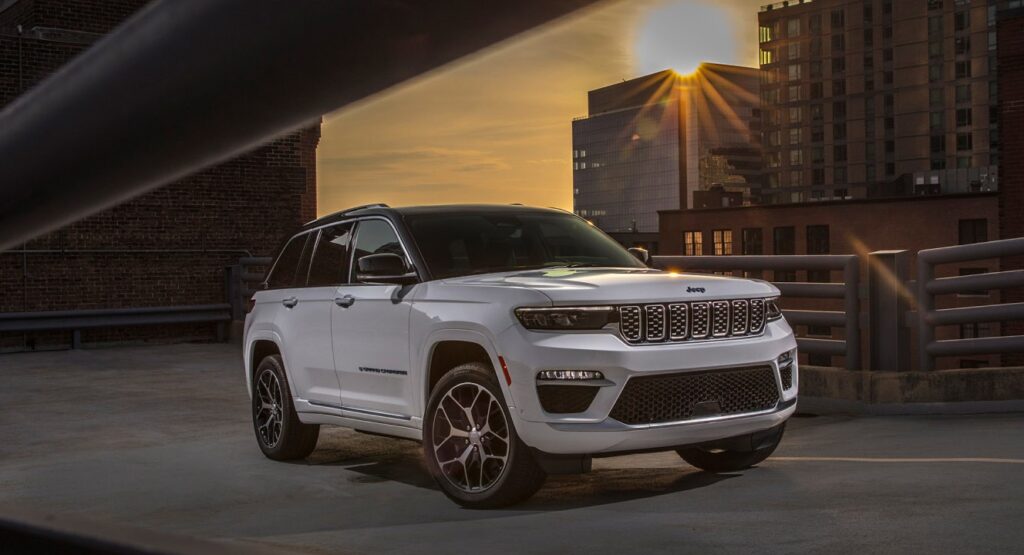
Jeep Grand Cherokee Fuel Consumption

Content in this publication
- Why Fuel Consumption Matters More Than Ever
- Understanding Jeep Grand Cherokee Fuel Economy
- Jeep Grand Cherokee MPG by Engine Type
- Diesel Grand Cherokee Fuel Consumption
- Jeep Grand Cherokee 4xe Fuel Consumption
- City vs Highway Fuel Consumption
- Real-World Fuel Consumption vs Official Estimates
- Fuel Consumption Across Different Generations
- How Four-Wheel Drive Affects Fuel Economy
- Towing and Fuel Consumption
- Best Jeep Grand Cherokee Engine for Fuel Economy
- Driving Habits That Increase Fuel Consumption
- Simple Ways to Improve Jeep Grand Cherokee Fuel Economy
- Jeep Grand Cherokee Fuel Tank Size and Driving Range
- Off-Road Driving and Fuel Consumption
- Comparing Grand Cherokee Fuel Economy to Rivals
- Fuel Consumption in Winter Conditions
- Maintenance and Fuel Economy
- Is the Jeep Grand Cherokee Expensive to Fuel?
- Should You Buy a Grand Cherokee for Fuel Economy?
- The Future of Jeep Grand Cherokee Efficiency
- Final Thoughts on Jeep Grand Cherokee Fuel Consumption
- FAQs
Why Fuel Consumption Matters More Than Ever
The modern SUV world feels like a balancing act on a tightrope. On one side, we crave power, luxury, and off-road confidence. On the other, we constantly glance at fuel prices like nervous investors watching the stock market. That is exactly where the Jeep Grand Cherokee enters the conversation.
For years, the Grand Cherokee has carried a reputation as one of the most capable midsize SUVs on the market. It blends rugged adventure with premium comfort in a way few competitors manage. Yet one question keeps surfacing among buyers, owners, and curious enthusiasts alike:
How good — or bad — is Jeep Grand Cherokee fuel consumption?
The answer is not as straightforward as many people expect. Fuel economy depends on engine choice, drivetrain, driving style, model year, terrain, maintenance habits, and even weather conditions. One Grand Cherokee can sip fuel modestly like a cautious traveler, while another can drink gasoline like a thirsty marathon runner after crossing the desert.
In this guide, we will break down everything you need to know about Jeep Grand Cherokee fuel consumption, from real-world MPG figures to hybrid efficiency, diesel economy, city driving performance, highway numbers, and practical ways to improve efficiency.
Understanding Jeep Grand Cherokee Fuel Economy
Before diving into numbers, we need to understand something important: the Grand Cherokee has evolved dramatically over the years.
Older generations prioritized brute strength and off-road durability. Newer versions blend performance with efficiency, introducing technologies like:
- Mild hybrid systems
- Plug-in hybrid powertrains
- Cylinder deactivation
- Advanced aerodynamics
- Lightweight materials
- Multiple driving modes
This means fuel consumption varies significantly depending on which version we examine.
Jeep Grand Cherokee MPG by Engine Type
V6 Models
The 3.6-liter Pentastar V6 is one of the most common engines found in the Grand Cherokee lineup.
Typical fuel economy figures include:
- City: 19 MPG
- Highway: 26 MPG
- Combined: 22 MPG
For a midsize SUV with real towing capability and solid off-road credentials, these numbers are respectable. The V6 often represents the sweet spot between power and economy.
Drivers who mainly commute or travel long highway distances tend to appreciate this engine the most.
V8 Models
Now we enter muscle territory.
The available 5.7-liter HEMI V8 transforms the Grand Cherokee into something closer to a luxury performance SUV than a traditional family hauler.
Expected fuel consumption:
- City: 14 MPG
- Highway: 22 MPG
- Combined: 17 MPG
That extra power comes at a cost. It is the automotive equivalent of ordering dessert every night — satisfying, thrilling, but definitely heavier on the wallet.
Still, many owners accept the tradeoff because the V8 delivers:
- Strong towing performance
- Faster acceleration
- Better high-speed confidence
- A deeper, more emotional driving experience
Diesel Grand Cherokee Fuel Consumption
The 3.0 EcoDiesel Advantage
The diesel-powered Grand Cherokee developed a loyal following for one simple reason: range.
Typical fuel economy numbers:
- City: 22 MPG
- Highway: 30 MPG
- Combined: 25 MPG
Those are impressive figures for an SUV capable of serious towing and long-distance touring.
Diesel models became especially popular among:
- Frequent highway drivers
- RV owners
- Adventure travelers
- Drivers covering high annual mileage
The EcoDiesel behaves like a marathon runner. It may not sprint as explosively as the V8, but it keeps moving efficiently for long stretches.
Jeep Grand Cherokee 4xe Fuel Consumption
The Plug-In Hybrid Revolution
The arrival of the Grand Cherokee 4xe changed the conversation entirely.
This plug-in hybrid model combines:
- A turbocharged gasoline engine
- Electric motors
- Rechargeable battery technology
Fuel economy figures look dramatically different:
- Electric-only range: around 25 miles
- Combined MPGe: approximately 56 MPGe
- Gasoline-only operation: around 23 MPG combined
For short commutes, many drivers barely use gasoline at all.
Imagine driving to work, picking up groceries, and returning home without hearing the engine start. That is the reality for many 4xe owners.
City vs Highway Fuel Consumption
Why Driving Environment Changes Everything
Fuel economy behaves differently depending on where we drive.
City Driving
In urban traffic, fuel consumption usually rises because of:
- Constant stopping
- Acceleration cycles
- Idling
- Congestion
- Lower average speeds
A heavy SUV like the Grand Cherokee naturally consumes more fuel in stop-and-go conditions.
Highway Driving
Highway efficiency improves because:
- Speeds remain consistent
- Engines operate more efficiently
- Braking is reduced
- RPM levels stabilize
That is why many owners report surprisingly strong highway fuel economy despite the SUV’s size.
Real-World Fuel Consumption vs Official Estimates
Why EPA Numbers Are Not Always Reality
Official MPG ratings provide a useful benchmark, but real-world results often differ.
Several factors influence actual consumption:
- Tire pressure
- Cargo weight
- Roof racks
- Driving aggression
- Climate conditions
- Terrain elevation
- Maintenance quality
Some owners beat official estimates easily. Others struggle to reach them.
Driving style alone can create a difference of 4–6 MPG.
Fuel Consumption Across Different Generations
Older Grand Cherokee Models
Earlier generations prioritized toughness over efficiency.
Common fuel economy ranges included:
- 12–18 MPG combined
- Larger naturally aspirated engines
- Heavier chassis
- Fewer efficiency technologies
These vehicles were built like mountain cabins on wheels — durable, strong, and unapologetically thirsty.
Modern Grand Cherokee Models
Newer models benefit from:
- Improved transmissions
- Better aerodynamics
- Smarter engine management
- Weight reduction
- Hybrid integration
The result is significantly improved efficiency without sacrificing capability.
How Four-Wheel Drive Affects Fuel Economy
Does 4WD Consume More Fuel?
In short: yes.
Four-wheel-drive systems add:
- Extra mechanical components
- Additional weight
- Increased drivetrain resistance
This typically reduces fuel economy by 1–2 MPG compared to rear-wheel-drive versions.
However, the tradeoff is worthwhile for drivers who regularly encounter:
- Snow
- Mud
- Sand
- Off-road trails
- Heavy rain
The added traction feels like wearing hiking boots during a storm. You expend slightly more energy, but stability and confidence increase dramatically.
Towing and Fuel Consumption
What Happens When You Tow?
Towing changes fuel consumption dramatically.
A Grand Cherokee towing a trailer may experience:
- 30–50% higher fuel usage
- Increased engine load
- Reduced aerodynamics
- Higher transmission stress
V8 and diesel models usually handle towing more efficiently than smaller engines because they work less aggressively under heavy loads.
Best Jeep Grand Cherokee Engine for Fuel Economy
Choosing the Most Efficient Option
If fuel savings are your priority, here is the general ranking:
- Grand Cherokee 4xe
- EcoDiesel
- V6 Pentastar
- V8 HEMI
Each suits a different lifestyle.
Best for City Drivers
The 4xe dominates.
Best for Highway Travel
The EcoDiesel shines.
Best Overall Balance
The V6 remains the safest all-around choice.
Driving Habits That Increase Fuel Consumption
Aggressive Acceleration
Rapid acceleration burns fuel quickly.
Imagine trying to sprint everywhere instead of walking calmly. Your body would consume more energy instantly. Engines behave the same way.
Excessive Idling
Leaving the engine running while parked wastes fuel unnecessarily.
Modern engines no longer need long warm-up periods.
High Speeds
Fuel economy often drops sharply above 70 MPH because aerodynamic drag increases exponentially.
The SUV essentially fights against a wall of air.
Simple Ways to Improve Jeep Grand Cherokee Fuel Economy
Maintain Proper Tire Pressure
Underinflated tires create rolling resistance.
Checking tire pressure monthly can noticeably improve efficiency.
Use High-Quality Fuel
Some engines perform more efficiently with premium fuel, especially turbocharged variants.
Reduce Extra Weight
Heavy cargo lowers MPG.
Cleaning unnecessary items from the trunk helps more than many drivers realize.
Drive Smoothly
Gentle acceleration and braking improve efficiency dramatically.
Smooth driving turns fuel consumption from chaotic to controlled.
Jeep Grand Cherokee Fuel Tank Size and Driving Range
How Far Can It Go on a Full Tank?
Fuel tank sizes vary slightly by generation and trim.
Typical tank capacity:
- Around 23 gallons
Estimated driving range:
| Engine Type | Estimated Range |
|---|---|
| V6 | 500–600 miles |
| EcoDiesel | 650–750 miles |
| V8 | 350–450 miles |
| 4xe Hybrid | Varies significantly |
The diesel version especially excels during long road trips.
Off-Road Driving and Fuel Consumption
Why Trails Burn More Fuel
Off-road environments are demanding.
Fuel consumption increases because of:
- Low-speed crawling
- Steep climbs
- Loose terrain
- Higher drivetrain stress
- Constant traction adjustments
Yet this is where the Grand Cherokee truly earns its reputation.
Many owners gladly sacrifice MPG for the ability to explore remote landscapes that ordinary crossovers could never handle.
Comparing Grand Cherokee Fuel Economy to Rivals
How Does It Stack Up?
The Grand Cherokee competes against SUVs like:
- Toyota 4Runner
- Ford Explorer
- Honda Passport
- Chevrolet Traverse
Compared to these rivals:
- The V6 Grand Cherokee performs competitively
- The V8 consumes more fuel than many rivals
- The 4xe offers class-leading efficiency
- The EcoDiesel remains exceptional for highway travel
Its blend of luxury and capability makes its MPG figures easier to justify.
Fuel Consumption in Winter Conditions
Cold Weather Changes Everything
Winter can significantly reduce efficiency.
Reasons include:
- Denser air
- Longer warm-up times
- Increased rolling resistance
- Heater usage
- Lower battery efficiency in hybrids
Many owners notice fuel economy dropping by 10–20% during cold months.
Maintenance and Fuel Economy
Why Maintenance Matters
Neglected maintenance quietly destroys MPG over time.
Key areas include:
- Air filters
- Spark plugs
- Oil quality
- Fuel injectors
- Wheel alignment
A poorly maintained SUV behaves like an athlete trying to run while carrying invisible weights.
Is the Jeep Grand Cherokee Expensive to Fuel?
The Honest Answer
It depends entirely on expectations.
Compared to compact SUVs, yes, the Grand Cherokee consumes more fuel.
Compared to full-size trucks or large V8 SUVs, it can actually seem reasonable.
Most buyers choose the Grand Cherokee because it offers:
- Premium comfort
- Genuine off-road capability
- Strong towing
- Advanced technology
- Luxury-like refinement
Fuel economy becomes part of the ownership equation rather than the sole deciding factor.
Should You Buy a Grand Cherokee for Fuel Economy?
Who It Makes Sense For
The Grand Cherokee fits drivers who want versatility.
It works especially well for people who need:
- Family comfort
- Adventure capability
- Winter confidence
- Long-distance touring
- Towing power
If maximum MPG is the only priority, smaller hybrids may be smarter choices.
But if we want an SUV that can comfortably cruise highways, tow boats, climb trails, and still deliver respectable efficiency, the Grand Cherokee remains highly appealing.
The Future of Jeep Grand Cherokee Efficiency
Electrification Is Changing the Game
Jeep continues pushing toward electrification.
Future Grand Cherokee models will likely feature:
- Larger battery packs
- Improved hybrid systems
- Better regenerative braking
- Enhanced aerodynamics
- Fully electric variants
The days of massive SUVs delivering terrible fuel economy are slowly fading.
Final Thoughts on Jeep Grand Cherokee Fuel Consumption
The Jeep Grand Cherokee occupies an interesting middle ground in the SUV market. It is neither the thirstiest brute nor the most frugal commuter. Instead, it balances strength, refinement, capability, and evolving efficiency technologies.
The V6 offers sensible economy. The diesel stretches highway miles impressively. The V8 delivers performance at the expense of MPG. Meanwhile, the 4xe points toward the future with dramatically reduced fuel usage for daily driving.
Choosing the right version depends on how we actually drive. That is the key. A city commuter may adore the 4xe, while a long-distance traveler may prefer the diesel. Someone towing regularly may happily accept the V8’s appetite.
Fuel consumption matters, but context matters even more.
The Grand Cherokee is not simply about MPG figures on paper. It is about what those gallons allow us to do — cross snowy highways, tow campers into the mountains, explore muddy trails, or cruise comfortably for hundreds of miles with confidence.
And perhaps that is why the Grand Cherokee continues to endure. It is not trying to be a tiny economy car wearing hiking boots. It embraces its identity while steadily becoming more efficient with every generation.
FAQs
Does the Jeep Grand Cherokee consume a lot of fuel?
Compared to compact SUVs, yes. However, compared to similarly capable midsize SUVs with towing and off-road abilities, its fuel consumption is competitive.
Which Jeep Grand Cherokee engine is most fuel efficient?
The Grand Cherokee 4xe plug-in hybrid currently offers the best fuel efficiency and lowest gasoline usage.
Is the V6 Grand Cherokee economical enough for daily driving?
Yes. The V6 provides a strong balance between performance and fuel economy, making it suitable for everyday use.
Does towing significantly reduce MPG?
Absolutely. Towing can increase fuel consumption by 30–50% depending on trailer weight and driving conditions.
Can driving habits improve fuel economy?
Yes. Smooth acceleration, moderate speeds, proper tire pressure, and regular maintenance can noticeably improve MPG.
If you want to know other articles similar to Jeep Grand Cherokee Fuel Consumption you can visit the category Driving.
Toyota Hilux Long Range Fuel Tank: Complete Buyer’s Guide
How Fast Is a BMW M2? Acceleration, Top Speed and Real-World Performance
Toyota Hilux Fuel Consumption: Real-World MPG, Diesel Economy, and Running Costs
Subaru XV Fuel Consumption: MPG, Real-World Economy, and What to Expect
BMW M2 MPG: Real-World Fuel Economy, Range, and Running Costs
Leapmotor C10 Real World Range: What Can You Actually Expect?
Leave a Reply
More content of your interest