
BMW 2 Series vs Skoda Slavia: Which Is Better to Drive?

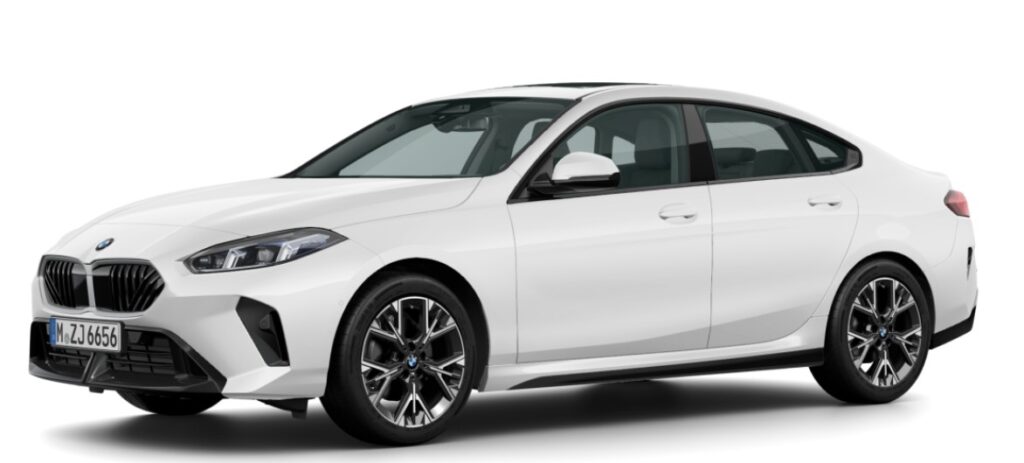
Comparing the BMW 2 Series vs Skoda Slavia is not as straightforward as comparing two ordinary family saloons. These cars come from different markets, occupy different price categories and approach performance from opposite directions.
The BMW 2 Series is a premium model developed for buyers who care about handling, acceleration, refinement and brand appeal. The Skoda Slavia is an India-focused compact saloon designed to provide space, efficiency and accessible turbocharged performance.
For UK readers, there is another important detail: the Skoda Slavia is not part of Skoda UK’s official new-car range. Anyone wanting one in Britain would need to investigate private importation, registration, insurance, parts availability and warranty implications. The BMW 2 Series, meanwhile, is officially sold and supported throughout the UK. Skoda’s Indian website currently lists the Slavia with 1.0-litre and 1.5-litre TSI petrol engines, while the UK Skoda website does not list it among locally available factory-order models.
That sounds like an easy victory for BMW, doesn’t it? Not entirely.
The Slavia has a few cards hidden up its sleeve. It is lighter, spacious, surprisingly quick in 1.5 TSI form and likely to feel energetic at ordinary road speeds. The BMW, however, brings far greater performance potential, stronger chassis engineering and a more polished driving experience.
Let us put both cars under the microscope.
Content in this publication
- BMW 2 Series vs Skoda Slavia at a Glance
- A Comparison of Two Very Different Philosophies
- Engine Performance
- BMW 2 Series Coupé Performance
- Acceleration in Real UK Driving
- Steering Feel and Driver Engagement
- Cornering and Chassis Balance
- Ride Quality on British Roads
- Transmission Comparison
- Braking Performance
- High-Speed Stability and Refinement
- Driving Position and Controls
- Practicality and Everyday Use
- UK Ownership: The Slavia’s Biggest Obstacle
- Fuel Economy and Running Costs
- Which Car Is More Fun?
- Which Model Should Performance Buyers Choose?
- BMW 2 Series vs Skoda Slavia: Performance Verdict
- Final Conclusion
- Frequently Asked Questions
BMW 2 Series vs Skoda Slavia at a Glance
Because “BMW 2 Series” can refer to several body styles, we should first clarify the comparison.
The BMW 2 Series Coupé is the enthusiast’s choice. It has two doors, a rear-wheel-drive-based platform and a low, athletic driving position. At the top of the regular range, the M240i xDrive produces 392 hp, develops 540 Nm and reaches 62 mph in 4.3 seconds. BMW describes the Coupé as having a low centre of gravity, a wide stance and rear-wheel-drive characteristics intended to provide direct feedback.
The BMW 2 Series Gran Coupé is conceptually closer to the Slavia because both have four doors and saloon-like proportions. The UK-market 220 Gran Coupé uses a 170 hp mild-hybrid powertrain, while the 223 xDrive develops 218 hp and the M235 xDrive produces 300 hp.
For the fairest performance comparison, we will mainly examine:
- BMW 220 Gran Coupé versus Skoda Slavia 1.5 TSI DSG
- BMW 2 Series Coupé versus Skoda Slavia from an enthusiast’s perspective
- Everyday UK driving, including motorways, wet roads and country lanes
- Acceleration, steering, ride quality and transmission behaviour
- Practicality, ownership and import considerations
Quick Comparison Table
| Category | BMW 220 Gran Coupé | Skoda Slavia 1.5 TSI DSG |
|---|---|---|
| Engine | 1.5-litre turbo mild hybrid | 1.5-litre turbo petrol |
| Power | 170 hp | 150 PS |
| Torque | 280 Nm total output | 250 Nm |
| Transmission | 7-speed automatic | 7-speed DSG |
| Driven wheels | Front-wheel drive | Front-wheel drive |
| 0–62 mph | 7.9 seconds | Approximately eight seconds, depending on test conditions |
| Official UK availability | Yes | No |
| Main strength | Refinement and performance polish | Lightweight pace and value |
| Best suited to | Premium UK daily driving | Affordable, spacious performance |
The numbers suggest a reasonably close contest between the Slavia 1.5 TSI and the entry-level BMW Gran Coupé. Once we move to the 223 xDrive, M235 xDrive or rear-wheel-drive 2 Series Coupé, however, the BMW pulls away like a sprinter leaving the starting blocks.
A Comparison of Two Very Different Philosophies
The BMW 2 Series is designed around aspiration. Even in its more accessible forms, it aims to deliver premium materials, controlled body movement, confident high-speed stability and a sense that the driver sits at the centre of the experience.
The Skoda Slavia follows a more pragmatic formula. It offers useful cabin space, a large boot, generous ground clearance and punchy turbocharged engines without demanding luxury-car money in its home market.
We could compare the BMW to a tailored sports jacket: structured, sophisticated and designed to make an impression. The Slavia is more like a comfortable pair of running shoes. It may not look as expensive, but it is light, useful and ready for daily work.
Neither approach is inherently better. The winner depends on what we expect from the car.
Engine Performance
Skoda Slavia 1.0 TSI: Small Engine, Big Personality
The entry-level Slavia uses a 1.0-litre three-cylinder turbocharged petrol engine producing 85 kW, equivalent to roughly 115 PS. Skoda offers it with either a six-speed manual gearbox or a six-speed torque-converter automatic, depending on the trim.
A three-cylinder engine may not sound exciting on paper, but small turbo units can feel surprisingly lively. Their low-speed torque makes them responsive in urban traffic, while the characteristic three-cylinder growl adds personality when pushed.
The 1.0 TSI should be adequate for:
- Daily commuting
- Urban driving
- Occasional motorway journeys
- Drivers prioritising economy
- Buyers who prefer a manual gearbox
However, it is not the engine we would choose for a performance-led comparison with the BMW. With passengers and luggage on board, the smaller Slavia would need more revs and more frequent gear changes.
Where the 1.0 TSI Feels Strongest
The engine’s sweet spot is likely to be between low and medium speeds. Turbo torque should help it pull cleanly through town, and the relatively low vehicle weight prevents it from feeling completely overwhelmed.
At motorway speeds, though, the difference in refinement becomes more obvious. The BMW’s stronger sound insulation, greater torque reserves and more sophisticated drivetrain make rapid overtaking feel calmer.
Skoda Slavia 1.5 TSI: The Performance Choice
The 1.5 TSI is the engine that gives the Slavia genuine enthusiasm. It produces 110 kW, or 150 PS, along with 250 Nm of torque. It is currently paired with a seven-speed DSG automatic in the Prestige and Monte Carlo versions listed by Skoda India.
This is a strong output for a relatively light front-wheel-drive saloon.
The 1.5 TSI responds with a broad wave of mid-range torque rather than requiring the driver to chase the red line. Press the accelerator when joining a fast road and the Slavia should gather speed with real urgency.
It is not brutally fast, but it sits in that enjoyable middle ground where performance remains usable. We can press the throttle without immediately reaching licence-threatening speeds.
The engine also uses cylinder-deactivation technology, allowing it to shut down two cylinders under light loads. That gives it a clever dual personality: lively when pushed and potentially economical when cruising.
BMW 220 Gran Coupé: More Power and Greater Polish
The UK-specification BMW 220 Gran Coupé combines a 1.5-litre three-cylinder petrol engine with a 48-volt mild-hybrid system. Total system output is 170 hp and 280 Nm, sent to the front wheels through a seven-speed automatic transmission.
BMW quotes 0–62 mph in 7.9 seconds and a top speed of 143 mph.
The numerical advantage over the Slavia 1.5 TSI is not enormous, yet the BMW is likely to feel more mature. Its power delivery is smoother, its transmission calibration is designed around European driving conditions and the mild-hybrid assistance should improve initial response.
The Slavia may occasionally feel more eager because it carries less weight. The BMW counters with stronger refinement and a broader sense of mechanical sophistication.
Does the BMW 220 Feel Fast?
It feels brisk rather than dramatic.
Acceleration is strong enough for confident motorway joining and overtaking, but it will not pin occupants into their seats. Its real talent lies in making speed feel effortless.
Where the Slavia may announce its acceleration with more engine noise and gearbox activity, the BMW builds pace with fewer rough edges.
BMW 223 xDrive: A Clear Step Forward
The 223 xDrive Gran Coupé raises total output to 218 hp and 360 Nm. It uses a 2.0-litre four-cylinder engine, mild-hybrid assistance, a seven-speed automatic gearbox and all-wheel drive.
BMW claims 0–62 mph in 6.4 seconds and a top speed of 155 mph.
This is where the performance gap becomes substantial.
The Slavia 1.5 TSI remains lively, but the BMW 223 xDrive delivers significantly stronger acceleration, especially from a standing start or when exiting a wet junction. Its all-wheel-drive system can distribute power more effectively, reducing wheelspin and helping the car launch cleanly.
On a damp British morning, that traction advantage matters.
BMW M235 xDrive: Another Performance League
The M235 xDrive Gran Coupé produces 300 hp and 400 Nm. Its all-wheel-drive system helps it reach 62 mph in 4.9 seconds.
At this point, the comparison becomes almost academic.
The Slavia is a quick mainstream saloon. The M235 is a compact performance car. It accelerates harder, brakes more decisively and carries greater speed through bends.
The Slavia’s advantage is that its limits are easier to explore on public roads. The M235 can feel like a powerful animal confined to a small garden: thrilling, but rarely able to stretch its legs fully.
BMW 2 Series Coupé Performance
For driving enthusiasts, the 2 Series Coupé changes the conversation completely.
Unlike the front-wheel-drive-based Gran Coupé and Slavia, the 2 Series Coupé uses a rear-wheel-drive-oriented layout. BMW highlights its low centre of gravity, wide stance and direct chassis responses.
That configuration matters because it separates steering and propulsion duties. The front wheels can focus primarily on changing direction while the rear wheels push the vehicle forward.
Why Rear-Wheel Drive Changes the Experience
Under acceleration, weight naturally moves towards the rear of a car. Sending power to the rear wheels allows the driven tyres to benefit from that weight transfer.
The result can include:
- Cleaner steering under power
- Better balance through bends
- More natural corner-exit behaviour
- Greater adjustability using the throttle
- A stronger sense of connection with the chassis
The Slavia’s front-wheel-drive setup is predictable and efficient, but hard acceleration can ask the front tyres to steer and transmit power simultaneously. That may produce mild wheelspin, torque steer or understeer when conditions are slippery.
M240i xDrive: Serious Straight-Line Speed
The BMW M240i xDrive Coupé uses a 3.0-litre turbocharged six-cylinder petrol engine producing 392 hp and 540 Nm. It reaches 62 mph in 4.3 seconds and has a top speed of 155 mph.
Its engine is the star of the show.
The straight-six delivers power with a smoothness that smaller turbocharged engines struggle to imitate. Where the Slavia’s 1.5 TSI feels punchy, the BMW feels relentless. Acceleration continues building beyond the point where the Skoda begins to lose urgency.
The M240i also sounds richer. It does not merely make noise; it develops a layered mechanical tone that rises as the engine spins faster.
For pure performance, there is no contest. The M240i wins by a considerable margin.
Acceleration in Real UK Driving
A 0–62 mph figure is useful, but it does not describe every driving situation.
Most UK motorists spend more time accelerating from 30 to 50 mph, overtaking from 50 to 70 mph or joining a dual carriageway than launching from a standstill.
Urban Acceleration
At low speeds, the Slavia 1.5 TSI should feel keen and responsive. Its DSG gearbox can quickly select a lower gear, while the engine’s 250 Nm torque output provides a satisfying surge.
The BMW 220 Gran Coupé feels similarly brisk, though its response may be smoother and less theatrical.
You may be interested in reading Test Drive Review: The Fiat 500 Abarth 0-60 Acceleration
The 223 xDrive and M235 xDrive offer more immediate performance, but much of their extra power is unnecessary in congested cities.
Motorway Overtaking
The BMW begins to establish a clearer advantage above 50 mph.
Its greater torque, refined transmission and stronger high-speed stability make motorway acceleration feel calmer. The Slavia can still overtake confidently, but the engine and gearbox may work harder.
With four adults and luggage, the difference would become more noticeable.
Wet-Weather Starts
British weather favours the all-wheel-drive BMW models.
The front-wheel-drive Slavia can struggle to deploy all its torque from a wet junction if the driver accelerates aggressively. Electronic traction control will manage the situation, but intervention can interrupt momentum.
The BMW 223 xDrive, M235 xDrive and M240i xDrive can distribute drive across four wheels, giving them a substantial launch advantage.
Steering Feel and Driver Engagement
Skoda Slavia Steering
The Slavia’s steering is likely to feel light at parking speeds and reassuringly predictable on faster roads. That suits its role as a comfortable family saloon.
It should change direction cleanly, but we should not expect the wheel to communicate every texture in the road. The emphasis is ease rather than forensic feedback.
The relatively light body can make the car feel agile, particularly through tight urban streets. It may turn in eagerly and feel less cumbersome than heavier premium models.
However, once the road becomes demanding, the chassis is likely to prioritise safety. Push too hard into a corner and the front tyres will gradually run wide rather than encouraging playful rotation.
BMW Gran Coupé Steering
The 2 Series Gran Coupé provides more weight and precision through the steering wheel. Its responses feel deliberate, and the body takes a stable set through faster bends.
Yet the Gran Coupé should not be confused with the rear-wheel-drive Coupé. The four-door BMW is based around a front-wheel-drive architecture, so its fundamental behaviour is closer to the Slavia than traditional BMW purists might expect.
It is sharper and more polished than the Skoda, but not necessarily overflowing with steering feedback.
BMW 2 Series Coupé Steering
The Coupé is the driver’s car of the group.
Its lower seating position, wider stance and rear-driven balance make it feel more natural when the road twists. The front end responds accurately, and the chassis feels as though it rotates around the driver rather than simply following the front wheels.
The difference resembles dancing with a trained partner rather than guiding someone through the steps. The Coupé seems to anticipate what we want.
Cornering and Chassis Balance
Slavia: Light, Friendly and Predictable
The Slavia’s greatest dynamic advantage is not raw grip. It is accessibility.
Because the car is relatively light and not excessively powerful, drivers can enjoy its engine without constantly braking for the next speed limit. The chassis should feel approachable, and its responses are unlikely to surprise an inexperienced driver.
On a flowing road, we can carry momentum and enjoy placing the car accurately. There is pleasure in driving a modestly powered car well.
Its limitations appear when we increase the pace:
- More body movement
- Less front-end grip
- Earlier understeer
- Lower braking reserves
- Reduced composure over uneven surfaces
These characteristics do not make it a poor-handling car. They simply reveal its priorities.
BMW 220 Gran Coupé: Controlled and Secure
The BMW feels more planted.
Its additional weight may reduce the playful lightness found in the Slavia, but the trade-off is stronger stability. The body remains better controlled through quick direction changes, and the suspension settles faster after bumps.
The BMW also benefits from more sophisticated electronic calibration. Stability control, transmission logic and chassis systems work together to make the car feel cohesive.
BMW xDrive Models: Traction Above Playfulness
The 223 xDrive and M235 xDrive can accelerate out of bends with greater confidence. Their all-wheel-drive systems reduce the tendency for the inside front wheel to spin when power is applied.
The disadvantage is added weight and complexity. They feel extremely capable, though perhaps slightly less playful than a compact rear-wheel-drive car.
BMW Coupé: The Enthusiast’s Winner
The rear-wheel-drive Coupé offers the best fundamental balance.
It can be guided using both the steering wheel and accelerator. In powerful versions, the driver can feel the rear axle contributing to the car’s direction, particularly when accelerating out of a bend.
That sensation is absent from the Slavia.
Ride Quality on British Roads
Performance is not only about speed. A car that becomes unsettled over broken tarmac cannot inspire confidence.
Slavia Ride Comfort
The Slavia was developed for roads that can be rough, unpredictable and full of sharp surface changes. Its generous ground clearance and comfort-oriented suspension should help it absorb potholes effectively.
That could make it surprisingly well suited to damaged UK urban roads.
Smaller wheels would probably provide the best ride. Sportier trims with larger alloy wheels may look sharper but transmit more impact into the cabin.
The Slavia may allow more body movement over long undulations, yet it should handle low-speed imperfections with useful compliance.
BMW Ride Comfort
The BMW feels more tightly controlled.
On smooth roads, that creates a premium sensation. The car remains composed, body movements are restrained and motorway cruising feels settled.
Over sharp potholes, however, M Sport suspension and large wheels may produce a firm edge. The BMW can feel more expensive without always feeling softer.
Optional adaptive suspension on the 2 Series Coupé allows the driver to choose between greater precision and a more relaxed setup. BMW states that the system can adjust to the road surface and selected driving mode.
Which Rides Better?
The answer depends on the road.
- On broken urban surfaces, the Slavia may feel more forgiving.
- On fast, undulating roads, the BMW controls its body more effectively.
- On motorways, the BMW feels quieter and more settled.
- With large M Sport wheels, the BMW may feel noticeably firmer.
Transmission Comparison
Skoda Seven-Speed DSG
The Slavia 1.5 TSI uses a seven-speed dual-clutch gearbox.
A DSG can shift quickly because it effectively prepares the next gear before the driver requests it. Under hard acceleration, that produces crisp, rapid changes and helps the engine remain within its strongest operating range.
Its behaviour can be less polished at crawling speeds. Dual-clutch gearboxes occasionally hesitate when moving away, reversing uphill or creeping through traffic.
Once the car is moving, the DSG suits the energetic 1.5 TSI engine well.
BMW Seven-Speed Automatic
The 2 Series Gran Coupé also uses a seven-speed automatic transmission. Its calibration is designed to balance economy, responsiveness and refinement.
In normal driving, the BMW’s gearbox should feel smoother. In Sport mode, it holds lower gears longer and reacts more eagerly to accelerator inputs.
Shift paddles provide manual control, though most drivers will leave the transmission to make its own decisions.
BMW Eight-Speed Steptronic in the Coupé
The 2 Series Coupé uses an eight-speed Steptronic Sport transmission in relevant versions. BMW allows drivers to shift automatically or manually using paddles or the selector.
This gearbox is one of the Coupé’s major strengths.
It can behave gently in traffic, select high gears during motorway cruising and snap into a lower ratio when the driver demands acceleration. Its broad ratio spread also helps powerful engines remain flexible.
Braking Performance
The Slavia’s brakes should be entirely adequate for normal road use. Its lighter weight reduces the amount of energy the system must manage during ordinary stops.
Repeated hard braking, however, is where the BMW’s superior performance hardware becomes meaningful. More powerful 2 Series versions use larger brakes designed to cope with higher speeds and greater vehicle mass.
The BMW brake pedal is also likely to feel firmer and more progressive, making it easier to judge how much stopping force we are applying.
For normal commuting, both cars are competent. For repeated high-speed driving, the BMW has greater reserves.
High-Speed Stability and Refinement
At 70 mph, the BMW separates itself from the Slavia more convincingly than it does in slow urban traffic.
The BMW benefits from:
- Better sound insulation
- More controlled suspension
- Greater aerodynamic refinement
- More supportive seats
- Stronger straight-line stability
- Better isolation from tyre and wind noise
The Slavia may feel light and lively around town, but that lightness can translate into a less substantial sensation at motorway speeds.
You may be interested in readingTest Drive Review: The Fiat 500 Abarth 0-60 AccelerationYou may be interested in reading
 Customizing Your Ride: A Comprehensive Guide to the Fiat 500 Body Kit
Crosswinds, coarse road surfaces and passing lorries are likely to disturb it more noticeably.
The BMW feels built for sustained European motorway travel. It settles into a cruise and gives the impression that 70 mph requires very little effort.
Driving Position and Controls
Inside the Slavia
The Slavia offers an upright, practical driving position. Visibility should be good, the controls are logically arranged and the saloon body provides a clear sense of the vehicle’s dimensions.
Its cabin focuses on space and convenience rather than creating a cockpit-like atmosphere.
Drivers moving from an ordinary hatchback or compact saloon should feel comfortable quickly.
Inside the BMW
The BMW places greater emphasis on the driver.
The steering wheel, digital displays and centre controls are arranged to create a more focused environment. In the Coupé, the lower seat and longer bonnet strengthen the sensation of driving a traditional sports car.
BMW also offers supportive M Sport seats and a thick-rimmed M steering wheel. The company describes the optional sports seats as providing greater lateral support during faster cornering.
This matters during enthusiastic driving. A seat that holds the body securely allows the driver to steer with relaxed arms rather than bracing against the centre console.
Practicality and Everyday Use
Performance may be the priority, but most owners still need room for shopping, luggage and passengers.
Rear-Seat Space
The Slavia is the clear winner for rear-seat accessibility.
Its four doors, long wheelbase and family-focused design make it better suited to carrying adults. Passengers can enter easily, and the cabin should provide more usable knee room than the two-door BMW Coupé.
The BMW Gran Coupé is more practical than the Coupé, but its sloping roof can restrict rear headroom.
Boot Capacity
The Slavia offers the more useful traditional saloon boot. Its luggage compartment is designed with family use in mind.
The BMW 2 Series Coupé provides 390 litres of luggage capacity, while the current 2 Series Gran Coupé lists 360 litres.
Although the figures are usable, the BMW’s shape and opening may not be as convenient as the Slavia’s larger saloon boot.
Ground Clearance
The Slavia’s higher ground clearance is valuable over speed bumps, damaged lanes and steep entrances.
The BMW sits lower, particularly in sporty specifications. That improves handling but requires more caution around kerbs, ramps and deep potholes.
UK Ownership: The Slavia’s Biggest Obstacle
For a UK buyer, the most important difference has nothing to do with horsepower.
The BMW 2 Series is officially available through BMW UK. Buyers can configure a car, arrange finance, book servicing and obtain parts through an established national dealer network.
The Slavia is not officially offered by Skoda UK. Its current model information and engine range appear on Skoda India’s website rather than the British product catalogue.
Potential Import Complications
Importing a Slavia into the UK could involve:
- Vehicle approval and registration
- Import duties and taxes
- Insurance for a non-standard model
- Emissions and compliance documentation
- Parts sourcing
- Warranty restrictions
- Reduced resale demand
- Compatibility with UK mapping and connected services
The Slavia is available in right-hand-drive form in India, which removes one obvious obstacle. Nevertheless, right-hand drive does not automatically make a vehicle simple or economical to import.
A low overseas purchase price can become less attractive after transport, taxes, inspections and registration expenses are added.
Fuel Economy and Running Costs
The Slavia should be cheaper to fuel, service and maintain in its intended market. Its lighter construction and smaller engines support good efficiency, while cylinder deactivation helps the 1.5 TSI reduce consumption during gentle cruising.
In Britain, however, the lack of official availability complicates the calculation.
An imported Slavia may require specialist parts or longer waiting periods. Even routine components could be more difficult to identify through UK parts systems.
The BMW costs more to buy and insure, particularly in high-performance versions. Premium tyres, larger brakes and dealership labour rates also increase expenses.
The 220 Gran Coupé partly offsets this with strong official efficiency. BMW quotes 51.4–53.3 mpg under combined WLTP testing for the 170 hp mild-hybrid version.
Expected Cost Winner
- In India: Skoda Slavia
- As a privately imported UK car: uncertain
- For predictable UK ownership: BMW 2 Series
- For premium maintenance costs: Slavia, provided parts are available
- For resale confidence: BMW
Which Car Is More Fun?
The answer depends on how we define fun.
The Slavia 1.5 TSI is enjoyable because it delivers accessible turbocharged performance in a light, practical package. We can use much of its power without travelling at extreme speeds.
The BMW 220 Gran Coupé is enjoyable because it feels polished, secure and responsive.
The BMW M235 xDrive is fun because it delivers serious acceleration and wet-weather traction.
The BMW 2 Series Coupé is the most rewarding because of its rear-wheel-drive balance, lower driving position and more communicative chassis.
Fun at Sensible Speeds
The Slavia deserves credit here.
A car does not need 300 hp to entertain. Sometimes a lively engine, modest weight and predictable chassis create more involvement than a massively powerful car that barely feels awake below motorway speeds.
On narrow roads, the Slavia may feel easy to place and willing to work.
Fun at Higher Speeds
The BMW dominates.
Its steering precision, body control, braking ability and stability allow it to remain composed as the pace rises. The more demanding the road becomes, the larger the difference feels.
Which Model Should Performance Buyers Choose?
Choose the Skoda Slavia 1.5 TSI If:
- You live in a market where it is officially sold
- You want affordable turbocharged performance
- Rear-seat space matters
- You prefer a large saloon boot
- You enjoy lightweight, usable pace
- You value low-speed comfort over ultimate handling
Choose the BMW 220 Gran Coupé If:
- You want a premium UK-supported daily driver
- You need four doors
- Refinement matters more than outright speed
- You want predictable ownership
- You prefer stronger high-speed stability
- You want modern mild-hybrid efficiency
Choose the BMW 223 xDrive If:
- You want noticeably stronger acceleration
- Wet-weather traction is important
- You regularly drive on fast roads
- You want performance without moving to a full M model
Choose the BMW M235 xDrive If:
- Acceleration is a major priority
- You want a compact performance car with four doors
- You accept a firmer ride
- Higher insurance and running costs are manageable
Choose the BMW 2 Series Coupé If:
- Driving enjoyment comes before rear-seat practicality
- You prefer rear-wheel-drive balance
- You enjoy country roads
- You want a traditional coupé driving position
- Steering precision matters
- You are willing to sacrifice two rear doors
BMW 2 Series vs Skoda Slavia: Performance Verdict
For pure performance, the BMW 2 Series wins decisively.
Even the 220 Gran Coupé offers slightly greater power and torque than the Slavia 1.5 TSI, alongside stronger refinement and official UK support. Move up to the 223 xDrive, M235 xDrive or M240i xDrive Coupé and the gap becomes enormous.
The Slavia still deserves respect. Its 1.5 TSI engine produces 150 PS and 250 Nm, giving it enough muscle to feel genuinely quick in normal driving. It is lighter, roomier and easier to exploit at sensible speeds.
However, the BMW provides a more complete performance package. It does not simply accelerate faster. It steers more accurately, controls body movement more effectively, brakes with greater confidence and remains more stable at motorway speeds.
The rear-wheel-drive-based BMW 2 Series Coupé is especially compelling. It delivers a level of balance and driver involvement the front-wheel-drive Slavia cannot reproduce.
Final Conclusion
The BMW 2 Series vs Skoda Slavia comparison reveals two cars designed with very different ambitions.
The Slavia is a clever, spacious and energetic saloon. In 1.5 TSI DSG form, it offers enough performance to surprise drivers who dismiss it as a purely practical vehicle. Its lightness gives it an eager character, while its comfortable suspension and generous cabin make it easy to live with.
The BMW 2 Series is the superior driver’s car. The 220 Gran Coupé feels more refined and composed, the 223 xDrive adds meaningful speed and traction, and the M235 xDrive delivers authentic performance-car acceleration.
The 2 Series Coupé goes further. Its rear-wheel-drive foundations, low driving position and sharper chassis turn an ordinary journey into something more memorable.
For a UK buyer, the decision is even clearer. The Slavia is not officially sold in Britain, making ownership far more complicated. Unless someone specifically wants a rare imported saloon and understands the associated costs, the BMW is the more sensible purchase.
Our final recommendation is straightforward:
Choose the Skoda Slavia 1.5 TSI for affordable, accessible and practical performance in a market where it is officially supported. Choose the BMW 2 Series in the UK for stronger acceleration, superior handling, easier ownership and a considerably more polished driving experience.
If driving enjoyment is the main priority, the BMW 2 Series Coupé is the winner.
Frequently Asked Questions
1. Is the Skoda Slavia available in the UK?
No. The Skoda Slavia is not currently included in Skoda UK’s official new-car range. It is primarily sold in India and selected international markets. A UK buyer would generally need to import one privately and address registration, insurance, compliance, warranty and parts-supply requirements.
2. Is the Skoda Slavia faster than the BMW 2 Series?
The answer depends on the BMW version, but generally no. The Slavia 1.5 TSI is reasonably quick, producing 150 PS and 250 Nm. The BMW 220 Gran Coupé develops 170 hp and 280 Nm, while the 223 xDrive, M235 xDrive and M240i xDrive are substantially faster.
3. Which handles better, the BMW 2 Series or Skoda Slavia?
The BMW 2 Series handles better overall. The Gran Coupé offers stronger body control and stability, while the rear-wheel-drive-based 2 Series Coupé provides the best steering precision, cornering balance and driver involvement. The Slavia remains agile and predictable but is tuned primarily for comfort and everyday usability.
4. Is the Skoda Slavia 1.5 TSI fun to drive?
Yes. Its turbocharged engine, 250 Nm of torque, relatively low weight and quick-shifting DSG transmission make it lively at normal road speeds. It is not a dedicated sports saloon, but it offers enough performance to make commuting and motorway driving enjoyable.
5. Which is the better UK purchase?
The BMW 2 Series is the better UK purchase because it is officially sold, supported and serviced in Britain. It also provides stronger performance, superior refinement and better resale prospects. The Slavia only makes sense for someone specifically seeking an unusual private import and prepared to accept additional ownership complexity.
You may be interested in readingTest Drive Review: The Fiat 500 Abarth 0-60 AccelerationYou may be interested in reading
Customizing Your Ride: A Comprehensive Guide to the Fiat 500 Body KitYou may be interested in reading
 A Trip Down Memory Lane: The 1977 Fiat 124 Spider
If you want to know other articles similar to BMW 2 Series vs Skoda Slavia: Which Is Better to Drive? you can visit the category Models.
Tesla Model S vs Audi e-tron GT: UK Performance Comparison
BMW 2 Series vs Mercedes A-Class: Which Performs Better?
BMW 2 Series vs Audi A4: Which Is Better Value in the UK?
BMW 2 Series vs 1 Series: Which BMW Should You Buy?
Which BMW 2 Series to Buy in the UK: Complete Buyer’s Guide
BMW 2 Series Years UK: Generations, Changes and Best Models
Leave a Reply
More content of your interest