
Mitsubishi Outlander Sport MPG: Real-World Fuel Economy Guide

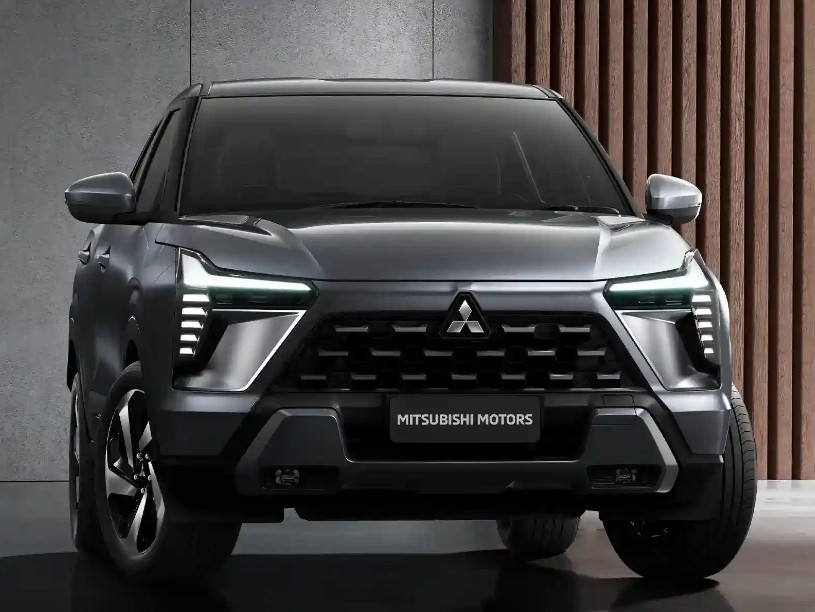
The Mitsubishi Outlander Sport MPG figures place this compact crossover in a practical middle ground. It is not a fuel-sipping hybrid, nor does it behave like a thirsty full-size SUV. Instead, it offers reasonable gas mileage, simple gasoline engines, standard all-wheel drive on newer models, and enough versatility for commuting, errands, road trips, and light outdoor adventures.
For the 2025 model year, most Mitsubishi Outlander Sport trims are rated at 23 MPG city, 29 MPG highway, and 26 MPG combined. The more powerful 2.4-liter SEL is rated at 23 MPG city, 28 MPG highway, and 25 MPG combined. Mitsubishi also lists a 15.8-gallon fuel tank.
Those numbers sound straightforward, but fuel economy rarely lives only on a window sticker. Traffic, weather, tire pressure, driving speed, engine choice, cargo weight, maintenance, and even the shape of our daily route can push the final result upward or downward.
So, what mileage can we realistically expect from an Outlander Sport? Is the 2.0-liter engine meaningfully more economical than the 2.4-liter version? And how far can this crossover travel on a tank?
Let’s break it down without turning the subject into a chemistry lesson.
Content in this publication
- What Is the Mitsubishi Outlander Sport MPG?
- Understanding City, Highway, and Combined MPG
- Mitsubishi Outlander Sport MPG by Engine
- How Far Can an Outlander Sport Travel on a Full Tank?
- Real-World Mitsubishi Outlander Sport Gas Mileage
- Why Your Outlander Sport MPG May Be Lower Than Expected
- How the CVT Affects Outlander Sport MPG
- Does All-Wheel Drive Reduce Fuel Economy?
- Is the Mitsubishi Outlander Sport Fuel-Efficient?
- Outlander Sport MPG Versus Mitsubishi Outlander MPG
- Outlander Sport MPG Versus Outlander PHEV
- How Much Does It Cost to Fuel an Outlander Sport?
- How to Improve Mitsubishi Outlander Sport MPG
- How to Calculate Your Actual MPG
- Why the Dashboard MPG Reading May Be Different
- When Poor MPG Could Indicate a Problem
- Does Air Conditioning Reduce MPG?
- Does Premium Gas Improve Outlander Sport MPG?
- Is the Outlander Sport Good for Highway Driving?
- Is the Outlander Sport MPG Good for Commuting?
- Should You Buy an Outlander Sport for Fuel Economy?
- Final Thoughts on Mitsubishi Outlander Sport MPG
- Frequently Asked Questions
- 1. What MPG does the Mitsubishi Outlander Sport get?
- 2. How many miles can an Outlander Sport travel on a full tank?
- 3. Does the Mitsubishi Outlander Sport require premium gas?
- 4. Why is my Outlander Sport getting poor gas mileage?
- 5. Is the 2.0-liter or 2.4-liter Outlander Sport more fuel-efficient?
What Is the Mitsubishi Outlander Sport MPG?
The current Mitsubishi Outlander Sport delivers the following EPA-estimated fuel economy:
| Configuration | City MPG | Highway MPG | Combined MPG |
|---|---|---|---|
| 2.0-liter Outlander Sport | 23 | 29 | 26 |
| 2.4-liter Outlander Sport SEL | 23 | 28 | 25 |
These figures apply to the all-wheel-drive configurations offered in the United States. The 2.0-liter engine produces 148 horsepower, while the 2.4-liter unit raises output to 168 horsepower. Both engines use a continuously variable transmission, commonly called a CVT.
At first glance, the difference seems tiny. The 2.4-liter model loses only one highway MPG and one combined MPG compared with the 2.0-liter version.
That means buyers do not face a dramatic fuel-economy penalty for choosing the stronger engine. However, the actual cost difference becomes more visible over thousands of miles, especially when fuel prices are high.
Understanding City, Highway, and Combined MPG
An MPG rating tells us how many miles a vehicle may travel using one gallon of gasoline. Yet each part of the rating describes a different environment.
City MPG
City driving includes:
- Frequent stops
- Slow-moving traffic
- Short journeys
- Repeated acceleration
- Long periods of idling
- Traffic lights and intersections
The Outlander Sport is rated at 23 MPG in the city. That is respectable for a gasoline-powered crossover with all-wheel drive, although drivers in heavy urban traffic may see lower numbers.
A short commute through downtown traffic can punish fuel economy like a leaky tap punishes a water bill. The engine burns fuel while the vehicle barely moves, and every fresh acceleration demands more energy.
Highway MPG
Highway driving usually allows the engine to operate more efficiently because the vehicle maintains a relatively steady speed.
The 2.0-liter Outlander Sport reaches an estimated 29 MPG on the highway, while the 2.4-liter SEL is rated at 28 MPG.
Drivers cruising at moderate speeds may come close to those figures. However, driving at 75 or 80 mph can reduce mileage because aerodynamic resistance rises sharply as speed increases.
Combined MPG
Combined MPG blends city and highway performance into one practical estimate.
Most current Outlander Sport trims achieve 26 MPG combined, while the 2.4-liter SEL is rated at 25 MPG combined.
For many owners, combined MPG is the most useful figure because daily driving normally includes a mixture of local roads, traffic, and faster routes.
Mitsubishi Outlander Sport MPG by Engine
Engine choice plays an important role in fuel consumption, although the difference between the two available engines is modest.
2.0-Liter Engine Fuel Economy
The standard 2.0-liter four-cylinder engine produces:
- 148 horsepower
- 145 pound-feet of torque
- 23 MPG city
- 29 MPG highway
- 26 MPG combined
This engine is the better choice when fuel economy matters more than acceleration. It suits drivers who spend most of their time commuting, running errands, or traveling at a relaxed pace.
The performance will not pin us to the seat, but that is not the point. The 2.0-liter Outlander Sport behaves more like a dependable backpack than a racing shoe. It is designed to carry everyday responsibilities without unnecessary drama.
2.4-Liter Engine Fuel Economy
The 2.4-liter four-cylinder engine offered in the SEL produces:
- 168 horsepower
- 167 pound-feet of torque
- 23 MPG city
- 28 MPG highway
- 25 MPG combined
The larger engine provides extra horsepower and torque, which can make acceleration and highway merging feel less strained. The trade-off is a small reduction in estimated fuel economy.
For drivers who frequently carry passengers, climb steep roads, or want stronger response from the accelerator, the 2.4-liter version may justify the additional fuel consumption.
Is the 2.4-Liter Engine Much More Expensive to Run?
Not necessarily.
Suppose we drive 12,000 miles per year:
- At 26 MPG, we use about 462 gallons.
- At 25 MPG, we use about 480 gallons.
- The difference is approximately 18 gallons annually.
If gasoline costs $3.50 per gallon, the 2.4-liter model would cost roughly $63 more per year under those assumptions.
That is not pocket change, but it is also unlikely to transform the household budget. The more important question is whether we value slightly better efficiency or slightly stronger performance.
How Far Can an Outlander Sport Travel on a Full Tank?
The 2025 Mitsubishi Outlander Sport has a listed fuel capacity of 15.8 gallons.
Using the official combined ratings, we can estimate theoretical driving range.
Estimated Range for the 2.0-Liter Model
At 26 MPG combined:
15.8 gallons × 26 MPG = approximately 411 miles
Estimated Range for the 2.4-Liter Model
At 25 MPG combined:
15.8 gallons × 25 MPG = approximately 395 miles
These numbers represent mathematical estimates, not guaranteed distances. We normally cannot use every drop in the tank, and actual mileage changes with conditions.
A realistic mixed-driving range may fall somewhere around 350 to 400 miles between fill-ups. Highway-focused drivers could travel farther, while owners making short urban trips may need fuel sooner.
Real-World Mitsubishi Outlander Sport Gas Mileage
EPA estimates are designed for comparison, but they cannot predict every owner’s experience. Mitsubishi itself notes that actual mileage may vary with driving conditions.
In everyday use, many drivers should expect mileage somewhere near the official combined rating when the vehicle is maintained properly and driven sensibly.
However, real-world results may look like this:
- Heavy city traffic: approximately 19–23 MPG
- Mixed suburban driving: approximately 23–27 MPG
- Moderate highway cruising: approximately 27–31 MPG
- Fast highway travel: approximately 24–28 MPG
- Cold-weather short trips: potentially below 20 MPG
These are practical ranges rather than official ratings. A single trip cannot tell the whole story. Fuel economy should be measured over several tanks because one windy road trip or one week of traffic can distort the result.
Why Your Outlander Sport MPG May Be Lower Than Expected
When fuel mileage drops, the engine is not always the villain. Several ordinary factors can quietly drain efficiency.
Short Trips
Engines use more fuel before reaching their ideal operating temperature. Repeated five-minute journeys can therefore produce surprisingly poor mileage.
Imagine heating an oven to bake one cookie, switching it off, and repeating the process several times. That is roughly how inefficient short-trip driving can become.
Heavy Traffic and Idling
An idling vehicle gets zero miles per gallon. It may not consume fuel quickly, but it consumes fuel without covering distance.
Stop-and-go traffic also forces the engine to accelerate the vehicle repeatedly, which demands more energy than steady cruising.
Aggressive Acceleration
Hard acceleration asks the engine for more fuel immediately. Occasional brisk acceleration will not destroy efficiency, but doing it at every traffic light adds up.
Smooth acceleration allows the CVT to manage engine speed more efficiently.
Highway Speed
The Outlander Sport may achieve its best mileage on open roads, but speed matters. Aerodynamic drag increases rapidly at higher speeds.
Cruising at 60 or 65 mph is usually more efficient than maintaining 75 or 80 mph. The difference may feel minor from the driver’s seat, yet the fuel gauge notices.
Low Tire Pressure
Underinflated tires create extra rolling resistance. The engine must work harder to keep the vehicle moving, much like cycling with soft tires.
Check tire pressures when the tires are cold and follow the specification shown on the driver’s door-jamb label.
Cold Weather
Cold temperatures affect fuel economy in several ways:
- The engine takes longer to warm up.
- Tire pressure may drop.
- Engine oil becomes thicker.
- Defrosters and heated accessories require energy.
- Winter gasoline blends may contain less energy.
- Snow and wet roads create additional resistance.
A noticeable winter MPG decline does not automatically mean something is wrong.
Extra Weight
Cargo, roof racks, and unnecessary items increase fuel consumption.
An extra jacket in the trunk will not matter, but hauling heavy equipment every day can. Roof-mounted cargo boxes are especially influential because they add both weight and aerodynamic drag.
How the CVT Affects Outlander Sport MPG
The Mitsubishi Outlander Sport uses a continuously variable transmission. Instead of shifting through a traditional set of fixed gears, the CVT can adjust its ratio gradually.
In theory, this helps the engine operate near an efficient speed. During calm acceleration, the transmission may keep engine RPM relatively low. When we demand more power, engine speed can rise and remain elevated until the vehicle reaches the desired speed.
Some drivers dislike the sound because the engine may appear to “hold” a note rather than shifting in steps. However, this behavior does not necessarily indicate a problem.
Driving a CVT Efficiently
We can help the transmission work effectively by:
- Accelerating smoothly.
- Avoiding repeated full-throttle starts.
- Maintaining a steady road speed.
- Anticipating traffic changes.
- Reducing unnecessary braking and reacceleration.
Think of the accelerator as a volume knob rather than an on-off switch. Small, measured inputs generally create smoother and more efficient progress.
Does All-Wheel Drive Reduce Fuel Economy?
All-wheel-drive systems often reduce fuel economy because they add weight and mechanical complexity. Power must travel through additional components, and those components create resistance.
Current Outlander Sport models in the United States are equipped with All-Wheel Control. Despite that hardware, the crossover still manages up to 26 MPG combined in most trims.
That efficiency is reasonable, but drivers who do not need all-wheel traction may find more economical front-wheel-drive alternatives elsewhere in the compact crossover market.
Still, all-wheel drive can be valuable in:
- Snow
- Heavy rain
- Loose gravel
- Muddy parking areas
- Steep roads
- Slippery rural routes
Fuel economy is only one part of ownership. Saving one MPG means little if the vehicle cannot confidently handle the roads we regularly use.
Is the Mitsubishi Outlander Sport Fuel-Efficient?
The Outlander Sport is moderately fuel-efficient rather than class-leading.
A rating of 26 MPG combined is acceptable for a conventional gasoline crossover with all-wheel drive, but many newer competitors use turbocharged engines, hybrid systems, or more advanced platforms to produce stronger fuel-economy numbers.
That does not automatically make the Outlander Sport a poor choice.
Its appeal comes from a different recipe:
- Straightforward naturally aspirated engines
- A practical compact body
- Standard all-wheel-drive capability
- Competitive starting prices
- A relatively simple driving experience
- Modest fuel requirements
The Outlander Sport may suit buyers who want predictable ownership more than cutting-edge efficiency.
Outlander Sport MPG Versus Mitsubishi Outlander MPG
The Outlander Sport and Outlander are different vehicles despite their similar names.
The Outlander Sport is smaller and uses 2.0-liter or 2.4-liter engines. The larger Outlander has three rows of available seating and uses a 2.5-liter engine.
The 2025 conventional Outlander is rated at:
- 24 MPG city and 31 MPG highway with two-wheel drive
- 24 MPG city and 30 MPG highway with S-AWC
- 27 MPG combined with two-wheel drive
- 26 MPG combined with S-AWC
That means the larger Outlander can achieve fuel economy similar to or slightly better than the smaller Outlander Sport.
Surprising? A little.
Vehicle size alone does not determine MPG. Engine technology, gearing, aerodynamics, weight, and platform design all enter the equation.
Which Mitsubishi Is Better for Fuel Economy?
For gasoline-only models, the standard Outlander can be slightly more efficient depending on configuration.
However, the Outlander Sport may still be:
- Less expensive to purchase
- Easier to park
- Better suited to smaller households
- More manageable in crowded urban areas
The better choice depends on total ownership needs, not a one-MPG difference.
Outlander Sport MPG Versus Outlander PHEV
The Outlander PHEV belongs to a completely different efficiency category.
The 2025 plug-in hybrid offers up to 38 miles of electric range, a combined gasoline-and-electric rating of 64 MPGe, and an estimated total driving range of up to 420 miles.
The PHEV can dramatically reduce gasoline use for drivers who:
- Charge regularly
- Make short daily trips
- Have access to home or workplace charging
- Use electric driving for most errands
However, it also costs considerably more than the Outlander Sport and is a larger, more complex vehicle.
The Outlander Sport remains the simpler choice. We add gasoline, drive, and repeat. No charging plan is required.
How Much Does It Cost to Fuel an Outlander Sport?
Fuel cost depends on mileage, gasoline prices, and annual distance.
Let’s use a 2.0-liter model rated at 26 MPG combined.
Annual Fuel Use at 10,000 Miles
10,000 ÷ 26 = approximately 385 gallons
At $3.50 per gallon:
385 × $3.50 = approximately $1,348 per year
Annual Fuel Use at 12,000 Miles
12,000 ÷ 26 = approximately 462 gallons
At $3.50 per gallon:
462 × $3.50 = approximately $1,617 per year
Annual Fuel Use at 15,000 Miles
15,000 ÷ 26 = approximately 577 gallons
At $3.50 per gallon:
577 × $3.50 = approximately $2,020 per year
These examples help us compare vehicles, but actual expenses will change with local fuel prices and driving style.
Cost Difference Between 25 and 26 MPG
At 12,000 miles per year:
- 26 MPG requires about 462 gallons.
- 25 MPG requires about 480 gallons.
- Difference: approximately 18 gallons.
At $3.50 per gallon, that difference equals about $63 annually.
Therefore, choosing the 2.4-liter SEL does not create a massive fuel-cost penalty. Purchase price, insurance, maintenance, and depreciation may have a greater financial impact.
How to Improve Mitsubishi Outlander Sport MPG
We cannot rewrite the EPA rating, but we can improve the way the vehicle uses fuel.
1. Accelerate Smoothly
Use moderate throttle whenever traffic allows. A smooth start reduces the fuel demanded by the engine and helps the CVT settle into an efficient ratio.
2. Maintain a Consistent Speed
Constant acceleration and braking waste energy. On open roads, steady driving usually improves mileage.
Cruise control may help on flat highways, although manual throttle control can sometimes be more efficient on rolling terrain.
3. Look Far Ahead
Anticipate traffic lights, slow vehicles, and turns. Lifting off the accelerator early preserves momentum and reduces unnecessary braking.
Every time we brake hard, we throw away energy that the engine previously created by burning fuel.
4. Check Tire Pressure Monthly
Correct tire pressure helps fuel economy, handling, braking, and tire life.
Do not inflate tires to the maximum pressure printed on the tire sidewall. Use the vehicle manufacturer’s recommended pressure on the driver’s door label.
5. Remove Unnecessary Cargo
Empty the trunk of heavy objects that do not need to travel every day.
A toolbox needed for work belongs there. A box of old books forgotten for six months does not.
6. Remove Roof Accessories When Unused
Crossbars, baskets, and cargo boxes disturb airflow. The effect becomes more noticeable at highway speeds.
7. Avoid Excessive Idling
Modern engines do not require long warm-up periods under normal conditions. After starting, allow a brief moment for fluids to circulate and then drive gently.
8. Keep Up With Maintenance
A properly maintained vehicle is more likely to deliver expected fuel economy.
Important items include:
- Engine oil
- Engine air filter
- Spark plugs
- Tire condition
- Wheel alignment
- CVT fluid service
- Cooling-system performance
- Fuel and emission-system inspections
9. Use the Recommended Oil
Engine oil that meets Mitsubishi’s specified viscosity and quality standards reduces friction while protecting internal components.
Using oil that is too thick may increase resistance, particularly during cold starts.
10. Track Several Tanks
Do not judge efficiency from the dashboard after one short trip.
Record:
- Odometer mileage at fill-up
- Gallons added
- Distance traveled
- Driving conditions
- Calculated MPG
Tracking several tanks reveals patterns and helps us identify real changes.
How to Calculate Your Actual MPG
Calculating fuel economy manually is easy.
The Formula
Miles driven ÷ gallons used = MPG
For example:
- Distance traveled: 325 miles
- Gasoline added: 12.5 gallons
- 325 ÷ 12.5 = 26 MPG
For the most accurate result:
- Fill the tank completely.
- Reset the trip odometer.
- Drive normally.
- Refill at the same station when possible.
- Divide trip miles by gallons added.
The dashboard MPG display is useful, but manual calculations offer a good reality check.
Why the Dashboard MPG Reading May Be Different
The onboard computer estimates fuel consumption using vehicle data. It may not perfectly match a manual calculation because:
- Fuel pumps shut off at slightly different points.
- The vehicle may not be parked level.
- The computer uses estimated fuel flow.
- The trip meter may cover only part of the tank.
- Remote starting and idling can influence the result.
- Tire-size changes can affect distance calculations.
A difference of one MPG is usually not alarming. A large and consistent discrepancy deserves further investigation.
When Poor MPG Could Indicate a Problem
Fuel economy naturally fluctuates, but a sudden decline may signal a mechanical issue.
Watch for:
- Check-engine light
- Rough idle
- Hard starting
- Weak acceleration
- Fuel smell
- Black exhaust smoke
- Unusual engine noise
- Transmission slipping sensations
- Tires losing pressure
- Brakes that feel unusually hot
- MPG dropping for several consecutive tanks
Possible causes include dirty sensors, worn spark plugs, incorrect tire pressure, dragging brakes, alignment problems, fuel-system faults, or emission-control issues.
Do not replace parts based only on MPG. A proper diagnostic inspection is cheaper than playing mechanical roulette.
Does Air Conditioning Reduce MPG?
Yes, air conditioning places an additional load on the engine.
The effect depends on:
- Outside temperature
- Cabin temperature
- Fan speed
- Vehicle speed
- Trip length
- Sun exposure
At lower speeds, using open windows may consume less fuel than maximum air conditioning. At highway speeds, open windows increase aerodynamic drag, so moderate air conditioning may be more efficient.
Comfort still matters. Saving a small amount of fuel is not worth arriving exhausted after driving through extreme heat.
The Outlander Sport is designed to operate on regular gasoline. Using premium fuel generally does not produce enough additional mileage to recover the higher price unless the manufacturer specifically requires or recommends it for a particular configuration.
Higher octane does not automatically mean more energy or better fuel economy. Octane describes resistance to engine knock.
Pouring premium gasoline into an engine designed for regular fuel is often like buying formal shoes for a walk on the beach: more expensive, but not more useful.
Is the Outlander Sport Good for Highway Driving?
The Outlander Sport can handle highway travel, and its 28–29 MPG highway estimate gives it a useful cruising range.
Its strengths include:
- Compact exterior dimensions
- Elevated seating position
- All-wheel-drive traction
- Simple controls
- Reasonable fuel-tank capacity
- Nearly 400 miles of theoretical mixed-driving range
However, the 2.0-liter engine may feel modest when merging, passing, or climbing hills with several passengers. The 2.4-liter SEL provides extra power at the cost of only one combined MPG.
Drivers who regularly travel at high speeds should remember that official highway estimates do not represent unlimited-speed cruising. Faster travel usually means lower efficiency.
Is the Outlander Sport MPG Good for Commuting?
For a gasoline-powered all-wheel-drive crossover, 25–26 MPG combined is workable for daily commuting.
It makes the most sense when we value:
- Compact SUV visibility
- All-weather traction
- A relatively affordable purchase price
- Traditional gasoline convenience
- Manageable size
Drivers covering extremely high annual mileage may save more with a hybrid. But those savings should be compared with the hybrid’s purchase price, insurance, financing, and expected ownership period.
Fuel economy is only one tile in the financial mosaic.
Should You Buy an Outlander Sport for Fuel Economy?
We should not buy the Outlander Sport because it dominates the MPG charts. It does not.
We might buy it because its fuel economy is acceptable while the vehicle delivers other useful qualities. Most trims offer 26 MPG combined, all-wheel-drive capability, a 15.8-gallon tank, and a straightforward naturally aspirated engine.
The Outlander Sport makes sense for buyers who prefer simplicity and value over cutting-edge powertrain technology.
It may be less appealing for drivers who prioritize:
- Maximum MPG
- Hybrid operation
- Rapid acceleration
- The newest interior design
- The lowest possible fuel cost
The key is to compare the entire ownership package instead of staring at one number.
Final Thoughts on Mitsubishi Outlander Sport MPG
The Mitsubishi Outlander Sport MPG rating is best described as decent, predictable, and practical.
Most 2.0-liter models deliver an EPA-estimated 23 MPG city, 29 MPG highway, and 26 MPG combined. The 2.4-liter SEL returns 23 MPG city, 28 MPG highway, and 25 MPG combined. With a 15.8-gallon tank, the crossover has a theoretical combined range of roughly 395 to 411 miles, depending on engine choice.
Real-world mileage will depend on traffic, temperature, tire pressure, speed, maintenance, cargo, and driving habits. Calm acceleration and steady cruising can help us approach the official estimates, while short trips and aggressive highway speeds can pull the numbers downward.
The Outlander Sport is not a mileage champion wearing an SUV costume. It is a compact crossover offering reasonable fuel economy alongside all-wheel-drive capability and conventional gasoline simplicity.
For many buyers, that balance may be more useful than a headline-grabbing MPG figure.
Frequently Asked Questions
1. What MPG does the Mitsubishi Outlander Sport get?
Most current Mitsubishi Outlander Sport trims are rated at 23 MPG city, 29 MPG highway, and 26 MPG combined. The 2.4-liter SEL is rated at 23 MPG city, 28 MPG highway, and 25 MPG combined.
2. How many miles can an Outlander Sport travel on a full tank?
With a 15.8-gallon fuel tank, a 2.0-liter model has a theoretical combined range of approximately 411 miles. The 2.4-liter model has a theoretical range of roughly 395 miles. Actual range will usually be lower because driving conditions vary and the tank is rarely run completely empty.
No. The Outlander Sport is intended to use regular gasoline. Premium fuel generally will not provide enough additional efficiency to justify its higher price.
4. Why is my Outlander Sport getting poor gas mileage?
Common causes include short trips, heavy traffic, cold weather, low tire pressure, high highway speeds, excessive idling, roof cargo, aggressive acceleration, or overdue maintenance. A sudden sustained decline accompanied by warning lights or poor performance should be inspected.
5. Is the 2.0-liter or 2.4-liter Outlander Sport more fuel-efficient?
The 2.0-liter engine is slightly more efficient. It is rated at 26 MPG combined, compared with 25 MPG combined for the 2.4-liter SEL. However, the larger engine provides additional horsepower and torque, and the annual fuel-cost difference may be relatively small.
If you want to know other articles similar to Mitsubishi Outlander Sport MPG: Real-World Fuel Economy Guide you can visit the category Driving.
BYD Shark 6 Long Range Fuel Tank: Is the 120L Upgrade Worth It?
BYD Shark 6 Average Per Litre: How Far Does It Really Go on One Litre?
Mitsubishi Pajero Sport Fuel Consumption: What Should We Really Expect?
Peugeot RCZ MPG: Real-World Fuel Economy and Running Costs Explained
BMW i7 Range Miles: How Far Can This Luxury EV Really Go?
Infiniti QX60 Fuel Economy: MPG, Range and Real-World Guide
Leave a Reply
More content of your interest