
How Nissan Serena Hybrid Works: A Complete Guide

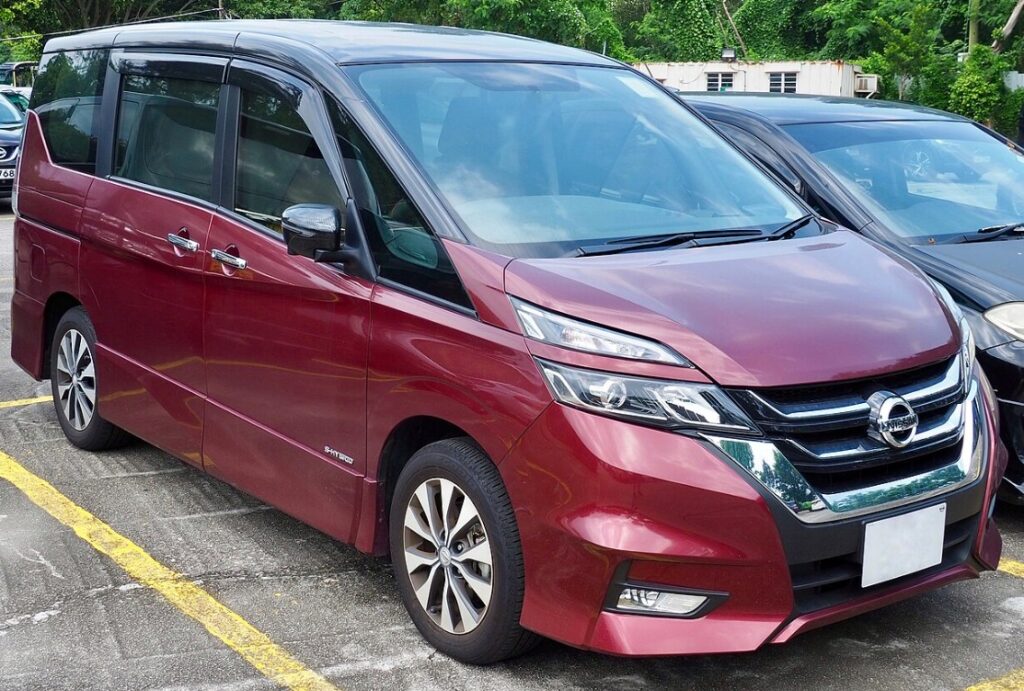
The Nissan Serena Hybrid can feel slightly confusing at first. We see the word “hybrid,” notice a gasoline engine under the hood, and naturally assume it works like a Toyota Prius or another conventional hybrid vehicle.
However, that assumption may be wrong.
Depending on the Serena’s model year and specification, it may use either Nissan’s earlier S-HYBRID mild-hybrid system or the more advanced e-POWER series-hybrid system. Although both systems combine gasoline and electrical components, they operate in very different ways.
In a Serena e-POWER, the gasoline engine does not normally drive the wheels directly. Instead, it acts primarily as an onboard electricity generator. The electric motor supplies the driving force, giving the minivan smooth, immediate acceleration similar to that of a battery-electric vehicle. Nissan officially describes e-POWER as a series-hybrid system in which the wheels are driven exclusively by a high-output electric motor.
The Serena S-HYBRID is simpler. Its gasoline engine remains the main source of propulsion, while a small electric motor assists during certain situations, supports engine restarting, and recovers energy during deceleration.
So, how does the Nissan Serena Hybrid work in everyday driving? Let us open the mechanical curtain and look behind the scenes.
Content in this publication
- What Does “Nissan Serena Hybrid” Actually Mean?
- How Does the Nissan Serena e-POWER Hybrid Work?
- Does the Nissan Serena e-POWER Need Plugging In?
- What Happens When You Start the Serena e-POWER?
- How Does the Serena Hybrid Accelerate?
- What Happens at Cruising Speed?
- How Regenerative Braking Works
- What Is e-Pedal or One-Pedal-Style Driving?
- Why Does the Engine Sometimes Sound Unrelated to Speed?
- How the Nissan Serena S-HYBRID Works
- Serena e-POWER vs S-HYBRID: The Key Difference
- How to Identify Which Serena Hybrid You Have
- Does the Serena Hybrid Run Without Gasoline?
- Does the Serena Hybrid Charge Itself?
- Why the Serena Hybrid Works Well in City Traffic
- How Does It Perform on the Highway?
- What Happens When Climbing Hills?
- What Happens When Driving Downhill?
- Why the Engine May Run When the Battery Looks Charged
- How Quiet Is the Nissan Serena e-POWER?
- What Are Charge Mode and Manner Mode?
- Does the Serena Hybrid Have a Normal Transmission?
- Is Nissan e-POWER the Same as a Conventional Hybrid?
- Is the Serena e-POWER a Range-Extended Electric Vehicle?
- What Maintenance Does a Serena Hybrid Need?
- What Happens If the Hybrid Battery Fails?
- How Long Does the Hybrid Battery Last?
- Advantages of the Nissan Serena e-POWER System
- Potential Disadvantages
- How to Drive a Serena Hybrid Efficiently
- Is the Nissan Serena Hybrid Good for Families?
- Conclusion: How Nissan Serena Hybrid Works
- Frequently Asked Questions
What Does “Nissan Serena Hybrid” Actually Mean?
The term “Nissan Serena Hybrid” can refer to more than one powertrain.
That distinction matters because the driving experience, battery function, fuel-saving strategy, and mechanical layout depend on which system the vehicle uses.
The two major Serena hybrid configurations are:
- Serena S-HYBRID: A mild-hybrid system in which the gasoline engine drives the vehicle and receives limited electrical assistance.
- Serena e-POWER: A series-hybrid system in which an electric motor drives the wheels while the gasoline engine generates electricity.
Think of the S-HYBRID as a conventional gasoline Serena wearing a small electrical backpack. The e-POWER model is closer to an electric vehicle carrying its own portable generator.
Both seek to reduce fuel consumption, but they take very different roads to reach that destination.
How Does the Nissan Serena e-POWER Hybrid Work?
The Nissan Serena e-POWER uses a gasoline engine, generator, inverter, lithium-ion battery, and electric traction motor.
However, the electric motor is the star of the show.
When we press the accelerator, electrical energy flows to the traction motor. The motor turns the drive wheels and moves the Serena forward. The gasoline engine operates when electricity must be generated, but it is not mechanically connected to the wheels in the same way as an ordinary gasoline drivetrain.
Nissan explains that e-POWER vehicles are entirely motor-driven, while the gasoline engine generates electricity for the battery and motor.
The basic energy path looks like this:
Gasoline tank → Engine → Generator → Inverter and battery → Electric motor → Wheels
That layout is why the Serena e-POWER can accelerate like an electric vehicle without needing routine external charging.
The Electric Motor Drives the Wheels
In a traditional gasoline Serena, the engine sends mechanical power through a transmission and onward to the wheels.
In the Serena e-POWER, the traction motor directly supplies the wheel-driving force. When the driver requests more acceleration, the power-control system tells the inverter and motor to increase torque. Nissan describes this process as the electric motor spinning up and directly accelerating the vehicle.
This produces several noticeable characteristics:
- Fast response when the accelerator is pressed
- Strong torque from low speeds
- Smooth acceleration without conventional gear changes
- Reduced hesitation in urban traffic
- A driving sensation closer to an electric car
The motor does not need to wait for an engine to reach a particular speed before producing useful torque. It responds almost immediately, which can make a large family minivan feel surprisingly eager around town.
The Gasoline Engine Generates Electricity
The gasoline engine in an e-POWER Serena functions mainly as an electricity producer.
It turns a generator, which converts mechanical energy into electrical energy. That electricity can then be sent toward the traction motor, stored temporarily in the battery, or divided between both destinations according to current driving needs.
The engine may start when:
- The battery’s charge level drops
- The driver demands strong acceleration
- The vehicle is climbing a hill
- Electrical consumption increases
- The control system identifies an efficient opportunity to generate power
- Heating or other operating conditions require engine activity
The clever part is that engine operation does not always mirror the exact movement of the vehicle.
In an ordinary car, engine speed usually rises as we accelerate. In an e-POWER Serena, the engine may run at a speed selected for efficient electricity generation rather than matching road speed directly.
That can initially feel unusual. We may hear the engine working while the vehicle maintains a steady pace, or notice it switching off while the Serena continues moving electrically.
Nothing mysterious is happening. The powertrain is simply managing energy behind the scenes.
What Does the Battery Do?
The battery in the Serena e-POWER is smaller than the enormous battery found in a fully electric vehicle.
Its job is not usually to provide hundreds of kilometres of electric-only range. Instead, it works as an energy buffer.
Imagine a small water reservoir between a pump and a garden hose. The engine-generator is the pump, the battery is the reservoir, and the electric motor is the hose delivering power to the wheels.
The battery can:
- Store energy produced by the engine-generator
- Supply electricity during acceleration
- Capture energy recovered while slowing down
- Allow brief periods of engine-off driving
- Smooth fluctuations between generation and motor demand
- Help the engine operate more efficiently
Because the battery continuously receives energy from the onboard generator and regenerative braking, the Serena e-POWER does not depend on a charging cable for normal use.
Does the Nissan Serena e-POWER Need Plugging In?
No. A standard Serena e-POWER is not a plug-in hybrid.
We fill its fuel tank with gasoline, and the onboard engine generates electricity as required. Regenerative braking also returns some energy to the battery during deceleration.
Nissan describes e-POWER as offering electric-motor driving without relying on external charging infrastructure because the gasoline engine produces electricity onboard.
That makes the system attractive for drivers who want an EV-like experience but cannot conveniently install a home charger.
Still, e-POWER is not the same as a full electric vehicle. It continues to consume gasoline and produce exhaust emissions whenever the engine operates.
What Happens When You Start the Serena e-POWER?
Pressing the start button activates the electrical powertrain, but the gasoline engine may not start immediately.
If the battery has enough energy and operating conditions allow it, the Serena may become ready to drive while remaining almost silent.
The process typically unfolds like this:
- The driver presses the brake pedal and start button.
- The vehicle’s control systems perform their checks.
- The dashboard indicates that the vehicle is ready.
- Electrical energy becomes available to the traction motor.
- The engine starts only when the system decides electricity generation is needed.
This behaviour can surprise drivers accustomed to listening for engine noise as proof that a car has started.
In the e-POWER Serena, the instrument display matters more than the sound under the hood. If the vehicle shows its ready indicator, it can move even when the engine is silent.
How Does the Serena Hybrid Accelerate?
During gentle acceleration, the battery may provide much of the electricity required by the motor.
The traction motor then turns the wheels smoothly and quietly. If the driver presses harder, the system may start the gasoline engine and increase electricity generation.
During stronger acceleration:
- The accelerator pedal sends a demand signal.
- The inverter controls electricity flowing to the motor.
- The motor produces immediate torque.
- The battery supplies stored energy.
- The engine-generator may contribute additional electricity.
- The control system balances all available energy sources.
Because the wheels remain motor-driven in an e-POWER model, the response feels direct. We do not experience the same sequence of engine revs, transmission shifts, and delayed wheel torque found in many conventional vehicles.
It feels less like climbing a staircase and more like riding an escalator.
What Happens at Cruising Speed?
At a steady cruising speed, the Serena’s power demand becomes more predictable.
The control system may run the engine at an efficient operating point, generate enough electricity for propulsion, and store surplus power in the battery. When sufficient energy is available, the engine may switch off temporarily.
The exact pattern changes constantly based on:
- Vehicle speed
- Battery charge
- Road gradient
- Cabin heating or cooling demand
- Passenger and cargo load
- Driving mode
- Accelerator position
- Outside temperature
This means two identical journeys may produce slightly different engine behaviour.
The system is not following a rigid on-or-off script. It is more like a conductor managing several musicians, bringing each component into the performance when it contributes most effectively.
How Regenerative Braking Works
When a normal vehicle slows down, its brakes convert motion into heat. That energy then disappears into the surrounding air.
The Serena e-POWER can recover part of that motion through regenerative braking.
When we release the accelerator or apply the brake, the traction motor can operate as a generator. Instead of using electricity to turn the wheels, the rotating wheels turn the motor. The motor then produces electricity and sends it toward the battery.
The energy flow reverses:
Wheels → Electric motor acting as generator → Inverter → Battery
Regenerative braking can:
- Recharge the battery slightly
- Reduce wasted energy
- assist conventional friction brakes
- Improve efficiency in stop-and-go traffic
- Provide stronger deceleration when using suitable drive modes
It does not recover every drop of energy. Electrical resistance, mechanical friction, battery limitations, and conversion losses still exist. Physics always takes its share.
Nevertheless, repeatedly recovering small amounts of energy can make a meaningful difference during urban driving.
Does Regenerative Braking Replace the Brakes?
No.
The Serena still uses conventional friction brakes. Regenerative braking supports them but does not eliminate them.
During gentle deceleration, the electric motor may perform much of the slowing. During harder braking, low-speed manoeuvres, emergencies, slippery conditions, or situations where the battery cannot accept additional energy, the friction brakes play a greater role.
The transition is electronically managed so that regenerative and mechanical braking work together.
You may be interested in reading Renault Koleos Reliability: Is This SUV Built to Last?
What Is e-Pedal or One-Pedal-Style Driving?
Certain Nissan electrified vehicles use an accelerator-based driving function that increases deceleration when the driver lifts off the pedal.
Nissan’s e-Pedal concept allows acceleration and deceleration to be controlled largely through accelerator movement, although exact functionality can vary by model, market, generation, and selected mode.
In practical terms:
- Press the accelerator to move faster.
- Ease off slightly to reduce speed.
- Lift further to create stronger regenerative deceleration.
- Use the brake pedal whenever additional stopping force is required.
This can make congested roads less tiring because we move our foot between pedals less frequently.
However, drivers should not assume every Serena e-POWER will come to a complete stop solely through accelerator release. Behaviour varies, and the owner’s manual should always be treated as the final authority.
One of the most frequently misunderstood e-POWER characteristics is engine noise.
A driver may accelerate gently while hearing the engine run noticeably. At another moment, the Serena may move briskly with relatively little engine sound.
Why?
Because the engine is generating electricity rather than directly dictating wheel speed.
Its operating speed depends on electrical demand, battery charge, efficiency targets, temperature, and other conditions. The engine may also generate extra energy at a convenient moment so it can remain off later.
Nissan uses advanced control technology to manage engine operation and improve the quietness associated with electric-motor driving.
Therefore, occasional differences between engine sound and vehicle speed are generally a normal characteristic of a series hybrid.
How the Nissan Serena S-HYBRID Works
The Serena S-HYBRID is mechanically different from e-POWER.
Here, the gasoline engine remains responsible for driving the wheels. A compact electric motor and battery provide limited assistance, recover energy, support accessories during engine-off periods, and restart the engine smoothly after automatic stop-start operation.
Nissan describes the mild-hybrid system as capturing energy during deceleration, storing it in a battery, and reusing it during acceleration and idle-stop operation.
The S-HYBRID energy path is closer to this:
Gasoline engine → Transmission → Wheels
With electrical support:
Battery and small motor → Assistance, restarting and accessory support
The motor is a helper, not the main athlete.
What Does the S-HYBRID Motor Actually Do?
Depending on operating conditions, the small motor can:
- Recover energy while the vehicle slows
- Support engine restarting
- Supply limited assistance during acceleration
- Power certain electrical systems during idle stop
- Reduce the load placed on the gasoline engine
- Help extend engine-off time at traffic lights
The assistance is modest compared with a full hybrid or e-POWER system.
An S-HYBRID Serena generally cannot provide the same sustained electric-motor propulsion or EV-like response as an e-POWER version.
How S-HYBRID Regeneration Works
When the vehicle decelerates, the system recovers some kinetic energy and converts it into electricity.
That electricity is stored in the battery rather than wasted entirely as heat. The stored energy is later used for electrical assistance, accessories, or restarting the engine.
Nissan introduced the Serena S-HYBRID in Japan in 2012 as a compact hybrid arrangement designed to improve efficiency without sacrificing interior space.
That packaging advantage suited the Serena well because cabin space is one of the minivan’s main selling points.
Serena e-POWER vs S-HYBRID: The Key Difference
The easiest way to remember the distinction is simple:
In e-POWER, the Motor Drives
The electric traction motor drives the wheels. The gasoline engine generates electricity.
In S-HYBRID, the Engine Drives
The gasoline engine drives the wheels. The small motor only assists.
Quick Comparison
| Feature | Serena e-POWER | Serena S-HYBRID |
|---|---|---|
| Main wheel-driving source | Electric motor | Gasoline engine |
| Engine mechanically drives wheels | Generally no | Yes |
| Electric driving feel | Strong | Limited |
| External charging required | No | No |
| Battery size | Larger hybrid battery | Smaller support battery |
| Regenerative braking | Significant role | More limited role |
| Low-speed response | Immediate motor torque | Conventional engine response |
| Primary hybrid type | Series hybrid | Mild hybrid |
| Transmission feel | Smooth, EV-like | More conventional |
| Engine purpose | Generate electricity | Propel vehicle |
This distinction should be checked before buying a used Serena because sellers sometimes describe every electrified version simply as “hybrid.”
How to Identify Which Serena Hybrid You Have
The model badge is the first clue.
An e-POWER badge normally indicates the series-hybrid system. An S-HYBRID badge indicates the earlier mild-hybrid arrangement.
We can also check:
- Vehicle registration documents
- Chassis or model code
- Instrument-panel graphics
- Owner’s manual
- Engine-bay labels
- Battery and powertrain information
- Official Nissan specification records
- Auction sheets for imported vehicles
A driving test may reveal the difference as well. An e-POWER Serena usually moves with pronounced electric-motor smoothness, while an S-HYBRID behaves more like a regular gasoline minivan with stop-start assistance.
However, documentation is safer than guesswork.
Does the Serena Hybrid Run Without Gasoline?
An e-POWER Serena can travel briefly with its gasoline engine switched off if the battery has sufficient energy.
But it is not designed to operate indefinitely without fuel. Once the battery charge drops, the engine must generate more electricity. If the fuel tank is empty, normal continued operation will eventually become impossible.
The same principle applies even more strongly to S-HYBRID models, where the gasoline engine is the primary propulsion source.
Therefore, describing the Serena e-POWER as an electric vehicle can be misleading. It is electrically driven, but gasoline remains its principal onboard energy source.
Does the Serena Hybrid Charge Itself?
In everyday language, we could say that it “self-charges,” but that phrase deserves context.
The battery receives energy from:
- The gasoline engine and generator
- Regenerative braking
- Deceleration energy recovery
It does not create energy from nowhere.
Every unit of stored electricity ultimately comes from gasoline combustion or recovered vehicle motion. There are also conversion losses along the way.
A better description is that the system manages and replenishes its battery automatically without external plugging in.
Why the Serena Hybrid Works Well in City Traffic
Urban driving is where the e-POWER system often feels most natural.
City roads involve repeated acceleration, deceleration, and stopping. Electric motors handle these situations efficiently because they can deliver immediate torque and recover energy during slowing.
Benefits in town may include:
- Smooth departures from traffic lights
- Quiet low-speed movement
- Strong regenerative braking opportunities
- Reduced conventional brake use
- No manual charging routine
- Easier accelerator control in congestion
- Less transmission hesitation
A conventional gasoline engine dislikes constantly changing demands. It is like a long-distance runner forced to sprint, stop, turn around, and sprint again.
The e-POWER system inserts an electrical buffer between the engine and wheels, allowing each component to perform a more suitable job.
How Does It Perform on the Highway?
The Serena e-POWER remains smooth on faster roads, but the efficiency advantage over a conventional powertrain may narrow during sustained high-speed travel.
At a constant highway speed, a traditional engine can sometimes drive the wheels efficiently through a direct mechanical path. A series hybrid must convert gasoline energy into mechanical engine output, then electricity, then motor output.
Each conversion introduces some loss.
Nissan reduces this disadvantage through intelligent control, efficient engine operation, battery management, aerodynamics, and regenerative recovery. Even so, driving speed, wind, hills, passenger load, tyre pressure, and climate-control use can strongly affect consumption.
Highway drivers should expect:
- Smooth, uninterrupted acceleration
- Easy overtaking response
- Engine operation during prolonged power demand
- Less frequent regenerative recovery than in city traffic
- Higher consumption at very high speeds
- Possible engine noise on steep climbs
The Serena is a tall family minivan, not a low-slung aerodynamic hatchback. Pushing a large body through the air requires energy, regardless of how clever the hybrid system may be.
What Happens When Climbing Hills?
Hill climbing increases electricity demand.
The traction motor must produce more torque, so the battery may discharge more rapidly. The gasoline engine then starts or increases its generating output to support the motor.
During a long climb, we may hear sustained engine activity. This is not necessarily evidence that the system is struggling. The engine is producing the electricity required to maintain momentum.
Heavy loads can amplify this effect. A Serena carrying several passengers, luggage, and climate-control demand has more work to do than an empty vehicle.
Planning overtakes carefully and maintaining a steady accelerator position can help the powertrain operate smoothly.
What Happens When Driving Downhill?
On a descent, the system has an opportunity to recover energy.
Releasing the accelerator can create regenerative deceleration, converting some downhill motion into electricity. The battery’s charge level may rise as the vehicle descends.
However, the battery has a limited capacity. Once it reaches its permitted charge ceiling, regenerative braking may be reduced, and the vehicle may rely more heavily on friction brakes or other control strategies.
Drivers should still use appropriate braking techniques on long descents. Regeneration is helpful, but it should never replace safe speed management.
Why the Engine May Run When the Battery Looks Charged
Drivers sometimes wonder why the engine starts even though the battery display shows available charge.
You may be interested in readingRenault Koleos Reliability: Is This SUV Built to Last?You may be interested in reading
Renault Koleos Pros and Cons: An Honest Ownership GuideSeveral explanations are possible:
- The system is maintaining an efficient charge reserve.
- Cabin heat requires engine operation.
- The engine or emissions equipment needs warming.
- The battery is too cold or hot.
- The vehicle anticipates higher electricity demand.
- The displayed gauge does not represent the battery’s full technical range.
- The system is performing a protection or maintenance cycle.
- Electrical accessories are consuming significant power.
Hybrid control software protects the battery by keeping it within a restricted charge window. The display is a simplified driver tool, not a laboratory measurement of every cell.
How Quiet Is the Nissan Serena e-POWER?
At low speeds or during battery-powered movement, the Serena e-POWER can be remarkably quiet.
The absence of direct engine propulsion reduces vibration and creates a calmer cabin. This suits a family minivan, where passengers may be sleeping, talking, watching a screen, or attempting to preserve the fragile peace of a long journey.
Yet it is not silent at all times.
The gasoline engine will still be heard when generating electricity, especially during:
- Strong acceleration
- Hill climbing
- Low battery charge
- Cold starts
- High cabin-heating demand
- Heavy passenger or cargo loads
- Prolonged motorway driving
The character of the sound is simply different because engine speed is controlled around electricity generation rather than conventional gear selection.
What Are Charge Mode and Manner Mode?
Some Serena e-POWER generations offer specialised operating functions such as Charge Mode and Manner Mode.
Nissan’s technical literature notes that the Serena e-POWER introduced functions with these names.
Charge Mode
Charge Mode can command the engine to generate additional electricity and raise the battery’s charge level.
A driver might use it before entering a location where quieter engine-off operation is preferred.
Manner Mode
Manner Mode is intended to reduce or avoid engine operation for a limited period when conditions and battery charge allow.
It may be useful in quiet residential areas, enclosed parking locations, or situations where reduced engine noise is desirable.
These functions do not transform the Serena into a long-range battery EV. Their availability and behaviour depend on model year, market, battery condition, and operating circumstances.
Does the Serena Hybrid Have a Normal Transmission?
The answer depends on the hybrid version.
The S-HYBRID uses a more conventional engine-driven drivetrain because the gasoline engine must transfer mechanical power to the wheels.
The e-POWER system does not need a traditional multi-speed gearbox to combine engine speed with wheel speed in the usual manner. The electric motor can deliver torque across a broad operating range, creating smooth acceleration without noticeable conventional gear shifts.
This simpler driving sensation is one of e-POWER’s strongest qualities.
Still, the system contains reduction gears and other mechanical components. “No conventional shifting” does not mean “no gears at all.”
Is Nissan e-POWER the Same as a Conventional Hybrid?
No.
A conventional full hybrid commonly uses both the gasoline engine and electric motor to drive the wheels. Depending on the situation, either source may propel the vehicle alone or both may work together.
In Nissan’s e-POWER system, the wheels are driven by the electric motor, while the gasoline engine supplies generated electricity. Nissan explicitly contrasts e-POWER with parallel hybrids in which both the engine and motor can mechanically drive the wheels.
This difference affects:
- Acceleration feel
- Engine behaviour
- Transmission design
- Noise patterns
- Energy flow
- Regenerative braking
- Maintenance expectations
The Serena e-POWER is therefore not just another mild variation of a familiar hybrid. Its architecture genuinely changes how propulsion reaches the road.
Is the Serena e-POWER a Range-Extended Electric Vehicle?
Mechanically, it shares characteristics with a range-extended electric vehicle because the electric motor drives the wheels and an onboard combustion engine generates electricity.
However, terminology differs between manufacturers and markets.
The safest description is Nissan’s own: an electric-drive series hybrid or 100% motor-driven hybrid system.
Calling it a range extender may help explain the concept, but owners should not assume it has the same plug-in capability or large battery as some range-extended EVs.
What Maintenance Does a Serena Hybrid Need?
A Serena hybrid still requires routine servicing.
The e-POWER version uses a gasoline engine, engine oil, filters, coolant systems, brake components, tyres, and electrical hardware. The fact that the engine does not normally drive the wheels directly does not make it maintenance-free.
Typical service areas include:
- Engine oil and filter
- Engine air filter
- Cooling systems
- Brake fluid
- Brake pads and discs
- Tyres and alignment
- Auxiliary 12-volt battery
- Hybrid cooling components
- Electrical connectors and diagnostic systems
- Spark plugs
- Fuel-system components
- Cabin air filter
Regenerative braking may reduce friction-brake wear in some driving conditions, but brakes can also suffer from corrosion if they are used lightly. Regular inspection remains important.
Imported Serenas should be maintained according to the correct chassis code and powertrain specification, not merely by the model name.
What Happens If the Hybrid Battery Fails?
Hybrid battery problems can cause warning lights, reduced performance, restricted electric operation, difficulty starting, or an inability to drive normally.
The exact response depends on the failed component. A battery issue is not the same as an inverter, generator, motor, sensor, wiring, or 12-volt battery fault.
Before assuming the expensive traction battery has failed, technicians should check:
- Diagnostic trouble codes
- 12-volt battery voltage
- Battery cooling airflow
- Electrical connections
- Inverter operation
- Generator output
- Motor-control data
- Temperature sensors
- Individual battery-module balance
Hybrid systems are interconnected. One weak link can trigger warnings that appear to implicate the entire chain.
A qualified hybrid technician with Serena-specific diagnostic equipment is preferable to trial-and-error parts replacement.
How Long Does the Hybrid Battery Last?
There is no single lifespan that applies to every Serena.
Battery condition depends on:
- Age
- Mileage
- Climate
- Charging and discharging cycles
- Cooling-system condition
- Storage habits
- Driving environment
- Manufacturing variation
- Previous repairs
- Long periods of inactivity
A well-maintained battery may remain serviceable for many years, while another may deteriorate sooner due to heat, neglect, or cell imbalance.
When buying a used Serena e-POWER, a diagnostic battery-health check is more valuable than trusting mileage alone.
Advantages of the Nissan Serena e-POWER System
The system offers several practical strengths:
- Electric-motor propulsion without routine plug-in charging
- Immediate low-speed torque
- Smooth urban acceleration
- Reduced gear-shifting sensation
- Strong regenerative braking capability
- Quiet operation during engine-off periods
- Efficient energy management in stop-start traffic
- Spacious minivan packaging
- Familiar gasoline refuelling
- Comfortable family-oriented driving
For households without reliable charging access, e-POWER can feel like a bridge between conventional gasoline vehicles and full EVs.
Potential Disadvantages
No powertrain is magical.
Possible drawbacks include:
- Continued reliance on gasoline
- More complex electrical systems than a conventional car
- Potentially expensive hybrid-component repairs
- Engine noise that may not match vehicle speed
- Limited engine-off range
- Efficiency that depends heavily on driving conditions
- Fewer specialist technicians in some countries
- Difficulty sourcing imported-model parts
- No home-charging fuel savings
- Battery degradation with age
A used Serena’s condition, maintenance records, local parts support, and diagnostic accessibility may matter more than small differences in advertised fuel economy.
How to Drive a Serena Hybrid Efficiently
We do not need to creep painfully slowly to save fuel. Smoothness matters more.
Useful habits include:
- Accelerate progressively rather than flooring the pedal unnecessarily.
- Maintain a steady speed when possible.
- Look ahead and release the accelerator early.
- Use regenerative deceleration effectively.
- Avoid carrying unnecessary weight.
- Keep tyres at the recommended pressure.
- Reduce excessive high-speed driving.
- Use climate control sensibly.
- Avoid blocking battery-cooling vents.
- Keep the vehicle properly serviced.
The best hybrid driver behaves like someone carrying a full cup of coffee: deliberate, calm, and always thinking one movement ahead.
Is the Nissan Serena Hybrid Good for Families?
For many families, yes.
The Serena combines an adaptable cabin with smooth low-speed performance and convenient gasoline refuelling. The e-POWER system can make school runs, urban errands, and congested commutes feel less tiring.
Its electric motor also handles the weight of passengers gracefully when pulling away from a stop.
However, buyers should consider:
- Local hybrid-repair expertise
- Parts availability
- Battery condition
- Import history
- Vehicle mileage
- Accident repairs
- Rust
- Maintenance documentation
- Right-hand-drive suitability
- Insurance and registration requirements
A technically clever drivetrain cannot compensate for a neglected vehicle.
Conclusion: How Nissan Serena Hybrid Works
The Nissan Serena Hybrid does not have one universal operating system.
In the Serena S-HYBRID, the gasoline engine drives the wheels, while a small motor recovers energy, assists acceleration, supports idle-stop operation, and restarts the engine smoothly.
In the Serena e-POWER, the arrangement changes dramatically. The electric motor drives the wheels, while the gasoline engine works primarily as an onboard electricity generator. The battery stores energy from the generator and regenerative braking, then supplies the motor according to demand.
That is the heart of the system.
The Serena e-POWER feels like an electric minivan because its wheels are motor-driven, yet it refuels like a gasoline vehicle because it creates electricity onboard. It sits between two worlds, borrowing the smoothness of an EV and the convenience of a traditional fuel tank.
Once we understand that distinction, the technology stops looking like a maze of wires and begins to resemble a carefully organised relay race. The engine generates, the battery stores, the inverter controls, and the motor carries the Serena across the finish line.
Frequently Asked Questions
1. Does the Nissan Serena hybrid engine drive the wheels?
It depends on the version. In the Serena S-HYBRID, the gasoline engine drives the wheels. In the Serena e-POWER, the electric motor drives the wheels while the gasoline engine generates electricity.
2. Do you have to charge a Nissan Serena e-POWER?
No. The gasoline engine generates electricity onboard, and regenerative braking returns energy to the battery. A standard Serena e-POWER does not require external plug-in charging.
3. Can the Nissan Serena e-POWER drive with the engine off?
Yes, it can move for limited periods using electricity stored in the hybrid battery. However, the engine will restart whenever additional electricity, heat, or battery charging is required.
4. Is Nissan Serena e-POWER a full electric vehicle?
No. Its wheels are electrically driven, but the vehicle still uses a gasoline engine to produce electricity. It is classified as a series hybrid rather than a battery-electric vehicle.
5. What is the main difference between e-POWER and S-HYBRID?
The main difference is who drives the wheels. The e-POWER system uses an electric traction motor, while the S-HYBRID system relies mainly on the gasoline engine and uses a smaller motor for limited assistance.
You may be interested in readingRenault Koleos Reliability: Is This SUV Built to Last?You may be interested in reading
Renault Koleos Pros and Cons: An Honest Ownership GuideYou may be interested in reading
 Peugeot 206 Reliability: Is This Small French Car Still Worth Buying?
If you want to know other articles similar to How Nissan Serena Hybrid Works: A Complete Guide you can visit the category Blog.
BYD Shark 6 Reliability: How Dependable Is This Hybrid Ute?
BYD Shark 6 Insurance Cost: What Should You Expect?
Mitsubishi Pajero Sport Reliability: Is It a Dependable SUV?
Mitsubishi Pajero Sport Years to Avoid: A Used Buyer’s Guide
Is Infiniti QX60 Reliable? A Complete Reliability Guide
Peugeot RCZ Insurance Group: Complete UK Guide
Leave a Reply
More content of your interest