

Ford Taurus Gas Mileage: MPG by Year, Engine, and Trim

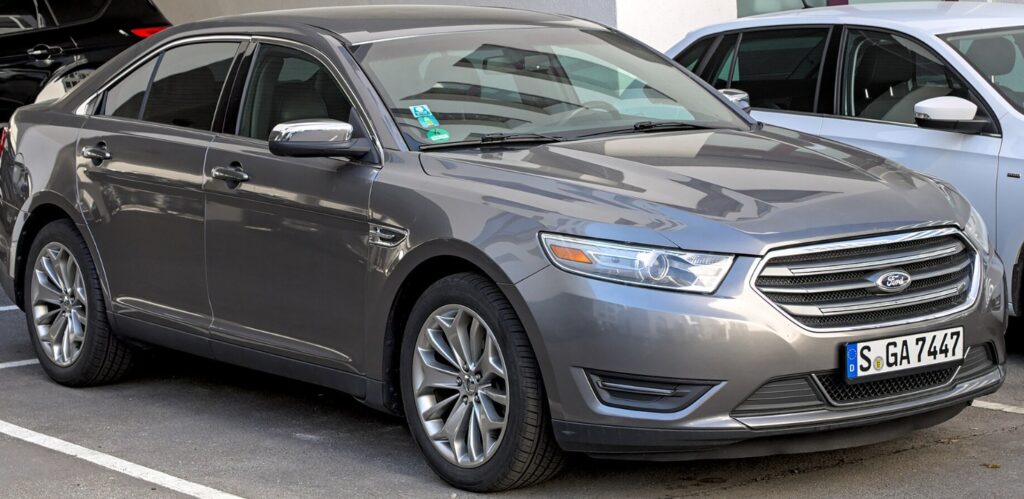
The Ford Taurus gas mileage story is more interesting than a single MPG figure suggests. Over its long production life, the Taurus evolved from a practical midsize family sedan into a large, comfortable cruiser with available all-wheel drive and, in SHO form, serious turbocharged power.
That evolution created a wide fuel-economy range. Some Taurus models can approach or exceed 30 mpg on the highway, while heavier all-wheel-drive versions and high-performance SHO models tend to stay closer to the low 20s—or below—in mixed driving.
So, how fuel-efficient is a Ford Taurus?
For most modern 2010–2019 models, we can expect approximately:
- 16–19 mpg in the city
- 24–29 mpg on the highway
- 19–23 mpg combined
The uncommon four-cylinder EcoBoost version can do even better, reaching an EPA-estimated 32 mpg on the highway. Meanwhile, the Taurus SHO sacrifices a little efficiency for its twin-turbo performance.
Let’s break down the numbers, explain why mileage varies so much, and look at what owners can realistically expect from a used Ford Taurus.
Content in this publication
- Ford Taurus Gas Mileage at a Glance
- Is the Ford Taurus Good on Gas?
- Ford Taurus MPG by Model Year
- Older Ford Taurus Gas Mileage
- Which Ford Taurus Gets the Best Gas Mileage?
- Ford Taurus SHO Gas Mileage
- Front-Wheel Drive vs. AWD Taurus MPG
- Ford Taurus Fuel Economy in L/100 km
- Real-World Ford Taurus Gas Mileage
- How to Calculate Ford Taurus MPG Correctly
- How Far Can a Ford Taurus Travel on One Tank?
- Does EcoBoost Improve Taurus Fuel Economy?
- How Driving Speed Changes Taurus MPG
- Does Cold Weather Reduce Ford Taurus MPG?
- How to Improve Ford Taurus Gas Mileage
- When Poor MPG Signals a Mechanical Problem
- Is a Ford Taurus Economical to Own?
- Best Ford Taurus for Fuel Economy
- Ford Taurus MPG Compared With Similar Cars
- Should You Buy a Ford Taurus for a Long Commute?
- Final Thoughts on Ford Taurus Gas Mileage
- Frequently Asked Questions
Ford Taurus Gas Mileage at a Glance
The final-generation Taurus was a large and relatively heavy sedan. It offered abundant passenger space, a quiet highway ride, and a substantial road presence, but it was never as light or economical as a compact commuter car.
Here is a practical overview of its fuel economy:
| Ford Taurus configuration | City MPG | Highway MPG | Combined MPG |
|---|---|---|---|
| 3.5L V6 with front-wheel drive | 18–19 | 26–29 | 21–23 |
| 3.5L V6 with all-wheel drive | 17–18 | 24–26 | 19–21 |
| 2.0L EcoBoost four-cylinder | Around 22 | Up to 32 | Around 26 |
| 3.5L EcoBoost Taurus SHO | 16–17 | 24–25 | 19–20 |
These figures vary by model year, drivetrain, wheel size, testing procedure, and equipment.
For example, the 2019 Taurus with the naturally aspirated 3.5-liter V6 was rated at 18 mpg city, 26 mpg highway, and 21 mpg combined with front-wheel drive. Comparable all-wheel-drive versions were rated at 17 city, 24 highway, and 19 combined, while the SHO returned approximately 16 city, 24 highway, and 19 combined.
Is the Ford Taurus Good on Gas?
The honest answer is: reasonable for its size, but not outstanding by modern standards.
The Taurus is a full-size sedan, particularly in its 2010–2019 form. It weighs considerably more than smaller cars such as the Ford Focus, Honda Civic, or Toyota Corolla. It also uses relatively large engines, and many examples come with all-wheel drive.
Against compact sedans, its mileage looks thirsty. Against large V6 sedans, crossovers, and older SUVs, it can look fairly respectable.
Think of the Taurus as a comfortable leather sofa on wheels. It is designed to carry passengers quietly and confidently, not sip fuel like a tiny hatchback.
A front-wheel-drive Taurus driven mainly on open highways may deliver acceptable fuel costs. A Taurus SHO used in stop-and-go traffic will be a completely different story.
Ford Taurus MPG by Model Year
Fuel economy changed across the Taurus lineup as Ford revised its engines, transmissions, aerodynamics, and available drivetrains.
2019 Ford Taurus Gas Mileage
The 2019 model was the final Taurus model year sold in the United States.
Its EPA estimates included:
- SE, SEL, or Limited FWD: 18 city/26 highway/21 combined mpg
- SEL or Limited AWD: 17 city/24 highway/19 combined mpg
- SHO AWD: 16 city/24 highway/19 combined mpg
These ratings show the effect of all-wheel drive clearly. Adding AWD generally costs around two highway mpg and approximately two combined mpg compared with the front-wheel-drive model.
For buyers seeking the best 2019 Ford Taurus gas mileage, a front-wheel-drive SE, SEL, or Limited is the logical choice.
2018 Ford Taurus Gas Mileage
The 2018 Taurus uses essentially the same core powertrain choices as the 2019 model, so its fuel economy is similar.
We can generally expect:
- Around 18 mpg city and 27 mpg highway from front-wheel-drive V6 versions
- Around 17 mpg city and 24 mpg highway with all-wheel drive
- Around 16 mpg city and 24 mpg highway from the SHO
Actual results depend heavily on traffic and average speed. On a calm interstate journey, a healthy front-wheel-drive Taurus may outperform its combined rating. During short urban trips, however, the trip computer can fall below 18 mpg surprisingly quickly.
2017 Ford Taurus Gas Mileage
The 2017 Taurus continued with the naturally aspirated 3.5-liter V6 as the mainstream engine and the twin-turbocharged EcoBoost V6 in the SHO.
Typical EPA figures remain within the same general range:
- FWD V6: low 20s combined
- AWD V6: around 20 mpg combined
- SHO: approximately 19–20 mpg combined
At this age, maintenance condition may matter as much as the original rating. Dirty filters, weak oxygen sensors, dragging brakes, low tire pressure, or old spark plugs can quietly eat away at efficiency.
2016 Ford Taurus Gas Mileage
The 2016 Taurus lineup offered an especially interesting choice: a 2.0-liter EcoBoost four-cylinder in addition to the V6 engines.
Ford’s Canadian literature listed highway fuel consumption as low as approximately 8.1 L/100 km for a properly equipped 2.0-liter model. That converts to roughly 29 mpg using the U.S. gallon calculation, although Canadian and U.S. rating procedures and advertised figures should not be compared as though they are identical.
The four-cylinder engine is rare on the used market, but it is worth investigating when fuel economy is a priority.
2015 Ford Taurus Gas Mileage
The 2015 Taurus offered:
- A 2.0-liter EcoBoost four-cylinder
- A naturally aspirated 3.5-liter V6
- A 3.5-liter twin-turbo EcoBoost V6 in the SHO
The 2.0-liter version provides the best official mileage, especially on the highway. The standard V6 offers a more traditional balance of smooth power, availability, and lower mechanical complexity.
The SHO sits at the opposite end of the spectrum. It offers effortless acceleration but invites heavier throttle use, which can turn an ordinary commute into a regular visit to the gas station.
2014 Ford Taurus Gas Mileage
A 2014 Taurus with the 2.0-liter EcoBoost engine can reach the mid-20s in combined driving under favorable conditions. Front-wheel-drive V6 models generally remain in the low 20s combined, while all-wheel drive reduces that result.
When comparing used examples, do not assume the smaller engine automatically guarantees lower running costs. Service history, purchase price, turbocharger condition, and annual mileage also matter.
2013 Ford Taurus Gas Mileage
The 2013 refresh brought revised styling, mechanical improvements, and the available 2.0-liter EcoBoost engine.
EPA figures for the regular V6 included approximately:
- 19 city/29 highway/23 combined mpg with front-wheel drive
- 18 city/26 highway/21 combined mpg with all-wheel drive
- 17 city/25 highway/20 combined mpg for the SHO
The 2.0-liter EcoBoost was EPA-certified at up to 32 mpg highway and 26 mpg combined, making it the efficiency champion of the modern Taurus family.
That highway number sounds impressive even now. Nevertheless, it assumes a specific configuration and standardized test conditions rather than crowded streets, winter idling, or aggressive acceleration.
2012 Ford Taurus Gas Mileage
Before the 2013 update, most Taurus buyers received the 3.5-liter V6.
A front-wheel-drive 2012 model generally delivers:
- High teens in urban driving
- Mid-to-upper 20s on the highway
- Around 21–22 mpg combined
All-wheel-drive and SHO versions use more fuel. The difference may seem small on paper, but it accumulates over thousands of miles.
2011 Ford Taurus Gas Mileage
The 2011 Taurus has mileage similar to the 2010 model because both share the same basic sixth-generation design.
The regular V6 provides acceptable highway economy but can feel thirsty in town. The SHO, with its twin-turbo engine and standard all-wheel drive, prioritizes acceleration and traction rather than maximum range from each gallon.
2010 Ford Taurus Gas Mileage
The redesigned 2010 Taurus marked a major change in size, styling, technology, and road presence.
EPA-rated figures included:
- SE FWD: 18 city/28 highway/22 combined mpg
- SEL or Limited FWD: approximately 18 city/27 highway/21 combined mpg
- AWD versions: approximately 17 city/25 highway/20 combined mpg
- SHO: approximately 17 city/25 highway/20 combined mpg
For such a large sedan, a 28-mpg highway figure was respectable at the time.
Older Ford Taurus Gas Mileage
Earlier Taurus generations were generally smaller and lighter than the final version, but they also used older engines and transmissions. As a result, newer does not always mean dramatically more efficient.
2000–2007 Ford Taurus MPG
Many Taurus models from this period use a 3.0-liter V6, available in different forms depending on the year and trim.
A healthy example may return approximately:
- 17–20 mpg in the city
- 24–28 mpg on the highway
- 20–23 mpg combined
Real-world mileage varies widely because these vehicles are now old enough for mechanical condition to dominate the equation.
A perfectly maintained 2005 Taurus on new tires may use less fuel than a neglected 2015 Taurus with a faulty sensor, poor alignment, and dragging rear brakes.
1996–1999 Ford Taurus MPG
The rounded third-generation Taurus came with multiple V6 engines, including regular models and the V8-powered SHO.
EPA figures for the 1997 lineup varied by configuration. Several standard models were rated around 19–21 mpg combined, while the SHO was rated at approximately 15 city, 24 highway, and 18 combined mpg.
The important lesson is simple: engine, transmission, and trim matter. Two Taurus sedans from the same year can have different fuel-consumption figures.
1986–1995 Ford Taurus MPG
First- and second-generation Taurus models were innovative family cars in their day. Their official mileage can look surprisingly decent, especially in highway driving, but direct comparisons with modern EPA figures are difficult.
The EPA changed its testing and adjustment methods over time. Consequently, an old window-sticker rating should not be treated as perfectly equivalent to a modern rating.
Age also changes everything. Fuel injectors, vacuum lines, ignition parts, transmission behavior, compression, and rolling resistance may no longer match factory-new conditions.
Which Ford Taurus Gets the Best Gas Mileage?
Among late-model U.S.-market versions, the 2.0-liter EcoBoost front-wheel-drive Taurus is the fuel-economy leader.
The 2013 version was rated at up to:
- 22 mpg city
- 32 mpg highway
- 26 mpg combined
That makes it significantly more efficient than the regular V6 and SHO versions, particularly during highway travel.
However, the four-cylinder Taurus was not the most popular configuration. Used-car shoppers may find far more examples with the 3.5-liter V6.
The best realistic combination of availability and efficiency is often a front-wheel-drive Taurus with the naturally aspirated 3.5-liter V6.
Ford Taurus SHO Gas Mileage
The Taurus SHO is the athlete of the family.
Its 3.5-liter twin-turbocharged EcoBoost V6 produces strong acceleration, while standard all-wheel drive helps transfer that power to the road. The downside is predictable: more fuel consumption.
Depending on the year, the SHO is generally rated around:
- 16–17 mpg city
- 24–25 mpg highway
- 19–20 mpg combined
Those numbers are not disastrous for a large, powerful AWD sedan. Still, they can deteriorate quickly when the turbochargers are frequently called into action.
Turbo boost is a little like opening a larger faucet. The power arrives rapidly, but so does the fuel.
The SHO can operate under manufacturer-specified fuel requirements, but fuel octane can affect performance in turbocharged engines. Owners should follow the fuel recommendation printed in the owner’s manual and near the fuel-filler area for their exact model year.
Premium fuel may help the engine deliver its intended performance under demanding conditions, but it does not automatically create a dramatic MPG improvement. The possible efficiency difference may be too small to recover the additional cost per gallon.
Why SHO Owners Often See Lower MPG
SHO fuel economy is affected by several built-in characteristics:
- Twin turbochargers
- All-wheel drive
- Heavy curb weight
- Wide performance-oriented tires
- Strong acceleration
- Higher cruising speeds
- Frequent use of boost
A carefully driven SHO can return decent highway mileage. A hard-driven SHO may spend most of its life in the mid-teens.
Front-Wheel Drive vs. AWD Taurus MPG
Choosing between front-wheel drive and all-wheel drive has a measurable effect on fuel consumption.
AWD models carry additional components, including a power transfer unit, driveshaft, rear differential, and related hardware. This creates additional weight and mechanical drag.
A comparable AWD Taurus commonly uses:
- About 1–2 mpg more in the city
- About 2 mpg more on the highway
- About 1–2 mpg more in combined driving
The gap is not enormous, but it matters for high-mileage drivers.
Suppose a front-wheel-drive Taurus averages 22 mpg while an AWD model averages 20 mpg. Over 15,000 miles, the FWD car would use about 682 gallons, while the AWD car would use 750 gallons. That is a difference of roughly 68 gallons per year.
AWD may still be worthwhile for drivers dealing with regular snow, ice, or slippery hills. For mild climates and mostly paved roads, front-wheel drive usually offers the better efficiency-value equation.
Ford Taurus Fuel Economy in L/100 km
Outside the United States, fuel consumption is frequently expressed in liters per 100 kilometers.
Lower L/100 km figures are better.
Approximate conversions include:
| MPG | Approximate L/100 km |
| 16 mpg | 14.7 L/100 km |
| 18 mpg | 13.1 L/100 km |
| 20 mpg | 11.8 L/100 km |
| 22 mpg | 10.7 L/100 km |
| 24 mpg | 9.8 L/100 km |
| 26 mpg | 9.0 L/100 km |
| 28 mpg | 8.4 L/100 km |
| 30 mpg | 7.8 L/100 km |
| 32 mpg | 7.4 L/100 km |
These conversions use U.S. gallons. Imperial MPG figures used in some countries are different because an Imperial gallon is larger than a U.S. gallon.
Real-World Ford Taurus Gas Mileage
EPA ratings are useful for comparison, but our daily driving rarely resembles a laboratory test.
A well-maintained late-model Taurus might realistically deliver:
- 14–18 mpg during short, congested urban trips
- 19–23 mpg in mixed driving
- 25–30 mpg on steady highway journeys
- Below 16 mpg with aggressive driving, severe cold, heavy idling, or mechanical problems
Some drivers exceed the official highway rating on long, flat trips. Others fall well below the city estimate because their car rarely reaches operating temperature.
Why Your Taurus MPG May Be Lower Than Expected
Poor mileage does not always mean the engine is failing. Often, several small factors combine like holes in a bucket.
Common causes include:
- Low tire pressure
- Winter fuel blends
- Cold weather
- Short journeys
- Extended idling
- Stop-and-go traffic
- Roof-mounted accessories
- Heavy cargo
- Aggressive acceleration
- High cruising speed
- Poor wheel alignment
- Old spark plugs
- Dirty engine air filter
- Worn oxygen sensors
- Faulty thermostat
- Dragging brake caliper
- Fuel injector problems
The dashboard MPG display can also be optimistic or pessimistic. Calculating mileage manually over several tanks gives us a more reliable picture.
How to Calculate Ford Taurus MPG Correctly
Use the full-tank method:
- Fill the fuel tank completely.
- Reset the trip odometer.
- Drive normally.
- Refill the tank at the same station or on a similarly level surface.
- Record the miles traveled.
- Record the gallons required to refill the tank.
- Divide miles traveled by gallons used.
The formula is:
Miles driven ÷ gallons used = MPG
For example:
330 miles ÷ 15 gallons = 22 mpg
One tank is not enough to establish a dependable average. Pump shutoff points, traffic, weather, and trip type can distort the result. We should calculate at least three consecutive tanks.
How Far Can a Ford Taurus Travel on One Tank?
Range depends on fuel-tank size, MPG, and how much reserve remains when the fuel light appears.
Many late-model Taurus versions have a relatively large fuel tank, supporting a theoretical highway range of more than 400 miles.
For example:
- At 18 mpg, 18 gallons provide 324 miles
- At 22 mpg, 18 gallons provide 396 miles
- At 26 mpg, 18 gallons provide 468 miles
- At 30 mpg, 18 gallons provide 540 miles
Real-world usable range is lower because drivers rarely consume every drop of fuel. Wind, hills, temperature, and speed also affect the final number.
A front-wheel-drive Taurus on a relaxed road trip can be an impressive long-distance machine. It settles into the highway like a train on rails, and the large tank reduces fuel stops.
Does EcoBoost Improve Taurus Fuel Economy?
EcoBoost does not mean one single thing.
The Taurus used two very different EcoBoost applications:
- A 2.0-liter turbocharged four-cylinder designed partly to reduce fuel use
- A 3.5-liter twin-turbo V6 in the SHO designed mainly to deliver performance
The smaller EcoBoost engine can offer genuinely better MPG, particularly at steady speeds. However, turbocharged engines are sensitive to driving style.
When driven gently, the engine behaves like a smaller powerplant. When the driver frequently demands boost, it consumes fuel like a much larger one.
This is why the phrase “EcoBoost mileage” can be misleading. We must ask which EcoBoost engine, in which Taurus, under what conditions?
How Driving Speed Changes Taurus MPG
Highway mileage is not fixed.
A Taurus may deliver excellent economy at 55–65 mph but noticeably worse fuel consumption at 75–85 mph. Aerodynamic resistance rises rapidly as speed increases, and the engine must work harder to push the car through the air.
The Taurus has a broad body and substantial frontal area. Although its shape is smoother than a truck or SUV, high speed still carries a fuel penalty.
For better highway economy:
- Keep speed steady
- Avoid unnecessary lane changes
- Accelerate gradually
- Use cruise control on suitable flat roads
- Leave enough following distance to avoid repeated braking
- Remove roof racks when they are not needed
The difference between calm and impatient driving can be several mpg.
Does Cold Weather Reduce Ford Taurus MPG?
Yes. Winter can substantially reduce fuel economy.
Cold temperatures cause:
- Longer engine warm-up times
- Thicker lubricants
- Lower tire pressure
- Increased aerodynamic drag
- Greater electrical demand
- More idling
- Reduced battery performance
- Lower efficiency during short trips
AWD may also engage more frequently on slippery roads, while winter tires can create additional rolling resistance.
A Taurus that averages 22 mpg in summer may fall into the high teens during a cold winter, especially when used for short urban journeys.
How to Improve Ford Taurus Gas Mileage
We cannot transform a Taurus into a hybrid, but we can help it perform closer to its potential.
1. Maintain Correct Tire Pressure
Underinflated tires increase rolling resistance. Check them when cold and follow the pressure label inside the driver’s door jamb—not the maximum figure printed on the tire sidewall.
2. Reduce Unnecessary Idling
A stationary car returns zero mpg. Modern engines generally do not need long warm-up periods before normal gentle driving.
3. Accelerate Smoothly
Heavy throttle opens the fuel taps. In EcoBoost models, aggressive acceleration also generates boost, increasing fuel demand.
4. Keep Speed Reasonable
The Taurus is comfortable enough to hide speed. That calm cabin can make 80 mph feel like 60 mph, but the fuel gauge knows the difference.
5. Remove Excess Weight
Do not use the trunk as permanent storage. Tools, equipment, sports gear, and other unnecessary cargo add weight on every journey.
6. Follow the Maintenance Schedule
Replace worn spark plugs, filters, and fluids at the correct intervals. Address check-engine lights promptly instead of hoping they disappear.
7. Check for Brake Drag
A sticking caliper can reduce mileage and create excessive heat. After a normal drive, one wheel that feels much hotter than the others may indicate a problem.
8. Combine Short Trips
Several cold starts consume more fuel than one longer journey. Combining errands helps the engine remain at an efficient operating temperature.
9. Use the Correct Motor Oil
Use the viscosity and specification Ford recommends for the exact engine and model year. Oil that is too thick may increase resistance and affect cold-start efficiency.
10. Measure Before Replacing Parts
Do not fire the parts cannon at poor MPG. Calculate several tanks, scan for diagnostic codes, inspect tire condition, and verify the thermostat is allowing the engine to reach proper temperature.
When Poor MPG Signals a Mechanical Problem
A sudden decrease deserves attention, particularly when it is accompanied by other symptoms.
Warning signs include:
- Check-engine light
- Rough idle
- Fuel smell
- Black exhaust smoke
- Hard starting
- Loss of power
- Unusually high idle speed
- Transmission slipping
- Engine running cold
- One wheel becoming extremely hot
- Strong vibration
- MPG dropping by 20% or more without a change in weather or driving
A failed thermostat is easy to overlook. If the engine remains cooler than intended, the computer may continue using a richer fuel mixture.
Likewise, an aging upstream oxygen sensor can provide inaccurate feedback without making the vehicle completely undrivable.
Check the Basics First
Before assuming the worst, verify:
- Tire pressures
- Air-filter condition
- Oil level and grade
- Diagnostic trouble codes
- Engine operating temperature
- Brake condition
- Alignment
- Fuel leaks
- Recent changes in driving patterns
Sometimes the “problem” is simply a new commute filled with traffic lights.
Is a Ford Taurus Economical to Own?
Fuel economy is only one part of ownership cost.
A Taurus may use more gas than a compact sedan, but used examples can be affordable to purchase. It also offers comfort, space, highway stability, and strong parts availability in many areas.
A cheap car with average mileage can cost less overall than an expensive hybrid, depending on:
- Purchase price
- Annual mileage
- Insurance
- Depreciation
- Maintenance
- Repair risk
- Local fuel prices
- Length of ownership
For someone driving 5,000 miles per year, the difference between 20 and 25 mpg may be manageable. For someone covering 25,000 miles annually, it becomes far more important.
Best Ford Taurus for Fuel Economy
Our first choice for maximum efficiency is the 2.0-liter EcoBoost front-wheel-drive Taurus, particularly from the 2013–2016 period.
It offers the strongest official highway mileage, but shoppers should confirm maintenance history and inspect the turbocharged engine carefully.
Our second choice is a front-wheel-drive Taurus with the naturally aspirated 3.5-liter V6. It uses more fuel but is easier to find and provides smooth, predictable performance.
For fuel-conscious shoppers, we would generally avoid:
- The Taurus SHO
- AWD unless genuinely needed
- Oversized aftermarket wheels
- Modified engines
- Cars with incomplete maintenance records
- Examples showing warning lights or abnormally low engine temperature
Ford Taurus MPG Compared With Similar Cars
The Taurus competes conceptually with large sedans such as the Chevrolet Impala, Toyota Avalon, Chrysler 300, and Buick LaCrosse.
Its mileage is broadly competitive with other older large V6 sedans, but newer four-cylinder and hybrid alternatives can use substantially less fuel.
The Taurus remains attractive when we value:
- A quiet ride
- Wide, supportive seats
- Confident highway manners
- Available AWD
- Strong SHO performance
- Traditional full-size sedan character
It is less compelling when our main objective is the lowest possible fuel bill.
Should You Buy a Ford Taurus for a Long Commute?
A front-wheel-drive Taurus can make sense for a highway-heavy commute. The cabin is comfortable, the ride is composed, and highway mileage is much better than city mileage.
Before buying, estimate fuel consumption using realistic—not ideal—figures.
For example, assume:
- 20 mpg for mixed driving in an AWD V6
- 22 mpg for mixed driving in a FWD V6
- 24–26 mpg for a gently driven 2.0L EcoBoost
- 18–19 mpg for a SHO in typical mixed use
A pre-purchase inspection is essential. The most fuel-efficient trim becomes irrelevant when deferred maintenance brings expensive repairs.
Final Thoughts on Ford Taurus Gas Mileage
The Ford Taurus gas mileage ranges from adequate to surprisingly good, depending on the engine and drivetrain.
A front-wheel-drive V6 model generally returns low-20s combined MPG and mid-to-upper-20s highway MPG. The rare 2.0-liter EcoBoost is the mileage champion, reaching up to an EPA-estimated 32 mpg highway. The Taurus SHO, meanwhile, trades efficiency for twin-turbo power and all-wheel-drive traction.
No Taurus will behave like a modern hybrid, but that is not its mission. This is a substantial sedan built for comfort, stability, and long-distance cruising.
Choose front-wheel drive, maintain the car properly, keep highway speeds reasonable, and avoid unnecessary idling. Do that, and a Taurus can deliver respectable mileage without losing the smooth, relaxed personality that makes it appealing in the first place.
Frequently Asked Questions
1. What is the average gas mileage of a Ford Taurus?
Most 2010–2019 Ford Taurus models return approximately 19–23 mpg combined. Front-wheel-drive versions are usually more efficient than all-wheel-drive models, while the Taurus SHO generally averages around 19–20 mpg according to official ratings.
2. Which Ford Taurus has the best MPG?
The front-wheel-drive Taurus with the 2.0-liter EcoBoost four-cylinder offers the best official fuel economy. The 2013 model was rated at up to 32 mpg highway and approximately 26 mpg combined.
3. How many miles can a Ford Taurus travel on a full tank?
Depending on the model, driving conditions, and tank capacity, a Taurus may travel roughly 330–500 miles per tank. Highway-driven front-wheel-drive models usually offer the longest range.
4. Why is my Ford Taurus getting bad gas mileage?
Common reasons include low tire pressure, short trips, cold weather, heavy traffic, excessive idling, aggressive driving, worn spark plugs, a faulty thermostat, aging oxygen sensors, poor alignment, or dragging brakes.
5. Does the Ford Taurus SHO use more gas?
Yes. The SHO uses a twin-turbocharged V6 and standard all-wheel drive, so it consumes more fuel than most regular Taurus trims. It is typically rated around 16–17 mpg city and 24–25 mpg highway, depending on the model year.
If you want to know other articles similar to Ford Taurus Gas Mileage: MPG by Year, Engine, and Trim you can visit the category Driving.
Mitsubishi Pajero Sport Fuel Consumption: What Should We Really Expect?
Peugeot RCZ MPG: Real-World Fuel Economy and Running Costs Explained

BMW i7 Range Miles: How Far Can This Luxury EV Really Go?

Infiniti QX60 Fuel Economy: MPG, Range and Real-World Guide

Land Rover Defender 90 MPG: Real-World Fuel Economy Explained

Toyota Hilux Long Range Fuel Tank: Complete Buyer’s Guide
Leave a Reply
More content of your interest