
Peugeot 206 vs Toyota Yaris: Which Used Car Is Better?

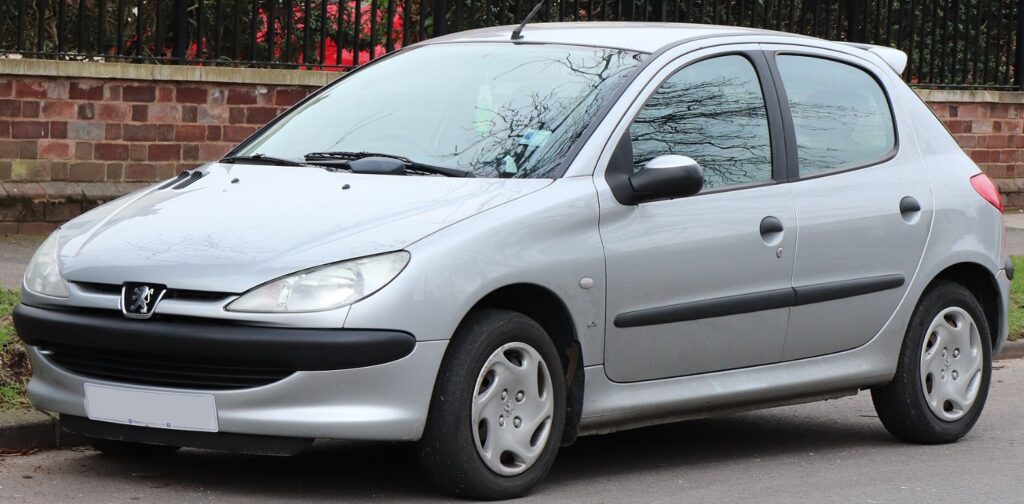
Choosing between the Peugeot 206 and Toyota Yaris can feel like comparing a stylish French café with a dependable Japanese convenience store. One charms us with personality, sharp handling, and distinctive design. The other quietly promises to open every morning, serve exactly what we need, and cause very little drama.
Both cars became familiar sights on roads around the world. The Peugeot 206 arrived in 1998 and developed into one of Peugeot’s biggest success stories, with more than eight million units produced across its long international lifespan. The first-generation Toyota Yaris appeared shortly afterward and built its reputation around clever packaging, economical engines, and straightforward everyday ownership.
But which one should we buy today?
The answer depends on what we value. The Peugeot 206 may appeal more to drivers who want style, responsive steering, and a lively personality. The Toyota Yaris is usually the stronger candidate when reliability, interior practicality, fuel economy, and low-stress ownership sit at the top of the list.
Let’s compare them properly.
Content in this publication
- Peugeot 206 vs Toyota Yaris at a Glance
- Understanding the Comparison
- Exterior Design: French Flair or Japanese Function?
- Interior Quality and Cabin Design
- Passenger Space and Comfort
- Boot Space and Everyday Practicality
- Engine Choices
- Performance and Acceleration
- Handling and Steering
- Ride Comfort
- Fuel Economy
- Reliability
- Maintenance and Repair Costs
- Manual vs Automatic Transmission
- Safety
- City Driving
- Highway Driving
- Ownership Personality
- Resale Value
- Which Car Is Better for a First-Time Driver?
- Which One Is Better for a Small Family?
- Common Used-Car Inspection Points
- Peugeot 206 vs Toyota Yaris: Pros and Cons
- Peugeot 206 vs Toyota Yaris: Which Is Cheaper to Own?
- Can the Peugeot 206 Be the Better Buy?
- Can the Toyota Yaris Be Boring but Brilliant?
- Final Verdict: Peugeot 206 or Toyota Yaris?
- Frequently Asked Questions
Peugeot 206 vs Toyota Yaris at a Glance
Before diving into the details, here is the central difference:
| Category | Peugeot 206 | Toyota Yaris |
|---|---|---|
| Overall personality | Stylish and sporty | Practical and dependable |
| Driving character | Agile and engaging | Light and easy |
| Interior space | Adequate for its size | Cleverly packaged |
| Reliability reputation | Mixed, condition-dependent | Generally strong |
| Maintenance | Affordable but sometimes frequent | Usually predictable |
| Fuel economy | Good with smaller engines | Often excellent |
| Ride comfort | Controlled but sometimes firm | Comfortable around town |
| Styling | Distinctive and youthful | Functional and friendly |
| Best for | Style-conscious drivers | Practical daily users |
| Used-car priority | Service history | Overall condition and history |
There is no universal winner in every category. Still, for most buyers seeking uncomplicated transportation, the Yaris holds an early advantage.
Understanding the Comparison
Which Generations Are We Comparing?
The Peugeot 206 was sold in many markets for an unusually long period. Depending on the country, buyers may encounter hatchbacks, sedans, station wagons, commercial versions, performance models, and the folding-roof 206 CC.
The Toyota Yaris also varies by region. It has been sold as a three-door or five-door hatchback, a sedan, and, in some markets, under related names such as the Toyota Vitz.
For the fairest comparison, we are mainly discussing:
- Peugeot 206 models from the late 1990s through the late 2000s
- First- and early second-generation Toyota Yaris models
- Common small petrol engines
- Manual and conventional automatic versions
- Ordinary hatchbacks rather than rare performance editions
Specifications can differ significantly by year, country, engine, transmission, and trim. That matters when checking insurance costs, safety equipment, fuel consumption, and replacement parts.
Exterior Design: French Flair or Japanese Function?
The Peugeot 206 Still Looks Stylish
The Peugeot 206 remains one of those old cars that does not immediately look ancient. Its swept-back headlights, curved roofline, compact proportions, and confident stance give it a surprisingly modern appearance.
Peugeot understood that an affordable small car did not need to resemble a household appliance. The 206 was shaped with emotion. Its styling feels fluid rather than boxy, almost as though the body had been carved by the wind instead of drawn with a ruler.
That design helped the model become one of the best-selling French cars ever. Peugeot itself highlights the 206’s daring appearance and dynamic road behavior as major reasons for its success.
Even an ordinary five-door model can look appealing with clean paintwork and sensible wheels. Sportier trims, especially those with color-coded bumpers and alloy wheels, still possess a touch of early-2000s charm.
The Toyota Yaris Prioritizes Practicality
The early Toyota Yaris takes a different approach. Its tall body, short overhangs, and upright cabin were designed to extract maximum usefulness from a small footprint.
It does not usually turn heads in the same way as the Peugeot. Its shape is cheerful, rounded, and practical rather than dramatic. Some drivers find it cute. Others see it as slightly awkward.
Yet its design makes sense the moment we sit inside. The high roof improves headroom. The compact exterior makes parking easy. Large windows help visibility. Short body dimensions allow the car to slip through congested streets like a shopping cart through a busy supermarket aisle.
Design Winner: Peugeot 206
For appearance alone, the Peugeot wins. The Toyota’s design is intelligent, but the Peugeot’s design has more personality.
Interior Quality and Cabin Design
Inside the Peugeot 206
The Peugeot 206 cabin generally feels low, intimate, and driver-focused. The dashboard curves toward the front occupants, while the seats place us relatively close to the road.
When the car was new, the interior looked modern and youthful. Today, its age becomes more obvious. Plastics may feel hard, trim pieces can loosen, and frequently touched surfaces may show wear.
The driving position is not perfect for everyone. Some drivers find the relationship between the seat, pedals, and steering wheel awkward. Taller drivers may struggle to find an ideal position, particularly in versions without extensive steering or seat adjustment.
Still, there is a pleasant simplicity to the cabin. Buttons are usually easy to understand, the instruments are readable, and many versions avoid the distracting screens that dominate newer cars.
Inside the Toyota Yaris
The Yaris cabin is often more practical than its exterior dimensions suggest. Toyota used a tall roofline, an upright seating position, and numerous storage areas to create a sense of space.
Certain early models have centrally mounted instruments. This arrangement can feel unusual at first because the speedometer is not directly in front of the driver. After a few journeys, however, many owners adapt without difficulty.
The dashboard may not feel luxurious, but it tends to be logically assembled. Cup holders, trays, door pockets, and movable or folding rear seats make everyday life easier.
The materials are generally durable rather than sophisticated. We are unlikely to stroke the dashboard admiringly, but it may survive years of use without demanding much attention.
Interior Winner: Toyota Yaris
The Yaris wins for practicality, storage, visibility, and effective use of space. The Peugeot offers more style, but the Toyota makes daily life easier.
Passenger Space and Comfort
Front-Seat Accommodation
Both cars can accommodate two adults comfortably in the front, but they create different sensations.
The Peugeot places us lower and makes the cabin feel more enclosed. Drivers who enjoy a conventional, slightly sporty position may prefer it. However, the limited adjustment in some versions can become tiring on long journeys.
The Toyota offers a higher seating position. Entry and exit feel easier, especially for older passengers or anyone with limited mobility. The upright design also provides a clearer view of surrounding traffic.
Rear-Seat Space
Neither vehicle is a limousine. These are small cars from an era before compact hatchbacks began growing into almost-family-sized vehicles.
The Peugeot’s rear seats are acceptable for children and occasional adult passengers. Legroom becomes tight when tall people occupy the front seats.
The Yaris generally uses its vertical space more effectively. Rear passengers often benefit from better headroom and a more open atmosphere. Some versions also offer a sliding rear bench, allowing owners to trade luggage space for passenger room.
Passenger-Space Winner: Toyota Yaris
The Toyota feels larger inside despite its compact dimensions.
Boot Space and Everyday Practicality
The Peugeot 206 hatchback provides a usable cargo area for grocery runs, small suitcases, and ordinary daily needs. Folding the rear seats increases capacity, although the resulting floor may not be completely flat.
The Yaris often delivers greater flexibility. Depending on the version, owners may be able to slide, fold, or tumble the rear seats. Its tall body allows awkward items to fit more easily.
The Peugeot 206 SW changes the equation. This estate version offers significantly more cargo versatility than the standard hatchback and may suit small families or owners who frequently transport equipment.
Likewise, Yaris sedan versions provide a separate trunk, although their opening may be less useful for bulky objects than a hatchback tailgate.
Which One Is Better for Shopping and Luggage?
For the standard hatchbacks, the Toyota usually has the advantage because of its more adaptable cabin.
The Peugeot remains perfectly usable, but its stylish shape does not exploit every centimeter as efficiently.
Practicality Winner: Toyota Yaris
Engine Choices
Peugeot 206 Engines
The Peugeot 206 was offered with a broad range of petrol and diesel engines. Common petrol choices include small 1.1-, 1.4-, and 1.6-liter units, while performance versions received larger and more powerful engines.
Diesel options became popular in markets where fuel prices and long-distance driving made them attractive. Late 206+ models in some European markets were available with 1.1- and 1.4-liter petrol engines, as well as a 1.4 HDi diesel.
The smaller petrol engines suit city driving but can feel strained when the vehicle is fully loaded or climbing steep roads. The 1.4-liter petrol is often a sensible middle ground. It provides better flexibility without dramatically increasing running costs.
The 1.6-liter versions offer stronger performance and make highway driving more relaxed, although fuel consumption may rise.
Toyota Yaris Engines
Early Toyota Yaris models commonly use 1.0-, 1.3-, or 1.5-liter petrol engines, depending on the market.
The 1.0-liter engine is designed for economy and urban use. It works well in congested streets but may need patience on faster roads.
The 1.3-liter engine is often the balanced choice. It remains economical while providing enough power for daily commuting and occasional highway travel.
The 1.5-liter engine delivers noticeably stronger performance. Toyota’s early Yaris T Sport, for example, used a 1.5-liter engine producing 105 bhp in UK specification.
Which Engine Range Is Better?
Peugeot offered greater variety, including several diesel and performance options. Toyota’s range is usually simpler but benefits from engines known for smooth operation and economical daily use.
For enthusiasts, the Peugeot catalogue is more interesting. For buyers who simply want a dependable petrol hatchback, the Yaris range is easier to navigate.
Performance and Acceleration
How the Peugeot 206 Feels
The Peugeot 206 often feels livelier than its power output suggests. Its responsive steering, relatively low weight, and agile chassis create a sense of energy.
Even modest engines can feel entertaining in urban traffic because the car changes direction eagerly. Faster versions add genuine performance, but the ordinary models remain more about momentum and handling than straight-line speed.
You may be interested in reading Ford Taurus vs Fusion: Which Ford Sedan Fits You Best?
The manual gearbox can feel light, although worn linkages may introduce looseness. Clutch condition is also important on older examples.
How the Toyota Yaris Feels
The Yaris focuses on easy progress. Steering is light, controls are generally simple, and the engines respond willingly around town.
Smaller engines may become noisy under hard acceleration. The car gets the job done, but it does not always make the journey feel like an event.
The 1.3- and 1.5-liter versions are more comfortable at highway speeds. Early official figures for certain 1.3-liter automatic models showed a 0–62 mph time of 13.1 seconds, demonstrating that economy rather than aggressive performance was the priority.
Performance Winner: Peugeot 206
The Yaris can be perfectly adequate, but the Peugeot generally feels more eager and engaging.
Handling and Steering
Peugeot 206: The More Entertaining Choice
Handling is one of the Peugeot’s strongest qualities. The steering communicates more of what the front wheels are doing, and the chassis feels alert.
On a winding road, the 206 can dance between bends like a much more expensive car. It feels compact, responsive, and willing to change direction.
However, condition matters enormously. Worn suspension components, poor-quality tires, damaged wheels, or incorrect alignment can transform a sharp little hatchback into a nervous and unpleasant machine.
The rear suspension deserves particular attention. Unusual rear-wheel angles, knocking sounds, or unstable handling may indicate wear that requires specialist repair.
Toyota Yaris: Safe and Predictable
The Toyota is generally easy to drive rather than exciting. Light steering helps with parking and low-speed maneuvering. The suspension provides predictable responses, and the car feels manageable for inexperienced drivers.
Push it hard, and it usually reveals less enthusiasm than the Peugeot. Body movement can be more noticeable, and the steering may provide less feedback.
Yet most owners are not hunting for mountain roads on the way to work. In normal use, the Yaris feels secure, friendly, and undemanding.
Handling Winner: Peugeot 206
Drivers who care about steering feel and cornering enjoyment will probably choose the Peugeot.
Ride Comfort
Ride quality depends on trim level, wheel size, tire choice, and suspension condition.
The Peugeot usually has a controlled ride, but sportier versions may feel firm on broken surfaces. Short, sharp bumps can enter the cabin more noticeably.
The Yaris tends to be comfortable around town, although its short wheelbase means deep potholes and rough roads can still disturb occupants. Its taller body may also produce more movement over undulating surfaces.
On poor urban roads, a basic Yaris with sensible tire sizes may be the more forgiving companion. On smoother roads, the Peugeot can feel more composed and connected.
Comfort Winner: Toyota Yaris
The Toyota narrowly wins for relaxed urban driving and easier access.
Fuel Economy
Fuel consumption varies according to engine, transmission, condition, traffic, terrain, tire pressure, and driving habits.
Peugeot 206 Fuel Economy
Smaller Peugeot petrol engines can be economical, especially during steady driving. The diesel versions may consume even less fuel, making them attractive to high-mileage users.
An official release for the late Peugeot 206+ quoted combined consumption of 4.0 liters per 100 kilometers for a specific 1.4 HDi diesel configuration. That figure comes from an official test cycle and should not be treated as a guarantee of real-world consumption.
A neglected diesel can also erase any savings through injector, turbocharger, emissions-system, or fuel-system repairs. Buying solely because the dashboard says “diesel” is never wise.
Toyota Yaris Fuel Economy
Fuel efficiency is one of the Yaris’s traditional strengths. Small petrol engines, moderate weight, and sensible gearing help control fuel costs.
Toyota quoted 42.8 mpg on the combined European cycle for one early 1.3-liter automatic Yaris version, equivalent to approximately 6.6 liters per 100 kilometers. Different engines and transmissions will produce different results.
In urban use, the smaller Yaris engines can be particularly economical when driven smoothly.
Fuel-Economy Winner: Toyota Yaris
The Peugeot diesel may beat some petrol Yaris versions on long journeys, but the Toyota petrol range usually offers the safer balance of economy and mechanical simplicity.
Reliability
Is the Peugeot 206 Reliable?
A well-maintained Peugeot 206 can provide years of useful service. The problem is that many surviving examples have passed through multiple owners, received inconsistent maintenance, or been repaired cheaply.
Potential trouble areas may include:
- Electrical switches and central locking
- Warning lights and sensor faults
- Cooling-system leaks
- Ignition components
- Worn suspension bushes
- Rear-axle wear
- Clutch and gearbox linkage wear
- Power-window mechanisms
- Interior trim deterioration
- Roof faults on neglected 206 CC models
This does not mean every Peugeot 206 will suffer every problem. It means pre-purchase inspection matters.
A cheap 206 with no service history can become expensive surprisingly quickly. A clean example maintained by a careful owner may be a completely different experience.
Is the Toyota Yaris Reliable?
The Toyota Yaris generally enjoys a stronger reliability reputation. Its petrol engines are often durable when serviced correctly, while its basic controls and mechanical systems tend to age well.
Still, a Toyota badge is not magical armor. Older Yaris models may suffer from:
- Worn clutches
- Noisy wheel bearings
- Suspension wear
- Exhaust corrosion
- Water leaks
- Aging batteries
- Faulty sensors
- Air-conditioning problems
- Automatic-transmission neglect
- Rust in harsh climates
The crucial difference is that serious, repeated faults appear less central to the Yaris ownership story. Owners are more likely to face ordinary age-related repairs rather than a procession of unpredictable electrical complaints.
Reliability Winner: Toyota Yaris
This is one of the clearest victories in the comparison.
Maintenance and Repair Costs
Maintaining a Peugeot 206
Peugeot 206 parts are widely available in many regions because the car sold in huge numbers. Routine items such as filters, brake pads, bulbs, belts, and suspension components are often inexpensive.
Labor costs depend on local knowledge. A mechanic familiar with older Peugeots may diagnose faults quickly. Someone unfamiliar with the model may replace several parts before identifying the real problem.
Timing-belt replacement is especially important on engines that use a belt. Buyers should request documented evidence rather than trusting a verbal promise.
The cooling system also deserves attention. A small leak, weak thermostat, damaged fan, or deteriorated hose can lead to overheating if ignored.
Maintaining a Toyota Yaris
Routine maintenance is typically straightforward. Oil changes, filters, brakes, spark plugs, and common suspension items are rarely exotic.
Toyota parts may cost more than the cheapest aftermarket Peugeot components in some countries. However, owners often recover that difference through fewer unexpected repairs.
The Yaris is also familiar to many independent mechanics. That broad mechanical knowledge can reduce diagnostic time and make ownership simpler.
Maintenance Winner: Toyota Yaris
The Peugeot may have cheap parts, but predictable maintenance is often more valuable than low individual component prices.
Manual vs Automatic Transmission
Peugeot Transmission Choices
The manual Peugeot 206 is usually the preferred option for simplicity and driver involvement. Gear selection should feel reasonably precise, and the clutch should engage smoothly.
Any crunching, slipping, excessive lever movement, or difficulty selecting reverse deserves investigation.
Automatic Peugeot versions require extra care. We should confirm that the transmission changes gears smoothly when cold and warm. Jerking, delayed engagement, flashing warning lights, or emergency-mode operation can indicate expensive trouble.
Toyota Transmission Choices
Manual Yaris models are generally simple and economical. As with any used vehicle, clutch wear depends heavily on previous driving habits.
Conventional automatic versions can be durable when maintained, but fluid condition and smooth operation should be checked.
Some generations and markets offered automated manual transmissions. These can feel hesitant or jerky even when functioning as intended, and repair costs may be less appealing than those of a basic manual.
Transmission Winner: Tie
A manual example of either car can make sense. When comparing automatics, the exact transmission type and service history matter more than the badge.
Safety
Safety equipment varies dramatically by year, trim, and country.
Some cars may have only a driver airbag, while later or higher-specification versions may include passenger airbags, side airbags, anti-lock brakes, and stability-related systems.
The Yaris often benefits from a taller structure and a reputation for sensible safety engineering, but we should never assume that every version contains identical equipment.
The Peugeot’s responsive handling can help drivers avoid trouble, but avoidance is not a replacement for structural protection or electronic safety systems.
You may be interested in readingFord Taurus vs Fusion: Which Ford Sedan Fits You Best?You may be interested in reading
Ford Taurus vs Chevy Impala: Which Sedan Wins?What Should We Check?
Before buying either model, confirm:
- The number and location of airbags
- Whether anti-lock brakes are fitted
- Whether warning lights illuminate and then switch off correctly
- The condition and age of the tires
- Whether seat belts retract and latch properly
- Whether the car has previous accident damage
- Whether stability control is fitted
- Whether any safety recalls remain unresolved
Safety Winner: Toyota Yaris
The Toyota receives a cautious advantage, particularly when comparing later or better-equipped versions. Actual specification remains essential.
City Driving
Both vehicles work well in urban environments.
The Peugeot feels compact and responsive. Its steering and dimensions help us place it accurately in traffic. Visibility is acceptable, although the lower seating position can make it feel more enclosed.
The Toyota’s higher driving position, large glass area, and light controls create a more relaxed city experience. Parking feels easy, and the cabin offers more convenient storage for phones, bottles, receipts, and other daily clutter.
City-Car Winner: Toyota Yaris
The Peugeot is more playful, but the Yaris is easier to live with.
Highway Driving
Neither car was primarily designed as a long-distance luxury cruiser.
The Peugeot may feel more planted and engaging at speed, particularly with a 1.4- or 1.6-liter engine. Smaller engines can become noisy when overtaking or climbing hills.
The Yaris is stable enough for highway use but may generate noticeable wind, engine, and tire noise. A 1.3- or 1.5-liter version is generally more suitable for frequent high-speed travel than the smallest engine.
Seats, tire condition, wheel alignment, and suspension health can influence long-distance comfort more than small differences between the models.
Highway Winner: Peugeot 206
With the right engine and good maintenance, the Peugeot can feel more composed and enjoyable on open roads.
Ownership Personality
Who Will Prefer the Peugeot 206?
The Peugeot may suit us when we value:
- Attractive styling
- Responsive steering
- European hatchback character
- A lower, sportier driving position
- Wide engine and body-style selection
- Affordable purchase prices
- A car that feels more emotional than ordinary
It is the choice for someone willing to tolerate a little unpredictability in exchange for charm.
Who Will Prefer the Toyota Yaris?
The Toyota may suit us when we prioritize:
- Dependable daily transportation
- Low fuel consumption
- Easy entry and exit
- Strong interior packaging
- Simple controls
- Predictable maintenance
- Solid resale demand
- Minimal ownership drama
It is the sensible shoe of small cars. It may not dominate a fashion show, but we can walk all day without thinking about it.
Resale Value
Used Toyota models frequently maintain strong demand because buyers associate the brand with reliability. A clean Yaris with documented maintenance may therefore command a higher price than an equivalent Peugeot.
The Peugeot 206 is often cheaper to purchase. That can create excellent value, especially when the car is structurally sound and mechanically healthy.
However, low purchase price should not distract us from repair costs. Spending less on the car and then replacing the rear axle, clutch, cooling-system components, and electrical parts is not a bargain.
Resale Winner: Toyota Yaris
The Toyota generally offers easier resale and stronger buyer confidence.
Which Car Is Better for a First-Time Driver?
The Yaris is usually the safer recommendation for a new driver. It is easy to maneuver, economical, practical, and generally forgiving.
The Peugeot can also be a good first car, particularly for someone who enjoys driving and has access to a trusted mechanic. Its controls are simple, its dimensions are manageable, and replacement parts are common in many markets.
Insurance prices could decide the matter. Engine size, trim, driver age, location, and claims history may produce major differences.
For most first-time buyers, the Yaris reduces uncertainty.
Which One Is Better for a Small Family?
The Toyota Yaris wins when comparing standard hatchbacks. Its higher roof, easier rear access, flexible seats, and cabin storage make family tasks less frustrating.
Parents installing child seats may appreciate the Toyota’s more upright rear doors and seating position.
The Peugeot 206 SW can be a strong exception. Its larger cargo area provides useful room for strollers, bags, and family equipment.
The 206 CC, despite having rear seats in some configurations, is not the practical family choice. Its rear accommodation and folding-roof mechanism prioritize style over utility.
Common Used-Car Inspection Points
What to Check on a Peugeot 206
Inspect the following areas carefully:
- Rear wheels for unusual inward lean
- Rear suspension for knocking noises
- Cooling system for leaks or staining
- Engine temperature during a long test drive
- Timing-belt replacement records
- Clutch operation
- Gearshift quality
- Electric windows
- Central locking
- Dashboard warning lights
- Power steering
- Interior water leaks
- Air-conditioning operation
- Roof function on 206 CC models
- Rust and accident repairs
What to Check on a Toyota Yaris
Pay attention to:
- Clutch bite and slipping
- Gearbox smoothness
- Automatic-transmission behavior
- Engine oil level
- Cooling-system condition
- Suspension knocks
- Wheel-bearing noise
- Exhaust corrosion
- Water entry around the cabin or trunk
- Air-conditioning performance
- Warning lights
- Tire wear
- Rust underneath the body
- Service records
- Evidence of accident damage
Never Skip a Cold Start
Ask the seller not to warm the engine before we arrive. A cold start can reveal rattles, smoke, weak batteries, rough idle, and delayed warning-light behavior that disappear once the engine heats up.
Peugeot 206 vs Toyota Yaris: Pros and Cons
Peugeot 206 Advantages
- More distinctive exterior design
- Engaging steering and handling
- Wide selection of engines and body styles
- Often inexpensive to purchase
- Strong parts availability in many countries
- More characterful driving experience
- Attractive sporty and convertible versions
Peugeot 206 Disadvantages
- Reliability depends heavily on maintenance
- Electrical faults can occur
- Rear-axle wear can be costly
- Driving position does not suit everyone
- Rear-seat space is limited
- Automatic versions require caution
- Neglected examples are common
Toyota Yaris Advantages
- Strong reliability reputation
- Excellent use of interior space
- Economical petrol engines
- Light and easy controls
- Good visibility
- Predictable ownership costs
- Strong resale demand
- Practical for city driving
Toyota Yaris Disadvantages
- Less engaging handling
- Interior materials can feel basic
- Small engines may be noisy
- Styling is not universally appealing
- Highway refinement is modest
- Well-kept examples may cost more
- Automated manual versions may feel awkward
Peugeot 206 vs Toyota Yaris: Which Is Cheaper to Own?
Purchase price and ownership cost are not the same thing.
A Peugeot 206 may cost less at the beginning. If it has been maintained correctly, it can remain affordable. Yet one poorly chosen example may require multiple repairs during the first year.
The Yaris may demand more money upfront, but its predictable maintenance and stronger resale value can lower long-term financial risk.
We should calculate ownership using:
- Purchase price
- Immediate repairs
- Insurance
- Registration and taxes
- Fuel consumption
- Scheduled servicing
- Tire replacement
- Timing-belt requirements
- Transmission maintenance
- Expected resale value
When all factors are considered, the Toyota usually offers the lower-risk financial proposition.
Can the Peugeot 206 Be the Better Buy?
Absolutely.
Suppose we find a one-owner Peugeot 206 with complete service records, recent timing-belt replacement, a healthy cooling system, clean suspension, and no electrical faults. Beside it sits a neglected Yaris with accident repairs, poor tires, low oil, and no maintenance history.
The Peugeot is the better car.
Model reputation matters, but individual condition matters more. A reliable model can become unreliable after years of abuse. A supposedly troublesome model can remain dependable when cared for properly.
We are buying a specific vehicle, not an internet stereotype.
Can the Toyota Yaris Be Boring but Brilliant?
Yes, and that may be its greatest strength.
A good Yaris often disappears into our routine. It starts, moves, parks, carries our belongings, and asks for ordinary servicing. It does not need to become the center of every conversation.
Some cars behave like demanding pets. The Yaris behaves more like a sturdy kitchen appliance: not thrilling, perhaps, but deeply appreciated when it works every day.
For commuters, students, small families, and budget-conscious owners, that quiet competence can be more valuable than style or steering feel.
Final Verdict: Peugeot 206 or Toyota Yaris?
The Toyota Yaris is the better overall choice for most used-car buyers.
It offers stronger reliability, smarter interior packaging, easier city driving, better resale prospects, and generally more predictable maintenance. When our goal is affordable transportation with minimal uncertainty, the Toyota makes a convincing case.
The Peugeot 206 remains the more emotional option. It looks better, handles with greater enthusiasm, and offers more body styles and personality. A carefully maintained example can be enjoyable, inexpensive, and surprisingly satisfying.
Our final recommendation is straightforward:
- Choose the Toyota Yaris for reliability, practicality, economy, and peace of mind.
- Choose the Peugeot 206 for styling, handling, character, and lower purchase prices.
- Choose the best-maintained individual car when condition and history differ significantly.
The badge gives us a clue. The inspection gives us the answer.
Frequently Asked Questions
1. Is a Peugeot 206 more reliable than a Toyota Yaris?
Generally, no. The Toyota Yaris usually has the stronger reliability reputation and tends to produce fewer unpredictable ownership problems. However, a well-maintained Peugeot can be more dependable than a neglected Toyota. Service history, mileage, previous repairs, and mechanical condition should guide the final decision.
2. Which is more fuel-efficient, the Peugeot 206 or Toyota Yaris?
The Toyota Yaris petrol range is usually the better all-around choice for economical daily driving. Certain Peugeot 206 diesel versions can deliver excellent long-distance fuel economy, but their age and mechanical complexity may introduce additional repair risks. Actual consumption depends on the engine, transmission, traffic, terrain, and driving style.
3. Is the Peugeot 206 more fun to drive than the Yaris?
Yes, in most comparable versions. The Peugeot generally offers more responsive steering, sharper handling, and a lower driving position. The Yaris feels lighter and easier in the city, but it does not usually provide the same sense of connection on winding roads.
4. Which car has more interior space?
The Toyota Yaris usually provides better passenger space and cabin flexibility. Its tall roof and upright seating position allow it to use its compact dimensions effectively. The Peugeot 206 SW may offer more cargo usefulness than a standard Yaris hatchback, but the regular 206 is less spacious inside.
You may be interested in readingFord Taurus vs Fusion: Which Ford Sedan Fits You Best?You may be interested in reading
Ford Taurus vs Chevy Impala: Which Sedan Wins?You may be interested in reading
Ford Taurus vs Chevy Malibu: Which Sedan Fits You Best?5. Which used car should a first-time buyer choose?
The Toyota Yaris is generally the stronger first-car choice because it is easy to drive, economical, practical, and relatively dependable. The Peugeot 206 can still be suitable when it has a complete maintenance history and passes a professional inspection. Insurance prices should also be compared before purchasing.
If you want to know other articles similar to Peugeot 206 vs Toyota Yaris: Which Used Car Is Better? you can visit the category Models.
BMW i7 vs Porsche Taycan: Luxury EVs With Very Different Personalities
BMW i7 vs 7 Series: Which BMW Flagship Makes More Sense?
BMW i7 vs Mercedes EQS: The Ultimate Luxury EV Comparison
BMW i7 vs M760e: Electric Luxury or Plug-In Hybrid Power?
NFINITI QX60 or Similar: Luxury SUVs Worth Comparing
Infiniti QX60 vs VW Atlas: Which Three-Row SUV Makes More Sense?
Leave a Reply
More content of your interest