

Ford Taurus vs Chevy Malibu: Which Sedan Fits You Best?

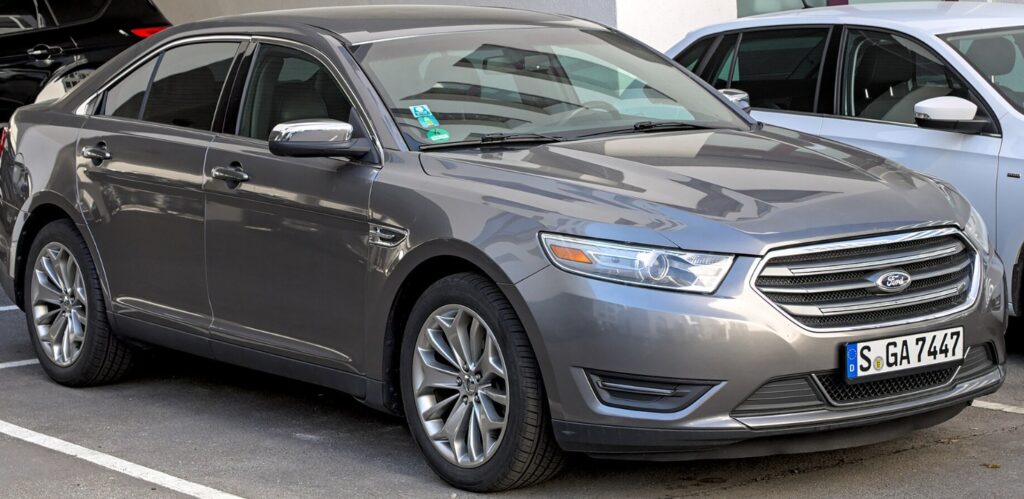
Comparing the Ford Taurus vs Chevy Malibu is not as straightforward as lining up two nearly identical family sedans. These cars wear American badges, seat five people, offer large trunks, and have spent decades carrying families, commuters, rental customers, and road-trip luggage. Yet they approach the sedan formula from noticeably different directions.
The Ford Taurus is the bigger, heavier, more substantial machine. It feels like a traditional full-size American sedan—a broad-shouldered cruiser built for long highways, roomy cabins, powerful V6 engines, and relaxed travel.
The Chevrolet Malibu is leaner and more economical. It belongs to the midsize class, where manageable dimensions, fuel efficiency, simple controls, and everyday practicality matter more than imposing road presence.
Think of the Taurus as a comfortable armchair on wheels. The Malibu is more like a lightweight office chair: less luxurious and commanding, perhaps, but easier to move, cheaper to operate, and better suited to daily routines.
So, which car deserves a place in our driveway? Let’s compare their dimensions, comfort, performance, fuel economy, reliability, technology, ownership costs, and used-car value.
Content in this publication
- Ford Taurus vs Chevy Malibu at a Glance
- A Brief Look at Their Histories
- Exterior Design: Muscular or Streamlined?
- Size and Dimensions
- Interior Space and Passenger Comfort
- Cargo Capacity and Practicality
- Engine Options and Performance
- Fuel Economy
- Ride Quality and Highway Comfort
- Handling and Steering
- Front-Wheel Drive vs All-Wheel Drive
- Technology and Infotainment
- Safety Features
- Reliability and Common Problems
- Maintenance and Repair Costs
- Used-Car Value and Availability
- Ford Taurus vs Chevy Malibu for Families
- Ford Taurus vs Chevy Malibu for Commuting
- Ford Taurus vs Chevy Malibu for Performance
- Which Sedan Has the Better Driving Personality?
- Pros and Cons of the Ford Taurus
- Pros and Cons of the Chevy Malibu
- Which Model Years Should We Compare?
- What to Inspect Before Buying Either Car
- Ford Taurus vs Chevy Malibu: Which One Should We Buy?
- Final Verdict: Ford Taurus or Chevy Malibu?
- Frequently Asked Questions
Ford Taurus vs Chevy Malibu at a Glance
Before we dig into the finer details, here is the central difference:
- Ford Taurus: Better for space, highway comfort, trunk capacity, available power, and all-wheel-drive capability.
- Chevy Malibu: Better for fuel economy, easy maneuverability, lower running costs, and modern everyday commuting.
- Taurus personality: Large, solid, calm, and powerful.
- Malibu personality: Light, efficient, practical, and uncomplicated.
- Best family cruiser: Ford Taurus.
- Best daily commuter: Chevy Malibu.
- Best performance model: Ford Taurus SHO.
- Best budget-friendly choice: Chevy Malibu.
- Best winter option: An all-wheel-drive Taurus.
- Best city option: Chevy Malibu.
There is one important point to remember: these cars do not occupy exactly the same segment. The Taurus is a full-size sedan, while the Malibu is a midsize sedan. Consequently, the Taurus is longer, wider, heavier, and generally more powerful.
Ford retired the North American Taurus after the 2019 model year. The final U.S.-market car measured approximately 202.9 inches long and offered about 20.1 cubic feet of trunk space. Chevrolet’s final Malibu generation was noticeably smaller; a 2024 model measured approximately 194.2 inches long and provided about 15.7 cubic feet of cargo capacity.
A Brief Look at Their Histories
The Ford Taurus Story
The Taurus has one of the most recognizable names in American automotive history. It arrived in the 1980s with a rounded, aerodynamic design that looked futuristic beside the boxy sedans of its era. Over multiple generations, it evolved from a mainstream family car into a large and increasingly upscale sedan.
By its final North American generation, the Taurus had become a substantial full-size car. It offered a commanding body, a large trunk, available all-wheel drive, and—in SHO form—a twin-turbocharged V6.
Ford officially retired the Taurus from its U.S. lineup in 2019, meaning buyers now encounter it exclusively on the used market.
The Chevrolet Malibu Story
The Malibu has roots stretching back to the 1960s. During its long life, it moved through several identities, including muscle-era versions, traditional rear-wheel-drive sedans, and modern front-wheel-drive family cars.
The latest generation focused heavily on efficiency and accessible transportation. It was lighter and more streamlined than the Taurus, offering turbocharged four-cylinder engines rather than large naturally aspirated V6 power as its mainstream formula.
General Motors ended Malibu production in November 2024 after nine generations and more than 10 million global sales. Therefore, like the Taurus, the Malibu now survives primarily as a used-car option, although leftover newer examples may occasionally appear in dealer inventory.
Exterior Design: Muscular or Streamlined?
Styling is subjective, but these sedans make very different first impressions.
Ford Taurus Exterior
The final-generation Taurus looks tall, wide, and planted. Its high beltline, broad grille, and thick body panels create a sense of mass. Even parked, it seems substantial—almost like a crossover that decided to stay low to the ground.
That size can be attractive to buyers who prefer a commanding vehicle. The Taurus appears formal and mature, particularly in Limited trim. The SHO adds sportier details, larger wheels, and a more aggressive stance without turning into a flashy performance car.
However, the bulky design also creates compromises. Rear visibility is not exceptional, and judging the corners can take practice. In tight parking structures, the Taurus feels every inch of its full-size footprint.
Chevy Malibu Exterior
The Malibu looks sleeker and lighter. Its sloping roofline, narrow headlights, and sculpted sides give it a more contemporary silhouette. It does not dominate a parking space like the Taurus, but that restraint is part of its appeal.
Where the Taurus resembles a heavyweight boxer in a tailored suit, the Malibu looks more like a middle-distance runner: leaner, cleaner, and prepared for everyday movement.
The Malibu is also easier to place on narrow streets. Its smaller dimensions make parking, turning, and navigating crowded urban areas less stressful.
Our Styling Verdict
Choose the Taurus when you want a larger, more imposing sedan. Choose the Malibu when you prefer a cleaner shape and more manageable exterior dimensions.
Size and Dimensions
The most obvious difference in the Ford Taurus vs Chevy Malibu comparison is physical size.
A 2019 Taurus is roughly nine inches longer than a 2024 Malibu. It is also wider and considerably heavier. The Taurus has a curb weight of about 3,917 pounds in a typical front-wheel-drive configuration, while a 2024 Malibu weighs around 3,135 pounds. That is a difference of nearly 800 pounds before accounting for variations in trim and equipment.
Why the Taurus Feels Larger
The Ford’s length and width create a broad cabin and enormous trunk. Drivers receive generous legroom, and passengers experience the reassuring sensation of being surrounded by a substantial vehicle.
Its size is particularly useful for:
- Long-distance highway travel
- Carrying bulky luggage
- Transporting adults regularly
- Drivers who prefer a heavier road feel
- Buyers moving down from an SUV
- Families that need maximum trunk volume
Why the Malibu’s Smaller Footprint Helps
The Chevy’s more compact body makes daily life easier. It requires less space for parking, changes direction more willingly, and generally feels less cumbersome.
Its dimensions suit:
- Urban commuting
- Apartment parking areas
- Narrow residential streets
- New or nervous drivers
- Smaller households
- Buyers prioritizing efficiency
Which One Is Easier to Drive?
The Malibu wins for ease of placement. It has a smaller turning circle and carries less mass. The Taurus is not difficult to drive, but it requires greater awareness in tight environments.
On an open highway, however, the Taurus turns its size into an advantage. It feels settled and composed, as though the road were rolling beneath it rather than pushing it around.
Interior Space and Passenger Comfort
Front-Seat Comfort
The Taurus provides a spacious driving position, but the experience is somewhat unusual. Its center console is wide and high, creating a cockpit-like feeling. Some drivers enjoy the enclosed design because it makes the car feel premium and secure. Others may wonder why such a large exterior does not produce an equally open cabin.
Front legroom is generous, and higher trims may include heated and ventilated seats, memory settings, power adjustments, and other upscale touches.
The Malibu’s cabin feels lighter and less enclosed. The dashboard is simpler, and the center console occupies less visual space. Taller drivers should still fit comfortably, though the materials and seat cushioning can feel less substantial than those in a well-equipped Taurus.
Rear-Seat Room
Both vehicles can carry five occupants, but neither transforms into a limousine simply because it has four doors.
The Taurus provides good width, making three-across seating more realistic. Yet its exterior size may create expectations that the rear legroom does not completely fulfill. Thick seats and bulky architecture consume some available space.
The Malibu uses its midsize proportions efficiently. Its rear seat is suitable for adults, children, and regular family use. The sloping roofline can slightly affect headroom for taller passengers, but overall accommodation remains competitive for the class.
Which Cabin Is More Comfortable?
For long journeys, the Taurus generally feels more relaxing. Its weight, available amenities, and broad seating create a traditional touring-car atmosphere.
For everyday use, the Malibu’s more open layout and straightforward controls may feel friendlier. It is less like entering a private lounge and more like stepping into a familiar, functional workspace.
Cargo Capacity and Practicality
Ford Taurus Trunk Space
The Taurus is the cargo champion. Its approximately 20.1-cubic-foot trunk is huge for a sedan. It can swallow several suitcases, groceries, sports equipment, or airport luggage without forcing us to play a frustrating game of trunk Tetris.
The drawback is that the trunk opening is not as expansive as a hatchback’s. The capacity is impressive, but awkwardly shaped objects may still be difficult to load.
Chevy Malibu Trunk Space
The Malibu offers approximately 15.7 cubic feet of cargo space in its later form. That is perfectly useful for a midsize sedan, though clearly smaller than the Taurus trunk.
It handles normal family errands without drama:
- Weekly groceries
- Carry-on luggage
- A folded stroller
- Work equipment
- School bags
- Small sporting items
Practicality Winner
The Taurus wins when cargo volume matters most. The Malibu wins when exterior manageability matters more than maximum storage.
Engine Options and Performance
This category reveals the biggest personality split.
Ford Taurus Powertrains
The final Taurus was commonly available with a 3.5-liter V6. Depending on model year and trim, buyers may also find a turbocharged four-cylinder EcoBoost engine or the performance-oriented twin-turbocharged V6 used in the SHO.
The standard V6 provides smooth, adequate acceleration. It is not shockingly fast, especially because the Taurus carries considerable weight, but it feels relaxed and appropriate for the car.
The SHO is the wild card.
You may be interested in reading What Year Ford Taurus Is Best? A Complete Used-Car Guide
Ford Taurus SHO
The Taurus SHO combines discreet styling with serious power. Its twin-turbocharged V6, all-wheel drive, and stronger acceleration make it the enthusiast’s choice in this comparison.
It is not a delicate sports sedan. It behaves more like a powerful locomotive wearing running shoes. There is significant mass to control, yet the engine delivers muscular passing power and effortless highway speed.
Drivers shopping for excitement should compare the Malibu against a standard Taurus separately from the SHO. The SHO is playing a different game.
Chevy Malibu Powertrains
Late-model Malibus commonly use a turbocharged four-cylinder engine. The final 2024 version relied on a 1.5-liter turbo engine producing 163 horsepower and 184 pound-feet of torque, paired with a continuously variable transmission and front-wheel drive.
Earlier examples may offer different combinations, including a stronger 2.0-liter turbocharged engine. Those 2.0-liter cars are significantly quicker and provide a more convincing response during highway merging.
The standard 1.5-liter Malibu is designed for economy rather than excitement. It accelerates adequately, but enthusiastic drivers may find it uninspiring.
Acceleration and Passing Power
The standard Taurus typically feels stronger and smoother than the base Malibu, especially at highway speeds. Its V6 does not need to work as hard to move the car once momentum builds.
The Malibu’s turbocharged engine supplies useful low-speed torque, but the transmission and modest output emphasize efficiency. It gets the job done without turning every entrance ramp into an event.
Performance Verdict
- Best basic engine refinement: Ford Taurus V6
- Best fuel-conscious powertrain: Chevy Malibu 1.5 turbo
- Best high-performance model: Ford Taurus SHO
- Best rare sleeper alternative: Chevy Malibu 2.0T
- Best highway passing power: Ford Taurus
- Best low-cost commuting: Chevy Malibu
Fuel Economy
The Malibu has a decisive advantage here.
Its smaller engine, lighter body, and efficiency-oriented transmission allow it to travel farther on less fuel. A later 1.5-liter Malibu is far better suited to drivers who spend every weekday commuting through traffic or covering long distances.
The Taurus carries more weight and generally uses larger engines. All-wheel-drive versions consume additional fuel, while the SHO’s twin-turbocharged V6 can become thirsty when driven enthusiastically.
Real-World Fuel Considerations
Official ratings are useful, but driving conditions matter enormously. Fuel consumption rises with:
- Heavy traffic
- Short journeys
- Cold weather
- Aggressive acceleration
- Underinflated tires
- Roof-mounted accessories
- Poor maintenance
- Extensive idling
Even so, the Malibu should remain the more economical car under comparable conditions.
Fuel Economy Winner
The Chevy Malibu wins comfortably. Anyone trying to minimize weekly fuel expenses should place it ahead of the Taurus.
Ride Quality and Highway Comfort
How the Taurus Rides
The Taurus feels most natural on broad roads. Its long body and substantial weight help it glide over highway surfaces with a reassuring sense of stability.
It is not always as soft as its size suggests. Large wheels and sport-oriented trims may transmit sharper bumps, but the overall experience remains calm and planted.
Wind noise and road noise vary with tires, condition, and trim, yet a well-maintained Taurus can be an excellent long-distance cruiser.
How the Malibu Rides
The Malibu also prioritizes comfort, but it feels lighter on its feet. It responds more quickly to steering inputs and deals with urban roads more naturally.
The ride is generally smooth, although rough pavement may reveal its lighter construction and simpler cabin insulation. It does not isolate occupants quite like a large sedan, but it provides a balanced compromise between comfort and control.
Long-Distance Winner
For highway journeys, we would choose the Taurus. It settles into the road like a large boat reaching calm water.
For mixed city and suburban driving, the Malibu’s lighter responses make it easier to live with.
Handling and Steering
Neither vehicle is primarily designed for drivers who spend weekends hunting twisting mountain roads. Still, they behave differently.
Taurus Handling
The Taurus feels stable but heavy. The steering is usually light enough for daily driving, while the body remains composed during gentle cornering.
Push harder, and its weight becomes obvious. The SHO offers stronger grip and more performance, but it cannot completely disguise the size of the platform.
Malibu Handling
The Malibu changes direction with less effort. Its lower weight makes it more agile and less reluctant in corners. Steering feedback is not especially rich, but the car feels predictable and manageable.
The Malibu is not a sports sedan, yet its lighter structure makes it seem more responsive during ordinary driving.
Handling Winner
The Malibu wins for agility. The Taurus wins for straight-line stability.
Front-Wheel Drive vs All-Wheel Drive
Most Malibu models are front-wheel drive. This layout is economical, space-efficient, and adequate for the majority of climates when paired with suitable tires.
The Taurus was available with all-wheel drive on selected versions, including the SHO. That option gives it an advantage in rain, snow, and slippery conditions.
However, all-wheel drive is not magic. It can improve acceleration and traction, but it does not shorten braking distances on ice. Proper winter tires remain critical.
Best Choice for Winter Conditions
An all-wheel-drive Taurus is the stronger winter configuration. A front-wheel-drive Malibu with high-quality winter tires can still perform well, but it lacks the Ford’s four-wheel traction.
Technology and Infotainment
Ford Taurus Technology
Depending on year and trim, the Taurus may include:
- Ford SYNC infotainment
- Touchscreen navigation
- Bluetooth connectivity
- Premium audio
- Heated and ventilated front seats
- Heated rear seats
- Adaptive cruise control
- Blind-spot monitoring
- Parking assistance
- Power-adjustable pedals
- Massaging front seats on selected trims
The equipment list can be impressive, especially in Limited and SHO versions. Yet older infotainment systems may feel dated beside newer interfaces.
Early versions of Ford’s touchscreen technology can also be slower and less intuitive than later SYNC systems. Buyers should test every feature before purchasing.
Chevy Malibu Technology
Later Malibus tend to provide a straightforward infotainment experience. Depending on trim and year, equipment may include:
- Touchscreen infotainment
- Apple CarPlay
- Android Auto
- Bluetooth
- Wi-Fi capability
- Remote start
- Heated seats
- Wireless phone charging
- Driver-assistance features
- Teen Driver settings
The Malibu’s technology may be less luxurious, but newer examples often integrate smartphones more conveniently.
Technology Winner
A newer Malibu wins for simple connectivity and modern phone integration. A high-trim Taurus wins for luxury-oriented comfort features.
Safety Features
Safety equipment varies significantly by model year and trim, so buyers must inspect the exact car rather than relying on the model name alone.
Possible Taurus features include blind-spot monitoring, rear cross-traffic alert, adaptive cruise control, parking sensors, lane-related assistance, and automated parking technology.
Possible Malibu features include forward-collision alerts, automatic emergency braking on selected models, lane-keeping assistance, blind-spot monitoring, rear cross-traffic alert, and a following-distance indicator.
Which One Feels Safer?
The Taurus feels physically substantial because of its weight and size. That subjective sense of security can be comforting, but size alone does not determine real-world safety.
A newer Malibu may include more current crash-avoidance technology than an older Taurus. Therefore, the safest purchase is usually the individual vehicle with:
- The strongest crash-test performance for its year
- The newest active-safety systems
- Good tires and brakes
- No structural accident damage
- Properly functioning airbags
- A documented maintenance history
Reliability and Common Problems
Reliability depends heavily on engine choice, model year, maintenance, mileage, previous ownership, and driving environment. Neither nameplate should be judged by one isolated owner story.
Potential Ford Taurus Problems
Used Taurus buyers should inspect for:
- Water-pump concerns on certain V6 engines
- Transmission hesitation or rough shifting
- All-wheel-drive system maintenance needs
- Suspension wear
- Steering issues
- Electrical accessory failures
- Infotainment problems
- Turbocharger or cooling-system concerns on neglected SHO models
- Uneven tire wear
- Oil or coolant leaks
The internal water-pump design used with some Ford V6 engines deserves particular attention. A failure can become expensive, especially when coolant contamination causes further engine damage.
That does not mean every Taurus will experience catastrophic trouble. It means service history matters, and suspicious coolant loss should never be ignored.
Potential Chevy Malibu Problems
Depending on generation and engine, Malibu buyers may encounter:
You may be interested in readingWhat Year Ford Taurus Is Best? A Complete Used-Car GuideYou may be interested in reading
Ford Taurus vs Toyota Avalon: Which Full-Size Sedan Wins?- Reduced-engine-power warnings
- Turbocharger-related faults
- Electronic throttle problems
- Transmission or CVT concerns
- Auto stop-start complaints
- Electrical glitches
- Battery drain
- Infotainment freezes
- Vacuum-pump issues
- Cooling-system leaks
- Suspension noises
- Sensor failures
Later 1.5-liter turbo models demand regular oil changes and correct fluids. Turbocharged engines can serve reliably, but neglected maintenance may turn a small economy engine into a large repair bill.
Which Is More Reliable?
There is no universal winner across every year.
A simple, well-maintained standard Taurus may outlast a neglected Malibu. A carefully serviced Malibu may cost far less to operate than an aging Taurus SHO with complex all-wheel-drive and turbocharged components.
As a general ownership proposition, the Malibu’s lower weight, smaller tires, and efficiency-focused design can reduce routine expenses. The Taurus may be durable, but major repairs can be more expensive.
Maintenance and Repair Costs
Ford Taurus Ownership Costs
The Taurus may require more money for:
- Fuel
- Larger tires
- V6 engine servicing
- All-wheel-drive maintenance
- Suspension components
- SHO-specific performance parts
- More complex repairs in tightly packaged engine areas
Its large body does not automatically make every repair expensive, but the combination of age, complexity, and declining parts demand can affect ownership.
Chevy Malibu Ownership Costs
The Malibu is generally more economical to run. Fuel bills are lower, tire sizes may be less costly, and routine service can be straightforward.
However, inexpensive operation depends on buying the right example. A turbocharged engine or CVT with a poor maintenance history can erase years of fuel savings in a single repair.
Ownership-Cost Winner
The Malibu usually wins, particularly for drivers covering high annual mileage.
Used-Car Value and Availability
Since both models are discontinued in North America, the comparison now revolves around the used market.
Why a Used Taurus Can Be Attractive
Large sedans often depreciate heavily because modern buyers prefer SUVs. That can make the Taurus an appealing value. We may find a spacious, powerful, well-equipped car for less money than a similarly luxurious crossover.
A Taurus Limited can offer features that would cost much more in a newer vehicle. The SHO can deliver serious performance at an accessible purchase price.
The danger is confusing a low purchase price with low total cost. An inexpensive SHO with deferred maintenance can quickly become costly.
Why a Used Malibu Can Be Attractive
The Malibu is widely available and often competitively priced. Fleet and rental use means buyers may see many examples on the market.
That abundance gives us negotiating power, but it also requires careful inspection. A former rental car is not automatically bad; some receive regular scheduled service. Still, high driver turnover can produce greater interior wear and less sympathetic treatment.
Which Offers Better Value?
The Taurus offers more car for the money in terms of size, power, and equipment.
The Malibu offers better value when fuel economy, newer model years, and lower everyday costs matter most.
Ford Taurus vs Chevy Malibu for Families
Families need more than a large back seat. We should consider car-seat access, trunk capacity, fuel expenses, safety equipment, and how easily the vehicle fits into daily life.
Choose the Taurus for Family Use When:
- You regularly carry large luggage loads.
- You take long highway trips.
- You need available all-wheel drive.
- Rear-seat width matters.
- You value a quiet, substantial ride.
- Fuel economy is not your primary concern.
Choose the Malibu for Family Use When:
- Most journeys happen in town.
- Fuel bills matter.
- Parking space is limited.
- You want a newer car for the same budget.
- Two adults and one or two children are the usual passengers.
- You prefer modern smartphone integration.
The Taurus is the better road-trip family sedan. The Malibu is often the more sensible weekday family car.
Ford Taurus vs Chevy Malibu for Commuting
For commuting, the Malibu makes a persuasive case.
It burns less fuel, occupies less space, and feels easier to maneuver. Drivers who spend hours in stop-and-go traffic may appreciate its light controls and smaller footprint.
The Taurus becomes more appealing when the commute consists mainly of high-speed highways. Its stable ride, comfortable seating, and available driver-assistance features can reduce fatigue.
Commuter Verdict
- Urban commuter: Chevy Malibu
- Long highway commuter: Ford Taurus
- Fuel-conscious commuter: Chevy Malibu
- Winter commuter: AWD Ford Taurus
- Performance-minded commuter: Ford Taurus SHO
Ford Taurus vs Chevy Malibu for Performance
There is little debate when the SHO enters the picture. It is faster, more powerful, and more capable of delivering effortless acceleration than the mainstream Malibu.
A Malibu with the optional 2.0-liter turbo engine can be surprisingly quick, though. It benefits from lower weight and may feel more energetic than its reserved styling suggests.
Still, the Taurus SHO provides a distinctive combination of all-wheel drive, twin-turbocharged power, and understated appearance.
The base Malibu and base Taurus are not true performance cars. The Taurus emphasizes smooth V6 power, while the Malibu emphasizes efficient turbocharged torque.
Which Sedan Has the Better Driving Personality?
This depends on what we expect from a sedan.
The Taurus encourages us to slow down, settle into the seat, and cover long distances. It feels deliberate. Inputs have weight, the body occupies space, and the powertrain rarely seems hurried.
The Malibu feels more casual. It asks less from the driver in tight areas and responds without the Taurus’s sense of mass. It is easier to jump into, run errands, park, and forget about.
One is a highway companion. The other is an everyday tool.
Neither philosophy is wrong.
Pros and Cons of the Ford Taurus
Ford Taurus Pros
- Spacious full-size body
- Huge trunk
- Smooth available V6 power
- Strong highway stability
- Available all-wheel drive
- Luxurious equipment on upper trims
- Powerful SHO model
- Substantial road presence
- Comfortable long-distance character
- Potentially excellent used-car value
Ford Taurus Cons
- Higher fuel consumption
- Large exterior dimensions
- Heavy handling
- Visibility can be limited
- Some repairs may be expensive
- Older infotainment on certain years
- Interior space is not as vast as the exterior suggests
- SHO models may be costly to maintain
- No newer North American models after 2019
Pros and Cons of the Chevy Malibu
Chevy Malibu Pros
- Better fuel economy
- Easier to park
- Lighter and more agile
- Straightforward controls
- Good midsize passenger space
- Widely available used
- Modern phone integration on later models
- Lower routine operating costs
- Comfortable ride
- Often newer than similarly priced Taurus examples
Chevy Malibu Cons
- Less trunk capacity
- Less powerful in standard form
- Front-wheel drive only in common configurations
- Cabin materials can feel basic
- Road noise may be more noticeable
- Base engine is not exciting
- Some turbocharged and transmission-related concerns
- Many used examples have fleet or rental histories
- Production ended in 2024
Which Model Years Should We Compare?
Because the Taurus and Malibu changed over time, model-year matching matters.
A fair comparison might include:
- 2013 Taurus vs 2013 Malibu
- 2016 Taurus vs 2016 Malibu
- 2018 Taurus vs 2018 Malibu
- 2019 Taurus vs 2019 Malibu
Comparing a 2019 Taurus with a 2024 Malibu can still be useful, but the result reflects a five-year technology and age difference.
A newer Malibu may offer fresher electronics, fewer years of corrosion exposure, and more modern connectivity. The Taurus may counter with greater power, cargo capacity, and premium features.
What to Inspect Before Buying Either Car
A professional pre-purchase inspection is worth the expense. Before purchasing, we should check:
- Cold-start behavior: Listen for rattles, knocking, or unusual ticking.
- Fluid condition: Inspect oil, coolant, brake fluid, and transmission fluid where serviceable.
- Cooling system: Look for leaks, dried coolant residue, or unexplained fluid loss.
- Transmission operation: Test for hesitation, slipping, shuddering, or harsh shifts.
- Turbo performance: On turbo models, watch for smoke, weak acceleration, or abnormal whining.
- Suspension: Listen for clunks over bumps and check for uneven tire wear.
- Electronics: Test every switch, camera, sensor, seat control, and infotainment function.
- Air conditioning: Confirm that it cools quickly and operates consistently.
- Accident history: Inspect panel gaps, paint differences, underbody damage, and airbag warnings.
- Service records: Prioritize documented maintenance over a suspiciously low asking price.
- Diagnostic scan: Check stored and pending fault codes.
- Tires and brakes: Large deferred expenses can change the real purchase price.
Ford Taurus vs Chevy Malibu: Which One Should We Buy?
The right answer becomes clearer when we match the vehicle to the driver.
Buy the Ford Taurus If You Want:
- A full-size sedan
- A large trunk
- Stronger highway performance
- Available all-wheel drive
- More luxury equipment
- A heavier, more substantial feel
- SHO performance
- A comfortable long-distance cruiser
Buy the Chevy Malibu If You Want:
- Better fuel economy
- Lower everyday costs
- Easier parking
- A newer used vehicle
- Modern smartphone connectivity
- A lighter driving experience
- A straightforward commuter
- Practical midsize dimensions
Final Verdict: Ford Taurus or Chevy Malibu?
The Ford Taurus vs Chevy Malibu debate is ultimately a choice between abundance and efficiency.
The Taurus gives us more metal, more trunk space, more available power, and more road presence. It is the stronger choice for highway travel, winter driving with all-wheel drive, large luggage loads, and buyers who miss the traditional American full-size sedan.
The Malibu gives us lower fuel consumption, easier maneuverability, newer technology in later models, and more sensible running costs. It is the smarter choice for commuting, city living, smaller families, and drivers who view a car primarily as reliable everyday transportation.
Our overall recommendation is simple:
Choose the Ford Taurus when comfort, space, power, and highway stability matter more than fuel economy. Choose the Chevy Malibu when affordability, efficiency, and everyday usability come first.
On paper, the Malibu is the rational decision for most commuters. In person, however, the Taurus may win drivers over with its size and relaxed confidence. Sometimes the practical shoe fits best. Sometimes we want the heavier boot.
The condition of the individual used car matters more than the badge on its trunk. A clean, documented Malibu is a better purchase than a neglected Taurus—and a carefully maintained Taurus is a better investment than a Malibu hiding years of abuse.
Frequently Asked Questions
1. Is the Ford Taurus bigger than the Chevy Malibu?
Yes. The Taurus is a full-size sedan, while the Malibu belongs to the midsize category. The final U.S.-market Taurus is longer, wider, heavier, and equipped with a substantially larger trunk than the later Malibu.
2. Which is more fuel-efficient, the Taurus or Malibu?
The Chevy Malibu is generally more fuel-efficient. Its lighter body and smaller turbocharged engine use less fuel than the Taurus’s heavier platform and V6 powertrains.
3. Is the Ford Taurus faster than the Chevy Malibu?
Most V6 Taurus models provide stronger performance than a standard 1.5-liter Malibu. The Taurus SHO is by far the fastest option in the comparison. A Malibu equipped with the less common 2.0-liter turbo engine can also deliver brisk acceleration.
You may be interested in readingWhat Year Ford Taurus Is Best? A Complete Used-Car GuideYou may be interested in reading
Ford Taurus vs Toyota Avalon: Which Full-Size Sedan Wins?You may be interested in reading
Ford Taurus vs Honda Accord: Which Used Sedan Is Better?4. Which is better for snow, the Ford Taurus or Chevy Malibu?
An all-wheel-drive Taurus is usually the better choice for snowy conditions, especially with proper winter tires. Most Malibus use front-wheel drive, which remains capable in moderate snow when fitted with suitable tires.
5. Which used car is cheaper to maintain?
The Malibu will usually cost less to fuel and maintain because it is lighter and more economical. Nevertheless, reliability depends on the exact model year, engine, service history, and condition. Buyers should inspect either vehicle professionally before purchase.
If you want to know other articles similar to Ford Taurus vs Chevy Malibu: Which Sedan Fits You Best? you can visit the category Models.
Honda Passport vs Toyota 4Runner: Which SUV Is Better?
Honda Passport vs Ford Bronco: Which SUV Is Better?
Honda Passport vs Ford Explorer: Which SUV Is Better?
Honda Passport or Pilot: Which SUV Is Better?
Honda Passport vs Jeep Grand Cherokee: Which SUV Is Better?
Honda Passport vs Nissan Pathfinder: Which SUV Is Better?
Leave a Reply
More content of your interest