
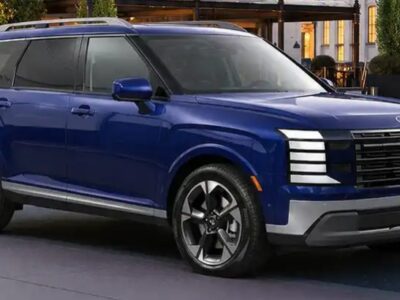
BMW M5 Touring MPG: Fuel Economy, Electric Range, and Real-World Efficiency

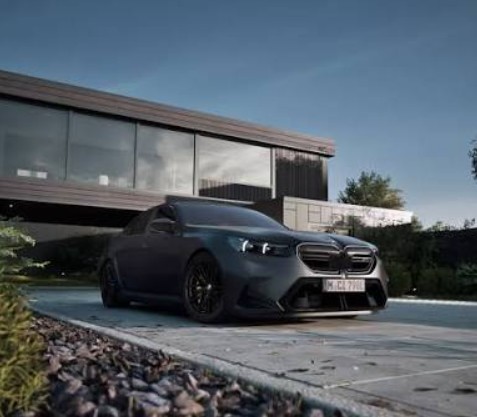
The BMW M5 Touring MPG story is far more interesting than a simple miles-per-gallon figure. This isn't an ordinary performance wagon with a thirsty V8 sitting under the hood. The latest G99-generation BMW M5 Touring combines a 4.4-liter twin-turbocharged V8 with an electric motor and a plug-in hybrid battery, creating a machine that can behave like two completely different cars.
One moment, we can glide quietly through town on electric power. The next, we have a 700-plus-horsepower performance wagon capable of accelerating with the urgency of a sports car.
Naturally, that raises a big question: How fuel-efficient is the BMW M5 Touring?
Official European testing gives the M5 Touring a weighted combined fuel consumption figure of 5.5 L/100 km, alongside an electric-energy consumption figure of 18.1 kWh/100 km. With its hybrid battery depleted, however, fuel consumption rises substantially to 11.0 L/100 km. BMW also quotes up to 60 km of electric range under WLTP testing.
Those figures tell us something important immediately: the M5 Touring's efficiency depends heavily on whether we actually charge it.
Let's dig into what those numbers mean, how they translate into MPG, what we can realistically expect in daily driving, and whether this monster wagon can genuinely be economical.
Content in this publication
- BMW M5 Touring MPG at a Glance
- What Is the Official BMW M5 Touring MPG?
- BMW M5 Touring MPG With a Depleted Battery
- How the BMW M5 Touring Plug-In Hybrid System Works
- BMW M5 Touring Electric Range
- Can You Drive the BMW M5 Touring Without Using Gas?
- Real-World BMW M5 Touring MPG
- Why Charging Matters So Much
- How Far Can an M5 Touring Go on a Tank?
- BMW M5 Touring MPG in City Driving
- BMW M5 Touring Highway MPG
- Does Driving Fast Destroy BMW M5 Touring MPG?
- How Weather Affects BMW M5 Touring MPG
- BMW M5 Touring MPG vs M5 Sedan
- BMW M5 Touring MPG vs Previous M5 Generations
- How Much Does It Cost to Fuel an M5 Touring?
- Is the BMW M5 Touring Economical for a Performance Car?
- Is the BMW M5 Touring Good for Long Trips?
- Should You Charge the M5 Touring Every Night?
- Who Will Get the Best BMW M5 Touring MPG?
- Who Will Get the Worst BMW M5 Touring MPG?
- Does the M5 Touring's Weight Hurt Fuel Economy?
- Why BMW Chose a Plug-In Hybrid M5
- Tips to Improve BMW M5 Touring MPG
- BMW M5 Touring MPG: The Number That Really Matters
- Conclusion: Is BMW M5 Touring MPG Actually Good?
- Frequently Asked Questions
BMW M5 Touring MPG at a Glance
Before we dive into the details, here are the key figures worth knowing.
| Specification | BMW M5 Touring |
|---|---|
| Powertrain | Plug-in hybrid |
| Engine | 4.4-liter twin-turbo V8 |
| System output | 717 hp U.S. specification |
| System torque | 738 lb-ft U.S. specification |
| Official weighted fuel economy | 5.5 L/100 km |
| Approx. UK MPG equivalent | 51.4 mpg |
| Approx. U.S. MPG equivalent | 42.8 mpg |
| Fuel use with depleted battery | 11.0 L/100 km |
| Approx. depleted-battery UK MPG | 25.7 mpg |
| Approx. depleted-battery U.S. MPG | 21.4 mpg |
| WLTP electric range | Up to 60 km / 37 miles |
| BMW USA estimated electric range | About 24 miles |
| Fuel tank | 15.6 U.S. gallons |
BMW USA currently lists the M5 Touring as a plug-in hybrid with 717 horsepower, 738 lb-ft of torque, all-wheel drive, and a 15.6-gallon fuel tank. Its technical page still shows the combined MPGe figure as TBD, while BMW estimates roughly 24 miles of U.S.-market electric range under ideal conditions.
That difference between European and American electric-range figures isn't unusual. WLTP and EPA-style testing use different cycles, so their results aren't directly interchangeable.
What Is the Official BMW M5 Touring MPG?
Here's where things become slightly confusing.
BMW's European specification lists 5.5 L/100 km weighted combined consumption. Converting that figure gives us approximately:
- 42.8 mpg U.S.
- 51.4 mpg UK
Sounds spectacular for a 700-plus-horsepower V8 wagon, doesn't it?
There is a catch.
That number comes from the official plug-in hybrid testing cycle. The test begins with usable battery charge, meaning a significant portion of the journey is completed electrically rather than by burning gasoline.
That's why treating 42.8 mpg as if it were the M5 Touring's ordinary gasoline economy would be misleading.
Why Plug-In Hybrid MPG Looks So High
Imagine commuting 20 miles to work.
If we start every morning with a fully charged M5 Touring and most of that trip happens electrically, we may barely use the V8 at all. Our gasoline consumption could look spectacular.
Now imagine driving 400 highway miles without stopping to recharge.
The electric battery can still assist the combustion engine, but once its initial plug-in charge has been consumed, the V8 shoulders far more of the workload. Suddenly, fuel economy looks very different.
That's why the 11.0 L/100 km depleted-battery figure may provide a more useful reference for long-distance gasoline consumption. BMW officially publishes both figures.
BMW M5 Touring MPG With a Depleted Battery
At 11.0 L/100 km, the M5 Touring works out to roughly:
21.4 MPG U.S.
For American drivers, this is probably the most useful gasoline-only comparison.
25.7 MPG UK
British drivers will naturally see a larger MPG number because an Imperial gallon is bigger than a U.S. gallon.
For something with this much performance, those figures aren't outrageous.
Remember what we're dealing with here. The current M5 Touring isn't merely a big estate car. It's a high-performance plug-in hybrid using a 4.4-liter V8, electric assistance, xDrive all-wheel drive, and a substantial battery.
BMW USA quotes a curb weight of 5,523 pounds.
Moving that much mass takes energy.
If someone expects Toyota Prius fuel consumption from a 717-horsepower M car, physics is going to spoil the party.
How the BMW M5 Touring Plug-In Hybrid System Works
The efficiency story makes much more sense once we understand the powertrain.
BMW combines its familiar high-performance 4.4-liter V8 with an electric motor integrated into the drivetrain. In U.S. specification, total system output reaches 717 horsepower and 738 lb-ft of torque.
The European BMW M specification uses metric horsepower and lists 727 hp and 1,000 Nm.
The electric motor isn't there simply to make the environmental numbers look prettier.
It also fills torque gaps, provides immediate response, assists the combustion engine, and lets the M5 travel meaningful distances without starting its V8.
Electric Power Changes the MPG Equation
Traditional performance cars have a simple relationship with fuel.
Drive gently, consume less.
Drive aggressively, consume much more.
A plug-in hybrid adds another variable: charging frequency.
If we plug the M5 Touring in every evening, our gasoline consumption may fall dramatically during daily commuting.
If we never charge it, we're essentially hauling around a large battery and electric drivetrain while relying mainly on a turbocharged V8.
That's a little like carrying an umbrella everywhere but refusing to open it when it rains.
BMW M5 Touring Electric Range
BMW lists a WLTP electric range of approximately 60 km, or roughly 37 miles, for the M5 Touring.
BMW USA quotes approximately 24 miles of electric range for the M5 Touring under its U.S.-market estimates, noting that real range varies with wheel and tire choice, driving style, temperature, traffic, accessories, and charging behavior.
Neither figure should be treated as a promise.
Weather matters.
Speed matters.
Heating and air conditioning matter.
Even wheel size matters.
But around 20-30 miles of practical electric driving can fundamentally change the ownership experience for someone whose daily routine consists of short journeys.
Can You Drive the BMW M5 Touring Without Using Gas?
For shorter trips, yes.
The M5 Touring includes an ELECTRIC mode that allows the car to prioritize battery power when sufficient charge is available. BMW also provides HYBRID and eCONTROL settings, while additional performance-oriented modes are available with M Drive Professional.
That means the absurdly powerful family wagon can quietly handle errands or a commute without waking its V8.
Think about how strange that would have sounded twenty years ago.
An M5 with a V8 that doesn't even need to start for the school run?
Yet here we are.
When the V8 Joins the Party
Push harder, exceed certain operating conditions, request maximum performance, or run down the usable electric charge, and the combustion engine becomes much more involved.
That's when the character of the car changes.
Instead of behaving like a heavy electric commuter, it becomes the machine the M badge promises: fast, aggressive, theatrical, and considerably thirstier.
Real-World BMW M5 Touring MPG
Real-world fuel economy is difficult to summarize with one number because two owners could use identical cars and obtain wildly different results.
Consider these scenarios.
Driver A: Short Daily Commute
Suppose we drive 15 miles per day and charge every night.
A large proportion of our mileage could happen electrically. Gasoline stops may become surprisingly infrequent, especially if longer journeys are rare.
Our displayed MPG could look almost comically high.
Driver B: Long Highway Commute
Now imagine covering 80 miles every weekday.
The first section could be electric, but most of the trip would eventually require gasoline.
Average fuel consumption would move much closer to the depleted-battery result.
Driver C: Performance Enthusiast
Then there's the person who bought an M5 Touring because 717 horsepower sounded like exactly the correct amount.
Frequent hard acceleration, Sport settings, mountain roads, and high speeds will quickly push consumption upward.
In that environment, forget the brochure MPG.
A V8 doesn't suddenly forget it's a V8 because someone attached a charging cable to it.
Why Charging Matters So Much
If we're buying a plug-in hybrid, charging isn't optional in the philosophical sense.
Technically, yes, the M5 Touring will function without regular external charging.
But efficiency suffers.
BMW itself recommends charging plug-in hybrids to maximize efficiency and performance.
That's the key to understanding the vehicle.
Charge Regularly and the M5 Makes Sense
With convenient home or workplace charging, the car can tackle frequent short journeys on electricity.
Gasoline then becomes something we primarily consume during longer drives or spirited driving.
Never Charge and the Equation Changes
Without regular charging, we lose one of the powertrain's biggest benefits.
You may be interested in reading Subaru Impreza Fuel Economy: MPG, Real-World Efficiency, and Driving Tips
We'll still have regenerative braking and hybrid assistance, but the spectacular official weighted consumption figure becomes largely irrelevant to everyday ownership.
If you're thinking of purchasing an M5 Touring but have nowhere practical to plug it in, keep that in mind.
How Far Can an M5 Touring Go on a Tank?
BMW USA lists a 15.6-gallon fuel tank.
If we use the approximate depleted-battery consumption equivalent of 21.4 mpg U.S., a simple theoretical calculation gives:
15.6 gallons × 21.4 mpg = about 334 miles
However, that's not a guaranteed real-world range.
No sensible driver deliberately empties every last drop from the tank, and consumption constantly changes.
Add a fully charged battery, though, and total travel distance between fuel stops can increase.
For everyday owners who recharge frequently, the more interesting statistic may actually be how many days—or even weeks—they can drive before visiting a fuel station.
BMW M5 Touring MPG in City Driving
City driving could be where the hybrid system shines brightest.
Traditional V8 performance cars generally hate stop-and-go traffic from an efficiency standpoint. Repeated acceleration consumes fuel, while idling wastes it.
Electric motors flip the script.
Low-speed urban driving suits electrification beautifully.
We can pull away electrically, recover energy through regenerative braking, and avoid running a large combustion engine unnecessarily.
If our daily journeys fit within the available electric range, city gasoline consumption can be extremely low.
Stop-and-Go Traffic Isn't Always the Enemy
In an ordinary V8 wagon, traffic jams are fuel-economy quicksand.
In a plug-in hybrid M5 with charge remaining, they're less frightening.
Regeneration can capture some energy while slowing down, and low-speed propulsion can rely heavily on the electric motor.
It's still a 5,500-pound performance wagon, of course. We're not rewriting the laws of thermodynamics.
We're simply using energy more intelligently.
BMW M5 Touring Highway MPG
Highways expose a different side of the M5.
Electric vehicles and plug-in hybrids typically lose some of their relative advantage when cruising continuously at higher speeds because aerodynamic drag becomes a major factor and opportunities for regenerative braking decline.
Once the initial battery charge is consumed, the combustion engine spends much more time working.
This is why long-distance drivers should pay close attention to BMW's 11.0 L/100 km depleted-battery figure rather than focusing solely on the weighted 5.5 L/100 km number.
Still, roughly 21 mpg U.S. from a gigantic high-performance wagon doesn't look terrible when viewed in context.
Does Driving Fast Destroy BMW M5 Touring MPG?
Yes.
No mystery there.
Power requires energy.
And the M5 Touring has an enormous appetite for power when we request it.
Every time we bury the accelerator, those turbochargers breathe deeply, the electric system contributes its torque, and the drivetrain attempts to launch more than two and a half tons of car toward the horizon.
That isn't an economical activity.
Think of the throttle like a tap.
A gentle touch produces a trickle.
Floor it, and we've opened a fire hydrant.
Driving Style Matters More Than You Might Expect
BMW notes that actual consumption and range depend on factors including driving style, route, weather, vehicle load, climate-control use, tires, and battery condition.
We can therefore improve efficiency considerably with simple habits:
- Accelerate progressively rather than violently.
- Use electric mode for shorter urban trips.
- Charge whenever practical.
- Maintain correct tire pressures.
- Avoid carrying unnecessary weight.
- Precondition while plugged in when appropriate.
- Anticipate traffic rather than repeatedly braking hard.
- Save the maximum-performance modes for occasions when we actually want them.
Naturally, the final suggestion may be the hardest one for M5 owners.
How Weather Affects BMW M5 Touring MPG
Plug-in hybrids are sensitive to temperature.
Cold weather can reduce battery efficiency and increase cabin-heating demand. BMW specifically notes that electric range varies with outside temperature and climate-control use.
Extremely low temperatures can also affect when fully electric operation becomes available. BMW says that below minus 10 degrees Celsius, pure-electric driving in its plug-in hybrids may only become available after the battery warms sufficiently.
Hot weather has its own penalties, particularly when air conditioning is working hard.
So if your M5 Touring achieves fewer electric miles in January than in mild spring weather, that doesn't necessarily indicate a problem.
BMW M5 Touring MPG vs M5 Sedan
Interestingly, the Touring is slightly less efficient than its sedan sibling under BMW's official European testing.
The M5 Sedan is rated at:
- 5.2 L/100 km weighted combined
- 10.7 L/100 km with depleted battery
- 62 km electric range
The M5 Touring is rated at:
- 5.5 L/100 km weighted combined
- 11.0 L/100 km with depleted battery
- 60 km electric range
The difference isn't dramatic.
And that's arguably impressive considering the Touring offers greater cargo flexibility and its distinctive wagon body.
Is the Sedan Worth Choosing Just for Fuel Economy?
Probably not.
If MPG is important enough that a difference of a few tenths of a liter per 100 km influences the decision, we're shopping at an unusually microscopic level.
The wagon-versus-sedan decision should probably come down to practicality and styling.
Personally, we'd choose the body style we actually want rather than sacrificing the Touring's extra versatility for a tiny efficiency advantage.
BMW M5 Touring MPG vs Previous M5 Generations
Comparing the latest M5 Touring with older M5s isn't straightforward because the new plug-in architecture fundamentally changes how fuel consumption is calculated.
Earlier M5 models relied entirely on gasoline.
The G99 can complete part of its daily mileage without burning gasoline at all.
That makes official MPG dramatically more favorable when the battery is regularly charged.
But if we compare gasoline consumption after the battery's plug-in energy has been depleted, the gap becomes far less extraordinary.
And that distinction matters.
A plug-in hybrid's efficiency isn't merely an attribute of the vehicle. It's partly an attribute of how its owner uses it.
How Much Does It Cost to Fuel an M5 Touring?
Fuel cost depends on three variables:
- Your local gasoline price.
- Your annual mileage.
- How often you charge.
Suppose gasoline costs $4 per gallon and we average 21 mpg while relying primarily on the combustion engine.
Driving 10,000 miles would require roughly:
10,000 ÷ 21 = 476 gallons
At $4 per gallon:
476 × $4 = approximately $1,904 per year
But if half of our journeys are completed electrically after inexpensive home charging, gasoline spending could fall considerably.
That's exactly why two M5 Touring owners can report very different annual fuel bills.
Is the BMW M5 Touring Economical for a Performance Car?
Yes—with context.
Calling an M5 Touring economical without qualification would sound ridiculous.
This is a luxury performance car producing more than 700 horsepower.
But compared with what such a vehicle would consume if it relied solely on a V8, the plug-in hybrid system can dramatically reduce gasoline usage during everyday driving.
The phrase we should remember is:
Efficient when used as designed.
Regularly charge it, use its electric range intelligently, and the M5 Touring can perform routine journeys with surprisingly little gasoline.
Never plug it in and repeatedly exploit the available performance?
Expect your fuel gauge to move like the second hand on a clock.
Is the BMW M5 Touring Good for Long Trips?
Very much so.
This is arguably where the Touring concept makes the most sense.
You may be interested in readingSubaru Impreza Fuel Economy: MPG, Real-World Efficiency, and Driving TipsYou may be interested in reading
Subaru Impreza Km Per Litre: Real-World Fuel Economy GuideBMW created the M5 Touring as a combination of high-performance capability, everyday usability, cargo space, and long-distance comfort.
You have:
- AWD traction
- enormous power
- a comfortable cabin
- Touring practicality
- gasoline refueling convenience
- short-distance electric operation
Unlike a pure EV, there's no need to structure every long trip around charging stops.
When the battery's initial electric range runs down, the gasoline engine simply keeps the journey moving.
The trade-off is obvious: long-distance fuel consumption will be considerably higher than the headline plug-in hybrid figure suggests.
Should You Charge the M5 Touring Every Night?
If it's convenient, absolutely.
Frequent charging gives us the best chance of maximizing the amount of driving completed electrically.
A Level 2 home charger is especially useful.
BMW USA lists an AC 0-100% charging time of approximately 1 hour 45 minutes in its technical specifications for the M5 Touring.
That means we don't necessarily need an overnight charging window anyway.
Plug the car in after arriving home and the battery can be replenished relatively quickly under suitable charging conditions.
What if You Can't Charge at Home?
The M5 Touring still works.
It's not going to leave us stranded because the plug-in battery isn't charged.
But the ownership proposition changes.
Someone with home charging can treat electricity as the primary fuel for short journeys.
Someone without reliable charging is more likely to use the car as a heavy V8 hybrid.
That second owner should budget accordingly.
Who Will Get the Best BMW M5 Touring MPG?
The ideal efficiency-focused M5 Touring owner probably has a routine something like this:
They Charge at Home
Starting with a full battery every morning is the biggest advantage.
Their Commute Is Relatively Short
A 10-20-mile commute allows substantial electric operation.
They Drive Longer Distances Occasionally
Weekend journeys can rely on the V8 once the battery has done its part.
They Don't Drive Everywhere Like It's Qualifying at Nürburgring
This one matters.
A lot.
The car's performance is addictive, but repeated full-power acceleration isn't compatible with maximizing MPG.
Who Will Get the Worst BMW M5 Touring MPG?
At the opposite extreme, expect high fuel consumption if you:
- Rarely charge the battery
- Make frequent highway journeys
- Drive aggressively
- Travel at high speeds
- Use performance modes extensively
- Carry heavy loads
- Drive in very cold conditions
- Frequently use maximum heating or cooling
Put all those factors together and the official weighted MPG figure becomes about as relevant as measuring a hurricane with a desk fan.
Does the M5 Touring's Weight Hurt Fuel Economy?
Definitely.
At roughly 5,523 pounds in U.S. specification, the M5 Touring is a very heavy car.
The battery, electric motor, combustion engine, AWD system, luxury equipment, sound insulation, and large body all contribute.
Electric torque masks the weight brilliantly during acceleration.
Physics doesn't forget about it during energy consumption.
Accelerating a heavy vehicle requires more energy, while tires and brakes also have more mass to manage.
Hybridization helps recover some energy during deceleration, but it cannot make weight disappear.
Why BMW Chose a Plug-In Hybrid M5
For enthusiasts, electrifying an icon like the M5 was always going to generate debate.
But the hybrid system gives BMW several advantages simultaneously.
We get enormous system power, instantaneous electric torque, quieter urban driving, reduced official emissions, usable zero-tailpipe-emission range, and the continued character of a V8 engine.
It's a complicated solution to a complicated problem.
BMW wanted performance without turning the M5 into a purely electric car.
The result sits between worlds.
And whether that's brilliant or excessive may depend entirely on what we expect an M5 to be.
Tips to Improve BMW M5 Touring MPG
Want to squeeze more distance from every gallon?
A few habits can make a meaningful difference.
1. Plug It In Regularly
This is the most important step.
A PHEV that isn't charged regularly cannot deliver its full efficiency potential.
2. Use Electric Mode Strategically
Save electric energy for urban sections where combustion engines tend to be least efficient.
3. Avoid Unnecessary Full-Throttle Acceleration
Yes, we know.
That's like asking someone to buy a chocolate cake and only smell it.
Still, moderation makes a dramatic difference.
4. Keep Tires Properly Inflated
Underinflated tires increase rolling resistance and can hurt efficiency.
5. Anticipate Traffic
Smooth braking and acceleration help the hybrid system manage energy more effectively.
6. Precondition While Connected
When practical, heating or cooling the cabin before departure while the vehicle remains plugged in can preserve battery energy for driving.
7. Don't Obsess Over One Journey
Plug-in hybrid efficiency makes more sense when measured over weeks or months rather than one isolated trip.
A 300-mile road trip might produce modest MPG.
Several weeks of short electrically powered commuting afterward could transform the long-term average.
BMW M5 Touring MPG: The Number That Really Matters
So, which MPG figure should we actually remember?
For a regularly charged M5 Touring used for short trips, there genuinely isn't one universal number.
Gasoline MPG can become extremely high because so much mileage happens without gasoline.
For long-distance driving after the plug-in charge has effectively been used, 11.0 L/100 km, or approximately 21.4 mpg U.S./25.7 mpg UK, provides a more meaningful official reference.
The headline weighted figure of 5.5 L/100 km, roughly 42.8 mpg U.S. or 51.4 mpg UK, demonstrates what's possible within the official PHEV testing methodology—but it only tells part of the ownership story.
That's the crucial distinction.
Conclusion: Is BMW M5 Touring MPG Actually Good?
The BMW M5 Touring MPG figures look almost unbelievable at first glance.
A 717-horsepower V8-powered wagon returning the equivalent of more than 40 mpg U.S.?
There's no magic involved.
There's electricity.
BMW's official 5.5 L/100 km weighted figure reflects a plug-in hybrid operating with battery energy available. Once the battery's initial charge has been consumed, the official consumption figure rises to 11.0 L/100 km—around 21.4 mpg U.S. or 25.7 mpg UK.
And that's precisely how we should judge this car.
The M5 Touring isn't inherently a fuel-sipping machine. Instead, it gives us the ability to avoid using its V8 during many everyday journeys.
Charge it consistently, commute within its electric range, and fuel-station visits can become surprisingly rare.
Ignore the charging cable and drive it like every road is an autobahn?
Well, the V8 will happily remind us that horsepower has never been free.
For the right owner, though, that's what makes the M5 Touring so fascinating. It can whisper through the city on electricity Monday morning and roar down a mountain road on Saturday afternoon.
Few cars manage that contradiction quite so convincingly.
Frequently Asked Questions
What MPG Does the BMW M5 Touring Get?
BMW officially rates the M5 Touring at 5.5 L/100 km weighted combined under WLTP-based European testing, equivalent to roughly 42.8 mpg U.S. or 51.4 mpg UK. With the battery depleted, BMW lists 11.0 L/100 km, equivalent to approximately 21.4 mpg U.S. or 25.7 mpg UK.
What Is the BMW M5 Touring Electric Range?
BMW lists approximately 60 km, or 37 miles, of WLTP electric range. BMW USA currently estimates roughly 24 miles under U.S.-market testing assumptions and notes that actual range varies with driving conditions, weather, wheels, accessories, and driving style.
Does the BMW M5 Touring Need to Be Charged?
It can operate without regular external charging because the gasoline engine remains available, but charging is highly recommended. BMW itself says charging its plug-in hybrid vehicles helps maximize efficiency and performance.
How Big Is the BMW M5 Touring Fuel Tank?
BMW USA lists a 15.6-U.S.-gallon fuel capacity for the M5 Touring. Combined with electric driving, this gives the car considerable long-distance flexibility.
Is the BMW M5 Touring Fuel Efficient?
For a 717-horsepower luxury performance wagon, it can be remarkably efficient when regularly charged and used for shorter journeys. However, drivers who rarely charge or frequently use the V8's performance should expect consumption much closer to the depleted-battery figure—or potentially worse during aggressive driving.
You may be interested in readingSubaru Impreza Fuel Economy: MPG, Real-World Efficiency, and Driving TipsYou may be interested in reading
Subaru Impreza Km Per Litre: Real-World Fuel Economy GuideYou may be interested in reading
 Hyundai Palisade Diesel Fuel Economy: What Can We Really Expect?
If you want to know other articles similar to BMW M5 Touring MPG: Fuel Economy, Electric Range, and Real-World Efficiency you can visit the category Driving.
Hyundai Palisade Diesel Fuel Economy: What Can We Really Expect?
Subaru Impreza Km Per Litre: Real-World Fuel Economy Guide
Subaru Impreza Fuel Economy: MPG, Real-World Efficiency, and Driving Tips
Ford Edge Fuel Economy: MPG, Engines, Costs, and Real-World Efficiency
Audi A4 MPG: Fuel Economy, Real-World Mileage, and Efficiency Guide
Hyundai Palisade Fuel Consumption: MPG, Real-World Economy, Hybrid Figures, and Running Costs
Leave a Reply
More content of your interest