
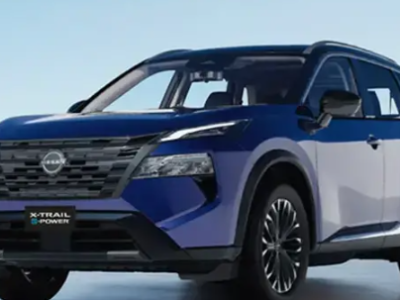
Alfa Romeo Tonale Fuel Consumption: MPG, Hybrid Economy and Real-World Costs

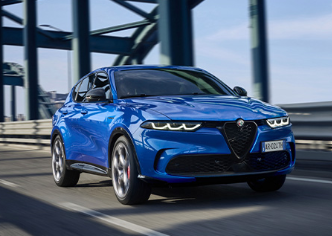
The Alfa Romeo Tonale has always tried to do something a little different. It wants to be a practical compact SUV without feeling anonymous, efficient without becoming dull, and distinctly Italian without demanding sports-car levels of fuel spending. That makes Alfa Romeo Tonale fuel consumption an important part of the buying equation.
There is one complication, though: there is no single Tonale fuel-economy figure that applies everywhere.
Depending on the model year and market, we can find the Tonale as a mild hybrid, diesel, plug-in hybrid Q4, or conventional turbocharged gasoline SUV. Those versions behave very differently at the fuel pump. Even more importantly, the latest European Tonale and the 2026 U.S. Tonale no longer share the same powertrain strategy.
For the European-market Tonale Hybrid, Alfa Romeo currently quotes approximately 5.7–5.9 L/100 km on the WLTP combined cycle. The latest Tonale Plug-In Hybrid Q4 is officially rated at roughly 3.4–3.7 L/100 km, alongside an electric range of up to 61 km under WLTP testing.
Meanwhile, the 2026 Alfa Romeo Tonale sold in the United States is gasoline-only. Alfa Romeo estimates 21 mpg city, 29 mpg highway and 24 mpg combined from its 268-hp 2.0-liter turbo engine and standard Q4 all-wheel drive.
So, is the Tonale economical? It certainly can be, but the answer depends heavily on which Tonale we are driving.
Content in this publication
- Alfa Romeo Tonale Fuel Consumption at a Glance
- Why Tonale Fuel Economy Is More Complicated Than It Looks
- Alfa Romeo Tonale Hybrid Fuel Consumption
- Alfa Romeo Tonale Plug-In Hybrid Fuel Consumption
- What About the 2025 Tonale PHEV in America?
- 2026 Alfa Romeo Tonale MPG
- Alfa Romeo Tonale Diesel Fuel Consumption
- Tonale Fuel Consumption in Real-World Driving
- Does Alfa Romeo DNA Mode Affect Fuel Consumption?
- How Wheels and Tires Affect Tonale MPG
- How to Improve Alfa Romeo Tonale Fuel Economy
- Tonale Hybrid vs PHEV: Which Uses Less Fuel?
- Tonale Hybrid vs Diesel Fuel Economy
- How Much Fuel Does a Tonale Use Over 10,000 km?
- What Is Good Fuel Consumption for a Tonale?
- Is the Alfa Romeo Tonale Economical to Run?
- Who Should Choose the Tonale Hybrid?
- Who Should Choose the Tonale Plug-In Hybrid?
- Who Should Choose the Gasoline Tonale?
- Conclusion: Is Alfa Romeo Tonale Fuel Consumption Good?
- Frequently Asked Questions
Alfa Romeo Tonale Fuel Consumption at a Glance
Before getting buried under electric motors, WLTP cycles and gallons, here is the basic picture.
| Tonale version | Official combined consumption | Key consideration |
|---|---|---|
| Current European Hybrid | 5.7–5.9 L/100 km | Good everyday efficiency without plugging in |
| Current European Plug-In Hybrid Q4 | 3.4–3.7 L/100 km WLTP | Economy depends heavily on regular charging |
| Current European Diesel | 5.3–5.5 L/100 km | Particularly attractive for longer journeys |
| 2026 U.S. 2.0 Turbo AWD | 24 mpg combined | 21 city / 29 highway |
| 2025 U.S. PHEV | 77 MPGe combined | Up to 33 miles EPA electric range |
Alfa Romeo's current technical information lists WLTP combined figures of 5.7–5.9 L/100 km for the hybrid and 5.3–5.5 L/100 km for the diesel, while the plug-in hybrid sits at 3.4–3.7 L/100 km under its weighted test cycle.
We should immediately add an asterisk the size of an Italian motorway sign to that PHEV figure, however. A plug-in hybrid's official fuel consumption assumes part of the journey is completed using electricity. Stop charging it and the gasoline consumption will inevitably rise.
Why Tonale Fuel Economy Is More Complicated Than It Looks
Fuel consumption used to be wonderfully simple. Fill the tank, drive the car, divide the fuel consumed by the distance travelled, and there was our answer.
Electrification changed that.
The Tonale can combine gasoline propulsion, electric assistance, regenerative braking and—in the PHEV—significant battery-only driving. Consequently, two owners travelling the same annual distance could record radically different gasoline consumption.
One could charge a Tonale PHEV every night and hardly use gasoline during the working week. Another could never plug it in and carry its battery hardware everywhere while relying primarily on the gasoline engine.
Same badge. Completely different fuel bill.
WLTP Versus EPA Fuel-Economy Figures
Another source of confusion is the testing system.
European figures generally use WLTP, expressing consumption in liters per 100 kilometers. American figures normally use EPA methodology and mpg or MPGe.
Neither figure guarantees what we will achieve ourselves. Laboratory ratings are primarily comparison tools.
Alfa Romeo itself notes that actual consumption can vary with driving style, speed, vehicle equipment, tires, temperature, road conditions and use of systems such as heating and air conditioning.
Think of an official consumption figure as the nutritional label on a packet rather than a promise about tomorrow's dinner.
Alfa Romeo Tonale Hybrid Fuel Consumption
For many drivers, the regular Tonale Hybrid is probably the easiest version to understand and live with.
The latest European-market model records 5.7–5.9 L/100 km combined under WLTP testing.
That translates roughly to 40–41 mpg using U.S. gallons, although direct WLTP-to-EPA comparisons should always be treated cautiously because the testing procedures differ.
The important point is that this version does not require us to reorganize our routine around charging.
We simply drive.
The hybrid system looks after itself.
How the Tonale Mild-Hybrid System Saves Fuel
The Tonale's electrified drivetrain reduces gasoline use by assisting the combustion engine during situations where an engine is traditionally least efficient.
Its electric system can recover energy while slowing down, assist acceleration and allow limited electrically supported operation.
Around town, that matters.
Conventional gasoline engines waste plenty of energy repeatedly accelerating a relatively heavy SUV from traffic lights. Hybrid assistance softens those peaks.
It is rather like having someone give us a small push every time we start cycling uphill. They are not doing the whole journey for us, but our legs certainly notice the difference.
Tonale Hybrid City Fuel Consumption
Urban driving is where hybrid technology generally earns its keep.
Frequent slowing gives regenerative braking more opportunities to recover energy, while electric assistance can reduce the amount of gasoline required during low-speed acceleration.
That doesn't mean congested traffic magically produces spectacular consumption. Long periods with heating or air conditioning operating, short cold-engine trips and aggressive acceleration can still pull efficiency downward.
Yet compared with a powerful non-hybrid SUV, the Tonale Hybrid's city-oriented electrification makes plenty of sense.
Tonale Hybrid Highway Fuel Consumption
The advantage becomes smaller on a motorway.
Why?
At a steady cruising speed, there is relatively little braking energy to recover and fewer acceleration events for the electric motor to assist.
Aerodynamic resistance also rises dramatically with speed. Push an SUV through the air at 120 or 130 km/h and electricity cannot repeal physics.
That explains why hybrid owners sometimes achieve their best numbers on mixed suburban roads rather than on extremely fast motorway journeys.
Alfa Romeo Tonale Plug-In Hybrid Fuel Consumption
Now things become much more interesting.
The latest Tonale Plug-In Hybrid Q4 carries an official WLTP combined fuel-consumption rating of approximately 3.4–3.7 L/100 km. Alfa Romeo also quotes 12.3–12.7 kWh/100 km combined electricity consumption and up to 61 km of combined WLTP electric range.
Those figures look fantastic.
And under the right circumstances, they are.
But a PHEV's success depends on whether we actually use it like a PHEV.
Why Plug-In Hybrid Consumption Can Be Misleading
Imagine our commute is 20 km each way.
If we begin every morning with a charged battery and can cover most of those 40 daily kilometers electrically, gasoline usage may be tiny. Over a working week, the dashboard's average fuel consumption could look almost comically low.
Now imagine a 600-km motorway trip starting with exactly the same vehicle.
After the battery's useful electric energy is depleted, the Tonale relies far more heavily on its gasoline engine. The trip average therefore rises.
This doesn't mean anything is wrong with the PHEV.
It simply means 3.4 L/100 km is a weighted official figure, not an unconditional promise that the vehicle will burn 3.4 liters every 100 km indefinitely.
The Golden Rule of Tonale PHEV Economy
Charge it.
It sounds painfully obvious, yet this is the central difference between owning an efficient plug-in hybrid and owning a complicated gasoline SUV carrying a battery.
You may be interested in reading Alfa Romeo Tonale Driving Modes: Complete DNA Guide
The current PHEV can travel up to 61 km on electricity in the combined WLTP cycle and up to 81 km under the WLTP urban cycle according to Alfa Romeo's technical specifications.
For somebody whose normal daily journey fits comfortably within that envelope, the drivetrain can be extremely effective.
What About the 2025 Tonale PHEV in America?
American buyers need to pay particular attention to model year.
The 2025 Tonale Hybrid/PHEV offered an EPA-estimated electric range of 33 miles and a combined efficiency figure of 77 MPGe.
That configuration disappears from the U.S. lineup for 2026.
Alfa Romeo explicitly states that the 2026 U.S. Tonale is no longer offered as a hybrid or plug-in hybrid. Instead, the range uses a conventional 2.0-liter turbocharged four-cylinder gasoline engine.
That distinction matters enormously when researching used and new cars online. A search for “Tonale fuel economy” can easily mix 2024, 2025 and 2026 specifications into one confusing soup.
2026 Alfa Romeo Tonale MPG
The 2026 U.S.-specification Tonale uses a 268-horsepower 2.0-liter turbocharged four-cylinder engine, a nine-speed automatic transmission and standard Q4 all-wheel drive.
Manufacturer-estimated economy stands at 21 mpg city, 29 mpg highway and 24 mpg combined.
Those numbers are not hybrid territory.
Then again, neither is 268 horsepower with standard AWD.
The 2026 model effectively trades the previous plug-in philosophy for a simpler, performance-oriented gasoline setup.
Is 24 MPG Good for the Tonale?
Context matters.
If our priority is absolute fuel economy, 24 mpg combined is unlikely to be the number that sends us sprinting toward the dealership.
If we want a compact luxury crossover with close to 270 horsepower, standard all-wheel drive and lively performance, the figure becomes easier to understand.
The Tonale has never really been designed as an economy car wearing fancy shoes. It is still an Alfa Romeo, and performance remains part of the equation.
Alfa Romeo Tonale Diesel Fuel Consumption
In markets where it remains available, the Tonale Diesel presents an interesting alternative.
Current Alfa Romeo technical specifications quote 5.3–5.5 L/100 km combined WLTP for the 130-hp diesel version.
That makes it impressively competitive for drivers covering substantial annual mileage, particularly on longer journeys.
Diesel engines naturally suit steady cruising because of their strong low-speed torque and efficient operation under sustained load.
The catch?
Short urban journeys may not play to a modern diesel's strengths, particularly because emissions-control systems prefer regular journeys long enough to reach proper operating temperature.
For motorway-heavy ownership, though, we should not dismiss it.
Tonale Fuel Consumption in Real-World Driving
Official figures tell us where to start. Real life tells us where we finish.
A Tonale driven gently along flat suburban roads in mild weather can outperform one being hammered through mountainous terrain with four passengers, luggage, 20-inch wheels and air conditioning running at full blast.
That's not an Alfa Romeo problem. That's physics.
Actual consumption will typically respond to vehicle load, temperature, journey length, tire pressure, wheel size, traffic, terrain and throttle use.
Short Trips Are Fuel-Economy Killers
Cold starts matter more than many drivers realize.
During the first few kilometers, the engine and transmission have not reached their most efficient operating temperatures. Cabin heating or cooling may also be demanding energy.
If almost every journey is five minutes long, our consumption can therefore be substantially worse than the official combined figure.
A hybrid helps, but it cannot completely escape the penalty.
Speed Makes a Bigger Difference Than We Think
Moving a vehicle through air becomes increasingly expensive as speed rises.
Going slightly faster on the motorway might save several minutes, yet it can noticeably worsen fuel economy.
The Tonale's SUV shape means aerodynamic drag matters more at higher speeds than it would in a lower, slipperier sedan.
So when we're wondering why our Tonale refuses to match the brochure while cruising quickly, the answer may be sitting directly beneath our right foot.
Does Alfa Romeo DNA Mode Affect Fuel Consumption?
The Tonale's driving modes can influence how eager the drivetrain feels.
A more responsive accelerator and performance-focused calibration can encourage harder acceleration, while efficiency-oriented driving generally rewards smoother inputs.
The computer may optimize certain parameters, but the driver remains the most important variable.
No button can overcome repeated full-throttle launches.
Drive modes are tools, not magic spells.
How Wheels and Tires Affect Tonale MPG
Large alloy wheels look terrific on the Tonale. Few people are going to accuse Alfa Romeo of designing wheels with all the emotional appeal of office furniture.
But style carries a price.
Larger wheel-and-tire combinations can increase weight and rolling resistance. Wider tires may also increase aerodynamic resistance slightly.
The differences are rarely catastrophic, yet over thousands of kilometers they can become measurable.
Tire pressure matters too. Underinflated tires create additional rolling resistance and can also affect handling, tire wear and braking.
How to Improve Alfa Romeo Tonale Fuel Economy
We do not need to crawl everywhere like we're balancing a glass of water on the dashboard. Small habits usually deliver better results than extreme hypermiling.
- Accelerate progressively. Turbocharged engines can deliver strong performance, but repeatedly demanding maximum boost consumes fuel quickly.
- Anticipate traffic. Looking several cars ahead reduces unnecessary acceleration followed immediately by braking.
- Maintain correct tire pressures. Check them cold and follow the specification for the vehicle's wheel and load configuration.
- Remove unnecessary weight. Carrying forgotten cargo everywhere quietly increases energy consumption.
- Reduce external drag. Roof boxes and unused roof-mounted equipment can noticeably hurt motorway efficiency.
- Combine short journeys. One longer trip is generally kinder to fuel economy than several separate cold starts.
- Use climate control intelligently. Extreme heating or cooling increases energy demand.
- Charge the PHEV regularly. This is easily the biggest factor for plug-in-hybrid owners.
- Avoid excessive motorway speed. A modest reduction can produce a surprisingly meaningful fuel saving.
- Keep the vehicle serviced. Correct oil, healthy ignition components, clean filters and properly functioning sensors help the drivetrain operate as intended.
Tonale Hybrid vs PHEV: Which Uses Less Fuel?
On paper, the PHEV wins easily.
A figure around 3.4–3.7 L/100 km looks considerably better than the regular hybrid's 5.7–5.9 L/100 km.
But ownership patterns can reverse the practical result.
Someone without convenient charging may find the ordinary hybrid simpler and more consistently economical.
Someone who parks beside a charger every evening and drives 30 or 40 km per day may barely wake the gasoline engine in a PHEV.
So rather than asking which drivetrain has the lowest official number, we should ask a better question:
You may be interested in readingAlfa Romeo Tonale Driving Modes: Complete DNA GuideYou may be interested in reading
 Nissan X-Trail Hybrid Fuel Consumption: Real-World MPG, L/100km, Range, and Efficiency Explained
Which drivetrain matches the journeys we actually make?
That is where the savings live.
Tonale Hybrid vs Diesel Fuel Economy
This comparison becomes particularly interesting for high-mileage drivers.
The hybrid's official WLTP consumption sits at approximately 5.7–5.9 L/100 km, while the diesel is listed at about 5.3–5.5 L/100 km.
On paper, diesel has the edge.
Urban motorists may still prefer the hybrid because its electrification suits stop-start driving and avoids some of the considerations associated with diesel emissions hardware.
Long-distance drivers covering large motorway distances, meanwhile, may find the diesel's character almost tailor-made for the job.
Neither solution is universally superior.
How Much Fuel Does a Tonale Use Over 10,000 km?
Here's where liters per 100 km becomes tangible.
At 5.8 L/100 km, a Tonale would theoretically consume about 580 liters over 10,000 km.
At 7.0 L/100 km, that rises to 700 liters.
At 8.0 L/100 km, we're looking at 800 liters.
A difference that seems tiny on the dashboard can therefore become substantial over a year.
The same principle works with American mpg. Moving from 24 mpg to 27 mpg may not look dramatic, but annual fuel consumption begins to diverge meaningfully once mileage climbs.
That is why driving style matters more than obsessing over tenths of a liter during a single journey.
What Is Good Fuel Consumption for a Tonale?
For the European Hybrid, consistently remaining somewhere around its official high-five-liter WLTP figure would represent strong efficiency, although real-world conditions can push the number higher.
For a regularly charged PHEV completing many short journeys electrically, gasoline consumption can become dramatically lower.
For the 2026 U.S. gasoline Tonale, the relevant benchmark is its manufacturer's 24 mpg combined estimate, with 21 mpg city and 29 mpg highway.
Rather than comparing every version against one universal target, compare your result with the appropriate drivetrain, test cycle and usage pattern.
Otherwise, we're comparing espresso with orange juice simply because both arrive in a cup.
Is the Alfa Romeo Tonale Economical to Run?
The answer ranges from “very” to “reasonably,” depending on the version.
The regular European hybrid offers attractive fuel efficiency without requiring charging infrastructure. The diesel remains compelling for longer-distance use. The PHEV can slash gasoline consumption for drivers who charge frequently and complete many shorter journeys.
The current American Tonale is a different animal. Its 268-hp turbo engine and standard AWD put greater emphasis on performance, and its 24-mpg combined estimate reflects that.
Running costs also extend beyond gasoline.
Electricity prices affect PHEV economics. Insurance, servicing, depreciation and tire replacement can easily outweigh small differences in mpg.
Buying a car solely because one official figure is 0.3 L/100 km lower is therefore a little like choosing a house because the bathroom tap uses less water. Useful? Absolutely. The entire story? Not remotely.
Who Should Choose the Tonale Hybrid?
The regular hybrid makes particular sense for mixed driving.
We can enjoy electrification without thinking about charging cables, home chargers or battery state before leaving for work. For urban and suburban driving with occasional longer trips, it is arguably the easiest Tonale drivetrain to understand.
Its official 5.7–5.9 L/100 km combined consumption is also respectable for a stylish compact premium SUV.
Who Should Choose the Tonale Plug-In Hybrid?
A PHEV works best when we have predictable daily journeys and convenient charging.
Home charging is especially valuable because it lets us leave each morning with useful electric range available.
Alfa Romeo says the current European Tonale PHEV can achieve up to 61 km of combined WLTP electric driving, extending to as much as 81 km under the urban WLTP cycle.
If our commute sits comfortably within that window, the Tonale can spend a remarkable proportion of its working life behaving more like an EV than a gasoline SUV.
Ignore the charging cable, however, and we surrender much of the advantage we paid for.
Who Should Choose the Gasoline Tonale?
The 2026 U.S. Tonale makes its priorities quite clear.
There is one main powertrain: a 268-hp turbocharged 2.0-liter four-cylinder paired with a nine-speed automatic and standard Q4 AWD.
This version suits the driver who values straightforward refueling, substantial power and all-wheel-drive capability more than maximizing every last mile from a gallon.
Its 21/29/24 mpg manufacturer estimates aren't class-leading hybrid numbers, but that is no longer what this particular Tonale is trying to be.
Conclusion: Is Alfa Romeo Tonale Fuel Consumption Good?
Overall, Alfa Romeo Tonale fuel consumption ranges from impressively efficient to fairly ordinary depending on the powertrain.
The European Tonale Hybrid currently sits around 5.7–5.9 L/100 km combined, giving us a good balance between efficiency and simplicity. The diesel can dip to approximately 5.3–5.5 L/100 km, making it attractive for longer-distance drivers.
The plug-in hybrid is potentially the star of the show, with an official 3.4–3.7 L/100 km WLTP rating and up to 61 km of combined electric range, provided we actually recharge it.
Across the Atlantic, the story changed for 2026. The U.S. Tonale now uses a gasoline-only 268-hp turbo drivetrain and carries a manufacturer-estimated 21 mpg city, 29 mpg highway and 24 mpg combined.
Ultimately, the “most economical Tonale” isn't necessarily the one with the smallest number printed in the brochure.
It's the one whose drivetrain fits our routine.
Charge every night? The PHEV can shine.
Drive hundreds of motorway kilometers? Diesel deserves attention where available.
Want electrification without plugging in? The regular hybrid fits neatly in the middle.
Want the latest U.S. Tonale's power and standard AWD? Expect to accept a little more appetite at the fuel pump.
And perhaps that is the Tonale's personality in a nutshell: it may care about efficiency, but it hasn't completely forgotten that an Alfa Romeo is supposed to make the journey interesting.
Frequently Asked Questions
1. What is the Alfa Romeo Tonale fuel consumption?
It depends on the powertrain and market. Current European specifications list roughly 5.7–5.9 L/100 km for the Tonale Hybrid, 5.3–5.5 L/100 km for the diesel, and 3.4–3.7 L/100 km for the Plug-In Hybrid Q4 under WLTP testing.
2. What MPG does the 2026 Alfa Romeo Tonale get?
In the United States, Alfa Romeo estimates the gasoline-powered 2026 Tonale at 21 mpg city, 29 mpg highway and 24 mpg combined. It uses a 268-hp 2.0-liter turbocharged engine with standard Q4 AWD.
3. Is the Alfa Romeo Tonale good on fuel?
The hybrid versions are relatively economical for a compact premium SUV. The regular European hybrid can achieve official combined consumption below 6 L/100 km, while a regularly charged PHEV can use considerably less gasoline. The gasoline-only 2026 U.S. Tonale prioritizes performance more heavily.
You may be interested in readingAlfa Romeo Tonale Driving Modes: Complete DNA GuideYou may be interested in reading
Nissan X-Trail Hybrid Fuel Consumption: Real-World MPG, L/100km, Range, and Efficiency ExplainedYou may be interested in reading
 What to Expect When Driving a Fiat 500: Owner's Perspective
4. How far can the Alfa Romeo Tonale PHEV drive on electricity?
The current European Tonale Plug-In Hybrid Q4 offers up to 61 km of combined WLTP electric range and up to 81 km under the urban WLTP cycle. The 2025 U.S. PHEV was rated for up to 33 miles of EPA-estimated all-electric range.
5. Why is my Alfa Romeo Tonale using more fuel than the official figure?
Official figures are standardized comparison results rather than guarantees. Higher speeds, cold weather, short trips, heavy traffic, large wheels, low tire pressure, vehicle load, climate-control use and aggressive acceleration can all increase consumption. For the PHEV, infrequent charging can make an especially large difference. Alfa Romeo explicitly notes that real consumption varies according to driving and operating conditions.
If you want to know other articles similar to Alfa Romeo Tonale Fuel Consumption: MPG, Hybrid Economy and Real-World Costs you can visit the category Driving.
Nissan X-Trail Hybrid Fuel Consumption: Real-World MPG, L/100km, Range, and Efficiency Explained
Alfa Romeo Tonale Driving Modes: Complete DNA Guide
Audi A6 MPG: Fuel Economy, Real-World Mileage, and Efficiency Explained
Kia Carnival Fuel Consumption: MPG, L/100 km, Hybrid and Real-World Economy
Hyundai Palisade Diesel Fuel Economy: What Can We Really Expect?
Subaru Impreza Km Per Litre: Real-World Fuel Economy Guide
Leave a Reply
More content of your interest