
Mazda CX-9 Versus Subaru Ascent: Which Three-Row SUV Is Better?

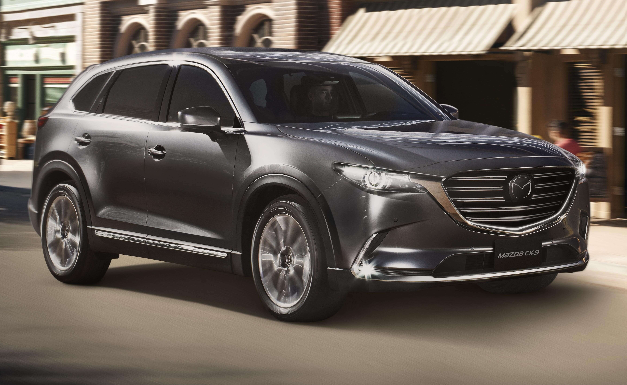
Choosing between the Mazda CX-9 versus Subaru Ascent is a little like choosing between a tailored jacket and a rugged hiking coat. Both can handle everyday family life, both offer three rows of seating, and both come with turbocharged four-cylinder engines and all-wheel-drive capability. Yet they approach the job from noticeably different directions.
The Mazda CX-9 focuses heavily on driving enjoyment, upscale design, and a cabin that feels more expensive than the badge might suggest. The Subaru Ascent, meanwhile, leans harder into practicality. It gives us more passenger room, greater towing capacity, generous cargo space, standard Symmetrical All-Wheel Drive, and a family-oriented interior.
There is also an important wrinkle for shoppers today: Mazda discontinued the CX-9 in the United States after the 2023 model year, while the Ascent remains available new. Mazda positioned the CX-90 as the next-generation successor.
That means this comparison is particularly useful if we're considering a used Mazda CX-9 against a newer or used Subaru Ascent.
So, which one deserves the driveway space? Let's dig in.
Content in this publication
- Mazda CX-9 Versus Subaru Ascent at a Glance
- Which Is Bigger: Mazda CX-9 or Subaru Ascent?
- Interior Space: Subaru Ascent Takes the Practicality Crown
- Cargo Space: Subaru Ascent Has More Room
- Engine Comparison
- Mazda CX-9 Versus Subaru Ascent Performance
- Ride Comfort
- All-Wheel Drive Comparison
- Towing Capacity: Subaru Wins Easily
- Fuel Economy
- Interior Quality: Mazda Feels More Premium
- Infotainment and Technology
- Safety Technology
- Mazda CX-9 Versus Subaru Ascent Reliability
- Which Has the Better Transmission?
- Which Is Better for Snow?
- Which Is Better for Families?
- Which Is Better for Long Road Trips?
- Styling: Mazda Wins on Emotion
- Used Mazda CX-9 Versus New Subaru Ascent
- Mazda CX-9 Versus Subaru Ascent: Pros and Cons
- Mazda CX-9 Versus Subaru Ascent: Which Should We Buy?
- Which One Offers Better Overall Value?
- Our Verdict: Mazda CX-9 Versus Subaru Ascent
- Frequently Asked Questions
Mazda CX-9 Versus Subaru Ascent at a Glance
Before getting into the details, here's the personality of each SUV in simple terms.
| Category | Mazda CX-9 | Subaru Ascent |
|---|---|---|
| Best for | Driving enjoyment and premium feel | Families, space and versatility |
| Seating | Up to 7 | Up to 8 |
| Engine | 2.5L turbo four-cylinder | 2.4L turbo Boxer four-cylinder |
| Drivetrain | AWD on 2023 models | Standard AWD |
| Transmission | 6-speed automatic | CVT |
| Maximum towing | 3,500 lb | 5,000 lb |
| Maximum cargo space | 71.2 cu ft | Up to 75.6 cu ft on 2026 models |
| Third-row emphasis | Occasional use | More family-friendly |
| Overall character | Sporty and upscale | Practical and adventurous |
The numbers already reveal the basic divide. The CX-9 behaves almost like a large sport sedan disguised as an SUV. The Ascent feels more like a family base camp on wheels.
Which Is Bigger: Mazda CX-9 or Subaru Ascent?
Interestingly, the Mazda doesn't look dramatically smaller from the outside.
The 2023 Mazda CX-9 measures about 199.4 inches long, while the 2026 Subaru Ascent measures about 196.8 inches long. The Mazda's wheelbase is also slightly longer at 115.3 inches versus 113.8 inches for the Subaru.
Yet the Subaru uses its footprint more efficiently.
That's one of the most interesting parts of this comparison. Exterior size alone does not tell us how useful a three-row SUV will be. Cabin packaging matters enormously, and that's where Subaru gains ground.
Exterior Dimensions Don't Tell the Whole Story
The CX-9's long hood, sweeping roofline, and athletic proportions make it attractive, but styling consumes some usable space.
The Ascent has a squarer body and more upright greenhouse. It may not look as sleek, but those boxier proportions pay dividends once passengers and luggage start piling in.
Think of it as the difference between a stylish suitcase and a rectangular moving box. Both may occupy similar floor space, but one simply swallows more stuff.
Interior Space: Subaru Ascent Takes the Practicality Crown
For families who regularly use all three rows, the Ascent is the easier SUV to recommend.
The 2026 Subaru Ascent offers seating configurations for seven or eight passengers, depending on whether we choose second-row captain's chairs or a bench seat. Subaru quotes up to 153.2 cubic feet of passenger volume and 31.7 inches of third-row legroom.
The 2023 CX-9 provides up to seven seats depending on configuration, but several trims use captain's chairs and seat six.
Mazda CX-9 Third Row
The Mazda's third row is best viewed as a backup plan.
Mazda listed about 29.7 inches of third-row legroom and 35.4 inches of headroom for the 2023 CX-9.
Children should be comfortable enough, especially for shorter journeys. Adults can fit, but longer trips may make the rear seats feel cramped.
The low roof and tighter legroom create a more enclosed environment than we get in the Subaru.
Subaru Ascent Third Row
The Ascent feels more deliberately designed around three-row family duties.
There's better legroom, more useful headroom, broader access through the rear doors, and a cabin shape that makes the back row feel less like an emergency compartment.
If grandparents, teenagers, or adult friends regularly occupy the third row, we'd lean toward the Subaru without much hesitation.
Who Wins for Passenger Space?
Winner: Subaru Ascent
The Mazda works well for families who occasionally need six or seven seats.
The Subaru works better for families who actually use six, seven, or eight seats.
Cargo Space: Subaru Ascent Has More Room
Open the liftgate with every seat occupied and neither vehicle becomes a cargo van, but the Subaru again has the advantage.
The 2023 Mazda CX-9 provides approximately:
- 14.4 cubic feet with all rows upright
- 38.2 cubic feet with the third row folded
- 71.2 cubic feet with the rear rows folded
Those figures come directly from Mazda's 2023 specifications.
The current Subaru Ascent offers up to 75.6 cubic feet of maximum cargo space, with approximately 17.8 cubic feet available behind the third row on the 2026 model.
Why the Difference Matters in Real Life
Four cubic feet here or there doesn't sound dramatic on paper.
Then we add:
- A stroller
- Three suitcases
- Grocery bags
- Sports equipment
- A cooler
- School backpacks
- A family dog
Suddenly, every inch matters.
The Subaru's straighter body shape and broader family focus make loading awkward objects easier.
The Mazda isn't impractical, but its design clearly prioritizes appearance and road manners over maximum interior volume.
Engine Comparison
Both SUVs use turbocharged four-cylinder engines, which may surprise shoppers expecting traditional V6 power in a vehicle this size.
Mazda CX-9 Engine
The CX-9 uses Mazda's 2.5-liter turbocharged four-cylinder engine paired with a conventional six-speed automatic transmission.
Its personality is one of the Mazda's strongest selling points.
Torque arrives early, so the CX-9 doesn't need to scream toward the redline whenever we merge onto a motorway or climb a hill.
More importantly, the six-speed automatic feels familiar and direct. Drivers who dislike continuously variable transmissions may immediately prefer the Mazda.
Subaru Ascent Engine
The 2026 Ascent uses a 2.4-liter turbocharged Subaru Boxer four-cylinder producing 260 horsepower and 277 lb-ft of torque, paired with Subaru's Lineartronic CVT.
There's enough performance for family duty, highway merging, and towing.
It doesn't feel slow.
Yet the experience is less sporty.
The CVT prioritizes smoothness and efficiency rather than mechanical drama. Under heavy acceleration, engine speed can rise and stay elevated in the familiar CVT fashion.
Mazda CX-9 Versus Subaru Ascent Performance
This is where the Mazda starts swinging back.
The CX-9 feels smaller than it really is.
Steering is sharper. Body movements are controlled. The vehicle turns into corners with a precision that is unusual among three-row family crossovers.
We don't need to be driving quickly to notice it, either. Even around town, the CX-9's steering, brake feel, throttle response, and transmission calibration make the vehicle feel cohesive.
Everything seems to speak the same language.
The Ascent Is More Relaxed
The Subaru is tuned differently.
Its steering is lighter, and the overall character is more relaxed. That makes perfect sense for an SUV designed primarily to carry families through rain, snow, gravel, motorway traffic, and weekend adventures.
Push it through a winding road, though, and the Subaru reminds us that carrying people comfortably matters more than entertaining the driver.
Which SUV Is More Fun to Drive?
Winner: Mazda CX-9
Few three-row crossovers of its era feel as polished and responsive from behind the wheel.
If driving enjoyment ranks near the top of our checklist, the Mazda deserves serious consideration.
Ride Comfort
Sportier handling sometimes comes with a price.
The CX-9's suspension feels controlled and sophisticated, but large wheels on upper trims can transmit sharper imperfections into the cabin.
The Ascent generally takes a softer approach.
Its suspension feels well suited to cracked roads, uneven suburban streets, long highway journeys, and dirt tracks leading to campsites.
For drivers who simply want everyone to stay comfortable, the Subaru's softer personality may be preferable.
You may be interested in reading BMW M2 vs M3: Which BMW M Car Is the Better Choice?
For those who dislike floaty body motions and want tighter control, the Mazda will probably feel better.
All-Wheel Drive Comparison
Both SUVs offer reassuring AWD capability, but Subaru's system is central to the brand's identity.
Every current Ascent comes with Symmetrical All-Wheel Drive, and Subaru pairs it with 8.7 inches of ground clearance. X-MODE is also offered to improve traction on slippery surfaces.
The 2023 Mazda CX-9 also came standard with Mazda's i-ACTIV AWD in the U.S. market.
Which AWD System Is Better?
For normal rain, occasional snow, or wet roads, either should serve us well.
For frequent trips into snow country, muddy access roads, gravel, camping areas, or rougher surfaces, we'd favor the Subaru.
Subaru has simply designed the Ascent around this mission.
Interestingly, the Mazda has comparable ground clearance—Mazda listed 8.8 inches for the 2023 CX-9—but its chassis and tires generally communicate a more road-focused personality.
Towing Capacity: Subaru Wins Easily
If we're pulling a camper, boat, trailer, or recreational equipment, this category could settle the argument immediately.
The Mazda CX-9 is rated to tow up to 3,500 pounds.
The Subaru Ascent can tow up to 5,000 pounds on current 2026 models.
That's a 1,500-pound advantage.
What Does 5,000 Pounds Let Us Tow?
Depending on trailer configuration and loading, the Ascent's capacity makes it better suited to:
- Small camping trailers
- Lightweight travel trailers
- Small boats
- Utility trailers
- ATVs or motorcycles on trailers
We still need to respect tongue weight, payload, hitch requirements, and gross combined weight ratings, of course.
But purely from a capacity perspective, Subaru is the clear winner.
Towing winner: Subaru Ascent
Fuel Economy
Fuel economy between these SUVs is surprisingly close.
The AWD 2023 Mazda CX-9 was EPA-rated around 20 mpg city and 26 mpg highway, or approximately 23 mpg combined.
The 2026 Subaru Ascent reaches up to 19 mpg city and 26 mpg highway, depending on trim.
So this isn't a dramatic victory for either one.
Mazda Has a Slight Efficiency Edge
Under comparable conditions, the CX-9's lower roofline and road-oriented character can give it a modest advantage.
But driving style matters enormously with turbocharged engines.
Use boost aggressively and fuel consumption rises quickly in either SUV.
For long-distance family travel, both provide respectable rather than exceptional efficiency.
Sit in a high-spec CX-9 and it's easy to forget we're in a mainstream-brand SUV.
Mazda uses flowing dashboard shapes, tasteful trim, solid controls, and restrained styling.
Instead of covering the dashboard in buttons, patterns, and oversized visual elements, the CX-9 feels calm.
There's almost a Japanese minimalist quality to it.
Subaru Prioritizes Function
The Ascent's interior isn't cheap.
Its mission is simply different.
Storage compartments, family-friendly materials, large door openings, flexible seating, cupholders, charging ports, and straightforward controls matter more than creating a luxury-car illusion.
Higher Ascent trims can feel quite plush, but the Mazda still has the edge in perceived sophistication.
Cabin quality winner: Mazda CX-9
Infotainment and Technology
Technology is one area where the age difference becomes noticeable.
The CX-9's final model year arrived before today's trend toward giant portrait-oriented displays became universal.
Mazda's infotainment interface relies heavily on a rotary controller.
Some drivers love it because they can navigate menus without reaching toward the dashboard. Others need time to adjust.
The Ascent's newer interface feels more contemporary and integrates modern smartphone connectivity throughout the cabin.
Which Is Easier to Use?
That depends on preference.
If we like physical controls and minimal distraction, Mazda's approach has charm.
If we prefer a larger touchscreen-oriented interface and newer connectivity features, the Subaru feels more current.
Safety Technology
Both SUVs were designed with family safety as a priority.
The CX-9 offered features such as adaptive cruise control, blind-spot monitoring, automatic emergency braking, lane-related driver assistance, and rear cross-traffic alert depending on configuration.
The current Ascent includes Subaru's EyeSight driver-assistance system and offers technologies such as automatic emergency steering, blind-spot detection, rear cross-traffic alert, and DriverFocus distraction mitigation on relevant trims.
The difference isn't that one cares about safety and the other doesn't.
It's that a newer Ascent naturally benefits from several additional years of technology development.
Mazda CX-9 Versus Subaru Ascent Reliability
Reliability comparisons become more complicated because maintenance history matters enormously on used vehicles.
A meticulously serviced CX-9 with 50,000 miles can be a much safer purchase than a neglected Ascent with 30,000 miles—and vice versa.
What should we look for?
Used Mazda CX-9 Checklist
Before buying, we would check:
- Complete service records
- Cooling system condition
- Turbocharger operation
- Oil leaks
- Transmission behavior
- Suspension noises
- AWD maintenance
- Tires with matching tread depth
- Any open recalls
- Evidence of overheating or coolant loss
Used Subaru Ascent Checklist
For a used Ascent, inspect:
- CVT behavior
- Service history
- AWD system condition
- Wheel bearings and suspension
- Turbo performance
- Electrical systems
- Infotainment operation
- Brake condition
- Tire matching
- Recall completion
A pre-purchase inspection is worth far more than arguing over generic brand reliability rankings.
Which Has the Better Transmission?
For many enthusiasts, the Mazda.
Its traditional six-speed automatic behaves more naturally during acceleration.
We press the throttle, the gearbox selects a gear, and the vehicle accelerates.
Simple.
The Ascent's CVT is smooth during relaxed driving but can feel less satisfying when we're asking for maximum power.
That doesn't automatically make it inferior. In stop-and-go traffic, CVTs can actually feel beautifully seamless.
Still, drivers who prioritize mechanical connection will probably prefer the CX-9.
Which Is Better for Snow?
The Subaru Ascent gets our vote.
Not because the Mazda is incapable—far from it—but because snow capability sits at the heart of the Subaru formula.
Standard AWD, strong ground clearance, X-MODE capability, and Subaru's long experience with all-wheel-drive passenger vehicles make the Ascent particularly attractive to drivers in snowy climates.
You may be interested in readingBMW M2 vs M3: Which BMW M Car Is the Better Choice?You may be interested in reading
BMW M2 vs M240i: Which BMW 2 Series Is Really Worth It?Just remember one important truth:
Winter tires matter enormously.
A Mazda CX-9 on excellent winter tires can outperform an Ascent wearing poor all-season tires in many winter situations.
AWD helps us accelerate.
Tires help us accelerate, turn, and stop.
Which Is Better for Families?
For most large families, Subaru.
The extra seating position alone could make the difference.
Add a roomier third row, slightly larger cargo area, broader towing capability, and easier family packaging, and the Ascent emerges as the more practical tool.
Choose the Ascent If You Regularly Carry:
- Three or more children
- Adult third-row passengers
- Sports equipment
- Camping gear
- Large amounts of luggage
- A trailer
- Eight passengers
Choose the CX-9 If Your Family Is Smaller
If we're usually carrying four or five people and only use the third row occasionally, the Mazda's compromises become much easier to accept.
In return, we get a vehicle that's significantly more enjoyable to drive.
Which Is Better for Long Road Trips?
This one is close.
The Ascent gives passengers more breathing room.
The Mazda gives the driver a more polished driving experience.
Imagine a 700-mile holiday journey.
If three adults are sitting across multiple rows with luggage stacked behind them, the Subaru wins.
If we're traveling with two adults and two children, the Mazda may actually be more enjoyable because its quieter, more premium-feeling cabin and sharper highway manners make it pleasant to pilot.
So the winner depends on who occupies the seats.
Styling: Mazda Wins on Emotion
Automotive design is subjective, but the CX-9 arguably looks more expensive than it is.
The long hood, tapered glass, sculpted body sides, and relatively restrained grille make it elegant rather than merely large.
The Subaru Ascent is much more conventional.
It's upright, chunky, and practical.
Nobody will struggle to understand what the Subaru is trying to be.
It's an SUV.
A useful one.
But if we occasionally glance back at our car after parking it, the Mazda has the better chance of triggering that little moment of satisfaction.
Used Mazda CX-9 Versus New Subaru Ascent
This is perhaps the most relevant comparison today.
Mazda ended U.S. CX-9 production after the 2023 model year.
That means buyers are usually comparing a used CX-9 against either a used Ascent or a brand-new Ascent.
And suddenly, value becomes interesting.
Why a Used CX-9 Can Be Tempting
Depreciation can turn higher-trim CX-9 models into attractive bargains.
We may find features such as:
- Leather upholstery
- Heated and ventilated seats
- Premium audio
- Large wheels
- Surround-view cameras
- Premium interior trim
- Captain's chairs
- Adaptive cruise control
The cabin can feel surprisingly upscale for used-mainstream-SUV money.
Why the New Ascent Still Makes Sense
Buying new gives us:
- Full manufacturer warranty coverage
- Newer driver-assistance technology
- No previous-owner uncertainty
- Greater towing ability
- More family space
- Newer connectivity
- Easier configuration choice
The Ascent costs more upfront, but we're buying a current product rather than the final generation of a discontinued model.
Mazda CX-9 Versus Subaru Ascent: Pros and Cons
Mazda CX-9 Pros
- Excellent handling
- Premium-feeling cabin
- Attractive styling
- Smooth conventional automatic transmission
- Strong turbo torque
- Standard AWD on final U.S. models
- Potentially excellent used value
- Refined road manners
Mazda CX-9 Cons
- Tight third row
- Less cargo space
- Lower towing capacity
- Maximum seven seats
- Discontinued in the U.S.
- Older infotainment architecture
- Not as family-focused as some competitors
Subaru Ascent Pros
- Seats up to eight
- Roomier third row
- Strong AWD capability
- 5,000-pound towing capacity
- More cargo flexibility
- 8.7 inches of ground clearance
- Modern driver-assistance technology
- Good choice for snow and outdoor activities
Subaru Ascent Cons
- CVT won't please everyone
- Less engaging handling
- Interior doesn't feel as premium
- Styling is more utilitarian
- Turbo engine can become thirsty when pushed
Mazda CX-9 Versus Subaru Ascent: Which Should We Buy?
Here's the simplest way to decide.
Buy the Mazda CX-9 If...
We want a three-row SUV but don't want it to drive like one.
The CX-9 is especially appealing when:
- We normally carry four or five people
- The third row is only occasionally needed
- Driving enjoyment matters
- Interior quality matters
- We prefer a conventional automatic
- We're shopping used
- Style matters more than absolute cargo capacity
A clean, well-maintained CX-9 can still be a fantastic family SUV.
Buy the Subaru Ascent If...
We need the third row frequently.
The Ascent makes more sense when:
- We have a larger family
- We need eight seats
- We tow regularly
- We travel in snow
- We camp or explore rough roads
- Cargo space matters
- We want to buy new
- Practicality comes before sporty handling
The Subaru may not stir the driver's soul like the Mazda, but it solves more family problems.
And that's a powerful advantage.
Which One Offers Better Overall Value?
Value depends heavily on whether we're buying new or used.
A late-model CX-9 can offer tremendous value because it combines near-premium materials with mainstream running costs and used-car depreciation.
The Ascent, however, offers more utility per square foot.
If every seat and every cubic foot of space matters, paying more for the Subaru may be justified.
If we only occasionally need the third row, the Mazda can deliver a more luxurious-feeling ownership experience without requiring luxury-brand money.
Our Verdict: Mazda CX-9 Versus Subaru Ascent
The Subaru Ascent is the better pure family SUV.
It's roomier, seats more people, tows more, offers excellent standard AWD capability, and makes better use of its interior space.
But the Mazda CX-9 is the SUV we'd recommend to drivers who refuse to give up driving enjoyment simply because they need three rows.
It feels more polished, more intimate, and more premium.
So the final choice comes down to priorities.
If our family travels like a small expedition team, take the Subaru.
If we want something that carries the family during the week but still makes a winding road interesting on Sunday morning, find a good CX-9.
Neither is universally better.
They're simply answering different questions.
And sometimes the best SUV isn't the one with the most space, horsepower, or towing capacity.
It's the one whose compromises fit our life.
Frequently Asked Questions
1. Is the Subaru Ascent bigger than the Mazda CX-9?
Not necessarily in overall exterior length, but the Subaru uses its dimensions more efficiently. The current Ascent offers more practical passenger accommodation and greater maximum cargo capacity, while the CX-9 uses more of its footprint for styling and driving-oriented proportions.
2. Which has more third-row space, the Mazda CX-9 or Subaru Ascent?
The Subaru Ascent. The current Ascent provides 31.7 inches of third-row legroom, while Mazda listed 29.7 inches for the 2023 CX-9. Adults are therefore generally more comfortable in the Subaru's rearmost seats.
3. Which can tow more, the CX-9 or Ascent?
The Subaru Ascent wins decisively. The current model is rated for up to 5,000 pounds, compared with 3,500 pounds for the 2023 Mazda CX-9.
4. Is the Mazda CX-9 discontinued?
Yes. Mazda officially discontinued the CX-9 in the U.S. following the 2023 model year, with the newer CX-90 representing the next generation of Mazda's larger three-row SUV lineup.
You may be interested in readingBMW M2 vs M3: Which BMW M Car Is the Better Choice?You may be interested in reading
BMW M2 vs M240i: Which BMW 2 Series Is Really Worth It?You may be interested in reading
BMW M2 vs M3 vs M4: Which BMW M Car Should We Buy?5. Which is better: Mazda CX-9 or Subaru Ascent?
The Subaru Ascent is better for larger families, regular third-row use, towing, cargo capacity, and winter-oriented driving. The Mazda CX-9 is better for drivers prioritizing handling, interior refinement, styling, and a more engaging driving experience.
If you want to know other articles similar to Mazda CX-9 Versus Subaru Ascent: Which Three-Row SUV Is Better? you can visit the category Models.
Land Rover Defender 90 Alternative: The Best Rivals Worth Considering
Land Rover Defender 90 Models: Complete Guide to Trims, Engines and Versions
Toyota Hilux Generations: Complete History, Evolution, and Key Differences
BMW M2 vs M340i: Which BMW Performance Car Should We Buy?
BMW M2 vs Porsche 911: Which Sports Car Makes More Sense?
BMW M2 vs Mustang GT: Which Performance Coupe Should We Buy?
Leave a Reply
More content of your interest