
Subaru XV vs Forester: Which Subaru SUV Should You Choose?

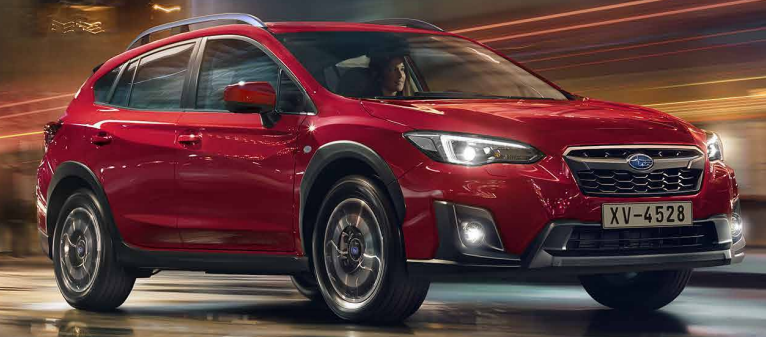
Choosing between the Subaru XV vs Forester can feel a little like choosing between hiking boots and full-on trekking boots. Both are comfortable, capable, rugged enough to get dirty, and unmistakably Subaru. Yet once we start living with them, their personalities are noticeably different.
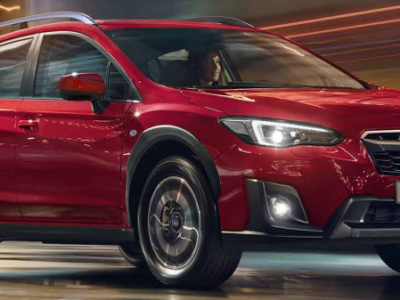
The Subaru XV—known as the Crosstrek in some markets and now globally replaced by the Crosstrek name—is the smaller, more urban-friendly crossover. Subaru officially standardized the Crosstrek name globally beginning with the third generation. The Forester, meanwhile, sits higher in Subaru's SUV hierarchy and gives us significantly more interior space, easier passenger access, and a more traditional SUV shape.
So, should we save money and enjoy the lighter, easier-to-park XV? Or does the Forester justify its extra size and cost?
For many buyers, the answer isn't about which SUV is objectively better. It is about which one fits daily life better.
Let's break down the Subaru XV vs Forester comparison from every angle that matters.
Content in this publication
- Subaru XV vs Forester at a Glance
- What Is the Main Difference Between the Subaru XV and Forester?
- Subaru XV vs Forester Size Comparison
- Subaru XV vs Forester Interior Space
- Subaru XV vs Forester Boot Space
- Subaru XV vs Forester Engine Performance
- Subaru XV vs Forester Fuel Consumption
- Subaru XV vs Forester AWD Capability
- Subaru XV vs Forester Off-Road
- Subaru XV vs Forester Driving Experience
- Subaru XV vs Forester Ride Comfort
- Subaru XV vs Forester Safety
- Subaru XV vs Forester Reliability
- Subaru XV vs Forester Maintenance Costs
- Subaru XV vs Forester for Families
- Subaru XV vs Forester for City Driving
- Subaru XV vs Forester for Road Trips
- Subaru XV vs Forester for Dogs
- Subaru XV vs Forester Towing
- Subaru XV vs Forester Used Car Value
- Subaru XV vs Forester Pros and Cons
- Which Is Cheaper to Own: Subaru XV or Forester?
- Who Should Buy the Subaru XV?
- Who Should Buy the Subaru Forester?
- Subaru XV vs Forester: Which Is Better Overall?
- Conclusion
- Frequently Asked Questions
Subaru XV vs Forester at a Glance
Although these two vehicles share plenty of Subaru DNA, they serve slightly different customers.
| Category | Subaru XV | Subaru Forester |
|---|---|---|
| Vehicle type | Small crossover SUV | Compact/midsize SUV |
| Seating | 5 | 5 |
| AWD | Standard on most markets | Standard on most markets |
| Driving feel | More car-like | More SUV-like |
| Interior space | Good | Excellent |
| Cargo capacity | Moderate | Much larger |
| Parking ease | Excellent | Good |
| Ground clearance | High | High |
| Fuel consumption | Generally lower | Generally higher |
| Rear-seat comfort | Good | Better |
| Family practicality | Good | Excellent |
| Urban driving | Excellent | Good |
| Long road trips | Good | Excellent |
| Light off-road use | Very capable | Very capable |
| Best suited to | Singles, couples, smaller families | Families, travelers, outdoor users |
Both models traditionally combine Subaru's horizontally opposed Boxer-engine philosophy with Symmetrical All-Wheel Drive, one of the core technologies Subaru has developed its modern identity around.
But similarities only tell half the story.
What Is the Main Difference Between the Subaru XV and Forester?
The simplest answer is size and practicality.
The XV feels like a hatchback that discovered hiking.
The Forester feels like an SUV that happens to be comfortable enough for everyday commuting.
That distinction affects almost everything: driving position, visibility, luggage capacity, passenger room, parking, fuel consumption, and even how the vehicle feels on narrow roads.
A representative Australian-market XV specification lists the previous-generation model at approximately 4,485 mm long and 1,800 mm wide, with 220 mm of ground clearance.
The Forester is larger and notably taller, giving it the classic upright SUV proportions that have become one of its defining characteristics.
If we spend most of our time weaving through tight city streets, the XV's smaller footprint can be wonderful.
If we're constantly loading children, suitcases, camping equipment, bicycles, groceries, or dogs, the Forester starts making a persuasive argument almost immediately.
Subaru XV vs Forester Size Comparison
Size is arguably the biggest practical separator.
The XV Is Easier to Manage
The Subaru XV doesn't feel intimidating.
We can squeeze it into parking spaces without performing a seven-point maneuver. Narrow residential streets aren't stressful. Underground parking garages feel manageable.
That's one of the XV's biggest strengths.
Despite its SUV-style ground clearance and rugged body cladding, it retains dimensions closer to a raised hatchback than a bulky family SUV.
That makes it particularly attractive for drivers who want SUV capability without actually wanting a big vehicle.
The Forester Gives Us More Vehicle
Move into a Forester and everything feels more spacious.
The roof sits higher. The doors are larger. The windows are huge. The rear seats feel less cramped. Cargo space expands substantially.
It is the difference between carrying luggage because we can and carrying luggage without thinking about whether it will fit.
For growing families, that distinction matters.
Which Is Better for Tight Parking Spaces?
The XV.
There's little debate here.
If we live in an apartment complex, regularly use multistorey parking, or drive through crowded urban neighborhoods, the smaller Subaru is simply easier to place.
Subaru XV vs Forester Interior Space
This is where the Forester starts flexing its muscles.
The XV's cabin isn't tiny. Far from it. Four adults can travel comfortably, and five can fit when necessary.
But the Forester creates noticeably more breathing room.
Front Seat Comfort
Both vehicles generally offer supportive seating and excellent outward visibility.
The XV gives us a slightly lower, more car-like seating position.
The Forester places us higher, producing that commanding SUV feeling many buyers love.
Neither approach is inherently superior.
Some drivers enjoy sitting in a vehicle.
Others want to sit above traffic.
The Forester definitely belongs to the second group.
Rear Seat Space
Regularly carrying adults in the back?
We'd choose the Forester.
Its taller body provides excellent headroom while the larger cabin gives passengers more freedom to stretch out.
Parents will also appreciate the larger door openings when installing child seats or leaning inside to buckle children in.
Little conveniences become huge conveniences when repeated hundreds of times.
Subaru XV vs Forester Boot Space
Open both tailgates and the Forester's advantage becomes obvious.
The XV offers enough room for normal grocery runs, backpacks, smaller suitcases, gym bags, and everyday luggage.
But start planning a family holiday and luggage Tetris may begin.
The Forester gives us much more flexibility.
Subaru Australia's current SUV comparison illustrates the difference clearly: modern Forester versions offer up to around 496 litres behind the rear seats, while the current Crosstrek—the successor to the XV—offers approximately 291–315 litres depending on variant.
Exact XV figures differ depending on generation and drivetrain, but the underlying lesson remains the same.
Forester wins decisively for cargo space.
Who Actually Needs the Extra Cargo Capacity?
The Forester makes more sense if we regularly carry:
- Baby strollers
- Camping equipment
- Large suitcases
- Golf clubs
- Sports equipment
- Large dogs
- Children's bicycles
- Photography equipment
- Work equipment
- Multiple passengers plus luggage
The XV works beautifully when our lifestyle simply doesn't demand that much space.
Subaru XV vs Forester Engine Performance
Engine availability varies dramatically by country, generation, and model year, so buyers should always verify the specifications of the exact vehicle they're considering.
Generally speaking, however, both models have historically relied heavily on Subaru Boxer engines paired with CVT automatic transmissions.
The difference lies in what each engine has to move.
How the XV Feels
The XV feels lighter and more compact.
Around town, that helps.
Throttle response is adequate for daily commuting, traffic, school runs, and relaxed highway driving.
Nobody buys an XV expecting WRX acceleration.
And that's perfectly fine.
Its personality is more about predictable traction and easy driving than outright speed.
How the Forester Feels
The Forester's larger body can make modest engines work harder, particularly when fully loaded.
However, depending on the market, Forester buyers may gain access to larger-displacement or hybrid powertrains.
The latest generation has also expanded electrification options in several markets.
The result?
Neither car is fundamentally designed as a performance SUV.
Instead, both prioritize stability, visibility, usability, and confidence.
Subaru XV vs Forester Fuel Consumption
Here's an area where physics refuses to negotiate.
The Forester is bigger.
It presents more bodywork to the air and generally carries more weight.
Consequently, an equivalent XV will often use slightly less fuel than an equivalent Forester under similar conditions.
But real-world fuel economy depends heavily on:
- Engine choice
- Hybrid versus petrol configuration
- Wheel size
- Traffic
- Terrain
- Driving speed
- Temperature
- Vehicle load
- Tire pressure
- Driving style
An aggressive XV driver can easily consume more fuel than a relaxed Forester driver.
Which One Is Better for High-Mileage Commuters?
If most of our driving involves one or two occupants and limited luggage, the XV usually makes more sense.
Why haul around extra sheet metal and cabin volume every day if we rarely use it?
On the other hand, if that larger cabin prevents us from needing a second vehicle or roof box, the Forester's additional fuel consumption may be a small price to pay.
Subaru XV vs Forester AWD Capability
This is where the comparison becomes interesting.
People sometimes assume the Forester must be enormously more capable off-road because it looks more like a conventional SUV.
Not necessarily.
The XV has historically been surprisingly capable.
Earlier XV specifications offered roughly 220 mm of ground clearance, while Subaru currently quotes the same 220 mm figure for modern Crosstrek and Forester variants in Australia.
You may be interested in reading Subaru XV vs Mitsubishi Eclipse Cross: Which Compact SUV Is Better?
That's impressive for relatively compact crossovers.
Symmetrical All-Wheel Drive
Subaru's permanent AWD philosophy remains central to both vehicles.
Rather than treating AWD as an emergency feature that wakes up only after traction disappears, Subaru designs its drivetrain architecture around balanced power delivery and predictable grip.
On wet highways, gravel tracks, muddy campsites, snow-covered roads, and loose surfaces, that creates confidence.
What About X-Mode?
Depending on trim and generation, Subaru's X-Mode system can optimize drivetrain behavior for slippery or loose conditions.
It isn't magic.
Neither vehicle suddenly becomes a rock-crawling Jeep Wrangler.
But for forest trails, campsites, snowy roads, muddy access tracks, and badly maintained rural roads, the system can be genuinely helpful.
Subaru XV vs Forester Off-Road
Let's be realistic.
Most XV and Forester owners won't be crossing deserts.
Their definition of off-roading is more likely:
“Can we reach that campsite without destroying the car?”
For that mission, both are excellent.
Where the XV Can Surprise Us
Its relatively compact body is actually an advantage on narrow trails.
Less width means fewer scratches from branches.
A shorter footprint makes tight turns easier.
And because the vehicle doesn't feel enormous, placing the wheels accurately can be simpler.
Where the Forester Wins
The Forester's cargo capacity makes it the obvious adventure companion when several people are traveling together.
Camping with four adults?
Forester.
Carrying climbing equipment?
Forester.
Heading away with children, tents, sleeping bags, food, and enough equipment to survive a small apocalypse?
Definitely Forester.
Subaru XV vs Forester Driving Experience
Drive these cars back-to-back and their family resemblance is obvious.
Yet their character isn't identical.
XV: More Nimble and Car-Like
The XV feels smaller because it is smaller.
We notice that on roundabouts, city streets, parking garages, and winding roads.
Its relatively low overall body proportions compared with the Forester can also create a slightly more planted sensation.
It's an SUV for drivers who don't necessarily want an SUV driving experience.
Forester: Relaxed and Commanding
The Forester feels calmer.
We sit higher.
We see more.
The cabin feels airy thanks to its upright design and large glass area.
Instead of encouraging us to dart through traffic, it seems to whisper, “Relax, we've got space.”
For long-distance driving, that relaxed personality can be addictive.
Subaru XV vs Forester Ride Comfort
Both vehicles generally prioritize comfort over aggressive handling.
Still, the Forester's longer, larger body lends itself particularly well to relaxed family travel.
Poor road surfaces are handled confidently, and the generous suspension travel helps on broken pavement and gravel.
The XV is comfortable too, but its smaller dimensions make road imperfections slightly more noticeable depending on tire and wheel combinations.
For two people?
We'd happily tour in either.
For five adults?
Give us the Forester keys.
Subaru XV vs Forester Safety
Safety has long been one of Subaru's biggest selling points.
Depending on model year and trim, these vehicles may offer Subaru EyeSight driver-assistance technology with features such as:
- Autonomous emergency braking
- Adaptive cruise control
- Lane-departure alerts
- Lane-keeping assistance
- Forward collision warning
- Blind-spot monitoring
- Rear cross-traffic alert
Equipment changes across generations, so we shouldn't assume every used XV or Forester includes every system.
That's particularly important when shopping for older cars.
Two vehicles that look almost identical externally may have considerably different safety technology.
Visibility Matters Too
Electronic systems get plenty of attention, but old-fashioned visibility deserves praise.
The Forester is particularly impressive here.
Its upright pillars and large windows create excellent sightlines.
For nervous drivers or people regularly navigating tight streets, visibility alone can make the Forester feel remarkably easy to drive despite its larger body.
Subaru XV vs Forester Reliability
Both vehicles have generally earned loyal followings, but reliability depends much more on generation, engine, maintenance history, and previous ownership than on the badge alone.
Used buyers should investigate:
- Complete service history
- CVT servicing requirements
- Engine oil consumption
- Cooling system condition
- Suspension noises
- Wheel bearings
- Battery condition
- Oil leaks
- Differential maintenance
- Previous accident repairs
- Tire condition and matching tire brands/sizes
Subaru's AWD system makes matching tires particularly important.
Installing one substantially different tire isn't something we'd casually recommend on an AWD Subaru.
Maintenance History Beats Low Mileage
Would we rather buy a 100,000-mile Subaru with impeccable servicing or a 60,000-mile example with mysterious gaps in its history?
Often, the well-maintained high-mileage car.
Cars remember neglect.
A shiny dashboard cannot undo missed oil changes.
Subaru XV vs Forester Maintenance Costs
The difference is usually less dramatic than people expect.
Both share similar Subaru engineering principles and, depending on generation, may use related engines and transmissions.
The Forester may cost slightly more for certain consumables because it can use larger components or tires depending on trim.
But neither model automatically becomes expensive simply because it wears an SUV badge.
The biggest cost variables are usually:
- Vehicle age
- Previous maintenance
- Engine and transmission combination
- Local labor prices
- Genuine versus aftermarket parts
- Tire size
- Driving conditions
A neglected bargain can quickly become the most expensive Subaru we've ever owned.
Subaru XV vs Forester for Families
This is one category where we're comfortable declaring a clear winner.
Forester.
Not because the XV is bad for families.
It's actually surprisingly practical.
But family life creates stuff.
A lot of stuff.
Strollers. Bags. Toys. Shopping. Sports equipment. School projects that inexplicably resemble small buildings.
The Forester absorbs chaos better.
Why Parents May Prefer the Forester
Its key advantages include:
- Larger rear doors
- More rear headroom
- Greater cargo capacity
- Easier child-seat access
- More spacious rear seats
- Taller seating position
- Better capacity for holiday luggage
For one child, the XV may be completely adequate.
For two or three children, the Forester's additional space becomes much harder to ignore.
Subaru XV vs Forester for City Driving
Now the tables turn.
XV wins.
Its compact dimensions make daily urban driving easier.
We can park closer to entrances.
You may be interested in readingSubaru XV vs Mitsubishi Eclipse Cross: Which Compact SUV Is Better?You may be interested in reading
Subaru XV vs Toyota Corolla Cross: Which Compact SUV Is Better?We can navigate cramped streets without holding our breath.
We can fit into older parking garages designed when vehicles apparently had the dimensions of kitchen appliances.
And we still retain plenty of ground clearance for potholes, steep driveways, and poorly designed speed bumps.
The XV is exceptionally good at disguising rugged capability inside a city-friendly footprint.
Subaru XV vs Forester for Road Trips
For occasional weekend travel with two occupants, we'd choose based on preference.
For serious touring?
Forester.
The larger cabin gives passengers more personal space, while the bigger luggage compartment means fewer compromises.
That matters after five hours behind the wheel.
An extra backpack sitting between passengers might seem harmless when leaving home.
Three hundred miles later, it becomes everyone's enemy.
Subaru XV vs Forester for Dogs
Our furry passengers deserve their own category.
Small or medium dog?
Either vehicle works.
Large dog?
Forester.
Multiple dogs?
Forester again.
The taller, larger cargo compartment gives pets more freedom while leaving room for luggage.
Owners should still use appropriate pet restraints or barriers rather than treating the cargo area like an uncontrolled canine playground.
Subaru XV vs Forester Towing
Towing capacity varies greatly depending on market, engine, transmission, and model year.
Historically, some XV variants have offered respectable towing capability for their size. For example, Subaru Australia's previous XV brochure listed up to 1,400 kg of braked towing capacity on certain petrol models.
But anyone regularly towing should look beyond the headline maximum.
We need to consider:
- Tow-ball download limits
- Gross vehicle mass
- Payload
- Passenger load
- Trailer brakes
- Local regulations
- Cooling demands
- Terrain
If towing is a major part of our lifestyle, the Forester's larger platform will often feel more natural.
For occasional small trailers, either may be sufficient depending on specification.
Subaru XV vs Forester Used Car Value
The XV often presents a compelling used-car proposition.
Why?
It gives buyers most of the Subaru essentials—AWD, ground clearance, practicality, safety, and distinctive styling—without the price or physical size of a Forester.
The Forester tends to command stronger demand from families and outdoor buyers because its practicality is easier to justify.
That means choosing between them isn't simply about finding the cheapest advertised car.
We should compare similar:
- Model years
- Trim grades
- Mileage
- Maintenance records
- Accident histories
- Tire condition
- Safety equipment
A higher-spec XV can occasionally be a better buy than a base Forester at similar money.
Subaru XV vs Forester Pros and Cons
Subaru XV Pros
- Easier to park
- Smaller exterior dimensions
- Car-like driving position
- Excellent ground clearance
- Standard AWD in many markets
- Potentially better fuel economy
- Great for couples
- Strong urban usability
- Surprisingly capable on rough roads
Subaru XV Cons
- Smaller cargo area
- Less spacious rear seats
- Engine performance can feel modest
- Less practical for large families
- Limited luggage capacity for long trips
Subaru Forester Pros
- Excellent interior space
- Large cargo area
- Superb visibility
- Comfortable driving position
- Strong family practicality
- Excellent road-trip vehicle
- Good ground clearance
- Capable AWD system
- Easier access for passengers
Subaru Forester Cons
- Larger exterior footprint
- Usually more expensive
- Can consume more fuel
- Not as nimble in tight streets
- Extra capacity may be unnecessary for couples
Which Is Cheaper to Own: Subaru XV or Forester?
For a comparable age and specification, the XV will often have the edge.
Purchase price can be lower.
Fuel consumption can be lower.
Certain tires and consumables may cost less.
But ownership economics aren't guaranteed.
A poorly maintained XV can swallow far more money than a meticulously maintained Forester.
Used-car condition matters enormously.
We would prioritize service history first, price second.
Who Should Buy the Subaru XV?
The XV is our pick if we:
- Mostly drive in cities
- Usually travel alone or with one passenger
- Want standard AWD without a large SUV
- Need good ground clearance
- Occasionally drive gravel roads
- Value easy parking
- Don't regularly carry large amounts of luggage
- Want something rugged but still hatchback-like
It might be one of Subaru's best combinations of capability and everyday usability.
The XV doesn't shout.
It quietly gets on with everything.
Who Should Buy the Subaru Forester?
The Forester makes more sense if we:
- Have children
- Regularly carry rear passengers
- Travel long distances
- Carry camping or sports gear
- Own large dogs
- Prefer high seating
- Want outstanding visibility
- Need a larger boot
- Frequently take family holidays
- Want a more traditional SUV experience
Its appeal becomes clearer the busier life gets.
Space is like money—we rarely complain about having a little extra.
Subaru XV vs Forester: Which Is Better Overall?
If we absolutely had to choose one vehicle without knowing anything about the buyer, we'd probably pick the Forester.
Why?
Versatility.
It can do almost everything the XV does while providing significantly more passenger and cargo space.
However, that's not the same as saying everyone should buy the Forester.
The XV remains the smarter purchase for people who don't need extra room.
Buying the bigger vehicle simply because it is bigger makes little sense.
If 90% of our driving involves one person, a laptop bag, and supermarket shopping, why drag an empty family-sized cabin around every day?
That's where the XV shines.
Our Quick Verdict
Choose the Subaru XV if we value:
Compact dimensions + AWD capability + urban convenience.
Choose the Subaru Forester if we value:
Interior room + family practicality + cargo capacity.
Neither choice is wrong.
They're simply different-sized tools from the same toolbox.
Conclusion
The Subaru XV vs Forester battle isn't really a fight.
It's more like two siblings choosing different careers.
The XV takes Subaru's famous AWD confidence, Boxer-engine character, generous ground clearance, and practical cabin and wraps everything inside a compact package. It's easy to park, easy to live with, and more adventurous than its hatchback-like proportions suggest.
The Forester takes those same ingredients and turns the volume up.
More space.
More cargo capacity.
More rear-seat comfort.
More SUV presence.
For singles, couples, city dwellers, and drivers who occasionally disappear down a gravel road on weekends, the XV remains incredibly appealing.
For families, frequent travelers, dog owners, campers, and anyone constantly asking, “Will all this stuff fit?”, the Forester is worth the extra size.
Ultimately, we shouldn't ask which Subaru is better.
We should ask a much more useful question:
How much SUV do we actually need?
Answer that honestly, and the choice between the Subaru XV and Forester becomes surprisingly simple.
Frequently Asked Questions
1. Is the Subaru Forester bigger than the Subaru XV?
Yes. The Forester is larger and taller, offering considerably more passenger and cargo space. The XV is closer to a lifted compact hatchback in overall proportions, making it easier to maneuver in cities.
2. Is the Subaru XV or Forester better off-road?
Both are surprisingly capable for crossover SUVs thanks to Subaru's AWD systems and generous ground clearance. The XV's smaller size can help on narrow trails, while the Forester is more practical when carrying passengers and adventure gear. Neither should be confused with a dedicated extreme off-roader.
3. Is the Subaru XV cheaper to run than the Forester?
Generally, yes. Comparable XV models can offer lower fuel consumption and may cost less to purchase. However, actual running costs depend heavily on engine choice, model year, maintenance history, tires, and driving conditions.
4. Which is better for families, Subaru XV or Forester?
The Forester is usually the better family vehicle. It provides more rear-seat space, larger doors, easier child-seat access, greater luggage capacity, and a taller cabin. Smaller families may still find the XV perfectly adequate.
5. Is the Subaru XV the same as the Crosstrek?
Essentially, yes, depending on generation and market. Subaru historically sold the vehicle as the XV in many countries and Crosstrek in others. Subaru announced that the Crosstrek name would be used globally beginning with the third generation.
You may be interested in readingSubaru XV vs Mitsubishi Eclipse Cross: Which Compact SUV Is Better?You may be interested in reading
Subaru XV vs Toyota Corolla Cross: Which Compact SUV Is Better?You may be interested in reading
Subaru XV vs Forester vs Outback: Which Subaru Should You Choose?If you want to know other articles similar to Subaru XV vs Forester: Which Subaru SUV Should You Choose? you can visit the category Models.
Land Rover Defender 90 vs 110 vs 130: Which Defender Is Right for You?
Land Rover Defender 90 vs 110: Which Defender Should You Buy?
Which Toyota Hilux Is the Best? The Complete Buyer’s Guide
Subaru XV vs Nissan Qashqai: Which Crossover Is Better?
Subaru XV vs Mazda CX-30: Which Compact SUV Should We Choose?
Subaru XV vs Toyota RAV4: Which SUV Is the Better Buy?
Leave a Reply
More content of your interest