
Subaru XV vs Forester vs Outback: Which Subaru Should You Choose?

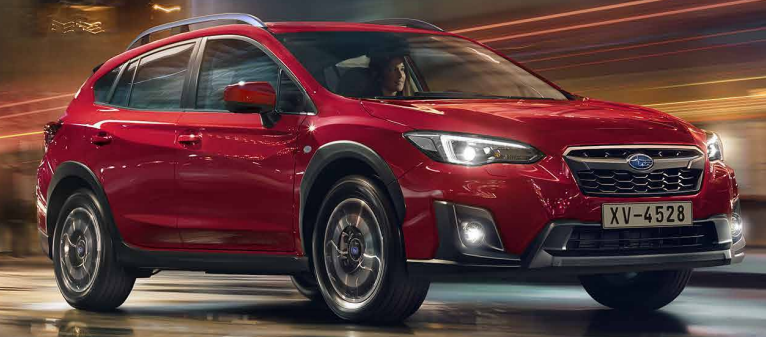
Choosing between the Subaru XV vs Forester vs Outback can feel a little like choosing three different sizes of the same hiking boot. They share plenty of Subaru DNA, they are all designed with adventurous driving in mind, and each can handle ordinary roads without feeling completely out of place when the pavement disappears. Yet they serve noticeably different types of drivers.
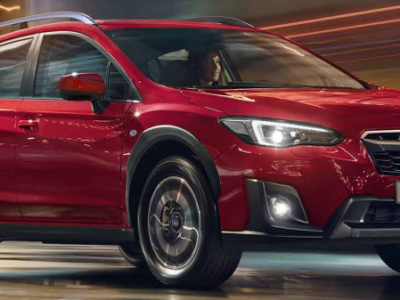
The Subaru XV—known today as the Crosstrek in many markets—is the compact, city-friendly member of the trio. The Forester is the traditional family SUV, with a taller body, excellent practicality, and plenty of usable interior space. The Outback, meanwhile, stretches the formula into something that feels half SUV, half rugged touring wagon.
So which one makes the most sense?
For many buyers, the decision comes down to something more important than horsepower or touchscreen size: how much vehicle do we actually need?
If we spend most of our week squeezing into city parking spaces, the XV can be surprisingly difficult to beat. If children, luggage, dogs, camping equipment, and supermarket runs are involved, the Forester begins to shine. And if long highway journeys, towing, touring comfort, and serious luggage capacity sit high on the list, the Outback starts making a very persuasive argument.
Let’s break down the differences.
Content in this publication
- Subaru XV vs Forester vs Outback at a Glance
- What Is the Difference Between the Subaru XV, Forester and Outback?
- Where the Subaru Outback Fits
- Subaru XV vs Forester vs Outback Size Comparison
- Which Has the Most Interior Space?
- Cargo Space: XV vs Forester vs Outback
- Driving Experience: Three Different Flavours of Subaru
- Subaru XV vs Forester vs Outback Off-Road
- Performance and Engine Choices
- Fuel Economy and Running Costs
- Towing: Which Subaru Wins?
- Technology and Safety
- Subaru XV vs Forester vs Outback for City Driving
- Which Is Best for Highway Driving?
- Which Is Best for Camping?
- XV vs Forester vs Outback Reliability
- Which Subaru Is Cheapest to Own?
- Subaru XV vs Forester vs Outback: Pros and Cons
- Who Should Buy the Subaru XV?
- Who Should Buy the Subaru Forester?
- Who Should Buy the Subaru Outback?
- Subaru XV vs Forester vs Outback: Which Is Best Overall?
- Frequently Asked Questions
Subaru XV vs Forester vs Outback at a Glance
Before diving into the details, here is the personality of each model in simple terms.
| Category | Subaru XV | Subaru Forester | Subaru Outback |
|---|---|---|---|
| Vehicle type | Compact SUV/crossover | Medium SUV | Large crossover/touring SUV |
| Best suited to | City driving and light adventures | Families and all-round use | Touring, road trips and larger loads |
| Parking ease | Excellent | Good | Fair |
| Passenger room | Good | Very good | Excellent |
| Cargo space | Moderate | Large | Very large |
| Driving feel | Light and compact | Upright and balanced | Stable and refined |
| Off-road suitability | Surprisingly capable | Strong all-round capability | Strong, especially for touring |
| Towing ability | Lowest of the three | Stronger | Generally strongest |
| Running costs | Usually lowest | Mid-range | Usually highest |
| Best overall trait | Maneuverability | Versatility | Comfort and capacity |
These are broad comparisons rather than universal specifications because engine choices, towing ratings, trim levels, and dimensions differ between countries and model years.
For some useful scale, the previous Australian-market XV measured 4,485 mm long and offered 220 mm of minimum ground clearance. Subaru's current Australian Forester also advertises 220 mm of clearance, while the Outback is listed with 213 mm in its Australian specification.
What Is the Difference Between the Subaru XV, Forester and Outback?
The biggest difference is not the badge. It is size and purpose.
Think of the lineup as three backpacks.
The XV is the daypack. It carries what we need without making us feel like we are hauling half the house.
The Forester is the weekend backpack. There is enough space for the family, supplies, and a few things we probably did not need to pack.
The Outback is the expedition bag. It is longer, more substantial, and better suited to long trips where luggage, comfort, and towing capability matter.
That distinction affects almost everything: parking, fuel use, passenger room, luggage capacity, ride quality, purchase price, and even the way each vehicle feels from the driver's seat.
Where the Subaru XV Fits
The XV was Subaru's compact SUV and effectively became the foundation for today's Crosstrek. Subaru Australia describes the Crosstrek as the next iteration of the XV, carrying forward the small SUV concept introduced by the XV.
That is important if we're shopping for a used XV. We are not looking at some forgotten side project from Subaru. We're effectively looking at the predecessor to a vehicle line that remains central to Subaru's SUV range.
The XV works particularly well for drivers who want SUV ground clearance and all-wheel-drive capability without moving into a noticeably larger family SUV.
Where the Subaru Forester Fits
The Forester sits in the sweet spot.
It is bigger and more practical than the XV, yet it does not feel as long or touring-focused as an Outback. Its upright shape is especially useful because interior volume is not only about how long a vehicle is. Height matters too.
That boxier roofline helps the Forester swallow passengers, bulky items, child seats, shopping bags, pets, and holiday luggage without making the vehicle unnecessarily enormous.
Why the Forester Is Often the Safe Middle Choice
For somebody who likes all three cars but genuinely cannot decide, the Forester is usually the easiest starting point.
It does most things well.
It is roomy without becoming cumbersome, adventurous without feeling overly specialised, and family-friendly without behaving like a giant SUV.
Where the Subaru Outback Fits
The Outback takes a different approach.
Instead of simply becoming a taller SUV, it retains the stretched proportions traditionally associated with a wagon. That gives it a lower, longer visual profile than the Forester.
The result is a vehicle that feels particularly natural on long-distance journeys.
In some markets, Outback variants also offer more powerful engine choices and substantially greater towing ability. For example, Subaru Australia's previous-generation Outback range offered a naturally aspirated 2.5-litre engine alongside 2.4-litre turbo XT versions, with the turbo versions rated to tow substantially more than the standard model.
For caravans, trailers, camping gear, long highway trips, or simply drivers who enjoy having lots of vehicle around them, the Outback has an obvious advantage.
Subaru XV vs Forester vs Outback Size Comparison
Size might be the single most important difference between these three.
The XV is unmistakably the smallest.
The Forester grows upward as much as outward.
The Outback stretches farther lengthwise.
Those proportions create three quite different experiences.
Subaru XV: Compact Without Feeling Tiny
One of the XV's strengths is that it provides meaningful ground clearance without demanding the parking footprint of a large SUV.
The former Australian XV, for example, was listed at 4,485 mm in overall length, 1,800 mm wide, and 1,615 mm high in several petrol versions. Ground clearance was 220 mm.
That combination explains much of its character.
It feels relatively easy to maneuver, but we still sit higher than we would in a conventional hatchback.
For city dwellers, that's a useful compromise.
Forester: Taller and More Family Friendly
The Forester makes much better use of vertical space.
As a reference, the MY26 Australian Forester is listed at 4,655 mm long, 1,830 mm wide, and 1,730 mm high, with 220 mm of minimum ground clearance.
Those numbers tell an interesting story.
It isn't dramatically longer than the old XV, yet it is considerably taller. That's why the Forester can feel much roomier than the difference in exterior length might suggest.
Outback: Longer and More Substantial
The Outback feels different again.
Rather than creating most of its usable space through additional height, it stretches the cabin and cargo area over a longer footprint.
That helps give the Outback its relaxed touring character. On the road, it tends to feel planted rather than towering.
The downside appears when we reach a cramped underground car park.
Suddenly, those extra dimensions matter.
Which Has the Most Interior Space?
For passenger space, we would generally rank them:
Outback ≈ Forester > XV
But there is more nuance here than the ranking suggests.
The Forester's tall, upright cabin can feel exceptionally spacious, particularly around the head and shoulders. Large windows also contribute to a wonderfully open feeling.
The Outback counters with more of that long-distance lounge effect. Its cabin feels stretched and substantial, making it particularly appealing for adult passengers and extended journeys.
The XV remains perfectly usable for four adults, but place the vehicles side by side and its compact roots become obvious.
Best for Families
For most families, we would choose the Forester.
Why not automatically choose the largest Outback?
Because family practicality is about more than sheer space.
Parents often deal with:
- child seats;
- tight school parking areas;
- supermarket spaces;
- pushchairs;
- sports equipment;
- children climbing in and out;
- frequent short trips;
- narrow residential streets.
The Forester's combination of manageable exterior dimensions and spacious interior packaging works brilliantly in those situations.
Cargo Space: XV vs Forester vs Outback
If luggage matters, the XV falls behind fairly quickly.
The old Australian XV was rated at roughly 310 to 345 litres of cargo volume behind the rear seats depending on variant, whereas the current Australian Forester lists around 484 to 496 litres in comparable rear-seat-up measurements, depending on version. Measurement standards can differ between manufacturers and generations, but the gap illustrates the broader point: the Forester provides substantially more useful family cargo room.
The Outback goes further by providing a long cargo floor particularly suited to suitcases, camping equipment, and bulky touring gear.
Which Is Better for Dogs?
This is where the Forester becomes surprisingly compelling.
Its upright rear compartment and tall roof can be more useful for dogs than simply having the longest possible cargo area.
A medium or large dog benefits from vertical space.
The Outback still works brilliantly, especially for multiple dogs or when we're carrying luggage at the same time. But the Forester's shape is wonderfully practical for pet owners.
Driving Experience: Three Different Flavours of Subaru
Subaru's familiar engineering themes connect these cars, including horizontally opposed Boxer engines and all-wheel-drive systems on many market versions. Subaru continues to highlight Boxer engines and Symmetrical All-Wheel Drive as central technologies across its range.
You may be interested in reading Subaru XV vs Honda HR-V: Which Compact SUV Is Better?
But similar ingredients do not create identical meals.
How the XV Drives
The XV feels the most nimble.
Its smaller dimensions make it easier to position on narrow roads, in traffic, and around parking areas.
That lighter, smaller sensation is one reason the XV can actually be more enjoyable than the larger vehicles in everyday driving.
We do not always need more car.
Sometimes the vehicle that asks the least of us is the one we enjoy the most.
How the Forester Drives
The Forester feels upright and predictable.
Visibility is one of its strongest qualities. The generous glass area helps us understand exactly where the vehicle sits on the road.
It doesn't disguise its SUV character, but neither does it typically feel enormous.
That makes it particularly easy to drive for people moving up from a hatchback or compact crossover.
How the Outback Drives
The Outback is the motorway cruiser of the trio.
Its longer stance tends to suit high-speed touring beautifully. Where the Forester feels like a traditional SUV, the Outback has more wagon DNA in its personality.
We settle into it rather than climb aboard it.
For drivers regularly covering hundreds of motorway kilometres, that difference can become more valuable than an extra feature on a specification sheet.
Subaru XV vs Forester vs Outback Off-Road
Here is where things become interesting.
Looking at an XV parked beside an Outback, we might assume the largest Subaru is automatically the best off-road.
Not necessarily.
Ground clearance is competitive across the family. The previous Australian XV and current Forester reference specifications both list 220 mm, while the referenced Outback advertises 213 mm. Subaru's modern Crosstrek, the XV's successor, continues to advertise 220 mm of clearance and X-Mode on the Australian range.
XV Off-Road Advantages
The XV's main weapon is compactness.
On narrow forest trails, tight turns, or awkward tracks, smaller dimensions can be an advantage.
There is simply less body to maneuver.
We would not treat an XV like a hardcore body-on-frame 4x4, of course, but for gravel roads, snowy routes, camping tracks, wet fields, and rough access roads, it can be impressively useful.
Forester Off-Road Advantages
The Forester may offer the best compromise.
It combines good clearance, useful visibility, manageable proportions, and a practical body.
We can carry considerably more equipment than in the XV without moving into something as long as the Outback.
What About X-Mode?
Subaru's X-Mode technology coordinates elements such as the engine, transmission, brakes, and AWD system to help manage low-grip surfaces. Availability and the number of selectable modes vary by model and trim.
It is not a magic button that transforms a crossover into a dedicated rock crawler.
But on slippery climbs, gravel, mud, or snow, it adds another layer of confidence.
Outback Off-Road Advantages
The Outback is particularly appealing for overland-style touring.
Think long gravel roads rather than narrow technical trails.
Its combination of luggage space, road comfort, AWD traction, available towing capability, and respectable ground clearance means we can drive hundreds of kilometres to the adventure without feeling punished before the adventure even starts.
Performance and Engine Choices
This section requires a little caution because engine ranges vary dramatically between countries and generations.
Historically, XV models have tended to receive smaller engines than Forester and Outback variants.
The Forester generally provides stronger performance suitable for its larger body.
The Outback often receives the most powerful engine options of the trio, depending on market.
For instance, Australian Outback XT variants have been offered with a 2.4-litre turbocharged Boxer petrol engine, while non-XT versions have used a naturally aspirated 2.5-litre Boxer.
Which Feels Fastest?
If we're comparing equivalent generations and choosing one of the turbocharged Outback variants available in certain markets, the Outback can easily be the strongest performer.
But outright acceleration probably should not determine the choice between these three.
The more useful question is whether each model has enough performance for its intended job.
For urban and suburban driving, the XV rarely needs huge power.
For a fully loaded family SUV, additional Forester performance is useful.
For highway overtaking, towing, and loaded touring, extra Outback torque can be genuinely valuable.
Fuel Economy and Running Costs
Generally, we'd expect the XV to be the cheapest of the three to operate.
It is smaller and lighter, and tyres, fuel consumption, insurance, and consumables may also be more affordable depending on the specification.
The Forester sits somewhere in the middle.
The Outback may require the largest budget, particularly with higher-output engines, larger wheels, or extensive touring use.
That doesn't mean the Outback is inefficient for what it offers. It simply means that carrying more vehicle usually costs more money.
Hybrid Options Change the Equation
Subaru has offered hybrid versions of both the XV/Crosstrek and Forester in various markets and generations. The latest Australian Forester, for example, is offered in petrol and hybrid versions, while Crosstrek has also been available with petrol and e-Boxer hybrid powertrains.
Anyone comparing fuel costs should therefore compare specific engine against specific engine, not simply model against model.
Towing: Which Subaru Wins?
For frequent towing, the Outback is usually our first choice.
Again, ratings vary by year and market, but the hierarchy is easy to understand.
The XV is designed primarily as a compact crossover.
The Forester has more meaningful towing potential.
The Outback is often positioned as the strongest touring and towing option.
For reference, the previous Australian XV brochure listed up to 1,400 kg braked towing capacity for several petrol versions. The MY26 Australian Forester lists as much as 1,800 kg for non-hybrid versions, while earlier Australian Outback XT variants were rated as high as 2,400 kg. These figures should never be transferred blindly to vehicles sold in another country or another model year.
Best Choice for Caravans and Trailers
If towing is occasional and relatively light, a Forester may be all we need.
If towing becomes a major part of our lifestyle, especially with heavier trailers, the Outback makes more sense.
Always verify the precise vehicle's:
- braked towing limit;
- unbraked towing limit;
- tow-ball load;
- payload;
- gross vehicle mass;
- local legal requirements.
Towing capacity is not just one number.
Technology and Safety
Equipment depends heavily on generation.
A newer Crosstrek or Forester may offer technology that an older, more expensive Outback simply never had.
That means used-car shoppers should avoid assuming that moving higher in Subaru's model hierarchy automatically means getting more advanced technology.
Look at the actual vehicle.
Subaru's EyeSight driver-assistance technology has evolved over the years, and available systems can include adaptive cruise control, pre-collision braking, lane-related assistance, blind-spot monitoring, rear cross-traffic alert, and other features depending on model and grade.
Used Buyers Should Prioritize Generation Over Badge
Imagine two cars:
a newer XV with updated safety systems and connectivity,
or an older Outback with leather seats but outdated infotainment.
You may be interested in readingSubaru XV vs Honda HR-V: Which Compact SUV Is Better?You may be interested in reading
Subaru XV vs Mazda CX-3: Which Small SUV Is Better?Which is better?
There is no automatic answer.
This is why comparing actual specification sheets matters more than assuming that Outback > Forester > XV in every category.
Subaru XV vs Forester vs Outback for City Driving
The XV wins.
This is perhaps its clearest victory.
It occupies less road space, feels easier to park, and still provides much of the elevated driving position and poor-weather confidence people want from an SUV.
For someone living in an apartment and occasionally driving into the mountains, the XV can make far more sense than buying an Outback simply because the Outback is bigger.
More isn't automatically better.
A large vehicle carrying one person and an empty boot around crowded city streets is like wearing hiking boots to walk across the living room.
It works.
But do we need it?
Which Is Best for Highway Driving?
The Outback gets our vote.
Its personality suits distance.
The stretched body, comfortable cabin, substantial luggage area, and available higher-output engines in certain markets all make sense when the horizon matters more than parking convenience.
The Forester comes surprisingly close, though.
Families who mix highway travel with city driving may actually prefer the Forester because it sacrifices less usability once the road trip ends.
Which Is Best for Camping?
We would divide this into three scenarios.
Choose the XV for lightweight camping where reaching remote places matters more than bringing half the garage.
Choose the Forester for family camping, especially when tents, coolers, chairs, and pets are involved.
Choose the Outback for long-distance camping trips, towing, roof-mounted gear, and carrying serious amounts of equipment.
The funny thing is that all three can fit the Subaru outdoorsy stereotype.
They simply interpret adventure differently.
XV vs Forester vs Outback Reliability
There is no useful blanket statement that one of these badges is always dramatically more reliable than the others.
Condition, generation, engine, maintenance history, transmission servicing, driving environment, recalls, and ownership history can matter more.
For a used vehicle, we would rather buy an immaculately maintained XV than a neglected Outback simply because the Outback was originally more expensive.
What Should We Check on a Used Subaru?
Before buying any used XV, Forester, or Outback, consider checking:
- complete service history;
- engine oil condition and consumption history;
- cooling system condition;
- CVT operation;
- wheel bearing noise;
- suspension wear;
- tyre condition and matching tyre sizes;
- battery condition;
- accident repairs;
- underbody damage;
- warning lights;
- AWD system operation;
- recalls and service campaigns.
A pre-purchase inspection is particularly valuable if the vehicle has spent significant time on unsealed roads.
Which Subaru Is Cheapest to Own?
The XV usually has the advantage.
Purchase price is only the beginning.
Smaller vehicles generally mean less money tied up in tyres, fuel, depreciation, and everyday consumables.
But we should not buy an XV merely to save money if we constantly need more space.
Similarly, paying extra for an Outback only makes sense if we actually use its advantages.
The Forester again lands in the middle, which explains why it appeals to such a broad range of buyers.
Subaru XV vs Forester vs Outback: Pros and Cons
Subaru XV Pros
- Compact exterior dimensions
- Easy to park
- Useful ground clearance
- AWD capability
- Lower running costs
- Great for singles and couples
- Well suited to urban driving
Subaru XV Cons
- Smallest cargo area
- Less suitable for large families
- Lower towing capability
- Can feel underpowered when heavily loaded
Subaru Forester Pros
- Excellent interior packaging
- Great visibility
- Family-friendly cabin
- Large cargo area
- Strong balance between city and adventure use
- More manageable than an Outback
Subaru Forester Cons
- Larger than necessary for some urban drivers
- More SUV-like driving character
- Not usually as strong for heavy towing as the most capable Outback versions
Subaru Outback Pros
- Excellent long-distance comfort
- Huge practicality
- Strong touring ability
- Excellent luggage capacity
- Stronger towing potential in suitable variants
- Available powerful engines in some markets
Subaru Outback Cons
- Largest footprint
- More difficult to park
- Potentially higher running costs
- Can be excessive for purely urban use
Who Should Buy the Subaru XV?
Buy the XV if your life is mostly urban but your weekends are not.
It is ideal for:
- singles;
- couples;
- smaller households;
- commuters;
- apartment dwellers;
- outdoor enthusiasts carrying modest amounts of equipment;
- drivers who want AWD without a bulky SUV.
The XV's great talent is doing enough without overdoing anything.
Who Should Buy the Subaru Forester?
Buy the Forester if you want one vehicle to cover almost everything.
It makes particular sense for:
- families;
- dog owners;
- road trips;
- school runs;
- camping;
- occasional towing;
- rough-road driving;
- drivers who appreciate excellent visibility.
If we had to recommend one of these three to the broadest possible audience, the Forester would probably be it.
It is the Goldilocks option.
Not too small.
Not too long.
Just very difficult to fault as an all-rounder.
Who Should Buy the Subaru Outback?
Buy the Outback when space, touring, and comfort outweigh compact dimensions.
It is best suited to:
- frequent highway drivers;
- larger families;
- camping enthusiasts;
- caravan or trailer owners;
- people carrying substantial luggage;
- drivers wanting a more premium touring feel;
- buyers who prefer wagon-like road manners.
If your idea of a normal weekend involves several hundred kilometres of driving, the Outback begins to look extremely convincing.
Subaru XV vs Forester vs Outback: Which Is Best Overall?
There is no universal winner, but there are three very clear winners for three different lifestyles.
Best for city driving: Subaru XV
Its smaller footprint makes everyday life easier.
Best all-rounder: Subaru Forester
It strikes the strongest balance between passenger space, cargo room, maneuverability, family practicality, and adventure capability.
Best for touring: Subaru Outback
Its larger body, long-distance comfort, luggage capacity, and towing potential make it the natural choice for serious road trips.
Our Final Verdict
If we were choosing without knowing exactly what tomorrow would bring, we would probably take the Forester.
It gives us enough room to grow without asking us to drive a large vehicle everywhere.
But that doesn't make it automatically better.
For city dwellers, the XV can be the smarter purchase precisely because it does less.
For long-distance travellers, the Outback can justify every extra centimetre of its footprint.
The real question isn't Which Subaru is best?
It's Which compromises do we want to live with?
The XV trades space for agility.
The Forester trades a little agility for much greater versatility.
The Outback trades compactness for space, comfort, and touring ability.
Once we look at them that way, choosing between the Subaru XV vs Forester vs Outback becomes surprisingly simple.
Frequently Asked Questions
1. Is the Subaru Forester bigger than the Subaru XV?
Yes. The Forester is a larger, taller SUV with substantially more cabin and cargo space. The XV is better suited to drivers who value compact dimensions and easier urban maneuverability. For example, Subaru Australia's previous XV was listed at 4,485 mm long, while the current MY26 Forester measures 4,655 mm.
2. Is the Subaru Outback bigger than the Forester?
The Outback generally has a longer footprint, while the Forester uses a more upright SUV body. Consequently, the Outback feels more like a large touring crossover, whereas the Forester feels taller and more traditionally SUV-like. The best one depends on whether we value a long cargo area and highway comfort or upright family practicality.
3. Is the Subaru XV now called the Crosstrek?
Yes in markets including Australia. Subaru describes the Crosstrek as the next iteration of the XV and says it carries forward the XV's small-SUV legacy. Naming history differs somewhat by market, as Crosstrek was already used instead of XV in countries such as the United States.
You may be interested in readingSubaru XV vs Honda HR-V: Which Compact SUV Is Better?You may be interested in reading
Subaru XV vs Mazda CX-3: Which Small SUV Is Better?You may be interested in reading
Subaru XV vs Toyota RAV4: Which SUV Is the Better Buy?4. Which is better off-road: XV, Forester or Outback?
For recreational off-road driving, all three can be capable when correctly equipped. The XV benefits from compact dimensions, the Forester offers a particularly strong blend of clearance and practicality, and the Outback excels when rough-road driving is combined with long-distance touring and heavy loads. Tyres and driving conditions can matter just as much as the badge.
5. Should I buy a Subaru XV, Forester or Outback?
Choose the XV if you want the smallest and easiest model to live with in the city. Choose the Forester if you need an adaptable family SUV. Choose the Outback if long-distance comfort, cargo capacity, and towing are priorities. For the widest range of buyers, the Forester is arguably the most balanced choice.
If you want to know other articles similar to Subaru XV vs Forester vs Outback: Which Subaru Should You Choose? you can visit the category Models.
Land Rover Defender 90 vs 110 vs 130: Which Defender Is Right for You?
Land Rover Defender 90 vs 110: Which Defender Should You Buy?
Which Toyota Hilux Is the Best? The Complete Buyer’s Guide
Subaru XV vs Nissan Qashqai: Which Crossover Is Better?
Subaru XV vs Mazda CX-30: Which Compact SUV Should We Choose?
Subaru XV vs Toyota RAV4: Which SUV Is the Better Buy?
Leave a Reply
More content of your interest