
Toyota Hilux vs Nissan Navara: Which Ute Makes More Sense?

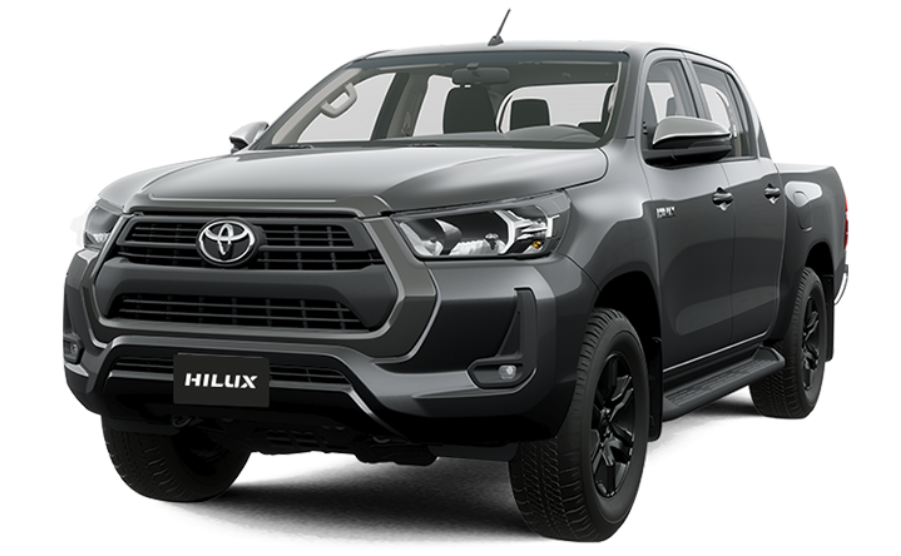
Choosing between the Toyota Hilux vs Nissan Navara is a bit like choosing between two well-proven tools in a crowded shed. Both are serious body-on-frame utes, both can tow substantial loads, both can tackle dirt roads and demanding worksites, and both have evolved far beyond the bare-bones pickups of the past.
Yet they do not feel identical once we look below the surface.
For current specifications, we are using the 2026 Australian-market diesel 4x4 models as our main reference because Toyota and Nissan offer directly comparable metric specifications there. Engines, trim names, payloads, technology, and even suspension configurations can vary in other countries, so local specifications should always be checked before buying.
The current Hilux uses Toyota's 2.8-litre turbo-diesel, producing up to 150 kW and 500 Nm with the automatic transmission. Australia's new-generation Navara uses a 2.4-litre bi-turbo diesel producing 150 kW and 470 Nm with a six-speed automatic. Both offer up to 3,500 kg braked towing capacity in their relevant diesel 4x4 configurations.
So, which one fits your driveway, worksite, caravan, or weekend adventures better? Let's dig deeper.
Content in this publication
- Toyota Hilux vs Nissan Navara at a Glance
- Engine Comparison: 2.8-Litre Hilux vs 2.4-Litre Navara
- Transmission and Drivetrain Differences
- Toyota Hilux vs Nissan Navara Towing Capacity
- Payload: Which One Carries More?
- Fuel Economy: Hilux vs Navara
- Ride Comfort and Suspension
- Off-Road Capability
- Dimensions and Practicality
- Interior and Technology
- Safety: Toyota Hilux vs Nissan Navara
- Work Use: Which Ute Fits a Tradesperson Better?
- Family and Lifestyle Use
- Hilux vs Navara for Towing a Caravan
- Hilux vs Navara for Serious Off-Roading
- Ownership and Maintenance Considerations
- Toyota Hilux vs Nissan Navara: Key Differences That Actually Matter
- Toyota Hilux vs Nissan Navara: Which One Should You Choose?
- Closing Thoughts
- Frequently Asked Questions
Here is the broad picture using representative current Australian 4x4 dual-cab versions.
| Feature | Toyota Hilux | Nissan Navara |
|---|---|---|
| Main diesel engine | 2.8L turbo-diesel | 2.4L bi-turbo diesel |
| Maximum power | 150 kW | 150 kW |
| Maximum torque | 500 Nm automatic | 470 Nm |
| Transmission | 6-speed manual or automatic, depending on grade | 6-speed automatic |
| Maximum braked towing | 3,500 kg on diesel 4x4 models | 3,500 kg |
| Drive layout | 4x2/4x4 depending on model | Current Australian range is dual-cab 4x4 |
| Rear suspension | Leaf spring | Leaf spring |
| Infotainment | 12.3-inch touchscreen | 9.0-inch touchscreen |
| Typical character | Broad work/lifestyle range | Strongly focused dual-cab 4x4 range |
Toyota confirms that current automatic Hilux variants produce 150 kW and 500 Nm, while Nissan states that its new Navara makes 150 kW and 470 Nm. The Australian Navara lineup is now concentrated around four dual-cab 4x4 automatic grades: SL, ST, ST-X and PRO-4X.
The specifications already hint at something important. The Hilux casts a wider net, while the Navara range is more tightly focused.
Engine size alone rarely tells the whole story, but it gives us a sensible place to start.
Toyota's familiar 2.8-litre four-cylinder turbo-diesel has been progressively refined and, in current automatic Hilux models, delivers 150 kW and 500 Nm. Manual variants produce less peak torque at 420 Nm.
Nissan takes a slightly different route. The latest Navara uses a smaller 2.4-litre four-cylinder diesel with twin turbocharging. It produces the same 150 kW of maximum power but 470 Nm of torque, available from low engine speeds.
Hilux Power Delivery
The Hilux's extra 30 Nm on automatic models may not sound enormous. In percentage terms, it isn't. But torque matters most when we are asking the vehicle to work—climbing steep roads, accelerating with cargo aboard, towing uphill, or crawling through loose terrain.
The 2.8-litre unit has the muscular feel we expect from a utility diesel. It does not need to behave like a sports engine. Its job is more like a strong farm dog: pull when asked, keep moving, and avoid unnecessary drama.
Toyota also offers V-Active 48V technology on selected current 4x4 automatic grades. It is designed to support the diesel powertrain rather than turn the Hilux into a conventional full hybrid.
The Navara's 2.4-litre bi-turbo engine takes a more modern downsized approach.
Rather than relying purely on displacement, twin turbocharging helps produce strong low- and mid-range response. Maximum output of 150 kW matches the Hilux, while 470 Nm remains substantial for a four-cylinder ute. Nissan pairs the engine exclusively with a six-speed automatic in the current Australian range.
Does 500 Nm Automatically Beat 470 Nm?
Not necessarily.
Torque is only one piece of the puzzle. Gear ratios, throttle mapping, vehicle mass, tyre size and final-drive gearing all affect what we actually feel behind the wheel.
Still, if we are comparing headline engine specifications alone, the automatic Hilux has the higher torque figure.
Transmission and Drivetrain Differences
Toyota gives buyers more drivetrain variety.
Depending on grade, current Hilux diesel models can be ordered with manual or automatic transmissions, while the wider range includes 4x2 and 4x4 configurations. That flexibility matters to fleets, tradespeople, rural users and buyers who simply do not need four-wheel drive every day.
The current Australian Navara lineup is simpler. Nissan has concentrated on dual-cab, 4x4 and automatic transmission models after noting that more than 90% of customers for the previous generation were already choosing that combination.
That strategy makes the showroom less complicated but also means buyers searching for a basic single-cab work ute or 4x2 Navara have fewer choices.
Here we reach one of the most searched questions in the entire comparison.
How Much Can the Toyota Hilux Tow?
Current Australian diesel Hilux 4x4 variants can tow up to 3,500 kg with a braked trailer. Toyota's 4x2 diesel versions are rated lower, at up to 2,900 kg.
Every model in Nissan Australia's current Navara range is rated for up to 3,500 kg of braked towing capacity.
On paper, therefore, there is no meaningful difference between comparable 4x4 models at the maximum advertised figure.
Why 3,500 kg Towing Does Not Mean You Can Load Everything Else Too
This is where ute comparisons often become misleading.
Maximum trailer weight is not the same thing as maximum real-world combined load.
Passengers, luggage, a canopy, bull bar, roof rack, recovery equipment and the downward weight placed on the tow ball all consume available vehicle payload. Gross Vehicle Mass, Gross Combined Mass and individual axle limits still apply.
A ute capable of pulling a 3,500 kg trailer cannot necessarily tow that trailer while simultaneously carrying its maximum payload.
Anyone planning to tow a large caravan, horse float or equipment trailer should calculate the entire combination rather than reading only the headline towing figure.
Payload: Which One Carries More?
Payload varies significantly by configuration, so there is no honest single number representing every Hilux.
Toyota's current range includes work-oriented cab-chassis versions alongside increasingly equipment-heavy lifestyle models. Kerb mass rises as accessories, larger wheels, luxury equipment and off-road hardware are added.
For example, Toyota quotes the current Hilux SR5 4x4 automatic double-cab at up to approximately 2,155 kg kerb mass and a 4x4 GVM between 3,080 and 3,120 kg depending on configuration.
The new Navara's payload also changes by grade. Nissan lists the SL dual cab at 1,064 kg, ST at 1,047 kg, ST-X at 1,019 kg and PRO-4X at 964 kg. In other words, extra equipment gradually consumes payload.
This is why the work-focused base model can sometimes be the smarter load carrier than the glamorous flagship parked beside it.
Fuel consumption sounds straightforward until we remember that laboratory numbers depend heavily on the exact version being tested.
Toyota lists current diesel Hilux variants around the low-to-mid 7 L/100 km range in several configurations. For example, Toyota quotes approximately 7.4 L/100 km for the SR5 4x4 automatic double-cab with V-Active technology.
Nissan quotes 7.7 L/100 km combined for the current Navara's 2.4-litre bi-turbo diesel.
Laboratory consumption should never be confused with guaranteed everyday economy. Add a trailer, mud-terrain tyres, a roof platform, heavy tools, stop-start traffic or a strong headwind and diesel consumption can climb quickly.
Still, both are remarkably economical on paper considering their size and capability.
You may be interested in reading Toyota Hilux or Ford Ranger: Which Ute Makes More Sense?
Ride Comfort and Suspension
This area deserves special attention because older Navara comparisons floating around online can now be misleading.
Previous-generation dual-cab Navaras became known for using coil-spring rear suspension in several variants. The new Australian D27 Navara uses leaf springs at the rear, paired with independent double-wishbone front suspension. Nissan has also promoted locally tuned suspension developed for Australian conditions.
The Hilux similarly uses an independent front setup with a live rear axle and leaf springs.
Why Leaf Springs Still Make Sense
Leaf springs can sound old-fashioned beside sophisticated SUV suspension systems, yet utes live a different life.
Their rear suspension has to tolerate large changes in mass. One morning the tray may be empty. That afternoon it might contain hundreds of kilograms of equipment.
That is like asking the same pair of shoes to work equally well for jogging and carrying concrete blocks.
Manufacturers therefore have to balance unladen comfort against stability, payload capacity and durability.
Everyday Driving
Modern tuning means neither ute needs to feel like an agricultural truck in normal driving, but physics remains physics.
With no load in the tray, rear-end movement over sharp bumps is still part of the dual-cab ute experience. Add some weight and the suspension often settles.
Buyers coming directly from a unibody SUV should test-drive both on the roads they actually use rather than judging comfort from a five-minute loop around a smooth dealership block.
Off-Road Capability
Both the Hilux and Navara are built around ladder-frame platforms and genuine four-wheel-drive hardware rather than soft-roader styling.
The current Navara SL comes with selectable 2H, 4H and 4L modes plus an electronic locking rear differential as standard. Higher versions add more sophisticated drivetrain features depending on grade.
Toyota offers low-range 4WD on appropriate Hilux models and adds five-mode Multi-Terrain Select to selected automatic 4x4 double-cab versions. Higher Hilux grades can also include a 360-degree Multi-Terrain Monitor.
Where the Hilux Feels Purpose-Built
The Hilux range has an enormous spread of configurations. We can start with a straightforward work model and move upward into SR5, Rogue and Rugged X territory with progressively more equipment.
That means Toyota can tailor essentially the same underlying ute concept toward very different owners.
Nissan has gone the opposite way with its latest Australian lineup.
Rather than trying to cover every possible cab and drivetrain combination, it has concentrated on the dual-cab 4x4 automatic market. Even the entry-level SL includes an electronic rear differential lock, all-terrain tyres and a dual-range transfer case.
For recreational buyers, that standard equipment is significant.
Dimensions and Practicality
Both vehicles occupy the familiar mid-size pickup footprint.
A current Hilux SR5 double-cab measures approximately 5,320 mm long, with a 3,085 mm wheelbase.
The latest Navara is also roughly 5,320 mm long, so neither suddenly transforms into a city hatchback when we reach a supermarket car park.
That means we should think about parking spaces, underground height limits, turning circles and garage length before buying either one.
Cabin Space
Both provide five-seat layouts in dual-cab form.
The rear seats are perfectly usable for family duty, but a dual-cab pickup still packages its interior around a separate cargo bed. Anyone regularly carrying tall adults in the second row should sit behind their own driving position before ordering.
A specification sheet can measure wheelbase. It cannot tell us whether our knees, shoulders or child seats feel comfortable.
Interior and Technology
This is one of the areas where today's Hilux has moved noticeably forward.
Toyota now installs a 12.3-inch multimedia touchscreen across the Hilux range, with wireless Apple CarPlay and Android Auto. WorkMate and SR grades use a 7-inch instrument display, while higher versions can get a 12.3-inch digital cluster.
The latest Navara comes with a 9.0-inch touchscreen and a 7.0-inch driver information display. Nissan provides wireless Apple CarPlay and wired Android Auto, while higher trims can add features including wireless phone charging.
Hilux Cabin Character
Toyota's newer dashboard finally gives the Hilux the screen presence expected from a modern vehicle.
At the same time, the cabin remains designed around ute practicality rather than trying to imitate a minimalist electric luxury car. That is not a bad thing. When we are bouncing down a corrugated road, a control we can quickly identify is often more useful than one buried three menus deep.
The Navara's screen is smaller, yet its interface covers the fundamentals: smartphone integration, navigation, digital radio, Bluetooth and multiple charging connections.
Higher trims add comfort equipment and extra convenience rather than fundamentally changing what the ute is supposed to be.
Both current vehicles have strong contemporary safety credentials.
ANCAP lists the current Hilux introduced from late 2025 with a five-star rating applying to the covered diesel and battery-electric variants, excluding Rugged X. It scored 84% for adult occupant protection, 89% for child occupant protection, 82% for vulnerable road-user protection and 82% for safety assist.
The current D27 Navara also carries a five-star ANCAP rating for all dual-cab variants. ANCAP lists scores of 86% for adult protection, 89% for child protection, 74% for vulnerable road-user protection and 70% for safety assist. Its rating is based partly on testing of the closely related Mitsubishi Triton alongside technical evidence supplied to ANCAP.
Toyota equips the latest Hilux with technologies including autonomous emergency braking, adaptive cruise control, blind-spot monitoring, rear cross-traffic alert and lane-support functions.
Nissan similarly offers autonomous emergency braking, lane assistance, cross-traffic alert and an Around View 360-degree camera system depending on equipment level.
Work Use: Which Ute Fits a Tradesperson Better?
This depends heavily on what we mean by "work."
If our job involves trays, service bodies, specialised conversions or unusual cab configurations, the Hilux's broad range becomes extremely valuable.
Toyota offers multiple cab styles and work-focused models, so a business can buy a vehicle around the job instead of adapting the job around a dual-cab pickup.
The Navara's Australian strategy is much narrower. It is essentially aimed at buyers who already know they want a four-door, five-seat, 4x4 automatic ute.
Neither philosophy is wrong.
You may be interested in readingToyota Hilux or Ford Ranger: Which Ute Makes More Sense?You may be interested in reading
Toyota Hilux vs Isuzu D-Max: Which Tough Ute Fits You Best?One behaves like a toolbox with multiple drawer sizes. The other arrives with the most popular drawer already open.
Family and Lifestyle Use
For many owners, these vehicles spend Monday carrying work equipment, Saturday carrying mountain bikes and Sunday sitting outside a café.
That mixed lifestyle changes what matters.
A family buyer may care more about rear air vents, parking cameras, smartphone connectivity and active safety than about having a single-cab alternative available somewhere lower in the range.
A tradesperson might think the opposite.
Before choosing, we would consider:
- How frequently will we tow, and what will the loaded trailer actually weigh?
- How many passengers do we normally carry?
- Do we genuinely need low-range 4WD?
- Will we install a canopy, bull bar, roof platform or long-range tank?
- How much payload remains after those accessories are fitted?
- Is the vehicle primarily a work tool, family vehicle, adventure ute, or a mixture of all three?
- Can we comfortably park it at home and at work?
Answer those questions first and the badge on the grille suddenly becomes less mysterious.
Both can be strong tow vehicles, but a 3.5-tonne caravan deserves more homework than simply confirming that "3,500 kg" appears in a brochure.
Tow-ball download reduces available payload. So do passengers and accessories.
Nissan lists a Gross Combined Mass of 6,250 kg for its current Australian Navara, while Toyota's relevant Hilux figures depend on configuration. Consequently, buyers towing close to maximum limits need to calculate the exact grade rather than generalising from model-wide marketing.
For a lighter caravan, camper trailer or boat, both offer far more breathing room.
Tyres may matter more than many showroom features.
A good set of suitable all-terrain tyres, appropriate pressures and competent driving can transform what a standard ute can accomplish. Conversely, a beautifully equipped flagship on inappropriate tyres can struggle surprisingly quickly.
The Navara's standard electronic rear differential lock on the base SL is attractive for buyers who want capability without climbing immediately to the most expensive trim.
Toyota counters with an extensive 4x4 range, Multi-Terrain Select on appropriate models and specialised upper grades aimed directly at recreational users.
Neither specification removes the need for recovery points, proper trip preparation and sensible judgment.
Ownership and Maintenance Considerations
Purchase price is only the first chapter.
Tyres, servicing, fuel, registration, insurance, accessories and depreciation can eventually dwarf the difference between two showroom stickers.
A vehicle used as a workhorse also needs to fit the local support network. Someone operating hundreds of kilometres from a major city may value parts availability and dealer access differently from an urban owner who lives ten minutes from several workshops.
For used examples, condition becomes even more important than the badge.
A carefully maintained Navara with a documented service history can be a far more sensible purchase than a neglected Hilux that spent years towing at maximum weight—and naturally the reverse is equally true.
What to Check Before Buying Used
Look beyond polished paint. Service history, underbody damage, suspension modifications, tyre wear, fluid leaks, towing history and previous accessories can tell us far more about a ute's life than shiny wheels.
Modern turbo-diesel vehicles also contain emissions-control systems that deserve correct maintenance. A cheap purchase becomes less cheap when deferred repairs arrive immediately afterward.
Strip away the marketing and we end up with several meaningful distinctions.
The current automatic Hilux has a 30 Nm torque advantage at its peak. Toyota also offers substantially more body-style and drivetrain choice. Its latest cabin brings a larger standard touchscreen, and selected models combine the diesel with V-Active 48V assistance.
The new Navara counters with 150 kW from its 2.4-litre bi-turbo diesel, 3,500 kg towing across the Australian range, an electronic rear differential lock even on the entry SL and payload above one tonne on several grades.
Its range is smaller but straightforward: every current Australian Navara is a dual-cab 4x4 automatic.
Toyota gives us more ways to configure the tool. Nissan has concentrated its effort around the configuration most private ute buyers were already choosing.
We should choose according to use rather than reputation alone.
The Toyota Hilux makes particular sense when we want maximum configuration flexibility, the 500 Nm automatic diesel, a choice of manual and automatic transmissions in parts of the range, multiple cab/body styles, a larger current infotainment screen, or access to a broad ladder of work and lifestyle grades.
The Nissan Navara makes particular sense when our shopping list already says dual-cab, automatic, diesel and 4x4. Its 150 kW/470 Nm powertrain is competitive, every current Australian version offers 3.5-tonne braked towing, and even the entry grade receives genuine off-road equipment.
There is no magical specification that makes one perfect for every owner.
If we tow 3 tonnes every weekend, our priorities will differ dramatically from someone carrying two mountain bikes. If we install a heavy service body, payload matters more than leather upholstery. If the vehicle spends 95% of its life commuting, comfort and safety technology rise up the list.
That is why the right comparison begins with the job.
Closing Thoughts
The Toyota Hilux vs Nissan Navara contest remains close because both vehicles attack the same problem from slightly different directions.
The Hilux is the broader proposition. Its range stretches from basic work configurations to sophisticated lifestyle 4x4s, and its 2.8-litre automatic diesel delivers a strong 500 Nm. The latest interior and safety upgrade also makes today's Hilux considerably more modern than older comparisons might suggest.
The new Navara is more concentrated. Nissan has stripped its Australian range down to the combination buyers overwhelmingly wanted anyway: dual cab, diesel, automatic and 4x4. Its 150 kW engine matches the Hilux for peak power, 470 Nm remains substantial, and 3,500 kg towing capability comes across the entire lineup.
Our decision should therefore come down to payload, trim, accessories, towing weight, everyday driving and price in the local market—not merely the name stamped across the tailgate.
The smartest ute is the one whose limits comfortably exceed what we actually ask it to do.
Frequently Asked Questions
Current Australian automatic Hilux diesel variants and the current Navara both produce up to 150 kW. The Hilux produces a higher maximum torque figure of 500 Nm, compared with 470 Nm for the Navara.
Comparable diesel 4x4 versions are evenly matched at the headline maximum. Toyota rates its diesel Hilux 4x4 range for up to 3,500 kg braked towing, while Nissan rates every current Australian Navara at up to 3,500 kg. Actual legal towing capacity still depends on loading, GVM, GCM and tow-ball limits.
Not in the current Australian D27 generation discussed here. Nissan specifies independent double-wishbone front suspension and leaf springs at the rear. This is important because many older Navara comparisons refer to previous-generation models with different suspension arrangements.
You may be interested in readingToyota Hilux or Ford Ranger: Which Ute Makes More Sense?You may be interested in reading
Toyota Hilux vs Isuzu D-Max: Which Tough Ute Fits You Best?You may be interested in reading
Toyota Hilux vs Tacoma: Which Toyota Pickup Makes More Sense?The current Hilux has the larger standard central display, with Toyota fitting a 12.3-inch touchscreen across the range. The current Navara uses a 9.0-inch touchscreen. Both support Apple CarPlay, although connectivity details differ by model and phone platform.
Both can work as family vehicles in dual-cab form, but the better fit depends on seat comfort, trim level, parking requirements, ride preferences and how much towing or off-roading we actually do. A test drive with the usual passengers—and ideally a careful look at the payload required after accessories—will tell us more than the badge alone.
If you want to know other articles similar to Toyota Hilux vs Nissan Navara: Which Ute Makes More Sense? you can visit the category Models.
Peugeot RCZ Models: Complete Guide to Versions, Trims and Engines
Toyota Hilux Like Cars: The Best Alternatives Worth Considering
Toyota Hilux and Fortuner Same Engine: Are They Really Identical?
Toyota Hilux vs Mazda BT-50: Which Ute Makes More Sense?
Toyota Hilux vs Prado: Which Toyota 4WD Makes More Sense?
Toyota Hilux vs Land Cruiser: Which Toyota 4x4 Makes More Sense?
Leave a Reply
More content of your interest