
Toyota Hilux vs Land Cruiser: Which Toyota 4x4 Makes More Sense?

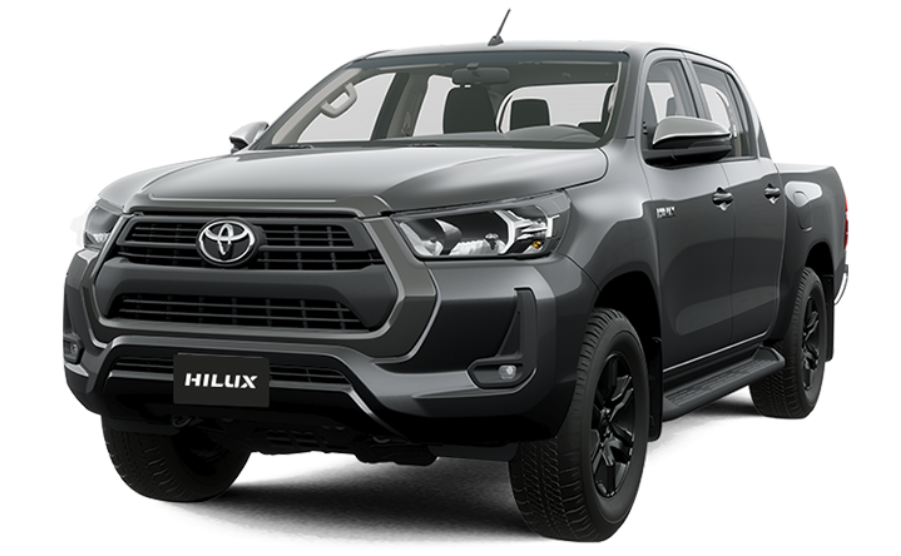
Put a Toyota Hilux beside a Toyota Land Cruiser and, at first glance, the comparison seems obvious. Both are tough. Both have reputations built far beyond smooth highways. Both can tow, crawl over rough terrain, survive dusty roads, and carry the kind of adventurous image Toyota has spent decades building.
Yet choosing between them is not as simple as asking which Toyota 4x4 is better.
The Toyota Hilux vs Land Cruiser debate is really about purpose.
The Hilux is fundamentally a utility vehicle. It gives us a separate cargo bed, serious payload capability, commercial versatility, and an enormous range of configurations. The Land Cruiser, depending on whether we're talking about the utilitarian 70 Series, modern 250 Series, or luxurious 300 Series, leans toward heavy-duty exploration, passenger transport, long-distance touring, or premium off-road travel.
Think of the Hilux as a multitool wearing work boots. The Land Cruiser is more like an expedition backpack: larger, more substantial, and designed to carry people through difficult terrain in greater comfort.
So, which one belongs in our driveway?
Let's dig deeper.
Market note: Toyota sells different Hilux and Land Cruiser configurations around the world. Engine choices, towing ratings, dimensions, trim names, payload figures, safety equipment, and prices therefore vary. Current Australian specifications provide useful examples throughout this comparison rather than universal specifications.
Content in this publication
- Toyota Hilux vs Land Cruiser at a Glance
- Design: Pickup Practicality vs Enclosed 4x4 Versatility
- Engines and Performance
- Toyota Hilux vs Land Cruiser for Towing
- Payload and Work Capability
- Off-Road Capability
- Ride Comfort and Everyday Driving
- Interior Space and Family Use
- Fuel Capacity and Long-Distance Touring
- Reliability and Durability
- Modification and Aftermarket Support
- Toyota Hilux vs Land Cruiser in the City
- Hilux vs Land Cruiser for Camping
- Running Costs and Purchase Price
- Toyota Hilux vs Land Cruiser 70
- Toyota Hilux vs Land Cruiser 250
- Toyota Hilux vs Land Cruiser 300
- Who Should Buy the Toyota Hilux?
- Who Should Buy the Toyota Land Cruiser?
- Closing Thoughts: Two Tough Toyotas Built for Different Lives
- Frequently Asked Questions
Toyota Hilux vs Land Cruiser at a Glance
Before disappearing down the specification rabbit hole, here's the basic difference.
| Category | Toyota Hilux | Toyota Land Cruiser |
|---|---|---|
| Main purpose | Utility, work, recreation | Off-road touring, passenger transport |
| Body style | Pickup/cab-chassis | SUV, wagon, cab-chassis depending on series |
| Cargo | Open pickup bed or custom tray | Enclosed cargo compartment |
| Passenger comfort | Good to very good | Generally better |
| Payload practicality | Excellent | Depends heavily on model |
| Off-road ability | Excellent | Excellent to exceptional |
| Towing | Strong | Strong |
| City driving | Easier in many versions | Larger/heavier in many versions |
| Long-distance touring | Good | Particularly strong |
| Luxury | Moderate | Much higher in LC300 |
| Worksite suitability | Excellent | LC70 particularly strong |
| Family practicality | Good in double-cab form | Usually better |
The catch is that there is no single Land Cruiser.
Which Land Cruiser Are We Comparing With the Hilux?
This matters enormously.
The Land Cruiser family includes vehicles with very different personalities.
The Land Cruiser 70 Series is the closest philosophical relative of the Hilux. It is unapologetically rugged, available in several heavy-duty configurations in markets such as Australia, and built around serious commercial and remote-area use.
The Land Cruiser 250 Series moves toward the middle. It combines genuine off-road capability with a more modern, family-friendly cabin and road manners.
Then we have the Land Cruiser 300 Series, which sits much higher in the hierarchy. It is a large SUV designed to combine difficult-terrain capability with powerful engines, technology, passenger space, and substantially more comfort.
Toyota's current global Land Cruiser 250 powertrain portfolio varies by region and includes petrol, diesel, and electrified options, while Australia's LC300 currently offers a 3.3-litre twin-turbo diesel alongside high-output electrified petrol variants on selected grades.
That distinction will follow us throughout this comparison.
Design: Pickup Practicality vs Enclosed 4x4 Versatility
Park them together and the philosophical difference becomes obvious.
A Hilux double cab has passenger space up front and a separate load bed behind it. Dirty mountain bikes, tools, muddy boots, camping equipment, building materials, fuel containers, or gardening supplies can live outside the cabin.
That separation is incredibly useful.
We don't need to worry about throwing a muddy recovery strap next to somebody's suitcase. Nor will a bag of cement turn the carpet into a miniature construction site.
The Land Cruiser wagon turns that equation around.
Its cargo area is enclosed and integrated with the passenger compartment. That's far better for luggage, cameras, electronics, groceries, pets, and anything we'd rather keep dry and secure.
Hilux Cargo Bed Advantages
The Hilux makes the most sense when our lifestyle repeatedly involves awkward or dirty cargo.
Typical examples include:
- Tools and construction materials
- Motorcycles or bicycles
- Camping equipment
- Farm supplies
- Firewood
- Recovery equipment
- Commercial cargo
- Outdoor sporting gear
- Custom trays, canopies, and service bodies
A canopy can transform the rear into an enormous touring setup, while cab-chassis variants open the door to highly specialized bodies.
Where the Land Cruiser Fights Back
The Land Cruiser's enclosed layout is more convenient for daily family life.
We simply open the rear door and throw our bags inside. There's no tonneau cover to roll back and no canopy lock to deal with.
For families, photographers, long-distance travelers, or anyone carrying expensive equipment, that security can outweigh the Hilux's open-bed flexibility.
Engines and Performance
Here's where comparing badge against badge becomes dangerous because both ranges vary dramatically by year and country.
Using Australia as a current example, the 2026 Hilux uses Toyota's 2.8-litre 1GD-FTV turbo-diesel throughout the combustion-engine range. Toyota rates it at 150 kW, with 420 Nm in manual form and 500 Nm with the six-speed automatic. Selected automatic double-cab versions also incorporate Toyota's 48-volt V-Active technology.
Those aren't sports-car numbers, nor do they need to be.
The engine's job is low-speed pulling, towing, load carrying, and predictable response.
Hilux 2.8 Diesel Character
The 2.8-litre diesel suits the Hilux remarkably well because it produces its useful torque low in the rev range.
Around town it feels muscular rather than frantic. Off-road, that low-speed delivery allows us to ease through obstacles rather than attacking them with excessive throttle.
Load the tray or connect a trailer, however, and physics still wins. A four-cylinder diesel working hard feels different from the larger engines found in some Land Cruisers.
Land Cruiser 70 Performance
Interestingly, current Australian Land Cruiser 70 models also use a 2.8-litre turbo-diesel.
Toyota lists up to 151 kW and 500 Nm for the current range, depending on transmission specification. That means engine output alone doesn't explain the difference between a Hilux and a 70 Series.
The chassis, gearing, body configuration, axle design, fuel capacity, load requirements, and overall mission matter just as much.
Land Cruiser 300 Performance
Move into a Land Cruiser 300 and we're playing a different game.
Toyota's Australian LC300 diesel uses a 3.3-litre twin-turbo V6 connected to a 10-speed automatic transmission. Toyota also offers selected high-performance hybrid versions combining a 3.5-litre twin-turbo petrol engine and electric assistance.
The diesel produces far more torque than the Hilux's four-cylinder engine, while Toyota quotes a combined 341 kW and 790 Nm for the current Australian Performance Hybrid system.
The LC300 therefore feels more effortless when moving a large vehicle, passengers, luggage, and a trailer.
It's the difference between carrying a heavy suitcase yourself and putting it on an airport trolley. The job still gets done, but one asks considerably less of us.
Toyota Hilux vs Land Cruiser for Towing
This category produces an interesting result.
A current Australian diesel 4x4 Hilux is rated to tow up to 3,500 kg with trailer brakes, subject to vehicle, equipment, regulatory, and loading limitations.
Current Australian Land Cruiser 70 models are also rated to as much as 3,500 kg braked, and Toyota lists the same headline 3,500 kg figure for the LC300 diesel.
So they're identical, right?
Not quite.
Maximum Towing Capacity Isn't the Whole Story
Headline towing capacity is only one number.
When towing seriously, we also need to examine:
- Gross Vehicle Mass
- Gross Combined Mass
- Vehicle kerb weight
- Payload remaining after passengers
- Tow-ball download
- Accessories
- Trailer configuration
- Axle limits
- Local regulations
A 3,500 kg rating doesn't automatically mean we can load the vehicle to maximum payload and simultaneously attach a 3,500 kg trailer.
Real towing setups need actual weight calculations.
Which Feels Better With a Heavy Trailer?
A larger Land Cruiser—particularly an LC300—has advantages in mass, powertrain reserve, wheelbase characteristics, cabin comfort, and long-distance refinement.
The Hilux remains a serious tow vehicle, especially if we also need the pickup bed when the trailer comes off.
So the deciding question isn't simply, “Which can tow more?”
It's, “What do we need the vehicle to do once we've unhitched?”
Payload and Work Capability
Here's where the Hilux earns its lunch.
Pickup trucks exist to work.
Depending on the exact configuration, a Hilux can combine substantial payload capacity with a usable tray and numerous aftermarket body solutions.
A farmer can fit one setup. A mining company another. An electrician another. A touring enthusiast can build a completely different vehicle using the same basic platform.
That's hard to beat.
Does the Land Cruiser 70 Beat the Hilux for Heavy Work?
Sometimes.
The LC70 is not an ordinary SUV. Toyota has offered 70 Series variants with payload capacity well beyond one tonne depending on body style and specification; its commercial configurations are precisely why the model remains relevant in demanding environments.
The Land Cruiser 70 can therefore be a genuine Hilux alternative for extreme work.
But if we compare a Hilux pickup with an LC300 family SUV, the Hilux is the obvious tool-of-trade choice.
Off-Road Capability
Now we're getting to the fun part.
You may be interested in reading Toyota Hilux vs Prado: Which Toyota 4WD Makes More Sense?
Both vehicles have serious off-road credentials when properly specified.
Four-wheel-drive Hilux models can offer low-range gearing, rear differential locking on relevant grades, substantial clearance, and electronic assistance depending on version.
Toyota's current Australian range includes low-range 4WD and rear differential locking on several popular 4x4 grades.
The Land Cruiser family takes multiple approaches.
Hilux Off Road
A Hilux is relatively straightforward.
Its pickup proportions make it capable on tracks, loose gravel, sand, mud, and technical terrain, while the enormous aftermarket lets us alter suspension, tires, protection, recovery equipment, and storage.
Its weak point can be the long rear overhang of certain configurations.
That tray behind the rear axle is wonderful at the hardware store but less wonderful when dropping sharply off a rock shelf.
Land Cruiser 70 Off Road
This is where the old-school Land Cruiser reputation comes alive.
The LC70 retains a rugged chassis, low-range four-wheel drive, and a design focused heavily on durability and difficult terrain.
Toyota's current Australian specification includes part-time four-wheel drive, while certain variants provide additional differential-locking capability.
It's less “SUV pretending to be adventurous” and more “farm machinery that happens to have number plates.”
Land Cruiser 300 Off Road
The LC300 uses technology rather than simplicity alone.
Its permanent four-wheel-drive system, low range, terrain-management features, Crawl Control and grade-dependent locking hardware give it formidable capability while keeping passengers in a far more civilized environment.
That's the LC300 trick.
We can cross difficult terrain without feeling as though our spine has signed a resignation letter.
Ride Comfort and Everyday Driving
This might be the biggest real-world difference.
A pickup designed to carry heavy loads inevitably involves compromises when empty.
The Hilux has improved considerably over the years, and higher specifications can feel surprisingly polished, but we can still sense its commercial DNA.
The rear suspension has work to do.
Over broken pavement, especially with an empty tray, a pickup may jiggle and bounce more than a well-sorted SUV.
Land Cruiser Comfort
The Land Cruiser 300 is clearly ahead if comfort is a major priority.
Its cabin isolation, seats, suspension calibration, drivetrain smoothness, equipment, and passenger-oriented design make long highway journeys easier.
The 250 sits somewhere between rugged utility and modern family SUV refinement.
A 70 Series?
That's another story.
It's tough, honest, charismatic—and considerably less polished than an LC300. Anyone assuming every Land Cruiser delivers limousine-like comfort may receive a fairly energetic introduction to reality.
Interior Space and Family Use
For two adults and occasional passengers, a Hilux double cab works brilliantly.
Add children, luggage, holiday equipment, pets, and a ten-hour road trip, though, and the Land Cruiser formula becomes increasingly attractive.
Hilux as a Family Vehicle
Modern double-cab pickups have become legitimate family vehicles.
They offer rear seats, contemporary infotainment, active safety systems, air conditioning, storage, USB connectivity, and daily usability unimaginable in older work utes.
Toyota has significantly updated technology, steering, safety, and cabin equipment on the current 2026 Australian Hilux generation.
Still, rear-seat accommodation and ride quality remain influenced by the vehicle's commercial mission.
Land Cruiser as a Family Vehicle
An LC300 makes the stronger family proposition.
Depending on specification, it can provide multiple seating configurations, easier passenger access, enclosed luggage space, and comfort designed for long journeys.
The Land Cruiser feels like we're taking the family somewhere.
The Hilux sometimes feels like we're taking the family along with the equipment.
It's a subtle difference, but owners notice it.
Fuel Capacity and Long-Distance Touring
Remote travel changes priorities.
Suddenly a giant fuel tank doesn't seem excessive. It feels like freedom.
Current Australian Hilux diesel models use an 80-litre fuel tank.
The current Australian Land Cruiser 70 dramatically raises that figure. Toyota lists 130 litres for most configurations and 180 litres for the Troop Carrier.
The LC300 currently carries 110 litres in the Australian market.
Why Fuel Capacity Matters Off Road
Range isn't simply about avoiding fuel stations.
In remote areas it can determine:
- Which route we choose
- How much reserve fuel we carry
- Where we camp
- Whether weather diversions are manageable
- How dependent we are on isolated fuel stops
Aftermarket long-range tanks can change the Hilux equation, but in standard form some Land Cruiser variants clearly start with an advantage.
Reliability and Durability
Few badges carry stronger durability associations than Hilux and Land Cruiser.
But we should separate reputation from guaranteed outcomes.
A vehicle's longevity still depends on maintenance, usage, modifications, driving conditions, service history, fuel quality, towing loads, climate, and plain luck.
Hilux Longevity
The Hilux has spent generations working in agriculture, construction, fleet service, remote travel, and recreational four-wheel driving.
That widespread use creates another advantage: familiarity.
Mechanics know them. Accessories are everywhere. Parts availability is generally strong in markets where Hilux sales are significant.
Land Cruiser Longevity
Land Cruisers have similarly earned their reputation through demanding service, particularly in remote and harsh environments.
The simpler LC70 appeals to buyers who prioritize ruggedness and serviceability.
An LC300 introduces far more technology, sophistication, and complexity. That brings huge gains in performance and comfort but also means it isn't mechanically comparable with an old-school Land Cruiser.
In other words, don't buy purely because the badge says “Land Cruiser.”
Buy the specific Land Cruiser that suits the job.
Modification and Aftermarket Support
If tinkering is part of the fun, both platforms are playgrounds.
Hilux accessories can include:
- Bull bars
- Winches
- Snorkels
- Suspension upgrades
- Underbody protection
- Roof racks
- Canopies
- Drawers
- Long-range fuel tanks
- Auxiliary batteries
- Camp kitchens
- Lighting
- Recovery systems
- All-terrain tires
Land Cruisers have equally impressive aftermarket ecosystems, especially the 70 Series.
Which Is Better for an Overland Build?
It depends on our vision.
Want a tray, canopy, rooftop tent, fridge, tools, spare fuel, recovery gear, and still need the truck for work?
The Hilux makes enormous sense.
Want passengers inside a secure body, large fuel reserves, long-range comfort, and more of an expedition SUV setup?
A Land Cruiser may be the better foundation.
There's no universal winner because a brilliant camping build can be a terrible work vehicle—and vice versa.
Toyota Hilux vs Land Cruiser in the City
Nobody buys either purely because it slips beautifully into microscopic underground parking spaces.
You may be interested in readingToyota Hilux vs Prado: Which Toyota 4WD Makes More Sense?You may be interested in reading
Toyota Hilux vs Mazda BT-50: Which Ute Makes More Sense?Still, the Hilux can be surprisingly manageable.
Modern steering assistance, cameras, sensors, and driver aids make daily operation easier than the vehicle's dimensions might suggest.
The catch is length.
A double-cab pickup plus its bed occupies considerable space.
Is the Land Cruiser Easier to Park?
Not necessarily.
Large Land Cruisers are wide and substantial. An LC300 can feel enormous in older parking structures and tight city streets.
Its wagon body can, however, be easier to judge than a long pickup bed hanging behind us.
If urban commuting represents 95% of our driving, we should seriously ask whether either vehicle is necessary.
A rugged 4x4 spending its entire life between an apartment garage and a shopping center is a little like wearing hiking boots to walk across the living room.
It works. But we're leaving most of its talent unused.
Hilux vs Land Cruiser for Camping
Both make fantastic camping vehicles, just differently.
Choose the Hilux Camping Setup If We Want:
- A separate dirty-gear area
- A canopy or custom tray
- Easy external storage
- Strong payload flexibility
- Commercial use during the week
- A pickup that transforms into a camper on weekends
Choose the Land Cruiser Camping Setup If We Want:
- Enclosed luggage storage
- Better passenger comfort
- Long highway journeys
- More convenient sleeping or storage conversions
- Large standard fuel capacity on certain versions
- An SUV-style touring experience
The Question We Should Ask Before Buying
What will we carry most often: people or equipment?
That single question can solve half the Hilux-versus-Land-Cruiser debate.
Running Costs and Purchase Price
The Land Cruiser badge generally pushes us into more expensive territory, particularly when discussing the LC300.
Purchase price is only the beginning.
Larger tires, insurance, fuel consumption, accessories, servicing, replacement components, and depreciation all influence total ownership cost.
A Hilux can also become surprisingly expensive once we add premium grades, suspension upgrades, canopy systems, bumpers, auxiliary power, and touring equipment.
Don't Compare Sticker Prices Alone
Compare completed vehicles.
A modest Hilux with $20,000 worth of overland modifications may cost more than expected.
Similarly, buying a Land Cruiser because it already provides some desired capability can occasionally reduce aftermarket spending.
Build a realistic budget containing:
- Vehicle price
- Taxes and registration
- Insurance
- Tires
- Essential accessories
- Towing hardware
- Storage
- Suspension changes
- Recovery equipment
- Estimated fuel and servicing
That's the number that matters.
Toyota Hilux vs Land Cruiser 70
This is the closest contest.
Both can work. Both can tour. Both can tow. Both can tolerate rough environments.
The Hilux provides a more conventional pickup experience, modern packaging, a highly useful load bed, and enormous versatility.
The LC70 feels more specialized.
It's the vehicle we buy when ruggedness isn't simply an occasional hobby but part of the job description.
For mining, remote-area work, agriculture, expedition travel, or extreme-duty applications, the 70 Series makes a compelling case.
For mixed work, daily driving, recreation, family duties, and mainstream pickup use, the Hilux is easier to justify.
Toyota Hilux vs Land Cruiser 250
Here the choice becomes clearer.
The Hilux remains the better tool.
The Land Cruiser 250 is the more passenger-focused adventure machine.
Toyota developed the 250 around the idea of returning Land Cruiser to its practical roots while combining genuine off-road engineering with modern safety, visibility, usability, and regional powertrain choices.
We'd take the Hilux when cargo flexibility and work matter.
We'd lean toward the 250 concept when daily family comfort and enclosed touring practicality dominate.
Toyota Hilux vs Land Cruiser 300
These vehicles barely compete directly.
The Hilux is a capable utility.
The LC300 is a large, powerful off-road SUV with substantially more emphasis on refinement, passengers, technology, and effortless performance.
Yes, both can tow.
Yes, both can tackle difficult tracks.
But comparing them purely on those two abilities misses the point.
A Hilux can spend Monday carrying tools, Saturday hauling camping gear, and Sunday crawling through mud.
An LC300 can cross that same mud while transporting the family in considerably more comfort.
We pay for that difference.
Who Should Buy the Toyota Hilux?
The Hilux makes the most sense if we regularly need an actual pickup.
It's especially compelling when:
- We carry dirty or bulky cargo.
- We need a tray or canopy.
- Payload flexibility matters.
- The vehicle doubles as a work tool.
- We want excellent aftermarket support.
- We tow but still need cargo space afterward.
- We prefer a lower-cost entry point than premium Land Cruisers.
- We enjoy building a touring pickup around our exact requirements.
The Hilux's greatest advantage isn't one spectacular specification.
It's flexibility.
It can be a tradie's vehicle Monday morning and an adventure truck by Friday night without needing to apologize for either personality.
Who Should Buy the Toyota Land Cruiser?
A Land Cruiser becomes more attractive when the journey itself matters as much as the workload.
Look toward the Land Cruiser family when:
- Passenger comfort matters more than pickup-bed versatility.
- We regularly travel long distances.
- Remote touring is a priority.
- We need substantial standard fuel capacity on applicable variants.
- We want enclosed and secure cargo storage.
- We need heavy-duty capability from something such as an LC70.
- We want the greater performance and refinement available from an LC300.
- Our adventure vehicle also serves as the main family car.
The trick is choosing the correct Land Cruiser rather than simply choosing the badge.
Closing Thoughts: Two Tough Toyotas Built for Different Lives
The Toyota Hilux vs Land Cruiser comparison has no universal answer because these vehicles solve different problems.
The Hilux is the adaptable workhorse. It gives us a pickup bed, strong towing capability, useful payload potential, serious four-wheel-drive hardware, and almost endless modification possibilities.
The Land Cruiser expands the mission.
A 70 Series pushes deeper into heavy-duty territory. A 250 balances everyday usability with serious off-road ability. A 300 turns the formula into a powerful, refined long-distance SUV.
If we spend our weeks carrying tools, equipment, motorcycles, construction materials, or commercial loads, the Hilux's bed is difficult to replace.
If our adventures revolve around passengers, long-distance travel, enclosed luggage, remote touring, and comfort, the Land Cruiser architecture becomes increasingly attractive.
And that's really the deciding factor.
Don't ask which Toyota is tougher.
Ask what we're asking it to carry.
People? Cargo? A caravan? Tools? A family? Half a campsite?
Once we answer that, the correct side of the Hilux-versus-Land-Cruiser fence usually becomes remarkably obvious.
Frequently Asked Questions
1. Is a Toyota Hilux better than a Land Cruiser off road?
Both can be exceptionally capable, but the answer depends on the specific variants and terrain. A properly equipped 4x4 Hilux combines low-range gearing, useful clearance, locking differential hardware on applicable grades, and relatively straightforward mechanical packaging. Land Cruiser models can add more specialized hardware, heavy-duty construction, or sophisticated terrain-management technology depending on whether we're comparing the 70, 250, or 300 Series. Tires, driver skill, vehicle weight, suspension, dimensions, and modifications can matter as much as the badge.
2. Which is better for towing, Toyota Hilux or Land Cruiser?
Many current Australian 4x4 Hilux models, the Land Cruiser 70, and the diesel LC300 carry headline braked towing ratings of up to 3,500 kg, subject to specification and operating limits. The important differences emerge when we examine Gross Combined Mass, vehicle weight, remaining payload, tow-ball load, powertrain performance, and passenger/cargo requirements. Always calculate the complete towing setup rather than relying solely on the advertised maximum.
3. Is a Hilux cheaper to run than a Land Cruiser?
Often, but not automatically. A Hilux generally occupies a more utility-focused part of the market than something like an LC300, potentially reducing purchase and ownership costs. However, trim level, engine, fuel prices, insurance, servicing, tires, accessories, and annual distance can significantly alter the calculation. A heavily modified Hilux touring build can become an expensive vehicle in its own right.
4. Which is better for long-distance travel, Hilux or Land Cruiser?
A Land Cruiser wagon generally has the edge for passenger-focused long-distance touring because it offers enclosed luggage storage and, depending on the model, greater refinement, larger standard fuel capacity, or more comfortable rear seating. The Hilux remains an excellent touring platform when we value a separate cargo area, custom canopy, high equipment flexibility, and the ability to combine work duties with recreational travel.
You may be interested in readingToyota Hilux vs Prado: Which Toyota 4WD Makes More Sense?You may be interested in reading
Toyota Hilux vs Mazda BT-50: Which Ute Makes More Sense?You may be interested in reading
Toyota Hilux and Fortuner Same Engine: Are They Really Identical?5. Should we buy a Hilux or Land Cruiser for camping?
Choose according to the camping setup. A Hilux works beautifully with a canopy, rooftop tent, drawer system, fridge, auxiliary battery, and external kitchen while keeping dirty gear separate from passengers. A Land Cruiser is attractive when we prefer enclosed storage, easier access between luggage and cabin, greater passenger comfort, and SUV-style touring. For couples carrying lots of equipment, the Hilux can be ideal; for family road trips, a Land Cruiser wagon can be easier to live with.
If you want to know other articles similar to Toyota Hilux vs Land Cruiser: Which Toyota 4x4 Makes More Sense? you can visit the category Models.
Peugeot RCZ Models: Complete Guide to Versions, Trims and Engines
Toyota Hilux Like Cars: The Best Alternatives Worth Considering
Toyota Hilux and Fortuner Same Engine: Are They Really Identical?
Toyota Hilux vs Mazda BT-50: Which Ute Makes More Sense?
Toyota Hilux vs Prado: Which Toyota 4WD Makes More Sense?
Toyota Hilux vs Ford Raptor: Which Pickup Fits Your Life?
Leave a Reply
More content of your interest