
Toyota Hilux Like Cars: The Best Alternatives Worth Considering

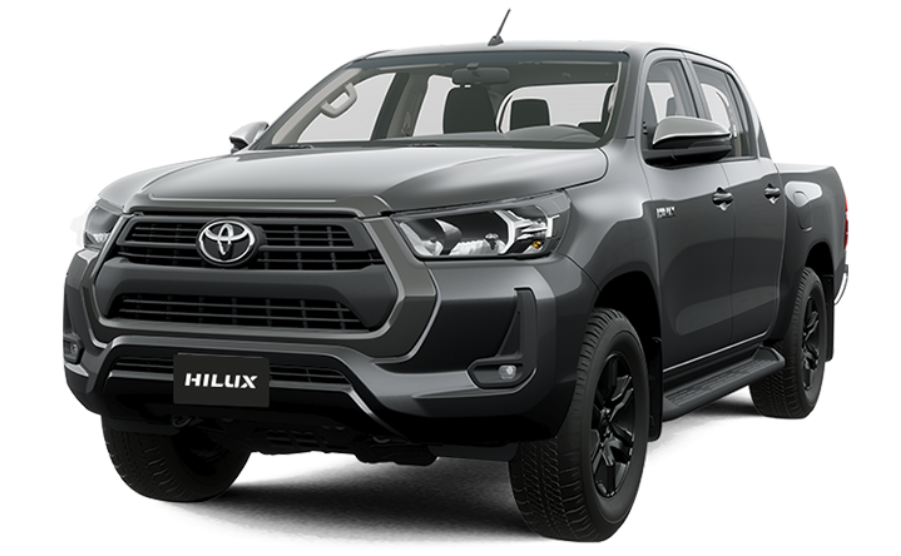
The Toyota Hilux has become almost shorthand for a tough, dependable pickup. Mention its name and most of us picture dusty construction sites, muddy farm tracks, loaded trays, caravans and four-wheel-drive adventures somewhere far beyond smooth pavement.
But the Hilux no longer stands alone.
The modern pickup market is packed with vehicles offering the same basic recipe: a ladder-frame chassis, strong diesel torque, serious towing ability, generous payload capacity and enough off-road hardware to keep moving after the asphalt disappears.
So, what are the best Toyota Hilux like cars?
Some alternatives emphasize comfort. Others bring stronger engines, more technology, lower prices or a slightly more sophisticated cabin. A few stay unapologetically work-focused.
In this guide, we'll explore the pickups that come closest to the Hilux formula and explain which type of buyer each one suits.
One important note before we start: specifications vary considerably between countries, model years and trim levels. Whenever towing, payload or engine figures matter to your purchase, check the exact vehicle offered in your market.
Content in this publication
- What Makes a Vehicle Similar to the Toyota Hilux?
- Toyota Hilux Alternatives at a Glance
- 1. Ford Ranger
- 2. Isuzu D-Max
- 3. Mitsubishi Triton or L200
- 4. Mazda BT-50
- 5. Nissan Navara
- 6. Volkswagen Amarok
- 7. KGM Musso
- 8. LDV T60 Max
- 9. Toyota Tacoma
- 10. Chevrolet Colorado
- Which Toyota Hilux Alternative Is Closest Overall?
- Best Hilux-Like Vehicle for Towing
- Best Toyota Hilux Alternative for Off-Road Driving
- Best Hilux-Like Truck for Everyday Driving
- Should We Buy a Hilux or One of Its Rivals?
- New vs Used Toyota Hilux Alternatives
- Don't Ignore Payload When Comparing Hilux-Like Cars
- Reliability: Is the Hilux Automatically the Safest Choice?
- How to Choose Among Cars Like the Toyota Hilux
- Conclusion
- Frequently Asked Questions
What Makes a Vehicle Similar to the Toyota Hilux?
Searching for cars like the Toyota Hilux is slightly different from simply searching for pickup trucks.
The Hilux occupies a particular corner of the market. It isn't a gigantic American full-size truck, nor is it a soft lifestyle crossover wearing a small cargo bed. It is fundamentally a working vehicle that has gradually become more civilized.
That means a genuine Hilux alternative normally needs several characteristics working together.
We want a body-on-frame platform capable of taking punishment. We expect useful payload capacity. Four-wheel-drive versions should provide proper off-road hardware rather than merely electronic traction aids designed for slippery city streets.
Diesel engines remain particularly important in markets such as Australia, Asia, Africa and parts of Latin America because their low-rpm torque suits towing and hauling.
The 2026 Australian Hilux provides a useful benchmark. Toyota lists a 2.8-litre turbo-diesel, with V-Active 48V technology available on numerous versions, while current 4x4 models are rated for up to 3,500 kg of braked towing.
That's the yardstick we'll keep in mind.
Toyota Hilux Alternatives at a Glance
If we had to build a shopping list before visiting dealerships, these would be among the most logical vehicles to investigate:
- Ford Ranger – excellent all-round alternative with powerful engine choices and strong technology.
- Isuzu D-Max – straightforward, diesel-focused ute with a workhorse personality.
- Mitsubishi Triton/L200 – capable 4x4 with competitive towing and a manageable footprint.
- Mazda BT-50 – rugged engineering wrapped in more distinctive styling.
- Nissan Navara – strong towing capability with a modernized 2026 generation.
- Volkswagen Amarok – a more premium-feeling interpretation of the traditional dual-cab ute.
- KGM Musso – value-focused alternative with surprising towing capability.
- LDV T60 Max – high-output diesel option aimed at buyers seeking equipment for their money.
- Toyota Tacoma – an obvious Toyota alternative for North American buyers.
- Chevrolet Colorado – another useful midsize pickup alternative in markets where it is sold.
The important part isn't finding the truck with the largest number printed on its brochure. It's finding the one whose strengths match how we actually use it.
1. Ford Ranger
The Ford Ranger is probably the first vehicle many shoppers compare with the Hilux, and there's a good reason for that.
Both trucks sit squarely in the midsize pickup category, both can be configured for work or recreation, and both have enormous aftermarket ecosystems in markets where they are popular.
Why the Ranger Feels Like a Hilux
The basic philosophy is familiar: rugged frame, diesel power, useful tray, genuine four-wheel-drive capability and enough towing capacity for serious recreational or commercial jobs.
Where the Ranger often separates itself is its emphasis on technology and powertrain choice.
For the 2026 Australian Ranger XLT, Ford offers a 2.0-litre turbo-diesel producing 125 kW and 405 Nm, while an available 3.0-litre V6 turbo-diesel produces 184 kW and 600 Nm. Ranger models can tow up to 3,500 kg when properly configured.
Who Should Consider the Ranger?
The Ranger makes sense if we want Hilux-style utility but place extra importance on cabin technology, engine choice and everyday refinement.
A Hilux can feel like a tool that learned some manners. The Ranger often feels more like a modern vehicle that still knows how to use a toolbox.
That's a subtle distinction, but one buyers notice during everyday driving.
2. Isuzu D-Max
The Isuzu D-Max doesn't need to shout.
Its appeal is remarkably straightforward: diesel engines, practical engineering and a reputation built around commercial-duty thinking.
For someone who likes the Hilux because of what it represents rather than because of the Toyota badge itself, the D-Max deserves serious attention.
Diesel Muscle Without Too Much Drama
In Australia, the current D-Max range includes 3.0-litre and 2.2-litre turbo-diesel options. Isuzu lists the 3.0-litre engine at 140 kW and 450 Nm, while current models can provide up to 3.5 tonnes of towing capability depending on specification.
Those numbers tell only part of the story.
The D-Max has traditionally appealed to buyers who want a truck to behave like a truck. It doesn't need to pretend it is a sports car when unloaded.
Is the D-Max Better for Work?
That depends on the exact version.
Payload, gross vehicle mass, towing limits and accessories must all be considered together. A heavy bull bar, canopy, passengers and tow-ball download can consume usable payload faster than we might expect.
Still, the D-Max belongs high on any shortlist of vehicles similar to the Toyota Hilux because its priorities are so closely aligned.
3. Mitsubishi Triton or L200
Depending on where we live, this Mitsubishi pickup may wear the Triton or L200 name.
Either way, it follows a familiar recipe: turbodiesel power, selectable four-wheel drive, a separate chassis and a dual-purpose personality.
A Strong Hilux Rival With Its Own Character
Current Australian Triton models use a 2.4-litre bi-turbo diesel producing 150 kW and 470 Nm. Mitsubishi also quotes a maximum braked towing capacity of 3,500 kg for current variants.
The Triton is interesting because it doesn't simply try to become a Hilux with different badges.
Its dimensions, driving feel and four-wheel-drive systems create a distinct personality.
For urban buyers who still want genuine off-road ability, that can make it especially appealing. A huge pickup can feel like maneuvering a wardrobe through a shopping centre car park. A sensibly sized truck makes everyday life easier.
Triton vs Hilux Philosophy
Toyota traditionally leans heavily on durability and resale reputation.
Mitsubishi often attacks the same buyer with equipment, warranty programs in certain markets and competitive pricing.
Neither approach is universally superior. One buyer may keep a truck for fifteen years. Another might trade every four.
The smarter purchase depends on which ownership pattern resembles ours.
4. Mazda BT-50
At first glance, the Mazda BT-50 can appear like the fashionable member of a very muddy family.
Its styling is usually cleaner and less aggressively industrial than some competitors, yet underneath it remains a serious ute.
More Than a Lifestyle Pickup
Mazda Australia's current BT-50 range offers a 3.0-litre turbo-diesel producing up to 140 kW and 450 Nm. Mazda quotes up to 3.5 tonnes of towing and payload capacity reaching approximately 1.2 tonnes on applicable versions.
The exact payload varies significantly by body and trim, which is important.
Luxury features weigh something. Accessories weigh something. Bigger wheels and additional equipment can also change the equation.
That's why comparing brochure maximums without comparing exact variants is like comparing athletes while one is carrying a backpack.
Who Will Like the BT-50?
Buyers who want work-ready fundamentals but don't necessarily want their truck to look as if it spends every afternoon inside a quarry.
The BT-50 also makes sense for shoppers already considering the D-Max, because the two vehicles share significant underlying engineering.
The Navara has been part of the global pickup landscape for decades, and the latest Australian generation gives the familiar badge another serious shot at the Hilux.
The 2026 Navara is particularly interesting because the Australian-market truck has undergone a substantial generational change.
A Modernized Rival
Nissan says the new Australian Navara uses a 2.4-litre bi-turbo diesel generating 150 kW and 470 Nm, paired with a six-speed automatic transmission.
All four launch grades—SL, ST, ST-X and PRO-4X—are dual-cab 4x4 pickups, and Nissan rates each for 3,500 kg of maximum braked towing.
Payload varies by grade, illustrating an important lesson for Hilux shoppers as well: the fanciest model isn't necessarily the version that can legally carry the most weight.
Because it sits in exactly the same usage territory.
Work during the week? Fine.
Camping equipment in the tray? Fine.
You may be interested in reading Peugeot RCZ Models: Complete Guide to Versions, Trims and Engines
Tow a caravan? Depending on weights, configuration and local regulations, that's exactly the sort of job these trucks are designed around.
It is another reminder that choosing a Hilux-like vehicle has become less about finding a capable model and more about choosing which flavor of capability we prefer.
6. Volkswagen Amarok
The Volkswagen Amarok approaches the category from a slightly different angle.
It still looks ready to collect scratches, tow trailers and swallow dirty equipment, but higher trims bring an atmosphere closer to a premium SUV.
The More Upscale Hilux Alternative
Volkswagen Australia lists current Amarok power outputs ranging from 125 kW to 222 kW and torque outputs reaching 600 Nm depending on engine and version. Maximum braked towing is listed at 3.5 tonnes.
Those specifications make it a genuine working proposition rather than simply a lifestyle vehicle wearing rugged styling.
Where it becomes interesting is inside.
Depending on trim, the Amarok can appeal to someone who wants one vehicle to serve as company transport, family car, touring machine and towing platform.
The Ranger Connection
The current Amarok generation shares important architecture with the Ford Ranger, but Volkswagen gives the vehicle its own design, calibration, trim strategy and identity.
Think of them as two chefs working from a common pantry. The ingredients overlap, but the final dishes don't taste exactly the same.
7. KGM Musso
The name may be less familiar than Toyota or Ford, but dismissing the KGM Musso without looking at the specifications would be a mistake.
Formerly sold under the SsangYong brand in many markets, KGM offers the Musso as a value-oriented dual-cab ute.
A Comfortable Alternative With Serious Towing Ability
Australian MY26 Musso models use a 2.2-litre turbo-diesel. KGM lists 133 kW and 400 Nm for the standard configuration, with 3.5-tonne braked towing capability. Payload varies considerably, reaching 1,010 kg on an applicable XLV configuration.
The Musso's rear suspension setup also differs by configuration, which can affect the balance between ride comfort and load-carrying priorities.
Why It Deserves Attention
Price.
A Hilux's brand reputation can command a premium. The Musso tries to tempt us by offering a lot of physical vehicle and equipment for the money.
That doesn't automatically make it the right long-term purchase. Dealer coverage, resale value, parts accessibility and servicing matter too.
But value hunters searching for cars similar to a Toyota Hilux should absolutely know it exists.
8. LDV T60 Max
The LDV T60 Max represents another increasingly common challenge to the established pickup hierarchy.
Instead of relying on decades of brand recognition, it competes aggressively through power, features and pricing.
Strong Numbers for the Money
The Australian T60 Max uses a 2.0-litre bi-turbo diesel producing 160 kW and 500 Nm. MY25 examples are rated for up to 3.5 tonnes of braked towing, while 4x4 is standard across the range described by LDV.
On paper, that's plenty of muscle.
The question becomes what matters beyond the specification sheet.
Ownership experience includes warranty terms, dealer access, parts supply, resale, servicing and how the truck behaves after years of rough roads. Anyone cross-shopping newer-market brands against the Hilux should investigate those factors carefully rather than focusing exclusively on purchase price.
9. Toyota Tacoma
If we're in North America, the Toyota Tacoma becomes one of the most obvious answers to the phrase Toyota Hilux like cars.
It isn't simply an American Hilux. They are separate vehicle lines developed around different market requirements.
Yet conceptually, they are close relatives.
Why Tacoma Buyers Might Also Want a Hilux
Both occupy the midsize pickup world. Both emphasize durability, outdoor use and off-road-capable trims. Both have enormous modification communities.
The Tacoma, however, is tailored far more strongly toward American buyers.
Recent generations emphasize petrol and hybridized powertrains rather than following the diesel-heavy formula familiar to Hilux buyers in Australia, Africa and parts of Asia.
That difference alone can determine which vehicle makes sense.
Hilux vs Tacoma Is Often a Geography Question
In many countries, we don't genuinely get to choose between the two because Toyota sells one far more extensively than the other.
If both are accessible through imports or specialist channels, examine warranty support and parts availability before falling in love with the novelty.
A rare truck is fun until a simple replacement component requires an international scavenger hunt.
10. Chevrolet Colorado
The Chevrolet Colorado deserves consideration particularly in North America and selected international markets.
Like the Hilux, it occupies the space between compact pickups and enormous full-size trucks.
A Different Route to the Same Destination
The Colorado's engines and configurations vary by market, but the overall concept will feel familiar: a frame-based midsize truck, useful bed, available four-wheel drive and versions aimed at increasingly serious off-road use.
Where it differs from a traditional diesel Hilux depends heavily on region.
North American Colorados lean toward turbocharged petrol power. Earlier and international variants have followed different strategies.
That makes the Colorado a great example of why the phrase cars like Toyota Hilux has no universal answer.
Similarity depends on whether we're comparing body style, towing capability, diesel efficiency, durability, off-road ability or price.
Which Toyota Hilux Alternative Is Closest Overall?
There isn't a single answer that works everywhere.
If we want something that mirrors the Hilux across the broadest range of jobs, the Ford Ranger, Isuzu D-Max, Mitsubishi Triton, Mazda BT-50 and Nissan Navara are probably the most direct conceptual rivals in markets where all are available.
Each retains the traditional midsize work-ute formula.
The Ranger pushes hard toward technology and power.
The D-Max embraces straightforward diesel practicality.
The Triton combines work capability with an approachable everyday footprint.
The BT-50 adds a slightly different visual identity to proven ute fundamentals.
The new Navara attacks the same territory with updated engineering and modern equipment.
Then we have alternatives such as the Amarok for more premium tastes and the Musso or T60 Max for shoppers chasing value.
Best Hilux-Like Vehicle for Towing
A surprising number of these trucks advertise the same headline figure: 3,500 kg of maximum braked towing in suitable configurations.
Hilux 4x4 variants, Ranger, D-Max, Triton, BT-50, Navara, Amarok, Musso and applicable T60 Max versions can all reach that neighborhood in the Australian market.
So the number on the advertisement isn't enough.
We need to investigate gross combined mass, vehicle payload, tow-ball download, axle limits and what happens once passengers and accessories are added.
Imagine a bucket with a fixed capacity. Bull bars, recovery gear, camping equipment, passengers and trailer download all pour weight into that bucket. Eventually it overflows.
Maximum towing capacity does not mean we can simultaneously load every other maximum.
Best Toyota Hilux Alternative for Off-Road Driving
Serious off-road buyers should look beyond ground clearance.
A good four-wheel-drive ute depends on traction systems, low-range gearing where applicable, underbody protection, suspension articulation, tire availability, approach and departure angles, cooling and the ability to absorb abuse repeatedly.
Aftermarket support matters too.
You may be interested in readingPeugeot RCZ Models: Complete Guide to Versions, Trims and EnginesYou may be interested in reading
 Test Drive Review: The Fiat 500 Abarth 0-60 Acceleration
A vehicle may be brilliant in factory form, but long-distance touring often requires bull bars, snorkels, auxiliary power systems, suspension upgrades, canopies or replacement tires.
The Ranger, D-Max, Triton, Navara and Amarok all have convincing off-road credentials in appropriate configurations, while support varies widely depending on country.
Best Hilux-Like Truck for Everyday Driving
This is where the category has changed dramatically.
Twenty years ago, buying a work ute often meant accepting an agricultural ride, basic interior and the turning circle of a small ferry.
Modern pickups are much easier to live with.
If daily comfort ranks near the top of our priorities, Ranger and Amarok deserve particularly close inspection, while Musso's SUV-like approach may also appeal.
But don't buy from specifications alone.
Drive the exact trim you're considering, preferably on familiar roads. Wheel size, suspension tune, load in the tray and tire pressures can change the ride enormously.
Should We Buy a Hilux or One of Its Rivals?
The Hilux remains attractive because its strengths extend beyond horsepower.
Brand familiarity matters. Dealer networks matter. Parts supply matters. Resale matters. Mechanics knowing the vehicle matters.
In remote regions, those factors can become more valuable than an extra screen or a few dozen additional kilowatts.
But competition has become fierce.
Rivals can provide more power, nicer cabins, longer equipment lists or lower purchase prices. That means buying the Hilux automatically simply because "it's a Hilux" makes less sense than it once did.
The smarter approach is to decide what the truck actually needs to do.
New vs Used Toyota Hilux Alternatives
Used pickups introduce a different equation.
Condition matters more than brand reputation.
A carefully serviced D-Max with documented maintenance can be a better purchase than a neglected Hilux that spent its life overloaded on rough roads.
Likewise, a sparkling exterior tells us surprisingly little.
Underbody impacts, towing history, aftermarket tuning, diesel particulate filter problems, suspension modifications, corrosion, accident repairs and poor maintenance can turn a supposedly dependable ute into an expensive project.
For used vehicles, mechanical inspection and service history should carry more weight than internet mythology.
Don't Ignore Payload When Comparing Hilux-Like Cars
Payload is one of the least glamorous numbers in a brochure, yet it's one of the most important.
Consider a family touring setup.
We add four occupants, a canopy, roof rack, fridge, recovery equipment, tools, drawers and camping gear. Then we connect a caravan and add its tow-ball download.
Suddenly a ute that looked tremendously capable on paper can be surprisingly close to its legal limits.
That's why payload should be calculated using the specific variant we plan to buy.
Top trims often carry more factory equipment and therefore may offer less usable payload than simpler work-focused grades.
Reliability: Is the Hilux Automatically the Safest Choice?
The Hilux's reputation didn't appear from nowhere. Decades of commercial, agricultural and remote-area use have made durability central to its identity.
Still, no modern vehicle is indestructible.
Today's diesel pickups contain turbochargers, high-pressure fuel systems, emissions hardware, electronic safety technology and increasingly complex infotainment.
Maintenance remains essential.
Likewise, saying every rival is less reliable simply because it doesn't wear a Toyota badge would be too simplistic.
Age, engine design, model generation, usage and servicing can matter just as much as the logo on the grille.
How to Choose Among Cars Like the Toyota Hilux
Start with your hardest job rather than your easiest one.
Nearly every dual-cab pickup can handle the school run and supermarket parking lot. Those tasks tell us very little.
Instead, ask what happens on the worst day.
Will we tow a heavy caravan up mountain roads?
Carry tools every weekday?
Drive hundreds of kilometers from a major city?
Spend weekends on difficult trails?
Need five adults inside regularly?
Keep the vehicle for twelve years?
Once the toughest requirement is clear, the shortlist usually becomes much smaller.
A buyer carrying heavy equipment may prioritize payload.
A caravan owner may care about GCM and towing stability.
A family may care more about rear-seat space and ride quality.
An adventurer may prioritize low-range gearing, tire availability and aftermarket accessories.
That's how we turn a crowded showroom into a sensible decision.
Conclusion
There has never been a better selection of Toyota Hilux like cars.
The Ford Ranger is a compelling all-rounder with strong technology and available V6 diesel performance. The Isuzu D-Max sticks close to the dependable workhorse formula. Mitsubishi's Triton/L200 remains a genuine four-wheel-drive rival, while the Mazda BT-50 combines serious ute hardware with more distinctive styling.
The Nissan Navara has entered a new generation with 3.5-tonne towing capability across its Australian launch range, while the Volkswagen Amarok gives the category a more premium flavor.
Value-focused shoppers can also investigate models such as the KGM Musso and LDV T60 Max.
Meanwhile, buyers in North America have their own Hilux-like alternatives, including the Tacoma and Colorado.
Ultimately, the best alternative isn't the pickup that beats the Hilux in one isolated specification.
It's the one that fits our workload, passengers, roads, budget and ownership plans.
That's where the real comparison begins.
Frequently Asked Questions
1. What cars are most similar to the Toyota Hilux?
The Ford Ranger, Isuzu D-Max, Mitsubishi Triton/L200, Mazda BT-50 and Nissan Navara are among the closest Hilux alternatives in markets where they are sold. All follow a traditional midsize, body-on-frame pickup formula with work, towing and four-wheel-drive capability.
2. What is the best alternative to a Toyota Hilux?
There is no universal best choice. The Ranger emphasizes performance and technology, the D-Max focuses strongly on workhorse qualities, the Triton offers competitive capability, and the Amarok targets buyers wanting a more premium experience. The best match depends on how the vehicle will be used.
3. Which Hilux alternatives can tow 3,500 kg?
In Australia, appropriately specified versions of the Ranger, D-Max, Triton, BT-50, Navara, Amarok, Musso and several other pickups are advertised with maximum braked towing capacities of 3,500 kg. Actual legal towing capability depends on the exact variant, vehicle loading, GCM, tow-ball download, equipment and local regulations.
4. Is the Ford Ranger similar to the Toyota Hilux?
Yes. The Ranger is one of the Hilux's closest mainstream competitors. Both offer work-focused and lifestyle-focused variants, four-wheel drive, diesel power in many markets and strong towing capability. The Ranger tends to emphasize technology and offers powerful engine choices, including an available V6 diesel in Australia.
You may be interested in readingPeugeot RCZ Models: Complete Guide to Versions, Trims and EnginesYou may be interested in reading
Test Drive Review: The Fiat 500 Abarth 0-60 AccelerationYou may be interested in reading
 Customizing Your Ride: A Comprehensive Guide to the Fiat 500 Body Kit
5. Is the Toyota Tacoma the same as a Hilux?
No. The Tacoma and Hilux are separate Toyota pickup lines designed primarily for different markets. They share a similar midsize-pickup philosophy, but their platforms, engines, specifications and market positioning are not identical.
If you want to know other articles similar to Toyota Hilux Like Cars: The Best Alternatives Worth Considering you can visit the category Models.
Peugeot RCZ Models: Complete Guide to Versions, Trims and Engines
Toyota Hilux and Fortuner Same Engine: Are They Really Identical?
Toyota Hilux vs Mazda BT-50: Which Ute Makes More Sense?
Toyota Hilux vs Prado: Which Toyota 4WD Makes More Sense?
Toyota Hilux vs Land Cruiser: Which Toyota 4x4 Makes More Sense?
Toyota Hilux vs Ford Raptor: Which Pickup Fits Your Life?
Leave a Reply
More content of your interest