
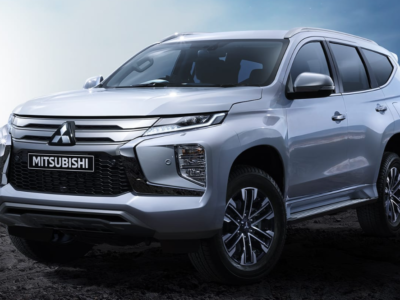
Mitsubishi Pajero Sport vs Toyota Fortuner: Which 7-Seat SUV Is Better?

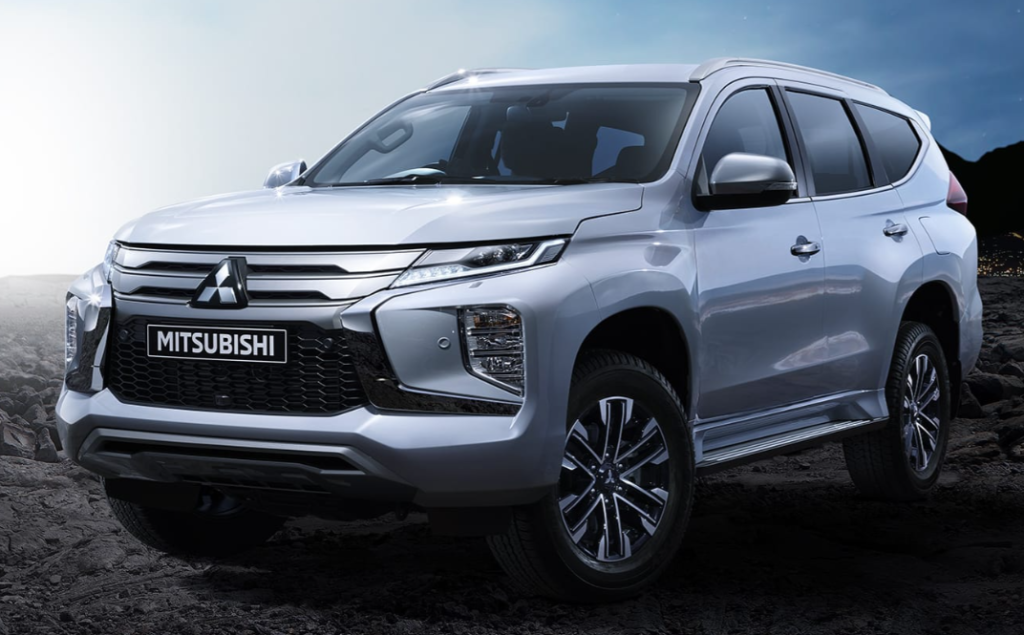
Choosing between the Mitsubishi Pajero Sport and Toyota Fortuner can feel like choosing between two experienced adventurers. Both are tough, body-on-frame SUVs, both can carry seven people, both are designed to leave paved roads behind, and both have strong reputations in markets where rugged diesel SUVs remain popular.
Yet they approach the job differently.
The Mitsubishi Pajero Sport tends to focus on sophisticated four-wheel-drive capability, a smooth eight-speed automatic transmission, and a comfortable balance between everyday driving and off-road exploration. The Toyota Fortuner, meanwhile, builds heavily on Toyota's proven pickup-based engineering and combines strong diesel torque with a relatively straightforward and durable 4WD system.
So, which should we choose?
In this Mitsubishi Pajero Sport vs Toyota Fortuner comparison, we'll examine engines, performance, fuel economy, towing, dimensions, interior space, reliability, comfort, off-road capability, safety, ownership costs, and everyday usability.
One important note before we start: specifications vary considerably between countries and model years. For a useful reference point, commonly available diesel versions use a 2.4-litre turbo-diesel producing around 133 kW and 430 Nm in the Pajero Sport, while many Fortuner markets use Toyota's 2.8-litre turbo-diesel producing around 150 kW and 500 Nm.
Content in this publication
- Mitsubishi Pajero Sport vs Toyota Fortuner at a Glance
- Engine and Performance
- Pajero Sport vs Fortuner Transmission
- Mitsubishi Pajero Sport vs Toyota Fortuner Fuel Economy
- Off-Road Capability
- Mitsubishi Pajero Sport 4WD System
- Toyota Fortuner 4WD System
- Pajero Sport vs Fortuner Off Road
- Ground Clearance
- Mitsubishi Pajero Sport vs Toyota Fortuner Towing Capacity
- Dimensions and Exterior Size
- Interior and Seating
- Second-Row Space
- Third-Row Seats
- Boot Space and Practicality
- Ride Comfort
- Steering and City Driving
- Safety
- Mitsubishi Pajero Sport vs Toyota Fortuner Reliability
- Maintenance and Ownership Costs
- Pajero Sport vs Fortuner for Families
- Pajero Sport vs Fortuner for Long Trips
- Pajero Sport vs Fortuner for Off-Road Touring
- Toyota Fortuner Advantages
- Mitsubishi Pajero Sport Advantages
- Mitsubishi Pajero Sport vs Toyota Fortuner: Which One Suits Different Buyers?
- Pajero Sport vs Fortuner: Used Car Comparison
- What Should We Test During a Test Drive?
- Mitsubishi Pajero Sport vs Toyota Fortuner: Final Comparison
- Frequently Asked Questions
Mitsubishi Pajero Sport vs Toyota Fortuner at a Glance
Here's the quick comparison before we dig deeper.
| Feature | Mitsubishi Pajero Sport | Toyota Fortuner |
|---|---|---|
| Typical diesel engine | 2.4L turbo-diesel | 2.8L turbo-diesel |
| Typical maximum power | 133 kW | 150 kW |
| Typical maximum torque | 430 Nm | 500 Nm |
| Automatic transmission | 8-speed | 6-speed |
| Seating | Up to 7 | 7 |
| Drivetrain | 2WD/4WD depending on version | 4WD/2WD depending on market |
| Ground clearance | Around 218 mm | Around 216–279 mm depending on market/spec |
| Braked towing capacity | Up to around 3,100 kg in some markets | Around 3,100 kg in Australia; varies elsewhere |
| Main strength | Sophisticated 4WD and smooth transmission | Strong engine and proven rugged platform |
Toyota's Australian Fortuner specification, for example, listed a 2.8-litre turbo-diesel, 150 kW, 500 Nm and 3,100 kg braked towing capacity, while Mitsubishi's Australian Pajero Sport specifications quote 133 kW, 430 Nm and up to 3,100 kg towing capacity for 4WD versions.
Interestingly, Toyota Australia states that the Fortuner was discontinued there from April 2026, although the model continues to be sold in other international markets.
Engine and Performance
Let's begin underneath the bonnet because this is where one of the clearest differences appears.
Mitsubishi Pajero Sport Engine
The widely used Pajero Sport diesel engine is Mitsubishi's 2.4-litre four-cylinder MIVEC turbo-diesel.
Typical specifications include:
- 2.4-litre turbo-diesel
- Four cylinders
- Approximately 133 kW
- Approximately 430 Nm
- Eight-speed automatic transmission
Official Mitsubishi specifications show peak power of 133 kW at 3,500 rpm and torque of 430 Nm at 2,500 rpm.
It isn't an enormous engine, but it produces strong low-speed torque.
More importantly, the eight-speed automatic gives Mitsubishi a broader spread of gear ratios.
On a highway, that means the Pajero Sport can settle into a relaxed cruising rhythm instead of feeling like the engine is constantly searching for the right gear.
Toyota Fortuner Engine
Toyota frequently equips the Fortuner with its well-known 2.8-litre four-cylinder turbo-diesel.
In markets using the higher-output configuration, it produces:
- 150 kW
- 500 Nm
- Six-speed automatic transmission
Toyota's official Australian documentation confirms these figures.
That additional torque becomes noticeable when accelerating with passengers, towing a trailer or climbing steep hills.
Which Has More Power?
On comparable diesel specifications, the Toyota Fortuner has the stronger engine on paper.
Its 500 Nm output gives it roughly 70 Nm more torque than the 430 Nm Pajero Sport.
However, engine output doesn't tell the complete story.
The Pajero Sport's eight-speed gearbox can help keep its engine closer to the ideal rev range, making it feel responsive despite having less peak torque.
Performance Summary
For pure engine muscle, the Fortuner has an advantage.
For transmission refinement, the Pajero Sport's eight-speed automatic is particularly appealing.
Pajero Sport vs Fortuner Transmission
Transmission design makes these SUVs feel surprisingly different.
Eight-Speed Pajero Sport Automatic
The Mitsubishi uses an eight-speed automatic in many versions.
Having additional gears can provide:
- Smoother acceleration
- Smaller gaps between ratios
- Lower cruising rpm
- Better control when climbing
- More flexibility while overtaking
Think of it like climbing stairs with smaller steps. The engine doesn't need to make such a big jump each time the transmission changes gear.
Six-Speed Fortuner Automatic
The Fortuner typically uses a six-speed automatic with its 2.8-litre diesel.
Six gears may sound old-fashioned compared with eight, nine or ten-speed transmissions, but simplicity isn't necessarily bad in an off-road vehicle.
Toyota has paired the transmission with an engine producing substantial low-end torque, meaning it doesn't require as many ratios to keep the vehicle moving confidently.
Mitsubishi Pajero Sport vs Toyota Fortuner Fuel Economy
Fuel economy matters tremendously in large diesel SUVs.
Neither vehicle is designed to compete with a hybrid crossover, but both can deliver reasonable highway economy considering their size, weight and off-road hardware.
For reference, Mitsubishi has published a combined-cycle figure around 8.1 L/100 km for certain Pajero Sport diesel specifications.
Toyota's Australian Fortuner specification listed approximately 7.6 L/100 km under its laboratory testing methodology.
Real-world consumption can easily be higher.
Fuel economy depends heavily on:
- Traffic
- Tyre pressure
- Roof racks
- Vehicle load
- Towing
- Driving style
- Terrain
- 4WD use
- Engine specification
A heavily loaded Fortuner towing a caravan through mountainous terrain obviously won't reproduce laboratory figures.
Which Is More Economical?
On official figures from comparable markets, there may be little separating them.
Instead of choosing solely according to a laboratory consumption number, we'd look at fuel-tank size, local diesel quality, servicing requirements and how the vehicle will actually be used.
Off-Road Capability
This is where the battle gets interesting.
These aren't ordinary crossovers wearing hiking boots.
Both are genuine off-road-capable SUVs based around rugged chassis architecture.
Mitsubishi Pajero Sport 4WD System
One of the Pajero Sport's biggest attractions is Mitsubishi's sophisticated Super Select 4WD system on appropriate variants.
Depending on model and market, it can provide several drivetrain settings designed for different conditions.
The major advantage is flexibility.
Where conventional part-time 4WD vehicles typically operate in rear-wheel drive on dry pavement before switching into four-wheel drive on loose terrain, Mitsubishi's system can offer additional options for changing road conditions.
That can be useful when travelling across:
- Wet highways
- Gravel
- Snow
- Mud
- Sand
- Rocky tracks
Off-Road Modes
Certain Pajero Sport versions also provide selectable terrain modes.
Rather than requiring the driver to manually balance throttle and traction in every situation, the electronics adapt vehicle behaviour to the surface.
It's like having an experienced co-driver quietly adjusting things behind the scenes.
Toyota Fortuner 4WD System
The Fortuner takes a more traditional approach.
Typical 4WD versions provide:
- High-range four-wheel drive
- Low-range gearing
- Rear differential lock
- Hill-related assistance systems depending on trim
Toyota's Australian documentation confirms low-range 4WD and a rear differential lock on Fortuner models.
This is an extremely useful combination when grip becomes scarce.
Low-Range Gearing
Low-range gearing multiplies available torque at low speeds.
That's exactly what we need while:
- Crawling over rocks
- Descending steep hills
- Recovering from deep mud
- Crossing uneven trails
- Negotiating sand
Speed isn't the objective.
Control is.
Rear Differential Lock
The Fortuner's rear differential lock can force both rear wheels to turn together.
When one wheel loses traction, the other can continue helping push the vehicle forward.
It's simple, effective off-road hardware.
Pajero Sport vs Fortuner Off Road
Both are genuinely capable.
The difference comes down more to philosophy.
The Fortuner offers traditional rugged 4WD hardware, while the Pajero Sport's Super Select system can provide additional drivetrain flexibility, depending on the version.
For drivers regularly moving between asphalt, wet roads and trails, Mitsubishi's system can be particularly convenient.
For serious recreational off-roading, either platform provides a strong foundation when fitted with suitable tyres.
You may be interested in reading Mitsubishi Pajero Sport vs Isuzu MU-X: Which 7-Seat 4WD Is Better?
Ground Clearance
Ground clearance specifications vary depending on market and configuration.
Mitsubishi lists approximately 218 mm for the Pajero Sport in several markets.
Toyota figures vary more substantially depending on the market and method of measurement. Some Fortuner specifications list roughly 216 mm running clearance, while others quote as much as 279 mm ground clearance.
That's exactly why buyers should check specifications for the particular model being considered rather than assuming every global Fortuner has identical measurements.
Why Ground Clearance Matters
More clearance helps prevent the underside from contacting:
- Rocks
- Deep ruts
- Sand ridges
- Trail obstacles
- Uneven terrain
However, clearance alone doesn't determine off-road ability.
Approach angle, departure angle, wheelbase, tyres and traction systems matter just as much.
Mitsubishi Pajero Sport vs Toyota Fortuner Towing Capacity
Planning to tow a caravan, boat or trailer?
Both SUVs are serious contenders.
Pajero Sport Towing Capacity
Mitsubishi Australia rated applicable Pajero Sport 4WD models for up to 3,100 kg braked towing capacity.
That's enough for many:
- Medium caravans
- Boats
- Horse trailers
- Equipment trailers
- Recreational vehicles
Toyota Fortuner Towing Capacity
The Australian Fortuner was also rated at 3,100 kg braked towing capacity.
Some specifications sold in other countries differ, so local ratings should always be confirmed.
Which Is Better for Towing?
When both vehicles share a 3,100 kg rating, the headline capacity is effectively identical.
However, Toyota's 500 Nm diesel output gives the Fortuner additional torque compared with the common 430 Nm Pajero Sport.
That could make the Toyota feel less strained when accelerating with a heavy load.
The Pajero Sport counters with its eight-speed gearbox, which gives the transmission more ratios to work with.
Never Compare Towing Capacity Alone
Anyone towing regularly should also check:
- Gross vehicle mass
- Gross combination mass
- Towball download
- Payload
- Trailer braking requirements
- Passenger and luggage weight
A vehicle's maximum towing figure doesn't automatically mean it can simultaneously carry a full cabin, roof load and maximum trailer.
Dimensions and Exterior Size
These SUVs are remarkably similar in overall footprint.
A typical Fortuner measures approximately:
- Length: 4,795 mm
- Width: 1,855 mm
- Wheelbase: 2,745 mm
Toyota lists these dimensions for several Fortuner specifications.
A common Pajero Sport specification measures approximately:
- Length: 4,825 mm
- Width: 1,815 mm
- Wheelbase: 2,800 mm
Mitsubishi documentation confirms these measurements in several international configurations.
Which Is Bigger?
The Pajero Sport is slightly longer and has a longer wheelbase.
The Fortuner is slightly wider.
In everyday driving, however, they're close enough that most drivers will experience them as similarly sized SUVs.
Both require more care in tight parking spaces than compact crossovers.
Interior and Seating
Both vehicles offer three rows and seating for up to seven occupants.
That makes them attractive to families who occasionally need to transport grandparents, children or friends without moving into a traditional minivan.
Front Seats
The front cabins provide commanding driving positions.
You sit relatively high, with plenty of visibility over smaller traffic.
Higher trim levels can include features such as:
- Leather upholstery
- Electric seat adjustment
- Climate control
- Smartphone connectivity
- Multiple cameras
- Keyless entry
- Heated seats depending on market
Second-Row Space
The middle row is where both SUVs work best for passengers.
Adults generally have substantially more usable space here than in the third row.
The elevated SUV body also makes loading children into safety seats relatively convenient.
Third-Row Seats
Like many seven-seat ladder-frame SUVs, the third row is best considered occasional seating.
Children will usually be happier back there than tall adults.
When all seven seats are occupied, luggage capacity also becomes limited.
If we frequently transport seven adults plus luggage, a larger SUV or people mover may make more sense.
Boot Space and Practicality
Cargo packaging is an important difference buyers often overlook.
With the third-row seats deployed, neither vehicle provides enormous luggage capacity.
Fold or stow them and the situation improves dramatically.
These SUVs can then accommodate:
- Large grocery shops
- Camping equipment
- Sports gear
- Suitcases
- Baby equipment
- Outdoor supplies
The exact cargo volume differs by trim and market, so comparing the physical seat-folding system may actually matter more than comparing one brochure number.
Try folding the third-row seats at the dealership.
It's one of those five-minute tests that can reveal more than twenty minutes reading specifications online.
Ride Comfort
Neither vehicle hides its commercial-vehicle DNA completely.
They use rugged chassis layouts because those platforms provide the strength needed for towing and off-road driving.
The trade-off?
They generally don't glide over broken city roads like modern unibody luxury SUVs.
Pajero Sport Comfort
The Pajero Sport tends to combine its long-travel suspension with relatively relaxed highway manners.
Its eight-speed transmission also contributes to a smoother driving experience.
Fortuner Comfort
Toyota has spent considerable effort refining the Fortuner's suspension and cabin insulation.
Toyota describes the Fortuner suspension as having been tuned for a balance between paved roads and rough terrain.
Still, depending on road quality and wheel size, occupants may notice the rugged underlying architecture.
Steering and City Driving
Neither vehicle is tiny.
Yet both are reasonably manageable around town.
The Pajero Sport has a quoted turning radius of approximately 5.6 metres in several specifications.
Parking cameras and sensors become particularly valuable because the high bonnet and elevated rear body can hide nearby objects.
If most of our driving involves narrow city streets and underground parking, we should test both before buying.
Dimensions on paper don't reveal how naturally a vehicle fits around us once we're behind the wheel.
Safety
Safety equipment varies substantially by trim level and country.
Modern versions may offer combinations of:
- Autonomous emergency braking
- Forward collision warning
- Adaptive cruise control
- Blind-spot monitoring
- Rear cross-traffic alert
- Lane departure warning
- Stability control
- Traction control
- Multiple airbags
- Parking cameras
Australian Fortuner models, for example, included Toyota Safety Sense technologies such as pre-collision assistance, active cruise control, lane departure alert and road-sign assistance.
Mitsubishi specifications list seven airbags plus stability, traction and hill-start systems on certain Pajero Sport versions.
Never assume an overseas review accurately describes the safety equipment on a local vehicle.
Check the exact trim.
Mitsubishi Pajero Sport vs Toyota Fortuner Reliability
Reliability is one of the biggest reasons buyers consider these vehicles.
You may be interested in readingMitsubishi Pajero Sport vs Isuzu MU-X: Which 7-Seat 4WD Is Better?You may be interested in reading
Mitsubishi Pajero Sport vs SsangYong Rexton: Which 4WD SUV Is Right for You?Both manufacturers have decades of experience producing rugged four-wheel-drive vehicles.
Toyota Fortuner Reliability
The Fortuner shares significant engineering philosophy and components with Toyota's Hilux family.
That means Toyota isn't experimenting with an unfamiliar formula.
It's using hardware designed around demanding conditions, commercial use and difficult environments.
Toyota's enormous global service network can also be valuable in regions where Fortuners and Hilux models are common.
Mitsubishi Pajero Sport Reliability
The Pajero Sport similarly benefits from Mitsubishi's pickup and off-road heritage.
Its engine and drivetrain have appeared across vehicles intended for demanding conditions.
As always, maintenance history matters enormously.
A meticulously serviced Pajero Sport can be a far better used-car purchase than a badly neglected Fortuner—and vice versa.
Used Vehicle Checks
Before buying either second-hand, inspect:
- Automatic transmission operation
- Cooling system
- Turbocharger condition
- Diesel particulate filter system where fitted
- Suspension bushes
- 4WD operation
- Differential operation
- Underbody damage
- Service history
- Signs of heavy towing
- Uneven tyre wear
An SUV that spent years crawling through muddy trails deserves a closer inspection than one that mainly handled suburban school runs.
Maintenance and Ownership Costs
Toyota often benefits from widespread parts availability in markets where Hilux-derived components and dealer support are common.
Mitsubishi can also be inexpensive to maintain where the Triton and Pajero Sport have strong market penetration.
The real answer therefore depends heavily on location.
Before purchasing, compare local prices for:
- Scheduled servicing
- Brake components
- Tyres
- Filters
- Batteries
- Suspension components
- Genuine replacement parts
- Insurance
A vehicle can be inexpensive in Thailand and comparatively costly to maintain in another country.
Ownership economics are local.
Pajero Sport vs Fortuner for Families
For family buyers, we'd focus less on peak torque and more on daily usability.
Check:
- Second-row access
- Third-row access
- Child-seat mounting points
- Air vents
- USB connections
- Boot accessibility
- Parking visibility
- Cabin storage
- Seat-folding mechanism
Both vehicles can serve as family SUVs, but neither is purely designed around family transportation.
Their rugged underpinnings create compromises that softer seven-seat crossovers avoid.
The reward is that the Pajero Sport and Fortuner can go places those crossovers may struggle to reach.
Pajero Sport vs Fortuner for Long Trips
For long-distance touring, both are compelling.
Their diesel engines provide strong range, while large cabins allow passengers to spread out.
The Pajero Sport's eight-speed transmission may make highway cruising especially relaxed.
The Fortuner counters with additional torque from its 2.8-litre engine in common higher-output configurations.
Add:
- All-terrain tyres
- Roof storage
- Recovery equipment
- Camping gear
…and either becomes a capable long-distance adventure vehicle.
Pajero Sport vs Fortuner for Off-Road Touring
If our weekends involve remote trails rather than shopping centres, we'd pay close attention to the drivetrain.
Mitsubishi's available Super Select arrangement provides considerable versatility.
Toyota's combination of low-range gearing and rear differential lock is less complicated conceptually but extremely effective.
Tyres will also transform either vehicle.
A Fortuner on road-biased tyres can struggle where a properly equipped Pajero Sport succeeds—and the reverse can be equally true.
The badge matters less once traction disappears.
Toyota Fortuner Advantages
The Fortuner makes a strong case because of its:
- Powerful 2.8-litre diesel in many markets
- Up to 500 Nm of torque in higher-output versions
- Strong towing capability
- Low-range gearing
- Rear differential lock
- Seven-seat layout
- Rugged construction
- Broad Toyota service network in many countries
- Close mechanical relationship with Toyota's established utility-vehicle ecosystem
Its personality is straightforward.
It's a tough SUV designed to work.
Mitsubishi Pajero Sport Advantages
The Pajero Sport counters with:
- Eight-speed automatic transmission
- Capable 2.4-litre turbo-diesel
- Up to approximately 430 Nm
- Sophisticated 4WD system on relevant trims
- Seven seats
- Strong towing capability
- Competitive fuel consumption
- Comfortable highway characteristics
- Serious off-road ability
Its biggest attraction may be versatility.
It feels designed for drivers who want rugged capability without making every journey feel like an expedition.
Mitsubishi Pajero Sport vs Toyota Fortuner: Which One Suits Different Buyers?
Instead of asking which SUV is universally better, it makes more sense to ask how we plan to use it.
Consider the Pajero Sport If You Prioritise
- A sophisticated selectable 4WD system
- Eight-speed automatic transmission
- Mixed highway and off-road driving
- Smooth long-distance cruising
- Strong towing ability
- Seven-seat versatility
Consider the Fortuner If You Prioritise
- Higher diesel torque in 2.8L versions
- Traditional off-road hardware
- Rear differential lock
- Toyota parts and dealer availability
- Rugged utility-derived engineering
- Strong towing capability
Neither list creates a universal winner.
Local specifications, prices and dealer support can completely change the equation.
Pajero Sport vs Fortuner: Used Car Comparison
Buying used makes things even more interesting.
A three-year-old Fortuner may retain value differently from a Pajero Sport depending on the market.
That means we shouldn't compare new-car prices alone.
Check:
- Purchase price
- Expected resale value
- Insurance
- Servicing
- Fuel consumption
- Replacement parts
- Warranty remaining
A cheaper purchase isn't always the cheaper vehicle to own.
Likewise, paying more initially doesn't automatically guarantee lower depreciation.
What Should We Test During a Test Drive?
A proper test drive should include more than driving around one city block.
Try to experience:
Highway Speeds
Listen for:
- Wind noise
- Tyre noise
- Engine rpm
- Transmission behaviour
Broken Roads
Check how the suspension handles:
- Potholes
- Expansion joints
- Uneven surfaces
Tight Parking
Test:
- Turning circle
- Camera quality
- Steering weight
- Rear visibility
Acceleration
Observe whether the transmission responds immediately or hesitates when overtaking.
Third-Row Access
Actually climb into the third row.
Brochures can't tell us whether our knees will be comfortable.
Mitsubishi Pajero Sport vs Toyota Fortuner: Final Comparison
The Mitsubishi Pajero Sport and Toyota Fortuner occupy almost the same territory, yet their personalities are different enough to make the comparison interesting.
The Fortuner's strongest asset is its muscular 2.8-litre diesel configuration. In markets offering the 150 kW/500 Nm version, it provides substantial pulling power. Its low-range 4WD system and rear differential lock also give it genuine credibility away from pavement.
The Pajero Sport responds with its 2.4-litre diesel producing around 133 kW and 430 Nm, an eight-speed automatic and sophisticated four-wheel-drive technology in relevant specifications.
Both can tow seriously heavy loads, accommodate seven occupants and tackle terrain that would make many ordinary family SUVs turn around.
The smartest choice therefore depends on priorities.
Drivers focusing heavily on diesel torque, simple ruggedness and Toyota's ecosystem may naturally gravitate toward the Fortuner.
Drivers who value drivetrain versatility, additional transmission ratios and a blend of touring comfort with genuine off-road capability may find the Pajero Sport particularly appealing.
More importantly, specifications vary significantly between countries. Compare the exact model year, engine, trim, towing rating, safety package and 4WD system available in your market before making a purchasing decision.
Frequently Asked Questions
Is Mitsubishi Pajero Sport bigger than Toyota Fortuner?
They are very similar in size. Typical Pajero Sport specifications list a length of around 4,825 mm and wheelbase of 2,800 mm, while common Fortuner specifications measure approximately 4,795 mm long with a 2,745 mm wheelbase. The Fortuner can be slightly wider depending on the market specification.
Which has more power, Pajero Sport or Fortuner?
In commonly compared diesel specifications, the Toyota Fortuner 2.8 turbo-diesel produces around 150 kW and 500 Nm, while the Mitsubishi Pajero Sport 2.4 turbo-diesel produces approximately 133 kW and 430 Nm. Exact outputs vary by country and model year.
Which is better off road, Mitsubishi Pajero Sport or Toyota Fortuner?
Both are genuine off-road vehicles. The Pajero Sport is notable for Mitsubishi's sophisticated selectable four-wheel-drive system on applicable models, while the Fortuner offers traditional low-range 4WD and a rear differential lock in relevant specifications. Tyres, driver experience and trim-specific equipment can be just as important as the underlying vehicle.
Which is better for towing, Pajero Sport or Fortuner?
Certain versions of both vehicles have been rated for up to 3,100 kg of braked towing capacity, although ratings differ between countries. The Fortuner's 500 Nm diesel engine provides additional peak torque, while the Pajero Sport uses an eight-speed transmission that provides a wider selection of ratios.
You may be interested in readingMitsubishi Pajero Sport vs Isuzu MU-X: Which 7-Seat 4WD Is Better?You may be interested in reading
Mitsubishi Pajero Sport vs SsangYong Rexton: Which 4WD SUV Is Right for You?You may be interested in reading
 Test Drive Review: The Fiat 500 Abarth 0-60 Acceleration
Is the Pajero Sport or Fortuner better for a family?
Both provide seven seats and can work well for adventurous families. The Pajero Sport offers a refined drivetrain and flexible 4WD technology, while the Fortuner provides strong diesel performance and a rugged, straightforward layout. Families should compare third-row space, cargo capacity, local safety equipment and ride comfort before choosing.
If you want to know other articles similar to Mitsubishi Pajero Sport vs Toyota Fortuner: Which 7-Seat SUV Is Better? you can visit the category Models.
Mitsubishi Pajero Sport vs Ford Everest: Which 4WD SUV Makes More Sense?
Mitsubishi Pajero Sport vs SsangYong Rexton: Which 4WD SUV Is Right for You?
Mitsubishi Pajero Sport vs Isuzu MU-X: Which 7-Seat 4WD Is Better?
Mitsubishi Pajero Sport vs Pajero: What’s the Difference and Which One Suits You?
Mitsubishi Pajero Sport vs Outlander: Which SUV Is Right for You?

Honda Passport Best Years: Which Model Years Are Worth Buying?
Leave a Reply
More content of your interest