

Haval Jolion Hybrid Fuel Consumption: How Efficient Is It Really?

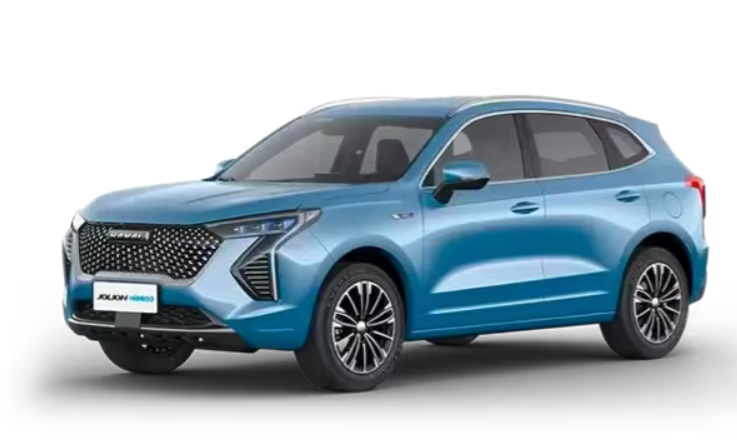
Fuel economy is one of the biggest reasons buyers consider a hybrid SUV, and the Haval Jolion Hybrid makes a strong case for itself. It combines a petrol engine with an electric motor to reduce fuel consumption, particularly during city driving where conventional petrol SUVs usually use the most fuel.
So, what is the Haval Jolion Hybrid fuel consumption in everyday driving?
As a useful reference, the current Australian-market Haval Jolion Hybrid has a claimed combined fuel consumption of approximately 5.1 litres per 100 km. A recent 2026 road test actually recorded about 5.0L/100km, although other tests have produced considerably higher figures depending on driving conditions.
That means drivers should realistically expect fuel economy somewhere around 5.0 to 6.5L/100km in many situations, with particularly efficient urban driving sometimes producing even better results.
Let's look at exactly how much fuel the Jolion Hybrid uses, how far it can travel on a tank and whether its hybrid system really saves enough fuel to justify choosing it over the standard petrol model.
Content in this publication
- What Is the Haval Jolion Hybrid Fuel Consumption?
- Haval Jolion Hybrid Real-World Fuel Consumption
- Why Can the Jolion Hybrid Be More Efficient in the City?
- Haval Jolion Hybrid City Fuel Consumption
- Haval Jolion Hybrid Highway Fuel Consumption
- Haval Jolion Hybrid Fuel Tank Capacity
- How Far Can a Haval Jolion Hybrid Travel on One Tank?
- Does the Haval Jolion Hybrid Need Premium Fuel?
- Haval Jolion Hybrid vs Petrol Fuel Consumption
- Why Does the Haval Jolion Hybrid Use Less Fuel?
- Does the Haval Jolion Hybrid Need Charging?
- What Affects Haval Jolion Hybrid Fuel Economy?
- How to Improve Haval Jolion Hybrid Fuel Consumption
- Is 5.1L/100km Good for an SUV?
- Can the Haval Jolion Hybrid Achieve 4.5L/100km?
- Why Is My Haval Jolion Hybrid Using 7L/100km?
- Is the Haval Jolion Hybrid Economical for Long Trips?
- Haval Jolion Hybrid Fuel Cost per 100km
- Is the Haval Jolion Hybrid Good on Fuel?
- Is the Haval Jolion Hybrid Worth It for Fuel Savings?
- Frequently Asked Questions
- Final Thoughts on Haval Jolion Hybrid Fuel Consumption
What Is the Haval Jolion Hybrid Fuel Consumption?
For the latest Australian-market Jolion Hybrid, the official combined fuel economy figure is approximately:
| Driving measurement | Haval Jolion Hybrid |
|---|---|
| Claimed combined consumption | 5.1L/100km |
| Recent road-test result | 5.0L/100km |
| Fuel tank capacity | 55 litres |
| Fuel type | 91 RON regular unleaded |
| Claimed CO2 emissions | 118g/km |
| Approximate theoretical range at 5.1L/100km | 1,078 km |
The 2026 Jolion Hybrid uses a 1.5-litre naturally aspirated petrol engine combined with an electric motor, producing a quoted combined system output of 140kW and 375Nm. The powertrain drives the front wheels through GWM's Dedicated Hybrid Transmission.
For us, the headline figure is clearly the 5.1L/100km official consumption.
That is significantly lower than what we normally expect from a conventional petrol-powered compact SUV.
Haval Jolion Hybrid Real-World Fuel Consumption
Official consumption figures are useful for comparing vehicles, but they don't necessarily represent what every owner will see.
Real-world Haval Jolion Hybrid fuel consumption varies considerably.
A 2026 Jolion Hybrid tested by CarExpert recorded 5.0L/100km during a week that included peak-hour commuting, suburban roads and highway driving.
Another test of a 2025 Jolion Lux Hybrid recorded 6.7L/100km, with much of the driving taking place on highways.
Earlier testing has produced results between these extremes. A long-term CarsGuide test recorded approximately 4.6L/100km over 2,120 km, while a controlled 150km loop returned approximately 5.2L/100km.
That gives us a much more useful picture than the official number alone.
What Fuel Consumption Should You Expect?
For normal mixed driving, we would consider roughly 5.0-6.5L/100km a sensible expectation.
However, your result could be lower or higher.
Drivers spending most of their time in slow urban traffic may actually see surprisingly low consumption because the electric motor can contribute much more frequently.
Long motorway journeys can produce a different result because the petrol engine does more work at sustained higher speeds.
Why Can the Jolion Hybrid Be More Efficient in the City?
This is one of the interesting characteristics of hybrid vehicles.
With a conventional petrol car, stop-start city traffic is generally bad for fuel economy. Every time we accelerate, the engine needs to move the vehicle from a standstill, and energy is lost when we brake.
A hybrid can recover some of that energy.
When the Jolion slows down, regenerative braking can convert some of the vehicle's kinetic energy into electrical energy and store it in the hybrid battery.
That stored energy can then help power the electric motor.
Consequently, urban driving gives the hybrid system many opportunities to recover and reuse energy.
Haval Jolion Hybrid City Fuel Consumption
There isn't one guaranteed city consumption number because traffic conditions vary enormously.
However, city environments are exactly where the Jolion's hybrid system can be most useful.
During low-speed driving, the vehicle can rely heavily on its electric motor. The petrol engine can switch on and off depending on battery charge, acceleration requirements and vehicle speed.
An earlier long-term road test recorded around 4.5L/100km across approximately 760km, showing how efficient the hybrid can become under favourable driving conditions.
Drivers who commute through suburban roads and moderate traffic may therefore have a realistic chance of getting close to the official consumption figure.
Haval Jolion Hybrid Highway Fuel Consumption
Highway driving changes the equation.
At sustained speeds, there are fewer opportunities for regenerative braking, and the petrol engine may operate much more frequently.
That doesn't make the Jolion Hybrid inefficient on highways, but the advantage over a conventional petrol vehicle is often smaller than it is around town.
This helps explain why one 2025 Jolion Hybrid test that involved predominantly highway driving recorded 6.7L/100km, noticeably above the official 5.1L/100km figure.
Therefore, someone driving 80 percent of their kilometres on highways shouldn't automatically expect 5.1L/100km.
Around 5.5-7.0L/100km can be possible depending on speed, weather, load, hills and driving style.
Haval Jolion Hybrid Fuel Tank Capacity
The Haval Jolion Hybrid uses a relatively generous 55-litre fuel tank in the Australian specification.
That works particularly well when combined with the hybrid's low consumption.
At an average of 5.1L/100km, the simple mathematical range would be approximately:
55 ÷ 5.1 × 100 = 1,078 km
In theory, therefore, the Jolion Hybrid could travel more than 1,000 kilometres using 55 litres of fuel.
Real-world range will normally be lower because drivers rarely use every litre in the tank and fuel economy constantly changes.
Still, travelling 800-1,000 km between refuelling stops can be realistic under favourable conditions.
How Far Can a Haval Jolion Hybrid Travel on One Tank?
Let's look at different consumption scenarios.
| Average consumption | Approximate theoretical 55L range |
|---|---|
| 4.5L/100km | 1,222 km |
| 5.0L/100km | 1,100 km |
| 5.1L/100km | 1,078 km |
| 5.5L/100km | 1,000 km |
| 6.0L/100km | 917 km |
| 6.5L/100km | 846 km |
| 7.0L/100km | 786 km |
These numbers are mathematical estimates rather than guaranteed driving ranges.
Nevertheless, they illustrate one of the Jolion Hybrid's strongest attributes: its combination of a decent-sized fuel tank and relatively low consumption can provide excellent range.
Another advantage is that the Australian-spec Jolion Hybrid can run on 91 RON regular unleaded petrol.
That matters when calculating actual running costs.
A vehicle consuming slightly less fuel but requiring expensive premium petrol doesn't always save as much money as its consumption figure suggests.
With the Jolion Hybrid, drivers can benefit from lower fuel consumption without necessarily paying for premium unleaded every time they fill the tank.
Always follow the fuel requirements specified for the exact model sold in your country, however, because specifications can differ between markets.
Haval Jolion Hybrid vs Petrol Fuel Consumption
This is where the hybrid's advantage becomes particularly obvious.
Recent petrol versions of the Jolion sold in Australia have carried a claimed combined fuel economy figure of approximately 8.1L/100km, compared with around 5.1L/100km for the Hybrid.
That represents roughly a 37 percent reduction in fuel consumption based purely on those official figures.
Consider 15,000km of annual driving.
At 5.1L/100km, the hybrid would consume approximately 765 litres.
At 8.1L/100km, a petrol Jolion would consume approximately 1,215 litres.
That's a theoretical difference of around 450 litres of petrol every 15,000km.
The actual saving depends on driving conditions and the specific petrol variant, but frequent drivers could save a meaningful amount of fuel over several years.
Why Does the Haval Jolion Hybrid Use Less Fuel?
The difference comes from how its hybrid powertrain distributes work between the petrol engine and electric motor.
The vehicle doesn't simply use a conventional petrol engine with a small electric boost.
Its hybrid system can vary the way power reaches the wheels depending on operating conditions.
At lower speeds and lighter loads, electric propulsion can play a much larger role.
When more performance is required, the petrol engine and electric motor can work together.
During deceleration, regenerative braking helps recover energy that would otherwise largely disappear as heat through the brakes.
The result is a vehicle that repeatedly captures and reuses energy during everyday driving.
Does the Haval Jolion Hybrid Need Charging?
No external charging is required for the conventional Haval Jolion Hybrid discussed here.
It is a self-charging hybrid rather than a plug-in hybrid.
The battery receives energy through the petrol engine and regenerative braking.
That means we simply fill the vehicle with petrol and drive it like a normal car.
There is no requirement to install a home charger or connect it to a public charging station.
For drivers who want lower fuel consumption but aren't ready to manage an EV or plug-in hybrid charging routine, that simplicity is one of the Jolion Hybrid's biggest attractions.
What Affects Haval Jolion Hybrid Fuel Economy?
Even two identical Jolion Hybrids can deliver very different fuel consumption.
Driving style, average speed, temperature, traffic and terrain all matter.
The biggest influences typically include:
- aggressive acceleration and braking;
- prolonged high-speed motorway driving;
- short journeys with a cold engine;
- steep hills;
- heavy passengers or luggage;
- incorrect tyre pressures;
- roof racks and other aerodynamic accessories;
- extensive air-conditioning use;
- traffic conditions;
- tyre choice and wheel size.
This is why one road test might record 5.0L/100km while another sees more than 6.5L/100km.
Neither result necessarily means something is wrong with the vehicle.
How to Improve Haval Jolion Hybrid Fuel Consumption
Hybrid vehicles reward smooth driving.
Rather than accelerating aggressively and immediately braking again, gradual acceleration allows the hybrid system to manage energy more effectively.
Looking further ahead in traffic also helps.
If we anticipate traffic lights and slowing vehicles, we can lift off the accelerator earlier and allow regenerative braking to recover energy.
Maintaining correct tyre pressure is another simple but important step.
Underinflated tyres increase rolling resistance, meaning the vehicle requires more energy to move.
Highway speed also makes a major difference.
Aerodynamic resistance increases quickly as speed rises, so travelling consistently at higher motorway speeds will generally increase petrol consumption.
Is 5.1L/100km Good for an SUV?
Yes.
For a petrol-electric compact SUV, approximately 5.1L/100km is a good figure.
It isn't necessarily class-leading, though.
For example, the Hyundai Kona Hybrid has previously carried an Australian combined claim around 3.9L/100km, while a Toyota Corolla Cross Hybrid has been quoted at around 4.3L/100km. Earlier testing therefore placed the Jolion's 5.0L/100km figure behind some of its most efficient hybrid competitors.
Fuel consumption isn't the only consideration, however.
Buyers also need to compare purchase price, performance, space, equipment, servicing costs and warranty coverage.
The Jolion Hybrid's appeal isn't necessarily that it has the lowest consumption in its class. Instead, it combines reasonably strong fuel economy with substantial performance and competitive pricing.
Can the Haval Jolion Hybrid Achieve 4.5L/100km?
Yes, it appears possible under suitable conditions.
Long-term testing has previously produced approximately 4.5-4.6L/100km, which is actually lower than the official combined claim used for those vehicles.
We wouldn't assume every owner will achieve that figure.
Drivers who spend significant time in moderate urban traffic and make good use of regenerative braking have a better chance.
Someone travelling long distances at motorway speeds may struggle to reach it consistently.
Why Is My Haval Jolion Hybrid Using 7L/100km?
Seeing 7L/100km doesn't automatically mean the hybrid system has a problem.
The consumption could increase significantly during short journeys, winter driving, mountain driving or extended motorway use.
Acceleration habits can also have a surprisingly large impact.
Independent Australian real-world testing has demonstrated that the Jolion Hybrid can use significantly more fuel than its laboratory number under certain conditions. One AAA real-world test reported approximately 6.6L/100km, compared with the older official 5.0L/100km figure.
That illustrates why buyers should treat official figures as standardized comparison measurements rather than guarantees.
If fuel consumption suddenly increases dramatically compared with the car's normal average, however, checking tyre pressures, servicing condition and warning lights would be sensible.
Is the Haval Jolion Hybrid Economical for Long Trips?
It can be.
Its large 55-litre tank gives the Jolion Hybrid an advantage for long-distance travel because even consumption around 6L/100km theoretically provides more than 900km of range.
You shouldn't expect the same hybrid benefit on an uninterrupted highway journey as you might achieve around town.
Even so, 5.5-6.5L/100km in a compact SUV remains respectable.
Drivers who regularly combine urban commuting with weekend highway trips are arguably well suited to this powertrain because they can take advantage of hybrid efficiency during the week without worrying about charging infrastructure on longer journeys.
Haval Jolion Hybrid Fuel Cost per 100km
Calculating your fuel cost is straightforward.
Suppose petrol costs $2.00 per litre.
At 5.1L/100km:
5.1 × $2.00 = $10.20 per 100km
If consumption increases to 6.0L/100km:
6 × $2.00 = $12.00 per 100km
At 8.1L/100km in a comparable petrol vehicle:
8.1 × $2.00 = $16.20 per 100km
The difference becomes increasingly important for drivers covering 20,000km or more each year.
Simply substitute your local petrol price into the calculation to estimate your own running cost.
Is the Haval Jolion Hybrid Good on Fuel?
Overall, yes.
Its approximately 5.1L/100km claimed combined consumption puts it firmly into fuel-efficient SUV territory.
The more important point, however, is that independent testing shows the Jolion Hybrid can produce very different numbers depending on how and where it is driven.
We've seen reported results ranging from around 4.5L/100km to approximately 6.7L/100km across different tests and conditions.
Therefore, 5.1L/100km should be considered a useful benchmark rather than a number every owner will consistently reproduce.
Is the Haval Jolion Hybrid Worth It for Fuel Savings?
That depends heavily on annual mileage.
Someone driving only 5,000km per year won't save enormous amounts of petrol compared with someone covering 20,000 or 30,000km.
Hybrid ownership becomes increasingly attractive as annual mileage rises, especially if much of the driving happens in urban areas.
City commuters are particularly well positioned to benefit because repeated braking and acceleration gives the hybrid system more opportunities to use regenerative braking and electric propulsion.
Drivers who spend almost all their time travelling long motorway distances should compare the hybrid's higher purchase price with their expected annual fuel savings before deciding.
Frequently Asked Questions
What is the Haval Jolion Hybrid fuel consumption?
The current Australian-market Haval Jolion Hybrid has a claimed combined consumption of approximately 5.1L/100km. Real-world results can vary, with independent tests producing figures from around 5.0L/100km to well above 6L/100km depending on conditions.
What is the real-world fuel economy of the Haval Jolion Hybrid?
A sensible general expectation is approximately 5.0-6.5L/100km, although particularly efficient driving can produce results below 5L/100km. Driving style, speed, traffic and terrain make a significant difference.
How far can a Haval Jolion Hybrid go on a full tank?
With its Australian-market 55-litre fuel tank, theoretical range at 5.1L/100km is around 1,078km. Real-world usable range will normally be lower, but approximately 800-1,000km between fills can be achievable depending on driving conditions.
The current Australian specification is designed to run on 91 RON regular unleaded petrol, although owners should always check the requirements for their specific market and model year.
Is the Haval Jolion Hybrid more fuel-efficient than the petrol model?
Yes. Recent Australian figures put the Hybrid around 5.1L/100km, while standard petrol Jolion variants have been quoted around 8.1L/100km. Based on those official numbers, the Hybrid uses roughly 37 percent less fuel.
Final Thoughts on Haval Jolion Hybrid Fuel Consumption
The Haval Jolion Hybrid fuel consumption is one of the strongest reasons to consider the hybrid version of this compact SUV.
With an official Australian combined figure of approximately 5.1L/100km, a 55-litre tank and the ability to use regular 91 RON petrol, the Jolion Hybrid has the potential to cover long distances without frequent fuel stops.
Real-world results tell an even more useful story.
Some drivers and road testers have achieved around 4.5-5.2L/100km, while other testing has returned figures closer to 6.5-6.7L/100km. Therefore, we'd consider approximately 5-6L/100km a very good real-world target, while recognising that sustained highway use or demanding conditions can push consumption higher.
Compared with the petrol Jolion, the hybrid can substantially reduce the amount of fuel used during everyday driving, particularly around town.
It may not be the absolute fuel-economy champion among hybrid SUVs, but its combination of efficiency, range and hybrid performance makes the Haval Jolion Hybrid an interesting option for buyers who want lower running costs without having to plug their vehicle in every night.
If you want to know other articles similar to Haval Jolion Hybrid Fuel Consumption: How Efficient Is It Really? you can visit the category Driving.
Kia Sorento Diesel Fuel Consumption: MPG, Efficiency and Real-World Range
Kia Sorento Fuel Economy: MPG, Hybrid, and Plug-In Hybrid Explained
BYD Shark 6 Fuel Consumption: Real-World Economy, Range and What to Expect
Vauxhall Agila MPG: Real-World Fuel Economy and Engine Guide

Honda Passport MPG: Real-World Fuel Economy, Ratings, and What to Expect

Nissan Rogue Fuel Economy: MPG, Range, Costs, and Real-World Efficiency
Leave a Reply
More content of your interest