
BMW 2 Series vs 1 Series: Which BMW Should You Buy?

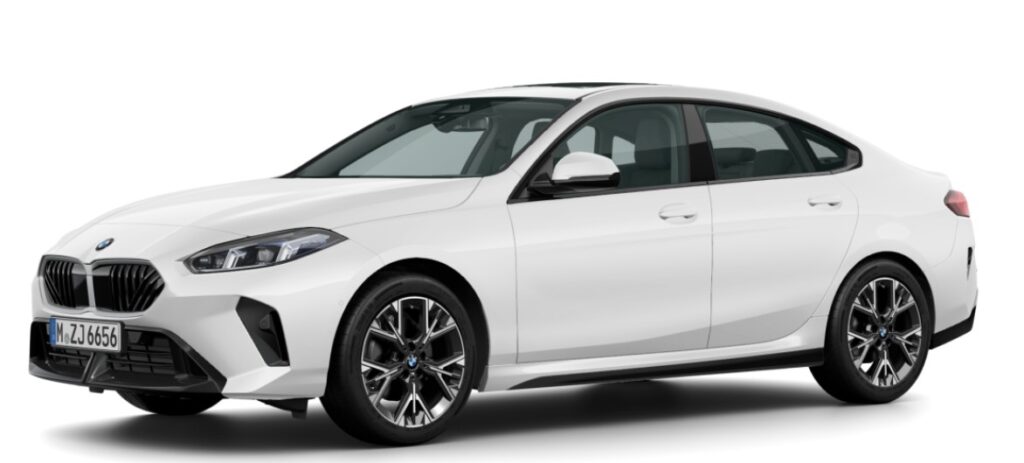
Choosing between the BMW 2 Series and BMW 1 Series sounds simple until we open BMW’s configurator and realise these two names represent rather different ideas.
The latest BMW 1 Series sold in the UK is a five-door premium hatchback designed to handle commuting, shopping, family duties and motorway journeys without making everyday life unnecessarily complicated. The 2 Series, meanwhile, is not one single type of car. BMW currently uses the badge for the sporty two-door 2 Series Coupé, the four-door 2 Series Gran Coupé and the practical 2 Series Active Tourer.
For buyers who care most about driving enjoyment, the meaningful comparison is usually the BMW 1 Series hatchback against the BMW 2 Series Coupé. The Gran Coupé deserves consideration if four doors are essential, but it shares more of its philosophy with the 1 Series than with the rear-wheel-drive Coupé.
So, which should we buy?
The immediate answer is this: the BMW 1 Series is the smarter everyday car, while the BMW 2 Series Coupé is the more exciting driver’s car.
That sounds decisive, but there are important shades between those two conclusions. Price, passenger space, engine choice, road quality and driving habits can all alter the result. Let’s put both cars under the microscope and discover which one deserves space on our driveway.
Content in this publication
- BMW 2 Series vs 1 Series at a Glance
- Understanding the Current BMW 1 Series
- Understanding the Current BMW 2 Series
- Exterior Design: Practical Hatchback or Classic Coupé?
- Interior Quality and Driving Position
- Technology and Infotainment
- Practicality: The BMW 1 Series Fights Back
- Engine Performance: More Than a Numbers Game
- Driving Enjoyment: Where the Battle Is Won
- M135 xDrive vs M240i xDrive
- BMW 1 Series vs 2 Series Gran Coupé
- Running Costs and Everyday Expenses
- Parking and Urban Driving
- Which Car Feels More Premium?
- Which BMW Is Better for a Young Driver?
- Which BMW Is Better for a Small Family?
- Which BMW Is Better for Long-Distance Driving?
- The Best BMW 1 Series to Buy
- The Best BMW 2 Series Coupé to Buy
- BMW 2 Series vs 1 Series: Advantages and Disadvantages
- Which One Should We Buy?
- Conclusion
- Frequently Asked Questions
BMW 2 Series vs 1 Series at a Glance
Before diving into the details, here is the basic difference between them:
| Category | BMW 1 Series | BMW 2 Series Coupé |
|---|---|---|
| Body style | Five-door hatchback | Two-door coupé |
| Basic drivetrain layout | Front-wheel-drive-based | Rear-wheel drive or all-wheel drive |
| Main strength | Everyday usability | Driving enjoyment |
| Passenger access | Easy | Restricted in the rear |
| Boot practicality | More flexible | Useful but less versatile |
| Driving character | Secure and agile | Balanced and engaging |
| Best performance model | M135 xDrive | M240i xDrive |
| Best for | Daily drivers and small families | Enthusiasts and couples |
| Main compromise | Less traditional BMW character | Limited rear-seat convenience |
| UK starting-price position | Lower | Higher |
BMW UK currently lists the 1 Series range from the BMW 120 Sport, while the 2 Series Coupé begins with the 220i M Sport. At the time of writing, their published starting prices are approximately £32,640 and £39,840 respectively, although pricing and specifications can change.
That difference of more than £7,000 immediately tells us something. The 1 Series is BMW’s accessible premium hatchback. The 2 Series Coupé asks us to pay extra for proportions, chassis layout and personality rather than additional doors or greater practicality.
Understanding the Current BMW 1 Series
The current BMW 1 Series is a compact five-door hatchback aimed directly at cars such as the Audi A3, Mercedes-Benz A-Class and Volkswagen Golf.
It is designed to work as an only car. We can drive it through crowded city streets, load luggage through its hatchback opening, carry adults in the rear and still enjoy the polished atmosphere expected from a modern BMW.
Unlike older generations of the 1 Series, the latest model uses a front-wheel-drive-based architecture. That choice releases more interior space and makes the car easier to package, but it also means the standard 1 Series no longer has the classic front-engine, rear-wheel-drive arrangement traditionally associated with BMW.
This does not make it a poor car. Far from it. It simply changes its personality.
The 1 Series now behaves like a highly polished premium hatchback rather than a miniature rear-wheel-drive sports saloon. Its priorities are grip, security, efficiency and usability.
Who Is the BMW 1 Series Designed For?
The 1 Series makes the most sense for buyers who:
- Need five doors regularly
- Carry children, friends or colleagues
- Drive in cities and tight car parks
- Want one car for every situation
- Prefer practicality without buying an SUV
- Value lower purchase and running costs
- Want performance without sacrificing daily convenience
It is the sensible shoe of the comparison—but a stylish, expensive and surprisingly quick sensible shoe.
Understanding the Current BMW 2 Series
The phrase “BMW 2 Series” needs clarification because the UK range includes several distinct vehicles.
BMW 2 Series Coupé
This is the model driving enthusiasts usually mean. It has two doors, a long bonnet, a relatively low roof and a rear-wheel-drive-based platform. The 220i and 230i send their power to the rear wheels, while the M240i uses BMW’s xDrive all-wheel-drive system.
BMW’s official figures show that the 220i produces 184 hp and reaches 62 mph in 7.5 seconds. The 230i raises output to 245 hp and cuts that time to 5.9 seconds. The M240i xDrive combines a six-cylinder mild-hybrid petrol engine with all-wheel drive and develops a quoted total output of 392 hp.
The Coupé is the most traditional BMW in this comparison.
BMW 2 Series Gran Coupé
Despite its name, the Gran Coupé has four doors. It is a compact fastback-style saloon based on a front-wheel-drive architecture related to that of the 1 Series.
It offers a sportier-looking body and a conventional boot rather than a hatchback. However, it is not simply a four-door version of the rear-wheel-drive 2 Series Coupé.
That distinction matters.
A buyer choosing the Gran Coupé mainly for its badge may expect the same underlying character as the Coupé and be surprised to discover that it feels closer to the 1 Series.
BMW 2 Series Active Tourer
The Active Tourer is the family-focused member of the range. It offers a tall body, generous cabin space and a flexible boot capacity of up to 1,405 litres with the rear seats folded.
It is practical, comfortable and useful, but it is not the car to choose when driving enjoyment is the leading priority. For that reason, our central battle remains 1 Series hatchback versus 2 Series Coupé.
Exterior Design: Practical Hatchback or Classic Coupé?
Design is subjective, but the two cars communicate their intentions before we even start the engine.
The 1 Series looks upright, compact and purposeful. Its short overhangs and hatchback shape make it easy to place on the road. It has enough visual aggression to feel premium and sporty, particularly in M Sport trim, but its proportions are dictated by practicality.
The 2 Series Coupé takes a more theatrical approach. Its bonnet stretches forward, the cabin sits farther back and the roof flows towards a short rear deck. It resembles a traditional sports coupé because that is exactly what it is trying to be.
Park the two cars side by side and the 1 Series appears ready for Monday morning. The 2 Series looks as though it is already thinking about Sunday’s empty B-road.
Which Car Has More Road Presence?
The 2 Series Coupé wins.
It looks lower, broader and more deliberate. Even the entry-level 220i carries a sense of occasion that the 1 Series struggles to match.
The 1 Series is attractive in a more restrained way. It fits naturally outside an office, supermarket or school. The Coupé turns more heads because it appears less ordinary.
Which Design Will Age Better?
The 2 Series Coupé’s classic proportions may prove more timeless. Long bonnets and compact cabins rarely fall completely out of fashion.
The 1 Series is more dependent on current design trends. Its sharper details and upright nose make an immediate impression, but the basic hatchback silhouette is familiar.
For emotional appeal, the Coupé takes the first major victory.
Interior Quality and Driving Position
Step inside either car and the family resemblance is obvious. Both deliver BMW’s modern interpretation of a compact premium cabin: large digital displays, clean horizontal lines, ambient lighting and relatively few traditional buttons.
Materials are generally convincing in the areas we touch most often, although neither car feels like a scaled-down 7 Series. Harder plastics remain lower in the cabin, and some buyers may miss the physical controls found in older BMW interiors.
The BMW 1 Series Cabin
The 1 Series cabin feels airy for a compact hatchback. Its upright seating position, broad windscreen and five-door layout make it approachable.
Visibility is generally better than in the Coupé, particularly when looking over the shoulder. The driving position is still sporty enough to feel like a BMW, but it does not cocoon the driver as tightly.
Everything feels arranged for daily ease. We get in, connect our phone, select drive and leave without ceremony.
The BMW 2 Series Coupé Cabin
The Coupé seats us lower. The windscreen feels shallower, the doors are longer and the centre console creates a stronger sense of separation between driver and passenger.
BMW describes the current Coupé as having a driver-focused cockpit, and that description is fair. Optional M Sport seats provide stronger lateral support, while the steering wheel and paddle placement reinforce the impression that driving is the main event.
It may not feel dramatically more luxurious than the 1 Series, but it feels more intimate. We sit inside it rather than simply sitting on top of it.
Which Has the Better Driving Position?
For enthusiastic driving, the 2 Series Coupé wins.
Its lower seating position helps us feel connected to the chassis. The view down the bonnet also makes the car feel substantial and properly rear-driven.
For visibility and easy entry, the 1 Series is better.
Technology and Infotainment
Both cars provide the digital features expected from a current premium vehicle, including a curved display arrangement, smartphone integration, navigation options and access to BMW’s connected services.
The interface looks sharp and responds quickly once we understand its structure. However, BMW’s movement towards touchscreen and voice-operated controls means that basic actions can require more attention than they did in earlier models.
Changing certain climate or vehicle settings while driving may involve opening an on-screen menu. That looks modern in a showroom, but a physical dial remains easier when travelling over a rough British road.
Does Either Car Have Better Technology?
There is no decisive gap.
Equipment varies by trim, package and model year, so buyers should compare actual specifications rather than assume every car includes the same features.
The important point is that the 2 Series Coupé’s extra cost primarily buys a different body and drivetrain philosophy. It does not automatically deliver a dramatically more advanced cabin.
Practicality: The BMW 1 Series Fights Back
Driving pleasure matters, but a car becomes frustrating when it cannot handle our real life.
Here the 1 Series lands its strongest punch.
Five doors make an enormous difference. Rear passengers can enter without folding the front seats, parents can secure child seats more easily, and carrying friends does not feel like organising a small expedition.
The hatchback opening also makes loading bulky items simpler. Folding the rear seats creates a more useful cargo area for suitcases, sports equipment or flat-packed furniture.
Rear-Seat Space
The 1 Series is the clear winner.
Its rear seats are not limousine-like, but adults can use them without complaint on ordinary journeys. Headroom and access are more forgiving than in the 2 Series Coupé.
The Coupé technically provides rear seats, yet they are best viewed as occasional accommodation. Access requires climbing past a folded front seat, headroom is restricted by the sloping roof, and taller passengers may find legroom tight.
Children will cope better, but parents must consider the effort involved in repeatedly reaching into the back.
You may be interested in reading BMW 2 Series vs Audi A4: Which Is Better Value in the UK?
Boot Space and Flexibility
The Coupé’s boot is useful enough for a weekend away or a normal supermarket trip. Its shape is reasonably regular, and folding rear seatbacks add flexibility.
The 1 Series remains more versatile because of its large hatchback opening. The difference is not merely about the number of litres listed in a brochure; it is about the shape of the opening and the ease with which objects can be loaded.
A suitcase may fit into both. A boxed television, large dog crate or bicycle is more likely to favour the 1 Series.
Which Is Better as an Only Car?
The BMW 1 Series.
Unless we rarely use the rear seats, the five-door hatchback removes numerous small inconveniences. Those conveniences may sound dull, but they matter every week.
Engine Performance: More Than a Numbers Game
The latest UK engine range can change over time, but the essential difference is clear.
The mainstream 1 Series focuses on efficient four-cylinder performance, while the 2 Series Coupé offers stronger rear-wheel-drive variants and access to a six-cylinder engine in the M240i.
BMW 120
The BMW 120 is designed for normal daily use. It offers enough performance for joining motorways, overtaking and travelling with passengers, but it is not built to overwhelm us with acceleration.
Its power delivery suits urban and suburban driving. The automatic transmission keeps effort low, and mild-hybrid assistance helps smooth normal progress.
For many buyers, it is all the engine they genuinely need.
BMW M135 xDrive
The M135 xDrive transforms the 1 Series into a serious performance hatchback. With all-wheel-drive traction and substantially greater output than the regular 120, it can deploy its performance effectively in poor weather.
It is fast, planted and easy to drive quickly. BMW currently positions it as the performance flagship of the 1 Series range, with a UK list price significantly above that of the standard 120.
Its personality is based on grip and efficiency. We point it towards a corner, trust the traction and accelerate hard on the exit.
BMW 220i Coupé
The 220i is the accessible route into the rear-wheel-drive Coupé. Its 184 hp output and 7.5-second 0–62 mph time do not look explosive, but speed is only part of the story.
The engine has enough strength for enjoyable road driving, and the chassis encourages us to carry momentum. It feels more like a balanced sports coupé than a straight-line weapon.
This may actually suit British roads, where visibility, traffic and surface quality often prevent us from using huge power outputs.
BMW 230i Coupé
The 230i may be the sweet spot for enthusiasts.
With 245 hp, 400 Nm and a quoted 0–62 mph time of 5.9 seconds, it is meaningfully quicker than the 220i while retaining rear-wheel drive.
It delivers strong performance without the price, weight or complexity of the M240i. The four-cylinder engine cannot reproduce the sound and smoothness of BMW’s straight-six, but the overall package is quick enough to feel special.
BMW M240i xDrive
The M240i is the star.
Its turbocharged 3.0-litre six-cylinder engine produces the kind of effortless surge that makes ordinary overtaking feel almost comically easy. BMW’s current UK technical data quotes 381 hp from the combustion engine and 392 hp as total mild-hybrid system output, together with 540 Nm of torque.
The xDrive system provides tremendous traction, making the M240i brutally effective in wet or cold conditions.
It is not a lightweight, delicate sports car. It feels more like a compact grand tourer with a hammer hidden under the bonnet. Press the accelerator and the horizon moves towards us.
Driving Enjoyment: Where the Battle Is Won
This is the section that matters most for our chosen buyer priority.
The BMW 1 Series can be enjoyable, particularly in M135 form, but the 2 Series Coupé is designed around the driver in a more fundamental way.
Steering and Front-End Response
The 1 Series turns into corners quickly and feels secure. Its compact dimensions make it easy to thread along narrow lanes, while the front-wheel-drive-based layout gives predictable behaviour.
The 2 Series Coupé feels more natural as speed builds. Its front wheels concentrate primarily on steering, while the rear wheels handle propulsion in the rear-wheel-drive versions. This separation gives the car a more balanced sensation.
We feel the vehicle rotating around us rather than simply pulling itself through the corner.
Modern BMW steering is not overflowing with old-fashioned road texture, but the Coupé’s responses still feel more deliberate and satisfying.
Chassis Balance
This is the largest difference.
The 1 Series is capable. The 2 Series Coupé is playful.
In the 220i and 230i, power travels to the rear axle. Under acceleration, the car feels as though it is being pushed from behind rather than dragged from the front. On a flowing road, that creates a cleaner rhythm.
BMW also offers performance hardware such as an M Sport differential on relevant Coupé configurations, intended to improve traction and stability during quicker direction changes and on varying surfaces.
The M135 counters with enormous grip. It can cover a wet road at impressive speed, but its character is less adjustable and less organic. It behaves like a precision tool, while the rear-wheel-drive Coupé feels more like an instrument we learn to play.
Ride Comfort
Neither car floats over broken roads.
M Sport suspension, large wheels and low-profile tyres can make either model feel firm, especially over potholes and sharp urban imperfections. The Coupé may feel more settled at speed, but the 1 Series can be easier to manage in town because of its shorter, more practical nature.
Wheel choice matters enormously. Large alloys look superb but often bring harsher low-speed ride quality, greater tyre expense and more anxiety around damaged road surfaces.
For UK use, the largest wheel is not always the wisest wheel.
Motorway Refinement
Both cars are competent motorway companions.
The 1 Series provides easier visibility and a more relaxed sense of space. The 2 Series Coupé sits lower and feels more substantial, although tyre noise can become noticeable depending on specification.
The M240i is particularly effective for long journeys because its engine barely appears to work at cruising speed. It has the character of a compact grand tourer: calm when required, explosive when invited.
Which Is More Fun at Legal Speeds?
The 220i or 230i Coupé may be more enjoyable than the extremely fast M models on ordinary roads.
Why? Because we can use more of the car.
A moderately powered rear-wheel-drive Coupé asks us to preserve speed, choose a line and work with the chassis. A high-output model can cross the legal limit before the engine has finished clearing its throat.
Raw speed is thrilling, but involvement often lives in the space between corners.
M135 xDrive vs M240i xDrive
Many performance-focused buyers will eventually narrow their choice to these two cars.
Both offer all-wheel drive, strong acceleration and everyday automatic transmissions. Yet their personalities are remarkably different.
Why Choose the M135 xDrive?
The M135 is easier to justify.
It has five doors, a usable rear cabin and a practical hatchback. It is rapid in poor weather and compact enough for daily urban life.
Choose it when we want one car that can carry a family on Friday and attack a wet country road on Sunday.
Why Choose the M240i xDrive?
The M240i has the emotional advantage.
Its straight-six engine, lower driving position and rear-biased performance character make it feel more special before we have even reached high speed. The engine note has depth, the power delivery feels richer and the body shape announces that practicality was not the only item discussed in the design meeting.
The M135 is the rational performance purchase. The M240i is the one we may turn around to look at after parking.
Which Performance BMW Is Better to Drive?
The M240i.
The M135 may feel smaller and highly effective on slippery roads, but the Coupé offers a more memorable combination of engine character, balance and occasion.
BMW 1 Series vs 2 Series Gran Coupé
Some buyers comparing these model names actually want four doors in either case. For them, the 2 Series Gran Coupé becomes relevant.
The Gran Coupé offers a sleeker profile and a separate boot. It looks more formal than the 1 Series and may appeal to buyers who dislike hatchbacks.
However, it does not deliver the full mechanical character of the 2 Series Coupé. Its front-wheel-drive-based architecture means its driving behaviour is conceptually closer to the 1 Series.
Why Buy the Gran Coupé Instead of the 1 Series?
Reasons include:
- More distinctive saloon-like styling
- A lower, sleeker roofline
- A conventional boot
- A more formal company-car image
- Preference for the M235 xDrive performance model
Why Buy the 1 Series Instead?
The 1 Series offers:
- A more useful hatchback opening
- Better loading flexibility
- Easier rear-seat packaging
- A generally lower entry price
- Similar underlying everyday qualities
If driving enjoyment is the priority and we can accept two doors, choose the 2 Series Coupé. If four doors are essential, the 1 Series often represents the more logical purchase than the Gran Coupé.
You may be interested in readingBMW 2 Series vs Audi A4: Which Is Better Value in the UK?You may be interested in reading
BMW 2 Series vs Mercedes A-Class: Which Performs Better?Running Costs and Everyday Expenses
The 1 Series should generally cost less to buy and operate when compared on equivalent mainstream specifications.
Its lower starting price reduces finance payments, while less powerful versions are likely to consume less fuel and may sit in more manageable insurance groups than high-performance 2 Series models.
The exact cost will depend on age, location, annual mileage, driving record and specification. Performance badges can produce a dramatic insurance increase, particularly for younger drivers.
Fuel Economy
The BMW 120 is likely to be the economical choice for most commuters.
The 220i Coupé can also return respectable figures when driven calmly, but its heavier body and performance-oriented character may increase consumption.
The M135 and M240i are different propositions. Their performance encourages heavier throttle use, and real-world fuel consumption can deteriorate rapidly when we enjoy that performance frequently.
The six-cylinder M240i may be surprisingly efficient on a steady motorway journey, yet city driving and enthusiastic acceleration will expose its appetite.
Tyres, Brakes and Servicing
High-performance models use larger tyres and stronger brakes. These components cost more to replace, especially when premium-brand tyres are fitted.
All-wheel-drive systems also reward careful tyre management. Significant differences in tyre wear or circumference can affect how the system operates, so replacing tyres in pairs—or sometimes as a complete set—may be advisable.
The 1 Series wins the running-cost contest, particularly in regular 120 form.
Parking and Urban Driving
In a crowded UK city, practicality has its own type of performance.
The 1 Series is easier to enter, easier to see out of and less awkward when passengers need access in tight parking spaces. Its shorter doors are especially helpful in narrow bays.
Coupé doors are long. That looks elegant, but opening one beside a concrete pillar can feel like performing surgery in a phone box.
The 2 Series Coupé also has more restricted rear visibility. Parking sensors and cameras reduce the problem, but they do not entirely remove it.
Drivers spending most of their week in central London, Birmingham, Manchester or another dense urban area may find the 1 Series noticeably less stressful.
The 2 Series Coupé feels more special, but not necessarily because every material is superior.
Its premium impression comes from experience: the long door, low seating position, rear-driven proportions and sense of separation from ordinary hatchbacks.
The 1 Series feels modern and well equipped. It communicates quality through technology and finish.
The Coupé communicates quality through atmosphere.
That distinction resembles the difference between a premium watch and a premium smartwatch. One may do more; the other may make the owner feel more.
Which BMW Is Better for a Young Driver?
A regular BMW 1 Series is the more sensible option.
It offers easier visibility, lower entry pricing and more manageable performance. It is also simpler to use when carrying friends or moving between rented properties.
Insurance remains an important consideration. Even an entry-level premium car may cost considerably more to insure than a mainstream hatchback, so obtaining quotations before paying a deposit is essential.
A 2 Series Coupé suits a young enthusiast who has a stable budget, rarely carries rear passengers and understands that tyres, insurance and repairs can cost more than expected.
Which BMW Is Better for a Small Family?
The 1 Series wins without difficulty.
Child-seat access alone can settle the argument. Reaching into the back of a two-door Coupé several times each day soon removes the romance from its sweeping roofline.
The five-door 1 Series also accommodates pushchairs, bags and weekly shopping more naturally.
A couple with one older child might manage with the Coupé, but the 1 Series is the car we would recommend when family practicality matters regularly.
Which BMW Is Better for Long-Distance Driving?
This depends on specification.
The 1 Series is easier to live with and offers better passenger access. A comfortable wheel and seat combination makes it an excellent motorway car.
The 2 Series Coupé feels more stable and substantial at speed. The M240i, in particular, has effortless overtaking power and a refined six-cylinder engine.
For a solo driver or couple covering long distances, the 2 Series may be more rewarding. For a family carrying luggage and passengers, the 1 Series is more convenient.
The Best BMW 1 Series to Buy
For most buyers, the regular BMW 120 in a sensibly equipped trim is the strongest all-round choice.
It supplies enough performance for normal UK roads without bringing the higher insurance, fuel and tyre costs associated with the M135. Choosing smaller wheels may also improve ride comfort.
The M135 is worth considering when we genuinely want hot-hatch performance but cannot sacrifice five-door practicality.
Do not buy it merely because it sits at the top of the range. Its extra capability only makes sense when we intend to use and appreciate it.
The Best BMW 2 Series Coupé to Buy
The 230i is arguably the enthusiast’s sweet spot, where available.
It is significantly faster than the 220i, retains rear-wheel drive and avoids the purchase and running costs of the M240i. Its 245 hp output is enough to feel exciting without making the car absurdly overpowered for British roads.
The 220i remains a good choice for buyers who value handling over acceleration. It offers the same attractive body shape and basic rear-wheel-drive character at a more accessible level.
The M240i is the emotional flagship. Buy it for the six-cylinder engine, effortless pace and sense of occasion—not because anyone genuinely needs nearly 400 hp for the weekly commute.
BMW 2 Series vs 1 Series: Advantages and Disadvantages
BMW 1 Series Advantages
- Lower starting price
- Five-door convenience
- More usable rear seats
- Flexible hatchback boot
- Easier urban driving
- Lower likely running costs
- Strong all-weather performance in M135 form
- Better as a single family car
BMW 1 Series Disadvantages
- Front-wheel-drive-based platform
- Less traditional BMW character
- Less visually distinctive
- Mainstream engines feel less exciting
- Digital controls can distract
- M135 prioritises grip over playfulness
BMW 2 Series Coupé Advantages
- Rear-wheel drive on 220i and 230i
- Superior chassis balance
- Lower and more engaging driving position
- More attractive coupé proportions
- Stronger sense of occasion
- Excellent 230i performance
- Six-cylinder M240i option
- More rewarding for enthusiastic drivers
BMW 2 Series Coupé Disadvantages
- Higher purchase price
- Only two doors
- Restricted rear-seat access
- Less useful cargo opening
- Long doors are awkward in tight spaces
- Higher potential insurance costs
- Performance versions can be expensive to run
- Firm ride on larger wheels
Which One Should We Buy?
The choice becomes easier when we stop asking which car is objectively better and start asking what compromises we are willing to accept.
Buy the BMW 1 Series If:
We need a car that works every day without demanding sacrifices.
It is the better choice for families, commuters, urban drivers and anyone who frequently carries rear passengers. It is less expensive at entry level and more flexible when life involves luggage, shopping or unpredictable plans.
The 1 Series can still be entertaining, especially in M135 form. It simply puts competence before theatre.
Buy the BMW 2 Series Coupé If:
Driving is more than transport.
The Coupé rewards us with a better seating position, rear-wheel-drive balance in the 220i and 230i, more expressive styling and access to the superb six-cylinder M240i.
We must accept awkward rear access and reduced practicality, but those inconveniences purchase something increasingly rare: a compact premium coupé built around the driver.
Our Final Recommendation for Driving Enjoyment
Choose the BMW 2 Series Coupé.
The 1 Series may be the cleverer purchase on paper, yet the Coupé makes the stronger emotional and dynamic case. Its proportions, driving position and drivetrain layout create an experience that feels distinct—not merely like a more expensive version of an ordinary hatchback.
Among the range, the BMW 230i Coupé is our balanced recommendation for enthusiasts. It has enough performance to feel exciting, retains rear-wheel drive and should be easier to justify than the M240i.
The M240i xDrive is the choice when budget is secondary and engine character matters deeply. That straight-six turns every clear slip road into a tiny occasion.
Choose the BMW 120 when practicality controls the decision. Choose the M135 when we need speed and five doors. But when driving enjoyment sits at the top of the list, the 2 Series Coupé earns the keys.
Conclusion
The BMW 1 Series and 2 Series may occupy neighbouring positions in BMW’s range, but they solve different problems.
The 1 Series is a polished premium hatchback. It is practical, compact, technologically advanced and easy to integrate into daily life. It asks for few compromises and serves as the stronger all-rounder.
The 2 Series Coupé is less rational, and that is precisely its appeal.
It sacrifices rear access and cargo flexibility to deliver better proportions, stronger engines and a more engaging chassis. It reminds us that a car can still be chosen because the long route home looks more interesting than the short one.
For most households, the BMW 1 Series is easier to recommend. For drivers who place enjoyment above practicality, the BMW 2 Series Coupé is the one to buy.
Frequently Asked Questions
Is the BMW 2 Series better than the BMW 1 Series?
The BMW 2 Series Coupé is better for driving enjoyment because it offers a lower driving position, rear-wheel drive in key versions and stronger performance options. The BMW 1 Series is better for practicality, rear-seat access and everyday family use.
Is the BMW 2 Series based on the BMW 1 Series?
It depends on the version. The 2 Series Gran Coupé and Active Tourer use front-wheel-drive-based architectures related to the 1 Series. The two-door 2 Series Coupé uses a different rear-wheel-drive-based platform and has a more traditional BMW driving character.
Which is faster, the BMW 1 Series or 2 Series?
The answer depends on the engine. The M135 xDrive is considerably faster than a regular BMW 120, but the M240i xDrive Coupé is the strongest non-M performance model in this comparison. BMW quotes up to 392 hp in total system output for the current M240i mild-hybrid powertrain.
Is the BMW 2 Series Coupé practical enough for daily use?
Yes, for a single driver or couple. Its boot can handle ordinary shopping and weekend luggage, while the rear seats offer emergency passenger space. However, frequent rear-seat use, child seats or bulky cargo strongly favour the five-door BMW 1 Series.
You may be interested in readingBMW 2 Series vs Audi A4: Which Is Better Value in the UK?You may be interested in reading
BMW 2 Series vs Mercedes A-Class: Which Performs Better?You may be interested in reading
BMW 2 Series vs Skoda Slavia: Which Is Better to Drive?Should we buy the BMW M135 or M240i?
Buy the M135 when five-door practicality, compact dimensions and all-weather traction matter most. Buy the M240i when engine sound, acceleration, coupé styling and driving enjoyment outweigh rear-seat convenience and running costs.
If you want to know other articles similar to BMW 2 Series vs 1 Series: Which BMW Should You Buy? you can visit the category Models.
How to Identify Your Ford Fiesta Model
Toyota RAV4 Engine Oil Capacity: Complete Guide

Vauxhall Corsa Models: Complete Guide to Generations, Trims and Versions (1993–2026)
Kia Sportage Trim Levels: Complete 2027 Comparison
Toyota Corolla Cross vs RAV4: Which SUV Is Better?
Haval Jolion vs Omoda C5: Which SUV Is Better?
Leave a Reply
More content of your interest