

Ford F-150 MPG: Fuel Economy, Engines, and Real-World Costs

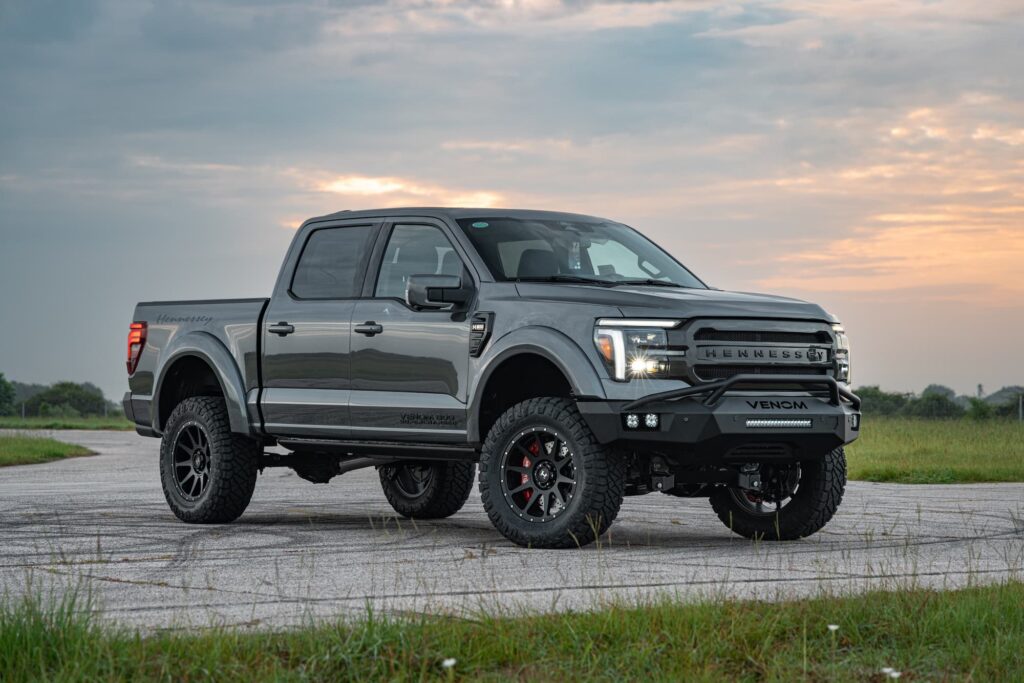
The Ford F-150 is built to haul lumber, tow trailers, tackle muddy job sites, and still look perfectly at home outside a grocery store. Fuel economy, however, has never been the first quality associated with a full-size pickup truck. Mention an F-150, and most of us picture torque, payload, bed space, and capability—not a fuel gauge that barely moves.
Yet modern F-150 models are far more efficient than the thirsty pickups many of us remember. Turbocharged engines, a 10-speed automatic transmission, lighter aluminum body panels, cylinder-management technology, and an available hybrid powertrain have helped stretch every gallon further.
So, what Ford F-150 MPG should we realistically expect?
Depending on the model year, engine, drivetrain, cab, tires, axle ratio, and driving conditions, a gasoline-powered F-150 may deliver roughly 17 to 26 MPG combined. Highway-oriented configurations can perform better than heavy-duty, off-road, or performance versions. Ford also reminds buyers that published figures are EPA estimates and that actual mileage varies by configuration and operating conditions.
That range is broad because the F-150 is not one single truck. It is more like a toolbox on wheels, offered in countless combinations. Comparing the hybrid with a Raptor is like comparing hiking boots with track shoes: both belong on our feet, but they serve very different purposes.
This guide explains Ford F-150 fuel economy by engine, drivetrain, model type, and driving situation. We will also examine real-world MPG, towing penalties, fuel costs, and practical ways to reduce consumption without driving like there is an egg under the accelerator.
Content in this publication
- What Is the Average Ford F-150 MPG?
- Ford F-150 MPG by Engine
- 2.7-Liter EcoBoost V6 MPG
- 3.5-Liter EcoBoost V6 MPG
- 5.0-Liter V8 Ford F-150 MPG
- 3.5-Liter PowerBoost Hybrid MPG
- Ford F-150 Raptor MPG
- Ford F-150 Tremor MPG
- Ford F-150 4x2 Versus 4x4 MPG
- Ford F-150 Highway MPG
- Ford F-150 City MPG
- Ford F-150 MPG While Towing
- How Payload Affects Ford F-150 MPG
- Ford F-150 MPG in Cold Weather
- Ford F-150 MPG in Hot Weather
- Real-World MPG Versus EPA MPG
- How Much Does It Cost to Fuel an F-150?
- Does Premium Fuel Improve Ford F-150 MPG?
- Common Reasons for Poor Ford F-150 MPG
- How to Improve Ford F-150 MPG
- Does a Tonneau Cover Improve F-150 MPG?
- Should We Drive With the Tailgate Down?
- Which Ford F-150 Gets the Best MPG?
- Is Ford F-150 MPG Good for a Full-Size Truck?
- How to Choose the Most Fuel-Efficient F-150
- Final Thoughts on Ford F-150 MPG
- Frequently Asked Questions
What Is the Average Ford F-150 MPG?
Most modern Ford F-150 configurations fall somewhere between the high teens and mid-20s in combined driving. A sensible rear-wheel-drive model with a smaller EcoBoost engine will generally use less fuel than a four-wheel-drive truck fitted with oversized all-terrain tires.
For everyday planning, these are reasonable expectations:
- City driving: approximately 15–23 MPG
- Highway driving: approximately 20–29 MPG
- Combined driving: approximately 17–26 MPG
- Towing a substantial trailer: often 8–15 MPG
- Aggressive off-road or performance driving: potentially below 15 MPG
These are general real-world ranges, not guaranteed ratings. Two F-150s parked beside each other can return very different results even when they share the same engine.
Why? One may be a rear-wheel-drive regular cab with road-focused tires. The other may be a SuperCrew 4x4 carrying tools, a bed cover, a leveling kit, and tires that resemble giant rubber hiking boots.
Why Ford F-150 MPG Varies So Much
Fuel economy is influenced by much more than engine size. The complete configuration matters.
Major factors include:
- Engine choice
- Rear-wheel drive or four-wheel drive
- Cab and bed configuration
- Vehicle weight
- Axle ratio
- Tire size and tread pattern
- Payload
- Towing weight and trailer shape
- Average speed
- Weather and terrain
Even accessories can matter. Roof racks, grille guards, light bars, bed racks, and wide off-road tires add weight or aerodynamic drag. Each change may seem small, but together they can nibble away at MPG like ants attacking a picnic.
Ford F-150 MPG by Engine
The F-150 engine lineup has changed over time, but recent generations have commonly offered naturally aspirated gasoline engines, turbocharged EcoBoost engines, a V8, a hybrid, and high-performance options.
The most efficient engine is not always the best choice for every owner. A contractor who tows regularly may save more fuel with an engine that handles the load comfortably than with a smaller engine working at full effort.
2.7-Liter EcoBoost V6 MPG
The 2.7-liter EcoBoost V6 is often one of the strongest choices for shoppers who want a useful balance of power and fuel economy.
Although it is smaller than the available 3.5-liter EcoBoost and 5.0-liter V8, it does not feel weak during ordinary driving. Turbocharging gives it generous low-end torque, which helps the truck accelerate without needing constant high engine speeds.
Depending on the year and configuration, we may see approximately:
- City: 18–20 MPG
- Highway: 23–26 MPG
- Combined: 20–22 MPG
Rear-wheel-drive versions tend to perform best. Four-wheel drive, heavier trims, larger tires, and lower axle gearing may reduce those numbers.
Who Should Choose the 2.7-Liter EcoBoost?
This engine makes sense for drivers who:
- Commute frequently
- Carry moderate loads
- Tow occasionally rather than constantly
- Want strong acceleration without V8 consumption
- Prefer a lower purchase price than the hybrid
For many personal-use buyers, the 2.7-liter EcoBoost sits in the sweet spot. It is the sensible pair of jeans in the F-150 wardrobe—not flashy, but comfortable, capable, and appropriate almost everywhere.
3.5-Liter EcoBoost V6 MPG
The 3.5-liter EcoBoost V6 is designed for owners who need more towing strength and torque. Under light driving conditions, it can deliver respectable efficiency. Once we begin using its power, however, fuel consumption rises quickly.
A typical modern 3.5-liter EcoBoost may return around:
- City: 16–19 MPG
- Highway: 21–24 MPG
- Combined: 18–21 MPG
The engine can be surprisingly economical on a steady highway journey. The trouble begins when the turbochargers are asked to work repeatedly. More boost requires more fuel.
That does not make the engine inefficient. It simply means power has a price.
EcoBoost Economy Depends on Our Right Foot
EcoBoost engines can behave like two different personalities.
Drive gently, maintain steady speeds, and allow the transmission to use higher gears, and the engine can sip fuel reasonably well. Accelerate aggressively, tow uphill, or stay in boost, and it may drink like a much larger engine.
This explains why two owners with identical trucks may report dramatically different results.
5.0-Liter V8 Ford F-150 MPG
The 5.0-liter V8 remains attractive because of its familiar sound, linear power delivery, and traditional naturally aspirated character. For many pickup buyers, the V8 feels as natural in an F-150 as coffee does in the morning.
Modern versions can use technologies such as variable valve timing and cylinder deactivation to reduce consumption during lighter driving.
Expected mileage often falls near:
- City: 16–18 MPG
- Highway: 22–24 MPG
- Combined: 18–20 MPG
The V8 may not lead the lineup for economy, but the difference between it and a larger EcoBoost configuration is not always dramatic in real-world use.
V8 Versus EcoBoost MPG
On paper, the smaller EcoBoost engines frequently hold an advantage. In practice, the result depends on how the truck is used.
When unloaded and driven gently, an EcoBoost engine may deliver better economy. Under repeated towing, heavy acceleration, or steep terrain, the gap can shrink because the turbocharged engine uses extra fuel while producing boost.
The V8 may appeal to us when we value:
- Predictable throttle response
- A traditional engine layout
- Strong naturally aspirated power
- A distinctive exhaust note
- Less dependence on turbo boost
The EcoBoost may suit us better when we prioritize:
- Low-speed torque
- Strong towing performance
- Better light-load efficiency
- Quicker acceleration from a smaller displacement
3.5-Liter PowerBoost Hybrid MPG
The PowerBoost hybrid combines a twin-turbocharged V6 with an electric motor and battery. Its purpose is not merely to save fuel. The system also delivers strong torque and can support the available Pro Power Onboard generator system.
In favorable configurations, the PowerBoost can achieve fuel economy in the low-to-mid 20s, with some versions performing particularly well in city driving.
A reasonable expectation is:
- City: 22–25 MPG
- Highway: 22–26 MPG
- Combined: 23–25 MPG
Exact ratings depend on the model year, drivetrain, and equipment. The hybrid does not guarantee spectacular highway savings because a full-size pickup still has the aerodynamics of a large moving cabinet. Its greatest advantage often appears in urban or mixed driving, where regenerative braking and electric assistance can contribute more frequently.
Does the F-150 Hybrid Save Money?
It can, but the answer depends on mileage, fuel prices, purchase cost, and driving habits.
Suppose a conventional F-150 averages 19 MPG while a hybrid averages 24 MPG. Over 15,000 miles:
- At 19 MPG, we use about 789 gallons
- At 24 MPG, we use about 625 gallons
- The hybrid saves approximately 164 gallons
At $3.50 per gallon, that is roughly $574 saved per year.
That saving is meaningful, but we should compare it with the hybrid’s purchase price, insurance cost, financing, and expected ownership period. Fuel economy is only one line in the budget.
The Hidden Value of PowerBoost
Some owners choose PowerBoost for reasons beyond MPG. The available onboard generator can power tools, appliances, camping equipment, or emergency essentials.
For a contractor, camper, or homeowner dealing with outages, that feature may carry more practical value than the fuel savings alone.
Ford F-150 Raptor MPG
The F-150 Raptor is engineered for high-speed off-road performance, not fuel economy. It uses powerful engines, aggressive tires, wider bodywork, specialized suspension components, and four-wheel drive.
Those features increase rolling resistance, aerodynamic drag, and weight.
Depending on the version, owners may experience:
- City: approximately 10–15 MPG
- Highway: approximately 15–18 MPG
- Combined: approximately 12–16 MPG
A high-performance Raptor R with a supercharged V8 will generally consume more fuel than a regular EcoBoost Raptor.
Buying a Raptor for excellent MPG would be like choosing a chainsaw because it is quiet. That is simply not its mission.
Ford F-150 Tremor MPG
The Tremor provides extra off-road capability without going as far as the Raptor. It typically includes four-wheel drive, specialized suspension tuning, all-terrain tires, skid plates, and off-road hardware.
Those additions may lower fuel economy compared with a similarly powered standard F-150.
We can generally expect high-teens combined MPG, although engine choice and driving conditions make a considerable difference.
The Tremor is a compromise in the positive sense. It offers meaningful off-road ability while remaining more practical for daily use than the most extreme performance models.
Ford F-150 4x2 Versus 4x4 MPG
Rear-wheel drive usually provides the best Ford F-150 MPG.
A 4x4 system adds components such as a transfer case, front differential, driveshafts, and related hardware. That equipment adds weight and mechanical drag.
The difference may be only 1–2 MPG in some configurations, but it can grow when the 4x4 truck is paired with:
- Heavy off-road packages
- Aggressive tires
- Lift kits
- Low axle ratios
- Added underbody protection
Is Four-Wheel Drive Worth the MPG Penalty?
For drivers in snowy regions, muddy job sites, rural areas, or difficult terrain, absolutely. The additional traction can be more valuable than a small fuel-economy advantage.
For drivers who remain on dry paved roads and rarely tow from slippery surfaces, rear-wheel drive may be the more economical choice.
The correct decision is not about chasing the highest MPG number. It is about avoiding equipment we do not need while keeping the capability we genuinely use.
Ford F-150 Highway MPG
The F-150 tends to achieve its best fuel economy during steady highway driving. Once the transmission reaches a high gear and the engine operates under a light load, fuel use can become surprisingly reasonable for such a large vehicle.
However, speed matters enormously.
A truck traveling at 60–65 mph may use noticeably less fuel than the same truck traveling at 75–80 mph. Aerodynamic resistance rises rapidly with speed, and a pickup does not glide through the air like a low sports car.
It pushes air aside like a refrigerator being carried through a wind tunnel.
How Speed Affects F-150 Fuel Economy
Although results vary, increasing highway speed can reduce economy by several MPG.
For better highway mileage:
- Use cruise control on relatively flat roads
- Avoid unnecessary high speeds
- Accelerate gradually after traffic interruptions
- Leave enough following distance to reduce braking
- Remove external accessories when not needed
- Keep windows closed at higher speeds
Cruise control may not always help in steep terrain. On rolling hills, it may command aggressive downshifts to maintain an exact speed. A careful driver can sometimes use less fuel by allowing speed to decrease slightly uphill and recover gradually downhill.
Ford F-150 City MPG
City driving is challenging because a heavy truck must repeatedly accelerate from a stop. Every green light asks the engine to move thousands of pounds from rest.
The hybrid performs particularly well here because it can recover energy during braking and use electric assistance during acceleration.
Gasoline-only versions may struggle more in dense traffic, especially when:
- Trips are short
- The engine rarely reaches operating temperature
- Air conditioning runs constantly
- Traffic involves repeated stops
- The truck idles for long periods
A city-only F-150 may return mileage below its published combined estimate. That does not automatically indicate a mechanical problem.
Ford F-150 MPG While Towing
Towing can reduce fuel economy more dramatically than almost any other factor.
Many owners focus on trailer weight, but aerodynamic drag is often equally important. A tall enclosed trailer can hurt MPG more than a lower, heavier trailer because it presents a large wall to the wind.
When towing, an F-150 that normally averages 20 MPG may fall to:
- 12–15 MPG with a smaller aerodynamic trailer
- 9–13 MPG with a large travel trailer
- 8–11 MPG under heavy loads, high speeds, or strong headwinds
These are broad expectations. Trailer design, terrain, engine, axle ratio, and speed all matter.
Why Towing Destroys MPG
A trailer increases:
- Total weight
- Rolling resistance
- Frontal area
- Aerodynamic turbulence
- Engine load
- Transmission workload
At highway speed, wind resistance becomes a major enemy. A strong headwind can make a moderate trailer feel as if an invisible hand is pulling it backward.
How to Improve MPG While Towing
We can reduce towing consumption by:
- Staying near 60–65 mph where safe and legal
- Maintaining correct trailer tire pressure
- Distributing cargo properly
- Avoiding unnecessary cargo
- Using tow/haul mode when appropriate
- Anticipating hills and traffic
- Keeping the trailer mechanically maintained
- Choosing aerodynamic accessories carefully
We should never sacrifice safety or stability solely to gain MPG. Correct tongue weight, proper loading, and suitable towing equipment matter more than saving a gallon.
How Payload Affects Ford F-150 MPG
Payload includes passengers, tools, luggage, accessories, and cargo carried in the truck.
A few grocery bags will make no measurable difference. Hundreds of pounds of tools carried every day certainly can.
Extra weight has its greatest effect during acceleration and climbing. On a steady, flat highway, aerodynamics may matter more than modest weight differences.
Still, removing unnecessary permanent cargo can improve economy over time. Many work trucks quietly carry an entire garage in the bed, including items that have not been touched for months.
Ford F-150 MPG in Cold Weather
Fuel economy commonly declines during winter.
Cold weather causes several problems at once:
- Engines take longer to warm up
- Oil and transmission fluid remain thicker
- Tire pressure decreases
- Winter fuel blends may contain less energy
- Cabin heating and defrosting increase demand
- Snow and slush add rolling resistance
- Remote starting encourages idling
Short winter trips are particularly inefficient because the truck spends much of the journey warming up.
Four-wheel drive itself does not necessarily consume dramatically more fuel when disengaged, but winter conditions and winter tires may lower MPG.
Ford F-150 MPG in Hot Weather
Moderate warmth can help an engine reach operating temperature quickly, but extreme heat creates other demands.
Air conditioning increases engine or electrical load. Hot pavement can affect tire pressure, and high temperatures may cause the powertrain to work harder while towing.
The MPG reduction from air conditioning is usually less dramatic during steady highway travel than during slow urban driving, where the system runs while the truck covers fewer miles.
Real-World MPG Versus EPA MPG
EPA fuel-economy ratings create a standardized comparison between vehicles. They are useful, but they cannot recreate every owner’s routine.
Ford states that its advertised MPG figures are EPA estimates and that actual mileage varies.
Real-world fuel economy may differ because of:
- Driving speed
- Traffic
- Terrain
- Weather
- Fuel quality
- Vehicle condition
- Tires
- Payload
- Towing
- Driver behavior
A driver commuting at 55 mph on flat rural roads may beat the estimate. Another owner climbing mountain roads with a loaded bed may miss it by a wide margin.
How to Calculate Actual Ford F-150 MPG
The dashboard display is convenient, but calculating fuel economy manually gives us a useful comparison.
Use this formula:
Miles driven ÷ gallons added = MPG
For example:
- Trip distance: 342 miles
- Fuel added: 18 gallons
- Calculation: 342 ÷ 18
- Result: 19 MPG
For the most reliable result:
- Fill the tank completely.
- Reset the trip odometer.
- Drive normally.
- Refill at the same station if possible.
- Use the same pump and stopping method.
- Divide miles driven by gallons added.
- Repeat across several tanks.
One tank can be misleading. Wind, traffic, towing, or pump shutoff differences may distort the number. A five-tank average tells a more honest story.
How Much Does It Cost to Fuel an F-150?
Annual fuel cost depends on MPG, mileage, and local gas prices.
Imagine we drive 15,000 miles annually and gasoline costs $3.50 per gallon.
| Average MPG | Gallons Per Year | Estimated Annual Cost |
|---|---|---|
| 15 MPG | 1,000 | $3,500 |
| 18 MPG | 833 | $2,916 |
| 20 MPG | 750 | $2,625 |
| 22 MPG | 682 | $2,387 |
| 25 MPG | 600 | $2,100 |
A difference of only 5 MPG can save hundreds of dollars per year. Over five years, the gap becomes substantial.
However, buying a more expensive trim or powertrain solely to reduce fuel cost may not always produce the lowest total ownership cost. We should compare the purchase-price difference with realistic fuel savings.
Some EcoBoost and high-performance engines may deliver their maximum advertised performance with premium fuel, while regular gasoline remains acceptable in many ordinary F-150 applications. The correct fuel should always be confirmed in the owner’s manual for the specific model year and engine.
Premium fuel may improve performance under demanding conditions, but it does not automatically produce enough MPG improvement to repay its higher price.
For example, if premium costs 15% more but improves fuel economy by only 2%, we are spending more overall.
Use premium when:
- The manual requires it
- Maximum performance is needed
- Heavy towing occurs in extreme heat
- The engine knocks on lower-octane fuel
- The manufacturer recommends it for demanding use
Otherwise, the financial benefit may be limited.
Common Reasons for Poor Ford F-150 MPG
A sudden reduction in fuel economy deserves attention, especially when driving conditions have not changed.
Possible causes include:
- Low tire pressure
- Dirty air filter
- Worn spark plugs
- Faulty oxygen sensor
- Sticking brake caliper
- Poor wheel alignment
- Incorrect oil viscosity
- Excessive idling
- Failed thermostat
- Fuel-system problems
- Added weight or accessories
- Four-wheel-drive system issues
- Aggressive driving
- Winter fuel and cold temperatures
A check-engine light should not be ignored. Some faults allow the engine to continue running while using more fuel than necessary.
Tire Pressure and MPG
Underinflated tires create extra rolling resistance. The engine must work harder to keep the truck moving.
Check tire pressure when the tires are cold and follow the pressure listed on the driver’s door-jamb label—not the maximum pressure printed on the tire sidewall.
Oversized all-terrain tires can reduce MPG even when correctly inflated because they may be heavier, wider, and more aggressive.
Wheel Alignment and Fuel Consumption
Poor alignment causes the tires to resist the direction of travel. Instead of rolling smoothly, they may scrub slightly against the road.
Warning signs include:
- Uneven tire wear
- Steering pull
- Crooked steering wheel
- Reduced fuel economy
- Unstable highway tracking
Correcting alignment can improve handling, tire life, and fuel use at the same time.
How to Improve Ford F-150 MPG
We do not need to crawl along the highway or remove the tailgate to save fuel. Simple habits can make a measurable difference.
1. Accelerate Smoothly
Hard acceleration sends more fuel into the engine and often causes the transmission to remain in lower gears.
Use the truck’s torque rather than racing the engine. Smooth does not mean painfully slow; it means progressive and controlled.
2. Reduce Highway Speed
This is often the most effective change. A modest reduction in cruising speed can produce a meaningful MPG improvement, especially in a large pickup.
3. Limit Unnecessary Idling
An idling truck achieves zero MPG. Long warmups, job-site idling, and waiting with the engine running consume fuel without adding mileage.
4. Keep Tires Properly Inflated
Check pressure monthly and before long trips or towing.
5. Remove Unnecessary Weight
Unload tools, equipment, sandbags, and cargo that are not currently needed.
6. Maintain the Truck
Use the recommended oil, follow service intervals, and address warning lights promptly.
7. Plan Trips Efficiently
Combining errands reduces cold starts and unnecessary miles.
8. Use the Correct Drive Mode
Normal or eco-oriented modes may soften throttle response and encourage earlier shifts. Tow/haul mode is useful with a trailer but may not be economical when driving unloaded.
9. Avoid Extreme Modifications
Lift kits, oversized tires, roof racks, and wide accessories can all reduce efficiency.
10. Track MPG Over Time
Recording fuel economy helps us notice gradual changes that might otherwise go unnoticed.
Does a Tonneau Cover Improve F-150 MPG?
A tonneau cover may reduce turbulence in the bed, but real-world gains are usually modest and inconsistent.
We should choose a cover primarily for:
- Cargo security
- Weather protection
- Appearance
- Convenience
Any fuel saving is a bonus, not a guarantee. It may take years for a costly cover to repay itself through MPG alone.
Should We Drive With the Tailgate Down?
Driving with the tailgate down is not a reliable fuel-saving strategy.
Airflow around a pickup bed is complex. The closed tailgate can help create a rotating pocket of air that allows outside airflow to pass more smoothly over the bed.
Leaving the tailgate down may also create safety, visibility, cargo-security, or legal concerns.
Which Ford F-150 Gets the Best MPG?
Among gasoline-powered F-150s, the best economy usually comes from a lighter rear-wheel-drive configuration with a smaller EcoBoost engine or from an efficient PowerBoost hybrid configuration.
The exact winner can change by model year because Ford updates engines, equipment, tires, and certification ratings.
In general:
- Best for city efficiency: PowerBoost hybrid
- Best conventional-engine balance: 2.7-liter EcoBoost
- Best for traditional V8 fans: 5.0-liter V8
- Best for heavy towing: configuration-dependent 3.5-liter EcoBoost
- Lowest MPG: Raptor and Raptor R
The F-150 Lightning uses electricity and is rated in MPGe rather than conventional MPG, so it should be compared using electricity consumption, charging prices, range, and towing efficiency—not gasoline MPG.
Is Ford F-150 MPG Good for a Full-Size Truck?
Yes, modern F-150 fuel economy can be competitive within the full-size pickup class, especially in lighter EcoBoost and hybrid configurations.
Still, we should judge efficiency in context. An F-150 will generally use more fuel than a compact crossover because it is larger, heavier, and designed to perform demanding work.
The better question is not, “Does it use little fuel?”
The better question is, “Does it use a reasonable amount of fuel for the capability we need?”
A truck that averages 20 MPG while towing, hauling, and handling work duties may be more useful—and financially sensible—than an efficient vehicle that cannot perform the required tasks.
How to Choose the Most Fuel-Efficient F-150
Before choosing an engine or trim, we should examine how the truck will actually be used.
Choose the 2.7-Liter EcoBoost When:
- Daily driving is the priority
- Towing needs are moderate
- Purchase price matters
- We want strong fuel economy without a hybrid
Choose PowerBoost When:
- We drive many city or mixed miles
- We value onboard electrical power
- We plan to keep the truck long enough to benefit from fuel savings
- We want strong performance with better urban efficiency
Choose the 3.5-Liter EcoBoost When:
- Towing performance is a major priority
- Low-end torque matters
- We accept higher fuel use under boost
Choose the 5.0-Liter V8 When:
- We prefer naturally aspirated power
- We enjoy traditional V8 character
- We want capability without hybrid complexity
Choose a Raptor When:
- Off-road performance matters far more than MPG
- Fuel cost is not the primary concern
- We understand that specialized equipment carries an efficiency penalty
Final Thoughts on Ford F-150 MPG
Ford F-150 MPG can range from surprisingly respectable to unapologetically thirsty.
A rear-wheel-drive EcoBoost or PowerBoost hybrid may reach the low-to-mid 20s in combined driving, while an off-road performance version may live in the low teens. Towing, speed, tires, weather, payload, and driving habits can move the final number considerably.
For most of us, the smartest approach is not to chase the highest advertised MPG. We should choose the lightest, simplest F-150 configuration that still meets our real needs.
Buying capability we never use is like carrying a suitcase full of bricks everywhere we go. It costs money at the dealership, at the fuel pump, and sometimes at the repair shop.
A well-chosen F-150 can balance power and efficiency better than many people expect. Keep the tires inflated, drive smoothly, control highway speed, remove unnecessary weight, and track consumption across several tanks. Those small habits will not turn a full-size pickup into an economy car, but they can stop fuel from disappearing like water through an open tap.
Frequently Asked Questions
1. What is the average MPG for a Ford F-150?
Most modern gasoline-powered Ford F-150 models average roughly 17–26 MPG combined, depending on the engine, drivetrain, configuration, tires, load, and driving conditions. Heavy off-road and performance models usually return lower figures.
2. Which Ford F-150 engine gets the best gas mileage?
The PowerBoost hybrid is often among the most efficient choices, particularly in city and mixed driving. The 2.7-liter EcoBoost is frequently one of the best non-hybrid options for balancing fuel economy, performance, and purchase price.
3. How many MPG does an F-150 get while towing?
An F-150 may return approximately 8–15 MPG while towing. A small, aerodynamic trailer may allow better results, while a tall travel trailer, high speed, mountain terrain, or strong headwinds can push economy toward the lower end.
4. Why is my Ford F-150 getting poor gas mileage?
Common causes include low tire pressure, oversized tires, cold weather, short trips, heavy loads, excessive idling, high highway speeds, poor alignment, sticking brakes, worn spark plugs, sensor problems, or aggressive acceleration.
5. Can a Ford F-150 get 30 MPG?
A gasoline F-150 might briefly display 30 MPG under ideal conditions, such as low-speed highway travel, favorable wind, warm weather, and light loading. However, maintaining a true 30 MPG average across normal mixed driving is unlikely for most conventional F-150 configurations.
If you want to know other articles similar to Ford F-150 MPG: Fuel Economy, Engines, and Real-World Costs you can visit the category Driving.
Kia Sorento Fuel Economy: MPG, Hybrid, and Plug-In Hybrid Explained
BYD Shark 6 Fuel Consumption: Real-World Economy, Range and What to Expect
Vauxhall Agila MPG: Real-World Fuel Economy and Engine Guide

Honda Passport MPG: Real-World Fuel Economy, Ratings, and What to Expect

Nissan Rogue Fuel Economy: MPG, Range, Costs, and Real-World Efficiency
BYD Shark 6 Long Range Fuel Tank: Is the 120L Upgrade Worth It?
Leave a Reply
More content of your interest