

Mazda BT-50 1.9 Fuel Consumption: Real-World Economy Guide

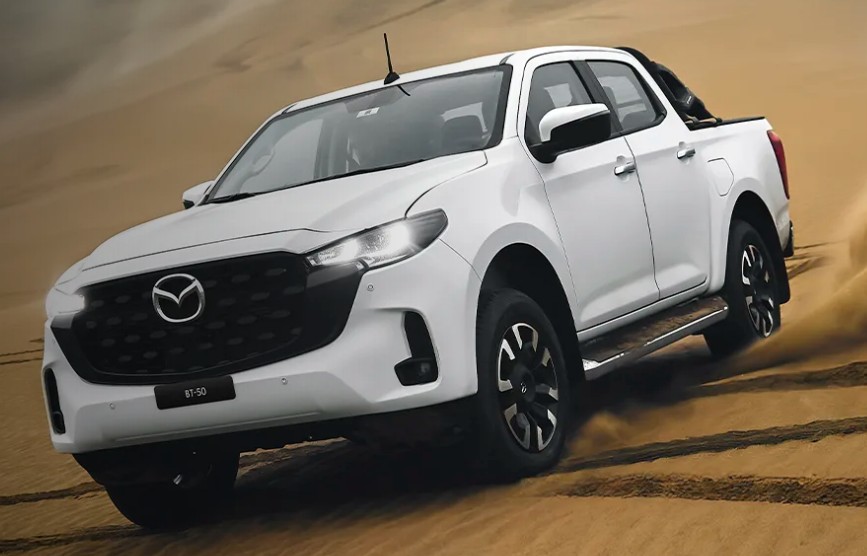
The Mazda BT-50 1.9 fuel consumption figures make this diesel pickup an interesting choice for drivers who want the usefulness of a ute without feeding it fuel like a thirsty workhorse. It is not the most powerful BT-50 ever produced, nor was it designed to be. Instead, the 1.9-litre model focuses on efficiency, manageable running costs, and enough performance for commuting, light commercial work, and everyday hauling.
On paper, some versions of the Mazda BT-50 1.9 can return consumption figures in the region of 6.6 to 8.6 litres per 100 kilometres, depending on the market, test standard, transmission, body configuration, and drivetrain. In independent testing, one Australian review recorded approximately 7.0 L/100 km on a route weighted toward open country roads. Meanwhile, Mazda specifications in another market list a combined figure of 8.6 L/100 km, showing why we should never treat one isolated number as universal.
So, what should owners realistically expect? That is where things become more useful—and more complicated. Fuel economy changes with traffic, payload, accessories, tyre pressure, speed, weather, and driving technique. A showroom brochure gives us a reference point, but the road writes the final answer.
Content in this publication
- Mazda BT-50 1.9 Fuel Consumption at a Glance
- What Engine Does the Mazda BT-50 1.9 Use?
- Official Mazda BT-50 1.9 Fuel Economy Figures
- Real-World Mazda BT-50 1.9 Fuel Consumption
- City Fuel Consumption
- Highway Fuel Consumption
- Fuel Consumption When Carrying a Load
- Mazda BT-50 1.9 Fuel Consumption While Towing
- Two-Wheel Drive Versus Four-Wheel Drive Economy
- Automatic Versus Manual Fuel Consumption
- How Far Can a Mazda BT-50 1.9 Travel on a Tank?
- How to Calculate Your True Fuel Consumption
- Why Your BT-50 1.9 May Be Using Too Much Fuel
- How to Improve Mazda BT-50 1.9 Fuel Economy
- Is the Mazda BT-50 1.9 Underpowered?
- Mazda BT-50 1.9 Versus Larger Diesel Economy
- Is the Mazda BT-50 1.9 Good on Fuel?
- Common Fuel-Economy Mistakes to Avoid
- Final Verdict
- Frequently Asked Questions
Mazda BT-50 1.9 Fuel Consumption at a Glance
For most drivers, a realistic Mazda BT-50 1.9 consumption range will look something like this:
| Driving situation | Expected fuel consumption |
|---|---|
| Steady open-road driving | 6.5–7.5 L/100 km |
| Mixed everyday driving | 7.5–8.5 L/100 km |
| Heavy urban traffic | 8.5–10.0 L/100 km |
| Carrying a moderate load | 9.0–11.0 L/100 km |
| Towing or difficult terrain | 10.0–14.0+ L/100 km |
These are practical estimates rather than guaranteed factory figures. A lightly loaded two-wheel-drive model cruising along a flat highway may dip toward the lower end. A dual-cab with a canopy, large tyres, roof racks, tools, passengers, and a trailer can sit far above it.
That difference is not unusual. Even Mazda notes in its official brochure material that laboratory fuel-consumption figures are primarily intended for comparing vehicles and may not match what drivers achieve in practice because traffic, road conditions, and driving behaviour affect the result.
What Engine Does the Mazda BT-50 1.9 Use?
The Mazda BT-50 1.9 uses a 1,898 cc four-cylinder intercooled turbo-diesel engine in the markets where this version was offered. Published specifications list outputs of approximately 110 kW at 3,600 rpm and 350 Nm between 1,800 and 2,600 rpm. It uses common-rail direct fuel injection and a compression-ignition diesel design.
Those figures reveal the engine’s personality. It is not trying to deliver sports-car acceleration or effortless heavy-trailer performance. Its strength lies in producing usable low- and mid-range torque while burning less fuel than a larger diesel under suitable conditions.
Why a Smaller Diesel Can Save Fuel
A smaller engine generally consumes less fuel when it does not need to work excessively hard. Around town, on open roads, and with light cargo, the 1.9-litre engine can operate efficiently because it moves less internal mass and requires less fuel per combustion cycle than a larger unit.
However, engine size alone does not determine economy.
Push a small diesel hard enough and it may use nearly as much fuel as a larger engine. When climbing steep hills, towing a substantial load, or constantly accelerating at full throttle, the 1.9 must work like a small pump trying to fill a swimming pool. It can do the job within its limits, but the expected economy advantage begins to shrink.
Efficiency Depends on Workload
The 1.9-litre BT-50 tends to make the most sense when we:
- Drive mainly on sealed roads.
- Carry light or moderate loads.
- Tow only occasionally.
- Prioritise fuel economy over maximum power.
- Spend significant time commuting.
- Operate a fleet where running costs matter.
- Do not require the capability of the larger engine.
For heavy towing, permanent cargo, steep rural routes, or demanding off-road use, a bigger engine may feel more relaxed even if its official fuel-consumption figure is higher.
Official Mazda BT-50 1.9 Fuel Economy Figures
There is no single official consumption figure that applies to every Mazda BT-50 1.9 sold worldwide. Vehicle specifications change by country, model year, cab type, gearbox, emissions standard, and drivetrain.
Some published data place combined economy near 6.6 L/100 km, equal to roughly 15.2 km/L, 35.6 US mpg, or 42.8 UK mpg. Other official regional Mazda specifications list 8.6 L/100 km combined for a 1,898 cc version.
This spread may look confusing, but it does not necessarily mean one figure is wrong. Different laboratory cycles can produce different results. A two-wheel-drive model can also be lighter and mechanically simpler than a four-wheel-drive version, while different cab and tray combinations alter total weight and aerodynamic drag.
Litres per 100 Kilometres Explained
In countries that use the metric system, consumption is commonly shown in litres per 100 kilometres.
Here, a lower number is better:
- 6.5 L/100 km is more economical than 8.5 L/100 km.
- 8.0 L/100 km means the vehicle burns eight litres to travel 100 km.
- 10.0 L/100 km means it uses ten litres over the same distance.
To estimate the fuel needed for a journey, we can use this simple formula:
Distance ÷ 100 × fuel consumption = litres required
For example:
500 km ÷ 100 × 8.0 L/100 km = 40 litres
Converting L/100 km to km/L
Some owners prefer kilometres per litre. In that format, a higher number is better.
Use:
100 ÷ L/100 km = km/L
Examples:
- 6.6 L/100 km equals approximately 15.2 km/L.
- 7.0 L/100 km equals approximately 14.3 km/L.
- 8.0 L/100 km equals 12.5 km/L.
- 8.6 L/100 km equals approximately 11.6 km/L.
- 10.0 L/100 km equals 10 km/L.
Converting Consumption to MPG
Miles per gallon becomes slightly tricky because US and UK gallons are different sizes.
Approximate conversions include:
| L/100 km | US mpg | UK mpg |
| 6.5 | 36.2 | 43.5 |
| 7.0 | 33.6 | 40.4 |
| 8.0 | 29.4 | 35.3 |
| 8.6 | 27.4 | 32.8 |
| 10.0 | 23.5 | 28.2 |
When comparing websites, we should always check whether they use US mpg or imperial UK mpg. Otherwise, two identical vehicles can appear to have dramatically different fuel economy.
Real-World Mazda BT-50 1.9 Fuel Consumption
Independent tests help bridge the gap between brochure numbers and daily driving. In one road test, the Mazda BT-50 1.9 returned approximately 7.0 L/100 km, compared with 9.0 L/100 km for the larger engine tested by the same publication. The reviewer noted that the route favoured higher-speed country roads more than suburban traffic, which likely helped the result.
Another review recorded an average of 8.9 L/100 km. That result reminds us that two tests can differ significantly depending on route, driver, weather, traffic, load, and testing method.
For a standard, lightly loaded vehicle, we would consider approximately 7.5 to 8.5 L/100 km a sensible real-world target in mixed driving. Drivers who regularly sit in congestion may see numbers closer to 9.0 or 10.0 L/100 km. Those travelling mostly on open roads could approach 7.0 L/100 km or, under favourable circumstances, slightly better.
City Fuel Consumption
Urban driving is rarely kind to a diesel pickup. Traffic lights, short journeys, cold starts, low-speed crawling, and repeated acceleration make the engine work without covering much distance.
In typical city use, we might expect:
- Around 8.0–9.0 L/100 km in light traffic.
- Around 9.0–10.0 L/100 km in busy traffic.
- More than 10.0 L/100 km during severe congestion or frequent short trips.
Short journeys are especially inefficient because the engine, gearbox, tyres, and lubricants may not reach their ideal operating temperature. The diesel particulate filter may also need suitable driving conditions to complete regeneration, depending on the vehicle’s emissions system and market specification.
Why Stop-Start Traffic Uses More Diesel
Every time we accelerate, the BT-50 must overcome its own weight. A pickup is heavier and less aerodynamic than a compact hatchback. Once it reaches a steady speed, maintaining momentum requires less energy. In city traffic, however, that momentum is repeatedly thrown away through braking.
Imagine pushing a loaded shopping trolley. Keeping it rolling is easy. Stopping it every ten metres and pushing it back to speed is what drains our energy. A ute behaves in much the same way.
Highway Fuel Consumption
Open-road driving is where the BT-50 1.9 can shine. At a steady speed, in the correct gear, with moderate cargo and properly inflated tyres, consumption may settle between approximately 6.5 and 7.5 L/100 km.
The best results usually appear when:
- The road is flat or gently rolling.
- Traffic flows consistently.
- Speed remains moderate.
- The vehicle is not carrying unnecessary weight.
- There is little headwind.
- Tyres are correctly inflated.
- Roof racks and bulky accessories are removed.
Does Driving Faster Use More Fuel?
Yes. Once speed rises, aerodynamic drag increases rapidly. A pickup already presents a broad shape to the air, so travelling at 120 km/h can use noticeably more fuel than cruising at 90 or 100 km/h.
The difference may be one litre per 100 km or more, depending on wind, gearing, road gradient, accessories, and load. What feels like a small increase in speed can turn the atmosphere into an invisible wall.
Fuel Consumption When Carrying a Load
Payload affects economy because the engine must accelerate and move additional mass. A few bags in the cabin will barely matter. Several hundred kilograms of tools, equipment, building materials, or recreational gear will.
A moderate payload might increase consumption by roughly 0.5 to 1.5 L/100 km, though the effect varies greatly. Hilly routes amplify the penalty because the engine must repeatedly lift that extra weight against gravity.
The shape of the load also matters. A heavy object sitting low in the tray may have less effect at highway speed than a lightweight but bulky item rising above the cab and catching the wind.
Permanent Accessories Count as Payload
Owners sometimes forget that aftermarket equipment travels with the vehicle every day. Steel bull bars, winches, canopies, drawer systems, auxiliary batteries, roof tents, recovery equipment, and oversized spare wheels can add hundreds of kilograms before we load a single suitcase.
Mazda notes that BT-50 kerb weight varies considerably by model and drivetrain, illustrating how configuration affects the mass the engine must move.
Mazda BT-50 1.9 Fuel Consumption While Towing
Towing is where the economy advantage of the small diesel can narrow quickly. The trailer adds weight, rolling resistance, and often a large aerodynamic penalty.
A small, low-profile trailer might lift consumption into the 9.0–11.0 L/100 km region. A taller or heavier trailer could push it beyond 12.0 L/100 km, especially in headwinds, hills, or stop-start traffic.
We should not choose a tow vehicle based solely on unloaded fuel consumption. A larger engine may use more diesel when empty but feel less strained while towing. The right choice depends on how often we tow, what the trailer weighs, and where we travel.
Why Trailer Shape Matters So Much
At highway speed, a tall caravan behaves like a sail. Even when its mass is reasonable, it disturbs the airflow and forces the engine to maintain higher output.
Two trailers of equal weight can produce different consumption:
- A low box trailer usually creates less drag.
- A tall enclosed trailer creates more drag.
- A wide caravan can create significant turbulence.
- Roof-mounted equipment may worsen airflow further.
Headwinds Can Transform the Result
A strong headwind effectively increases the speed of the air hitting the vehicle. Driving at 100 km/h into a 30 km/h headwind can produce aerodynamic conditions closer to travelling at 130 km/h in still air.
That is why outbound and return trips can show surprisingly different consumption even when the route, driver, and load remain the same.
Two-Wheel Drive Versus Four-Wheel Drive Economy
A two-wheel-drive BT-50 will usually have a small economy advantage because it can be lighter and has fewer drivetrain components to rotate. A four-wheel-drive model adds capability, but capability is rarely weightless.
The real difference depends on specification. It may be modest during steady driving, but over thousands of kilometres, even a small change matters.
For drivers who rarely leave sealed roads, a two-wheel-drive version may offer:
- Lower purchase cost.
- Slightly lower fuel use.
- Reduced mechanical complexity.
- Lower kerb weight.
- A potentially higher available payload in some configurations.
A four-wheel-drive model remains the better tool for slippery work sites, deep mud, sand, rough trails, steep access roads, or remote travel. Saving a fraction of a litre is pointless if the vehicle cannot reach the destination.
Automatic Versus Manual Fuel Consumption
Transmission choice can also affect economy, though the difference is often smaller than driving style, load, or traffic conditions.
A careful driver using a manual gearbox can keep the engine in an efficient operating range. However, modern automatic transmissions can shift consistently and avoid poor gear selection. In real life, the automatic may equal or outperform a badly driven manual.
The automatic is also easier in traffic and can reduce driver fatigue. The manual gives us more direct control, which some owners prefer for rural work or specific towing situations.
Rather than assuming one is always more economical, we should compare the exact model specifications and think about where the vehicle will spend most of its time.
How Far Can a Mazda BT-50 1.9 Travel on a Tank?
Driving range depends on tank capacity, usable fuel, and actual consumption. Because tank sizes and specifications vary by market and model, owners should confirm the capacity in the manual for their exact vehicle.
To illustrate the calculation, suppose a BT-50 has 70 usable litres:
| Average consumption | Theoretical range |
| 6.5 L/100 km | 1,077 km |
| 7.0 L/100 km | 1,000 km |
| 8.0 L/100 km | 875 km |
| 8.6 L/100 km | 814 km |
| 10.0 L/100 km | 700 km |
| 12.0 L/100 km | 583 km |
We should not plan to use every drop. Fuel gauges are not laboratory instruments, road conditions change, and running a diesel system completely dry can create unnecessary trouble.
A sensible touring plan includes a reserve, particularly in rural areas.
How to Calculate Your True Fuel Consumption
The dashboard display is convenient, but the full-tank method often gives us a clearer long-term picture.
Full-Tank Calculation Method
- Fill the tank completely.
- Reset the trip meter.
- Drive normally.
- Refill the tank to the same level.
- Record the litres added.
- Record the distance travelled.
- Divide litres by kilometres.
- Multiply the answer by 100.
For example:
- Fuel added: 58 litres.
- Distance travelled: 720 km.
- Calculation: 58 ÷ 720 × 100.
- Result: 8.06 L/100 km.
Track Several Tanks, Not Just One
One refill can be misleading. The pump may stop at a different point, the vehicle may be parked at a different angle, or that week may include unusual traffic.
A more reliable average comes from tracking at least three to five tanks. Ten tanks are even better. The longer record smooths out random variation and exposes meaningful trends.
Why Your BT-50 1.9 May Be Using Too Much Fuel
Sudden or persistent increases in consumption deserve investigation. Some causes are harmless, while others signal maintenance problems.
Common reasons include:
- Low tyre pressure.
- Aggressive acceleration.
- Excessive idling.
- Heavy payload.
- Roof racks or rooftop tents.
- Oversized all-terrain tyres.
- Poor wheel alignment.
- Binding brakes.
- A clogged air filter.
- Injector problems.
- Faulty engine sensors.
- Frequent diesel particulate filter regeneration.
- Poor-quality fuel.
- Short urban journeys.
- Strong seasonal headwinds.
- Towing more often.
- Incorrect oil specification.
Tyre Pressure and Rolling Resistance
Soft tyres deform more as they roll. That deformation creates resistance, forcing the engine to burn additional fuel.
The correct pressure depends on tyre size, vehicle load, speed, and manufacturer guidance. We should use the vehicle placard and owner’s manual rather than copying a number from another owner online.
Higher load may require different pressures, but overinflating tyres simply to chase fuel economy can reduce grip, comfort, and even tyre life.
Wheel Alignment
Poor alignment can make the tyres scrub against the road instead of rolling cleanly. The vehicle may pull to one side, the steering wheel may sit off-centre, or the tyre shoulders may wear unevenly.
Alignment problems do not always cause dramatic consumption increases, but they can quietly waste fuel kilometre after kilometre.
Air Filter and Intake Restrictions
A badly restricted air filter can affect engine breathing. Modern diesel management systems compensate for many changing conditions, so replacing a slightly dusty filter will not magically transform economy. Still, a severely clogged filter should not be ignored.
The filter should be inspected more frequently when the BT-50 operates on dusty roads or work sites.
Diesel Particulate Filter Regeneration
During active regeneration, additional fuel may be used to raise exhaust temperature and burn accumulated soot from the diesel particulate filter. Occasional regeneration is normal.
Frequent regeneration may occur when the vehicle repeatedly completes short, low-speed journeys or when there is an emissions-system problem. Owners who notice rising fuel consumption, repeated fan operation, unusual idle behaviour, warning lights, or unsuccessful regenerations should have the vehicle assessed properly.
How to Improve Mazda BT-50 1.9 Fuel Economy
The biggest improvements rarely come from magical additives. They come from reducing wasted energy.
Drive Smoothly
Accelerate progressively and look well ahead. When we anticipate traffic, we avoid unnecessary bursts of throttle followed by heavy braking.
Smooth does not mean painfully slow. It means deliberate.
Maintain a Sensible Cruising Speed
Moderate highway speed can create a noticeable improvement. Dropping from a very high cruising speed to a steady legal pace often saves more fuel than any accessory or fuel additive could realistically deliver.
Remove Unnecessary Weight
Do we need to carry recovery boards, tools, camping furniture, spare fluids, and building materials every day? Sometimes we do. Often we do not.
Removing 100 kg will not turn the BT-50 into a feather, but every reduction helps—particularly in stop-start driving.
Reduce Aerodynamic Drag
Remove unused roof racks, rooftop tents, awnings, and tall cargo where practical. Aerodynamic accessories matter most at highway speed, where drag becomes the dominant opponent.
Use the Correct Engine Oil
Use oil that meets the exact specification stated for the vehicle. Oil viscosity and emissions-system compatibility matter. An unsuitable product may affect lubrication, cold operation, and after-treatment equipment.
Service the Vehicle on Schedule
Regular maintenance helps the engine, transmission, cooling system, tyres, and emissions controls operate as intended. A service cannot compensate for aggressive driving, but neglected components can certainly make consumption worse.
Limit Unnecessary Idling
A stationary engine achieves exactly zero kilometres per litre. Brief idling may be unavoidable, but leaving the vehicle running for long periods burns fuel without moving us closer to the destination.
Use Air Conditioning Sensibly
Air conditioning places an additional load on the engine. We do not need to suffer in a hot cabin to save a few drops of diesel, but extreme temperature settings and open windows at highway speed can both increase consumption.
At low speed, open windows may be reasonable. At highway speed, closed windows and moderate climate control may reduce aerodynamic drag.
Is the Mazda BT-50 1.9 Underpowered?
That depends entirely on the job.
With approximately 110 kW and 350 Nm in published regional specifications, the 1.9-litre engine offers enough output for normal transport, commuting, light commercial work, and moderate loads.
It may feel less effortless than the larger diesel when:
- Overtaking with a full load.
- Climbing long hills.
- Towing a tall trailer.
- Driving in soft sand.
- Carrying permanent heavy equipment.
- Travelling at high altitude.
- Accelerating at highway speeds.
The smaller engine is not necessarily weak; it is simply optimised for a different balance. Think of it as a middle-distance runner rather than a heavyweight lifter.
Mazda BT-50 1.9 Versus Larger Diesel Economy
In light-duty use, the 1.9 can provide a meaningful fuel advantage. The independent test that recorded 7.0 L/100 km from the smaller engine reported 9.0 L/100 km from the larger alternative on its comparison route.
At 20,000 km per year, that two-litre difference would equal:
- 400 litres of diesel saved annually.
- 2,000 litres saved over five years.
- A potentially meaningful reduction in operating cost.
However, the comparison changes under heavy load. If the 1.9 spends much of its life working near maximum effort, its advantage may become smaller. The larger engine may also provide benefits that cannot be measured at the fuel pump: easier overtaking, stronger towing, less frequent downshifting, and greater performance reserve.
Who Should Choose the 1.9?
The Mazda BT-50 1.9 is best suited to drivers who:
- Want a fuel-efficient pickup for everyday use.
- Travel long distances without heavy loads.
- Operate in urban or regional environments.
- Tow only light or moderate trailers.
- Value lower running costs.
- Do not need maximum engine performance.
Who May Prefer the Larger Engine?
A larger diesel may be more appropriate for drivers who:
- Tow heavy caravans regularly.
- Carry substantial payloads every day.
- Work in mountainous areas.
- Need stronger overtaking performance.
- Frequently drive off-road.
- Want greater torque in reserve.
Is the Mazda BT-50 1.9 Good on Fuel?
Yes, by pickup standards, the Mazda BT-50 1.9 can be genuinely economical. Achieving around 7.0 to 8.5 L/100 km in normal unloaded or lightly loaded driving would represent a strong result for a diesel ute.
Still, we should compare like with like. A compact hybrid car will consume less. A heavy four-wheel-drive pickup with aggressive tyres, a steel canopy, and permanent work equipment will consume more than a basic two-wheel-drive version.
The question is not simply, “Is it economical?” The more useful question is, “Is it economical for the work we need it to do?”
Common Fuel-Economy Mistakes to Avoid
Drivers often chase better numbers while overlooking the basics.
Trusting One Dashboard Reading
A single trip can be distorted by wind, gradients, regeneration, traffic, or a recent reset.
Comparing Different Test Cycles
A figure measured under one standard may not be directly comparable with a figure from another country or model year.
Ignoring Vehicle Configuration
A cab-chassis, dual-cab, two-wheel-drive, and four-wheel-drive model will not necessarily consume the same amount.
Forgetting Accessories
Canopies, racks, larger tyres, bull bars, and tools all influence the final result.
Expecting Brochure Economy While Towing
Laboratory combined figures are not towing figures. A trailer dramatically changes the vehicle’s workload.
Assuming the Smallest Engine Is Always Cheapest
Purchase price and unloaded economy matter, but suitability matters more. Buying an engine that must constantly work at its limit may not deliver the ownership experience we expect.
Final Verdict
The Mazda BT-50 1.9 fuel consumption can be impressively low for a diesel pickup. Depending on model, market, test method, and driving conditions, published figures range from roughly 6.6 to 8.6 L/100 km, while independent road tests have produced results around 7.0 to 8.9 L/100 km.
In ordinary mixed driving, a realistic target is approximately 7.5 to 8.5 L/100 km for a lightly loaded, well-maintained vehicle. City traffic may push it toward 9.0 or 10.0 L/100 km, while towing can take it above 10.0 or even 12.0 L/100 km.
The 1.9-litre BT-50 makes the strongest case for itself when used as an everyday ute: commuting during the week, carrying moderate cargo, travelling on open roads, and handling occasional light-duty towing. It is efficient because it avoids unnecessary engine capacity, but that same advantage becomes less obvious when we ask it to perform heavy work continuously.
Treat official figures as a measuring stick, not a promise. Track several tanks, calculate consumption manually, maintain the vehicle correctly, and compare results under similar conditions. Fuel economy is not one fixed number stamped into the engine. It is a moving conversation between the vehicle, the road, the weather, the load, and the person behind the wheel.
Frequently Asked Questions
1. What is the Mazda BT-50 1.9 fuel consumption?
Depending on the model, market, drivetrain, and test method, published combined figures range from approximately 6.6 to 8.6 L/100 km. A realistic mixed-driving result for many owners may sit around 7.5 to 8.5 L/100 km.
2. Is the Mazda BT-50 1.9 economical for a pickup?
Yes. Consumption near 7.0 to 8.5 L/100 km is competitive for a diesel pickup, especially when the vehicle is lightly loaded and driven mainly on open roads.
3. How many kilometres per litre does the BT-50 1.9 achieve?
At 7.0 L/100 km, it achieves approximately 14.3 km/L. At 8.0 L/100 km, it returns 12.5 km/L. At 8.6 L/100 km, it delivers roughly 11.6 km/L.
4. Why is my Mazda BT-50 using more fuel than expected?
Possible causes include heavy traffic, low tyre pressure, added accessories, large tyres, roof racks, towing, excessive idling, poor alignment, frequent short trips, diesel particulate filter regeneration, or a mechanical fault.
5. Is the 1.9-litre BT-50 suitable for towing?
It can handle appropriate trailers within the vehicle’s specified limits, but regular heavy towing may reduce fuel economy significantly and make the larger diesel feel more relaxed. Always confirm the towing limits for the exact model and consider trailer weight, shape, terrain, and payload.
If you want to know other articles similar to Mazda BT-50 1.9 Fuel Consumption: Real-World Economy Guide you can visit the category Driving.
Can Nissan Rogue Pull a Boat? Complete Towing Guide
Can Nissan Rogue Be Flat Towed? Complete Towing Guide
Are Nissan Rogue Good on Gas? MPG, Fuel Economy, and Real-World Costs
Can Nissan Rogue Drive in Snow? Complete Winter Driving Guide
Kia Sorento Diesel Fuel Consumption: MPG, Efficiency and Real-World Range
Haval Jolion Hybrid Fuel Consumption: How Efficient Is It Really?
Leave a Reply
More content of your interest