
MINI Cooper 0-60 Times: Complete Performance Guide

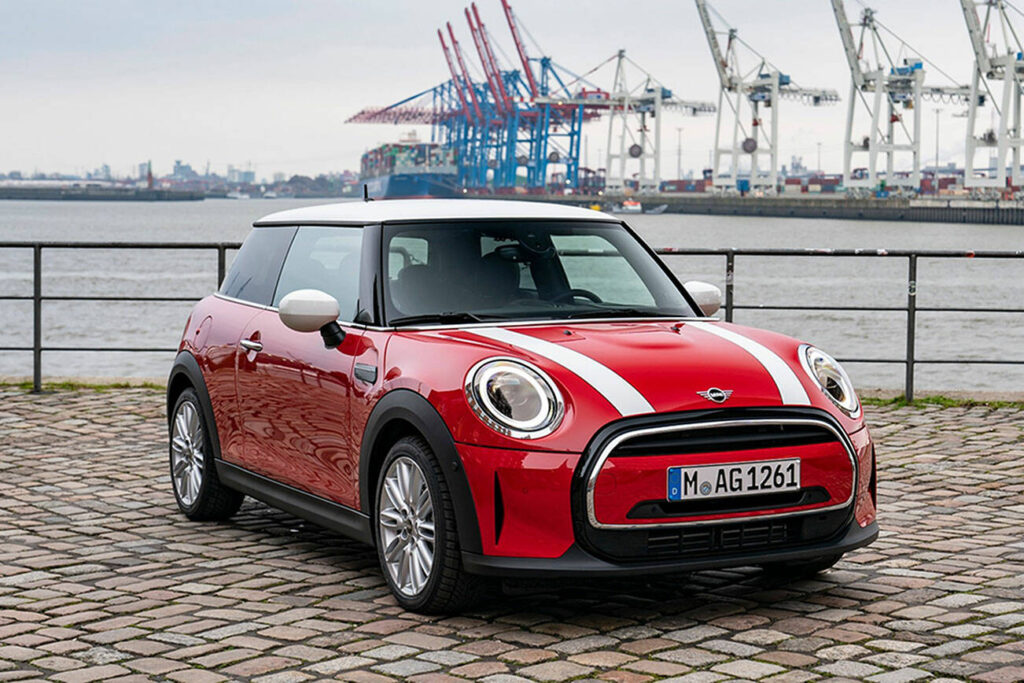
The MINI Cooper is famous for its distinctive styling, precise handling, and entertaining driving experience. However, one question frequently comes up among enthusiasts and potential buyers: How fast is a MINI Cooper from 0 to 60 mph?
The answer depends on several factors, including the model, engine, transmission, generation, and body style.
While the standard MINI Cooper offers lively acceleration for everyday driving, the Cooper S and John Cooper Works (JCW) versions deliver significantly stronger performance.
Some high-performance MINI models can accelerate from 0 to 60 mph in approximately five seconds, making them surprisingly quick compared with many larger vehicles.
In this comprehensive guide, we'll explore MINI Cooper 0-60 times across different generations, compare petrol and electric versions, examine the fastest models, and explain what influences acceleration.
Content in this publication
- MINI Cooper 0-60 Times at a Glance
- MINI Cooper 0-60 Times by Generation
- MINI Cooper S 0-60 Times
- MINI John Cooper Works 0-60 Times
- MINI John Cooper Works GP 0-60 Times
- MINI Cooper Electric 0-60 Times
- MINI Countryman 0-60 Times
- MINI Cooper Convertible 0-60 Times
- What Is the Fastest MINI Cooper Ever Made?
- What Affects MINI Cooper 0-60 Performance?
- MINI Cooper Manual vs Automatic 0-60 Times
- MINI Cooper 0-60 vs 0-62 MPH
- Can a MINI Cooper Go 0-60 in Under 6 Seconds?
- Is the MINI Cooper a Fast Car?
- How to Improve MINI Cooper Acceleration
- Which MINI Cooper Has the Best Acceleration for the Money?
- MINI Cooper 0-60 Times: Frequently Asked Questions
- Conclusion: How Fast Is a MINI Cooper?
MINI Cooper 0-60 Times at a Glance
Before exploring individual generations, let's compare the acceleration figures of several modern MINI models.
The following table uses manufacturer-advertised figures for the 2027 US-market lineup.
| MINI Model | Horsepower | 0-60 MPH |
|---|---|---|
| MINI Cooper C 2-Door | 161 hp | 7.4 seconds |
| MINI Cooper S 2-Door | 201 hp | 6.3 seconds |
| MINI John Cooper Works 2-Door | 228 hp | 5.9 seconds |
| MINI Cooper C 4-Door | 161 hp | 7.9 seconds |
| MINI Cooper S 4-Door | 201 hp | 6.7 seconds |
| MINI Cooper C Convertible | 161 hp | 7.9 seconds |
| MINI Cooper S Convertible | 201 hp | 6.7 seconds |
| MINI JCW Convertible | 228 hp | 6.2 seconds |
| MINI Countryman S ALL4 | 241 hp | 6.2 seconds |
| MINI Countryman SE ALL4 Electric | 308 hp | 5.4 seconds |
| MINI JCW Countryman ALL4 | 312 hp | 5.2 seconds |
These figures represent manufacturer estimates rather than independently tested results. Actual performance may vary depending on driving conditions, tires, vehicle specification, and testing procedures.
As we can see, the MINI Cooper S offers a substantial improvement over the standard Cooper, while the John Cooper Works models provide the strongest acceleration among the performance-oriented versions.
MINI Cooper 0-60 Times by Generation
The MINI Cooper has evolved considerably since BMW introduced the modern version in 2001.
Each generation brought improvements in engine technology, torque delivery, transmission efficiency, and vehicle performance.
Understanding these differences is particularly important when comparing used MINI models.
First Generation MINI Cooper (2002-2006)
The first-generation modern MINI, commonly identified by the R50 and R53 chassis codes, established the brand's reputation for entertaining handling.
The regular MINI Cooper featured a naturally aspirated 1.6-liter four-cylinder engine, while the Cooper S used a supercharged version.
MINI Cooper first-generation acceleration:
| Model | 0-60 MPH |
|---|---|
| 2003 MINI Cooper | 8.5 seconds |
| 2003 MINI Cooper S | 6.9 seconds |
The supercharged MINI Cooper S was particularly popular among driving enthusiasts.
Its relatively immediate throttle response, distinctive supercharger sound, and compact dimensions made it entertaining on winding roads.
Although modern hot hatchbacks offer significantly more horsepower, the original Cooper S remains enjoyable because of its mechanical simplicity and engaging driving characteristics.
The first-generation MINI also demonstrates that acceleration figures do not tell the entire story.
A car can feel remarkably sporty without being exceptionally fast in a straight line.
Second Generation MINI Cooper (2007-2013)
The second generation introduced important engine improvements.
One of the most significant changes was the replacement of the supercharged Cooper S engine with a turbocharged 1.6-liter four-cylinder.
This increased torque availability and improved overall efficiency.
Second-generation acceleration figures:
| Model | 0-60 MPH |
|---|---|
| 2007 MINI Cooper | 8.5 seconds |
| 2007 MINI Cooper S | 6.7 seconds |
The Cooper S became slightly quicker while delivering stronger acceleration across a wider engine-speed range.
This made the car more responsive during everyday driving, particularly when overtaking or accelerating onto highways.
Later versions received additional engine and performance updates.
For that reason, buyers comparing second-generation models should verify the exact year, engine output, and transmission.
Third Generation MINI Cooper (2014-2024)
The third-generation MINI introduced major changes to the engine lineup.
The standard Cooper adopted a turbocharged 1.5-liter three-cylinder engine in many markets, while the Cooper S moved to a turbocharged 2.0-liter four-cylinder.
These engines provided improved torque and stronger acceleration.
Third-generation launch acceleration figures:
| Model | 0-60 MPH |
|---|---|
| MINI Cooper Manual | 7.4 seconds |
| MINI Cooper Automatic | 7.3 seconds |
| MINI Cooper S Manual | 6.5 seconds |
| MINI Cooper S Automatic | 6.4 seconds |
The Cooper S became an increasingly attractive option for buyers wanting practical transportation with enjoyable performance.
Its combination of turbocharged power, responsive handling, and compact dimensions provided a driving experience that remained distinctive.
Later third-generation models received changes to powertrains, equipment, and transmissions, so these launch figures should not be applied to every model year.
Fourth Generation MINI Cooper (2025 Onward)
The newest petrol-powered MINI Cooper introduced a revised exterior design, modern interior technology, and updated powertrain calibration.
The US-market Cooper C and Cooper S use turbocharged 2.0-liter four-cylinder engines.
The Cooper C develops 161 horsepower, while the Cooper S produces 201 horsepower.
Modern MINI Cooper acceleration:
| Model | 0-60 MPH |
|---|---|
| MINI Cooper C 2-Door | 7.4 seconds |
| MINI Cooper S 2-Door | 6.3 seconds |
| MINI John Cooper Works 2-Door | 5.9 seconds |
The modern MINI Cooper S provides noticeably quicker acceleration than the standard version.
Its seven-speed dual-clutch transmission helps deliver rapid gear changes and responsive performance.
Despite improvements in power and technology, MINI continues emphasizing precise steering and entertaining handling.
MINI Cooper S 0-60 Times
The MINI Cooper S has long been one of the most popular choices among drivers looking for stronger performance without purchasing a dedicated high-performance vehicle.
It offers more horsepower and torque than the standard Cooper while remaining comfortable and practical enough for everyday use.
MINI Cooper vs Cooper S Acceleration
The current US-market 2-Door models provide a useful comparison.
| Specification | MINI Cooper C | MINI Cooper S |
|---|---|---|
| Engine | 2.0L Turbo | 2.0L Turbo |
| Horsepower | 161 hp | 201 hp |
| Torque | 184 lb-ft | 221 lb-ft |
| Transmission | 7-Speed DCT | 7-Speed DCT |
| 0-60 MPH | 7.4 seconds | 6.3 seconds |
The Cooper S reaches 60 mph approximately 1.1 seconds faster than the standard Cooper C.
This difference is significant during real-world driving.
When accelerating from a stoplight, merging onto a highway, or overtaking another vehicle, the Cooper S delivers stronger acceleration.
Its additional torque also provides better responsiveness without requiring the driver to push the engine as hard.
Why Is the MINI Cooper S Faster?
Several mechanical factors explain the performance advantage.
Higher horsepower: The Cooper S generates more power, allowing it to accelerate more strongly as speed increases.
Greater torque: Additional torque improves responsiveness, particularly at lower and medium engine speeds.
Engine calibration: The Cooper S uses performance-oriented engine tuning to deliver stronger output.
Transmission programming: Dual-clutch gearboxes can provide rapid gear changes and consistent acceleration.
The Cooper S strikes an appealing balance between performance, comfort, and everyday practicality.
MINI John Cooper Works 0-60 Times
John Cooper Works models represent MINI's performance-focused lineup.
These vehicles are designed for drivers who want stronger acceleration, more aggressive handling, and distinctive styling.
The current US-market MINI JCW 2-Door features a turbocharged engine producing approximately 228 horsepower.
Its manufacturer-advertised acceleration time is 5.9 seconds from 0 to 60 mph.
This makes the JCW noticeably quicker than the standard Cooper and slightly faster than the Cooper S.
MINI Cooper S vs John Cooper Works
| Specification | Cooper S | JCW 2-Door |
|---|---|---|
| Horsepower | 201 hp | 228 hp |
| 0-60 MPH | 6.3 seconds | 5.9 seconds |
| Driving Character | Sporty | Performance-Focused |
Although the difference is approximately 0.4 seconds, the JCW offers more than improved straight-line acceleration.
Performance-focused suspension tuning, upgraded braking components, and a sportier driving character distinguish it from the Cooper S.
For enthusiasts who regularly enjoy winding roads, the JCW can be more rewarding.
However, the Cooper S remains an excellent option for drivers who want strong acceleration without the additional expense and potentially firmer ride associated with performance-oriented models.
MINI John Cooper Works GP 0-60 Times
The MINI John Cooper Works GP deserves special attention.
These limited-production models were developed with a greater emphasis on performance, lightweight construction, and motorsport-inspired engineering.
Two particularly notable versions are the 2013 and 2020 JCW GP.
| Model | Official Acceleration |
|---|---|
| 2013 MINI JCW GP | 5.9 seconds, 0-60 mph |
| 2020 MINI JCW GP | 5.2 seconds, 0-62 mph |
The 2020 MINI JCW GP featured a powerful turbocharged engine producing approximately 301 horsepower in US specification.
It also incorporated distinctive aerodynamic components, upgraded suspension, and specialized performance equipment.
Only 3,000 examples of the 2020 GP were produced worldwide.
Its combination of power, compact dimensions, and aggressive engineering made it one of the most exciting modern MINI models.
Importantly, the 2020 GP figure listed above measures acceleration to 62 mph rather than 60 mph.
These two measurements should not be treated as identical.
MINI Cooper Electric 0-60 Times
Electric powertrains have introduced a different kind of performance to the MINI lineup.
Unlike traditional combustion engines, electric motors can provide substantial torque almost immediately.
This makes electric MINIs particularly responsive when accelerating from a standstill.
MINI Cooper E vs Cooper SE
The newer electric MINI Cooper lineup includes several performance levels in markets where these versions are available.
| Electric MINI Model | Horsepower | 0-62 MPH |
|---|---|---|
| MINI Cooper E | 184 hp | 7.3 seconds |
| MINI Cooper SE | 218 hp | 6.7 seconds |
| MINI Electric JCW | 258 hp | 5.9 seconds |
These are European-style 0-62 mph acceleration figures.
The Cooper SE offers stronger acceleration than the standard Cooper E, while the electric JCW provides performance comparable to sporty petrol-powered MINIs.
Older MINI Cooper SE Acceleration
The earlier MINI Cooper SE Electric, introduced for the 2020 model year, produced approximately 181 horsepower in US specification.
Its manufacturer-quoted 0-60 mph time was 6.9 seconds.
Although its driving range was relatively modest compared with many larger electric vehicles, it offered responsive acceleration and enjoyable handling.
The immediate torque delivery made it feel particularly energetic during urban driving.
Why Do Electric MINIs Feel Quick?
Electric vehicles provide several advantages when accelerating.
- Immediate torque delivery.
- Smooth power application.
- No conventional manual gear changes.
- Responsive acceleration at lower speeds.
- Predictable power delivery.
However, electric vehicles also carry substantial battery weight.
That means electric power does not automatically guarantee quicker acceleration than a similarly positioned petrol-powered vehicle.
The final result depends on motor output, traction, vehicle mass, and powertrain calibration.
MINI Countryman 0-60 Times
The MINI Countryman offers greater interior space and practicality than the traditional Cooper hatchback.
Despite its larger dimensions and additional weight, certain Countryman models provide impressive acceleration.
MINI Countryman S ALL4
The Countryman S ALL4 combines a 241-horsepower turbocharged engine with all-wheel drive.
Its manufacturer-advertised 0-60 mph time is approximately 6.2 seconds.
This makes it a relatively quick compact SUV.
The all-wheel-drive system can also help distribute power effectively when accelerating under suitable conditions.
For buyers who need more passenger space while retaining a sporty driving experience, the Countryman S ALL4 offers an appealing compromise.
MINI Countryman SE ALL4 Electric
The electric Countryman SE ALL4 produces approximately 308 horsepower.
It can accelerate from 0 to 60 mph in a manufacturer-quoted 5.4 seconds.
Its dual-motor electric powertrain delivers strong torque and all-wheel-drive traction.
The result is impressive acceleration for a vehicle designed to accommodate passengers and luggage more comfortably than a conventional MINI hatchback.
MINI JCW Countryman ALL4
The John Cooper Works Countryman ALL4 is one of the quickest current MINI models.
It produces approximately 312 horsepower and accelerates from 0 to 60 mph in 5.2 seconds.
Its combination of turbocharged power and all-wheel drive makes it particularly effective at accelerating from a standstill.
Although the Countryman is larger than a traditional MINI Cooper, its performance demonstrates how far the brand's engineering has developed.
MINI Cooper Convertible 0-60 Times
The MINI Cooper Convertible offers the brand's familiar handling characteristics with the additional enjoyment of open-top driving.
However, convertibles generally weigh more than equivalent hardtop models because additional structural reinforcement is required.
This extra weight can slightly reduce acceleration.
Modern MINI Convertible acceleration figures:
| Model | 0-60 MPH |
|---|---|
| MINI Cooper C Convertible | 7.9 seconds |
| MINI Cooper S Convertible | 6.7 seconds |
| MINI JCW Convertible | 6.2 seconds |
The standard Convertible provides adequate performance for daily use.
The Cooper S Convertible offers stronger acceleration, while the JCW Convertible delivers the sportiest experience.
Buyers prioritizing maximum straight-line performance may prefer a hardtop model.
However, drivers who value open-air motoring might consider the small acceleration penalty worthwhile.
What Is the Fastest MINI Cooper Ever Made?
Several high-performance MINI models deserve recognition.
One particularly impressive example is the 2020 MINI John Cooper Works Clubman ALL4.
This model featured a powerful turbocharged engine and all-wheel drive.
Its manufacturer-quoted acceleration time was approximately 4.9 seconds from 0 to 60 mph.
That made it exceptionally quick by MINI standards.
The 2020 JCW GP was another standout, although its frequently published 5.2-second acceleration figure refers to 0-62 mph.
Among the current US-market range, the JCW Countryman ALL4 is notable for its 5.2-second advertised 0-60 mph time.
Nevertheless, the quickest MINI in a straight line is not necessarily the most engaging one to drive.
A smaller, lighter JCW hatchback may feel more agile through corners despite having a slower acceleration time.
What Affects MINI Cooper 0-60 Performance?
Several factors influence how quickly a MINI Cooper accelerates.
Understanding these variables helps explain why real-world results may differ from manufacturer specifications.
1. Engine Horsepower
Horsepower plays an important role in acceleration, especially as vehicle speed increases.
More powerful engines generally provide greater potential for rapid acceleration.
However, horsepower alone does not determine performance.
Vehicle weight, gearing, traction, and torque delivery are also important.
2. Engine Torque
Torque contributes to the pulling force available from the powertrain.
Modern turbocharged MINI engines typically produce strong torque at relatively low engine speeds.
This helps provide responsive acceleration in everyday driving.
3. Vehicle Weight
Weight directly affects how much energy is required to accelerate a vehicle.
A lighter car generally needs less energy to reach a particular speed.
This helps explain why compact hatchbacks can deliver impressive acceleration without extremely powerful engines.
However, some heavier all-wheel-drive models can accelerate more quickly because of their greater power and available traction.
4. Transmission Type
The transmission influences how effectively engine power reaches the wheels.
Manual transmissions give drivers direct control over gear selection.
Automatic and dual-clutch transmissions can provide quicker, more consistent gear changes.
Modern MINI dual-clutch transmissions are designed to balance efficiency, comfort, and responsive performance.
5. Tire Grip
Tires are essential for transmitting power to the road.
Poor-quality, worn, or incorrectly inflated tires can reduce traction.
This becomes particularly important in high-powered front-wheel-drive vehicles, where excessive wheelspin can reduce acceleration efficiency.
6. Weather Conditions
Rain, low temperatures, and slippery road surfaces can significantly affect acceleration.
Wet pavement may reduce available grip, particularly during aggressive starts.
Strong winds and road gradients can also influence measured performance.
7. Engine Maintenance
A properly maintained engine is more likely to perform according to its intended specifications.
Neglected spark plugs, faulty sensors, restricted airflow, and certain mechanical problems may affect acceleration.
Regular servicing is important for maintaining performance and reliability.
MINI Cooper Manual vs Automatic 0-60 Times
Historically, MINI offered both manual and automatic transmissions across several model generations.
Manual gearboxes became especially popular among enthusiasts because of the additional driver involvement they provided.
However, automatic transmissions have become increasingly effective at delivering consistent acceleration.
For example, early third-generation MINI Cooper S models had the following manufacturer figures:
| Transmission | 0-60 MPH |
|---|---|
| Manual | 6.5 seconds |
| Automatic | 6.4 seconds |
The automatic version was approximately 0.1 seconds quicker.
Although this difference was small, it demonstrated how modern automatic transmissions could match or outperform manual versions.
Current US-market MINI Cooper models use dual-clutch automatic transmissions.
For used MINI buyers, the transmission is worth considering alongside the engine specification and production year.
MINI Cooper 0-60 vs 0-62 MPH
One important detail when researching MINI acceleration is the difference between 0-60 mph and 0-62 mph.
These are not identical measurements.
0-60 mph measures acceleration from a standstill to 60 miles per hour.
0-62 mph measures acceleration from a standstill to approximately 100 kilometers per hour.
The second measurement is commonly used in European vehicle specifications.
Because 62 mph is slightly faster than 60 mph, a vehicle normally takes longer to complete a 0-62 mph acceleration test.
However, there is no universal conversion factor.
The difference depends on the vehicle's acceleration characteristics, gearing, and testing conditions.
When comparing MINI models, we should always verify whether the published figure represents 0-60 mph or 0-62 mph.
Can a MINI Cooper Go 0-60 in Under 6 Seconds?
Yes. Several MINI models can accelerate from 0 to 60 mph in less than six seconds.
Examples include:
- MINI JCW 2-Door: 5.9 seconds.
- MINI Countryman SE ALL4 Electric: 5.4 seconds.
- MINI JCW Countryman ALL4: 5.2 seconds.
- 2020 MINI JCW Clubman ALL4: 4.9 seconds.
These figures demonstrate that MINI vehicles can offer genuine performance despite their relatively compact dimensions.
However, it is important to distinguish these models from the standard MINI Cooper.
The regular Cooper is designed primarily for balanced everyday performance, while JCW versions place greater emphasis on acceleration and handling.
Is the MINI Cooper a Fast Car?
Whether a MINI Cooper is considered fast depends on the model and the vehicles being used for comparison.
The standard Cooper is not designed to compete directly with high-performance sports cars.
Instead, it emphasizes responsive handling, compact dimensions, and enjoyable everyday driving.
The Cooper S offers stronger acceleration and more responsive performance.
JCW versions take the experience further with additional horsepower and sportier chassis tuning.
One of MINI's greatest strengths is the way its vehicles combine steering response, road feel, and acceleration.
Even when a MINI is not exceptionally quick in a straight line, it can feel exciting on winding roads.
This is why the MINI Cooper has remained popular among drivers who prioritize enjoyment rather than maximum horsepower.
How to Improve MINI Cooper Acceleration
Some owners want to improve their MINI Cooper's performance.
Several approaches can help maintain or potentially improve acceleration, although modifications should always be considered carefully.
Keep the Engine Properly Maintained
Following the recommended service schedule helps maintain normal engine performance.
Important maintenance items may include:
- Spark plugs.
- Engine air filters.
- Engine oil.
- Cooling system components.
- Fuel system components.
- Relevant sensors and ignition components.
A poorly maintained engine may produce less power than expected.
Choose Suitable Performance Tires
High-quality tires can improve traction and help the vehicle use its available power more effectively.
Tire grip is particularly important during hard acceleration.
Always use tires with appropriate dimensions, load ratings, and speed ratings for the vehicle.
Reduce Unnecessary Weight
Removing unnecessary cargo slightly reduces the vehicle's overall weight.
Although this will not transform acceleration, excess weight does increase the amount of energy required to reach a particular speed.
Avoid removing factory safety equipment or essential vehicle components.
Consider Professional Engine Tuning
Some MINI engines respond to aftermarket performance tuning.
However, increased power can place additional stress on the engine, transmission, and cooling system.
Modifications may also affect emissions compliance, warranty coverage, insurance, and long-term reliability.
For many owners, purchasing a factory Cooper S or JCW is a more predictable route to improved performance.
Which MINI Cooper Has the Best Acceleration for the Money?
Choosing the right MINI involves more than comparing acceleration figures.
Purchase price, maintenance expenses, fuel consumption, insurance, and practicality should also influence the decision.
Best for Everyday Driving: MINI Cooper C
The standard Cooper C offers responsive performance without focusing exclusively on speed.
Its acceleration is adequate for most commuting and highway situations.
It is a sensible option for drivers who prioritize style, comfort, and everyday usability.
Best Balance: MINI Cooper S
The Cooper S offers one of the most attractive combinations of acceleration and practicality.
Its stronger turbocharged engine makes everyday driving more enjoyable.
With a modern advertised 0-60 mph time of approximately 6.3 seconds in 2-Door form, it delivers genuinely sporty performance.
For many enthusiasts, the Cooper S provides the best overall balance.
Best Performance Hatchback: MINI JCW
The John Cooper Works hatchback is designed for drivers who want more aggressive performance.
Its stronger engine, upgraded components, and sportier driving character make it attractive to enthusiasts.
However, its additional performance may come with higher ownership costs.
Best Electric Performance: MINI Cooper SE
The electric Cooper SE provides immediate torque and smooth acceleration.
It is particularly enjoyable in urban environments, where electric powertrains deliver strong responsiveness at lower speeds.
Buyers should also consider charging availability and driving range.
Best Performance SUV: MINI JCW Countryman
The JCW Countryman offers strong acceleration alongside greater passenger and cargo space.
Its all-wheel-drive system and powerful engine make it one of the quickest models in the modern MINI lineup.
It is particularly appealing for drivers who want performance without choosing a smaller hatchback.
MINI Cooper 0-60 Times: Frequently Asked Questions
1. How fast is a MINI Cooper from 0 to 60 mph?
The current US-market MINI Cooper C 2-Door has a manufacturer-advertised 0-60 mph time of approximately 7.4 seconds. The Cooper S completes the same acceleration test in approximately 6.3 seconds. Older MINI generations have different performance figures depending on their engines and transmissions.
2. What is the MINI Cooper S 0-60 time?
The modern MINI Cooper S 2-Door accelerates from 0 to 60 mph in approximately 6.3 seconds according to manufacturer specifications. Previous generations have recorded different figures, commonly ranging from the mid-six-second range to approximately seven seconds for certain versions.
3. What is the fastest MINI Cooper ever made?
The 2020 MINI John Cooper Works Clubman ALL4 is one of the quickest production MINIs, with a manufacturer-quoted 0-60 mph time of 4.9 seconds. The limited-production 2020 JCW GP is another notable performance model, with an official 0-62 mph time of 5.2 seconds.
4. Is the MINI Cooper S faster than the regular MINI Cooper?
Yes. The MINI Cooper S has more horsepower and torque than the standard Cooper. In the modern US-market 2-Door lineup, the Cooper S accelerates from 0 to 60 mph approximately 1.1 seconds faster than the Cooper C.
5. Is an electric MINI faster than a petrol MINI Cooper?
It depends on the specific versions being compared. Some electric MINI models accelerate more quickly than standard petrol models because of their immediate torque delivery. However, powerful petrol-powered JCW versions can match or exceed the acceleration of certain electric MINIs.
Conclusion: How Fast Is a MINI Cooper?
MINI Cooper 0-60 times vary substantially depending on the generation, engine, transmission, and body style.
The standard Cooper provides lively acceleration for everyday driving, while the Cooper S delivers noticeably stronger performance.
John Cooper Works models offer the most performance-focused experience, with several versions capable of accelerating from 0 to 60 mph in less than six seconds.
Electric MINIs introduce immediate torque and smooth power delivery, while Countryman models demonstrate that additional practicality does not necessarily require sacrificing acceleration.
For most drivers, the MINI Cooper S represents an excellent balance of performance, practicality, and driving enjoyment.
Those who prioritize maximum acceleration may prefer a JCW version, while buyers seeking a distinctive and enjoyable daily driver will likely find the standard Cooper more than capable.
Ultimately, the MINI Cooper's appeal extends beyond its 0-60 mph numbers.
Its compact dimensions, responsive steering, distinctive design, and engaging handling make it a rewarding vehicle to drive, regardless of whether it reaches 60 mph in five seconds or eight.
If you want to know other articles similar to MINI Cooper 0-60 Times: Complete Performance Guide you can visit the category Driving.
Can Nissan Rogue Pull a Boat? Complete Towing Guide
Can Nissan Rogue Be Flat Towed? Complete Towing Guide
Are Nissan Rogue Good on Gas? MPG, Fuel Economy, and Real-World Costs
Can Nissan Rogue Drive in Snow? Complete Winter Driving Guide
Kia Sorento Diesel Fuel Consumption: MPG, Efficiency and Real-World Range
Haval Jolion Hybrid Fuel Consumption: How Efficient Is It Really?
Leave a Reply
More content of your interest