
Porsche Cayenne MPG: The Complete Guide to Fuel Economy, Real-World Efficiency, and Cost Savings

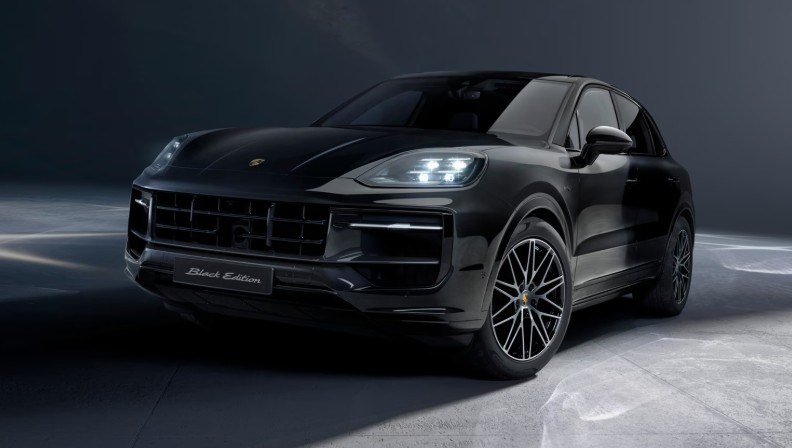
The Porsche Cayenne has always occupied a unique position in the luxury SUV market. It delivers sports car DNA wrapped inside a practical, family-friendly package. Yet one question continues to dominate buyer discussions: What is the Porsche Cayenne MPG?
Fuel economy may not be the first thing enthusiasts think about when shopping for a Porsche. However, with fluctuating fuel prices and growing awareness of efficiency, understanding the Cayenne's miles per gallon (MPG) ratings has become increasingly important.
In this comprehensive guide, we'll explore everything you need to know about Porsche Cayenne MPG, including official fuel economy figures, real-world consumption, differences between trims, hybrid advantages, driving habits, and practical tips to maximize every gallon.
Content in this publication
- Understanding Porsche Cayenne MPG
- Why Fuel Economy Matters in a Luxury SUV
- The Evolution of Porsche Cayenne Fuel Efficiency
- Current Porsche Cayenne MPG Ratings
- Base Porsche Cayenne MPG
- Porsche Cayenne S MPG Performance
- Cayenne GTS Fuel Economy Explained
- Porsche Cayenne Turbo MPG
- Porsche Cayenne E-Hybrid MPG Advantages
- Real-World Porsche Cayenne MPG
- How Driving Habits Affect Porsche Cayenne MPG
- Highway vs City Fuel Economy
- The Impact of Wheel Size on MPG
- Weather Conditions and Fuel Economy
- Maintaining Optimal Porsche Cayenne MPG
- Fuel Quality and Efficiency
- How Porsche Technology Improves MPG
- Comparing Porsche Cayenne MPG to Competitors
- Tips to Improve Porsche Cayenne MPG
- Is Porsche Cayenne MPG Good Enough for Daily Driving?
- The Future of Porsche Cayenne Efficiency
- Conclusion
- FAQs
Understanding Porsche Cayenne MPG
MPG stands for miles per gallon and represents how far a vehicle can travel using one gallon of fuel.
When evaluating the Porsche Cayenne MPG, we typically consider:
- City MPG
- Highway MPG
- Combined MPG
- Real-world fuel economy
- Hybrid electric efficiency
The Cayenne lineup offers a broad range of engines, from efficient V6 powerplants to high-performance twin-turbo V8s and plug-in hybrid systems. Naturally, fuel economy varies considerably between models.
Why Fuel Economy Matters in a Luxury SUV
Luxury SUVs are often purchased for comfort, performance, and prestige. However, fuel efficiency impacts ownership costs more than many drivers realize.
A difference of just 5 MPG can save hundreds or even thousands of dollars annually.
Fuel economy affects:
- Annual fuel expenses
- Long-distance travel costs
- Environmental impact
- Resale value
- Overall ownership satisfaction
Think of MPG as the hidden cost behind every mile you drive.
The Evolution of Porsche Cayenne Fuel Efficiency
First-Generation Cayenne
When Porsche introduced the Cayenne in 2002, efficiency was not its primary focus.
Large engines dominated the lineup:
- V6 engines
- V8 engines
- Turbocharged V8 variants
Fuel economy often hovered in the mid-teens.
Second-Generation Improvements
As technology evolved, Porsche introduced:
- Direct fuel injection
- Improved aerodynamics
- Lighter construction
- Start-stop systems
These innovations significantly improved MPG figures.
Modern Cayenne Efficiency
Today's Cayenne is smarter than ever.
Advanced systems include:
- Turbocharged downsized engines
- Plug-in hybrid technology
- Improved transmissions
- Sophisticated engine management
The result is impressive fuel economy without sacrificing performance.
Current Porsche Cayenne MPG Ratings
The exact figures vary by model year and trim level, but modern Cayenne models generally deliver:
| Model | City MPG | Highway MPG |
|---|---|---|
| Cayenne Base | 17-19 | 22-23 |
| Cayenne S | 15-17 | 20-23 |
| Cayenne GTS | 14-15 | 18-19 |
| Cayenne Turbo GT | 14-15 | 18-19 |
| Cayenne E-Hybrid | Higher equivalent efficiency | Higher equivalent efficiency |
These numbers can fluctuate depending on driving conditions and wheel size.
Base Porsche Cayenne MPG
The Best Balance of Power and Efficiency
The standard Cayenne often provides the most balanced fuel economy in the lineup.
Its turbocharged V6 engine offers:
- Strong acceleration
- Smooth highway cruising
- Competitive fuel economy
For many buyers, the base Cayenne represents the sweet spot between performance and practicality.
Ideal Driver Profile
The base model works particularly well for:
- Daily commuters
- Families
- Long-distance travelers
- Luxury SUV shoppers seeking lower fuel costs
Porsche Cayenne S MPG Performance
The Cayenne S adds more horsepower and excitement.
How Performance Impacts Fuel Economy
More power usually requires more fuel.
The Cayenne S delivers:
- Faster acceleration
- Greater towing capability
- More aggressive driving character
Despite increased performance, modern engineering helps keep fuel consumption surprisingly reasonable.
Real-World Expectations
Many owners report MPG figures close to official estimates during highway driving.
Aggressive acceleration, however, can dramatically reduce efficiency.
Cayenne GTS Fuel Economy Explained
Performance Comes First
The GTS variant is designed for enthusiasts.
Its characteristics include:
- Sport-tuned suspension
- Powerful V8 engine
- Enhanced exhaust note
- Dynamic handling
The tradeoff is lower fuel economy.
Is the MPG Sacrifice Worth It?
For driving enthusiasts, the answer is often yes.
The GTS transforms every drive into an event, making fuel costs feel like part of the admission price.
Porsche Cayenne Turbo MPG
The High-Performance Luxury SUV
The Cayenne Turbo is where luxury meets brute force.
Turbocharged V8 power delivers breathtaking acceleration.
However:
- Increased horsepower requires more fuel.
- Larger tires increase rolling resistance.
- Performance-focused tuning prioritizes speed.
Who Should Choose the Turbo?
Drivers who value:
- Maximum performance
- Prestige
- Rapid acceleration
- Sports-car-like capability
For these buyers, MPG is usually a secondary consideration.
Porsche Cayenne E-Hybrid MPG Advantages
The Most Efficient Cayenne Option
The E-Hybrid dramatically changes the efficiency equation.
Combining:
- Gasoline power
- Electric motors
- Rechargeable batteries
The hybrid system can significantly reduce fuel consumption.
Electric Driving Benefits
Short trips may require little or no gasoline.
Advantages include:
- Reduced fuel costs
- Lower emissions
- Quiet operation
- Instant electric torque
For urban driving, the E-Hybrid often outperforms every other Cayenne model in efficiency.
Real-World Porsche Cayenne MPG
Official ratings provide a benchmark, but real-world driving tells the full story.
Factors Influencing Actual MPG
Fuel economy depends on:
- Traffic conditions
- Driving style
- Weather
- Road quality
- Vehicle maintenance
Two identical Cayennes can produce dramatically different MPG results.
Owner Experiences
Many owners report:
- Better highway MPG than expected
- Lower city MPG in heavy traffic
- Significant improvements with conservative driving
Real-world averages often fall between official city and highway estimates.
How Driving Habits Affect Porsche Cayenne MPG
Aggressive Driving
Rapid acceleration consumes more fuel.
Common MPG killers include:
- Hard launches
- Sudden braking
- High-speed cruising
- Frequent lane changes
Smooth Driving
Gentle inputs allow the vehicle to operate more efficiently.
Benefits include:
- Improved MPG
- Reduced tire wear
- Lower maintenance costs
- More relaxed driving experience
Imagine carrying a full cup of coffee without spilling it. That's the smoothness we're aiming for.
Highway vs City Fuel Economy
Highway Efficiency
The Cayenne often shines on the open road.
Reasons include:
- Stable engine speeds
- Reduced braking
- Consistent momentum
Many owners achieve their best MPG figures during long highway trips.
City Driving Challenges
Urban driving presents obstacles:
- Stop-and-go traffic
- Frequent acceleration
- Idling periods
- Congestion
These conditions reduce overall efficiency.
The Impact of Wheel Size on MPG
Many buyers overlook wheel size when considering fuel economy.
Larger Wheels
Benefits:
- Sportier appearance
- Enhanced handling
- Improved road presence
Drawbacks:
- Increased weight
- Greater rolling resistance
- Lower MPG
Smaller Wheels
Advantages:
- Better fuel economy
- Improved ride comfort
- Lower replacement costs
Sometimes the most visually dramatic option isn't the most efficient.
Weather Conditions and Fuel Economy
Cold Weather Effects
Winter can reduce MPG because:
- Engines require longer warm-up times
- Heating systems increase energy demand
- Tire pressure drops
Hot Weather Effects
Summer presents different challenges:
- Air conditioning usage
- Increased cooling demands
- Higher engine temperatures
Climate plays a bigger role in fuel economy than many drivers expect.
Maintaining Optimal Porsche Cayenne MPG
Regular Maintenance Matters
Proper maintenance ensures maximum efficiency.
Key tasks include:
- Oil changes
- Air filter replacement
- Spark plug inspections
- Tire pressure checks
A neglected vehicle often consumes more fuel.
Tire Maintenance
Correct tire pressure improves:
- Safety
- Handling
- Fuel economy
Even slight underinflation can negatively impact MPG.
Fuel Quality and Efficiency
Porsche recommends premium fuel for the Cayenne.
Benefits include:
- Optimal engine performance
- Better combustion
- Reduced engine knock
- Maximum efficiency
Using lower-octane fuel may affect performance and fuel economy.
Long-Term Benefits
Premium fuel can help preserve engine health and maintain consistent MPG over time.
How Porsche Technology Improves MPG
Modern Cayenne models incorporate numerous fuel-saving technologies.
Start-Stop Systems
These systems automatically shut off the engine during stops.
Benefits include:
- Reduced idle fuel consumption
- Improved city MPG
- Lower emissions
Advanced Transmission Design
The sophisticated transmission:
- Optimizes gear selection
- Maintains efficient engine speeds
- Enhances highway economy
Technology quietly works behind the scenes to save fuel.
Comparing Porsche Cayenne MPG to Competitors
The Cayenne competes with several luxury SUVs.
Common rivals include:
- BMW X5
- Mercedes-Benz GLE
- Audi Q8
- Range Rover Sport
The Cayenne generally offers competitive efficiency considering its performance-oriented character.
Its blend of power, handling, and fuel economy remains one of the strongest in the segment.
Tips to Improve Porsche Cayenne MPG
Practical Fuel-Saving Strategies
Follow these simple habits:
- Avoid excessive idling.
- Maintain tire pressure.
- Remove unnecessary cargo.
- Accelerate smoothly.
- Use cruise control on highways.
- Schedule routine maintenance.
- Avoid excessive speeding.
Small changes can add up to substantial savings.
Driving Smarter, Not Slower
Improving MPG doesn't mean sacrificing enjoyment.
Instead, it's about using the vehicle's capabilities more intelligently.
Is Porsche Cayenne MPG Good Enough for Daily Driving?
For most owners, the answer is yes.
The Cayenne successfully balances:
- Luxury
- Performance
- Practicality
- Efficiency
While it may not match economy-focused crossovers, it delivers respectable MPG considering its size and performance potential.
The hybrid variants further strengthen its appeal for daily use.
The Future of Porsche Cayenne Efficiency
Porsche continues investing heavily in electrification.
Future Cayenne models are expected to feature:
- More advanced hybrid systems
- Greater electric range
- Improved battery technology
- Enhanced efficiency
The future promises even better MPG without compromising the driving excitement that defines the Porsche brand.
Conclusion
The Porsche Cayenne MPG story is one of remarkable evolution. What began as a powerful luxury SUV with modest fuel economy has transformed into a sophisticated machine capable of delivering impressive efficiency alongside world-class performance.
Whether we choose the balanced base model, the exhilarating Cayenne S, the thrilling GTS, the powerful Turbo, or the highly efficient E-Hybrid, there is a Cayenne tailored to virtually every driving style and fuel economy priority.
Ultimately, the best Porsche Cayenne MPG comes not only from engineering but also from how we drive, maintain, and enjoy the vehicle. Like a finely crafted watch, every component works together to create something greater than the sum of its parts—performance, luxury, and efficiency living under one elegant roof.
FAQs
1. What is the average Porsche Cayenne MPG?
Most modern Porsche Cayenne models achieve roughly 17–23 MPG depending on trim, driving conditions, and engine configuration.
2. Which Porsche Cayenne has the best fuel economy?
The Cayenne E-Hybrid generally delivers the best overall efficiency due to its combination of electric and gasoline power.
Yes. Premium fuel helps the engine operate as intended, often supporting optimal performance and fuel economy.
4. Is the Porsche Cayenne good for long-distance driving?
Absolutely. The Cayenne offers excellent highway comfort, strong cruising efficiency, and long-range travel capability.
5. Can driving style significantly affect Porsche Cayenne MPG?
Yes. Smooth acceleration, moderate speeds, and proper maintenance can noticeably improve real-world fuel economy.
If you want to know other articles similar to Porsche Cayenne MPG: The Complete Guide to Fuel Economy, Real-World Efficiency, and Cost Savings you can visit the category Driving.
Toyota Prius MPG UK: Official and Real Fuel Economy

Mazda CX-5 Real-World MPG: What Drivers Actually Get
Mazda CX-5 0-60: Acceleration Times by Year and Engine
MG HS Fuel Consumption: Complete MPG Guide

Can Nissan Rogue Pull a Boat? Complete Towing Guide
Can Nissan Rogue Be Flat Towed? Complete Towing Guide
Leave a Reply
More content of your interest