

Renault Koleos Fuel Economy: A Complete Buyer’s Guide

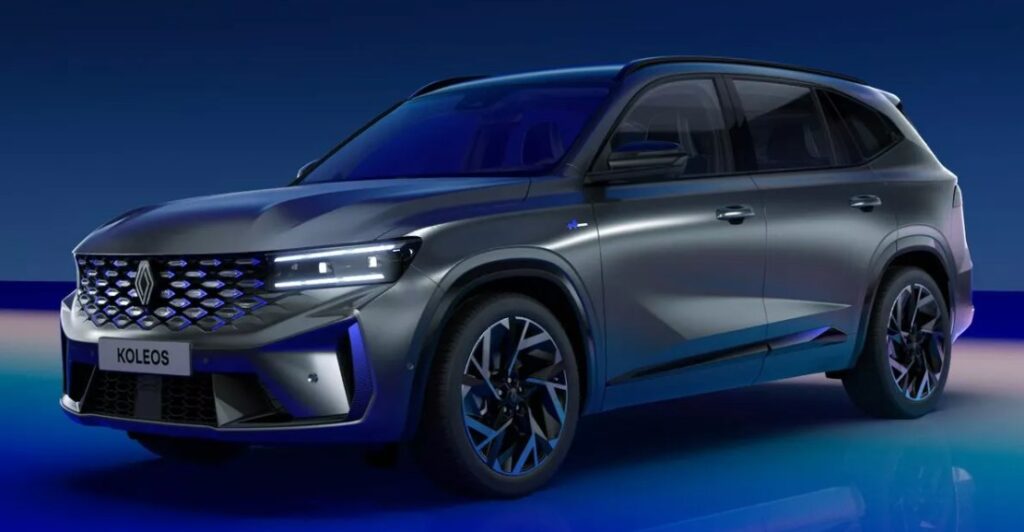
The Renault Koleos has always occupied an interesting corner of the SUV market. It offers a spacious cabin, comfortable road manners, and a more distinctive personality than many mainstream family crossovers. Yet potential buyers often arrive at the same practical question: How economical is the Renault Koleos?
The answer depends heavily on the generation, engine, transmission, drivetrain, local testing method, and—perhaps most importantly—how the vehicle is driven.
An early petrol Koleos with four-wheel drive behaves very differently at the fuel pump from a later diesel model. Likewise, the latest full-hybrid version belongs to an entirely new efficiency category. Looking at one isolated figure does not tell the whole story.
In this guide, we will examine Renault Koleos fuel economy across all major generations, explain the differences between petrol, diesel, front-wheel-drive, four-wheel-drive, and hybrid versions, and help potential buyers estimate realistic running costs.
Content in this publication
- Renault Koleos Fuel Economy at a Glance
- Understanding Fuel-Economy Measurements
- First-Generation Renault Koleos Fuel Economy
- Second-Generation Renault Koleos Fuel Economy
- Latest Renault Koleos Full Hybrid Fuel Economy
- Petrol, Diesel or Hybrid: Which Is Most Economical?
- Front-Wheel Drive Versus Four-Wheel Drive
- Real-World Renault Koleos Fuel Economy
- How Much Does It Cost to Fuel a Koleos?
- How to Improve Renault Koleos Fuel Economy
- What to Check When Buying a Used Koleos
- Is the Renault Koleos Economical for Its Size?
- Which Renault Koleos Has the Best Fuel Economy?
- Is Paying More for Better Economy Worth It?
- Final Thoughts on Renault Koleos Fuel Economy
- Frequently Asked Questions
Renault Koleos Fuel Economy at a Glance
The Koleos has been sold with several powertrains in different markets, so there is no single fuel-consumption figure that applies to every vehicle.
As a broad buyer’s reference, typical official combined figures have fallen into these ranges:
- First-generation petrol models: approximately 9.0–10.0 L/100 km
- First-generation diesel models: approximately 7.0–8.0 L/100 km
- Second-generation 2.5-litre petrol models: approximately 8.0–9.0 L/100 km
- Second-generation diesel models: approximately 5.9–7.5 L/100 km
- Latest full-hybrid models: from approximately 5.6 L/100 km
These numbers should be treated as guidance rather than guarantees. Official tests are useful for comparing versions under controlled conditions, but real roads rarely behave like laboratories.
A petrol first-generation 2.5-litre 4WD model, for example, carried an official combined figure of around 9.6 L/100 km, while certain second-generation 2.0 dCi diesel versions were rated close to 5.9 L/100 km under the older NEDC procedure.
Understanding Fuel-Economy Measurements
Before comparing engines, we need to understand the language used to describe economy.
Litres per 100 Kilometres
Most countries outside the United States express consumption as litres per 100 kilometres.
With this measurement, a lower number is better:
- 5.5 L/100 km is relatively economical for a large SUV.
- 8.0 L/100 km is moderate.
- 10.0 L/100 km or more indicates heavier fuel use.
The figure tells us how many litres the vehicle requires to cover 100 kilometres.
Miles per Gallon
Fuel economy may also appear as miles per gallon. However, UK and US gallons are different sizes, meaning their mpg figures are not directly interchangeable.
For example, 8.0 L/100 km equals approximately:
- 29.4 US mpg
- 35.3 UK mpg
With mpg, the logic is reversed: a higher number is better.
Kilometres per Litre
Some markets use kilometres per litre. In this format, 8.0 L/100 km equals 12.5 km/L.
Again, the larger figure represents better economy.
Quick Conversion Formula
To convert litres per 100 kilometres into US mpg:
US mpg = 235.2 ÷ L/100 km
To convert it into UK mpg:
UK mpg = 282.5 ÷ L/100 km
These formulas are helpful when comparing Koleos listings imported from different countries.
First-Generation Renault Koleos Fuel Economy
The original Koleos appeared in 2008 and remained in production, with several updates, until the middle of the following decade.
It was a compact-to-midsize SUV developed through the Renault-Nissan alliance and shared substantial engineering with other alliance vehicles. Buyers could choose petrol or diesel power, manual or automatic transmissions, and front-wheel-drive or four-wheel-drive layouts depending on the market.
First-Generation 2.5-Litre Petrol Economy
The 2.5-litre naturally aspirated petrol engine was one of the most widely available options. It generally produced around 170 hp and was often paired with a continuously variable transmission.
Official combined consumption typically sat around 9.3–9.6 L/100 km, depending on drivetrain and specification. Australian-market data for the 2011 model, for example, listed approximately 9.3 L/100 km for a 4x2 CVT version and 9.5 L/100 km for a comparable 4x4.
That difference may look small, but it accumulates over thousands of kilometres.
At 15,000 kilometres per year:
- 9.3 L/100 km uses approximately 1,395 litres.
- 9.5 L/100 km uses approximately 1,425 litres.
- 10.5 L/100 km in real-world conditions uses approximately 1,575 litres.
For predominantly urban driving, owners may see consumption rise beyond 11 L/100 km, particularly when dealing with congestion, short trips, air-conditioning use, and steep terrain.
The petrol Koleos is not disastrously thirsty for its age and size, but nobody will confuse it with a small hatchback. It drinks with the steady confidence of a full-size coffee mug rather than sipping from an espresso cup.
First-Generation 2.0 dCi Diesel Economy
The 2.0-litre dCi turbodiesel was the more economical first-generation option. Power outputs varied by market and model year, with versions commonly producing around 150 hp or 175 hp.
Depending on transmission and drivetrain, official combined figures generally fell near 7.0–8.0 L/100 km.
Diesel engines usually perform best on:
- Long motorway journeys
- Consistent-speed rural roads
- High annual mileage
- Trips where the engine reaches full operating temperature
A diesel Koleos can be noticeably more efficient than the 2.5-litre petrol model during long-distance driving. It also delivers stronger low-speed torque, which helps the vehicle move without demanding high engine revs.
However, diesel is not automatically the best choice for every buyer.
Repeated short journeys may prevent the diesel particulate filter from completing its regeneration process. That can transform a fuel-saving purchase into an expensive maintenance headache. Buyers should consider their driving pattern, not merely the consumption figure printed in a brochure.
Manual Versus Automatic Economy
Manual first-generation versions can sometimes return slightly better official consumption than automatic models. In practice, however, driver behaviour may erase the difference.
A careful driver using an automatic smoothly may outperform an aggressive driver in a manual. Transmission type matters, but the person behind the wheel matters more.
The CVT aims to hold the engine at an efficient operating speed. During gentle acceleration, this can work well. Under hard acceleration, however, engine speed may rise sharply and remain elevated, increasing consumption and producing the familiar CVT “drone.”
Second-Generation Renault Koleos Fuel Economy
The second-generation Koleos arrived during 2016 and 2017, depending on the country. It grew into a more mature midsize SUV and adopted more polished styling, a roomier interior, and newer powertrain technology.
Its engine range varied considerably across Europe, Australia, Asia, the Middle East, Latin America, and other markets.
Second-Generation 2.5-Litre Petrol Economy
Many markets received a 2.5-litre naturally aspirated petrol engine connected to an X-Tronic CVT.
This version is smooth, relatively simple, and generally suited to buyers who value quiet operation over maximum efficiency. Official figures commonly land in the 8.0–9.0 L/100 km region, although the exact result depends on whether the vehicle uses front-wheel drive or four-wheel drive.
Renault documentation for certain markets lists extra-urban figures of approximately 6.7 L/100 km for a 4x2 version and 6.9 L/100 km for a 4x4. These are highway-style figures rather than complete real-world averages.
A realistic mixed-driving result may be closer to:
- 8.0–9.0 L/100 km with calm suburban and highway use
- 9.0–10.5 L/100 km in mixed everyday conditions
- 11.0–13.0 L/100 km in dense city traffic
Terrain can shift those numbers dramatically. A Koleos driven around a flat coastal city may consume less fuel than an identical vehicle climbing through hilly urban roads every day.
Second-Generation 2.0 dCi Economy
The 2.0 dCi diesel is one of the most compelling Koleos engines for long-distance economy.
An early second-generation 175 hp 4x4 X-Tronic version recorded an NEDC combined figure of approximately 5.9 L/100 km, equivalent to roughly 39.9 US mpg or 47.9 UK mpg.
Those numbers are attractive, but buyers should remember that NEDC testing often produced optimistic results compared with everyday driving.
Realistically, many drivers should expect something closer to:
- 6.0–7.0 L/100 km on relaxed highway journeys
- 7.0–8.0 L/100 km in mixed driving
- 8.0–9.5 L/100 km in heavy urban traffic
The diesel Koleos is at its best when allowed to stretch its legs. On an open road, the engine settles into a low-rev rhythm, almost like a long-distance runner finding a comfortable pace.
Later Blue dCi Models and WLTP Testing
Later European Koleos versions used updated Blue dCi engines and were tested under the stricter WLTP procedure.
One 184 hp 4x4 X-Tronic version recorded different consumption values depending on driving phase:
- Approximately 8.1–8.7 L/100 km at low speed
- Approximately 6.5–6.7 L/100 km at medium speed
- Approximately 5.8–6.0 L/100 km at high speed
- Approximately 7.0–7.2 L/100 km at very high speed
These figures reveal something important: speed alone does not determine economy.
Low-speed urban driving can be inefficient because the vehicle repeatedly accelerates its considerable mass. At very high motorway speeds, aerodynamic resistance rises sharply. The Koleos tends to be most economical when cruising smoothly at a moderate speed.
Latest Renault Koleos Full Hybrid Fuel Economy
The Koleos name has entered a new phase in selected markets with the introduction of a full-hybrid E-Tech powertrain.
This latest model is mechanically distinct from the earlier second-generation Koleos and combines a turbocharged petrol engine with electric assistance.
Official Hybrid Consumption
Renault advertises fuel consumption from approximately 5.6 L/100 km for the full-hybrid version under applicable homologation conditions. The company also states that the vehicle may operate electrically for a substantial proportion of urban driving, depending on speed, battery charge, traffic, temperature, and driving style.
That makes the hybrid particularly appealing to drivers whose routines include:
- City congestion
- Repeated stopping and starting
- Suburban commuting
- Low-to-moderate speeds
- Frequent deceleration
Instead of wasting all the vehicle’s motion as heat through the brakes, regenerative braking recovers part of that energy and stores it in the hybrid battery.
Does the Hybrid Need to Be Plugged In?
No. The Koleos full hybrid is designed to recharge through its petrol engine and regenerative braking.
It is not a plug-in hybrid, so owners do not need a home charger or a public charging routine.
That simplicity may suit apartment residents or buyers who want lower urban consumption without reorganising their lives around a charging cable.
Hybrid Versus Diesel Economy
The hybrid and diesel achieve efficiency in different ways.
The diesel is generally well suited to sustained motorway travel. The hybrid shines in traffic, where its electric motor can assist during acceleration and reduce the amount of time the petrol engine runs inefficiently.
A buyer covering 30,000 kilometres of open-road travel every year may still appreciate diesel characteristics where suitable models remain available. A driver commuting through stop-and-go traffic may extract more value from the hybrid.
The best engine is therefore not simply the one with the lowest official number. It is the one whose strengths match the buyer’s normal journey.
Petrol, Diesel or Hybrid: Which Is Most Economical?
Choose Petrol When Simplicity Matters
A petrol Koleos may suit buyers who:
- Cover relatively low annual mileage
- Complete many short journeys
- Want quieter cold starts
- Prefer to avoid diesel emissions-system concerns
- Find petrol models cheaper to purchase
Although petrol consumption is usually higher, purchase price and maintenance risks also influence the total cost of ownership.
Saving one litre per 100 kilometres means little if the more efficient vehicle costs considerably more to buy or requires an expensive emissions-system repair.
Choose Diesel for Frequent Long Trips
A diesel Koleos may be the strongest choice when:
- Annual mileage is high
- Most trips exceed 20–30 minutes
- Motorway driving is common
- Towing or heavy loading is frequent
- Diesel fuel remains competitively priced
The engine’s torque allows relaxed progress without constant high revs. That quality can make a diesel Koleos feel both stronger and calmer than a petrol equivalent.
Choose Hybrid for Urban Efficiency
The hybrid makes sense for drivers who:
- Spend substantial time in traffic
- Want automatic operation
- Prefer not to plug in
- Want lower urban fuel use
- Plan to keep the vehicle long enough to benefit from the technology
Its economy advantage may shrink on fast, uninterrupted motorway journeys because there are fewer braking events from which to recover energy.
Front-Wheel Drive Versus Four-Wheel Drive
Four-wheel drive adds traction, versatility, and buyer appeal. It also adds mechanical weight and friction.
All else being equal, a front-wheel-drive Koleos will usually consume slightly less fuel than a comparable four-wheel-drive version.
The difference may only be a few tenths of a litre per 100 kilometres, but buyers should ask whether they genuinely need four-wheel drive.
When Four-Wheel Drive Is Worth It
The extra consumption may be justified for drivers who frequently encounter:
- Snow
- Mud
- Loose gravel
- Wet rural roads
- Steep unpaved access routes
- Slippery boat ramps
For someone who spends every day on dry urban pavement, four-wheel drive may be like carrying hiking boots to walk through a shopping centre: useful in theory, unnecessary in practice.
Real-World Renault Koleos Fuel Economy
Official economy figures provide a comparison point, not a promise.
A Koleos advertised at 8.3 L/100 km may return 9.5 L/100 km for one owner and 7.8 L/100 km for another.
Why Real Consumption Is Higher
Real-world consumption commonly rises because of:
- Cold starts
- Short journeys
- Heavy traffic
- Aggressive acceleration
- High cruising speeds
- Underinflated tyres
- Roof racks or cargo boxes
- Air-conditioning use
- Passenger and luggage weight
- Mountainous terrain
No single factor acts alone. They pile up like stones in a backpack, gradually making the engine work harder.
City Economy
City traffic is usually the Koleos’ least efficient environment, particularly for older petrol models.
A large SUV must repeatedly accelerate more than 1.5 tonnes of vehicle, occupants, and cargo. Every red light turns momentum into heat, and every green light asks the engine to rebuild that momentum.
A petrol model that achieves 8.5 L/100 km on an open road could easily exceed 11 L/100 km in congestion.
The hybrid handles this environment more effectively because it can recover energy and use electric assistance at low speeds.
Highway Economy
The Koleos generally performs well on the highway when driven smoothly.
At moderate speeds, diesel versions may deliver especially impressive results. Petrol versions also improve substantially compared with city driving because the engine is no longer battling constant acceleration.
However, there is a sharp distinction between cruising at 90 km/h and cruising at 130 km/h. Aerodynamic drag increases rapidly with speed, so the fuel-economy penalty becomes much greater than many drivers expect.
Towing Economy
Towing increases consumption because the engine must move additional mass and overcome more aerodynamic drag.
Depending on trailer size, terrain, wind, and speed, consumption may rise by 20–50% or more.
A Koleos normally returning 8.0 L/100 km could use 10–12 L/100 km while towing. A heavy, box-shaped caravan may push the result higher.
Buyers intending to tow should focus on towing stability, engine torque, permitted weights, and braking requirements—not fuel economy alone.
How Much Does It Cost to Fuel a Koleos?
We can estimate annual fuel use with a simple calculation:
Annual kilometres ÷ 100 × L/100 km = litres used annually
Suppose we drive 15,000 kilometres per year.
At 6.0 L/100 km
15,000 ÷ 100 × 6.0 = 900 litres per year
At 8.0 L/100 km
15,000 ÷ 100 × 8.0 = 1,200 litres per year
At 10.0 L/100 km
15,000 ÷ 100 × 10.0 = 1,500 litres per year
The difference between 6.0 and 10.0 L/100 km is 600 litres annually.
Multiply that amount by the local fuel price to estimate the financial impact. This approach is more useful than obsessing over a single mpg figure because it translates consumption into an actual household expense.
How to Improve Renault Koleos Fuel Economy
We do not need to crawl along the road or switch off every comfort feature to save fuel. Small, consistent habits matter more.
Accelerate Smoothly
Hard acceleration demands a large burst of energy. Press the accelerator progressively and allow the transmission to build speed without sending the engine racing.
Anticipate Traffic
Look beyond the vehicle immediately ahead.
When traffic slows in the distance, release the accelerator early rather than driving toward the queue and braking hard. Hybrid owners gain the additional benefit of regenerative deceleration.
Maintain Correct Tyre Pressure
Underinflated tyres increase rolling resistance and can worsen handling, tyre wear, and fuel consumption.
Check pressures when the tyres are cold and follow the vehicle’s placard rather than the maximum pressure printed on the tyre sidewall.
Remove Unnecessary Roof Accessories
Roof bars, baskets, and cargo boxes disturb airflow. Even empty accessories can create additional drag at highway speeds.
Remove them when they are not needed.
Avoid Excessive Idling
An idling engine travels zero kilometres while continuing to consume fuel. Long warm-ups are rarely necessary under normal conditions; gentle driving allows most modern engines to reach operating temperature more efficiently.
Service the Vehicle Properly
Fuel economy may deteriorate because of:
- Dirty air filters
- Old or unsuitable engine oil
- Faulty oxygen sensors
- Worn spark plugs
- Brake drag
- Wheel-alignment problems
- Diesel particulate-filter issues
- Incorrect transmission fluid
- Engine-management faults
A sudden increase in consumption deserves investigation. The vehicle may be trying to tell us something before a warning light appears.
What to Check When Buying a Used Koleos
Fuel economy depends on condition as much as specification.
Review the Trip Computer
Check the displayed average consumption, but do not accept it blindly. The seller may have reset it shortly before the test drive.
Observe:
- Average speed
- Trip distance
- Instant consumption
- Idle smoothness
- Engine temperature
- Warning lights
An average of 13 L/100 km may indicate urban use rather than a mechanical fault. Context matters.
Inspect the Tyres
Incorrect tyre sizes, poor-quality replacements, low pressures, and uneven wear can all affect economy.
Large aftermarket wheels may look impressive, but heavier wheels and wider tyres often make the engine work harder.
Test the Transmission
A healthy CVT should deliver smooth acceleration. Excessive flaring, shuddering, hesitation, or unusual noises require professional inspection.
A transmission that cannot transfer power efficiently may increase fuel consumption and lead to much larger repair bills.
Check Diesel Emissions Equipment
For a diesel Koleos, investigate:
- Diesel particulate-filter condition
- Exhaust-gas-recirculation system
- AdBlue or selective catalytic reduction system, where fitted
- Turbocharger operation
- Service history
- Frequency of previous short trips
A low official consumption figure should not distract us from the condition of these systems.
Ask About Driving History
A high-mileage motorway vehicle may be healthier than a lower-mileage diesel used only for five-minute school runs.
Mileage tells us how far the vehicle travelled. It does not tell us how kindly those kilometres were accumulated.
Is the Renault Koleos Economical for Its Size?
The Koleos is reasonably economical for a comfortable midsize SUV, particularly in diesel and hybrid form.
Older petrol versions are average rather than outstanding. They offer acceptable consumption when driven gently but become thirsty in congested city conditions.
The second-generation diesel competes more convincingly on long-distance efficiency, while the latest full hybrid brings the Koleos closer to modern fuel-saving expectations.
We should also remember what the vehicle provides in exchange for its fuel:
- A large passenger compartment
- Comfortable seating
- Strong road presence
- Useful luggage capacity
- Automatic-transmission availability
- Available four-wheel drive
- Long-distance refinement
Comparing a Koleos with a supermini solely on fuel consumption would be unfair. The more relevant question is whether it is economical compared with SUVs of similar size, weight, power, and age.
Which Renault Koleos Has the Best Fuel Economy?
Among traditional combustion versions, the second-generation diesel models generally provide the strongest highway and mixed-driving economy.
The latest full-hybrid Koleos can produce the lowest official consumption overall, particularly in urban and suburban conditions, with Renault quoting figures from approximately 5.6 L/100 km in applicable markets.
A practical ranking would look like this:
- Latest full hybrid: best for urban and mixed use
- Second-generation diesel: best for long-distance travel
- First-generation diesel: economical but older and condition-dependent
- Second-generation 2.5 petrol: acceptable all-round performance
- First-generation 2.5 petrol: highest likely consumption
This ranking does not automatically determine the best purchase. Availability, price, maintenance history, fuel cost, annual mileage, and local regulations may change the final decision.
Is Paying More for Better Economy Worth It?
Suppose one Koleos costs $4,000 more but saves 1.5 L/100 km.
At 10,000 kilometres per year, it saves 150 litres annually.
At 20,000 kilometres, it saves 300 litres.
We then multiply the litres saved by the local fuel price and compare that result with the higher purchase cost.
This calculation often reveals that low-mileage drivers should prioritise vehicle condition and purchase price. High-mileage drivers benefit more from improved economy because the savings accumulate faster.
Fuel economy is important, but it is only one piece of the ownership puzzle.
Final Thoughts on Renault Koleos Fuel Economy
The Renault Koleos can be economical, but the answer depends on which Koleos we choose.
Early 2.5-litre petrol models generally consume the most fuel, especially in urban traffic. First-generation diesels improve long-distance economy but require careful inspection as they age. Second-generation petrol versions provide a reasonable balance of refinement and running costs, while the later diesels remain attractive for motorway drivers.
The newest full-hybrid Koleos changes the equation. With official consumption starting near 5.6 L/100 km in certain markets, it brings modern hybrid efficiency to a spacious family-SUV format.
Still, no brochure can predict our personal result. Traffic, terrain, temperature, tyre pressure, vehicle condition, load, and driving style all influence how frequently we visit the fuel station.
For potential buyers, the smartest approach is simple: identify the version, confirm its official test figure, estimate a realistic margin above that number, and calculate annual fuel costs using personal mileage.
The most economical Koleos is not necessarily the one with the smallest number on paper. It is the version that matches our roads, budget, driving pattern, and ownership plans.
Frequently Asked Questions
1. What is the average Renault Koleos fuel economy?
Depending on the generation and engine, official combined consumption generally ranges from approximately 5.6 L/100 km for newer hybrid models to around 10 L/100 km for older petrol versions. Real-world consumption may be higher, particularly in urban traffic.
2. Is the Renault Koleos diesel economical?
Yes. Diesel Koleos models can be economical on long journeys, with some second-generation versions carrying official combined figures near 5.9–7.0 L/100 km. Urban use and short trips may produce noticeably higher consumption.
3. How economical is the 2.5-litre petrol Koleos?
Most 2.5-litre petrol versions return official figures near 8–10 L/100 km, depending on generation and drivetrain. Real urban consumption can exceed 11 L/100 km in heavy traffic.
4. Does four-wheel drive increase Koleos fuel consumption?
Usually, yes. Four-wheel-drive models carry extra weight and drivetrain resistance. The difference may be modest, but a comparable front-wheel-drive version will normally use slightly less fuel.
5. Which Koleos is best for city driving?
The latest full-hybrid model is likely to be the best choice for urban driving because it can use electric assistance, recover energy during deceleration, and reduce inefficient petrol-engine operation in stop-and-go traffic.
If you want to know other articles similar to Renault Koleos Fuel Economy: A Complete Buyer’s Guide you can visit the category Driving.
Can Nissan Rogue Pull a Boat? Complete Towing Guide
Can Nissan Rogue Be Flat Towed? Complete Towing Guide
Are Nissan Rogue Good on Gas? MPG, Fuel Economy, and Real-World Costs
Can Nissan Rogue Drive in Snow? Complete Winter Driving Guide

Kia Sorento Diesel Fuel Consumption: MPG, Efficiency and Real-World Range

Haval Jolion Hybrid Fuel Consumption: How Efficient Is It Really?
Leave a Reply
More content of your interest