

Volvo XC90 Gas Mileage: MPG, Real-World Economy, and Fuel-Saving Guide

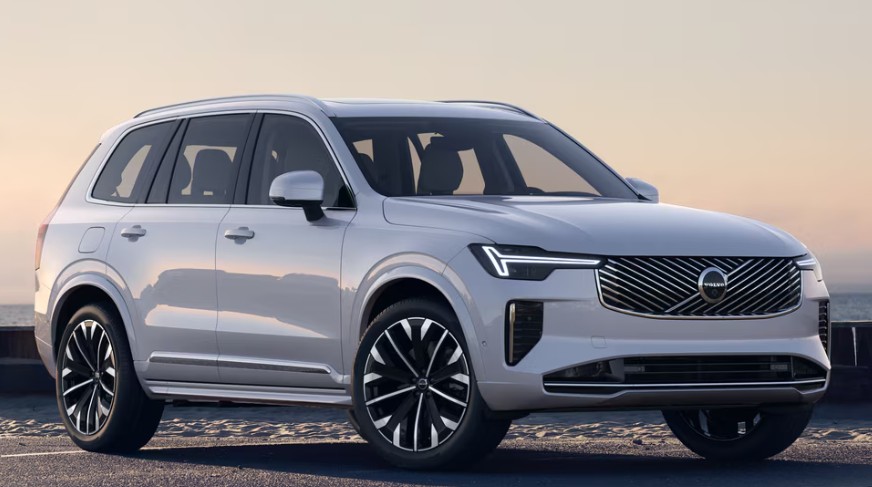
The Volvo XC90 gas mileage question sounds simple until we start comparing engines, model years, hybrids, driving styles, and even wheel sizes. One XC90 can behave like a reasonably economical family SUV, while another can gulp fuel noticeably faster in urban traffic. Throw the Recharge plug-in hybrid into the conversation, and suddenly traditional MPG figures tell only half the story.
That is why looking at one fuel-economy number on a specification sheet rarely gives us the complete picture.
The XC90 is a large three-row premium SUV. It carries plenty of weight, usually comes with all-wheel drive, and offers the kind of comfort and power buyers expect from a luxury vehicle. We therefore shouldn't expect economy-car fuel consumption. Still, Volvo's smaller turbocharged engines, mild-hybrid technology, and plug-in-hybrid systems allow newer XC90s to use fuel surprisingly efficiently for their size.
In this guide, we'll break down what kind of mileage we can realistically expect, explain why one XC90 may consume much more fuel than another, compare gasoline and hybrid versions, and look at practical ways to squeeze more miles from every gallon.
Content in this publication
- What Gas Mileage Does a Volvo XC90 Get?
- Why Volvo XC90 Fuel Economy Varies So Much
- Volvo XC90 MPG by Engine Type
- Four-Cylinder Volvo XC90 Gas Mileage
- Volvo XC90 Recharge Fuel Economy
- XC90 City MPG vs Highway MPG
- Real-World Volvo XC90 Gas Mileage
- How Driving Style Changes XC90 MPG
- Does Eco Mode Improve Volvo XC90 Gas Mileage?
- How Tire Size Affects XC90 Fuel Consumption
- Does Premium Gas Improve XC90 MPG?
- Volvo XC90 Gas Mileage When Towing
- Cold Weather and XC90 Gas Mileage
- Air Conditioning and Fuel Economy
- Roof Boxes Can Reduce Highway MPG
- Maintenance Problems That Can Increase Fuel Consumption
- How to Improve Volvo XC90 Gas Mileage
- Is Volvo XC90 Gas Mileage Good for a Three-Row SUV?
- XC90 Gasoline vs Recharge: Which Saves More Fuel?
- Which Volvo XC90 Gets the Best Gas Mileage?
- Should Fuel Economy Decide Which XC90 We Buy?
- Estimating Your XC90 Fuel Cost
- Best XC90 for Drivers Who Care About MPG
- Conclusion: Is the Volvo XC90 Fuel Efficient?
- Frequently Asked Questions About Volvo XC90 Gas Mileage
What Gas Mileage Does a Volvo XC90 Get?
Depending on model year, engine, drivetrain, road conditions, and driving habits, gasoline-powered Volvo XC90 models generally fall somewhere around the high teens to mid-20s MPG in everyday driving.
Highway cruising is normally where the XC90 looks its best. In steady conditions, later four-cylinder versions can move this large SUV surprisingly efficiently. Stop-and-go city traffic tells another story because repeatedly accelerating a heavy SUV requires considerably more energy.
Broadly speaking, owners can expect something along these lines:
- City driving: roughly high-teens to low-20s MPG
- Highway driving: often low-to-upper-20s MPG
- Mixed driving: commonly around 20-25 MPG
- Older six-cylinder or V8 models: frequently lower
- Plug-in-hybrid XC90 models: potentially much lower gasoline use when regularly charged
These are useful ranges rather than promises. Two apparently identical XC90s can return different numbers simply because one driver spends every morning crawling through downtown traffic while another glides along open highways.
Why Volvo XC90 Fuel Economy Varies So Much
Fuel consumption is a bit like a restaurant bill. Ordering from the same menu doesn't guarantee everyone pays the same amount.
The XC90 has been sold through multiple generations with numerous powertrains. Earlier vehicles could use five-, six-, or eight-cylinder engines, while more recent XC90s moved toward turbocharged four-cylinder engines, mild-hybrid assistance, and plug-in-hybrid technology.
That creates substantial variation.
Engine Choice Matters
Older, larger engines tend to consume more fuel because they have greater displacement and were developed before today's emphasis on downsizing and electrification.
Modern XC90 engines take a different route. Volvo uses smaller engines combined with turbocharging and, on some versions, electrical assistance. Instead of keeping a large engine working lightly all the time, the vehicle can rely on a smaller engine and produce extra power when required.
That doesn't magically turn the XC90 into a compact hatchback, but it helps.
All-Wheel Drive Adds a Small Efficiency Penalty
Many XC90s use all-wheel drive. That's great when roads are slippery or when drivers want confident traction, but AWD adds components, weight, and mechanical drag.
Think of it as hiking with an extra backpack. The difference may seem small during an easy walk, yet over a long distance the extra effort adds up.
Vehicle Weight Cannot Be Ignored
The XC90 is big.
Passengers, luggage, safety equipment, luxury features, AWD hardware, batteries on hybrid models, and a substantial body all contribute weight. Every time we accelerate, the engine must move that mass.
Once the vehicle is cruising steadily on a highway, weight matters less than it does in repeated stop-start situations. That's one reason highway fuel economy can look considerably better than urban economy.
Volvo XC90 MPG by Engine Type
Because Volvo has changed the XC90's engine lineup repeatedly, the smartest way to understand mileage is to examine the major categories.
Older Five-Cylinder XC90 Models
Some early XC90 versions came with five-cylinder engines.
These models can still make excellent used SUVs when well maintained, but economy isn't their strongest selling point. Depending on configuration, driving conditions, and age, real-world consumption can sit in the teens or around the low-20s MPG.
Age also matters. A twenty-year-old vehicle with worn sensors, aging ignition components, old tires, or neglected maintenance may consume considerably more fuel than it did when new.
Six-Cylinder XC90 Gas Mileage
The six-cylinder XC90 typically trades some economy for smoother and stronger performance.
Drivers who spend most of their time in town should expect fuel use to rise quickly. Highway mileage improves because the engine isn't constantly accelerating the vehicle from a standstill.
For buyers comparing used XC90s, the six-cylinder can make sense when purchase price and performance matter more than squeezing out every possible MPG.
Volvo XC90 V8 Gas Mileage
Yes, Volvo once put a V8 in the XC90.
And no, fuel economy wasn't the main reason anyone bought it.
The V8 XC90 has an undeniable appeal. It sounds better, delivers strong performance, and has become an interesting choice for enthusiasts who want something different from the typical luxury SUV.
But gasoline consumption can be substantial.
City mileage can fall deep into SUV territory, particularly with aggressive acceleration or short journeys. Highway driving is more forgiving, but anyone shopping primarily for efficiency should look toward newer four-cylinder or hybrid versions.
Who Should Consider the V8?
The V8 makes the most sense for someone who values character, performance, rarity, or towing ability more than operating cost.
If every fuel stop makes us wince, it probably isn't the right XC90.
Four-Cylinder Volvo XC90 Gas Mileage
Modern XC90s rely heavily on four-cylinder engines.
That sounds almost strange when we remember how large the SUV is. Years ago, putting a four-cylinder engine into a three-row luxury SUV would have sounded like asking a bicycle to tow a boat.
Turbocharging changed the equation.
These engines can deliver strong torque while using less fuel during light-load cruising than traditional larger engines.
T5 Gas Mileage
The T5 generally represented one of the more economy-focused gasoline choices in the second-generation XC90 lineup.
It uses turbocharging without the additional performance hardware found in stronger versions. Because of that, it tends to return respectable mileage for a large premium SUV.
Drivers who prioritize running costs over maximum acceleration may find the T5 attractive on the used market.
T6 Gas Mileage
The T6 typically provides more power.
Depending on model year, the T6 architecture combined technologies such as turbocharging and supercharging to produce significantly stronger performance from a relatively small engine.
Extra performance usually comes with some fuel penalty.
Yet the difference isn't always huge during relaxed highway cruising. Where we notice it more is when we frequently use that additional horsepower. Boost feels addictive, and every enthusiastic squeeze of the accelerator asks for more fuel.
B5 and B6 Mild-Hybrid Gas Mileage
Volvo later shifted toward B-series mild-hybrid powertrains.
A mild hybrid doesn't operate like a full electric vehicle. We don't plug it into the wall, and it generally can't travel meaningful distances using electricity alone.
Instead, the electrical system assists the gasoline engine, helps recover energy during braking, and smooths certain power demands.
The result can be modest improvements in efficiency and drivability.
Is a Mild Hybrid Dramatically More Efficient?
Usually not.
Think evolution rather than revolution.
A mild-hybrid XC90 may improve efficiency around the edges, but we shouldn't expect gasoline consumption to suddenly drop by half. The vehicle is still powered primarily by gasoline.
Volvo XC90 Recharge Fuel Economy
Now things become more interesting.
The XC90 Recharge is a plug-in hybrid, often shortened to PHEV. It combines a gasoline engine with a much more substantial electric system and battery.
This fundamentally changes how we should think about Volvo XC90 gas mileage.
Why Traditional MPG Can Be Misleading With a PHEV
Suppose our daily commute is shorter than the vehicle's usable electric range and we charge every night.
Most weekday journeys may use very little gasoline.
Our dashboard could show an eye-popping average MPG figure because the engine rarely runs. Another owner with exactly the same XC90 Recharge might never plug it in and travel primarily on gasoline, producing vastly different numbers.
Both figures could technically be correct.
That's why PHEVs are difficult to summarize with one MPG number.
Charging Is the Secret
Buying a plug-in hybrid and rarely charging it is like buying running shoes and using them exclusively as slippers.
It works, but we're ignoring the feature that makes the product special.
Drivers with reliable home charging and predictable daily distances can dramatically reduce gasoline consumption.
Drivers who regularly take long highway trips will eventually exhaust the available battery charge and rely more heavily on the gasoline engine.
XC90 City MPG vs Highway MPG
The difference between city and highway economy can be significant.
City Driving
Urban conditions are tough on fuel economy because we continually:
- Accelerate from traffic lights
- Brake and lose momentum
- Idle or crawl through congestion
- Run climate control at low speeds
- Make short journeys before the engine fully warms
- Carry passengers and cargo
A gasoline XC90 used mostly in a busy city can therefore return noticeably worse economy than official combined estimates suggest.
Hybrid versions often perform relatively better in urban driving because they can recover braking energy.
Highway Driving
Highway cruising lets the XC90 settle into its stride.
Once we're moving at a consistent speed, the engine doesn't need to repeatedly overcome the vehicle's inertia. The transmission can select a tall gear, engine speed drops, and fuel consumption improves.
However, speed matters enormously.
Driving at 60-65 mph is substantially easier on fuel than pushing a large, aerodynamically blunt SUV through the air at very high speeds.
Air resistance rises quickly with speed. The XC90 may feel calm at 80 mph, but the engine knows we're asking it to punch through an increasingly thick wall of air.
Real-World Volvo XC90 Gas Mileage
Official ratings are useful for comparing vehicles under standardized conditions.
Real life is messier.
We carry luggage. We sit in traffic. We drive uphill. We use air conditioning. We install roof boxes. We forget to check tire pressure.
So what should owners reasonably expect?
A properly maintained modern gasoline XC90 driven normally can often deliver fuel economy somewhere in the low-to-mid 20-MPG range during mixed use, with better results possible on relaxed highway journeys and worse results likely in dense urban traffic.
The older and more powerful the engine, the easier it becomes to fall below that range.
Recharge owners can see dramatically higher effective gasoline mileage when their daily journeys rely heavily on electricity.
How Driving Style Changes XC90 MPG
Perhaps the biggest variable isn't hiding beneath the hood.
It's sitting behind the steering wheel.
Hard Acceleration Burns More Fuel
Turbocharged engines can feel wonderfully responsive. That makes it tempting to accelerate aggressively.
Unfortunately, acceleration is where a heavy SUV needs considerable energy.
We don't need to drive painfully slowly. Smooth throttle inputs are enough to make a measurable difference.
Imagine carrying a cup of coffee without a lid. Driving in a way that wouldn't spill it generally produces better fuel economy too.
Look Further Down the Road
Efficient drivers anticipate.
If a traffic light is already red 300 yards ahead, accelerating toward it and braking hard wastes energy. Lifting the accelerator early allows the XC90 to coast.
In hybrids, smoother deceleration may also help the regenerative braking system recover more energy.
Cruise Control Can Help
On relatively flat highways, cruise control can maintain speed more consistently than a distracted right foot.
On steep terrain, however, manually allowing speed to fluctuate slightly may occasionally use less fuel than a system determined to maintain the exact set speed while climbing.
Does Eco Mode Improve Volvo XC90 Gas Mileage?
Where equipped, Eco-oriented drive settings can help.
The vehicle may adjust throttle response, climate-control behavior, transmission logic, and other systems to prioritize efficiency.
Don't expect miracles.
Eco mode can't repeal physics. If we accelerate aggressively, tow a heavy trailer, or drive at very high speeds, fuel use will remain high.
Its biggest advantage is encouraging smooth operation and reducing unnecessary energy demand.
How Tire Size Affects XC90 Fuel Consumption
Large wheels look fantastic on the XC90.
They can also work against efficiency.
Bigger wheels and performance-oriented tires may be heavier and have greater rolling resistance. Wider tires can also increase aerodynamic drag.
A vehicle wearing moderate factory wheel sizes will often return slightly better economy than an otherwise identical XC90 sitting on huge wheels and sticky performance tires.
Tire Pressure Matters Too
Underinflated tires deform more as they roll.
That creates resistance.
We can picture the difference between pushing a shopping cart with properly inflated wheels and dragging one with a sticky caster. The engine must work harder.
Checking tire pressures regularly is one of the cheapest fuel-saving habits available.
Fuel requirements vary depending on engine and model year, so the owner's manual should always be our primary reference.
Some turbocharged Volvo engines may recommend or require higher-octane fuel for optimal performance.
Higher octane doesn't automatically contain dramatically more energy. Its main benefit is resistance to premature combustion or knock.
If the engine is designed to take advantage of premium gasoline, using the recommended octane can help it operate as intended. But filling a vehicle that doesn't need premium with the most expensive fuel at the station won't suddenly transform its economy.
Volvo XC90 Gas Mileage When Towing
Towing changes everything.
A trailer adds weight, rolling resistance, and usually a substantial aerodynamic penalty.
Even a relatively light trailer can reduce fuel economy. A tall travel trailer can have an even bigger impact because the XC90 must push a much larger shape through the air.
Owners shouldn't be surprised if MPG drops sharply while towing.
What Hurts Towing Economy Most?
Trailer shape can matter almost as much as weight.
A low, streamlined utility trailer may create far less drag than a large caravan or enclosed trailer.
Speed is another major factor. Increasing highway speed while towing can make fuel consumption climb quickly.
Cold Weather and XC90 Gas Mileage
Winter can quietly steal MPG.
Cold engines take longer to reach their efficient operating temperature. Tire pressures fall as temperatures drop. Winter gasoline formulations may contain slightly less energy. Heated seats, defrosters, climate control, and other electrical loads also require energy.
Plug-in hybrids face another issue: battery performance generally declines in cold conditions.
So if your XC90 suddenly seems thirstier every winter, it doesn't necessarily mean something is wrong.
Air Conditioning and Fuel Economy
Air conditioning requires energy.
The effect is usually more noticeable in urban driving, where the engine may be working relatively lightly while the climate system continues consuming power.
That said, opening every window at high highway speed isn't necessarily more efficient because the increased aerodynamic drag can counteract the benefit of switching off the AC.
Comfort matters too. We don't need to turn every summer drive into a sauna to save a fraction of a gallon.
Roof Boxes Can Reduce Highway MPG
Roof boxes are convenient.
Aerodynamically, they're about as subtle as wearing a backpack on top of your backpack.
They increase frontal area and disturb airflow, particularly at highway speeds. Bike racks and roof-mounted equipment can have similar effects.
If we're no longer using the roof box, taking it off can improve efficiency.
Maintenance Problems That Can Increase Fuel Consumption
A sudden decline in Volvo XC90 gas mileage deserves attention.
Possible contributors include dirty filters, worn spark plugs, failing oxygen sensors, dragging brakes, alignment problems, incorrect tire pressure, fuel-system issues, or engine-management faults.
Not every mileage decline indicates a major mechanical failure, but unexplained changes are worth investigating.
Warning Signs to Watch
We should pay closer attention when poor fuel economy arrives alongside:
- A check-engine light
- Rough idle
- Loss of power
- Hard starting
- Fuel smells
- Black exhaust smoke
- Uneven tire wear
- Brake heat or dragging
- Noticeably worse performance
Those symptoms move the problem beyond ordinary driving-style variation.
How to Improve Volvo XC90 Gas Mileage
We don't need complicated modifications. Consistent habits usually produce better results.
Practical Fuel-Saving Checklist
- Keep tires inflated to the recommended pressure.
- Accelerate smoothly rather than flooring the throttle.
- Avoid unnecessary idling.
- Remove unused roof racks and cargo boxes.
- Keep highway speed reasonable.
- Maintain the engine according to Volvo's schedule.
- Use the recommended fuel grade.
- Combine short journeys when possible.
- Avoid carrying unnecessary heavy cargo.
- Charge Recharge models regularly.
- Use climate control sensibly.
- Anticipate traffic rather than braking aggressively.
None of these individually turns an XC90 into a fuel miser. Together, however, they can make a meaningful difference.
Is Volvo XC90 Gas Mileage Good for a Three-Row SUV?
Context matters.
Compared with a compact crossover, the XC90 isn't particularly economical. Compared with large luxury SUVs that historically relied on six- and eight-cylinder engines, modern XC90 variants can look quite efficient.
That's the key distinction.
We're transporting up to three rows of passengers in a premium AWD SUV with substantial safety equipment, strong performance, and a comfortable cabin. Expecting subcompact fuel use would be unrealistic.
For buyers prioritizing efficiency, the newer mild-hybrid and plug-in-hybrid models are the versions worth examining most closely.
XC90 Gasoline vs Recharge: Which Saves More Fuel?
If we're able to charge at home and most daily journeys fall within the vehicle's practical electric range, the Recharge has an enormous advantage in gasoline consumption.
But buying a PHEV is about more than the MPG display.
Purchase price, electricity rates, gasoline prices, charging availability, journey length, battery condition on used vehicles, and insurance costs all matter.
Choose a Gasoline or Mild-Hybrid XC90 If…
A conventional XC90 may make more sense when we regularly travel long distances, cannot charge reliably, want lower initial complexity, or find a particularly attractive used example.
Choose the Recharge If…
The plug-in hybrid becomes especially compelling when we can charge overnight, commute relatively short distances, make frequent urban journeys, and want electric driving without giving up gasoline-powered long-distance flexibility.
Which Volvo XC90 Gets the Best Gas Mileage?
In terms of gasoline consumption, a well-used plug-in-hybrid Recharge generally has the greatest potential because electricity replaces gasoline during shorter journeys.
Among versions relying primarily on gasoline, newer four-cylinder and mild-hybrid models tend to be more economical than older six-cylinder and V8 configurations.
That doesn't automatically make them better vehicles for every buyer.
The best XC90 is the one balancing purchase price, reliability, performance, comfort, efficiency, and how we actually drive.
Should Fuel Economy Decide Which XC90 We Buy?
It should influence the decision, but it shouldn't dominate it.
Saving 2 MPG sounds significant until we compare the annual dollar difference against vehicle condition, depreciation, repair history, insurance, and purchase price.
Suppose one used XC90 gets slightly better mileage but needs expensive suspension, cooling-system, or electrical repairs. The fuel savings can disappear faster than ice cream on a hot dashboard.
When buying used, condition and maintenance history deserve enormous weight.
Estimating Your XC90 Fuel Cost
A simple formula helps us compare versions:
Annual fuel cost = annual miles ÷ average MPG × fuel price per gallon
For example, imagine we drive 12,000 miles each year.
At 20 MPG:
12,000 ÷ 20 = 600 gallons annually.
At 24 MPG:
12,000 ÷ 24 = 500 gallons.
That's a 100-gallon difference each year.
Multiply that by your local fuel price and suddenly the practical value of better mileage becomes much clearer.
For Recharge models, the calculation becomes more complicated because electricity replaces some gasoline consumption.
Best XC90 for Drivers Who Care About MPG
For drivers primarily interested in efficiency, we'd generally rank the options conceptually like this:
Best potential gasoline savings: XC90 Recharge with regular charging.
Strong everyday compromise: newer mild-hybrid XC90.
Reasonably economical used choice: later four-cylinder T5 models.
Performance-focused compromise: T6 and higher-output gasoline models.
Least efficiency-focused: older large-engine models, particularly the V8.
Remember, though, model year and configuration matter. Always compare specific vehicles rather than relying solely on the badge.
Conclusion: Is the Volvo XC90 Fuel Efficient?
The Volvo XC90 gas mileage is respectable when we judge it for what the vehicle actually is: a large, powerful, premium three-row SUV rather than an economy car.
Modern four-cylinder and mild-hybrid models can deliver reasonable highway fuel economy, while the Recharge plug-in hybrid can dramatically reduce gasoline use for owners who charge frequently. Older six-cylinder and V8 models consume considerably more, but they may appeal for other reasons such as purchase price, character, and performance.
The biggest lesson is that XC90 fuel economy isn't controlled by one number printed on a window sticker.
Engine choice matters. So does traffic. Tire pressure matters. Speed matters. Weather matters. Charging habits matter tremendously on the Recharge.
And perhaps most importantly, our right foot matters.
Drive smoothly, keep the XC90 properly maintained, remove unnecessary aerodynamic drag, and choose the powertrain that fits the way we actually travel. Do that, and this substantial Swedish SUV can be far more economical than its size suggests.
Frequently Asked Questions About Volvo XC90 Gas Mileage
1. What is the average MPG for a Volvo XC90?
Modern gasoline Volvo XC90 models commonly return fuel economy somewhere around the low-to-mid 20-MPG range during mixed real-world driving, although exact results vary substantially by engine, model year, traffic, climate, wheel size, and driving habits. Older six-cylinder and V8 models generally consume more fuel.
2. Is the Volvo XC90 Recharge better on gas?
It can be dramatically better on gasoline when charged regularly. Because the Recharge can complete part of a journey using stored electricity, owners with short daily commutes may use very little gasoline. Once the battery's usable electric energy is depleted, the gasoline engine becomes much more important.
3. Why is my Volvo XC90 using so much gas?
Heavy city traffic, cold weather, aggressive acceleration, low tire pressure, short journeys, roof boxes, towing, high highway speeds, and mechanical problems can all increase consumption. If fuel economy suddenly deteriorates without an obvious change in driving conditions, maintenance or diagnostic inspection may be worthwhile.
4. Does Eco mode save gas in a Volvo XC90?
Eco-oriented settings can help by encouraging smoother acceleration and adjusting certain vehicle systems for efficiency. The improvement depends on driving conditions and driver behavior. Eco mode helps most when we pair it with steady speeds, gentle acceleration, sensible climate-control use, and proper maintenance.
5. Which Volvo XC90 engine is best for fuel economy?
Drivers who can charge regularly will generally find the Recharge plug-in hybrid offers the greatest potential to reduce gasoline consumption. Among primarily gasoline-powered XC90s, newer four-cylinder and mild-hybrid versions are usually more efficiency-focused than older six-cylinder and V8 models.
If you want to know other articles similar to Volvo XC90 Gas Mileage: MPG, Real-World Economy, and Fuel-Saving Guide you can visit the category Driving.
Kia Sorento Fuel Economy: MPG, Hybrid, and Plug-In Hybrid Explained

BYD Shark 6 Fuel Consumption: Real-World Economy, Range and What to Expect

Vauxhall Agila MPG: Real-World Fuel Economy and Engine Guide

Honda Passport MPG: Real-World Fuel Economy, Ratings, and What to Expect

Nissan Rogue Fuel Economy: MPG, Range, Costs, and Real-World Efficiency
BYD Shark 6 Long Range Fuel Tank: Is the 120L Upgrade Worth It?
Leave a Reply
More content of your interest