

Vauxhall Meriva Engine Size: Complete Petrol and Diesel Guide

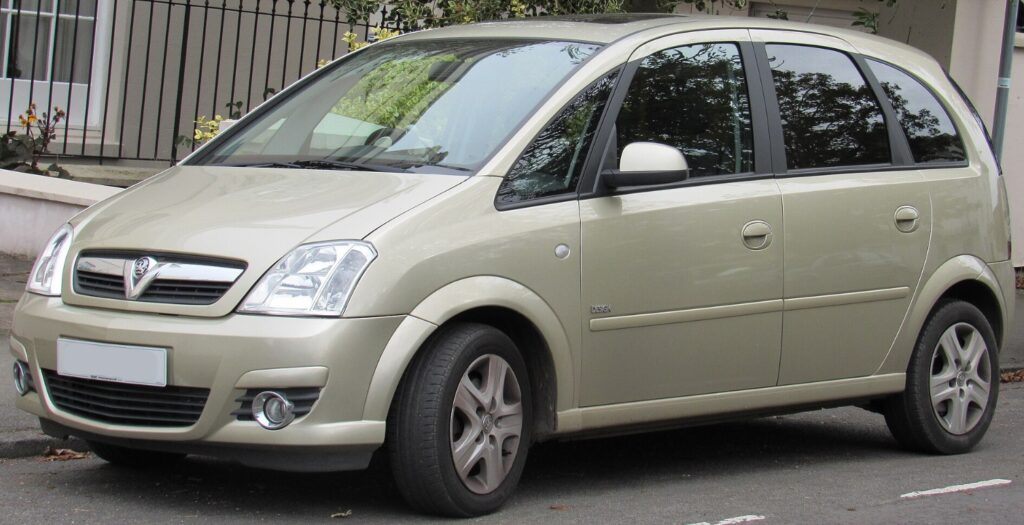
Choosing the right Vauxhall Meriva engine size can feel surprisingly complicated. At first glance, the numbers appear straightforward: 1.3, 1.4, 1.6, 1.7 or 1.8 litres. Yet two engines with almost identical capacities can deliver completely different driving experiences.
One might feel relaxed and responsive around town, while another struggles once the car is filled with passengers. A small turbocharged engine may outperform a larger naturally aspirated unit, and a diesel that looks economical on paper may prove inconvenient for short urban journeys.
So, which Vauxhall Meriva engine is best?
The answer depends on how we use the car. A driver completing short school runs needs something different from a family regularly travelling on motorways. Likewise, someone looking for a simple used car may prioritise mechanical simplicity, while another owner may value strong torque, automatic transmission or lower fuel consumption.
In this guide, we explore the main petrol and diesel engines offered across both generations of the Vauxhall Meriva. We will compare their performance, suitability, running characteristics and potential disadvantages so that we can choose an engine based on real-world needs rather than badge size alone.
Content in this publication
- What Engine Sizes Are Available in the Vauxhall Meriva?
- Understanding Engine Capacity, Power and Torque
- Vauxhall Meriva A Engine Sizes: First Generation
- 1.4-Litre Petrol Engine
- 1.6-Litre Petrol Engine
- 1.8-Litre Petrol Engine
- 1.6 Turbo VXR Engine
- 1.3 CDTi Diesel Engine
- 1.7 DTI and CDTi Diesel Engines
- Vauxhall Meriva B Engine Sizes: Second Generation
- 1.4-Litre Naturally Aspirated Petrol
- 1.4-Litre Turbo Petrol: 120PS
- 1.4-Litre Turbo Petrol: 140PS
- 1.3 CDTi Diesel in the Meriva B
- 1.7 CDTi Diesel in the Meriva B
- 1.6 CDTi Diesel Engine
- Petrol or Diesel: Which Meriva Engine Type Is Better?
- Which Vauxhall Meriva Engine Size Is Best for City Driving?
- Which Engine Is Best for Motorway Driving?
- Which Meriva Engine Is Best for Reliability?
- How to Identify Your Vauxhall Meriva Engine Size
- What to Check Before Buying Any Meriva Engine
- Best Vauxhall Meriva Engine Size by Driver Type
- Does Engine Size Affect Insurance and Tax?
- Does a Smaller Meriva Engine Always Use Less Fuel?
- Conclusion: Choosing the Right Vauxhall Meriva Engine Size
- Frequently Asked Questions
What Engine Sizes Are Available in the Vauxhall Meriva?
Across its production life, the Vauxhall Meriva was sold with a broad selection of petrol and diesel engines. The exact availability varied according to model year, trim level, transmission and generation.
The principal engine capacities included:
- 1.3-litre CDTi diesel
- 1.4-litre petrol
- 1.4-litre turbo petrol
- 1.6-litre petrol
- 1.6-litre turbo petrol
- 1.6-litre CDTi diesel
- 1.7-litre DTI and CDTi diesel
- 1.8-litre petrol
The first-generation Meriva offered the widest variety, including naturally aspirated petrol engines, several diesel choices and the unusually powerful 1.6 Turbo VXR.
The second-generation model simplified the petrol range around the 1.4-litre engine while continuing to offer 1.3- and 1.7-litre diesels. Later versions introduced the more refined 1.6 CDTi diesel. Vauxhall’s 2013 brochure described a range consisting of three 1.4-litre petrol choices and several diesels, including the then-new 1.6 CDTi.
Understanding Engine Capacity, Power and Torque
Engine size measures the combined capacity of the cylinders, usually expressed in litres or cubic centimetres. A 1.4-litre engine has a displacement of approximately 1,400cc, while a 1.7-litre engine is closer to 1,700cc.
However, displacement does not tell the entire story.
Why a Bigger Engine Is Not Always Faster
A larger naturally aspirated engine can produce less power than a smaller turbocharged engine. For example, a turbocharger pushes additional air into the cylinders, allowing the engine to burn more fuel and generate greater power without dramatically increasing its physical capacity.
That means a 1.4 Turbo Meriva can feel much stronger than a basic 1.6-litre petrol model from the earlier generation.
Engine choice should therefore involve several factors:
- Engine capacity
- Horsepower
- Torque
- Vehicle weight
- Gearbox type
- Turbocharging
- Intended driving conditions
Think of engine capacity as the size of a person’s lungs. Larger lungs may help, but fitness, technique and efficiency still determine how well that person performs.
Why Torque Matters in a Family MPV
Torque represents rotational pulling force. It affects how easily the car moves from low engine speeds, climbs hills or accelerates while carrying passengers.
Diesel engines generally produce stronger low-speed torque than naturally aspirated petrol engines. This can make a diesel Meriva feel more effortless when loaded, even when its headline horsepower figure looks modest.
Petrol engines often need more revs before delivering their strongest performance. They may feel quieter and smoother, but drivers sometimes need to change gear more frequently.
Vauxhall Meriva A Engine Sizes: First Generation
The first-generation Vauxhall Meriva was sold in the UK from 2003 until 2010. It was compact on the outside but remarkably flexible inside, which helped it become popular with families, older motorists and drivers who appreciated its elevated seating position.
Its engine range was extensive, although not every option remained available throughout the entire production period.
1.4-Litre Petrol Engine
The 1.4-litre petrol engine was one of the smaller and simpler choices in the original Meriva range. Later first-generation examples commonly used a 1,364cc four-cylinder engine producing around 90 horsepower.
What Is the 1.4 Petrol Like to Drive?
Around town, the 1.4 can be perfectly adequate. It starts quietly, responds predictably and does not have the diesel clatter associated with older CDTi engines.
Its limitations become clearer when the car is heavily loaded or driven on faster roads. The Meriva is not especially light, so the engine often needs to work hard during motorway acceleration, steep climbs and overtaking.
We may find ourselves changing down a gear and pressing the accelerator firmly simply to maintain momentum.
Who Should Choose the 1.4 Petrol?
The 1.4 petrol makes the most sense for:
- Short urban journeys
- Low annual mileage
- Drivers who value simplicity
- Mostly flat routes
- Light passenger loads
- Buyers seeking an affordable used example
It is less suitable for frequent motorway travel or drivers who regularly carry five occupants and luggage.
1.6-Litre Petrol Engine
The 1.6-litre petrol engine offers a useful step up from the 1.4. Depending on the production year and version, outputs varied, but many examples produced approximately 100 horsepower.
It is not a performance engine, yet it generally suits the Meriva’s weight better than the entry-level petrol.
Is the 1.6 Petrol the Sensible Middle Ground?
For many used-car buyers, yes.
The 1.6 petrol tends to offer acceptable urban flexibility without the complexity associated with diesel particulate filters on later diesel models. It can handle occasional motorway journeys more comfortably than the 1.4, although drivers should not expect particularly rapid acceleration.
Its character is straightforward. It does not deliver a sudden surge of turbocharged torque. Instead, power builds progressively as the engine revs.
That predictability can be reassuring. The car simply gets on with the job, rather like a dependable kettle that may not be glamorous but works every morning.
Possible Disadvantages of the 1.6 Petrol
The main drawbacks include:
- Moderate rather than exceptional fuel economy
- Limited low-speed pulling power
- More engine noise during hard acceleration
- Sluggish performance when heavily loaded
- Potentially higher fuel use than a comparable diesel on long trips
For mixed driving and modest annual mileage, however, the 1.6 remains one of the easier engines to understand and live with.
1.8-Litre Petrol Engine
The 1.8-litre petrol was among the larger naturally aspirated engines fitted to the first-generation Meriva. Many versions produced approximately 125 horsepower, giving the car noticeably stronger performance than the basic 1.4 and 1.6 models.
Does the 1.8 Petrol Feel Fast?
“Fast” may be generous, but it feels much less strained.
The extra power improves motorway joining, overtaking and hill climbing. The engine is also better suited to carrying passengers, although it still needs to rev when maximum performance is required.
Its disadvantages are predictable: fuel consumption can be higher, vehicle tax may be less favourable depending on the registration year, and well-maintained examples may be harder to find.
The 1.8 is worth considering when performance matters more than squeezing every possible mile from a litre of fuel.
1.6 Turbo VXR Engine
The Vauxhall Meriva VXR was the wild card of the range. While the normal Meriva focused on practicality, the VXR added a turbocharged 1.6-litre petrol engine with approximately 180 horsepower.
It was the family MPV that drank an espresso, tightened its trainers and decided to chase hot hatchbacks.
How Different Is the Meriva VXR?
Very different.
It offers much stronger acceleration, firmer suspension, sportier styling and sharper responses. Yet its character is not necessarily ideal for every Meriva buyer.
Potential owners should expect:
- Higher fuel consumption
- Increased insurance costs
- Firmer ride quality
- More expensive performance-related components
- Greater sensitivity to poor maintenance
- Limited availability on the used market
The 1.6 Turbo VXR is best treated as an enthusiast’s choice rather than the default family option.
1.3 CDTi Diesel Engine
The 1.3 CDTi was the smallest diesel offered in the Meriva. Its actual displacement was approximately 1,248cc, and power outputs varied according to version and model year.
The appeal is obvious: a small diesel can deliver respectable fuel economy, especially during longer journeys.
Is the 1.3 CDTi Powerful Enough?
That depends on our expectations.
When driven gently with one or two occupants, it can perform adequately. Once the car is loaded, however, the engine may feel breathless. Pulling away, joining fast traffic and climbing hills can require planning.
The narrow power delivery of an older small turbo diesel also means we may encounter turbo lag at low revs, followed by a stronger push once the turbo begins working.
Best Use Case for the 1.3 CDTi
The 1.3 CDTi suits drivers who:
- Prioritise fuel economy
- Travel longer distances regularly
- Drive calmly
- Rarely carry heavy loads
- Do not require rapid acceleration
It is not automatically the best choice for short trips. Diesel engines generally warm up more slowly than petrol engines, while repeated short journeys can contribute to intake, exhaust gas recirculation and particulate-filter problems on applicable versions.
1.7 DTI and CDTi Diesel Engines
The 1.7-litre diesel was available in several forms during the Meriva’s life. Early vehicles used DTI or lower-powered CDTi versions, while later models gained more powerful variants.
First-generation specifications included 1.7-litre diesels with outputs ranging from roughly 75 to 125 horsepower, depending on version.
Why Was the 1.7 Diesel Popular?
It suited the Meriva’s practical personality. Compared with the 1.3 diesel, the 1.7 generally offered stronger pulling power and more relaxed performance with passengers on board.
It was not always quiet. Older 1.7 diesels can sound agricultural when cold, and their power delivery may feel less polished than that of a modern diesel. Nevertheless, a healthy example can cope well with motorway driving.
Is the 1.7 CDTi Better Than the 1.3 CDTi?
For frequent long-distance use, towing within the vehicle’s permitted limits or carrying several passengers, the 1.7 is often the more comfortable choice.
The 1.3 can use less fuel under favourable conditions, but the larger engine does not need to work as hard. In real traffic, that can make the 1.7 feel more natural and less frustrating.
The condition of the individual vehicle remains more important than the theoretical advantage of either engine.
Vauxhall Meriva B Engine Sizes: Second Generation
The second-generation Meriva arrived in 2010 with a larger body, rear-hinged back doors and a more sophisticated cabin. Increased refinement and safety equipment also added weight, making engine choice especially important.
The principal UK engine options included:
- 1.4-litre petrol
- 1.4-litre turbo petrol
- 1.3-litre CDTi diesel
- 1.6-litre CDTi diesel
- 1.7-litre CDTi diesel
1.4-Litre Naturally Aspirated Petrol
The basic second-generation 1.4 petrol used a 1,398cc four-cylinder engine producing approximately 100 horsepower.
Is the 100PS 1.4 Petrol Too Small?
It is not unusable, but patience helps.
For local journeys, shopping trips and school runs, it performs its duties without drama. The engine is relatively smooth and does not bring the short-trip concerns associated with a diesel.
On faster roads, the Meriva’s weight becomes obvious. Acceleration is leisurely, particularly with passengers, and overtaking requires space.
This version suits buyers who prioritise low mechanical complexity over performance.
1.4-Litre Turbo Petrol: 120PS
The turbocharged 1.4 petrol transformed the Meriva’s behaviour. Although its capacity was slightly smaller at approximately 1,364cc, turbocharging increased power and, more importantly, torque.
The 120PS version offered around 175Nm of torque, giving it a much stronger mid-range than the non-turbo 100PS engine.
Why the 120PS Engine Makes Sense
This engine strikes a useful balance between everyday performance and reasonable running costs.
It is powerful enough for motorway journeys but not excessively sporty. Around town, the extra torque reduces the need to rev the engine aggressively. With passengers aboard, it feels more composed than the naturally aspirated model.
Automatic versions were also available during parts of the production run, making the 120PS engine especially relevant for buyers who prefer two-pedal driving.
Who Is the 120PS 1.4 Turbo Best For?
It is a strong option for:
- Mixed urban and motorway use
- Average annual mileage
- Family journeys
- Drivers avoiding diesel
- Occasional fully loaded trips
- Buyers wanting an automatic petrol Meriva
For many owners, this is the most balanced petrol engine in the second-generation range.
1.4-Litre Turbo Petrol: 140PS
The 140PS version uses the same basic 1.4-litre capacity but receives a higher state of tune. Torque rises to approximately 200Nm, giving the Meriva more confident acceleration.
Is the 140PS Version Worth Choosing?
It is worth considering when we regularly use fast roads, live in a hilly area or simply dislike sluggish cars.
The difference is not merely visible on a specification sheet. The stronger engine feels more flexible when overtaking and less burdened by passengers.
However, additional performance may mean higher fuel consumption, insurance costs or purchase prices compared with the lower-powered version.
The 140PS model is not a sports car, but it has enough muscle to prevent the Meriva from feeling like it is dragging a caravan made of concrete.
1.3 CDTi Diesel in the Meriva B
The second-generation 1.3 CDTi was offered in different outputs, including approximately 75PS and 95PS versions. The 95PS ecoFLEX was intended to deliver especially low fuel consumption and emissions.
What Is the 1.3 CDTi Like in Real Driving?
Economical, but not effortless.
Once moving, it can cruise efficiently. At low speeds, particularly before the turbo responds, it may feel hesitant. Add five passengers and luggage, and the lack of displacement becomes difficult to ignore.
The 95PS version is preferable to the lower-powered model for most drivers, but neither is ideal for someone who expects strong acceleration.
Should We Buy It for City Driving?
Not necessarily.
A small engine does not automatically make a car suitable for short journeys. Because this is a diesel, repeated low-speed trips may prevent the exhaust system from reaching optimal operating temperatures.
Drivers who cover only a few miles at a time will usually find a petrol engine more appropriate, even if the diesel advertises better official fuel economy.
1.7 CDTi Diesel in the Meriva B
The second-generation 1.7 CDTi was sold with several power outputs, commonly including approximately 100PS, 110PS and 130PS versions. A 1,686cc 110PS example produced around 280Nm of torque, illustrating the engine’s strength at lower revs.
What Are the Strengths of the 1.7 CDTi?
Its strongest qualities are torque and cruising ability.
On a motorway, the engine feels more relaxed than the 1.3 diesel. It handles hills, passengers and luggage with less effort. The 130PS version is especially capable, making it one of the better choices for drivers covering substantial distances.
Its weaknesses are refinement and age. Compared with the later 1.6 CDTi, the 1.7 can sound coarse, particularly during cold starts and acceleration.
Manual or Automatic 1.7 CDTi?
Both were available in certain configurations, although the exact combinations depended on model year and power output.
An automatic can make urban driving easier, but we should inspect its maintenance history carefully. Gearbox condition matters just as much as engine capacity. Smooth shifts, clean fluid where serviceable and evidence of correct maintenance are more valuable than a promising badge on the tailgate.
1.6 CDTi Diesel Engine
The 1.6 CDTi arrived later in the second-generation Meriva’s life as a replacement for older diesel technology. Meriva versions were offered with outputs including approximately 95PS, 110PS and 136PS, depending on year and market.
Why Is the 1.6 CDTi Called the Whisper Diesel?
The engine gained a reputation for being quieter and smoother than the older 1.7 CDTi. Vauxhall promoted it as a more refined diesel with low fuel consumption and emissions.
In practical terms, the 1.6 CDTi feels more modern. It produces useful torque without quite as much vibration or diesel rattle.
Which 1.6 CDTi Power Output Is Best?
The 95PS version prioritises economy but may feel modest in a fully loaded Meriva. The 110PS engine provides a useful compromise, while the 136PS model delivers the strongest acceleration and overtaking performance.
For regular motorway journeys, the 110PS or 136PS versions are generally more appealing. They offer enough reserve power to move the Meriva confidently without requiring constant gear changes.
Potential Considerations Before Buying
As with any modern diesel, we should examine:
- Diesel particulate filter condition
- EGR system operation
- Turbocharger performance
- Injector behaviour
- Service history
- Oil-change frequency
- Warning lights
- Clutch and dual-mass flywheel condition
A refined diesel can become expensive if previous owners ignored maintenance.
Petrol or Diesel: Which Meriva Engine Type Is Better?
The petrol-versus-diesel decision should begin with driving patterns rather than fuel prices alone.
Choose a Petrol Meriva When We:
- Cover relatively low annual mileage
- Complete frequent short journeys
- Drive mainly in towns
- Want quieter cold starts
- Prefer simpler exhaust systems
- Do not regularly carry heavy loads
Choose a Diesel Meriva When We:
- Cover substantial annual mileage
- Frequently use motorways
- Regularly carry passengers or luggage
- Need stronger low-speed torque
- Can give the engine regular longer journeys
- Are prepared for more complex emissions equipment
A diesel may save fuel, but fuel economy is only one piece of the financial puzzle. A single expensive repair can erase years of savings at the pump.
Which Vauxhall Meriva Engine Size Is Best for City Driving?
For urban use, the 1.4-litre petrol engines are usually the most natural choices.
The non-turbo version is suitable for calm local journeys, although it can feel slow. The 120PS 1.4 Turbo is more flexible and requires less effort when joining faster traffic.
A petrol engine warms up more quickly and generally tolerates repeated short journeys better than a diesel. That matters when the vehicle is mainly used for shopping, school trips or commuting through congested streets.
The 1.3 CDTi may appear tempting because of its economy, but city driving does not always provide the operating conditions a diesel needs.
Which Engine Is Best for Motorway Driving?
For regular motorway use, we would focus on:
- 1.6 CDTi 110PS or 136PS
- 1.7 CDTi 110PS or 130PS
- 1.4 Turbo petrol with 140PS
- 1.4 Turbo petrol with 120PS
The diesels offer stronger low-rev torque and potentially better long-distance fuel efficiency. The 140PS petrol is a good alternative for drivers who want strong performance without diesel-related emissions equipment.
A motorway engine should have enough reserve power to accelerate from slip roads, overtake safely and maintain speed on gradients. The smallest engines can complete these tasks, but they may sound and feel strained.
Which Meriva Engine Is Best for Reliability?
There is no single engine guaranteed to be trouble-free. Reliability depends on maintenance, mileage, previous use and age.
A well-maintained turbo engine can outlast a neglected naturally aspirated one. Similarly, a high-mileage diesel that has spent its life on motorways may be healthier than a low-mileage example used only for three-mile trips.
Simpler Does Not Always Mean Perfect
Naturally aspirated petrol engines avoid diesel particulate filters and high-pressure diesel injection, making them attractive to buyers seeking simplicity.
Yet they can still experience:
- Cooling-system leaks
- Ignition-coil problems
- Oil leaks
- Sensor faults
- Timing-related wear
- Poor maintenance
- Clutch or gearbox issues
The service record is often a better predictor of reliability than engine size alone.
How to Identify Your Vauxhall Meriva Engine Size
We can usually identify the engine through the registration document, owner’s manual, service history or vehicle identification information.
Useful places to check include:
- The V5C registration certificate
- The original purchase invoice
- Service-book entries
- Insurance databases
- The engine code label
- VIN-based parts catalogues
- A Vauxhall dealer’s records
Do not rely solely on exterior badges. Badges can be removed, replaced or incorrectly fitted.
Why the Engine Code Matters
Two cars described as “1.4 petrol” may use different engine variants. The engine code provides more precision when ordering parts such as:
- Timing components
- Filters
- Spark plugs
- Ignition coils
- Sensors
- Gaskets
- Turbocharger parts
- Clutch kits
Ordering components by registration number is convenient, but confirming the engine code can prevent costly mistakes.
What to Check Before Buying Any Meriva Engine
A test drive should reveal more than whether the car starts.
Cold-Start Inspection
Ask to see the engine when it is cold. A seller who has already warmed the car may unintentionally—or intentionally—hide starting problems, smoke or mechanical noise.
Check for:
- Excessive rattling
- Uneven idle
- Blue, white or black smoke
- Warning lights
- Strong fuel smells
- Coolant loss
- Oil leaks
- Slow cranking
Road-Test Inspection
During the drive, assess whether the engine pulls smoothly from low revs. Hesitation, surging, misfiring or sudden loss of power deserves investigation.
Accelerate through several gears and listen for abnormal whining, knocking or hissing. Check that the temperature remains stable and that the clutch does not slip under load.
Questions Worth Asking the Seller
- How often was the oil changed?
- What type of journeys did the car complete?
- Has the timing system been serviced?
- Has the turbocharger been replaced?
- Has the DPF caused trouble?
- Has the vehicle overheated?
- Are there invoices supporting the service history?
- Does the engine consume oil or coolant?
The seller’s answers should align with the paperwork and the car’s behaviour.
Best Vauxhall Meriva Engine Size by Driver Type
Our ideal engine depends on our routine.
Best for Short Urban Journeys
The 1.4 petrol is usually the safest match. Choose the turbocharged 120PS version when stronger acceleration is important.
Best for Mixed Family Use
The 1.4 Turbo 120PS offers a practical blend of performance and everyday usability.
Best for Frequent Motorway Travel
The later 1.6 CDTi in 110PS or 136PS form provides strong torque, good cruising ability and improved refinement.
Best for a Tight Used-Car Budget
A well-maintained 1.6 petrol from the first generation can make sense, provided its condition is better than that of similarly priced alternatives.
Best for Performance
The first-generation 1.6 Turbo VXR is easily the most exciting option, although it is a specialist purchase with higher running costs.
Best All-Round Petrol Engine
For the second-generation Meriva, the 1.4 Turbo 120PS is arguably the sweet spot. It is stronger than the base petrol without becoming unnecessarily powerful.
Best All-Round Diesel Engine
The 1.6 CDTi 110PS is one of the most balanced later diesel options. It combines useful pulling power with greater refinement than the older 1.7 CDTi.
Does Engine Size Affect Insurance and Tax?
Engine capacity can influence running costs, but insurers consider far more than litres alone.
Factors may include:
- Power output
- Insurance group
- Driver age
- Location
- Claims history
- Vehicle value
- Security equipment
- Annual mileage
- Repair costs
A turbocharged 1.4 may cost more to insure than a naturally aspirated 1.6 because the smaller engine produces more power.
Vehicle tax also depends on registration date and official emissions figures rather than engine size alone. Two Merivas with the same capacity may therefore fall into different tax categories.
Does a Smaller Meriva Engine Always Use Less Fuel?
No.
A small engine driven gently can be economical. But when it must constantly work at high revs to move a heavy car, its advantage may shrink.
Imagine two people carrying the same suitcase upstairs. One is smaller and sprints at maximum effort, while the other walks steadily without becoming breathless. The smaller person is not necessarily using less energy.
The same idea applies to engines. A 1.3 diesel may be efficient during relaxed cruising, but a larger diesel could feel more effortless under heavy loads. Likewise, a turbocharged petrol driven aggressively can consume considerably more fuel than expected.
Conclusion: Choosing the Right Vauxhall Meriva Engine Size
There is no universally perfect Vauxhall Meriva engine size. The right choice depends on where we drive, how far we travel and how much performance we expect.
For short journeys and lower annual mileage, a petrol model is usually the more sensible option. The basic 1.4 works for relaxed urban use, while the 120PS 1.4 Turbo provides a better balance for mixed driving.
For regular motorway trips, the 1.7 CDTi offers strong pulling power, although the later 1.6 CDTi is quieter and more refined. Buyers covering substantial distances may find the 110PS or 136PS 1.6 diesel particularly appealing.
The most important lesson is simple: condition beats capacity. A carefully maintained 1.4 can be a wiser purchase than a neglected 1.7, while a high-mileage motorway diesel may be healthier than a low-mileage car that rarely reached operating temperature.
We should choose the engine that matches our routine, inspect the vehicle thoroughly and prioritise documented maintenance. Do that, and the Meriva can remain the versatile, easygoing family companion it was designed to be.
Frequently Asked Questions
1. What engine size is a Vauxhall Meriva?
Depending on the generation and model year, the Vauxhall Meriva was offered with engine capacities including 1.3, 1.4, 1.6, 1.7 and 1.8 litres. Petrol and diesel options were available, alongside turbocharged and naturally aspirated versions.
2. What is the best petrol engine for the Vauxhall Meriva?
The 120PS 1.4 Turbo is one of the best all-round petrol choices in the second-generation Meriva. It provides better flexibility than the non-turbo 1.4 without the higher running costs associated with performance-focused versions.
3. Is the 1.4 Vauxhall Meriva underpowered?
The naturally aspirated 1.4 can feel underpowered on motorways, hills or when carrying several passengers. It remains adequate for gentle urban driving. The turbocharged 120PS and 140PS versions provide noticeably stronger performance.
4. Is the 1.3 CDTi engine suitable for a Meriva?
The 1.3 CDTi suits economical long-distance driving with light loads. However, it can feel slow when the car is fully occupied and may not be ideal for repeated short journeys because diesel emissions systems need appropriate operating conditions.
5. Which Meriva diesel engine is best?
The later 1.6 CDTi is generally the most refined diesel option, particularly in 110PS or 136PS form. The 1.7 CDTi remains a capable motorway engine, but it often sounds and feels less polished.
If you want to know other articles similar to Vauxhall Meriva Engine Size: Complete Petrol and Diesel Guide you can visit the category Service and Parts.
Land Rover Defender 90 Tyre Pressure: Complete Guide
Land Rover Defender 90 Weight: Kerb Weight, GVW and Payload Explained
Land Rover Defender 90 Towing Capacity: Complete Guide
Land Rover Defender 90 Boot Space: Size, Dimensions and Practicality
Toyota Hilux Key Battery Replacement: Complete DIY Guide
Toyota Hilux Windscreen Replacement Cost: Prices, Factors, and Money-Saving Tips
Leave a Reply
More content of your interest