
Ford Ranger Kerb Weight: Complete Model and Load Guide

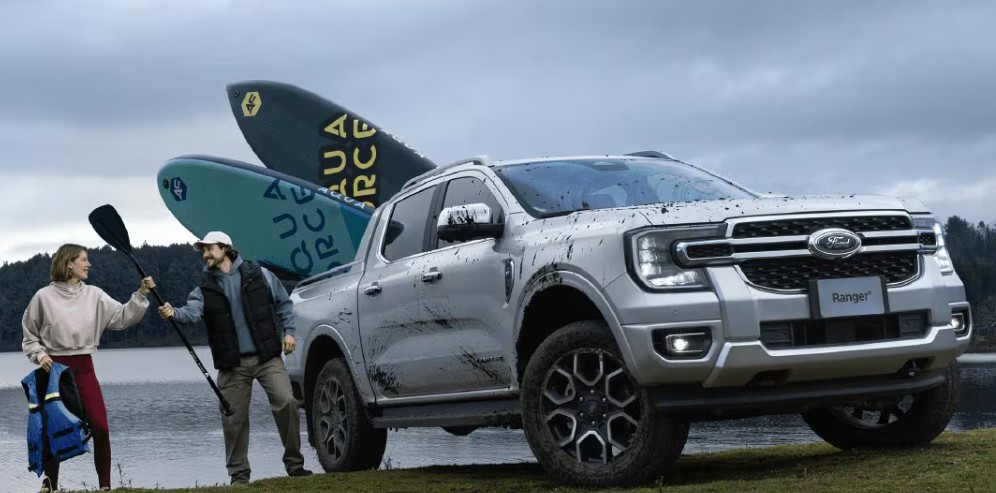
The Ford Ranger kerb weight is not one fixed number. It changes with the model year, cab style, engine, drivetrain, trim level, factory options, and whether the vehicle is a pickup or cab-chassis version.
As a broad guide, many recent Ford Ranger models have a kerb weight of roughly 2,000 to 2,500 kg. However, lighter work-focused variants may sit below that range, while heavily equipped Ranger Raptor, plug-in hybrid, and Super Duty configurations can be considerably heavier.
Why should we care about a few hundred kilograms? Because kerb weight affects almost everything a Ranger does: payload, towing calculations, fuel use, braking, tyre loads, off-road behaviour, vehicle shipping, and even the accessories we can legally install.
A Ranger may look as though it can carry half the workshop and tow a house at the same time. Yet every passenger, toolbox, bull bar, canopy and tow-ball load eats into its permitted capacity. Weight limits work like a bank account—every addition is a withdrawal.
This guide explains what Ford Ranger kerb weight means, why figures vary, how it relates to gross vehicle mass and payload, and how to calculate the realistic working weight of a specific truck.
Content in this publication
- What Is the Ford Ranger Kerb Weight?
- Ford Ranger Kerb Weight at a Glance
- Why Ford Ranger Kerb Weight Varies
- Ford Ranger Kerb Weight by Generation
- Ford Ranger Raptor Kerb Weight
- Ford Ranger PHEV Kerb Weight
- Ford Ranger Super Duty Kerb Weight
- Kerb Weight Versus Tare Weight
- Kerb Weight Versus Gross Vehicle Mass
- Kerb Weight Versus Gross Combined Mass
- How Accessories Change Ford Ranger Kerb Weight
- How Kerb Weight Affects Driving
- How to Find Your Exact Ford Ranger Kerb Weight
- How to Calculate the Ranger’s Real Payload
- Does a Heavier Ford Ranger Feel Safer?
- Can Suspension Upgrades Increase Payload?
- Common Ford Ranger Weight Mistakes
- Is a Lighter or Heavier Ranger Better?
- Ford Ranger Kerb Weight Buying Checklist
- Conclusion: Know the Ranger Behind the Number
- Frequently Asked Questions
What Is the Ford Ranger Kerb Weight?
Kerb weight is the weight of the vehicle when it is ready to drive but is not carrying passengers or cargo.
Ford Australia defines kerb weight as the vehicle with:
- A full tank of fuel
- All essential operating fluids
- Standard factory equipment
- No passengers
- No luggage or cargo
- No aftermarket accessories
Ford also distinguishes between minimum and maximum kerb weight. Minimum kerb weight represents a base vehicle without additional factory options, while maximum kerb weight accounts for the heaviest available combination of factory equipment.
That sounds simple, but specifications are not always presented identically in every country. Some European documents use a “mass in running order” figure that may include an assumed driver weight. We therefore need to check the definition beside the number rather than assuming every published figure was calculated in exactly the same way.
Does Kerb Weight Include Fuel?
Yes. Ford’s published kerb-weight definition normally includes a full fuel tank and the fluids required for normal operation.
That fuel makes a noticeable difference.
Diesel weighs approximately 0.83 to 0.85 kg per litre, depending on temperature and composition. A Ranger with an 80-litre tank can therefore carry close to 67 kg of diesel when full. The tank is not just a hollow space in the specification sheet—it becomes a substantial load when filled.
Does Kerb Weight Include the Driver?
Not always.
In markets where Ford describes the figure simply as kerb weight, the driver is generally excluded. In some European commercial-vehicle specifications, however, “kerb mass in running order” may include a 75 kg allowance for the driver. Ford UK specifically separates gross payload from net payload by accounting for this driver allowance.
This difference is one reason two websites can publish slightly different Ranger weights without either figure necessarily being wrong.
Does Kerb Weight Include Accessories?
Standard factory equipment is included, but aftermarket equipment usually is not.
Accessories that can increase the Ranger’s real weight include:
- Bull bars
- Winches
- Canopies
- Tow bars
- Roof racks
- Drawer systems
- Steel trays
- Underbody protection
- Auxiliary batteries
- Long-range fuel tanks
- Driving lights
- Larger wheels and tyres
- Suspension components
- Camping equipment
Some factory-fitted options may be reflected in a maximum kerb-weight figure. Dealer-installed and aftermarket additions normally must be added separately.
Ford Ranger Kerb Weight at a Glance
For modern global-market Rangers, a practical general range is approximately:
| Ford Ranger type | Approximate kerb-weight range |
|---|---|
| Basic 4x2 work model | 1,900–2,150 kg |
| 4x4 cab-chassis | 2,000–2,300 kg before some body installations |
| Double-cab pickup | 2,100–2,400 kg |
| V6 diesel model | 2,250–2,450 kg |
| Ranger Raptor | Around 2,400–2,500 kg |
| Ranger plug-in hybrid | Commonly heavier than equivalent diesel models |
| Ranger Super Duty | Depends heavily on cab and body configuration |
These are general comparison ranges, not compliance figures. Ford’s own Australian towing data has listed kerb weights from approximately 2,129 kg to 2,475 kg across selected Ranger variants, demonstrating just how much the number can vary within one model family.
The correct weight for a particular vehicle must come from its official specification, compliance information, documentation or an actual weighbridge measurement.
Why Ford Ranger Kerb Weight Varies
We cannot ask, “How much does a Ford Ranger weigh?” and expect one perfect answer. That is a little like asking how heavy a suitcase is without knowing what has been packed inside.
Several major factors change the result.
Cab Configuration
The Ranger has been offered in several body configurations, depending on the country and model year:
- Single Cab
- Super Cab
- Double Cab
- Cab-chassis
- Pickup
- Special heavy-duty configurations
A Single Cab normally uses less body structure, glass, seating and interior equipment than a Double Cab. The Double Cab gives us a more practical passenger area, but those extra doors and seats do not float weightlessly into existence.
Single Cab Ranger Weight
Single Cab models are frequently among the lightest Rangers in a range. Their lower base weight can also help produce a larger theoretical payload when compared with heavier lifestyle variants sharing a similar gross vehicle mass.
However, a Single Cab cab-chassis may need a tray or specialised body. The published minimum kerb weight may exclude that structure, especially in heavy-duty applications.
Ford notes, for example, that the minimum kerb weight of certain Australian Ranger Super Duty cab-chassis models excludes the tray.
Super Cab Ranger Weight
The Super Cab sits between the Single Cab and Double Cab. It offers additional interior space while generally remaining lighter than an equivalent full Double Cab.
Its actual advantage depends on engine, drivetrain and equipment. A luxurious Super Cab with a large engine may still outweigh a basic Double Cab work truck.
Double Cab Ranger Weight
Double Cab models tend to be heavier because they include:
- Four full doors
- A larger cabin
- Rear seating
- More glass
- Additional trim
- More safety equipment
- Frequently higher equipment levels
The Double Cab is also where many buyers add canopies, drawer systems, fridge slides and touring accessories. Its official kerb weight may be manageable, but its real travelling weight can climb like a hiker on a steep trail.
Pickup Versus Cab-Chassis
A Ranger pickup leaves the factory with a complete load box. A cab-chassis model is designed to receive a tray, service body, camper structure or other specialised rear body.
This creates an important trap.
The specification may show an attractive minimum kerb weight for the cab-chassis, but that number might not include the tray or body that will ultimately be fitted. Once we add a steel tray, toolboxes, ladder racks and work equipment, the vehicle can gain several hundred kilograms.
When comparing payloads, we must compare complete vehicles rather than a finished pickup against an incomplete cab-chassis.
Two-Wheel Drive Versus Four-Wheel Drive
Four-wheel-drive Rangers generally weigh more than equivalent 4x2 versions.
A 4x4 system may add:
- A transfer case
- Front differential hardware
- Front driveshafts
- Additional protection
- More complex suspension components
- Drive-mode equipment
The added hardware improves traction and off-road ability, but it also reduces the remaining weight available for passengers and equipment when gross vehicle mass stays the same.
Engine Choice
Engine weight can move the scale in either direction.
Modern Ranger ranges have included:
- Four-cylinder turbo-diesel engines
- Bi-turbo diesel engines
- V6 turbo-diesel engines
- Four-cylinder petrol engines
- Twin-turbo petrol V6 engines
- Plug-in hybrid powertrains
A V6 engine is normally heavier than a four-cylinder engine. It may also require different cooling, transmission and driveline components.
The plug-in hybrid adds an electric motor, high-voltage battery and associated electronics. Ford UK confirms that the Ranger PHEV has a higher gross vehicle mass than the conventional internal-combustion Ranger, reflecting its greater kerb mass.
Trim Level
An XL and a Wildtrak may share the Ranger badge, but they do not carry identical equipment.
Higher trims may add:
- Larger alloy wheels
- Electric seats
- Premium audio
- Additional sound insulation
- Side steps
- Sports bars
- Power-operated accessories
- Larger displays
- Driver-assistance hardware
- Protective exterior parts
- More elaborate interior trim
Each item appears small in isolation. Together, they can turn into the automotive equivalent of filling every pocket with stones.
Factory Options
A sunroof, larger wheels, towing package, premium seating or special rack system can change the final kerb weight.
That is why Ford often provides minimum and maximum values or warns that published figures refer to a standard vehicle. The exact build matters.
Ford Ranger Kerb Weight by Generation
The Ranger name has covered multiple generations, markets and engineering platforms. We should avoid applying the weight of a current Australian Double Cab to an older North American compact Ranger—or vice versa.
Older Compact Ford Rangers
Older Rangers, particularly compact North American models, were often much lighter than today’s global mid-size trucks.
Depending on cab style, engine and drivetrain, some older models had curb weights around 1,300 to 1,800 kg. They were smaller, simpler and carried less technology.
Comparing one with a current Ranger Raptor is like comparing a hiking boot with a steel-toe work boot. They serve related purposes, but their construction and mass are worlds apart.
First-Generation Global T6 Ranger
The global T6 Ranger introduced for the 2010s was larger and more substantial than many earlier Rangers.
Official New Zealand specifications for certain 2019 models listed total kerb weights beginning at 1,717 kg and extending beyond 1,900 kg, with heavier variants sitting higher still. Ford also warned that optional equipment had to be considered when calculating the final kerb weight.
A later 4x4 Double Cab, especially in Wildtrak or Raptor form, can exceed 2,200 kg.
Next-Generation Ford Ranger
The current global Ranger introduced greater structural strength, wider tracks, more technology, larger engines and higher trim complexity.
Ford Australia’s published towing guide has included kerb-weight examples such as:
- 2,129 kg
- 2,183 kg
- 2,189 kg
- 2,271 kg
- 2,288 kg
- 2,346 kg
- 2,399 kg
- 2,475 kg
These figures do not all describe the same body or trim, but that is exactly the point: the current Ranger range covers a broad spread of weights.
Ford Ranger Raptor Kerb Weight
The Ranger Raptor is normally among the heaviest members of the regular Ranger family.
Its weight reflects the presence of:
- A high-output engine
- Reinforced chassis components
- Specialised off-road suspension
- Large all-terrain tyres
- Wider bodywork
- Heavy-duty underbody protection
- Performance seats and interior features
- Additional cooling equipment
- Full-time four-wheel-drive hardware on relevant models
Ford Australia has published a Ranger Raptor kerb-weight figure of 2,475 kg in its towing information.
That does not mean every Raptor in every market or model year weighs exactly 2,475 kg. The figure must be matched with the correct specification, engine and production period.
Why the Raptor Has a Lower Payload
A heavier kerb weight leaves less room between the empty vehicle and its gross vehicle mass.
Consider this simplified calculation:
GVM – kerb weight = theoretical payload
If a Ranger has:
- GVM: 3,130 kg
- Kerb weight: 2,475 kg
Its theoretical payload would be:
3,130 – 2,475 = 655 kg
That 655 kg must potentially accommodate passengers, cargo, aftermarket equipment and tow-ball download.
Four adults, a full camping setup and a trailer on the hitch can consume that allowance surprisingly quickly.
Ford Ranger PHEV Kerb Weight
The Ranger plug-in hybrid is heavier than an otherwise comparable combustion-only Ranger because it combines two propulsion systems.
It carries:
- A petrol engine
- An electric motor
- A high-voltage battery
- Power electronics
- Charging hardware
- Additional cabling
- Hybrid cooling equipment
Ford compensates partly by giving the European Ranger PHEV a 3,500 kg GVM, compared with 3,350 kg for the internal-combustion Ranger cited by Ford UK.
The New Zealand Ranger Hybrid is advertised with up to 973 kg of payload and up to 3,500 kg of braked towing capacity, although exact capability remains variant-dependent.
The lesson is simple: electrification adds mass, but manufacturers may revise the permitted gross weight so the truck retains practical carrying ability.
Ford Ranger Super Duty Kerb Weight
The Ranger Super Duty is engineered for heavier commercial work and needs to be treated separately from a conventional Ranger.
Ford Australia describes it with an 8,000 kg gross combined mass in relevant configurations and upgraded axle capacities. The platform is intended for applications such as farming, emergency services, remote-area operations and heavy equipment transport.
Its published weight figures require careful reading because a cab-chassis model may be listed without a tray.
Minimum Versus Maximum Super Duty Weight
Ford explains that minimum kerb weight may represent the lightest orderable factory configuration and can exclude the tray. Maximum kerb weight may include the heaviest combination of factory-fitted options.
For a realistic working calculation, we would need to include:
- Base cab-chassis weight
- Tray or service-body weight
- Bull bar and winch
- Fuel and water storage
- Tools and recovery equipment
- Occupants
- Cargo
- Tow-ball download
Skipping the tray weight is like weighing ourselves without the backpack and then claiming the backpack contains nothing.
Kerb Weight Versus Tare Weight
Kerb weight and tare weight are sometimes treated as interchangeable, but Ford documentation can list them separately.
In Australian use, tare mass often represents the unladen vehicle with a limited quantity of fuel, while kerb weight may assume a full fuel tank. Definitions can vary by regulation and publication.
Ford’s Australian towing tables have shown both tare weight and kerb weight, with kerb weight commonly 64 kg higher in several examples.
That gap is consistent with the mass of additional fuel.
Never combine a tare figure from one document with a payload calculation designed for kerb weight unless the definitions are confirmed.
Kerb Weight Versus Gross Vehicle Mass
Gross vehicle mass, commonly abbreviated to GVM, is the maximum permitted weight of the fully loaded vehicle.
It includes:
- Kerb weight
- Driver
- Passengers
- Cargo
- Accessories
- Tray or body additions
- Tow-ball download
- Equipment carried on the roof or in the tub
Ford explains that GVM is effectively the kerb mass plus accessories and payload, including tow-ball download when towing.
The Basic Payload Formula
The simplest payload calculation is:
Payload = GVM – kerb weight
Suppose a Ranger has:
- Kerb weight: 2,250 kg
- GVM: 3,350 kg
Then:
3,350 – 2,250 = 1,100 kg
At first glance, 1,100 kg sounds enormous. But let us add a realistic touring setup:
| Added item | Example weight |
| Driver and passenger | 160 kg |
| Two rear passengers | 120 kg |
| Bull bar | 70 kg |
| Winch | 30 kg |
| Canopy | 90 kg |
| Drawer system | 70 kg |
| Fridge and battery | 60 kg |
| Camping gear | 120 kg |
| Tow-ball download | 300 kg |
| Total added weight | 1,020 kg |
Only 80 kg remains in this example. Add a roof tent, water container or heavier passengers and the Ranger could exceed its GVM.
Kerb Weight Versus Gross Combined Mass
Gross combined mass, or GCM, is the maximum permitted combined weight of the loaded Ranger and the loaded trailer.
A simplified relationship is:
Actual vehicle weight + actual trailer weight must not exceed GCM
The Ranger may advertise a 3,500 kg braked towing capacity, but that does not always mean we can load the vehicle to its GVM and attach a trailer weighing the full 3,500 kg simultaneously.
Ford warns that cargo may need to be restricted to remain within GVM and GCM limits.
Why Maximum Towing and Maximum Payload May Conflict
Imagine a Ranger with:
- GVM: 3,350 kg
- GCM: 6,400 kg
- Maximum braked towing capacity: 3,500 kg
If the trailer actually weighs 3,500 kg, the Ranger may be limited to:
6,400 – 3,500 = 2,900 kg
If the Ranger’s kerb weight is 2,250 kg, only 650 kg remains for passengers, accessories, cargo and the trailer’s tow-ball download.
The truck can still tow 3,500 kg, but not necessarily while carrying its maximum advertised payload.
How Accessories Change Ford Ranger Kerb Weight
The brochure figure describes the starting point. The real truck in the driveway may be much heavier.
Common Accessory Weight Estimates
| Accessory | Typical added weight |
| Aluminium bull bar | 35–60 kg |
| Steel bull bar | 60–90 kg |
| Electric winch | 25–40 kg |
| Steel underbody protection | 25–60 kg |
| Tow bar | 25–45 kg |
| Canopy | 60–120 kg |
| Drawer system | 50–100 kg |
| Roof platform | 20–40 kg |
| Roof tent | 50–90 kg |
| Auxiliary battery system | 25–60 kg |
| Long-range fuel tank and extra fuel | 60–150 kg |
| Steel tray | 250–450 kg, depending on design |
These are broad examples. Actual products vary substantially.
Front-Axle Loading Matters Too
Adding 100 kg does not affect only the total weight. Its location matters.
A bull bar and winch place their mass near or ahead of the front axle. A heavy canopy and rear drawer system load the rear axle. A roof tent raises the centre of gravity.
A Ranger can remain below its GVM while exceeding an individual axle rating. That is why total vehicle weight alone does not tell the whole story.
How Kerb Weight Affects Driving
Weight changes the way a Ranger feels and behaves.
Acceleration
A heavier truck needs more energy to accelerate. A powerful V6 can disguise the mass, but it cannot repeal physics.
Braking Distance
Additional weight can increase braking distance and brake temperature, particularly on long descents or while towing.
Fuel Consumption
Moving more mass generally requires more fuel, especially in urban driving where the vehicle repeatedly accelerates from rest.
Aerodynamic accessories, off-road tyres and roof loads may worsen consumption further.
Handling
A heavily loaded Ranger may:
- Lean more in corners
- React more slowly
- Feel less stable during sudden manoeuvres
- Place greater demands on tyres
- Become sensitive to poor load distribution
Off-Road Performance
Extra weight can improve traction in certain situations, but it also makes the truck more likely to sink into sand or mud.
A heavier Ranger carries more momentum downhill, stresses recovery points more severely and may require lower tyre pressures to maintain flotation.
The difference between a lightly loaded Ranger and an expedition build can feel like the difference between running in trainers and running with a refrigerator strapped to our back.
How to Find Your Exact Ford Ranger Kerb Weight
Internet tables are useful for initial research, but they should not be the final authority for legal loading.
Check the Official Specification
Use the brochure or specification document for the correct:
- Country
- Model year
- Engine
- Cab type
- Drivetrain
- Trim
- Body configuration
Ford Australia and Ford New Zealand both provide model-comparison and specification resources, but the available combinations change over time.
Read the Vehicle Identification Plates
Check the labels or plates in the driver’s door opening, B-pillar or engine bay.
Depending on the market, these may show:
- GVM
- Front axle limit
- Rear axle limit
- Gross combined limit
- Tyre and loading information
Ford UK advises owners to find vehicle-specific payload information on the tyre and loading label on the driver-side B-pillar or door edge.
Review Registration Documents
Registration or approval documents may list tare, mass in service or another official weight category.
Confirm which definition is used. “Tare,” “kerb mass” and “mass in running order” are not automatically identical.
Use a Public Weighbridge
A weighbridge provides the most realistic answer after accessories have been installed.
For the best information, measure:
- Total vehicle mass
- Front axle mass
- Rear axle mass
- Vehicle mass with the trailer attached
- Trailer axle mass separately, where possible
Weigh the Ranger as it normally travels—with occupants, tools, water, fuel and equipment.
An empty weighbridge test before a holiday can be misleading if the vehicle later gains four passengers, a fridge, luggage and 250 kg of tow-ball download.
How to Calculate the Ranger’s Real Payload
Use this practical process.
Step 1: Confirm the GVM
Find the manufacturer-approved GVM for the exact vehicle.
Step 2: Weigh the Ranger
Measure the truck with its permanent accessories, a full tank and normal equipment.
Step 3: Subtract Actual Weight from GVM
For example:
- GVM: 3,350 kg
- Actual ready-to-travel weight without occupants: 2,620 kg
Remaining capacity:
3,350 – 2,620 = 730 kg
Step 4: Add People and Cargo
Suppose we add:
- Occupants: 240 kg
- Luggage: 100 kg
- Camping gear: 80 kg
- Tow-ball download: 250 kg
Total added load:
240 + 100 + 80 + 250 = 670 kg
Remaining margin:
730 – 670 = 60 kg
That is legal on the basic GVM calculation, but we still need to check axle ratings and GCM.
Step 5: Leave a Safety Margin
Loading exactly to the last kilogram is unwise.
Scales vary. Fuel, food, mud, water and last-minute luggage can increase the final mass. A reasonable margin gives us breathing room.
Does a Heavier Ford Ranger Feel Safer?
Not automatically.
A heavier truck can feel planted on a motorway, but mass also increases braking energy and can make emergency direction changes harder.
Safety depends on:
- Correct loading
- Proper tyre pressures
- Healthy brakes
- Suitable suspension
- Balanced axle loads
- Trailer setup
- Driver behaviour
- Compliance with all weight ratings
Weight can provide stability, but excessive or poorly distributed weight becomes a liability.
Can Suspension Upgrades Increase Payload?
Stronger springs can improve ride height and reduce sag, but they do not automatically increase the legal GVM.
A suspension upgrade may help the Ranger carry an existing legal load more comfortably. It does not, by itself, alter:
- Manufacturer GVM
- Axle ratings
- GCM
- Braking limits
- Registration approval
A legal GVM upgrade normally requires an approved engineering package and compliance with local regulations. Rules differ by country and jurisdiction.
We should never assume that because the rear suspension looks level, the vehicle is legally or mechanically within its limits.
Common Ford Ranger Weight Mistakes
Using the Lightest Online Figure
The lightest listed Ranger may be a basic 4x2 Single Cab, not a V6 Double Cab Wildtrak.
Ignoring the Tray
A cab-chassis figure may exclude the fitted tray or service body.
Forgetting Tow-Ball Download
Tow-ball download forms part of the load carried by the Ranger and contributes to GVM and rear-axle loading.
Treating Payload as Tub Capacity
Payload includes people, accessories and cargo throughout the vehicle—not only material placed in the bed.
Assuming a 3,500 kg Trailer Is Always Permitted
Maximum trailer capacity may require reduced vehicle loading to remain under GCM.
Ignoring Axle Limits
A truck can pass the total-weight test while failing the rear-axle test.
Trusting the Brochure After Modifications
The brochure did not know we would install a steel tray, bull bar, winch, canopy and two batteries.
Is a Lighter or Heavier Ranger Better?
Neither is universally better.
A lighter Ranger may offer:
- More potential payload
- Better fuel efficiency
- Easier handling
- Less stress on tyres and brakes
- Better flotation on sand
A heavier Ranger may provide:
- More equipment
- Greater structural reinforcement
- More powerful driveline components
- Better protection
- Increased comfort
- Specialised off-road hardware
The ideal vehicle is not simply the lightest one. It is the model that delivers the equipment we need while preserving enough legal capacity for how we actually use it.
Ford Ranger Kerb Weight Buying Checklist
Before choosing a Ranger, ask:
- What is the exact kerb weight of this variant?
- Does the figure include a tray?
- What is its GVM?
- What payload remains?
- What are the front and rear axle ratings?
- What is the GCM?
- How much will our accessories weigh?
- What tow-ball download do we expect?
- How many people will regularly travel in it?
- Can the completed vehicle be weighed before delivery?
This checklist matters especially for buyers planning:
- Caravan towing
- Commercial tool storage
- Slide-on campers
- Remote-area touring
- Emergency-service conversions
- Farm bodies
- Long-range tanks
- Heavy canopies
Conclusion: Know the Ranger Behind the Number
The Ford Ranger kerb weight generally ranges from roughly 2,000 to 2,500 kg for many modern configurations, but that broad estimate should never replace the specification for an exact vehicle.
Cab style, engine, four-wheel-drive equipment, trim level, factory options, hybrid components and aftermarket accessories can all change the final mass. Cab-chassis models require extra attention because their published figures may not include the tray or specialised body.
More importantly, kerb weight is only the beginning. We must compare it with GVM, axle ratings, GCM, actual payload and trailer download. The shiny towing number in the brochure tells only one chapter of the story.
The smartest approach is straightforward: verify the official figures, record the weight of every major accessory and put the completed vehicle on a weighbridge. Once we know the real numbers, we can load and tow with confidence rather than guesswork.
Frequently Asked Questions
1. What is the average Ford Ranger kerb weight?
Many recent Ford Ranger variants weigh approximately 2,000 to 2,500 kg at the kerb. Basic 4x2 work models may be lighter, while Raptor, V6, hybrid and heavily equipped versions are generally heavier.
2. What is the Ford Ranger Raptor kerb weight?
Ford Australia has published a kerb weight of approximately 2,475 kg for a current-generation Ranger Raptor in its towing guide. The precise figure can vary by market, production year and specification.
3. Does Ford Ranger kerb weight include a full tank?
Ford generally defines kerb weight as including a full tank of fuel, essential fluids and standard equipment, but excluding passengers, cargo and aftermarket accessories.
4. How does kerb weight affect Ranger payload?
A higher kerb weight normally reduces payload when GVM remains unchanged. Payload is broadly calculated by subtracting kerb weight from gross vehicle mass, although accessories, passengers, tow-ball load and axle limits must also be considered.
5. Where can I find my Ranger’s exact weight?
Check the official model specification, compliance or identification labels, registration documents and owner information. For the most accurate real-world measurement, weigh the completed vehicle at a certified public weighbridge.
If you want to know other articles similar to Ford Ranger Kerb Weight: Complete Model and Load Guide you can visit the category Service and Parts.
BYD Shark 6 Weight: Kerb Weight, Payload, GVM and What It Means
BYD Shark 6 Towing Capacity: Complete Towing Guide
Peugeot RCZ Engine Swap: Options, Costs, Compatibility, and What You Need to Know
Mitsubishi Pajero Sport Engine Size: Complete Engine Guide
Mitsubishi Pajero Sport Weight: Kerb Weight, GVM, Payload and What It Really Means
Mitsubishi Pajero Sport Service Reset: Complete Step-by-Step Guide
Leave a Reply
More content of your interest