
Nissan Note vs Nissan Kicks: Which One Should We Buy?

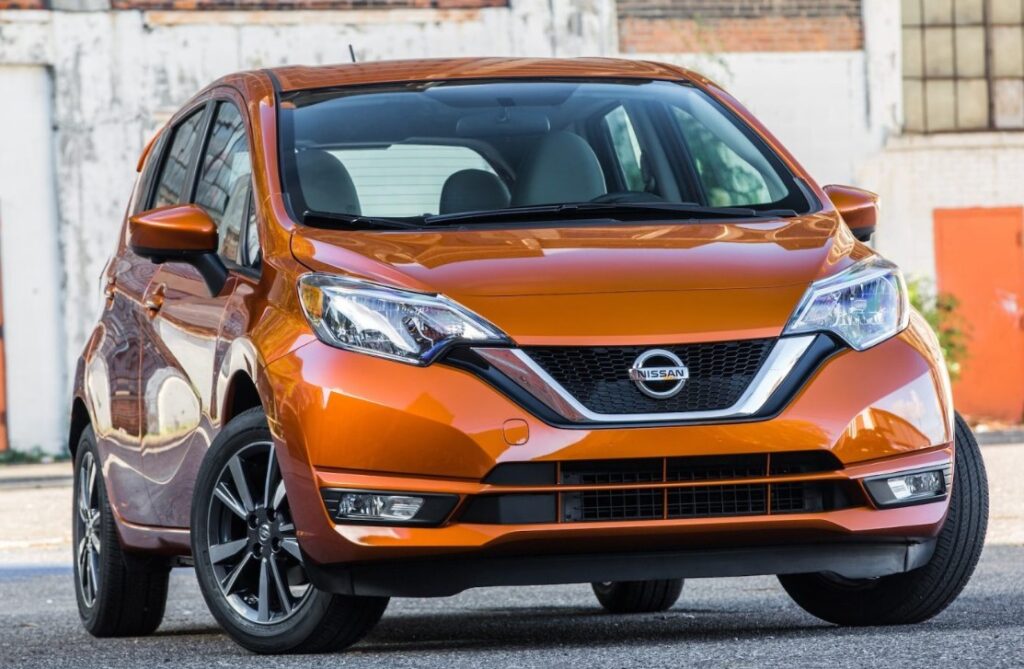
Choosing between the Nissan Note and Nissan Kicks can feel like deciding between a clever city apartment and a compact suburban house. Both give us practical space, manageable running costs, and the familiar Nissan badge, but they approach everyday driving from noticeably different angles.
The Nissan Note is primarily a compact hatchback. In its latest Japanese-market form, it focuses heavily on efficiency, easy urban driving, and Nissan’s e-POWER system. The Kicks, meanwhile, is a small crossover with a taller body, a more commanding seating position, and stronger visual road presence. Depending on the market and model year, the Kicks may use a conventional petrol engine or Nissan’s e-POWER technology.
That regional variation matters. The current Note is mainly sold in Japan and reaches many other countries as a used import. The Kicks is available across a broader selection of markets, but its engines, dimensions, equipment, and even body generation differ by country. For example, the newer North American Kicks uses a 2.0-liter petrol engine, while Kicks models sold in some Asian markets use e-POWER.
So, rather than pretending there is one universal specification sheet, we will compare the personalities, strengths, weaknesses, and typical ownership experience of both vehicles. Let’s find out whether the low-slung Note or SUV-inspired Kicks deserves a place in our driveway.
Content in this publication
- Nissan Note vs Nissan Kicks at a Glance
- Understanding the Main Difference
- Exterior Design and Road Presence
- Dimensions and Urban Maneuverability
- Interior Space and Passenger Comfort
- Boot Space and Cargo Practicality
- Powertrain Differences
- Performance and Acceleration
- Fuel Economy and Running Costs
- Ride Comfort
- Handling and Driving Enjoyment
- Ground Clearance and Rough-Road Ability
- Technology and Infotainment
- Safety and Driver Assistance
- Reliability and Mechanical Complexity
- Maintenance and Parts Availability
- Nissan Note vs Nissan Kicks for Families
- Nissan Note vs Nissan Kicks for Commuting
- Nissan Note vs Nissan Kicks for Road Trips
- Price and Value for Money
- Resale Value
- Advantages of the Nissan Note
- Disadvantages of the Nissan Note
- Advantages of the Nissan Kicks
- Disadvantages of the Nissan Kicks
- Who Should Buy the Nissan Note?
- Who Should Buy the Nissan Kicks?
- Final Verdict: Nissan Note or Nissan Kicks?
- Frequently Asked Questions
Nissan Note vs Nissan Kicks at a Glance
Here is the basic difference:
| Category | Nissan Note | Nissan Kicks |
|---|---|---|
| Vehicle type | Compact hatchback | Subcompact crossover |
| Best environment | Cities and congested roads | Mixed urban and highway driving |
| Driving position | Lower, car-like | Higher, SUV-like |
| Typical powertrain | e-POWER hybrid | Petrol or e-POWER, depending on market |
| Parking ease | Excellent | Good |
| Cargo practicality | Clever but compact | Generally larger and more versatile |
| Fuel-saving potential | Usually stronger | Depends heavily on version |
| Road presence | Subtle and modern | Bolder and more rugged-looking |
| Typical buyer | Commuter or small household | Small family or lifestyle buyer |
| Used-import availability | Common in several countries | Varies by region |
The simple answer is that the Note makes more sense when efficiency, agility, and urban convenience sit at the top of our list. The Kicks is usually the more suitable option when we value ride height, luggage capacity, visual presence, and crossover versatility.
Understanding the Main Difference
Although these vehicles overlap in price and passenger capacity in some used-car markets, they are not identical products wearing different clothes.
The Note is designed like a conventional supermini or compact hatchback. Its relatively low roofline and compact footprint help it squeeze through dense traffic and fit into small parking spaces. It feels like a vehicle created by engineers who understand narrow streets, crowded shopping areas, and stop-start commuting.
The Kicks takes that basic practicality and raises it—literally. It sits higher, looks wider and tougher, and gives us a clearer view over surrounding traffic. It is still far smaller and easier to handle than a large SUV, but it offers some of the posture and practicality buyers associate with crossovers.
A Hatchback Versus a Crossover
The body style influences nearly everything.
A hatchback such as the Note usually delivers:
- Lower weight
- Easier maneuverability
- Better aerodynamic efficiency
- A more car-like driving experience
- Lower fuel consumption in comparable conditions
A crossover such as the Kicks generally offers:
- A higher seating position
- Easier entry and exit
- More ground clearance
- A larger-looking cabin
- Greater cargo flexibility
- Stronger SUV-style road presence
Neither formula is automatically better. The question is whether we want a nimble city companion or a small crossover that feels more substantial.
Exterior Design and Road Presence
The Nissan Note has evolved considerably from the softly rounded early generations. The latest model presents a sharper, cleaner shape with slim lighting, a distinctive grille treatment, and smoother body surfaces. It looks modern without shouting for attention.
That restraint will appeal to buyers who prefer an understated car. The Note blends naturally into city traffic. It does not try to imitate an off-roader, and it does not wear oversized styling elements simply for decoration.
The Kicks is more expressive. Depending on the generation, it may feature a broad grille, pronounced wheel arches, contrasting roof options, chunky body cladding, and an upright front end. It wants to look adventurous even when its daily mission involves supermarkets, offices, and school runs.
Which One Looks More Expensive?
The answer depends on trim level.
A well-equipped Note with LED lighting and attractive alloy wheels can look sophisticated, especially in newer e-POWER form. However, its compact hatchback proportions may still appear modest beside the taller Kicks.
The Kicks often creates a stronger first impression. Height and width naturally give it more visual authority. Park the two side by side, and the Kicks can look like the more expensive vehicle even when their actual market prices are close.
Our Design Verdict
We would choose the Note for elegance and simplicity. We would pick the Kicks for presence and personality.
Dimensions and Urban Maneuverability
The Note’s smaller footprint is one of its greatest strengths. Exact measurements depend on generation, but the modern Japanese Note remains a compact vehicle designed around urban usability. Earlier Note models were also notably short and narrow by modern crossover standards.
The Kicks is longer, wider, and usually taller. The newest North American version is particularly more substantial than earlier Kicks models. That increase creates additional cabin and cargo space, but it also makes the vehicle less effortless in tight streets.
For daily driving in older city centers, apartment garages, or narrow parking bays, the Note feels like the easier tool. It turns into spaces with less drama and requires less mental calculation when passing parked vehicles.
The Kicks is hardly enormous, though. It remains a subcompact crossover and is much easier to place than midsize SUVs. We simply notice more vehicle around us.
Which Is Easier to Park?
The Nissan Note wins.
Its shorter body, lower mass, and compact proportions make parallel parking and tight garage maneuvers simpler. Many versions also include parking sensors, surround-view cameras, or Nissan’s Around View Monitor, although equipment varies.
The Kicks may offer equally useful camera technology, but its physical size cannot disappear. Sensors help; compact dimensions help more.
Interior Space and Passenger Comfort
This is where the comparison becomes more interesting.
The Note is small outside but impressively intelligent inside. Nissan has historically packaged the Note to maximize passenger room, particularly in the rear. Its boxy hatchback foundations allow it to deliver respectable headroom and legroom without occupying much road space.
The Kicks benefits from greater width and height. Passengers usually feel less enclosed, and the taller doors make entry easier. Parents helping children into car seats may especially appreciate the additional height because they do not need to bend as deeply.
Front-Seat Experience
In the Note, the driver sits in a conventional car-like position. The controls are close, visibility is generally good, and the cabin feels efficient rather than expansive.
The Kicks positions us higher. That can improve confidence in traffic because we can see farther ahead. It also makes getting in and out easier for taller occupants or people with limited mobility.
Front-seat comfort depends heavily on trim, seat design, and market specification. However, the Kicks usually feels airier, while the Note feels more compact and focused.
Rear-Seat Accommodation
The Note can surprise us here. It often provides more rear legroom than its exterior dimensions suggest. For two adults, short and medium trips should be comfortable. Three adults across the rear bench will feel crowded, as they would in most vehicles of this size.
The Kicks generally has the advantage in shoulder room and perceived space. Its taller roof also helps rear passengers feel less boxed in. Families carrying growing children will probably find it more suitable over the long term.
Which Is Better for Five People?
The Kicks is the stronger choice, but neither vehicle is ideal for five large adults on long journeys.
For occasional five-person travel, both can work. For regular family use, the extra width and crossover proportions of the Kicks make life easier.
Boot Space and Cargo Practicality
Boot space can change the entire ownership experience. A vehicle may feel perfect during a ten-minute test drive but become frustrating the first time we load luggage, a stroller, sports equipment, or a large grocery order.
The Note provides a practical hatchback opening and folding rear seats. Its cargo area is useful for daily shopping and small-family duties, but it remains a compact car. Some versions also have a raised load floor or powertrain components that influence usable space.
The Kicks is generally the superior cargo carrier. The current North American model offers up to approximately 30 cubic feet behind the rear seats in certain front-wheel-drive configurations and as much as 60 cubic feet with the rear seats folded. All-wheel-drive versions sacrifice some cargo volume because of their additional hardware.
Which One Is Better for Luggage?
The Kicks wins for most buyers.
Its wider opening and larger cargo area make it easier to carry suitcases, folding bicycles, camping supplies, or bulky household purchases. The difference becomes especially noticeable when the rear seats are folded.
The Note remains perfectly capable for ordinary errands, but we will need to pack more thoughtfully. It is a neat suitcase; the Kicks is a larger travel bag.
Powertrain Differences
We need to tread carefully here because powertrain availability changes by country.
The modern Nissan Note is strongly associated with e-POWER. Nissan’s e-POWER system is a series-hybrid arrangement in which the wheels are driven exclusively by an electric motor. The petrol engine generates electricity rather than directly driving the wheels in normal operation. This creates an EV-like response without requiring external charging.
The Kicks is more complicated. In countries such as the United States, the current Kicks uses a conventional petrol engine. In certain Asian markets, however, the Kicks is sold with e-POWER.
This means a Nissan Note e-POWER versus Nissan Kicks petrol comparison is fundamentally different from a Note e-POWER versus Kicks e-POWER comparison.
Nissan Note e-POWER
The Note e-POWER typically delivers its strongest qualities in stop-start driving:
- Immediate electric-motor response
- Smooth initial acceleration
- No need to plug in
- Efficient urban operation
- Strong regenerative braking
- A quieter feel at low speeds
The petrol engine still starts when electricity is needed, so this is not a pure electric car. Nevertheless, the motor-driven character makes it feel different from a traditional petrol hatchback.
Nissan launched the Note e-POWER in Japan in 2016 and later expanded the technology to vehicles including the Kicks.
Nissan Kicks Petrol
A conventional petrol Kicks feels more familiar. The latest North American version uses a 2.0-liter engine and is available with front-wheel drive or all-wheel drive, depending on specification.
This setup offers predictable operation and straightforward refueling. However, it does not provide the same instant electric response as e-POWER. Under hard acceleration, a continuously variable transmission may also allow engine revs to rise noticeably.
Nissan Kicks e-POWER
The Kicks e-POWER combines crossover packaging with motor-driven performance. Like the Note, it uses a petrol engine to generate electricity while an electric motor drives the wheels.
You may be interested in reading Nissan Note vs Note e-POWER: Which One Should We Buy?
Because the Kicks is usually larger and heavier, the same basic technology has more mass to move. It may not feel quite as light or efficient as the Note, but it can provide a pleasing balance of smooth acceleration and crossover practicality.
Performance and Acceleration
Neither vehicle is intended to be a hot hatch or performance SUV. Still, they do not feel identical.
The Note e-POWER usually feels lively in urban traffic. Electric motors deliver torque quickly, so the car responds promptly when moving away from traffic lights or entering a gap. The sensation can make it feel faster than its official output suggests.
The petrol Kicks may provide more total power in certain markets, but its greater size and conventional drivetrain can make the delivery feel less immediate. It gathers speed competently rather than leaping forward.
An e-POWER Kicks closes that gap. It provides the same basic motor-driven character as the Note, although vehicle weight and tuning affect the final experience.
Which Feels Faster Around Town?
The Note e-POWER often feels quicker and more alert.
Its lighter body and immediate motor response suit low-speed urban driving. It darts through traffic like a small fish changing direction in a stream.
At higher speeds, the Kicks may feel more settled and substantial, particularly newer versions with wider tracks and a larger footprint.
Fuel Economy and Running Costs
Fuel economy is one of the strongest reasons to consider the Note.
Current Japanese-market Note specifications list impressive official efficiency figures, although exact results vary by trim, drivetrain, test cycle, weather, speed, and driving style.
In real life, the Note e-POWER tends to perform particularly well in cities, where regenerative braking and electric-motor operation can work frequently. Highway efficiency may be less remarkable because the petrol engine must continue generating electricity during sustained higher-speed driving.
The Kicks’ fuel consumption varies dramatically by powertrain:
- A petrol Kicks will generally consume more fuel than a comparable Note e-POWER in heavy urban traffic.
- A Kicks e-POWER can be very efficient but still carries more size and weight.
- An all-wheel-drive Kicks may use more fuel than a front-wheel-drive version.
- Larger wheels and wider tires can also reduce efficiency.
Which Is Cheaper to Run?
The Note is likely to cost less in fuel, especially for urban commuters.
However, purchase price, insurance, import duties, battery condition, servicing, tire size, and local parts availability can outweigh small fuel savings. A cheap-to-fuel imported car is not automatically cheap to own if specialist components are difficult to source.
Ride Comfort
The Note’s ride is designed around compact-car priorities. It feels light and responsive, but rough roads can expose its shorter wheelbase, smaller body, and relatively simple suspension. Potholes may produce sharper movements, particularly on trims with larger wheels.
The Kicks generally feels more substantial. Its longer wheelbase and taller tires can help it absorb road imperfections more calmly. However, this is not guaranteed: sportier trims with large alloy wheels may ride more firmly than basic versions.
City Comfort
In smooth urban conditions, the Note feels quiet and easy. e-POWER versions can creep through traffic with minimal drama, although the petrol generator may become audible when battery demand increases.
The Kicks offers a better view and can deal more confidently with broken surfaces, speed humps, and steep driveways. In cities with poor road quality, that advantage may be more valuable than a small improvement in fuel economy.
Highway Comfort
The Kicks is usually the better highway companion.
Its larger body tends to feel more planted, and its cabin may provide better long-distance space. Wind and tire noise vary by version, but the crossover generally feels less like a city car being asked to stretch its legs.
The Note can travel on highways without difficulty, yet it feels more at home in urban and suburban environments.
Handling and Driving Enjoyment
The Note has the agility advantage. Its lower center of gravity, smaller body, and lighter feel make it easy to guide through corners and crowded roads. Steering is typically light, which benefits parking and low-speed driving.
The Kicks leans slightly more in bends because of its taller body. It is not clumsy, but we can feel that the design prioritizes visibility and practicality rather than sharp cornering.
Which One Is More Fun?
For nimble city driving, the Note.
For relaxed cruising and a sense of confidence, the Kicks.
Drivers who enjoy precise, compact cars may find the Note more engaging. Buyers who prefer a comfortable, elevated view may barely care that the Kicks is less eager to change direction.
Ground Clearance and Rough-Road Ability
The Kicks wins this category comfortably.
Its crossover body provides more clearance beneath the vehicle, reducing anxiety around potholes, rough tracks, deep gutters, and steep ramps. Some current Kicks versions also offer all-wheel drive, although availability is market-specific.
The Note is designed for paved roads. It can handle ordinary bumps and uneven surfaces, but its lower body requires more caution. Large potholes, unpaved rural roads, or aggressive driveway angles may expose its limitations.
Is the Kicks a True Off-Roader?
No.
Even when equipped with all-wheel drive, the Kicks remains a road-focused subcompact crossover. It is better suited to snow, wet roads, gravel lanes, and mildly challenging surfaces than serious trails.
Think of it as hiking shoes rather than mountaineering boots.
Technology and Infotainment
Equipment depends heavily on year, trim, and country, so we should never assume that two used examples have identical features.
Possible Note equipment includes:
- Digital instrument displays
- NissanConnect infotainment
- Smartphone integration
- Around View Monitor
- ProPILOT driver assistance
- Electronic parking brake
- One-pedal-style regenerative driving modes
- LED lighting
Possible Kicks equipment includes:
- Large touchscreen displays
- Apple CarPlay and Android Auto
- Digital gauges
- Wireless phone charging
- Premium audio
- Surround-view cameras
- Adaptive cruise control
- Blind-spot monitoring
- Rear cross-traffic alert
Higher-end Kicks versions may feel more visually impressive because the wider dashboard provides room for larger displays. The Note’s interface can feel more futuristic in e-POWER models, but imported vehicles may present a challenge if menus, navigation, or voice commands remain in Japanese.
Import Technology Warning
Before buying an imported Note, we should check:
- Whether the infotainment language can be changed
- Whether local radio frequencies work properly
- Whether navigation maps support our country
- Whether connected services remain functional
- Whether replacement cameras and sensors are locally available
A beautiful screen is less useful when half its features cannot communicate with us.
Safety and Driver Assistance
Both vehicles can offer extensive safety technology, but specification varies.
Recent examples may include autonomous emergency braking, lane-departure warning, blind-spot assistance, adaptive cruise control, parking cameras, and traffic-sign recognition.
The Kicks may have an advantage in perceived safety because it is larger and gives the driver a higher view. Yet perceived safety and measured crash protection are not the same thing.
We should compare crash-test results for the exact generation and market. Safety structures, airbag counts, and driver-assistance packages may differ across regions, even when vehicles share the same name.
Which Is Better for New Drivers?
The Note is easier to control and park, making it an excellent option for inexperienced drivers.
The Kicks offers better visibility and may feel more reassuring, but its larger dimensions require slightly more spatial awareness.
A Note with parking cameras and automatic emergency braking could be the ideal first-car package. A Kicks may be preferable for a nervous driver who gains confidence from sitting higher.
Reliability and Mechanical Complexity
Both vehicles can be reliable when maintained properly, but used-car condition matters far more than the badge on the tailgate.
The Note e-POWER uses a petrol engine, generator, inverter, high-voltage battery, electric motor, and electronic control systems. This sounds complicated—and it is—but the engine does not drive the wheels through a conventional stepped transmission.
The Kicks petrol uses a more traditional drivetrain, often paired with a continuously variable transmission. Buyers should examine service history carefully because neglected transmission fluid, overheating, or previous misuse can become expensive.
An e-POWER Kicks shares many of the Note’s hybrid considerations while adding crossover weight and, in some markets, different battery or motor configurations.
What Should We Inspect on a Used Note?
Check:
- High-voltage battery health
- 12-volt battery condition
- Warning lights
- Smooth generator operation
- Service history
- Accident repairs
- Suspension noise
- Imported infotainment functionality
- Availability of local diagnostic support
What Should We Inspect on a Used Kicks?
Check:
- CVT operation on petrol versions
- Engine noise and oil condition
- Suspension and wheel alignment
- Camera and sensor operation
- Air-conditioning performance
- Signs of flood or collision damage
- Tire wear
- Service records
- Recall completion by VIN
Nissan provides market-specific recall-checking resources, and imported Japanese vehicles may need to be checked through Nissan Japan’s VIN-based recall system.
Maintenance and Parts Availability
The Kicks has an important advantage in countries where it is officially sold: dealer support.
You may be interested in readingNissan Note vs Note e-POWER: Which One Should We Buy?You may be interested in reading
Nissan Note vs Nissan Micra: Which Small Nissan Wins?Local dealers are more likely to stock routine parts, understand diagnostic procedures, and provide compatible software updates. Body panels, sensors, lamps, filters, and suspension components may also be easier to obtain.
The Note can be inexpensive to maintain in countries with a large population of Japanese imports. Independent specialists often become familiar with common problems, and used parts may be plentiful.
In markets where the Note is rare, however, a small fault can become an international treasure hunt.
Which Has Lower Maintenance Risk?
Choose the model officially supported in our country.
A locally sold Kicks may be safer than an imported Note, even if the Note has a reputation for efficiency. Conversely, in countries where the Note is common and workshops understand e-POWER, ownership may be straightforward.
Nissan Note vs Nissan Kicks for Families
The Kicks is generally the better family vehicle.
Its higher roof makes child-seat installation easier, the larger cargo area accommodates strollers and bags, and the cabin provides more room for passengers to grow. It also feels more suitable for road trips.
The Note still works well for a small family living in a crowded city. Its rear doors, hatchback body, and efficient drivetrain make school runs painless. The problem appears when we combine people and luggage. Space disappears quickly.
Best Choice for a Family With One Child
Either vehicle can work.
The Note is ideal when parking and economy dominate. The Kicks is better when we regularly carry a stroller, travel luggage, or additional passengers.
Best Choice for a Family With Two Children
The Kicks.
We will appreciate its width, cargo room, and easier access every single day. Those small conveniences become enormous after the hundredth school run.
Nissan Note vs Nissan Kicks for Commuting
For commuting, the Note is difficult to beat.
It consumes little fuel, responds quickly in traffic, fits into small parking spaces, and often offers the soothing low-speed character of electric-motor drive. It turns a congested journey into something less exhausting.
The Kicks remains a good commuter, particularly when roads are rough or the journey includes faster highways. Its raised seating position can reduce stress in dense traffic, and its larger cabin provides more breathing room.
Our Commuter Verdict
Choose the Note for dense cities and short journeys.
Choose the Kicks for mixed routes, poor surfaces, or longer daily distances.
Nissan Note vs Nissan Kicks for Road Trips
The Kicks has the clearer advantage.
Its cargo capacity, wider cabin, and more settled high-speed character make it easier to live with over long distances. Passengers can bring more luggage without stacking bags around their feet.
The Note can complete long journeys efficiently, but its compact dimensions eventually reveal themselves. Four adults and their holiday luggage may push the cabin beyond its comfort zone.
Fuel range also depends on tank size, powertrain, and driving conditions. An efficient Note may require surprisingly few fuel stops, but the Kicks’ added comfort may matter more after several hours behind the wheel.
Price and Value for Money
Pricing is impossible to compare universally because these vehicles often occupy different markets.
A used-import Note may look remarkably affordable compared with a locally sold Kicks. However, we must add:
- Import and registration costs
- Insurance differences
- Battery inspection
- Infotainment conversion
- Parts availability
- Resale uncertainty
- Specialist servicing
The Kicks may cost more upfront but retain value better where buyers strongly prefer crossovers. SUV-style vehicles remain desirable in many used markets because families appreciate their seating position and versatility.
Which One Offers Better Value?
The Note offers better value when we need inexpensive, efficient transportation.
The Kicks offers better value when we will regularly use its extra space, ride height, and cargo capacity.
Paying more for unused space is wasteful. Saving money on a car that cannot meet our family’s needs is equally wasteful.
Resale Value
The Kicks is likely to be easier to resell in SUV-focused markets. Its crossover styling attracts a broad audience, and buyers often accept higher prices for raised vehicles.
The Note can retain value well in markets where Japanese imports and hybrids are popular. Fuel-conscious drivers may actively seek e-POWER models, particularly when petrol prices rise.
Battery concerns can affect resale values for older e-POWER vehicles, even when the battery remains healthy. A documented battery inspection can therefore strengthen buyer confidence.
Advantages of the Nissan Note
The Note’s main strengths include:
- Excellent urban maneuverability
- Strong fuel-saving potential
- Responsive e-POWER acceleration
- Easy parking
- Clever interior packaging
- Lower purchase prices in many used markets
- Comfortable commuting character
- Subtle, modern styling
It is a rational car with a spark of cleverness. It does not dominate the road, but it quietly solves everyday problems.
Disadvantages of the Nissan Note
Its compromises include:
- Less cargo space than the Kicks
- Lower ground clearance
- Tighter cabin width
- Limited official availability outside Japan
- Potential language and infotainment issues
- Specialist e-POWER servicing requirements
- Less commanding driving position
- Reduced suitability for rough roads
The Note makes the most sense when we embrace its city-car mission rather than expecting it to behave like an SUV.
Advantages of the Nissan Kicks
The Kicks offers:
- Higher seating position
- Better cargo practicality
- Easier passenger entry
- More imposing exterior design
- Greater ground clearance
- Better family usability
- Stronger highway comfort
- Wider official dealer availability in many regions
- Available all-wheel drive in selected markets and generations
It combines manageable dimensions with enough SUV flavor to make everyday journeys feel more substantial.
Disadvantages of the Nissan Kicks
Its weaknesses may include:
- Higher fuel consumption than the Note
- A larger turning and parking footprint
- More body movement in corners
- Higher purchase price
- Reduced cargo space on some AWD versions
- Noticeable engine noise in certain petrol-CVT combinations
- Market-dependent equipment and powertrains
The Kicks is more versatile, but versatility often arrives carrying extra weight, cost, and fuel consumption.
Who Should Buy the Nissan Note?
The Note suits us when:
- Most journeys take place in a city
- Parking space is limited
- Fuel economy matters greatly
- We usually carry one or two passengers
- We prefer hatchbacks to SUVs
- We want EV-like response without plugging in
- Local mechanics understand imported Nissan hybrids
- We rarely travel on rough roads
It is particularly attractive to commuters, couples, small households, and urban drivers seeking practical efficiency.
Who Should Buy the Nissan Kicks?
The Kicks is the better fit when:
- We want a higher driving position
- We carry children or older passengers
- Cargo room is a priority
- Roads in our area are uneven
- We frequently travel outside the city
- We like crossover styling
- Local Nissan dealers officially support the model
- We may need all-wheel drive
It is the more adaptable vehicle for families and drivers whose lifestyle extends beyond tightly packed streets.
Final Verdict: Nissan Note or Nissan Kicks?
The Nissan Note wins the efficiency contest. It is easier to park, lighter on fuel, and more natural in congested urban environments. The e-POWER system gives it smooth, responsive acceleration and a distinctive personality that separates it from ordinary compact hatchbacks.
The Nissan Kicks wins the versatility contest. It provides more luggage capacity, a higher seating position, better rough-road confidence, and a cabin that suits family life more comfortably. It is the more complete all-rounder, especially for drivers who divide their time between city streets and longer journeys.
So, which should we buy?
For a single commuter, couple, or small household living in a dense city, we would choose the Nissan Note. It is efficient, intelligent, and delightfully easy to place.
For a family, frequent traveler, or driver who values space and ride height, we would choose the Nissan Kicks. It asks us to pay a little more in size, weight, and possibly fuel, but returns that investment through everyday flexibility.
The Note is the sharper tool. The Kicks is the larger toolbox.
Frequently Asked Questions
1. Is the Nissan Note bigger than the Nissan Kicks?
No. The Nissan Kicks is generally longer, wider, and taller than the Nissan Note. The Note is a compact hatchback, while the Kicks is a subcompact crossover with greater road presence and usually more cargo capacity.
2. Which is more fuel-efficient, the Nissan Note or Nissan Kicks?
The Nissan Note e-POWER is usually more fuel-efficient, particularly in city traffic. However, the result depends on the exact Kicks powertrain. A Kicks e-POWER will normally be more efficient than a conventional petrol Kicks, but it still carries more size and weight than the Note.
3. Is the Nissan Kicks better for families?
Yes, in most cases. The Kicks provides easier access, a higher roof, more cargo flexibility, and greater cabin width. The Note can serve a small urban family well, but the Kicks is more practical when carrying children, strollers, luggage, or additional passengers.
4. Does the Nissan Note need to be plugged in?
No. Nissan e-POWER models do not require external charging. A petrol engine generates electricity, while an electric motor drives the wheels. This produces an EV-like driving sensation without relying on a charging station.
5. Which is more reliable, the Nissan Note or Nissan Kicks?
Both can be dependable when properly maintained. Reliability depends on the model year, powertrain, service history, battery condition, transmission care, and local parts support. A professionally inspected vehicle with complete maintenance records is safer than choosing solely by model name.
You may be interested in readingNissan Note vs Note e-POWER: Which One Should We Buy?You may be interested in reading
Nissan Note vs Nissan Micra: Which Small Nissan Wins?You may be interested in reading
Nissan Note or Similar: What Car Will You Actually Get?If you want to know other articles similar to Nissan Note vs Nissan Kicks: Which One Should We Buy? you can visit the category Models.
BYD Shark 6 2025 vs 2026: What Actually Changed?
BMW i7 vs Porsche Taycan: Luxury EVs With Very Different Personalities
BMW i7 vs 7 Series: Which BMW Flagship Makes More Sense?
BMW i7 vs Mercedes EQS: The Ultimate Luxury EV Comparison
BMW i7 vs M760e: Electric Luxury or Plug-In Hybrid Power?
NFINITI QX60 or Similar: Luxury SUVs Worth Comparing
Leave a Reply
More content of your interest