
Ford Ranger vs F-150: Which Ford Truck Should We Buy?

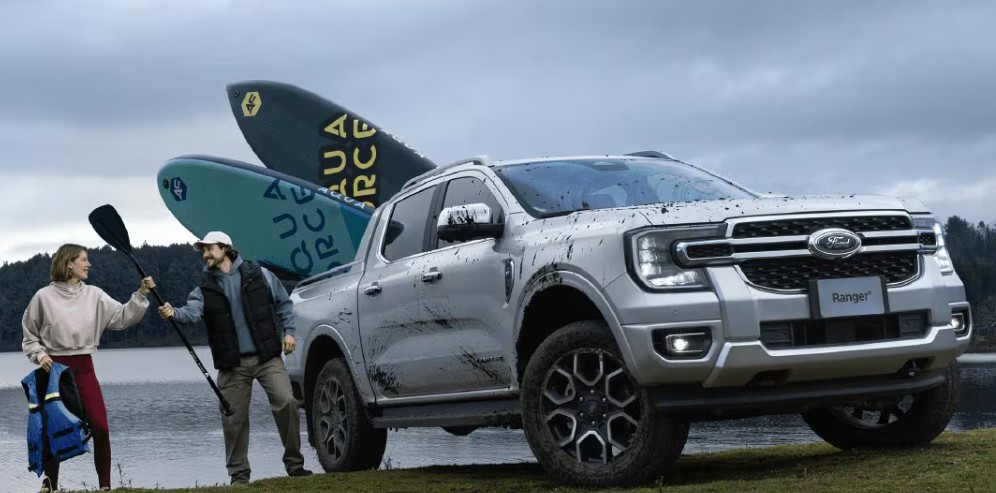
Choosing between the Ford Ranger and Ford F-150 looks simple until we start comparing what these trucks actually do. Both wear the Blue Oval, both offer serious capability, and both can handle work, family life, towing, and weekend adventures. Yet they belong to different weight classes and serve noticeably different buyers.
The Ranger is a midsize pickup designed to balance useful truck capability with everyday maneuverability. It fits more naturally into city streets, crowded parking lots, narrow trails, and modest garages. The F-150 is a full-size pickup with a broader engine range, more body configurations, greater maximum towing capacity, and considerably more room to grow.
Think of the Ranger as a sturdy multitool that slips into a pocket. The F-150 is the rolling toolbox parked in the workshop. Both can solve problems, but one carries considerably more equipment.
For the 2026 model year in the United States, Ford advertises maximum available towing of 7,500 pounds and maximum available payload of 1,767 pounds for the Ranger. The 2026 F-150 raises those ceilings to 12,800 pounds of available maximum towing and 2,235 pounds of maximum payload, depending on configuration. Those figures immediately reveal the central difference: the Ranger covers most recreational and moderate-duty needs, while the F-150 provides a much larger capability reserve.
So, should we choose the tidier Ranger or step up to the stronger F-150? Let’s examine how they compare in the situations that matter most.
Content in this publication
- Ford Ranger vs F-150 at a Glance
- What Is the Main Difference Between the Ranger and F-150?
- Exterior Size and Everyday Maneuverability
- Engine Choices and Performance
- Ford Ranger vs F-150 Towing Capacity
- Payload and Bed Utility
- Cabin Space and Passenger Comfort
- Technology and Interior Features
- Off-Road Performance
- Fuel Economy and Running Costs
- Driving Experience
- Reliability and Long-Term Ownership
- Ford Ranger vs F-150 for Work
- Ford Ranger vs F-150 for Outdoor Adventures
- Safety and Driver Assistance
- Which Truck Offers Better Value?
- Common Buying Mistakes to Avoid
- A Simple Ford Ranger vs F-150 Decision Guide
- Final Verdict: Ford Ranger or F-150?
- Frequently Asked Questions
Ford Ranger vs F-150 at a Glance
Before getting lost in engines, trim levels, tires, and towing packages, we can reduce the comparison to one central question:
Do we want the smallest truck capable of doing the job, or the largest capability cushion our budget can reasonably support?
Here is the basic split:
| Category | Ford Ranger | Ford F-150 |
|---|---|---|
| Truck class | Midsize pickup | Full-size pickup |
| Best environment | Cities, trails, light-to-moderate work | Heavy work, long-distance towing, spacious family use |
| Maximum available towing | 7,500 lb | 12,800 lb |
| Maximum available payload | 1,767 lb | 2,235 lb |
| Maneuverability | Easier | More demanding |
| Cabin and bed variety | More limited | Much broader |
| Engine selection | Simpler lineup | Extensive lineup |
| Likely ownership costs | Generally lower | Generally higher |
| Best all-round buyer | Daily driver and weekend adventurer | Contractor, frequent tower, or full-size-truck buyer |
Maximum ratings depend on engine, drivetrain, cab, axle, equipment, accessories, passengers, and cargo. They should never be treated as universal ratings for every truck on a dealer’s lot. Ford’s own specifications emphasize that actual capacity varies by configuration.
What Is the Main Difference Between the Ranger and F-150?
The biggest difference is not horsepower or badge prestige. It is physical scale.
The Ranger competes in the midsize pickup category. It is built for buyers who need a genuine truck bed, body-on-frame strength, off-road ability, and useful towing without accepting the bulk of a traditional American full-size pickup.
The F-150 sits one class above it. Its larger footprint creates room for more powerful configurations, longer beds, different cab arrangements, higher maximum ratings, and a more spacious interior.
That size difference influences almost everything:
- How easily the truck fits in a garage
- How comfortable it feels in traffic
- How much equipment it can carry
- How stable it feels with a heavy trailer
- How much room passengers receive
- How much fuel, tire, insurance, and maintenance expense we may face
- How confidently it handles narrow tracks or congested streets
The Ranger is not simply a cheaper F-150. Nor is the F-150 merely an enlarged Ranger. They are separate tools built around different priorities.
The Ranger’s Core Philosophy
The Ranger asks, “How much truck do we genuinely need?”
Its appeal comes from moderation. It can tow a boat, haul renovation materials, tackle rough tracks, carry camping equipment, and perform ordinary work duties without feeling like a commercial vehicle every time we visit a supermarket.
For many owners, that is the sweet spot. Capability is useful only when we can live with the machine providing it.
The F-150’s Core Philosophy
The F-150 asks, “What might we need this truck to do tomorrow?”
It gives us more headroom. Even when we do not exploit its highest towing or payload ratings, the additional capacity can make demanding jobs feel less strained. It also offers more ways to configure the truck around work, luxury, performance, efficiency, or off-road driving.
The trade-off is predictable: more truck requires more space, usually more money, and often more effort in daily driving.
Exterior Size and Everyday Maneuverability
On paper, vehicle dimensions can look like lifeless numbers. On a narrow street, they become very real.
The Ranger’s smaller footprint is one of its greatest advantages. It is easier to position between parking lines, less intimidating in older parking structures, and generally more comfortable on tight residential roads. When a trail squeezes between trees or rocks, a few inches can feel like a mile.
The F-150 has a broader stance and can be substantially longer depending on its cab and bed configuration. That makes it feel planted and substantial, but it also means we must think more carefully about:
- Garage depth
- Parking-space width
- Underground height restrictions
- Turning room
- Drive-through lanes
- Urban traffic
- Narrow off-road routes
A full-size pickup soon teaches us to scan the world differently. We stop seeing a parking bay and start evaluating an engineering challenge.
Which Truck Is Better for City Driving?
The Ranger wins for most urban drivers.
It still feels like a pickup, but its dimensions are less likely to dominate every journey. Parallel parking remains manageable, and changing lanes in dense traffic generally requires less road space.
The F-150 can certainly function as a daily city vehicle. Millions of owners prove that. Modern cameras, parking sensors, steering assistance, and surround-view systems can soften its size. Nevertheless, technology cannot shrink sheet metal.
If our week consists mainly of commuting, errands, school runs, and occasional hardware-store visits, the Ranger is usually the more relaxed companion.
The Garage Test
Before choosing either truck, we should measure:
- Garage-door width
- Interior garage width
- Usable floor length
- Clearance around shelving
- Space required to open the doors
- Height clearance with roof accessories
A truck that technically fits but requires folding mirrors and climbing out through a six-inch gap will become irritating surprisingly quickly.
Engine Choices and Performance
The Ranger’s engine lineup is deliberately focused. It provides enough power for midsize-truck duties without creating an overwhelming configuration maze.
The F-150 takes the opposite approach. Its range has historically included several gasoline engines, turbocharged options, a V8, a hybrid powertrain, high-output performance variants, and an electric F-150 Lightning sold as a related model line. Exact availability varies by model year, trim, and market.
That variety lets F-150 buyers prioritize:
- Lower initial cost
- Everyday torque
- Maximum towing
- Traditional V8 character
- Hybrid efficiency and onboard power
- High-performance off-road driving
- Electric driving
Ford’s 2026 F-150 information highlights a 400-horsepower V8 configuration while advertising up to 12,800 pounds of available maximum towing. The key phrase is properly equipped: selecting an engine alone does not guarantee the truck’s headline rating.
Is the Ranger Powerful Enough?
For most personal-use buyers, yes.
A maximum towing rating of 7,500 pounds places the Ranger well beyond crossover-SUV territory and gives it enough theoretical capacity for many boats, utility trailers, campers, motorcycles, and recreational loads.
Its performance also feels lively because the truck is smaller and lighter than a full-size pickup. We do not need the largest engine in the dealership to merge confidently or climb a dirt-road gradient.
The Ranger becomes less suitable when our routine involves heavy enclosed trailers, large travel trailers, substantial equipment, or payloads that repeatedly push against its limits.
When Does the F-150’s Extra Power Matter?
The F-150’s deeper capability reserve matters when we:
- Tow frequently rather than occasionally
- Travel through mountains with a loaded trailer
- Carry heavy tools or materials
- Need more cab and bed combinations
- Want the relaxed feel of a larger engine under load
- Expect the truck’s duties to expand
- Need specialized towing or work equipment
Maximum capacity is not the only consideration. A truck operating comfortably below its limit may feel more composed than one constantly approaching its ceiling.
Ford Ranger vs F-150 Towing Capacity
This is where the comparison opens into a wide gap.
The 2026 Ranger offers up to 7,500 pounds of available maximum towing. The 2026 F-150 reaches up to 12,800 pounds, a difference of 5,300 pounds between the advertised ceilings.
That does not automatically make the F-150 the right choice. A 12,800-pound rating is irrelevant when our heaviest trailer weighs 3,000 pounds.
We should compare trucks using the trailer’s loaded weight, not its empty or dry weight. Water, batteries, propane, luggage, tools, fuel, food, accessories, and aftermarket equipment all add mass.
Choose the Ranger for Towing When
The Ranger makes sense when we tow:
You may be interested in reading Ford Ranger vs Raptor: Which Pickup Should We Buy?
- Small or midsize boats
- Utility trailers
- Jet skis
- Dirt bikes or ATVs
- Compact campers
- Modest car trailers within the truck’s actual rating
- Landscaping equipment of moderate weight
Its smaller body can also be convenient when launching a boat at a tight ramp or reversing through a confined campsite.
Choose the F-150 for Towing When
The F-150 becomes the stronger candidate for:
- Larger boats
- Heavier travel trailers
- Loaded enclosed trailers
- Vehicle transport
- Construction equipment
- Frequent long-distance towing
- Loads that leave little safety margin in a Ranger
Why Tow Ratings Require More Than One Number
Before towing, we must examine:
- Gross vehicle weight rating
- Gross combined weight rating
- Rear axle rating
- Trailer tongue weight
- Hitch rating
- Payload remaining after passengers and cargo
- Brake requirements
- Tire ratings
- Weight-distribution requirements
A truck may have enough advertised towing capacity while running out of payload because trailer tongue weight presses down on the rear axle. This is especially important for family trips, where people, luggage, accessories, and a trailer all consume capacity at once.
Payload and Bed Utility
Payload is one of the most misunderstood pickup specifications.
It includes everything placed in or on the truck beyond its empty operating weight: passengers, cargo, accessories, tools, bed covers, aftermarket bumpers, and trailer tongue weight.
Ford advertises a maximum available payload of 1,767 pounds for the 2026 Ranger and 2,235 pounds for the 2026 F-150. Again, the specific door-jamb label on an individual truck matters more than the marketing maximum.
Is the Ranger Bed Large Enough?
For camping gear, bicycles, gardening supplies, tools, household projects, and recreational equipment, the Ranger bed is usually practical.
Its narrower body may also make it easier to reach equipment from the side. That sounds trivial until we repeatedly climb into a tall full-size bed to retrieve one small bag hiding near the cab.
The limitations appear when we need greater bed length, carry bulky construction materials, or install specialized equipment. The F-150’s wider range of cab-and-bed configurations gives commercial and serious recreational users more flexibility.
Why the F-150 Is the Better Work Platform
The F-150 is more adaptable when the bed functions as a mobile workshop.
Depending on configuration and available equipment, a full-size truck can better accommodate:
- Large toolboxes
- Racks and ladder systems
- Commercial bed caps
- Building materials
- Generators and compressors
- Larger recreational equipment
- Heavier slide-in accessories
- More substantial towing hardware
The F-150 does not merely carry more. It offers a larger canvas on which to build a specialized truck.
Cabin Space and Passenger Comfort
The Ranger provides a modern cabin with sufficient room for many households, especially when rear-seat passengers are children or occasional adult guests.
The F-150’s larger cab options move the experience closer to a family lounge. Rear legroom can be generous, the cabin feels wider, and there is more freedom to store bags, work equipment, child seats, and personal items.
This distinction matters more than flashy dashboard features. A family may tolerate a slightly firmer ride or higher fuel bill, but cramped rear seating becomes tiresome on every long journey.
Which Is Better for a Family?
The answer depends on how often every seat is occupied.
Choose the Ranger when:
- We normally carry one or two people
- Children use the rear seats
- Full-family trips are occasional
- Easier parking matters more than maximum cabin room
- We prefer a truck that feels closer to an ordinary vehicle
Choose the F-150 when:
- Adults regularly occupy the second row
- We use bulky child seats
- Road trips are common
- Cabin storage is a major priority
- The truck doubles as the primary family vehicle
Comfort Is About More Than Seat Size
The F-150’s longer wheelbase and wider stance can contribute to a relaxed highway character, although ride quality varies by configuration, tires, suspension, load, and trim.
The Ranger feels more compact and nimble. Some drivers prefer that sense of connection. Others appreciate the F-150’s heavier, more planted manner.
Neither sensation is universally better. One feels like a boot built for hiking; the other feels like a substantial workbench rolling down the road.
Technology and Interior Features
Both trucks can offer contemporary infotainment, smartphone integration, driver-assistance technology, towing aids, cameras, and selectable driving features, depending on trim and options.
The difference lies in range and specialization.
The Ranger offers the technology most private owners expect without forcing us into the complexity of an enormous model lineup. The F-150 can go further, particularly when configured as a premium family truck, towing platform, mobile office, off-road machine, or hybrid work vehicle.
The Ranger’s Simpler Appeal
A narrower trim and powertrain range can be refreshing.
We spend less time wondering whether we need a particular cab, bed, axle ratio, engine, package, appearance group, towing option, or onboard-power setup. The Ranger still requires careful configuration, but the decision tree is shorter.
The F-150’s Customization Advantage
The F-150 is better for buyers with a precise mission.
We can shape it around commercial work, comfort, towing, high-speed desert driving, traditional V8 ownership, or hybrid utility. Ford’s build-and-price system reflects the model’s extensive customization possibilities, although actual availability and pricing remain dealer- and market-dependent.
The downside is that two F-150s parked beside each other may have radically different abilities. Buying by badge or appearance alone is risky.
Off-Road Performance
Both nameplates offer serious off-road potential, particularly in their Raptor forms.
The Ranger’s smaller body gives it a natural advantage on tight trails. It can squeeze through narrow gaps, change direction more easily, and place its wheels with less anxiety around obstacles.
The F-150 provides a wider, more substantial platform. In open terrain, sand, high-speed desert conditions, and broad forest tracks, that size can feel reassuring. On cramped trails, it becomes a liability.
Ranger Advantages Off Road
The Ranger tends to suit buyers who value:
- Narrower-trail access
- Easier maneuverability
- A more manageable wheelbase
- Lower intimidation on technical routes
- Everyday usability after the trail ends
The 2026 Ranger Raptor is a specialized performance version, and Ford lists a maximum available payload of 1,513 pounds for that model. This illustrates an important principle: off-road equipment and performance tuning can reduce practical load capacity compared with the highest-rated standard configurations.
F-150 Advantages Off Road
The F-150 is attractive when we value:
- Greater power potential
- High-speed stability in open terrain
- More cabin and cargo room for expeditions
- Larger aftermarket support
- A broader selection of specialized configurations
Yet a full-size truck requires more careful route planning. The heroic machine in the advertisement can feel like a ship entering a canal when trees close in on both sides.
Fuel Economy and Running Costs
Fuel economy varies considerably by engine, drivetrain, tires, trim, load, driving style, temperature, traffic, and towing use. We should compare official ratings for the exact configurations being considered rather than relying on a single model-wide figure.
In general, the Ranger’s smaller size and lighter-duty format can reduce everyday fuel and ownership expenses. It may also use less expensive tires, consume fewer fluids, and cost less to maneuver through ordinary life.
The F-150 can counter with a wider powertrain selection, including efficiency-focused and hybrid configurations in certain markets. Nevertheless, a larger truck still carries more mass, larger components, and potentially higher replacement costs.
Costs We Should Compare Before Buying
We should request real quotes and calculate:
- Purchase price
- Financing cost
- Insurance premium
- Fuel consumption
- Tire replacement
- Scheduled servicing
- Registration or taxation
- Parking fees
- Expected depreciation
- Trailer and accessory costs
A truck payment is only the visible tip of the iceberg. The rest of the ownership cost floats quietly below the surface.
Does the Ranger Always Save Money?
Not necessarily.
A heavily optioned Ranger can overlap with some F-150 configurations in price. At that point, the decision becomes more nuanced. The F-150 may offer additional room and capability for similar money, while the Ranger retains advantages in maneuverability and likely everyday efficiency.
Buying the larger truck simply because the prices overlap can still be a mistake. We live with dimensions every day; we exploit maximum towing only occasionally.
You may be interested in readingFord Ranger vs Raptor: Which Pickup Should We Buy?You may be interested in reading
Ford Ranger and Everest: Same DNA, Different AdventuresDriving Experience
The Ranger feels more agile. It is easier to place on the road, simpler to thread through traffic, and less cumbersome during quick errands.
The F-150 feels more substantial. Its larger cabin and planted highway behavior can make long journeys relaxing, particularly when the truck is carrying passengers or towing.
Ranger Behind the Wheel
The Ranger suits drivers moving from an SUV, crossover, or smaller pickup. Although it remains a body-on-frame truck, its scale makes the transition less dramatic.
It feels appropriately sized for mixed use:
- Work during the week
- Home projects on Saturday
- Trail driving on Sunday
- Commuting again on Monday
F-150 Behind the Wheel
The F-150 delivers the commanding view many truck buyers love. It feels broad, powerful, and confident.
That confidence comes with responsibility. We must leave more room, watch the rear corners, account for the turning circle, and avoid assuming other road users can see around us.
Reliability and Long-Term Ownership
Reliability cannot be judged accurately by nameplate alone.
Both vehicles have been produced across multiple generations, powertrains, factories, and electronic architectures. A dependable engine paired with neglected maintenance can become a liability, while a properly maintained truck with complete records may provide years of useful service.
For a used Ranger or F-150, condition matters more than internet folklore.
What to Check on a Used Ranger
Inspect:
- Complete service history
- Transmission behavior
- Turbocharger performance
- Cooling-system condition
- Four-wheel-drive operation
- Evidence of hard off-road use
- Trailer wiring and hitch wear
- Underbody damage
- Fluid leaks
- Uneven tire wear
- Electronic warning messages
What to Check on a Used F-150
Inspect:
- Service records for the exact engine
- Transmission shifts when cold and warm
- Four-wheel-drive engagement
- Differential and transfer-case leaks
- Trailer-brake and towing equipment
- Cab and bed corrosion
- Suspension wear
- Signs of commercial overloading
- Aftermarket tuning
- Electrical accessories
- Payload and certification labels
Beware of Modified Trucks
Large tires, suspension lifts, engine tunes, aftermarket bumpers, and heavy accessories can change performance, handling, braking, fuel use, warranty coverage, and payload.
A modified truck may look ready to cross a continent. It may also hide a history of hard use and poor geometry. Documentation matters.
Ford Ranger vs F-150 for Work
The Ranger is excellent for technicians, inspectors, small-business owners, landscapers, and tradespeople who carry moderate equipment but spend substantial time driving or parking in built-up areas.
The F-150 is better when payload, bed flexibility, passenger space, towing stability, and specialized work configurations outweigh urban convenience.
Choose the Ranger as a Work Truck When
- Tools are moderate in weight
- Parking is limited
- Fuel expenses matter
- We visit crowded job sites
- Heavy towing is occasional
- A midsize bed meets daily needs
Choose the F-150 as a Work Truck When
- Equipment is heavy or bulky
- We tow regularly
- Crew space matters
- Bed configuration is critical
- The truck supports a growing business
- We need a larger capacity reserve
A good work truck earns money without creating unnecessary expense. Bigger is beneficial only when the additional size produces measurable value.
Ford Ranger vs F-150 for Outdoor Adventures
The Ranger is arguably the more natural lifestyle truck for campers, mountain bikers, anglers, surfers, and trail users who want useful cargo capacity without full-size bulk.
The F-150 suits families and groups carrying more people, equipment, food, water, and towing gear. It is also attractive for long-distance travel where cabin space matters as much as trail agility.
Best for Narrow Trails: Ranger
Its more compact dimensions reduce stress when the landscape tightens. It is easier to park at remote trailheads and simpler to maneuver around campsites.
Best for Large Campers and Boats: F-150
The higher available towing and payload ceilings provide more flexibility for substantial recreational equipment. We still need to calculate actual loaded weights carefully, but the F-150 starts with a larger envelope.
Safety and Driver Assistance
Safety equipment varies by trim, model year, package, and region. Both trucks may offer features such as automatic emergency braking, blind-spot monitoring, lane assistance, adaptive cruise control, parking sensors, cameras, and trailer-related aids.
The most important safety feature, however, remains choosing a truck appropriate for the job.
A Ranger overloaded beyond its ratings is not made safe by driver-assistance technology. An F-150 driven carelessly in a narrow urban environment is not protected by its size.
We should prioritize:
- Correct loading
- Properly adjusted mirrors
- Suitable tires
- Trailer-brake setup
- Secure cargo
- Adequate following distance
- Regular maintenance
- Familiarity with the truck’s width and length
Which Truck Offers Better Value?
The Ranger offers better value when it satisfies our real needs without forcing us to pay for excess size and capability.
The F-150 offers better value when its additional capacity, cabin space, configuration choices, and towing ability prevent us from needing another vehicle or upgrading later.
Value is not the lowest price. It is the best relationship between cost and usefulness.
The Case for Buying the Ranger
Buy the Ranger when we want:
- Easier daily driving
- Genuine pickup utility
- Strong but moderate towing ability
- Better trail maneuverability
- Potentially lower running expenses
- A truck that does not consume every available inch
The Case for Buying the F-150
Buy the F-150 when we want:
- Higher towing and payload ceilings
- More engine choices
- More cab and bed configurations
- Greater rear-seat room
- A stronger long-term work platform
- More room for future needs
Common Buying Mistakes to Avoid
Even experienced truck owners can focus on the wrong numbers.
Buying the Maximum Rating Instead of the Actual Truck
The advertised maximum may apply only to a carefully selected configuration. We must inspect the certification labels, equipment list, axle ratio, hitch, engine, and payload sticker of the exact vehicle.
Ignoring Payload While Focusing on Towing
Passengers, cargo, accessories, and tongue weight can exhaust payload before reaching the headline tow rating.
Choosing by Appearance Alone
Large wheels, aggressive tires, luxury interiors, and off-road suspension packages can alter payload, ride, efficiency, and towing suitability.
Underestimating Daily Size
A test drive on wide roads does not reveal how a full-size truck behaves in our garage, workplace, school parking lot, or neighborhood.
Buying Too Small for Regular Heavy Work
The opposite mistake is also expensive. If the Ranger will constantly operate near its limits, the F-150 may be the more comfortable and durable fit for the job.
A Simple Ford Ranger vs F-150 Decision Guide
Choose the Ford Ranger when most of these statements describe us:
- We drive in a city or crowded suburbs.
- We rarely tow above moderate weights.
- We want a capable off-road truck.
- We have limited garage space.
- We normally carry one or two passengers.
- Lower everyday running costs matter.
- We prefer nimble handling.
- We want enough truck, not the most truck.
Choose the Ford F-150 when most of these statements describe us:
- We tow heavy trailers regularly.
- We carry substantial tools or materials.
- Adults often use the rear seats.
- We want several engine and body choices.
- We have enough parking and garage space.
- Long-distance comfort is important.
- We expect our hauling needs to increase.
- Full-size presence is part of the appeal.
Final Verdict: Ford Ranger or F-150?
The Ford Ranger is the smarter choice for many private owners. It supplies genuine truck capability without making every parking lot feel like an obstacle course. Its available 7,500-pound maximum towing rating and 1,767-pound maximum payload are sufficient for a broad range of recreational, household, and moderate work duties.
The Ford F-150 is the stronger choice for buyers who regularly use a pickup as a serious towing, hauling, business, or family platform. Its available maximum ratings of 12,800 pounds for towing and 2,235 pounds for payload create a wider working envelope, while its extensive configuration range allows more precise specialization.
Our recommendation is simple: buy the Ranger when its capacity comfortably exceeds our actual requirements; buy the F-150 when we need its additional room and strength repeatedly, not theoretically.
The best truck is not the one with the largest number in the brochure. It is the one that completes our hardest task and still feels easy to live with on an ordinary Tuesday.
Frequently Asked Questions
1. Is the Ford Ranger cheaper to run than the F-150?
It will generally have the potential to cost less in everyday use because it is a smaller midsize truck. Fuel, tires, insurance, servicing, and depreciation still vary by engine, trim, location, driving pattern, and annual mileage. We should compare quotes for the exact vehicles rather than assuming every Ranger is cheaper than every F-150.
2. Can a Ford Ranger tow as much as an F-150?
No. For the 2026 U.S. models, Ford advertises up to 7,500 pounds of available maximum towing for the Ranger and up to 12,800 pounds for the F-150. Actual capacity depends on the individual truck’s configuration and loading.
3. Is the Ford Ranger better for off-roading?
The Ranger can be better on narrow and technical trails because its smaller dimensions make it easier to maneuver. The F-150 may be preferable in open terrain where power, stability, cabin space, and cargo capacity matter more. Specialized Raptor versions sharpen the off-road abilities of both trucks.
4. Is the F-150 too large for everyday driving?
Not necessarily, but its suitability depends on our surroundings. It works well on broad roads and in areas designed around full-size vehicles. Drivers with narrow garages, congested streets, tight parking structures, or older urban neighborhoods may find the Ranger noticeably easier to live with.
You may be interested in readingFord Ranger vs Raptor: Which Pickup Should We Buy?You may be interested in reading
Ford Ranger and Everest: Same DNA, Different AdventuresYou may be interested in reading
Ford Ranger Versus Hilux: Which Pickup Is Better?5. Which is better for a family, the Ranger or F-150?
The F-150 is generally better for families that regularly carry adults, large child seats, luggage, or road-trip equipment. The Ranger may be the better family choice when rear-seat use is lighter and easier parking, maneuverability, and lower ownership costs matter more.
If you want to know other articles similar to Ford Ranger vs F-150: Which Ford Truck Should We Buy? you can visit the category Models.
BYD Shark 6 2025 vs 2026: What Actually Changed?
BMW i7 vs Porsche Taycan: Luxury EVs With Very Different Personalities
BMW i7 vs 7 Series: Which BMW Flagship Makes More Sense?
BMW i7 vs Mercedes EQS: The Ultimate Luxury EV Comparison
BMW i7 vs M760e: Electric Luxury or Plug-In Hybrid Power?
NFINITI QX60 or Similar: Luxury SUVs Worth Comparing
Leave a Reply
More content of your interest