
Peugeot 206 Fuel Consumption: Real MPG, Engine Comparison, and Saving Tips

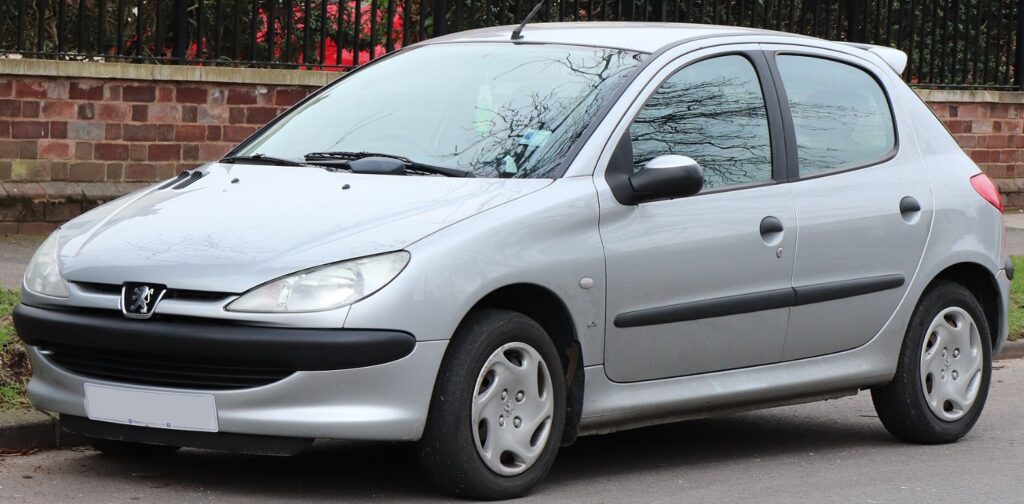
The Peugeot 206 fuel consumption figures remain one of the main reasons this small French hatchback continues to attract used-car buyers. It may not have a touchscreen the size of a television or a collection of electronic driving assistants, but the 206 is light, compact, mechanically simple, and generally affordable to run.
Still, asking how much fuel a Peugeot 206 uses is a little like asking how much food a family eats. The answer depends on who is involved, where they are, and how they behave.
A small 1.4 HDi diesel driven gently on an open road can sip fuel like it is rationing every drop. A 2.0-litre GTI crawling through heavy urban traffic can drink considerably more. Engine size, transmission, body style, maintenance, tyre pressure, weather, traffic, and driving habits all influence the final number.
In this guide, we will examine the expected fuel economy of the main Peugeot 206 engines, compare petrol and diesel versions, convert litres per 100 kilometres into MPG and kilometres per litre, and explain why your car may consume more fuel than expected.
Content in this publication
- What Is the Average Peugeot 206 Fuel Consumption?
- Peugeot 206 Fuel Economy by Engine
- Petrol Versus Diesel Peugeot 206 Consumption
- Manual Versus Automatic Fuel Consumption
- Peugeot 206 City Fuel Consumption
- Peugeot 206 Motorway Fuel Consumption
- Does the Peugeot 206 CC Use More Fuel?
- Does the Peugeot 206 SW Consume More Fuel?
- Why Is My Peugeot 206 Using Too Much Fuel?
- How to Calculate Peugeot 206 Fuel Consumption
- How Far Can a Peugeot 206 Travel on a Full Tank?
- How to Improve Peugeot 206 Fuel Economy
- Does Air Conditioning Increase Consumption?
- How Weather Affects Peugeot 206 Fuel Consumption
- Is the Peugeot 206 Economical by Modern Standards?
- Which Peugeot 206 Has the Best Fuel Consumption?
- Should You Trust Official Fuel Figures?
- Final Thoughts on Peugeot 206 Fuel Consumption
- Frequently Asked Questions
What Is the Average Peugeot 206 Fuel Consumption?
Most standard Peugeot 206 models return approximately 4.0 to 8.0 litres per 100 kilometres in mixed driving, depending on the engine and operating conditions.
As a practical starting point, we can expect the following:
| Peugeot 206 version | Typical combined consumption |
|---|---|
| 1.1 petrol manual | 5.8–7.0 L/100 km |
| 1.4 petrol manual | 6.3–7.5 L/100 km |
| 1.4 petrol automatic | 7.0–9.0 L/100 km |
| 1.6 16V petrol | 6.5–8.0 L/100 km |
| 2.0 GTI petrol | 7.5–10.0 L/100 km |
| 1.4 HDi diesel | 4.0–5.5 L/100 km |
| 1.9 naturally aspirated diesel | 5.0–6.5 L/100 km |
| 2.0 HDi diesel | 5.0–6.5 L/100 km |
These are broad real-world expectations rather than guarantees. Consumption can rise above these ranges in short urban journeys, mountainous areas, cold weather, or poorly maintained vehicles.
Official figures for the popular 1.4-litre petrol engine are around 6.3–6.4 L/100 km combined, with urban consumption approaching 8.8–8.9 L/100 km and extra-urban use near 5.0–5.3 L/100 km.
The 1.4 HDi is considerably more economical. Depending on the model year and test specification, published combined figures are around 4.0–4.3 L/100 km.
Peugeot 206 Fuel Economy by Engine
The 206 was produced with numerous engines, power outputs, transmissions, and body styles. Two cars that look almost identical from the pavement can produce surprisingly different fuel bills.
Peugeot 206 1.1 Petrol Fuel Consumption
The 1.1-litre petrol engine is one of the smallest and simplest options. On paper, that sounds like a recipe for excellent fuel economy. In practice, the results depend heavily on how the car is used.
Because the engine has limited power, it often needs more throttle and higher revs when carrying passengers, climbing hills, or joining fast traffic. That can erase some of the advantage created by its small displacement.
We can generally expect:
- Urban driving: 7.0–8.5 L/100 km
- Open-road driving: 4.8–5.8 L/100 km
- Mixed driving: 5.8–7.0 L/100 km
- Approximate UK economy: 40–49 MPG
- Approximate US economy: 34–41 MPG
For gentle commuting on relatively flat roads, the 1.1 can be remarkably frugal. However, it is not necessarily the best choice for regular motorway driving or a heavily loaded vehicle.
Is the 1.1 the Most Economical Petrol 206?
It can be, but not under every condition.
At moderate speeds, with one or two occupants and smooth acceleration, the 1.1 usually performs well. At motorway speeds, however, it may work harder than the 1.4 or 1.6. A larger engine using a moderate throttle opening can occasionally consume less than a smaller engine being pushed close to its limits.
That is why displacement alone never tells the whole fuel-economy story.
Peugeot 206 1.4 Petrol Fuel Consumption
The 1.4 petrol is one of the most common Peugeot 206 engines and arguably one of the best all-round options. It offers enough performance for ordinary driving without the running costs associated with the sportier versions.
Published specifications for a 1.4i manual indicate approximately:
- Urban: 8.8–8.9 L/100 km
- Extra-urban: 5.0–5.3 L/100 km
- Combined: 6.3–6.4 L/100 km
That combined figure converts to roughly 44–45 UK MPG, 37 US MPG, or almost 16 kilometres per litre.
Real-world drivers may see closer to 7.0 or 7.5 L/100 km when the car is used mainly in town. Heavy congestion, repeated cold starts, short trips, and air-conditioning use can push the number even higher.
1.4 8V Versus 1.4 16V Consumption
Peugeot offered different versions of the 1.4-litre engine, including 8-valve and 16-valve configurations.
The 8-valve engine is relatively simple and usually feels responsive at low speeds. The 16-valve engine offers more power and breathes better at higher revolutions. Their fuel consumption can be similar in relaxed driving, although the more powerful version may use additional fuel when driven enthusiastically.
The difference between two well-maintained cars may be smaller than the difference caused by their drivers.
Peugeot 206 1.6 Petrol Fuel Consumption
The 1.6 16V gives the 206 livelier performance without turning it into a full performance model. It feels more comfortable during overtaking, motorway driving, and hill climbing than the smaller petrol engines.
Expected consumption is approximately:
- Urban: 8.5–10.0 L/100 km
- Open road: 5.2–6.2 L/100 km
- Mixed driving: 6.5–8.0 L/100 km
A carefully driven 1.6 manual can be surprisingly economical on a steady journey. In stop-and-go traffic, however, it normally consumes more than the 1.1 and 1.4.
The 1.6 is rather like a larger coffee cup: it does not force us to drink more, but it certainly makes it easier.
Peugeot 206 2.0 GTI Fuel Consumption
The 2.0 GTI was built for drivers who wanted stronger acceleration and a more entertaining experience. Fuel economy was not ignored, but it was clearly not the only priority.
Typical real-world consumption can range from:
- Urban: 10.0–12.5 L/100 km
- Open road: 6.0–7.2 L/100 km
- Mixed driving: 7.5–10.0 L/100 km
Driven smoothly on a long road, the GTI can return respectable figures. Driven as its badge encourages, consumption can increase quickly.
Why GTI Consumption Varies So Widely
The variation is partly mechanical and partly behavioural.
A 2.0-litre engine naturally uses more fuel under acceleration, but GTI owners may also use the upper half of the rev range more frequently. Larger wheels, performance tyres, modifications, and spirited driving can widen the gap between official and real-world figures.
Peugeot 206 1.4 HDi Fuel Consumption
For drivers focused on economy, the 1.4 HDi is usually the star of the range.
Official combined figures are typically around 4.0–4.3 L/100 km, depending on year and specification. Some published figures list approximately 5.4 L/100 km in urban use, 3.5–3.7 L/100 km outside town, and 4.0–4.2 L/100 km combined.
That translates to roughly:
- 23–25 km/L
- 67–71 UK MPG
- 56–59 US MPG
Real-world economy data collected from drivers has also placed the 1.4 HDi close to its official rating, although results naturally vary with vehicle condition and journey type.
Why the 1.4 HDi Is So Efficient
Several factors work together:
- Small engine displacement
- Direct diesel injection
- Strong low-revolution torque
- Relatively low vehicle weight
- Tall cruising gears
- Reduced need for high engine speeds
On a steady road, the engine barely seems to sip from the tank. However, modern expectations should be kept realistic. These cars are now older, and worn injectors, air leaks, turbo issues, or neglected servicing can reduce efficiency.
Peugeot 206 1.9 Diesel Fuel Consumption
The older 1.9 diesel is naturally aspirated rather than turbocharged. It is mechanically straightforward and can be durable, but it feels slower and less refined than the HDi engines.
Typical figures are approximately:
- Urban: 6.0–7.5 L/100 km
- Open road: 4.5–5.5 L/100 km
- Mixed driving: 5.0–6.5 L/100 km
It can still be economical, particularly on long journeys. Nevertheless, the 1.4 HDi normally offers better economy, stronger low-speed response, and a more modern driving experience.
Peugeot 206 2.0 HDi Fuel Consumption
The 2.0 HDi combines stronger performance with good long-distance efficiency. It generally uses more fuel than the 1.4 HDi, but it requires less effort when the vehicle is loaded or travelling at higher speeds.
We can expect:
- Urban: 6.0–7.5 L/100 km
- Open road: 4.2–5.3 L/100 km
- Mixed driving: 5.0–6.5 L/100 km
For regular motorway travel, the 2.0 HDi may be a more relaxed choice than the 1.4 HDi. The smaller diesel wins the economy contest, while the larger one provides more effortless performance.
Petrol Versus Diesel Peugeot 206 Consumption
Diesel versions usually use less fuel than their petrol counterparts, especially on medium and long journeys.
A 1.4 petrol might consume 6.5–7.5 L/100 km in mixed use, while a healthy 1.4 HDi could return around 4.2–5.0 L/100 km under similar conditions.
That difference appears substantial, but fuel consumption is only one part of ownership cost.
When a Diesel 206 Makes Sense
A diesel may suit us when we:
- Drive long distances regularly
- Spend considerable time on open roads
- Need strong low-speed torque
- Want maximum range from each tank
- Can maintain the fuel and injection systems correctly
When a Petrol 206 Is the Smarter Choice
A petrol version may be preferable when we:
- Mostly complete short journeys
- Drive relatively few kilometres each year
- Want simpler and quieter urban operation
- Prefer lower potential repair complexity
- Live where diesel restrictions or taxes are unfavourable
An economical car is not automatically the car with the smallest fuel number. It is the vehicle whose total running costs fit our actual use.
Manual Versus Automatic Fuel Consumption
Most Peugeot 206 models were sold with a manual transmission, although automatic versions were available in selected markets.
The manual gearbox generally produces lower consumption because it is lighter and transfers power more efficiently. It also gives the driver greater control over engine speed.
An older automatic transmission can increase fuel consumption by approximately 0.5 to 1.5 L/100 km, depending on the engine, traffic, maintenance, and driving style.
Why the Automatic May Use More Fuel
Older automatic gearboxes often have:
- Fewer forward gears
- Greater internal energy losses
- Higher engine speeds at certain road speeds
- Less efficient torque-converter operation
- A tendency to hold lower gears during acceleration
A poorly maintained automatic can consume even more. Old fluid, delayed gear changes, slipping, or transmission faults make the engine work harder for every kilometre travelled.
Peugeot 206 City Fuel Consumption
Urban traffic is where fuel economy usually suffers most.
The engine burns fuel while the vehicle is barely moving. Each acceleration requires energy, and much of that energy disappears as heat the next time we brake. Short journeys are particularly inefficient because the engine may not reach its ideal operating temperature.
In typical city use, we might see:
| Engine | Typical city consumption |
| 1.1 petrol | 7.0–8.5 L/100 km |
| 1.4 petrol | 8.0–9.5 L/100 km |
| 1.6 petrol | 8.5–10.0 L/100 km |
| 2.0 petrol | 10.0–12.5 L/100 km |
| 1.4 HDi | 5.0–6.2 L/100 km |
| 2.0 HDi | 6.0–7.5 L/100 km |
Extremely heavy congestion can produce higher figures.
A five-kilometre trip does not simply use half the fuel of a ten-kilometre trip.
During the first few minutes, the engine is cold, internal friction is higher, and the fuel mixture may be richer. If every journey ends before the engine fully warms up, average consumption can remain stubbornly high.
Combining several errands into one longer route can therefore reduce fuel use without changing the car.
Peugeot 206 Motorway Fuel Consumption
At a stable speed, the Peugeot 206 can be economical. Its relatively low weight helps, and the diesel versions are particularly effective on longer journeys.
Typical motorway or open-road consumption may be:
- 1.1 petrol: 5.0–6.2 L/100 km
- 1.4 petrol: 5.0–6.3 L/100 km
- 1.6 petrol: 5.5–6.8 L/100 km
- 2.0 petrol: 6.2–7.8 L/100 km
- 1.4 HDi: 3.7–4.8 L/100 km
- 2.0 HDi: 4.5–5.8 L/100 km
Speed matters enormously. Driving at 120 or 130 km/h requires significantly more energy than cruising at 90 or 100 km/h because aerodynamic drag increases rapidly as speed rises.
The Best Cruising Speed for Economy
There is no universal perfect speed, but many Peugeot 206 versions are efficient between approximately 80 and 100 km/h in their highest suitable gear.
Driving too slowly in a high gear can make the engine labour. Driving too quickly turns the air into an invisible wall. Smooth, moderate cruising usually provides the best compromise.
Does the Peugeot 206 CC Use More Fuel?
The Peugeot 206 CC has a folding metal roof and structural reinforcement, making it heavier than the standard hatchback. It was also commonly fitted with larger petrol engines.
As a result, the CC normally consumes more fuel than an equivalent hatchback.
A 1.6-litre 206 CC may use approximately 7.0–9.0 L/100 km in mixed driving, while a 2.0-litre version may return around 8.0–10.5 L/100 km.
Driving with the roof lowered can also increase aerodynamic drag, especially at higher speeds. The effect may be modest during a gentle Sunday drive but more noticeable during fast motorway travel.
Does the Peugeot 206 SW Consume More Fuel?
The 206 SW estate is slightly longer and heavier than the hatchback. In most cases, the consumption difference is small.
An equivalent SW may use roughly 0.2 to 0.6 L/100 km more, particularly when loaded. The exact gap depends on engine choice, transmission, roof bars, passengers, and luggage.
Remove unused roof racks when they are no longer needed. At motorway speed, an empty roof rack can still behave like a small parachute.
Why Is My Peugeot 206 Using Too Much Fuel?
A sudden or gradual increase in consumption deserves investigation. The cause may be as simple as low tyre pressure or as serious as a faulty injection component.
Common Causes of High Fuel Consumption
The most frequent possibilities include:
- Low tyre pressure
- Dirty air filter
- Worn spark plugs
- Faulty oxygen sensor
- Incorrect coolant-temperature signal
- Sticking brake caliper
- Misfiring engine
- Fuel injector problems
- Thermostat stuck open
- Poor wheel alignment
- Excessive idling
- Heavy urban traffic
- Automatic transmission faults
- Roof racks or unnecessary cargo
- Aggressive acceleration
A Faulty Thermostat Can Quietly Increase Consumption
When the thermostat remains open, the engine may take too long to warm up or may never reach its normal operating temperature.
The engine-management system can respond as though the engine is still cold, supplying additional fuel. The driver may notice weak cabin heating, a low temperature-gauge reading, or an unusually long warm-up period.
Oxygen Sensor Problems
The oxygen sensor helps the engine-management system adjust the air-fuel mixture. A slow or inaccurate sensor can cause the engine to run richer than necessary.
Possible symptoms include:
- Increased fuel consumption
- Uneven idle
- Reduced performance
- Exhaust smell
- Engine warning light
- Failed emissions inspection
We should not replace the sensor solely because consumption is high. Diagnostic testing is more reliable than changing parts at random.
Dragging Brakes
A partially seized brake caliper forces the engine to pull against constant resistance. It is like cycling with one brake lightly applied.
After a drive, one wheel may feel noticeably hotter than the others. The vehicle may also pull to one side, feel sluggish, or produce a burning smell.
Because excessive brake heat can become a safety issue, this problem should be inspected promptly.
How to Calculate Peugeot 206 Fuel Consumption
Dashboard estimates can be useful, but the tank-to-tank method gives us a clearer real-world figure.
The Full-Tank Method
Follow these steps:
- Fill the fuel tank completely.
- Reset the trip odometer.
- Drive normally.
- Refill the tank to the same level.
- Record the litres added.
- Record the distance travelled.
- Use the appropriate formula.
Litres per 100 Kilometres Formula
Use:
Litres used ÷ kilometres travelled × 100
For example, suppose we use 35 litres over 520 kilometres:
35 ÷ 520 × 100 = 6.73 L/100 km
Kilometres per Litre Formula
Use:
Kilometres travelled ÷ litres used
Using the same journey:
520 ÷ 35 = 14.86 km/L
UK MPG Formula
Use:
Miles travelled ÷ UK gallons used
One imperial gallon equals approximately 4.546 litres.
US MPG Formula
One US gallon equals approximately 3.785 litres. For that reason, UK MPG and US MPG are not interchangeable.
A car returning 45 UK MPG returns only about 37.5 US MPG. This difference causes plenty of confusion in online discussions.
How Far Can a Peugeot 206 Travel on a Full Tank?
Many Peugeot 206 versions have a fuel tank of approximately 50 litres, although the exact usable capacity may vary by model and market.
Estimated range can be calculated by dividing tank capacity by consumption and multiplying by 100.
For example:
- At 4.5 L/100 km: theoretical range is about 1,110 km
- At 6.5 L/100 km: theoretical range is about 770 km
- At 8.5 L/100 km: theoretical range is about 590 km
We should not plan to use every last litre. Fuel gauges are imperfect, driving conditions change, and repeatedly running the tank nearly empty can place unnecessary strain on the fuel system.
Typical Real-World Range
A practical range may be:
| Version | Approximate usable range |
| 1.1 petrol | 600–750 km |
| 1.4 petrol | 600–730 km |
| 1.6 petrol | 550–700 km |
| 2.0 petrol | 450–620 km |
| 1.4 HDi | 850–1,050 km |
| 2.0 HDi | 700–900 km |
These numbers assume a healthy vehicle and a mixture of normal driving conditions.
How to Improve Peugeot 206 Fuel Economy
We do not need to drive like a rolling roadblock to save fuel. Small, consistent changes usually work better than extreme techniques.
Use Smooth Acceleration
Accelerate progressively rather than pressing the throttle sharply. The goal is not painfully slow acceleration. We simply want to avoid demanding more power than necessary.
Build speed once, then preserve momentum.
Change Gear at Sensible Engine Speeds
In a petrol 206, shifting between roughly 2,000 and 2,500 rpm often works during relaxed driving. A diesel can usually change gear at slightly lower engine speeds because it produces more low-end torque.
However, avoid making the engine struggle in a high gear. Labouring at very low rpm can create vibration, weak response, and potentially more fuel use.
Look Ahead
Anticipating traffic reduces unnecessary braking and acceleration.
When a traffic light ahead is already red, there is little value in racing toward it. Ease off early and allow the car to slow gradually. Momentum is stored energy; every avoidable brake application throws some of it away.
Maintain Correct Tyre Pressure
Underinflated tyres increase rolling resistance. Even a modest pressure loss can make the car feel heavier and increase consumption.
Check tyre pressure when the tyres are cold and follow the specification for the exact wheel size and vehicle load. The correct information is usually shown on a label, in the handbook, or in the vehicle documentation.
Remove Unnecessary Weight
A few small items will not transform consumption, but carrying heavy tools, boxes, or equipment for months adds a constant penalty.
Clear the boot periodically. Your Peugeot 206 does not need to carry the contents of a storage cupboard everywhere it goes.
Limit Excessive Idling
An idling car achieves precisely zero kilometres per litre. If we are waiting for an extended period and it is safe and appropriate to do so, switching the engine off saves fuel.
For brief stops in traffic, repeatedly restarting an older car may not be worthwhile. Use common sense and consider battery and starter condition.
Service the Engine Properly
Regular servicing helps preserve efficient combustion. Important items include:
- Correct engine oil
- Clean air filter
- Suitable spark plugs
- Healthy fuel filter
- Correct coolant temperature
- Proper injector operation
- Leak-free intake system
- Functional ignition components
The 206 was offered with 1.1, 1.4, 1.6, and 2.0-litre petrol engines, along with several diesel choices, so service requirements must match the exact engine.
Do Fuel Additives Improve Economy?
Fuel additives are not a magic cure.
A reputable injector cleaner may help when mild deposits are genuinely affecting spray quality, but it will not repair a failed sensor, seized brake, worn injector, damaged ignition coil, or low-compression engine.
Diagnosis should come before bottles of hope.
Does Air Conditioning Increase Consumption?
Yes. The air-conditioning compressor places an additional load on the engine.
The effect is most noticeable in urban driving, where the engine operates at lower speed and the vehicle covers less distance per hour. Depending on temperature and system condition, air conditioning may increase consumption by several percent.
At higher road speeds, closing the windows and using air conditioning can sometimes be more efficient than driving with the windows wide open, because open windows create aerodynamic turbulence.
Use climate control when comfort and visibility require it. Saving fuel should never mean driving with fogged windows or becoming dangerously overheated.
How Weather Affects Peugeot 206 Fuel Consumption
Cold weather normally increases consumption because:
- The engine takes longer to warm up
- Oil is thicker during startup
- Tyre pressure may fall
- Electrical loads increase
- Short journeys become less efficient
- Wet or snowy roads create resistance
Hot weather can also raise consumption through air-conditioning use.
Wind matters too. A strong headwind can make a small car behave as though it is climbing a gentle hill for the entire journey.
Is the Peugeot 206 Economical by Modern Standards?
A healthy Peugeot 206 can still be economical, particularly the 1.4 HDi and smaller manual petrol versions.
However, newer cars may offer:
- More efficient automatic transmissions
- Start-stop systems
- Improved aerodynamics
- Better engine management
- Hybrid assistance
- Lower emissions
- More accurate trip computers
The 206 fights back with low weight and mechanical simplicity. A well-maintained example can deliver respectable fuel economy without complicated technology.
The key phrase is well maintained. An efficient design cannot overcome neglected tyres, dragging brakes, weak ignition, or leaking injectors.
Which Peugeot 206 Has the Best Fuel Consumption?
The 1.4 HDi manual is generally the most fuel-efficient mainstream Peugeot 206.
Its official combined consumption can be close to 4.0–4.3 L/100 km, while realistic everyday results often remain below 5.5 L/100 km when the vehicle is healthy and driven sensibly.
For drivers who prefer petrol, the 1.1 and 1.4 manual versions offer the best balance of simplicity and economy.
Best Version for City Driving
The 1.1 or 1.4 petrol manual is often suitable for short urban trips because it warms up faster than a diesel and avoids some diesel-system concerns.
Best Version for Long Journeys
The 1.4 HDi is the economy champion, while the 2.0 HDi provides stronger performance for frequent motorway travel.
Best Balance of Performance and Economy
The 1.6 petrol manual is a sensible compromise for drivers who want more responsive performance without stepping up to the fuel use of the 2.0 GTI.
Should You Trust Official Fuel Figures?
Official figures are useful for comparing vehicles tested under similar conditions, but they do not guarantee the result we will achieve.
Laboratory testing cannot perfectly reproduce:
- Severe congestion
- Steep hills
- Strong wind
- Roof racks
- Passenger loads
- Mechanical wear
- Aggressive driving
- Repeated short journeys
- Poor road surfaces
Older Peugeot 206 figures were generally recorded under the NEDC testing system. Real driving can be more demanding, although some economical diesel owners have reported results close to official numbers.
Treat the official figure as a reference line, not a promise carved into stone.
Final Thoughts on Peugeot 206 Fuel Consumption
The Peugeot 206 remains capable of delivering sensible fuel economy, even decades after its introduction. Smaller petrol engines commonly return around 6.0–7.5 L/100 km in mixed use, while the sportier petrol versions may consume 8.0 L/100 km or more.
The 1.4 HDi is the clear winner for minimum fuel use, with around 4.0–5.5 L/100 km achievable under suitable conditions. The 2.0 HDi is slightly thirstier but better suited to drivers who value stronger performance and relaxed motorway cruising.
More importantly, fuel economy depends on the whole vehicle rather than the engine badge alone. Correct tyre pressure, smooth driving, quality maintenance, sensible speeds, and early fault diagnosis can make a meaningful difference.
A Peugeot 206 should feel light and eager, not as though it is pulling an invisible trailer. When consumption rises suddenly, the car is often telling us that something has changed. Listening early can save fuel, money, and larger repair bills later.
Frequently Asked Questions
1. What is normal fuel consumption for a Peugeot 206 1.4 petrol?
Normal mixed consumption is usually around 6.3–7.5 L/100 km. Urban driving may increase it to 8.0–9.5 L/100 km, while steady open-road driving can reduce it to approximately 5.0–6.0 L/100 km.
2. How economical is the Peugeot 206 1.4 HDi?
A healthy 1.4 HDi may return approximately 4.0–5.5 L/100 km, depending on traffic, weather, speed, and maintenance. Official combined figures for some versions are close to 4.0–4.3 L/100 km.
3. Why has my Peugeot 206 fuel consumption increased?
Common causes include low tyre pressure, a dirty air filter, worn spark plugs, a faulty oxygen sensor, a cold-running engine, injector problems, dragging brakes, poor wheel alignment, or changes in journey type.
4. How many kilometres can a Peugeot 206 travel per litre?
A petrol 206 generally returns around 12–17 km/L, while a diesel version may achieve approximately 17–25 km/L. The exact result depends on the engine and driving conditions.
5. Which Peugeot 206 engine uses the least fuel?
The 1.4 HDi diesel manual is usually the most economical. Smaller petrol engines are also efficient, but they generally use more fuel than the 1.4 HDi on longer journeys.
If you want to know other articles similar to Peugeot 206 Fuel Consumption: Real MPG, Engine Comparison, and Saving Tips you can visit the category Driving.
Mitsubishi Pajero Sport Fuel Consumption: What Should We Really Expect?
Peugeot RCZ MPG: Real-World Fuel Economy and Running Costs Explained
BMW i7 Range Miles: How Far Can This Luxury EV Really Go?
Infiniti QX60 Fuel Economy: MPG, Range and Real-World Guide
Land Rover Defender 90 MPG: Real-World Fuel Economy Explained
Toyota Hilux Long Range Fuel Tank: Complete Buyer’s Guide
Leave a Reply
More content of your interest