

Ford Taurus Fuel Economy: MPG, Engines, Costs, and Real-World Results

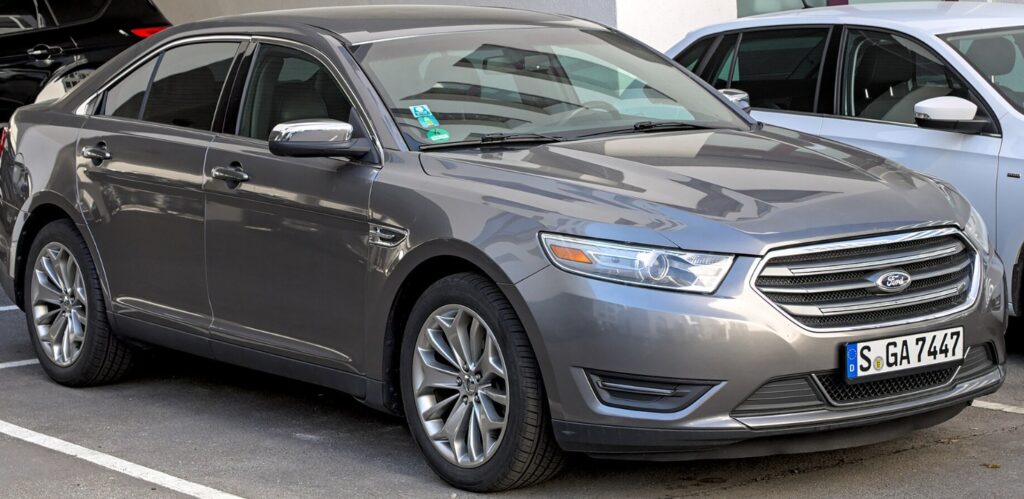
The Ford Taurus has never pretended to be a tiny fuel-sipping commuter. It is a substantial sedan with a spacious cabin, a broad stance, and—depending on the model year—anything from a sensible four-cylinder engine to a muscular twin-turbocharged V6.
Still, Ford Taurus fuel economy is not necessarily as disappointing as the car’s size might suggest. Choose the right engine, keep the vehicle maintained, and drive with a measured right foot, and a Taurus can deliver respectable highway mileage. Push a Taurus SHO through city traffic as though every stoplight were the start of a drag race, however, and the fuel gauge may fall like sand through an hourglass.
So, what gas mileage can we realistically expect from a Ford Taurus? Which engine is the most economical? Does all-wheel drive make a significant difference? And is the Taurus still affordable to run as a used car?
Let’s break it all down.
Content in this publication
- What Is the Ford Taurus Fuel Economy?
- Understanding Official MPG Ratings
- Ford Taurus Fuel Economy by Engine
- 3.5-Liter Naturally Aspirated V6 Fuel Economy
- 2.0-Liter EcoBoost Fuel Economy
- Ford Taurus SHO Fuel Economy
- Front-Wheel Drive vs All-Wheel Drive MPG
- Ford Taurus Fuel Economy by Generation
- First-Generation Ford Taurus MPG
- Second- and Third-Generation Taurus Economy
- Fourth-Generation Ford Taurus MPG
- Final North American Taurus Generation
- The Current International Ford Taurus Is Different
- Real-World Ford Taurus Gas Mileage
- How to Calculate Your Actual Taurus MPG
- What Reduces Ford Taurus Fuel Economy?
- Low Tire Pressure
- Aggressive Acceleration
- High Highway Speeds
- Excessive Idling
- Short Trips
- Mechanical Problems
- How to Improve Ford Taurus Fuel Economy
- Does Premium Fuel Improve Taurus MPG?
- How Much Does It Cost to Fuel a Ford Taurus?
- Is the Ford Taurus Economical for a Large Sedan?
- Best Ford Taurus for Fuel Economy
- Should We Buy a Ford Taurus for Daily Commuting?
- Final Thoughts on Ford Taurus Fuel Economy
- 1. What is the average MPG of a Ford Taurus?
- 2. Which Ford Taurus engine gets the best gas mileage?
- 3. How many miles can a Ford Taurus travel on one tank?
- 4. Why is my Ford Taurus getting poor gas mileage?
- 5. Is the Ford Taurus SHO bad on gas?
What Is the Ford Taurus Fuel Economy?
For the final North American Ford Taurus models, fuel economy generally ranged from approximately:
- 16–18 mpg in the city
- 24–27 mpg on the highway
- 19–22 mpg combined
The exact rating depends on the model year, engine, drivetrain, wheel size, and trim.
As a representative example, the 2019 Taurus with the naturally aspirated 3.5-liter V6 was rated at up to 18 mpg city and 26 mpg highway with front-wheel drive. All-wheel-drive versions were rated at around 17 mpg city and 24 mpg highway. The high-performance Taurus SHO, which used a twin-turbocharged V6 and standard all-wheel drive, was rated at approximately 16 mpg city and 24 mpg highway.
Those numbers make the Taurus less economical than a modern compact sedan or hybrid, but they are understandable for a large, heavy car equipped with a powerful V6 engine.
Ford Taurus MPG at a Glance
| Taurus configuration | Approximate city MPG | Approximate highway MPG | Approximate combined MPG |
|---|---|---|---|
| 3.5L V6 front-wheel drive | 18 | 26 | 21–22 |
| 3.5L V6 all-wheel drive | 17 | 24 | 19–20 |
| Taurus SHO twin-turbo AWD | 16 | 24 | 19 |
| 2.0L EcoBoost front-wheel drive | Around 20 | Around 29 | Around 23 |
These figures should be treated as broad reference points rather than universal guarantees. Ford changed its engine availability and equipment combinations during the Taurus production run, so two cars from different years may produce noticeably different results.
Understanding Official MPG Ratings
Official fuel-economy ratings are useful because they allow us to compare vehicles under standardized testing conditions. They do not promise that every owner will achieve the published number on every journey.
Real-world mileage can change according to:
- Traffic congestion
- Average driving speed
- Weather and temperature
- Tire pressure
- Vehicle condition
- Passenger and cargo weight
- Air-conditioning use
- Driving style
- Fuel quality
- Road elevation
- Trip length
A Taurus driven steadily on an open highway may equal or even exceed its official highway figure. The same vehicle used for five-minute urban trips in freezing weather may fall well below its city rating.
That does not necessarily indicate a mechanical problem. Fuel economy is a moving target, not a number carved into the dashboard.
Ford Taurus Fuel Economy by Engine
Engine choice has one of the largest effects on Taurus gas mileage. Over its later years, the North American Taurus was offered with naturally aspirated, turbocharged, and twin-turbocharged engines.
3.5-Liter Naturally Aspirated V6 Fuel Economy
The naturally aspirated 3.5-liter V6 was the most common engine in later Taurus models. In the 2019 version, it produced 288 horsepower and 254 lb-ft of torque, giving the large sedan smooth acceleration without requiring turbochargers.
With front-wheel drive, this engine could return approximately:
- 18 mpg city
- 26 mpg highway
- About 21–22 mpg combined
With all-wheel drive, the figures typically dropped to around:
- 17 mpg city
- 24 mpg highway
- About 19–20 mpg combined
The engine is not especially frugal in stop-and-go traffic, but it settles into a more relaxed rhythm on the highway. At a steady cruising speed, the six-speed automatic transmission can keep engine revolutions relatively low, allowing the Taurus to cover long distances without consuming fuel at an alarming rate.
Who Should Choose the 3.5L V6?
This engine makes sense for drivers who value:
- Smooth, predictable power
- Broad used-car availability
- Comfortable highway performance
- Simpler operation than a turbocharged engine
- A balance between performance and ownership cost
It is not the best choice for someone whose top priority is maximizing every gallon. Still, among large traditional sedans, its consumption is not outrageous.
2.0-Liter EcoBoost Fuel Economy
Ford offered a turbocharged 2.0-liter EcoBoost four-cylinder engine in certain Taurus years and trims. The idea was simple: use a smaller engine with turbocharging to provide useful power while consuming less fuel during lighter driving.
Under favorable conditions, the 2.0-liter EcoBoost could approach:
- 20 mpg city
- 29 mpg highway
- Around 23 mpg combined
That made it one of the most efficient engines available in the North American Taurus.
However, there is a catch. A turbocharged engine’s fuel economy depends heavily on how often we request boost. Drive gently, and the smaller engine can behave like an economical four-cylinder. Accelerate aggressively, carry heavy loads, or climb steep roads regularly, and the turbocharger must work harder. Once that happens, fuel consumption may move closer to V6 territory.
Is the 2.0L EcoBoost the Best Taurus for MPG?
In terms of official ratings, it is usually the strongest choice among later North American gasoline-powered Taurus models.
Nevertheless, shoppers should consider more than a number on a fuel-economy label. The 2.0-liter engine was less common than the 3.5-liter V6, and availability varies significantly in the used market. Maintenance history is also more important than theoretical efficiency.
A well-maintained V6 may be a wiser purchase than a neglected EcoBoost with overdue oil changes, cooling-system problems, or signs of turbocharger wear.
Ford Taurus SHO Fuel Economy
The Ford Taurus SHO sits at the entertaining end of the range. Its 3.5-liter twin-turbocharged EcoBoost V6 produced 365 horsepower and 350 lb-ft of torque in the final model years. It also came with all-wheel drive, helping the sedan transfer that power to the road.
Official fuel economy was approximately:
- 16 mpg city
- 24 mpg highway
- 19 mpg combined
Nobody buys a Taurus SHO because they want the consumption of a hybrid hatchback. The SHO is a large performance sedan disguised as a respectable family car. It can cruise quietly one moment and surge forward the next like a sleeping bear suddenly disturbed.
Why Does the SHO Use More Fuel?
Several factors work against it:
- A powerful twin-turbo V6
- Standard all-wheel drive
- Greater mechanical weight
- Wider performance tires
- Aggressive gearing and calibration
- The temptation to use all 365 horsepower
Under gentle highway driving, the SHO may return surprisingly reasonable mileage. In urban traffic—or when driven enthusiastically—consumption can rise quickly.
Realistic Taurus SHO MPG
Owners may see around 17–20 mpg in mixed use, although individual results vary widely. A highway-heavy trip can move into the low or mid-20s. Short city trips may pull average mileage into the mid-teens.
The SHO rewards restraint, but restraint is not always why we bought the SHO in the first place.
Front-Wheel Drive vs All-Wheel Drive MPG
Drivetrain choice also affects Ford Taurus fuel economy.
Front-wheel drive is generally more economical because it uses fewer drivetrain components and carries less weight. All-wheel drive adds a transfer unit, driveshaft, rear differential, rear axles, and related hardware. Those components improve traction, but they also create additional weight and mechanical resistance.
For later V6 models, choosing all-wheel drive commonly reduced fuel economy by approximately:
- 1 mpg in city driving
- 2 mpg on the highway
- 1–2 mpg combined
That may sound minor, but it adds up over thousands of miles.
Is AWD Worth the Fuel-Economy Penalty?
It depends on where and how we drive.
All-wheel drive may be valuable for:
- Snowy regions
- Icy winter roads
- Steep or slippery driveways
- Frequent driving in poor weather
- Drivers who value extra launch traction
Front-wheel drive may be the better option for:
- Mild climates
- Mostly urban or highway travel
- Lower maintenance costs
- Better fuel economy
- Fewer drivetrain components
Good tires remain essential either way. All-wheel drive helps the car accelerate, but it does not magically shorten braking distances.
Ford Taurus Fuel Economy by Generation
The Taurus name covers several generations, and comparing them is not always straightforward. Engines, transmissions, vehicle size, testing procedures, and emissions requirements changed dramatically over the years.
First-Generation Ford Taurus MPG
The original Taurus arrived for the 1986 model year with aerodynamic styling that looked futuristic beside many box-shaped competitors.
Depending on the engine and transmission, earlier versions could deliver mileage in the low 20s during mixed driving and higher figures on the highway. The lighter body helped, but older automatic transmissions had fewer gears and less sophisticated electronic control.
Age now matters more than original ratings. A first-generation car with tired fuel injectors, weak ignition components, low compression, dragging brakes, or an improperly operating transmission may consume far more fuel than it did when new.
Second- and Third-Generation Taurus Economy
During the 1990s and early 2000s, the Taurus commonly used 3.0-liter V6 engines. These vehicles often returned fuel economy around the high teens in city use and the mid-to-upper 20s on the highway, depending on configuration.
Their relatively moderate weight helped, but four-speed automatic transmissions limited efficiency compared with later six-, eight-, and ten-speed units.
For today’s buyer, condition again matters more than the original brochure. A carefully maintained older Taurus can still be reasonable on fuel, while an inexpensive but neglected example may turn every visit to the gas station into a recurring subscription.
Fourth-Generation Ford Taurus MPG
The fourth-generation Taurus, sold through the mid-2000s, continued with V6 power and front-wheel drive. Highway mileage could be respectable, particularly with a properly running Duratec engine and steady driving.
City mileage was less impressive because the automatic transmission, vehicle weight, and engine calibration reflected the technology of the period.
When evaluating one today, we should pay close attention to:
- Oxygen sensors
- Mass airflow sensor condition
- Vacuum leaks
- Spark plugs and ignition coils
- Transmission operation
- Wheel alignment
- Brake drag
- Tire size
A single issue may not destroy fuel economy, but several small problems can work together like holes in a bucket.
Final North American Taurus Generation
The final North American Taurus generation was larger, heavier, safer, quieter, and more powerful than many of its predecessors. It also offered available all-wheel drive and advanced turbocharged engines.
That progress came at a cost. The car’s substantial curb weight meant the engine had to work harder whenever it accelerated from a stop. As a result, city mileage remained modest.
Highway performance was more favorable because the Taurus could maintain momentum efficiently once it was moving. Its aerodynamic body, tall transmission gears, and relaxed cruising behavior helped compensate for its mass.
Production of the North American Taurus ended after the 2019 model year, so shoppers in the United States and Canada are now dealing exclusively with used examples.
The Current International Ford Taurus Is Different
The Taurus name remains in use in some international markets, particularly in the Middle East, but the current model is not the same vehicle as the discontinued North American sedan.
Ford’s Middle East website currently lists a 2.0-liter EcoBoost version at around 15.5 kilometers per liter and a 1.5-liter hybrid version at up to 23.4 kilometers per liter.
Converted approximately, those figures equal:
- 15.5 km/L: about 36.5 US mpg
- 23.4 km/L: about 55 US mpg
However, direct comparisons require caution. Different markets may use different test cycles, specifications, fuels, and measurement methods. The current international Taurus also has a different platform and powertrain strategy from the North American model that ended production in 2019.
In other words, seeing “Ford Taurus hybrid MPG” online does not mean Ford sold a hybrid version of the final North American Taurus.
Real-World Ford Taurus Gas Mileage
Real-world mileage usually lands within a broad range rather than matching one precise figure.
A healthy late-model naturally aspirated V6 Taurus may return:
- 15–19 mpg in heavy urban traffic
- 19–23 mpg in mixed driving
- 24–29 mpg on long highway journeys
A Taurus SHO may return:
- 13–17 mpg in demanding city use
- 17–20 mpg in mixed driving
- 22–26 mpg during steady highway cruising
A 2.0-liter EcoBoost Taurus may return:
- 18–21 mpg in the city
- 22–25 mpg in mixed use
- 27–31 mpg on the highway
These are reasonable real-world expectations, not guarantees. Terrain, climate, speed, maintenance, and driver behavior can move the result in either direction.
Why Highway Mileage Is Much Better
Large sedans often perform better on the highway than in town because they avoid repeated acceleration.
Getting a heavy Taurus moving requires energy. Once it reaches a steady cruising speed, the engine only needs enough power to overcome aerodynamic drag, tire resistance, and mechanical losses.
That is why a Taurus may feel surprisingly efficient during a long road trip yet thirsty during a week of short errands.
How to Calculate Your Actual Taurus MPG
The dashboard average is convenient, but a manual calculation gives us a useful second opinion.
Follow these steps:
- Fill the fuel tank completely.
- Reset the trip odometer.
- Drive normally until the next fill-up.
- Fill the tank again.
- Record the gallons added.
- Divide miles driven by gallons used.
For example:
- Miles driven: 330
- Fuel added: 15 gallons
- Calculation: 330 ÷ 15
- Result: 22 mpg
Repeat the process over several tanks. One fill-up can be distorted by pump shutoff differences, idling, unusual traffic, or a long highway trip. A three- to five-tank average gives us a clearer picture.
Ford also allows the average fuel-economy display to be reset through the steering-wheel controls on applicable Taurus models.
What Reduces Ford Taurus Fuel Economy?
A sudden decline in mileage deserves attention, especially when our route and driving habits have not changed.
Low Tire Pressure
Underinflated tires create additional rolling resistance. The engine must work harder, and fuel consumption rises.
Check pressure when the tires are cold and follow the specification on the driver’s door-jamb label—not the maximum pressure molded into the tire sidewall.
Aggressive Acceleration
Hard acceleration wakes up the entire powertrain. The transmission holds lower gears, engine speed rises, and turbocharged models build boost.
Smooth acceleration does not mean crawling away from every intersection. It means applying power progressively rather than treating the accelerator like an on-off switch.
High Highway Speeds
Aerodynamic resistance increases sharply as speed rises. A Taurus cruising at 60–65 mph may deliver noticeably better mileage than the same car traveling at 75–80 mph.
The car may feel effortless at high speed, but the fuel tank still notices.
Excessive Idling
An idling engine produces zero miles per gallon. Long warm-ups, drive-through queues, and sitting with the climate control running can lower the displayed average quickly.
Modern engines generally do not require extended stationary warm-up periods under normal conditions. Gentle driving allows the engine and transmission to reach operating temperature more efficiently.
Short Trips
Cold engines use more fuel. When most journeys end before the engine fully warms, average economy suffers.
Combining several errands into one longer trip can reduce the number of cold starts and improve overall efficiency.
Mechanical Problems
Common causes of poor Taurus fuel economy include:
- Dirty or failing mass airflow sensor
- Aging oxygen sensors
- Worn spark plugs
- Weak ignition coils
- Vacuum leaks
- Sticking brake calipers
- Poor wheel alignment
- Faulty thermostat
- Dirty fuel injectors
- Transmission problems
- Incorrect engine oil
- Exhaust restrictions
A check-engine light should not be ignored. Ford warns that continuing to drive with certain engine faults can increase emissions and reduce fuel economy.
A Faulty Thermostat Can Quietly Waste Fuel
If the thermostat sticks open, the engine may struggle to reach its intended operating temperature. The computer may continue using a richer fuel mixture longer than necessary.
The car may still drive normally, making this problem easy to overlook. A temperature gauge that remains unusually low—or cabin heat that takes too long to arrive—can provide a clue.
How to Improve Ford Taurus Fuel Economy
We cannot transform a 4,000-pound V6 sedan into a hybrid overnight, but small changes can deliver meaningful improvements.
Use Smooth Throttle Inputs
Look farther ahead and anticipate traffic. When we see a red light in the distance, lifting early is more efficient than accelerating toward it and braking hard.
The goal is to preserve momentum. Momentum is stored energy, and throwing it away repeatedly costs fuel.
Maintain a Consistent Speed
Cruise control can help on flat, open roads. In hilly terrain, however, it may apply aggressive throttle to maintain an exact speed. Allowing a small speed variation manually may sometimes use less fuel.
Remove Unnecessary Weight
A few items in the trunk will not ruin mileage, but carrying heavy tools, equipment, or unused cargo every day makes the engine work harder.
We do not need to empty the car until it resembles a racing shell. We simply should avoid treating the trunk like permanent storage.
Keep Tires Properly Inflated
Check tire pressure at least monthly and before long journeys. Temperature changes can alter pressure, especially during seasonal transitions.
Also inspect for uneven wear. A tire can be properly inflated and still create excessive resistance if alignment is poor.
Use the Correct Engine Oil
Oil that meets Ford’s specified viscosity and performance standard helps reduce friction while protecting internal components. Oil that is too thick may slightly increase resistance, especially during cold starts.
Always consult the owner’s manual for the correct specification for the particular engine and model year.
Replace Maintenance Items on Schedule
Fuel economy often declines gradually, so we may not notice the change.
Keep an eye on:
- Engine air filter
- Spark plugs
- Engine oil
- Fuel-system condition
- Transmission fluid
- Coolant system
- Oxygen sensors
- Tire condition
Routine maintenance is rarely glamorous, but neither is watching our fuel budget disappear.
Most naturally aspirated Taurus models are designed to operate on regular unleaded gasoline. Using premium fuel in an engine that does not require it usually does not create enough efficiency improvement to recover the higher purchase price.
Turbocharged EcoBoost engines may adjust performance according to fuel octane and operating conditions. Higher-octane fuel can sometimes improve performance or resistance to knock, but it does not guarantee a dramatic increase in mileage.
The correct approach is simple: follow the fuel recommendation in the owner’s manual for the exact model year and engine.
Do not assume that expensive fuel automatically means economical fuel.
How Much Does It Cost to Fuel a Ford Taurus?
Fuel cost depends on four variables:
- Annual mileage
- Average MPG
- Local gasoline price
- Driving conditions
Suppose we drive 12,000 miles per year and average 21 mpg.
12,000 ÷ 21 = approximately 571 gallons per year
At $3.50 per gallon:
571 × $3.50 = approximately $1,999 per year
Now imagine a Taurus SHO averaging 18 mpg:
12,000 ÷ 18 = approximately 667 gallons
At the same fuel price:
667 × $3.50 = approximately $2,335 per year
The difference is roughly $336 annually.
That may be acceptable for someone who values the SHO’s performance. For a high-mileage commuter, however, several years of additional fuel expense can become significant.
Is the Ford Taurus Economical for a Large Sedan?
Measured against modern hybrids, the North American Taurus is not economical. A contemporary hybrid sedan may travel twice as far on a gallon in city traffic.
Measured against other large, naturally aspirated or high-performance sedans from its era, the Taurus is more competitive. Front-wheel-drive V6 versions can provide reasonable highway mileage, and the 2.0-liter EcoBoost offers an attractive efficiency advantage when driven carefully.
The Taurus works best for buyers who want:
- A quiet highway cruiser
- A spacious cabin
- A large trunk
- Strong V6 performance
- Used-car value
- Comfortable long-distance travel
It works less well for drivers who spend every day in dense traffic and view fuel economy as the main buying priority.
Best Ford Taurus for Fuel Economy
For North American models, the 2.0-liter EcoBoost front-wheel-drive Taurus is generally the strongest choice for gas mileage.
However, because it is less common, many shoppers will compare front-wheel-drive and all-wheel-drive versions of the naturally aspirated 3.5-liter V6.
For most buyers, the practical efficiency ranking is:
- 2.0L EcoBoost front-wheel drive
- 3.5L V6 front-wheel drive
- 3.5L V6 all-wheel drive
- 3.5L twin-turbo Taurus SHO
The best individual car is still the one with a complete maintenance history, healthy tires, no warning lights, smooth transmission operation, and evidence of responsible ownership.
A neglected “efficient” version can consume more fuel—and far more repair money—than a carefully maintained V6.
Should We Buy a Ford Taurus for Daily Commuting?
A Taurus can be an excellent commuter when the route includes open roads or highway travel. It is comfortable, stable, quiet, and capable of covering distance without exhausting its occupants.
For short urban trips, the picture changes. Its size makes parking more demanding, its weight hurts stop-and-go efficiency, and the V6 consumes more fuel than smaller alternatives.
Before buying, calculate the likely annual fuel expense using:
- Your expected mileage
- The car’s realistic combined MPG
- Current local fuel prices
- Your ratio of city to highway driving
That simple calculation can prevent a comfortable test drive from becoming an uncomfortable monthly expense.
Final Thoughts on Ford Taurus Fuel Economy
The Ford Taurus is not a fuel-economy champion, but neither is it an uncontrollable gas guzzler in every configuration.
A front-wheel-drive V6 model can return respectable highway mileage, while the less common 2.0-liter EcoBoost provides the best overall efficiency among later North American versions. All-wheel drive reduces economy slightly, and the Taurus SHO exchanges additional fuel for significantly stronger performance.
For many owners, the key is expectation. We are dealing with a large sedan, not a featherweight economy car. Driven smoothly and maintained correctly, the Taurus can be a relaxed long-distance companion with manageable fuel costs. Driven aggressively in constant city traffic, it can drink with the enthusiasm of a much larger vehicle.
Before purchasing a used Taurus, confirm the engine, drivetrain, official rating, service history, tire condition, and actual dashboard average. Then complete a manual MPG calculation after purchase. Real data from our own route will always tell us more than an optimistic number in an advertisement.
Frequently Asked Questions
1. What is the average MPG of a Ford Taurus?
Later North American Ford Taurus models typically average around 19–22 mpg combined. Front-wheel-drive V6 versions generally perform better than all-wheel-drive models, while the Taurus SHO usually averages around 19 mpg under official testing.
2. Which Ford Taurus engine gets the best gas mileage?
The turbocharged 2.0-liter EcoBoost four-cylinder is generally the most fuel-efficient engine offered in later North American Taurus models. It can reach approximately 29 mpg on the highway under favorable conditions.
3. How many miles can a Ford Taurus travel on one tank?
Range depends on tank size, engine, and driving conditions. A Taurus averaging 21 mpg with a roughly 19-gallon usable fill could theoretically cover close to 400 miles. Real-world range is often lower because drivers normally refuel before the tank is completely empty.
4. Why is my Ford Taurus getting poor gas mileage?
Common causes include low tire pressure, short trips, aggressive acceleration, prolonged idling, cold weather, worn spark plugs, aging oxygen sensors, brake drag, poor alignment, a faulty thermostat, or transmission problems. A sudden decline should be investigated, particularly when accompanied by a warning light.
5. Is the Ford Taurus SHO bad on gas?
The SHO uses more fuel than other Taurus versions because it combines a 365-horsepower twin-turbo V6 with all-wheel drive. Its official rating is approximately 16 mpg city and 24 mpg highway. That is modest by modern standards but reasonable for a large performance sedan of its era.
If you want to know other articles similar to Ford Taurus Fuel Economy: MPG, Engines, Costs, and Real-World Results you can visit the category Driving.
Mitsubishi Pajero Sport Fuel Consumption: What Should We Really Expect?
Peugeot RCZ MPG: Real-World Fuel Economy and Running Costs Explained

BMW i7 Range Miles: How Far Can This Luxury EV Really Go?

Infiniti QX60 Fuel Economy: MPG, Range and Real-World Guide

Land Rover Defender 90 MPG: Real-World Fuel Economy Explained
Toyota Hilux Long Range Fuel Tank: Complete Buyer’s Guide
Leave a Reply
More content of your interest