
Subaru Impreza Years to Buy: The Best Model Years for a Smart Purchase

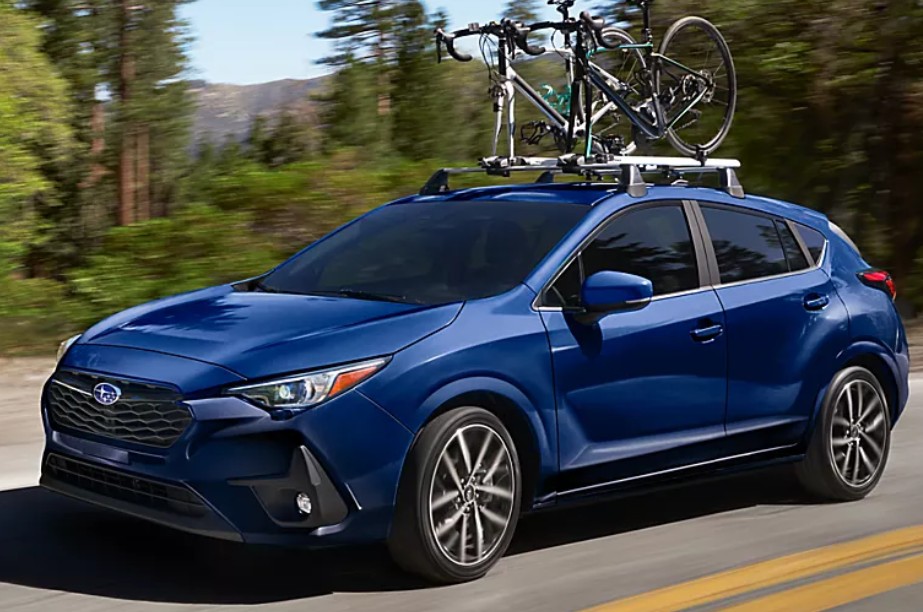
Shopping for a used Subaru Impreza can feel a little like standing in front of a long restaurant menu: plenty of good choices, a few tempting bargains, and several options that deserve a closer look before we commit. The Impreza has been around for decades, and although its basic recipe has remained recognizable—compact dimensions, boxer engines, and standard or widely available all-wheel drive—the car has changed enormously from one generation to another.
So, what are the Subaru Impreza years to buy?
For most buyers, 2024-2026, 2020-2023, 2017-2019, and carefully selected 2015-2016 models deserve the strongest consideration. Which one makes the most sense depends on budget, mileage, maintenance history, technology expectations, and whether we prefer a sedan, hatchback, or newer hatchback-only configuration.
The 2024 redesign is particularly attractive because Subaru improved crash protection and lighting, while the newest Impreza continues to come with standard Symmetrical All-Wheel Drive. The 2025 lineup, for example, offers 2.0-liter engines in Base and Sport trims and a stronger 2.5-liter engine in the RS.
But buying the newest Impreza isn't automatically the smartest financial decision. Sometimes a five-year-old example with complete service records beats a shiny newer car that has been neglected.
Let's dig into the generations, identify the sweet spots, and figure out which Impreza belongs on our shopping list.
Content in this publication
- What Are the Best Subaru Impreza Years to Buy?
- Why Model Year Matters When Buying an Impreza
- 2024-2026 Subaru Impreza: Best Years for Modern Buyers
- 2021-2023 Subaru Impreza: The Used-Car Sweet Spot
- 2017-2020 Subaru Impreza: Excellent Balance of Age and Price
- 2019-2020 Subaru Impreza: Our Favorite Older Value Range
- 2015-2016 Subaru Impreza: Best Years for Budget Buyers?
- Should We Buy a Subaru Impreza Older Than 2015?
- Subaru Impreza Hatchback or Sedan: Which Should We Buy?
- Is the Subaru Impreza Reliable Enough to Buy Used?
- What Mileage Is Too High for a Used Subaru Impreza?
- Why AWD Makes the Impreza Different
- Which Subaru Impreza Trim Should We Buy?
- Safety: Another Reason to Consider Newer Impreza Years
- What About Recalls?
- How to Choose Between Two Subaru Impreza Years
- Should We Buy a Brand-New Impreza Instead?
- Which Subaru Impreza Year Offers the Best Overall Value?
- Used Subaru Impreza Buying Checklist
- Who Should Buy a Subaru Impreza?
- Who Should Look at Something Else?
- Final Verdict: The Subaru Impreza Years We'd Buy
- Frequently Asked Questions About Subaru Impreza Years to Buy
What Are the Best Subaru Impreza Years to Buy?
If we want the short version before diving into the details, these are the periods we'd investigate first:
- 2024-2026: Best for modern safety, technology, refinement, and the newest Impreza design.
- 2021-2023: Strong choice for buyers wanting a relatively modern Impreza without paying near-new-car prices.
- 2017-2020: One of the most appealing used-car ranges thanks to newer-generation construction, good practicality, and widespread availability.
- 2015-2016: Worth considering as a budget purchase when maintenance history and condition are excellent.
- Older models: Potentially inexpensive and charming, but condition becomes dramatically more important than model year.
There's an important distinction here. Calling something one of the best years does not mean every vehicle from that year will be trouble-free. A neglected 2022 Impreza can be a worse purchase than a meticulously maintained 2016.
With used cars, the calendar tells only half the story.
Why Model Year Matters When Buying an Impreza
Cars don't evolve evenly.
A redesigned model may bring stronger construction, better driver-assistance technology, a different infotainment system, revised engines, or updated transmissions. Then manufacturers refine that formula over several years.
That's why savvy used-car shoppers often look at generations rather than treating every model year independently.
Early Versus Late Generation Imprezas
The first year of a redesign gives us the latest architecture and technology, but later years sometimes benefit from incremental updates.
Think of a vehicle generation like a smartphone operating system. Version 1 introduces the big changes. Versions 2, 3, and 4 polish the experience.
That doesn't mean we should automatically avoid first-year vehicles. The redesigned 2024 Impreza, for instance, brought meaningful safety improvements. IIHS noted better side protection and standard good-rated headlights compared with the preceding version.
Instead, we should simply understand what changed and shop accordingly.
2024-2026 Subaru Impreza: Best Years for Modern Buyers
For shoppers prioritizing safety features, a contemporary cabin, newer technology, and relatively low age, the newest generation is difficult to ignore.
Subaru redesigned the Impreza for 2024, and one of the biggest changes was surprisingly simple: the sedan disappeared.
The modern Impreza is now a five-door hatchback.
That decision makes sense when we consider what many Impreza owners actually want—compact exterior dimensions combined with flexible cargo space.
Why the 2024 Impreza Is Worth Buying
The 2024 model represented a meaningful redesign rather than a cosmetic refresh.
IIHS reported that the redesigned Impreza improved its performance in the organization's updated side-impact evaluation and gained good-rated headlights across the lineup. Standard front crash-prevention technology also performed strongly in pedestrian evaluations.
That gives the 2024 model a major advantage for buyers whose priorities include contemporary crash protection.
The structure also feels like a more mature interpretation of the Impreza formula.
We still get:
standard all-wheel drive,
a low-mounted boxer engine,
a practical hatchback body,
reasonable fuel economy,
and the secure road manners Subaru owners expect.
But the package feels considerably more modern.
2025 Subaru Impreza: A Particularly Attractive Choice
The 2025 model keeps the same core architecture, making it another year we'd happily place high on our shopping list.
The range consists of Base, Sport, and RS versions.
Subaru lists a 2.0-liter boxer four-cylinder for the Base and Sport and a 2.5-liter boxer four-cylinder for the RS. All three retain standard Symmetrical All-Wheel Drive. Official EPA-oriented figures published by Subaru list up to 34 mpg highway for the 2.0-liter versions and 33 mpg for the RS.
Who Should Buy the Impreza RS?
If there's one complaint we've heard repeatedly about ordinary compact cars, it's that sensible can sometimes become sleepy.
The RS helps.
Its 2.5-liter engine provides more muscle than the standard 2.0-liter setup. It isn't a WRX wearing casual clothes, and buyers expecting turbocharged fireworks will be disappointed. Still, it gives the Impreza noticeably more personality.
For daily driving, mountain roads, highway merging, and passengers plus cargo, that extra output can make the RS feel more relaxed.
Who Should Stick With the 2.0-Liter Impreza?
Not everyone needs the RS.
If our priorities are commuting, fuel economy, winter traction, practicality, and keeping the purchase price down, the Base or Sport can make more sense.
We're buying an Impreza, after all—not auditioning for a rally stage every Tuesday morning.
2021-2023 Subaru Impreza: The Used-Car Sweet Spot
This is where things become particularly interesting.
A late fifth-generation Impreza can provide much of the equipment, practicality, and everyday usability buyers want while avoiding a large portion of new-car pricing.
That combination puts 2021, 2022, and 2023 models high on our list when shopping used.
Why Late Fifth-Generation Cars Make Sense
By these years, the generation had been in production for several seasons.
That matters because buyers aren't paying for a newly introduced platform while still getting a vehicle that doesn't feel ancient.
These cars also offer one major advantage over the current generation: buyers can find both sedan and hatchback configurations depending on model year and market.
If we love the Impreza formula but don't need a hatch, that's important.
2022 and 2023 Impreza Models for Value Seekers
A well-maintained 2022 or 2023 is the kind of car we'd call a rational purchase.
It isn't old enough to feel like a bargain-bin compact, yet depreciation can make it substantially more approachable than a brand-new vehicle.
Insurance, financing, mileage, trim, and regional used-car prices will ultimately determine the deal, but these years occupy a useful middle ground.
It's the automotive equivalent of buying last year's flagship phone: most of the experience remains while someone else has already swallowed the first bite of depreciation.
2017-2020 Subaru Impreza: Excellent Balance of Age and Price
The fifth-generation Impreza arrived for the 2017 model year.
For shoppers on a more moderate budget, 2017 through 2020 deserves serious attention.
The strongest examples can deliver a satisfying balance of modern design, standard AWD, manageable fuel consumption, and considerably lower used prices than today's Impreza.
Why the 2017 Generation Was Important
The 2017 Impreza introduced Subaru's newer-generation platform architecture to the model.
That brought the car into a more contemporary era.
Compared with much older Imprezas, the fifth-generation car feels less agricultural and more like a mainstream compact that happens to have AWD.
That's a meaningful distinction.
Older Subaru models can have tremendous character, but newer buyers often care more about quietness, ride quality, smartphone connectivity, safety equipment, and highway refinement.
Should We Buy a 2017 Impreza?
Potentially, yes.
We wouldn't reject a 2017 simply because it was the first year of its generation. Instead, we'd evaluate the individual car carefully.
Look for complete service records, smooth CVT operation, consistent engine behavior, even tire wear, and evidence that previous owners understood something critical about AWD vehicles: matching tires matter.
If a later 2018-2020 example costs only slightly more, however, we'd normally lean toward the newer car.
Age matters.
Rubber components age. Batteries age. Paint ages. Suspension components accumulate wear. Electronics experience thousands more heat cycles.
Two or three extra model years can therefore be valuable even when the basic design is nearly identical.
2019-2020 Subaru Impreza: Our Favorite Older Value Range
If our budget doesn't stretch into 2021-and-newer territory, we'd pay special attention to 2019 and 2020.
These years sit comfortably inside the fifth generation without being the earliest examples.
They can be especially appealing for someone who needs an inexpensive commuter capable of handling rain, snow, gravel roads, and changing weather without stepping into an SUV.
Why These Years Work So Well for Practical Buyers
The Impreza's secret weapon has never been raw horsepower.
It's versatility.
Many competitors are quicker. Some have fancier interiors. Others produce better highway fuel economy because they don't carry an AWD system around every day.
Yet the Impreza combines characteristics that are surprisingly difficult to reproduce:
compact-car maneuverability,
year-round traction,
a low center of gravity,
available hatchback practicality,
and relatively sensible running costs.
That's why a clean 2019 or 2020 can be more useful than a similarly priced crossover.
You may be interested in reading BMW M5 vs M3: Which BMW M Car Is Better?
We don't necessarily need a taller vehicle just because rain exists.
2015-2016 Subaru Impreza: Best Years for Budget Buyers?
Now we're approaching territory where condition starts to overwhelm model-year rankings.
A 2015 or 2016 Impreza can still make sense if the purchase price is attractive and the car has been maintained properly.
At this age, however, we wouldn't buy one remotely or based solely on a shiny set of dealership photographs.
A pre-purchase inspection becomes extremely valuable.
What Makes a 2015-2016 Impreza Appealing?
Price.
That's the obvious answer.
These cars can bring AWD capability into a price bracket populated by older front-wheel-drive compacts.
For someone living where snow, steep wet roads, or unpaved surfaces are part of life, that can be attractive.
They're also relatively straightforward compared with increasingly technology-heavy new vehicles.
But simplicity doesn't make age disappear.
What Should We Inspect Before Buying?
We'd pay particular attention to service records, oil levels, fluid condition, wheel bearings, suspension noises, exhaust corrosion, cooling-system condition, and transmission behavior.
Check the tires too.
Four-wheel traction systems work best when all four tires have compatible dimensions and similar levels of wear.
One nearly new tire alongside three worn ones is not something we'd casually ignore.
Should We Buy a Subaru Impreza Older Than 2015?
We can—but now we're buying the individual vehicle more than the model year.
A fifteen-year-old car may have lived several entirely different lives.
One could have belonged to a meticulous owner who changed fluids religiously, stored it indoors, drove mostly highway miles, and kept every receipt.
Another could have spent winters collecting road salt underneath the chassis while bouncing between owners who considered dashboard warning lights decorative.
Both can carry the same Subaru badge.
That's why generic recommendations lose power as cars age.
When an Older Impreza Is Worth Considering
An older car can still be a good purchase when:
the body and undercarriage are solid,
maintenance records are comprehensive,
the engine starts cleanly from cold,
the transmission operates correctly,
all four tires match,
there are no unexplained warning lights,
and an independent mechanic gives it a clean bill of health.
History becomes more important than mileage alone.
A 90,000-mile vehicle with poor maintenance can frighten us more than a 140,000-mile example that has been cared for obsessively.
Subaru Impreza Hatchback or Sedan: Which Should We Buy?
This question becomes relevant when shopping older generations because the newest Impreza no longer gives us a choice.
Starting with the 2024 redesign, the Impreza became hatchback-only.
For most buyers, we'd choose the hatchback.
Why the Hatchback Is So Practical
Lift the rear hatch and suddenly the Impreza becomes much more versatile than its compact footprint suggests.
Groceries are easy.
Luggage is easy.
Dogs, camping equipment, boxes, sports gear, and awkward furniture become manageable.
The 2025 Impreza, for example, offers about 20.4 cubic feet of cargo volume behind the rear seats and up to 56 cubic feet with the rear seats folded, according to Subaru's published specifications.
That's one reason the modern Impreza can function as an SUV alternative for buyers who don't need extra ground clearance.
Why We Might Still Prefer the Sedan
Older sedan versions can cost less on the used market and sometimes appeal to drivers who prefer a traditional trunk.
A trunk also keeps luggage visually separated from the passenger compartment.
More importantly, sedans can occasionally represent better value simply because hatchbacks tend to attract stronger demand.
If two mechanically equivalent cars sit beside each other and the sedan saves us thousands, practicality suddenly becomes negotiable.
Is the Subaru Impreza Reliable Enough to Buy Used?
Reliability discussions become messy because people often want a single number.
Cars don't work that way.
The reliability of an Impreza depends on model year, maintenance, climate, mileage, previous ownership, accident history, and how the vehicle was driven.
A Subaru that spent its life commuting gently through suburbs is different from one that spent weekends attacking muddy forest roads.
Maintenance History Matters More Than Internet Reputation
We'd choose a thoroughly documented Impreza over an undocumented example from a supposedly superior year.
Oil-change records matter.
Transmission servicing matters.
Cooling-system maintenance matters.
Tires matter.
Brake-fluid changes matter.
And evidence of repaired accident damage matters.
The best Subaru Impreza year is ultimately the year attached to the best actual car we can afford.
What Mileage Is Too High for a Used Subaru Impreza?
There isn't a magical odometer reading at which an Impreza suddenly becomes bad.
Mileage needs context.
Highway mileage can be relatively gentle. Repeated short journeys can be surprisingly demanding because the engine experiences far more cold starts.
A used car's service history therefore deserves equal billing with its odometer.
How We'd Judge Mileage
At lower mileage, we care about age-related deterioration and whether servicing was performed on time.
At moderate mileage, we start paying closer attention to brakes, tires, wheel bearings, suspension components, and fluid history.
At high mileage, we'd want a professional inspection and enough room in the budget for repairs.
The question shouldn't simply be, "How many miles does it have?"
A better question is, "What happened during those miles?"
Why AWD Makes the Impreza Different
This is arguably the reason people keep returning to Subaru.
Most mainstream compact cars have historically been front-wheel drive. Subaru built much of the Impreza's identity around standard AWD.
The current Impreza still includes Subaru Symmetrical All-Wheel Drive across the lineup.
That's valuable, but we should understand what AWD does—and what it doesn't.
AWD Helps You Go, Not Defy Physics
AWD can improve traction when accelerating on slippery surfaces.
It doesn't magically shorten braking distances.
Good tires remain crucial.
A front-wheel-drive car wearing excellent winter tires can be safer in certain conditions than an AWD vehicle sliding around on worn all-season rubber.
So if we're purchasing an Impreza specifically for winter weather, we'd reserve some budget for tires instead of assuming the drivetrain does everything.
Which Subaru Impreza Trim Should We Buy?
Used Impreza trim names and equipment vary by year and market, but the philosophy is straightforward.
Base trims maximize value.
Mid-level trims usually offer the features most drivers actually notice.
Higher trims add comfort and technology.
And in the newest generation, the RS is the performance-oriented naturally aspirated option.
Base Impreza: Keep It Simple
The Base model makes sense when affordability is everything.
You may be interested in readingBMW M5 vs M3: Which BMW M Car Is Better?You may be interested in reading
BMW M5 vs M4: Which BMW M Car Is Better?We still get the underlying Impreza architecture and AWD system without paying for every available feature.
For commuters, students, first-time buyers, or anyone who considers a heated steering wheel a luxury rather than a human right, the basic car may be enough.
Impreza Sport: The Middle Ground
Sport trims often occupy the sweet spot.
They generally provide enough styling and equipment upgrades to feel special without wandering too far from the Impreza's value-focused roots.
For a used buyer, we'd compare actual installed equipment rather than trusting the trim badge alone.
Impreza RS: Best Newer Impreza for More Power
The newest RS stands apart thanks to its larger 2.5-liter boxer engine, while Base and Sport versions use a 2.0-liter unit.
If our budget allows it, it's the version we'd test-drive first.
Then we'd drive the 2.0-liter car immediately afterward.
That back-to-back comparison tells us whether the additional performance is worth the premium far better than horsepower figures on a screen.
Safety: Another Reason to Consider Newer Impreza Years
Safety technology evolves quickly.
That's one argument for stretching the budget toward a newer vehicle when possible.
The redesigned 2024 Impreza earned strong results in several IIHS assessments, including good ratings in the small-overlap frontal and updated side evaluations. IIHS also gave its standard pedestrian front-crash-prevention system a good rating.
Notably, IIHS says 2024-2026 Imprezas built after December 2023 received rear-seatbelt changes intended to improve protection in its updated moderate-overlap test.
That's the kind of obscure manufacturing detail we'd never see from a simple "best years" ranking.
Yet it's exactly the sort of detail that can matter to a family buying a car for long-term ownership.
What About Recalls?
A recall doesn't automatically make a vehicle a bad purchase.
Nearly every large manufacturer has recalls.
What matters is whether the required work was completed.
Before buying any used Impreza, we should run the car's VIN through the relevant national recall database. In the United States, NHTSA allows shoppers to check VINs for unresolved safety recalls.
That's worth doing even when purchasing from a dealer.
Never assume somebody else checked.
How to Choose Between Two Subaru Impreza Years
Suppose we're comparing a 2019 and a 2021.
Which should we buy?
The answer isn't automatically 2021.
Imagine the 2019 has one owner, full maintenance documentation, four matching premium tires, no accidents, immaculate paint, and a spotless inspection.
The 2021 has incomplete records, mismatched tires, suspicious body-panel gaps, and three warning lights that the seller promises are "just sensors."
We know which keys we'd take.
Use Condition as the Tiebreaker
When deciding between similar Imprezas, we'd rank our priorities roughly like this:
service history first, mechanical condition second, accident/rust history third, mileage fourth, equipment fifth, model year sixth.
Model year becomes much more important when it represents a substantial technological or structural upgrade, such as the 2024 redesign.
Otherwise, condition wins.
Should We Buy a Brand-New Impreza Instead?
Sometimes the used-car bargain isn't much of a bargain.
Late-model used vehicles can carry surprisingly strong resale values. When interest rates, warranty coverage, dealer incentives, and financing are included, a brand-new Impreza may occasionally make more financial sense than a lightly used one.
We need to compare total cost—not just sticker prices.
New Versus Used Impreza
A new Impreza gives us maximum warranty coverage, no mystery maintenance history, modern safety technology, and the ability to choose specification.
A used Impreza gives us depreciation savings.
The sweet spot depends on the price difference.
If a two-year-old car saves only a small amount, buying new becomes attractive.
If it saves several thousand dollars while remaining in excellent condition, used starts looking much better.
Which Subaru Impreza Year Offers the Best Overall Value?
If we had to narrow everything down to a few targets, we'd divide the answer by budget.
Best Overall: 2021-2023 Subaru Impreza
These are our sweet-spot years for many used buyers.
They're modern enough to avoid feeling dated, old enough to have undergone meaningful depreciation, and widely recognizable as the mature end of the previous generation.
Best Newer Choice: 2024-2026 Subaru Impreza
Choose these years when modern crash protection, newer driver-assistance systems, hatchback practicality, and updated cabin technology outweigh purchase-price savings.
The redesign also brought stronger performance in IIHS's updated side-impact testing compared with the 2023 model.
Best Budget Sweet Spot: 2019-2020 Subaru Impreza
These are the years we'd hunt when trying to balance cost with relative modernity.
Find one with meticulous history, and we may end up with a remarkably capable daily driver for the money.
Best Low-Budget Choice: 2015-2016 Subaru Impreza
These can work when affordability comes first.
But inspections become non-negotiable.
At this age we're not buying a model-year reputation—we're buying the consequences of someone else's maintenance habits.
Used Subaru Impreza Buying Checklist
Before money changes hands, we'd verify the following:
- Check the VIN for outstanding recalls.
- Request complete maintenance records.
- Start the engine from completely cold.
- Listen for unusual rattles, knocking, humming, or bearing noises.
- Confirm the transmission operates smoothly.
- Test every dashboard warning light during startup.
- Inspect underneath the car for corrosion and fluid leaks.
- Check that all four tires match in size and have similar tread depth.
- Verify alignment by looking for uneven tire wear.
- Test the air conditioning, infotainment system, windows, locks, cameras, and driver-assistance equipment.
- Check for accident repairs and inconsistent paint.
- Inspect the cargo area and spare-wheel well for signs of water intrusion.
- Drive at both city and highway speeds.
- Have an independent mechanic perform a pre-purchase inspection.
- Compare the asking price with several equivalent cars—not just one listing.
That final inspection can feel like an unnecessary expense when we're excited about a car.
It's usually much cheaper than discovering somebody else's mechanical problem after the paperwork is signed.
Who Should Buy a Subaru Impreza?
The Impreza works particularly well for buyers who want AWD but don't actually need an SUV.
That's a larger group than manufacturers' marketing departments might have us believe.
If we drive primarily on paved roads, don't need huge ground clearance, and want better maneuverability than a crossover, the Impreza makes a compelling case.
The Impreza Makes Sense If We Value
Year-round traction, compact dimensions, predictable handling, hatchback practicality, reasonable fuel consumption, and a relatively understated personality.
It's not trying to be a luxury car.
It's not trying to be a truck.
It's not pretending every commute is an expedition through Patagonia.
It's simply a practical compact car with a particularly useful drivetrain.
Who Should Look at Something Else?
The Impreza isn't perfect.
Buyers wanting aggressive acceleration may find ordinary 2.0-liter versions too relaxed.
Drivers needing substantial ground clearance should probably investigate the Subaru Crosstrek instead.
Anyone prioritizing maximum fuel economy may find efficient front-wheel-drive rivals more compelling.
And buyers who specifically want a traditional sedan need to shop pre-2024 Imprezas or consider another model because the current generation is hatchback-only.
There's no shame in choosing something else.
Good car buying isn't about proving one model is objectively "best."
It's about finding the machine whose compromises match our life.
Final Verdict: The Subaru Impreza Years We'd Buy
After looking across the lineup, 2021-2023 models represent perhaps the most attractive used-car sweet spot, especially for shoppers wanting a modern Impreza without paying for the newest generation.
For buyers with larger budgets, 2024-2026 models are the ones to target. The redesign improved safety performance, introduced a hatchback-only body strategy, and gives us access to the stronger 2.5-liter RS alongside the familiar 2.0-liter versions.
On a tighter budget, 2019-2020 Imprezas deserve serious consideration. We'd also consider a clean 2015-2016 example, but only after a thorough inspection.
The central lesson is simple: don't let a model-year ranking make the purchase for us.
A car is more than its birth certificate.
Maintenance records, condition, mileage, rust, tires, ownership history, accident repairs, and mechanical inspection can completely overturn a generic "best year" recommendation.
Find the right Impreza, and we get something increasingly uncommon in today's market: a straightforward compact car that combines everyday efficiency with standard all-wheel-drive confidence.
That's a pretty clever recipe.
Frequently Asked Questions About Subaru Impreza Years to Buy
1. What is the best Subaru Impreza year to buy used?
For many used buyers, 2021-2023 models provide an attractive balance between age, features, depreciation, and modern design. We'd also strongly consider 2019-2020 examples for a lower budget. The actual condition and service history of the vehicle should ultimately carry more weight than its model year alone.
2. Is the 2024 Subaru Impreza a good year to buy?
Yes. The Impreza was redesigned for 2024, bringing updated styling, technology, and meaningful safety improvements. IIHS reported improved side-impact protection and good-rated headlights across the lineup. The 2024-and-newer Impreza is hatchback-only, so sedan buyers will need an earlier model.
3. Is a 2019 Subaru Impreza worth buying?
A well-maintained 2019 Impreza can be an excellent value. It belongs to the fifth generation and offers a more contemporary driving experience than substantially older cars while typically costing much less than nearly new examples. We'd prioritize cars with strong service histories, matching tires, clean accident records, and a successful pre-purchase inspection.
4. How many miles is too many for a used Subaru Impreza?
There's no universal cutoff. A properly maintained higher-mileage Impreza can be a better purchase than a neglected low-mileage car. Once mileage becomes substantial, we'd budget for wear items and insist on a mechanical inspection. Maintenance records, transmission condition, fluid history, corrosion, suspension wear, and previous repairs matter as much as the odometer.
You may be interested in readingBMW M5 vs M3: Which BMW M Car Is Better?You may be interested in reading
BMW M5 vs M4: Which BMW M Car Is Better?You may be interested in reading
BMW M5 vs Audi RS7: Which Super Sedan Deserves Your Garage?5. Should I buy a Subaru Impreza or Crosstrek?
Choose the Impreza if we primarily want an efficient compact hatchback with AWD and don't need additional ground clearance. Consider the Crosstrek if rough roads, snow depth, outdoor recreation, or extra ride height matter more. The two models share some fundamental Subaru characteristics, but the Crosstrek leans closer to crossover territory while the Impreza remains a road-focused compact car.
If you want to know other articles similar to Subaru Impreza Years to Buy: The Best Model Years for a Smart Purchase you can visit the category Models.
Kia Sportage Trim Levels: Complete 2027 Comparison
Toyota Corolla Cross vs RAV4: Which SUV Is Better?
Haval Jolion vs Omoda C5: Which SUV Is Better?
Haval Jolion vs Chery Tiggo 4 Pro: Full Comparison
Haval Jolion vs H6: Which SUV Is Better in 2026?
Haval Jolion vs Toyota Corolla Cross: Which SUV Is Better?
Leave a Reply
More content of your interest