
Subaru XV vs Toyota RAV4: Which SUV Is the Better Buy?

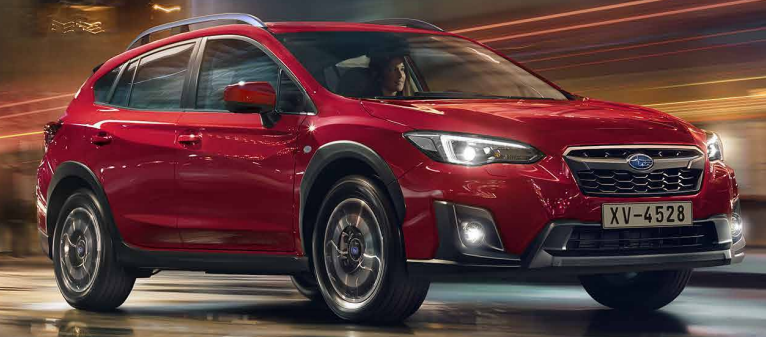
Choosing between the Subaru XV vs Toyota RAV4 looks simple until we park them next to each other. Both wear the crossover-SUV uniform, both have strong reputations for everyday usability, and both appeal to drivers who want something more adventurous than a conventional hatchback. Yet underneath that familiar SUV shape, they approach the job from very different directions.
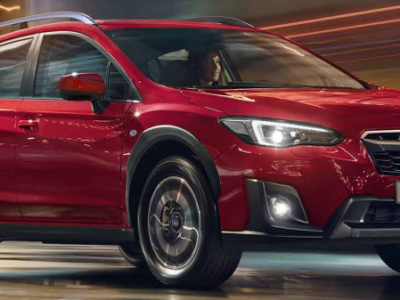
The Subaru XV is the smaller, more agile option. It feels almost like a raised hatchback wearing hiking boots. The Toyota RAV4, meanwhile, is a larger family SUV with more interior space, a bigger luggage area, and a wider range of powertrain choices depending on model year and market.
That difference matters.
If we're mainly driving through crowded streets, squeezing into parking spaces, escaping onto gravel roads at weekends, and rarely carrying a mountain of luggage, the XV makes a lot of sense. If children, road trips, shopping bags, luggage, rear-seat passengers, and long-distance efficiency dominate our priorities, the RAV4 begins to pull ahead.
So, is the Subaru XV better than the Toyota RAV4?
Not universally.
Let's break the comparison down piece by piece and figure out which one fits the way we actually drive.
Content in this publication
- Subaru XV vs Toyota RAV4 at a Glance
- What Is the Main Difference Between Subaru XV and Toyota RAV4?
- Subaru XV vs Toyota RAV4 Size
- Subaru XV vs Toyota RAV4 Interior Space
- Subaru XV vs Toyota RAV4 Boot Space
- Subaru XV vs Toyota RAV4 Engine and Performance
- Toyota RAV4 Performance
- Subaru XV vs Toyota RAV4 Fuel Economy
- Subaru XV vs Toyota RAV4 AWD Capability
- Subaru XV vs Toyota RAV4 Driving Experience
- Subaru XV vs Toyota RAV4 Safety
- Subaru XV vs Toyota RAV4 Reliability
- Subaru XV vs Toyota RAV4 Maintenance Costs
- Subaru XV vs Toyota RAV4 for City Driving
- Subaru XV vs Toyota RAV4 for Families
- Subaru XV vs Toyota RAV4 for Road Trips
- Subaru XV vs Toyota RAV4 for Snow and Bad Weather
- Subaru XV vs Toyota RAV4 Price and Value
- Pros and Cons of the Subaru XV
- Pros and Cons of the Toyota RAV4
- Subaru XV vs Toyota RAV4: Which Should We Buy?
- Closing Thoughts: Subaru XV or Toyota RAV4?
- Frequently Asked Questions
Subaru XV vs Toyota RAV4 at a Glance
Before diving into the details, here's the simplest way to understand these two SUVs.
| Category | Subaru XV | Toyota RAV4 |
|---|---|---|
| Vehicle type | Compact crossover | Medium SUV |
| Best suited to | Couples, small families, urban/adventure driving | Families, road trips, everyday practicality |
| Size | Smaller | Larger |
| AWD | A major part of its identity | Available depending on version |
| Ground clearance | Excellent for its class | Good SUV clearance |
| Cargo capacity | Modest | Significantly more practical |
| Urban driving | Excellent | Good |
| Rear-seat space | Adequate | Roomier |
| Fuel economy | Reasonable | Hybrid versions can be excellent |
| Driving personality | Agile, secure, outdoorsy | Comfortable, mature, versatile |
| Parking | Easier | Requires more space |
| Overall practicality | Good | Excellent |
The important thing is that the RAV4 isn't simply an XV rival with a Toyota badge. It's a larger vehicle.
Think of the XV as the backpacker of the pair: compact, adventurous, and ready to leave the pavement. The RAV4 is more like the family traveller who arrives with three suitcases, snacks, chargers, and a carefully planned route.
What Is the Main Difference Between Subaru XV and Toyota RAV4?
Size and purpose.
The Subaru XV was positioned as a compact SUV, whereas the Toyota RAV4 sits further up the SUV ladder. That distinction influences nearly everything else: passenger space, luggage capacity, weight, manoeuvrability, price, and even the way each vehicle feels from behind the wheel.
In late Australian XV specifications, for example, Subaru listed the XV at 4,485 mm long with 220 mm of ground clearance.
Toyota's current-generation Australian RAV4 is approximately 4,600 mm long in conventional versions, reinforcing its position as the bigger vehicle.
Those numbers don't look dramatically different on paper, but vehicle packaging amplifies the gap.
The Toyota feels substantially more like a traditional family SUV. The XV feels more compact and car-like.
A Note About the Subaru XV Name
There's also an important naming issue.
In markets such as Australia, Subaru replaced the XV name with Crosstrek for the newer generation. Subaru describes the Crosstrek as the successor to the XV, rather than an entirely unrelated model.
So when researching a newer equivalent of the Subaru XV, we'll often find ourselves looking at the Subaru Crosstrek.
That matters when shopping used versus new. A used XV may be competing against an older RAV4, while someone shopping for today's equivalent will more realistically compare the Crosstrek with the latest RAV4.
Subaru XV vs Toyota RAV4 Size
The RAV4 wins if our definition of winning is simply "more vehicle."
But bigger isn't automatically better.
Exterior Dimensions and Everyday Usability
The XV's smaller footprint works beautifully in urban environments.
Narrow car parks, underground garages, tight streets, and crowded shopping centres are less intimidating. The Subaru feels like something we can place accurately without constantly wondering whether the rear bumper is about to introduce itself to a concrete pillar.
The RAV4 is still perfectly manageable, but we notice its extra dimensions.
The reward comes once we're inside.
The Toyota uses its larger body to deliver more room for people and cargo. If we've got growing teenagers in the back or regularly carry several adults, that additional space can matter far more than shaving a few centimetres off the vehicle's footprint.
Which Is Easier to Park?
The Subaru XV.
For dense city driving, we'd give the XV a clear advantage.
Visibility is generally good, its proportions are easy to understand, and the compact footprint removes some stress from parallel parking or manoeuvring through cramped garages.
That doesn't make the RAV4 cumbersome. It simply means the Subaru feels more natural when space gets tight.
Subaru XV vs Toyota RAV4 Interior Space
Here's where the Toyota starts earning its larger dimensions.
The XV's cabin is perfectly usable for four adults, and five passengers are possible when necessary. But its rear accommodation isn't as generous as the RAV4's.
The Toyota provides a broader sense of space.
It's easier to imagine adults sitting comfortably in the second row for a longer journey, particularly when the front occupants are tall.
Parents may also appreciate the additional breathing room when fitting child seats.
Front-Seat Comfort
Both SUVs offer comfortable, upright driving positions.
The XV sits in an interesting middle ground. We get a better view over traffic than in a conventional hatchback without feeling as though we're climbing into a large SUV every morning.
The RAV4 feels more substantial.
Its cabin creates more of that "proper SUV" atmosphere, which some buyers love. There's generally more room around the occupants and more space for everyday clutter.
Cup holders, phones, bottles, cables, sunglasses—we somehow accumulate an entire household inside a vehicle, don't we?
The Toyota accommodates that lifestyle better.
Rear-Seat Comfort
For occasional passengers, either vehicle can work.
For regular family duties, RAV4 takes the advantage.
That extra room becomes especially noticeable on journeys lasting several hours. A cramped cabin can turn a peaceful holiday drive into a rolling complaint department surprisingly quickly.
Subaru XV vs Toyota RAV4 Boot Space
If luggage capacity is high on our shopping list, this may settle the argument.
The RAV4 offers far greater cargo usefulness.
Late Australian Subaru XV specifications listed luggage capacity at roughly 310 to 345 litres depending on variant, while Toyota quotes considerably larger cargo figures for the current RAV4. Measurement methods and model generations can differ, so the figures shouldn't be treated as a perfect laboratory comparison, but the practical conclusion is straightforward: the RAV4 has the larger boot.
What Fits in the XV?
The Subaru can comfortably handle normal daily life:
- Weekly groceries
- A couple of travel bags
- Gym equipment
- Hiking gear
- Small pushchairs depending on design
- Everyday shopping
- Weekend luggage for two
Problems begin when "a couple of bags" turns into four passengers each bringing luggage.
Suddenly we're playing automotive Tetris.
What Fits in the RAV4?
The RAV4 gives us substantially more freedom.
That makes it more suitable for:
- Family holidays
- Larger pushchairs
- Camping gear
- Airport runs
- Sports equipment
- Larger shopping trips
- Frequent travel with rear passengers
If we're constantly folding seats down in the XV, that's probably our signal that we really need the Toyota.
Subaru XV vs Toyota RAV4 Engine and Performance
Engine choices vary considerably by country and model year, so buyers should compare the exact vehicles available locally rather than assuming every XV or RAV4 has the same drivetrain.
Broadly, though, they have different personalities.
The XV traditionally emphasises predictable traction, smoothness, and everyday usability rather than outright acceleration.
The RAV4, particularly in its hybrid forms, delivers stronger performance while combining it with impressive efficiency.
Subaru XV Performance
Many XV models use Subaru's familiar horizontally opposed Boxer engine combined with a continuously variable transmission.
The combination is smooth and easygoing.
We wouldn't describe the XV as fast. Put our foot down hard and the experience is more "we'll get there" than "hold on."
But speed isn't really the point.
The XV's strengths emerge on winding roads, poor surfaces, wet conditions, and loose gravel. Its relatively compact dimensions and AWD system give the driver confidence rather than adrenaline.
Does the Subaru XV Feel Underpowered?
That depends on expectations.
You may be interested in reading Subaru XV vs Mazda CX-30: Which Compact SUV Should We Choose?
During normal commuting, it's generally adequate.
When overtaking at highway speeds, climbing steep gradients with passengers aboard, or asking for urgent acceleration, some versions can feel modest.
If outright performance ranks near the top of our priorities, the RAV4—particularly a stronger hybrid configuration—may be more satisfying.
Toyota RAV4 Performance
The RAV4's powertrain story has increasingly centred around electrification.
For example, Toyota's 2026 Australian lineup includes hybrid and plug-in hybrid configurations, with different front- and all-wheel-drive combinations depending on grade.
That's a major advantage.
Hybrid power suits this kind of family SUV beautifully because electric assistance can deliver smooth low-speed response while reducing fuel consumption.
The RAV4 feels less like a vehicle struggling against its own mass and more like one with enough muscle in reserve.
Subaru XV vs Toyota RAV4 Fuel Economy
For drivers covering lots of kilometres, fuel consumption can become more important than horsepower, wheels, or fancy interior trim.
And this is where Toyota's hybrid strategy becomes difficult to ignore.
Current RAV4 hybrid specifications in Australia quote combined laboratory consumption in the mid-4 L/100 km range depending on drivetrain, though real-world results naturally vary with traffic, temperature, driving style, tyres, terrain, and load.
Older Subaru XV petrol models generally can't match that kind of hybrid efficiency.
Which Is Better for City Fuel Economy?
Usually, RAV4 Hybrid.
Hybrid systems thrive in stop-start conditions because they can recover energy while slowing and use electrical assistance when moving away again.
Traditional petrol engines spend urban driving burning fuel while crawling between traffic lights.
That's why the bigger Toyota can sometimes consume less fuel than a smaller conventional petrol crossover.
It sounds backwards, but hybrid technology changes the equation.
What About Highway Driving?
The difference may narrow during steady highway journeys.
At constant speeds, hybrids have fewer opportunities to exploit regenerative braking and electric-only operation.
Even so, the RAV4 remains highly competitive.
Subaru XV vs Toyota RAV4 AWD Capability
This category brings the Subaru back into the fight.
AWD isn't merely an optional personality trait for the XV. It's woven deeply into the vehicle's identity.
Late XV specifications included Subaru's symmetrical AWD system across the Australian range, while newer Crosstrek models continue to emphasise standard AWD capability.
Toyota offers AWD RAV4 versions too, but the two vehicles approach all-wheel drive differently depending on the powertrain.
Which Is Better on Gravel Roads?
We'd lean toward the Subaru.
The combination of:
- Compact dimensions
- Generous ground clearance
- AWD
- Predictable handling
- Good visibility
- Relatively manageable weight
makes the XV feel at home on unsealed roads.
It's like a mountain goat wearing everyday trainers.
The RAV4 is capable as well and gives us more room for camping equipment, but the Subaru feels particularly natural when the road becomes narrow, rough, or slippery.
Which Is Better Off-Road?
Neither is a heavy-duty 4x4, and we shouldn't confuse crossover AWD capability with the hardware found in vehicles designed for serious rock crawling.
Still, the XV is surprisingly adventurous.
Its 220 mm ground clearance in late Australian specifications is particularly useful when crossing rutted tracks or uneven approaches.
The RAV4 offers useful rough-road capability in appropriate AWD versions, but its bigger strength is versatility rather than hardcore off-road performance.
Subaru XV vs Toyota RAV4 Driving Experience
The XV is the more intimate driving companion.
The RAV4 is the more relaxed family transport.
XV: Smaller and More Playful
Because it feels compact, the Subaru changes direction easily and communicates its dimensions clearly.
On twisting roads, that makes it surprisingly enjoyable.
The steering isn't sports-car sharp, but the XV feels planted and reassuring. Subaru's low-mounted Boxer-engine layout also contributes to the vehicle's balanced character.
It's the SUV we'd rather have when the journey includes a winding mountain road followed by ten kilometres of gravel.
RAV4: More Refined and Mature
The Toyota feels more grown up.
It generally prioritises ride comfort, cabin practicality, easy performance, and long-distance usability.
That's exactly what many SUV buyers actually want.
We may dream about muddy trails while configuring our new vehicle online, but most Monday mornings involve traffic, coffee, school runs, and supermarket car parks.
The RAV4 understands that reality.
Subaru XV vs Toyota RAV4 Safety
Safety has long been an important selling point for both brands.
Equipment changes by trim and production year, but modern versions may include technologies such as:
- Autonomous emergency braking
- Adaptive cruise control
- Lane assistance
- Blind-spot monitoring
- Rear cross-traffic alert
- Driver monitoring
- Parking assistance
- Multiple airbags
Subaru's EyeSight driver-assistance technology has become one of the brand's defining systems, while Toyota equips RAV4 models with its own suite of active safety technologies.
The sensible move when buying used is to check the exact specification rather than assuming a model name guarantees every feature.
A base vehicle from several years ago may differ substantially from today's equivalent.
Subaru XV vs Toyota RAV4 Reliability
Here's a category where neither vehicle deserves to be dismissed casually.
Both Subaru and Toyota have built strong reputations among buyers who expect vehicles to survive years of ordinary use.
But maintenance history matters more than the logo on the steering wheel.
A perfectly maintained XV can be a far better purchase than a neglected RAV4, and vice versa.
Subaru XV Reliability Considerations
When inspecting a used XV, we'd pay attention to:
- Complete servicing history
- CVT behaviour
- Engine oil condition
- Suspension noises
- Wheel-bearing noise
- Battery condition
- Warning lights
- Evidence of heavy off-road use
- Tyre wear consistency
Matching tyres can be particularly important on AWD vehicles.
Four tyres that differ significantly in size or wear aren't something we'd casually ignore.
Toyota RAV4 Reliability Considerations
On a used RAV4, we'd check:
- Service history
- Hybrid battery condition where applicable
- Cooling-system condition
- Suspension wear
- Brake condition
- Tyre wear
- Electrical features
- Accident repairs
- Recall completion
Toyota's hybrid technology has been around long enough that buying a used hybrid shouldn't automatically scare us, but age, mileage, climate, and previous maintenance still deserve attention.
Subaru XV vs Toyota RAV4 Maintenance Costs
The smaller Subaru might appear to be the automatic winner, but ownership costs aren't determined by size alone.
Servicing schedules, tyre prices, insurance, parts availability, fuel use, and local labour rates all influence the calculation.
The RAV4's potentially lower fuel consumption in hybrid form can compensate for some other running expenses, particularly for high-mileage drivers.
The XV's AWD system, meanwhile, means tyre condition deserves particular attention.
Which Could Be Cheaper to Own?
For low annual mileage, the difference may not be dramatic.
For someone driving thousands of urban kilometres every month, RAV4 Hybrid's efficiency can become a meaningful financial advantage.
You may be interested in readingSubaru XV vs Mazda CX-30: Which Compact SUV Should We Choose?You may be interested in reading
Subaru XV vs Nissan Qashqai: Which Crossover Is Better?For someone purchasing an older used example at a lower upfront price, an XV may offer strong value.
We have to compare total ownership cost—not just what disappears from our bank account on purchase day.
Subaru XV vs Toyota RAV4 for City Driving
The XV wins this round.
Its compact proportions simply make urban life easier.
We get:
- Easier parking
- Better manoeuvrability
- Less intimidating dimensions
- Good visibility
- AWD confidence in poor weather
- Useful ride height without owning a large SUV
If 90% of our driving takes place around town and we rarely fill the rear seats, the XV's smaller size may actually be an advantage rather than a compromise.
Why haul around extra vehicle every single day if we don't need it?
Subaru XV vs Toyota RAV4 for Families
Now the pendulum swings back toward Toyota.
The RAV4 makes more sense for a growing family because it provides the commodity parents can never seem to have enough of:
space.
Space for child seats.
Space for bags.
Space for shopping.
Space for pushchairs.
Space between siblings who have suddenly decided that touching the same armrest constitutes an international incident.
The XV can absolutely serve a small family, but the RAV4 gives us more room to grow into the vehicle.
Subaru XV vs Toyota RAV4 for Road Trips
We'd choose the RAV4 for conventional road trips.
Why?
Greater cargo room, stronger available powertrains, better family accommodation, and excellent hybrid efficiency create a compelling package.
With passengers and luggage loaded aboard, those advantages become more obvious.
However, there's one exception.
If our definition of a road trip includes narrow mountain roads, gravel tracks, remote hiking destinations, and minimal luggage, the XV becomes extremely appealing.
This comparison isn't merely about which car goes farther.
It's about what we plan to do when we get there.
Subaru XV vs Toyota RAV4 for Snow and Bad Weather
The XV's AWD-oriented design gives it a strong reputation among drivers living in areas with difficult weather.
But AWD doesn't perform magic.
Tyres matter enormously.
A front-wheel-drive vehicle wearing suitable winter tyres can outperform an AWD vehicle running inappropriate tyres under certain conditions.
So we'd never buy the Subaru purely because the letters "AWD" appear on the specification sheet and assume physics has been defeated.
Still, when correctly equipped, the XV makes an excellent poor-weather companion.
AWD RAV4 variants are highly capable too and may suit families who need both traction and additional room.
Subaru XV vs Toyota RAV4 Price and Value
This category varies enormously because we're often comparing vehicles from different classes, generations, and ages.
Generally speaking, the XV's smaller positioning can mean a lower entry point, particularly on the used market.
The RAV4 may cost more but gives us more vehicle.
So the question isn't:
Which is cheaper?
It's:
Which gives us more of what we personally need for the money?
If we never use the RAV4's additional cargo and passenger space, paying extra for it offers limited value.
If the XV forces us to install a roof box every family holiday, the cheaper SUV may quickly start feeling like the wrong bargain.
Pros and Cons of the Subaru XV
Advantages
- Compact exterior dimensions
- Standard AWD on many markets and generations
- Excellent ground clearance
- Confidence on gravel and slippery surfaces
- Easy urban manoeuvrability
- Comfortable driving position
- Strong adventurous personality
- Easier parking than the RAV4
Disadvantages
- Smaller luggage area
- Less rear passenger room
- Performance can feel modest
- Older petrol versions aren't especially fuel-efficient compared with modern hybrids
- Not ideal for families needing maximum cargo capacity
Pros and Cons of the Toyota RAV4
Advantages
- Spacious interior
- Large cargo area
- Excellent family practicality
- Strong hybrid options
- Good fuel economy in hybrid versions
- Comfortable long-distance character
- AWD available on selected variants
- More versatile for passengers and luggage
Disadvantages
- Larger footprint
- Less convenient in tight parking spaces
- May cost considerably more depending on variant
- Doesn't feel as compact or nimble as the XV
- Buyers who don't need the extra room may be paying for unused capability
Subaru XV vs Toyota RAV4: Which Should We Buy?
Choose the Subaru XV if we:
- Spend lots of time driving in cities
- Want standard AWD confidence
- Frequently travel on gravel roads
- Prefer a smaller crossover
- Don't require a huge boot
- Usually carry one to four people
- Enjoy outdoor activities
- Want something between a hatchback and traditional SUV
Choose the Toyota RAV4 if we:
- Have a family
- Regularly carry rear passengers
- Need significantly more luggage room
- Travel long distances
- Prioritise hybrid fuel efficiency
- Want stronger available performance
- Carry pushchairs, sports equipment, or camping gear
- Prefer a more conventional midsize SUV
Our Verdict
If we had to recommend one to the widest possible audience, the Toyota RAV4 wins overall.
It's simply more versatile.
The spacious cabin, larger luggage capacity, family-friendly proportions, and increasingly sophisticated hybrid options make it an exceptionally well-rounded everyday SUV.
But that doesn't mean we'd automatically buy one.
For one or two people who enjoy outdoor adventures and primarily drive in urban areas, the Subaru XV may actually be the smarter vehicle.
It's smaller without feeling fragile, capable without pretending to be a hardcore off-roader, and practical without becoming cumbersome.
The XV is the scalpel.
The RAV4 is the Swiss Army knife.
Which tool is better depends entirely on what we're trying to cut.
Closing Thoughts: Subaru XV or Toyota RAV4?
The Subaru XV vs Toyota RAV4 debate becomes much easier once we stop treating them as identical competitors.
They aren't.
The XV prioritises compact dimensions, AWD confidence, manoeuvrability, and adventure-friendly ground clearance. It's particularly attractive for couples, smaller households, city dwellers, and drivers who regularly leave sealed roads behind.
The RAV4 prioritises interior room, cargo capacity, family usability, long-distance comfort, and efficient electrified powertrains. For buyers who need one vehicle to cover school runs, commuting, holidays, shopping, airport trips, and weekend adventures, it's difficult to overlook.
So our final decision is straightforward.
Choose the Subaru XV for compact capability. Choose the Toyota RAV4 for maximum versatility.
Neither decision is inherently wrong.
The real mistake would be buying the SUV that wins somebody else's comparison rather than the SUV that fits our own driveway, passengers, budget, and lifestyle.
Frequently Asked Questions
1. Is the Subaru XV better than the Toyota RAV4?
The Subaru XV can be better for drivers who value compact dimensions, AWD capability, generous ground clearance, and easy urban manoeuvrability. The Toyota RAV4 is generally better for families because it provides substantially more passenger and cargo space while offering efficient hybrid powertrains in many markets.
2. Which is bigger, Subaru XV or Toyota RAV4?
The Toyota RAV4 is the larger SUV. The XV belongs to the compact crossover category, while the RAV4 occupies the midsize family-SUV segment. That difference gives the RAV4 more interior and luggage space, while the smaller XV is easier to park and manoeuvre.
3. Which is better off-road, Subaru XV or Toyota RAV4?
For light trails, gravel roads, and rough surfaces, the Subaru XV is particularly impressive thanks to its AWD-focused design, compact proportions, and generous ground clearance. AWD versions of the RAV4 are also capable, but neither should be confused with a dedicated low-range 4x4 designed for extreme terrain.
4. Which has better fuel economy, Subaru XV or Toyota RAV4?
A modern Toyota RAV4 Hybrid will generally have the advantage over conventional petrol XV models, particularly in stop-start urban driving. Actual consumption varies according to model year, drivetrain, traffic, climate, terrain, load, and driving style.
5. Which is better for a family, Subaru XV or Toyota RAV4?
The Toyota RAV4 is usually the stronger family vehicle. Its larger rear seating area and substantially greater cargo capacity make child seats, pushchairs, holiday luggage, and everyday family equipment easier to accommodate. A Subaru XV can still suit smaller families that prioritise compact dimensions and AWD capability.
You may be interested in readingSubaru XV vs Mazda CX-30: Which Compact SUV Should We Choose?You may be interested in reading
Subaru XV vs Nissan Qashqai: Which Crossover Is Better?You may be interested in reading
 Which Toyota Hilux Is the Best? The Complete Buyer’s Guide
If you want to know other articles similar to Subaru XV vs Toyota RAV4: Which SUV Is the Better Buy? you can visit the category Models.
Land Rover Defender 90 vs 110 vs 130: Which Defender Is Right for You?
Land Rover Defender 90 vs 110: Which Defender Should You Buy?
Which Toyota Hilux Is the Best? The Complete Buyer’s Guide
Subaru XV vs Nissan Qashqai: Which Crossover Is Better?
Subaru XV vs Mazda CX-30: Which Compact SUV Should We Choose?
Subaru XV vs Mazda CX-3: Which Small SUV Is Better?
Leave a Reply
More content of your interest