

Is Peugeot 206 Fuel Efficient? A Complete Economy Guide

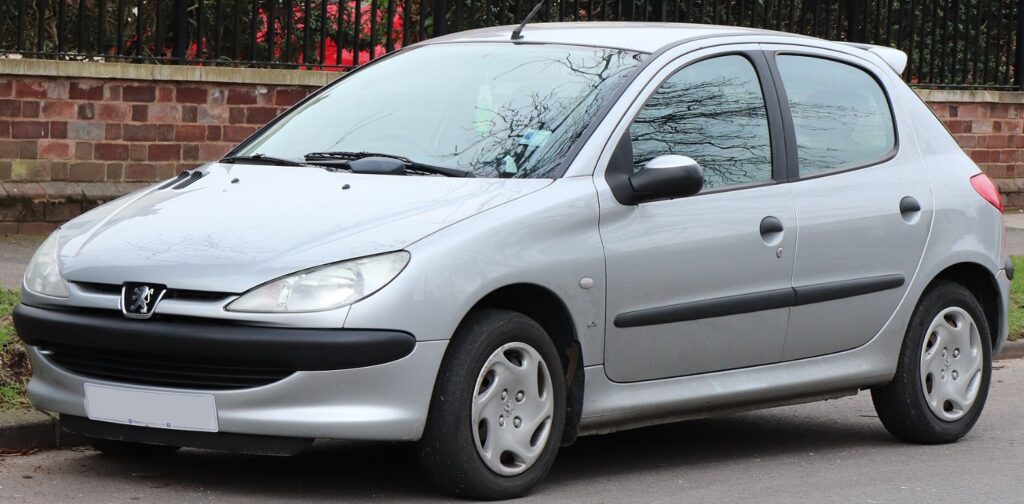
The Peugeot 206 may be small, stylish, and inexpensive to buy, but is the Peugeot 206 fuel efficient enough for modern daily driving? In most cases, yes. The little French hatchback can deliver respectable fuel economy, especially when fitted with one of its smaller petrol engines or the famously frugal 1.4 HDi diesel.
However, there is no single fuel-consumption figure that represents every Peugeot 206. The range includes tiny 1.1-litre petrol engines, economical HDi diesels, sporty GTi versions, practical SW estates, automatic models, and heavier 206 CC convertibles. Comparing them as though they were identical would be like comparing running shoes with hiking boots: both get us moving, but they do the job differently.
Depending on the engine and body style, published combined consumption figures extend from approximately 4.0 to 8.7 litres per 100 kilometres. Most mainstream versions sit comfortably between those extremes.
Let us examine how economical the Peugeot 206 really is, which engine uses the least fuel, what owners can expect in everyday conditions, and whether this ageing supermini remains a sensible choice for drivers trying to control fuel costs.
Content in this publication
- Is the Peugeot 206 Economical at a Glance?
- Peugeot 206 Fuel Economy by Engine
- Peugeot 206 1.1 Petrol Fuel Economy
- Peugeot 206 1.4 Petrol Fuel Economy
- Peugeot 206 1.6 Petrol Fuel Economy
- Peugeot 206 2.0 GTi Fuel Economy
- Peugeot 206 1.4 HDi Fuel Economy
- Peugeot 206 1.6 HDi Fuel Economy
- Peugeot 206 1.9 Diesel Fuel Economy
- Peugeot 206 2.0 HDi Fuel Economy
- Does the Peugeot 206 CC Use More Fuel?
- Is the Peugeot 206 SW Fuel Efficient?
- Manual Versus Automatic Peugeot 206 Economy
- How Far Can a Peugeot 206 Travel on One Tank?
- Why Is My Peugeot 206 Using Too Much Fuel?
- How to Improve Peugeot 206 Fuel Economy
- Petrol or Diesel: Which Peugeot 206 Is Cheapest to Run?
- Is a Peugeot 206 More Efficient Than Modern Cars?
- Which Peugeot 206 Is Most Fuel Efficient?
- What Should We Check Before Buying an Economical Peugeot 206?
- Is the Peugeot 206 Still Worth Buying for Fuel Economy?
- Final Verdict: Is Peugeot 206 Fuel Efficient?
- Frequently Asked Questions
Is the Peugeot 206 Economical at a Glance?
Yes, the Peugeot 206 is generally economical by the standards of older petrol and diesel cars.
Its greatest advantage is simplicity. Most versions are relatively light, use naturally aspirated petrol engines or uncomplicated diesel units, and do not carry the additional weight found in newer vehicles. Less mass means the engine has less metal to drag away from every traffic light.
A well-maintained Peugeot 206 can typically return:
- Around 4.3–5.5 L/100 km from an economical diesel
- Approximately 5.8–7.0 L/100 km from a small petrol engine
- Roughly 7.0–9.0 L/100 km from a sporty, automatic, or convertible version
- Noticeably higher consumption during short urban journeys
- Better results during steady rural or motorway driving
These figures should be treated as realistic ranges rather than promises. Engine condition, transmission, traffic, temperature, wheel size, driving style, and maintenance history can all move the final result.
What Counts as Good Fuel Economy for an Older Car?
We need to judge the 206 in the correct context.
The model was introduced in the late 1990s, long before stop-start systems, advanced hybrid assistance, highly efficient eight-speed transmissions, and modern fuel-economy regulations became common. Comparing it directly with a new hybrid hatchback would be unfair.
For an older conventional car, anything close to 5.0 L/100 km from a diesel or 6.0 L/100 km from a petrol engine is respectable. A Peugeot 206 achieving those numbers is not merely surviving on nostalgia. It is still doing useful work without drinking fuel like a thirsty SUV.
Official Figures Versus Everyday Consumption
Official fuel figures were normally recorded under older laboratory test procedures. They are useful for comparing one engine with another, but they do not perfectly represent congested roads, worn components, hills, cold starts, or enthusiastic acceleration.
Real-world results are usually less flattering. Honest John’s owner-submitted data for the 1998–2006 Peugeot 206 shows a broad real-economy range of approximately 35 to 74 UK mpg, with an overall average of around 54.5 UK mpg across submitted vehicles. That enormous spread demonstrates why the engine, condition, and journey type matter so much.
Peugeot 206 Fuel Economy by Engine
The engine is the biggest factor in determining whether a particular Peugeot 206 is genuinely economical.
A small diesel driven over long distances can sip fuel like it is drinking through a straw. A 2.0-litre GTi driven hard can empty the tank with considerably more enthusiasm.
Peugeot 206 1.1 Petrol Fuel Economy
The 1.1-litre petrol engine appears to be the obvious economy champion. It is small, basic, and inexpensive to maintain. In gentle use, it can indeed be efficient.
Drivers may see approximately:
- 5.5–6.5 L/100 km during mixed driving
- Around 7.0–8.0 L/100 km in busy urban traffic
- Close to 5.0–5.5 L/100 km on calm open-road journeys
Its weakness is performance. The engine has limited power, particularly when the car carries passengers, luggage, or climbs steep roads. We may need to use more throttle and change gears frequently, which can erase part of the theoretical economy advantage.
Is the 1.1 Petrol Too Slow to Be Efficient?
Not necessarily, but the answer depends on where we drive.
In a flat town with light traffic, the 1.1 can be perfectly adequate. On faster roads, however, the engine works hard to maintain speed. Asking a small engine to operate near its limit is not always more economical than using a slightly larger engine at a relaxed load.
The 1.1 makes the most sense for:
- Urban commuters
- New drivers
- Lightly loaded cars
- Short regional journeys
- Owners who value simplicity over acceleration
It is less convincing for regular motorway use or mountainous areas.
Peugeot 206 1.4 Petrol Fuel Economy
The 1.4 petrol is one of the most balanced choices in the range. It provides more usable performance than the 1.1 without introducing the thirst of the larger petrol engines.
Published figures for the 1.4i indicate approximately 8.8 L/100 km in urban driving, 5.0 L/100 km on open roads, and 6.4 L/100 km combined.
In normal ownership, we should expect roughly:
- 6.5–7.5 L/100 km in mixed conditions
- Around 8.0–9.5 L/100 km in heavy city traffic
- Approximately 5.5–6.2 L/100 km on longer open roads
Those numbers are not revolutionary, but they are reasonable for a petrol hatchback of its age.
Why the 1.4 Petrol Is a Sensible Compromise
Fuel efficiency is not simply about choosing the smallest engine. It is about finding an engine that completes our normal journeys without constantly straining.
The 1.4 has enough strength for everyday traffic while remaining relatively light and straightforward. Parts are generally familiar to independent mechanics, and there is no diesel particulate filter to worry about on typical versions.
For drivers completing a mixture of town and occasional motorway journeys, the 1.4 petrol may be the most practical all-round answer.
Peugeot 206 1.6 Petrol Fuel Economy
The 1.6-litre petrol engine gives the 206 a livelier personality. Acceleration is stronger, overtaking requires less planning, and motorway driving feels more relaxed.
That extra energy comes with a cost.
Published combined consumption for a typical 1.6 16-valve hatchback is around 6.8 L/100 km, while aggregated user reports cited by Auto ABC place real consumption closer to 7.5 L/100 km.
A realistic expectation is:
- 7.0–8.0 L/100 km in mixed driving
- Approximately 9.0–10.5 L/100 km in dense city traffic
- Around 5.8–6.8 L/100 km on open roads
Can the 1.6 Petrol Still Be Economical?
Yes, when driven smoothly.
Because the 1.6 produces more useful torque than the smaller petrol engines, it does not need to be pushed as hard. On a flowing road, its consumption can be surprisingly reasonable. The problem begins when we repeatedly explore the upper half of the rev counter.
The engine rewards restraint but invites enthusiasm. It is the automotive equivalent of keeping biscuits in an unlocked cupboard: sensible intentions can disappear quickly.
Peugeot 206 2.0 GTi Fuel Economy
The 2.0 GTi was created for performance rather than maximum economy. It remains compact and relatively light, but its larger engine, shorter gearing, wider tyres, and sporty character naturally increase fuel use.
Drivers should commonly expect:
- Around 8.0–9.0 L/100 km in mixed driving
- Approximately 10.0–12.0 L/100 km in urban use
- Close to 6.5–7.5 L/100 km during controlled highway driving
A carefully driven GTi need not be ruinously expensive at the pump. Yet buying one solely for economy would miss the point. This is the version for drivers who accept higher consumption in exchange for stronger acceleration and a more entertaining chassis.
Using the correct fuel grade can support proper performance and combustion, but premium fuel does not magically transform the GTi into an economy car.
We should follow the fuel specification stated in the owner’s manual or fuel-filler information. Paying extra for a higher octane rating than required may produce little or no measurable saving unless the engine is calibrated to benefit from it.
Peugeot 206 1.4 HDi Fuel Economy
The 1.4 HDi is usually the fuel-economy star of the Peugeot 206 range.
Factory-style figures for this engine are approximately 5.4–5.7 L/100 km in urban driving, 3.7 L/100 km outside town, and 4.3–4.4 L/100 km combined, depending on model year and specification.
In realistic use, many drivers can aim for:
- 4.5–5.3 L/100 km in mixed conditions
- Approximately 5.5–6.5 L/100 km in urban traffic
- Around 3.8–4.5 L/100 km on longer open-road journeys
For a conventional car designed more than two decades ago, those are excellent numbers.
Why Is the 1.4 HDi So Efficient?
Several characteristics work together:
- The car is light
- The engine has modest displacement
- Diesel combustion is efficient under steady load
- Turbocharging improves usable low-speed torque
- Tall gearing helps reduce engine speed
- The engine does not need aggressive revving
- The narrow original tyres create relatively little rolling resistance
It is not fast, but it does not need to be. The 1.4 HDi quietly turns fuel into distance with admirable discipline.
The Hidden Cost of Choosing the Most Economical Engine
Fuel consumption is only one part of ownership cost.
An old diesel may require attention to injectors, turbocharger components, glow plugs, the exhaust gas recirculation system, fuel lines, or other age-related parts. A diesel saving money at every fuel stop can become expensive if it needs major repairs immediately after purchase.
For low annual mileage, a healthy petrol model may therefore cost less overall—even if it uses more fuel.
Peugeot 206 1.6 HDi Fuel Economy
The 1.6 HDi combines useful torque with strong economy. One published specification for the higher-powered version lists approximately 6.0 L/100 km in town, 4.1 L/100 km outside town, and 4.8 L/100 km combined.
Realistic figures often fall near:
- 4.8–5.8 L/100 km in mixed use
- Around 6.0–7.0 L/100 km in urban traffic
- Approximately 4.0–4.8 L/100 km on longer roads
The 1.6 HDi feels considerably stronger than the 1.4 HDi, particularly when climbing, carrying passengers, or overtaking.
1.4 HDi or 1.6 HDi: Which Is More Efficient?
The 1.4 HDi usually wins on pure fuel consumption. The 1.6 HDi wins on flexibility.
Choose the 1.4 HDi when:
- Maximum economy is the priority
- Journeys are mostly steady
- Performance expectations are modest
- Insurance and running costs matter greatly
Choose the 1.6 HDi when:
- We regularly use motorways
- The car carries passengers or luggage
- Stronger acceleration matters
- We want economy without sluggish performance
The difference at the pump may be smaller than expected because the 1.6 does not need to work as hard under load.
Peugeot 206 1.9 Diesel Fuel Economy
The older 1.9 naturally aspirated diesel is simple and durable when cared for, but it lacks the refinement and efficiency of the later HDi engines.
Typical real-world consumption may sit around:
- 5.5–6.5 L/100 km in mixed driving
- Approximately 6.5–7.5 L/100 km in urban conditions
- Around 4.8–5.5 L/100 km on open roads
It can still be economical, but it feels slow, noisy, and agricultural beside the HDi models. The engine is more like a sturdy work boot than a lightweight trainer: dependable, honest, and rarely elegant.
Peugeot 206 2.0 HDi Fuel Economy
The 2.0 HDi provides stronger torque while retaining good long-distance efficiency. Depending on the version and journey, owners may see:
- Approximately 5.0–6.0 L/100 km in mixed driving
- Around 6.5–7.5 L/100 km in city use
- Close to 4.3–5.0 L/100 km on faster open roads
It may not match the 1.4 HDi on absolute economy, but its relaxed performance can make it a better motorway companion.
Does the Peugeot 206 CC Use More Fuel?
Usually, yes.
The Peugeot 206 CC carries a folding metal roof, additional body reinforcement, and extra mechanical components. That weight makes it less economical than a comparable hatchback.
For the 1.6-litre petrol 206 CC, published figures include approximately 9.5 L/100 km in urban driving and 5.7 L/100 km outside town.
In practical driving, we might see:
- 7.5–8.5 L/100 km in mixed use
- Approximately 9.5–11.0 L/100 km in city traffic
- Around 6.0–7.0 L/100 km on longer roads
Does Driving With the Roof Down Increase Consumption?
At low speeds, the difference may be modest. At motorway speeds, lowering the roof disrupts airflow and increases aerodynamic drag.
The effect depends on speed, wind, windows, and driving conditions, but an open roof generally makes the car work harder. We buy a convertible to enjoy the experience, though—not to conduct a laboratory experiment on drag coefficients.
Is the Peugeot 206 SW Fuel Efficient?
The Peugeot 206 SW estate is slightly heavier than the hatchback, but the difference in fuel use is normally modest.
A comparable engine may consume an additional 0.2–0.6 L/100 km, especially when the vehicle carries luggage. Its longer and more practical body can still be economical, particularly with the 1.4 HDi.
The SW is a strong option for drivers who need:
- More luggage capacity
- A practical rear opening
- Better family usability
- Low fuel consumption
- A small footprint for urban parking
An empty SW may perform close to the hatchback. A fully loaded one naturally requires more energy.
Manual Versus Automatic Peugeot 206 Economy
Manual Peugeot 206 models are generally more fuel efficient than the traditional automatic versions.
Older automatic transmissions often have fewer gears and greater internal losses than modern units. They may also keep the engine operating at higher speeds.
Compared with an equivalent manual, an automatic 206 can use approximately:
- 0.5–1.5 L/100 km more fuel
- Even more in stop-start urban traffic
- Slightly more during motorway cruising, depending on gearing
Why Transmission Condition Matters
An automatic gearbox that slips, hesitates, or fails to lock properly can increase consumption dramatically. Similarly, a worn manual clutch may waste energy and make smooth acceleration difficult.
Before blaming the engine for poor economy, we should check whether the transmission is transferring power efficiently.
How Far Can a Peugeot 206 Travel on One Tank?
Most Peugeot 206 versions use a fuel tank of around 50 litres, although capacity can vary by model and market.
Using a 50-litre tank, theoretical range would be approximately:
| Average consumption | Approximate theoretical range |
|---|---|
| 4.0 L/100 km | 1,250 km |
| 5.0 L/100 km | 1,000 km |
| 6.0 L/100 km | 833 km |
| 7.0 L/100 km | 714 km |
| 8.0 L/100 km | 625 km |
| 9.0 L/100 km | 556 km |
We should not plan to use every drop. Maintaining a sensible reserve helps prevent unnecessary stress and reduces the chance of drawing contamination from the bottom of an old fuel tank.
Realistic Range Between Fill-Ups
A carefully driven 1.4 HDi may travel 800–1,000 kilometres between fills under favourable conditions.
A small petrol model may achieve around 600–750 kilometres.
A GTi, automatic, or CC used mainly in town may need fuel after roughly 450–600 kilometres.
These are broad estimates. The actual result depends on how much fuel we add, when we refill, and whether the journey resembles an empty motorway or a gridlocked city centre.
Why Is My Peugeot 206 Using Too Much Fuel?
A Peugeot 206 that suddenly becomes thirsty is usually telling us something.
Common causes include:
- Low tyre pressure
- A dirty air filter
- Worn spark plugs
- A faulty oxygen sensor
- A failing coolant-temperature sensor
- Sticking brakes
- Incorrect wheel alignment
- Leaking fuel injectors
- A damaged thermostat
- Poor-quality replacement sensors
- Excessive idling
- Short journeys
- Heavy loads
- Aggressive acceleration
- Incorrect engine oil
- Air-conditioning use
- Engine-management faults
A Cold Engine Uses More Fuel
Engines are least efficient before reaching normal operating temperature. During warm-up, the management system may supply a richer fuel mixture.
If most journeys cover only two or three kilometres, the car repeatedly operates in its least efficient phase. Ten cold trips usually consume more fuel than one continuous journey covering the same total distance.
A Faulty Thermostat Can Quietly Waste Fuel
A thermostat stuck open may prevent the engine from reaching its intended temperature. The dashboard gauge may remain unusually low, the heater may feel weak, and consumption may rise.
This problem is easy to overlook because the car still runs. It simply burns more fuel while pretending nothing is wrong.
How to Improve Peugeot 206 Fuel Economy
We do not need extreme techniques or expensive modifications. Consistent basics usually produce the greatest improvement.
1. Check Tyre Pressures Regularly
Underinflated tyres create additional rolling resistance. The engine must work harder to maintain speed, while tyre wear and steering response also suffer.
Use the pressure information provided for the exact model, wheel size, and load. Do not rely on a universal figure copied from another 206.
2. Accelerate Smoothly
We should build speed progressively rather than treating every green light as the start of a rally stage.
Strong acceleration forces the engine to deliver more fuel. Smooth inputs allow the car’s low weight to work in our favour.
3. Use the Highest Suitable Gear
Changing up early can reduce engine speed and fuel consumption, but selecting a gear that is too high causes labouring.
The goal is relaxed operation—not making the engine shake, groan, and beg for mercy.
4. Anticipate Traffic
Looking further ahead allows us to lift off the accelerator earlier, preserve momentum, and avoid unnecessary braking.
Every time we brake hard, we discard energy that the engine used fuel to create.
5. Remove Unnecessary Weight
A permanently loaded boot turns the car into a delivery van without paying it a salary.
Remove unused tools, boxes, roof equipment, or other heavy items. The saving from one object may be small, but efficiency is often built from small advantages.
6. Maintain the Engine Properly
Routine maintenance should include attention to:
- Engine oil and filter
- Air filter
- Spark plugs on petrol models
- Fuel filter on diesel models
- Cooling-system operation
- Injector condition
- Sensor faults
- Brake condition
- Wheel alignment
A healthy engine does not merely last longer. It converts fuel into movement more effectively.
7. Measure Consumption Correctly
Dashboard estimates can be useful, but the full-tank method is more reliable:
- Fill the tank and record the odometer.
- Drive normally.
- Refill to a similar level.
- Record litres added and kilometres travelled.
- Divide litres by kilometres.
- Multiply the result by 100.
For example, using 35 litres over 600 kilometres gives:
35 ÷ 600 × 100 = 5.83 L/100 km
Repeat the calculation over several tanks. One refill can be distorted by pump angle, filling technique, traffic, or unusual journeys.
Petrol or Diesel: Which Peugeot 206 Is Cheapest to Run?
The diesel versions usually use less fuel, but that does not automatically make them cheaper for every owner.
A diesel makes sense when we:
- Cover high annual mileage
- Complete long journeys
- Regularly use open roads
- Need strong low-speed torque
- Find a well-maintained example
- Can verify its service history
A petrol model may be wiser when we:
- Drive relatively few kilometres
- Make short urban trips
- Want simpler maintenance
- Prefer lower repair risk
- Cannot verify the diesel’s condition
- Find petrol significantly cheaper to buy
Fuel Savings Can Disappear Into Repair Bills
Imagine that a diesel saves the equivalent of a modest amount every month. That looks attractive—until a neglected injector, turbo component, or fuel-system fault consumes several years of savings.
We should therefore buy on condition first and engine type second. The most economical Peugeot 206 is often the one that has been cared for properly.
Is a Peugeot 206 More Efficient Than Modern Cars?
Compared with a new petrol-only car, a good 206 can remain competitive during steady driving because it is light. However, newer vehicles generally have more advanced engine management, improved aerodynamics, stop-start systems, better transmissions, and cleaner emissions control.
Modern hybrids are usually far more efficient in congested urban conditions because they can recover braking energy and move at low speeds using electric assistance.
Still, the 206 has one important advantage: buying it does not require paying for a new car. Fuel economy must be viewed alongside purchase price, depreciation, insurance, maintenance, and repair costs.
A cheap, healthy 206 returning 6.0 L/100 km may make more financial sense for some drivers than financing a newer car that returns 5.0 L/100 km.
Which Peugeot 206 Is Most Fuel Efficient?
For maximum fuel economy, the leading choices are generally:
- Peugeot 206 1.4 HDi manual
- Peugeot 206 1.6 HDi manual
- Peugeot 206 2.0 HDi manual
- Peugeot 206 1.1 petrol manual
- Peugeot 206 1.4 petrol manual
The exact order can vary according to body style, gearing, model year, and driving conditions.
Best Version for City Driving
For modest annual mileage, the 1.1 or 1.4 petrol manual is often the safest choice. The 1.4 offers a better balance of performance and economy.
Best Version for Motorway Driving
The 1.6 HDi or 2.0 HDi provides stronger torque and more relaxed cruising than the smallest engines.
Best Version for Pure Economy
The 1.4 HDi manual hatchback is the clearest winner. It combines low weight with excellent official and real-world consumption potential.
Best Version for Fun Without Extreme Consumption
The 1.6 petrol manual offers useful performance without reaching the running costs of the 2.0 GTi.
What Should We Check Before Buying an Economical Peugeot 206?
A low advertised consumption figure means little if the vehicle is worn out.
Before buying, inspect or verify:
- Cold starting behaviour
- Stable idle
- Exhaust smoke
- Warning lights
- Coolant temperature
- Evidence of fuel leaks
- Tyre condition and pressure
- Brake drag
- Clutch operation
- Automatic transmission behaviour
- Injector noise
- Turbo response on HDi versions
- Service records
- Timing-belt history where applicable
- Correct wheel and tyre sizes
- Signs of accident damage
Take a Long Test Drive
A five-minute trip around the block rarely reveals the truth.
Drive from cold, include urban streets and faster roads, check whether the temperature stabilises, listen for mechanical noises, and watch for warning lights. A seller who refuses a proper inspection may be offering us a problem wearing polished paint.
Is the Peugeot 206 Still Worth Buying for Fuel Economy?
It can be.
The Peugeot 206 remains an appealing economy car when three conditions are met:
- The purchase price is reasonable.
- The vehicle has been maintained correctly.
- The selected engine suits our actual journeys.
The 1.4 HDi offers outstanding fuel consumption, while the 1.4 petrol provides a simpler and more balanced option for lower-mileage users. The 1.6 petrol is still respectable if we want stronger performance, and even the GTi can be manageable when driven with restraint.
Age is now the larger concern. Rubber seals, sensors, suspension parts, electrical connections, cooling components, and previous repairs may influence ownership more than the original fuel rating.
We are not merely buying an engine specification. We are buying everything that has happened to the car since it left the factory.
Final Verdict: Is Peugeot 206 Fuel Efficient?
Yes, the Peugeot 206 can be a fuel-efficient car, particularly with the 1.4 HDi diesel, 1.6 HDi diesel, or smaller manual petrol engines.
The 1.4 HDi is the strongest choice for drivers chasing maximum kilometres from every litre. It can approach the economy of much newer conventional diesel cars when driven gently and maintained correctly.
The 1.4 petrol is arguably the better all-round choice for urban drivers and low-mileage owners. It uses more fuel than the diesel, but its relative simplicity may reduce the risk of expensive age-related repairs.
The 1.6 petrol and convertible versions consume more, while the GTi sits firmly at the performance end of the family. They are not disastrous, but they should not be our first choices when every drop matters.
Ultimately, fuel efficiency is not hidden inside the badge. It comes from the combination of engine, transmission, body style, condition, traffic, maintenance, and the person behind the wheel.
Choose a healthy example, keep it serviced, maintain the correct tyre pressures, and drive with a little mechanical sympathy. Do that, and the Peugeot 206 can remain a remarkably economical companion—small in size, modest in appetite, and still capable of stretching a tank farther than many people expect.
Frequently Asked Questions
1. What is the average fuel consumption of a Peugeot 206?
Average consumption varies substantially by engine. Small diesel versions may use around 4.3–5.5 L/100 km, while mainstream petrol models commonly return approximately 6.0–8.0 L/100 km. Sporty, automatic, and convertible versions can use more.
2. Which Peugeot 206 engine uses the least fuel?
The 1.4 HDi diesel manual is generally the most fuel-efficient Peugeot 206. Published combined figures are close to 4.3–4.4 L/100 km, although actual consumption depends on driving conditions and vehicle condition.
3. Is the Peugeot 206 economical in city traffic?
Small petrol models can be reasonably economical in town, but short journeys and congestion may push consumption above 8.0 L/100 km. The 1.4 HDi uses less fuel, although a petrol version may be more appropriate for repeated short trips.
4. How many kilometres can a Peugeot 206 travel per litre?
A petrol Peugeot 206 may travel approximately 12–17 kilometres per litre, depending on its engine and driving conditions. An economical HDi diesel may achieve roughly 18–25 kilometres per litre.
5. Why has my Peugeot 206 fuel consumption increased?
Possible causes include low tyre pressure, short trips, cold weather, worn spark plugs, a dirty air filter, sticking brakes, incorrect engine temperature, faulty oxygen sensors, injector problems, heavy loads, or aggressive driving. A sudden increase should be investigated rather than accepted as normal.
If you want to know other articles similar to Is Peugeot 206 Fuel Efficient? A Complete Economy Guide you can visit the category Driving.
Can Nissan Rogue Pull a Boat? Complete Towing Guide
Can Nissan Rogue Be Flat Towed? Complete Towing Guide
Are Nissan Rogue Good on Gas? MPG, Fuel Economy, and Real-World Costs
Can Nissan Rogue Drive in Snow? Complete Winter Driving Guide

Kia Sorento Diesel Fuel Consumption: MPG, Efficiency and Real-World Range
Haval Jolion Hybrid Fuel Consumption: How Efficient Is It Really?
Leave a Reply
More content of your interest