
Mazda 6 vs BMW 3 Series: Which Sedan Makes More Sense?

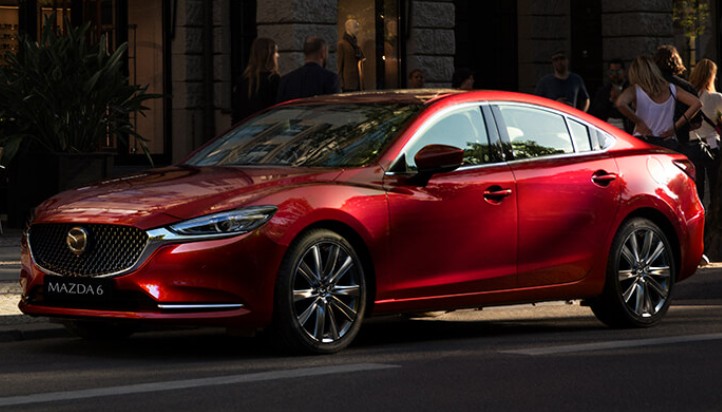
The Mazda 6 vs BMW 3 Series comparison is more interesting than it first appears. On paper, these two sedans occupy different neighborhoods. The Mazda 6 has traditionally been positioned as a stylish, well-equipped mainstream family sedan, while the BMW 3 Series lives firmly in premium territory. Yet once we get behind the wheel—or simply start comparing what we receive for our money—the gap becomes surprisingly complicated.
Both cars appeal to drivers who refuse to treat a sedan as nothing more than transportation. They look sharp, feel more engaging than many rivals, and place noticeable emphasis on the driving experience. The BMW brings rear-wheel-drive heritage, powerful engines, premium technology, and a prestigious badge. The Mazda counters with handsome design, straightforward ownership, impressive cabin quality, and pricing that tends to be considerably easier to swallow.
So, is paying extra for the BMW genuinely worthwhile? Or does the Mazda 6 deliver most of the experience without the premium-car expenses attached?
Let's dig into the details.
Content in this publication
- Mazda 6 vs BMW 3 Series at a Glance
- Exterior Design: Two Different Interpretations of Sporty
- Interior Quality: Does the Mazda Really Feel Like a Budget BMW?
- Seats and Driving Position
- Rear-Seat Comfort
- Cargo Space and Everyday Practicality
- Mazda 6 vs BMW 3 Series Performance
- Handling: The Biggest Difference Between Them
- Ride Comfort: Mazda 6 vs BMW 3 Series
- Steering Feel
- Transmission and Gearbox Experience
- Fuel Economy
- Reliability: Mazda 6 vs BMW 3 Series
- Maintenance Costs
- Insurance Costs
- Technology and Infotainment
- Safety Features
- Mazda 6 vs BMW 3 Series for Daily Driving
- Long-Distance Driving
- Which Car Is Better for Families?
- Which Is Better for Enthusiasts?
- Ownership Experience: Rationality vs Indulgence
- Used Mazda 6 vs Used BMW 3 Series
- Depreciation and Resale Value
- Mazda 6 vs BMW 3 Series: Which Offers Better Value?
- What Does the BMW Give Us That the Mazda Cannot?
- What Does the Mazda Give Us That the BMW Cannot?
- Mazda 6 vs BMW 3 Series: Final Verdict
- Frequently Asked Questions
Mazda 6 vs BMW 3 Series at a Glance
Before pulling the comparison apart piece by piece, we can summarize the personalities of these cars fairly simply.
The Mazda 6 is the sensible enthusiast's sedan. It blends comfort, style, usable rear-seat space, and engaging handling without demanding luxury-car money.
The BMW 3 Series is the more serious performance machine. It generally offers stronger acceleration, more sophisticated chassis tuning, higher-end technology, and a wider range of performance-oriented variants.
Think of the Mazda as an excellent restaurant meal at a surprisingly reasonable price. The BMW is the tasting menu with premium ingredients, silverware, and a significantly larger bill.
Neither approach is automatically better.
Quick Comparison
| Category | Mazda 6 | BMW 3 Series |
|---|---|---|
| Market Position | Mainstream midsize sedan | Compact luxury sport sedan |
| Driving Character | Balanced and engaging | Sportier and more performance-focused |
| Purchase Price | Usually lower | Considerably higher |
| Interior Quality | Excellent for its class | More premium overall |
| Engine Performance | Adequate to strong | Strong to very powerful |
| Rear-Seat Space | Generally generous | Good but varies by generation |
| Running Costs | Lower | Higher |
| Brand Prestige | Moderate | High |
| Technology | User-friendly | More sophisticated |
| Best For | Value-conscious drivers | Luxury and performance seekers |
Exterior Design: Two Different Interpretations of Sporty
Neither sedan disappears into a parking lot.
Mazda has long used flowing proportions and relatively restrained styling with the Mazda 6. Rather than covering the body with vents, creases, and aggressive trim pieces, the design tends to emphasize smooth surfaces and long curves.
It ages well because it rarely tries too hard.
The BMW 3 Series takes a more assertive approach. Its shorter overhangs, rear-driven proportions, recognizable kidney grille, and muscular stance communicate performance immediately.
Mazda 6: Elegant Without Shouting
The Mazda 6 has often looked more expensive than it actually is.
Its elongated hood, relatively low roofline, sculpted fenders, and clean profile give it something approaching luxury-car presence. Park one beside an ordinary family sedan and the Mazda usually looks like the person who bothered to iron their shirt.
There is maturity to the design.
It doesn't need enormous spoilers or theatrical bodywork to attract attention.
BMW 3 Series: Performance in Its Proportions
The BMW feels more athletic before the engine even starts.
Its stance reflects decades of sport-sedan evolution. The cabin sits relatively far rearward compared with many front-wheel-drive sedans, creating classic performance-car proportions.
Depending on trim and generation, the BMW can look understated or considerably more aggressive.
Which One Looks Better?
That comes down almost entirely to taste.
We would choose the Mazda if we prefer elegant, understated styling.
We would choose the BMW if we want something that looks visibly sporty and premium.
Interior Quality: Does the Mazda Really Feel Like a Budget BMW?
This is where the comparison becomes surprisingly uncomfortable for the BMW.
The Mazda 6 has earned a reputation for cabins that punch above their price category. Higher trims in particular can feature attractive leather, soft-touch surfaces, tasteful metallic accents, and relatively minimalist dashboard designs.
Of course, the BMW still feels more expensive when examined closely.
But the difference isn't always proportional to the price gap.
Mazda 6 Cabin
Inside the Mazda, most controls are positioned logically. The dashboard usually avoids unnecessary visual clutter, and Mazda's focus on ergonomics makes the interior easy to understand.
That's important.
Some modern cars treat the dashboard like a smartphone convention. Buttons disappear, menus multiply, and adjusting something simple can require several taps.
The Mazda tends to feel more conventional.
And sometimes conventional is exactly what we want.
BMW 3 Series Cabin
The BMW cabin takes a more technological approach.
Depending on model year, we may find digital displays, sophisticated infotainment systems, customizable interfaces, voice controls, premium lighting, advanced navigation, and numerous driver settings.
Material quality tends to be excellent, although optional equipment can significantly change the experience.
A lightly equipped 3 Series and a fully optioned one can feel like noticeably different cars.
Seats and Driving Position
Few things affect our relationship with a car more than the seat.
The Mazda 6 typically provides supportive front seats and a relatively sporty driving position without sacrificing everyday comfort.
The BMW goes further.
Its driver-focused ergonomics make it easier to settle into a low, connected position behind the wheel. Seat adjustment ranges are often extensive, especially with upgraded seating packages.
For long motorway journeys, both can be excellent.
For enthusiastic driving, however, the BMW feels more purpose-built.
Rear-Seat Comfort
Here's an area where people sometimes assume the BMW automatically wins simply because it costs more.
Not necessarily.
The Mazda 6 is a midsize sedan, while the 3 Series is traditionally classified as a compact executive sedan. That means the Mazda can provide very competitive rear-seat room.
Families carrying teenagers or adults regularly may actually find the Mazda surprisingly accommodating.
Headroom and Legroom
Exact measurements depend on year and version, but the general pattern is straightforward.
The Mazda emphasizes passenger practicality.
The BMW balances passenger space against performance-oriented proportions.
If rear-seat passengers matter frequently, we would sit in both cars before assuming the luxury model is automatically more spacious.
Cargo Space and Everyday Practicality
Neither sedan is going to challenge a large SUV for cargo volume, but both provide useful trunks for everyday life.
Groceries?
Easy.
Airport luggage?
Usually no problem.
Weekend trips?
Absolutely.
The Mazda's midsize dimensions make it especially practical as a family vehicle.
The BMW remains perfectly usable, but its priorities lean slightly more toward driving dynamics than maximum interior packaging efficiency.
Mazda 6 vs BMW 3 Series Performance
Now we reach the section where the BMW begins stretching its legs.
Mazda has produced several enjoyable engines for the Mazda 6, including naturally aspirated and turbocharged four-cylinder options depending on market and model year.
But BMW treats powertrains almost like a ladder.
Entry-level versions can already provide strong performance, while higher-output models climb into genuinely rapid territory.
Mazda 6 Engine Character
Naturally aspirated Mazda engines generally prioritize smooth response and predictable power delivery.
Press the accelerator and the response feels immediate rather than artificially dramatic.
Turbocharged versions add considerably more torque, making overtaking and highway merging much easier.
The Mazda rarely feels slow in normal driving.
But speed isn't really its central purpose.
BMW 3 Series Engine Character
BMW engines tend to deliver noticeably stronger acceleration.
Turbocharged four-cylinder models combine performance with impressive everyday efficiency, while six-cylinder versions can provide the kind of acceleration that once belonged almost exclusively to dedicated sports cars.
The distinction becomes obvious when merging onto a motorway or accelerating out of a corner.
The BMW simply has deeper reserves.
Winner for Straight-Line Performance: BMW 3 Series
If acceleration matters, the BMW wins comfortably.
Handling: The Biggest Difference Between Them
This is arguably the heart of the entire Mazda 6 vs BMW 3 Series debate.
Mazda engineers cars with drivers in mind. Steering response tends to feel natural, body movements are controlled, and the chassis encourages confidence through corners.
That makes the Mazda 6 one of the more enjoyable mainstream sedans.
But the BMW 3 Series was essentially built around this mission.
How the Mazda 6 Feels
The Mazda turns into corners eagerly.
Steering feels reasonably direct.
The suspension strikes a pleasant balance between comfort and control.
Drive one down a winding road and it feels far more alive than a typical commuter sedan.
It behaves like a comfortable family car that secretly owns running shoes.
How the BMW 3 Series Feels
The BMW is more serious.
Its chassis architecture, available rear-wheel-drive configuration, suspension tuning, steering response, drivetrain layout, and available performance hardware allow it to feel more composed when pushed.
Acceleration out of corners is stronger.
Body control is tighter.
Balance is more neutral.
You may be interested in reading Mazda 6 vs Ford Mondeo: Which Midsize Car Is Better?
The car encourages us to drive a little farther just because the road becomes interesting.
Is the BMW Twice as Fun?
Not necessarily.
And that's important.
The Mazda may deliver 70 or 80 percent of the enjoyment for dramatically less money depending on the used or new-market comparison we're making.
That remaining percentage, however, matters tremendously to enthusiasts.
Ride Comfort: Mazda 6 vs BMW 3 Series
Performance doesn't always mean comfort.
Thankfully, both sedans manage the compromise relatively well.
The Mazda 6 tends to have slightly firm suspension tuning compared with softer mainstream alternatives, yet it remains comfortable enough for commuting.
The BMW also balances ride and handling effectively, though wheel size, suspension packages, run-flat tires, and performance options can dramatically influence ride quality.
Wheel Size Matters More Than We Think
A BMW sitting on large performance wheels can feel considerably harsher over broken pavement than a standard version.
Likewise, Mazda trims with larger wheels may transmit more road imperfections into the cabin.
Before buying either vehicle, we should resist judging ride comfort purely from reviews.
Drive the exact wheel-and-tire configuration we intend to purchase.
It matters.
Steering Feel
BMW built much of its reputation around steering.
Older generations in particular became benchmarks for communication and precision.
Modern systems are typically electrically assisted, and enthusiasts continue debating whether they provide the same feedback.
The Mazda uses electrically assisted steering too, but its calibration often feels natural and predictable.
In everyday driving, we may actually appreciate the Mazda's friendliness.
During enthusiastic driving, the BMW's sharper chassis still pulls ahead.
Transmission and Gearbox Experience
Depending on generation and region, both cars can use automatic transmissions, while some earlier models may also be available with manuals.
BMW's modern automatic gearboxes are generally quick, smooth, and well matched to turbocharged engines.
Mazda automatics often emphasize intuitive response rather than maximum gear count.
More Gears Aren't Always Better
A transmission specification can look impressive on paper.
But what matters is behavior.
Does the gearbox hesitate when we need acceleration?
Does it constantly hunt between ratios?
Does it hold the right gear entering a corner?
Mazda's philosophy traditionally favors predictable behavior.
BMW's transmissions generally shift more quickly and provide greater performance potential.
For relaxed driving, both approaches work well.
For aggressive driving, BMW has the edge.
Fuel Economy
We might assume the Mazda wins automatically because it has less power.
That isn't always true.
Modern BMW engines can deliver surprisingly strong fuel economy relative to their performance, particularly during highway driving.
However, the Mazda usually retains an important advantage: it may require less expensive fuel depending on engine specification and market.
Fuel grade requirements vary, so we always need to check the owner's manual for the exact engine.
But premium-performance engines frequently benefit from or require higher-octane fuel.
That difference adds up.
A few extra dollars at each fill-up may seem insignificant until we multiply it across several years.
Reliability: Mazda 6 vs BMW 3 Series
This category can dramatically influence the buying decision.
The Mazda 6 uses comparatively straightforward engineering in many versions. That simplicity contributes to lower repair complexity and generally manageable ownership costs.
The BMW contains more sophisticated components and electronic systems.
Sophistication is wonderful when everything works.
When something doesn't, our wallet notices.
Mazda 6 Reliability
A properly maintained Mazda 6 can be a dependable long-term vehicle.
However, reliability varies by engine, transmission, model year, driving conditions, and maintenance history.
We should never treat a badge as a guarantee.
A neglected Mazda can become expensive.
A meticulously maintained BMW can remain remarkably reliable.
Maintenance history matters more than internet stereotypes.
BMW 3 Series Reliability
Modern BMWs can be substantially more reliable than outdated jokes about European cars suggest.
Still, repairs tend to cost more.
Parts can be expensive.
Labor may require specialized knowledge.
Diagnostic equipment becomes more important.
And performance-oriented components naturally cost more to replace.
Reliability Winner: Mazda 6
For owners who prioritize predictable long-term expenses, the Mazda is generally the safer choice.
Maintenance Costs
This is where the luxury-car badge continues charging admission even after we leave the dealership.
Oil services, brake components, tires, suspension parts, electronic modules, cooling-system components, and drivetrain repairs can cost significantly more on a BMW.
The Mazda generally uses less expensive components.
The Used-BMW Trap
A used BMW can appear astonishingly affordable.
A luxury sedan that once cost serious money may eventually sell for roughly the same price as a mainstream compact car.
Tempting?
Absolutely.
But depreciation does not reduce repair costs at the same rate.
A cheap BMW remains a BMW when it needs brakes, suspension components, sensors, or drivetrain work.
That's something we should remember before celebrating a bargain purchase price.
Insurance Costs
Insurance varies enormously based on country, driver profile, location, age, mileage, trim, engine, and insurer.
Still, the BMW will often cost more to insure.
Why?
Higher vehicle value, more expensive parts, stronger performance, and potentially greater repair complexity all influence premiums.
The Mazda's lower replacement and repair costs can make insurance friendlier.
Technology and Infotainment
BMW wins the technology contest overall.
Modern 3 Series models may offer advanced digital instrument panels, sophisticated navigation, connected services, driver profiles, configurable displays, parking systems, and comprehensive driver assistance.
Mazda systems generally emphasize simplicity.
BMW Offers More
If technology excites us, BMW's interface can feel like entering a modern cockpit.
There are menus for nearly everything.
The digital displays are more elaborate.
Available audio systems can be excellent.
Driver-assistance functions may be more comprehensive depending on specification.
Mazda Keeps Things Simple
The Mazda tends to avoid technology overload.
Physical controls and rotary interfaces on many versions reduce the need to poke constantly at touchscreens.
After a week of commuting, that simplicity can become surprisingly valuable.
A feature isn't helpful if we need three menus to find it.
Safety Features
Both cars can offer extensive safety equipment depending on model year and trim.
Possible systems include:
You may be interested in readingMazda 6 vs Ford Mondeo: Which Midsize Car Is Better?You may be interested in reading
Mazda 6 or Honda Accord: Which Midsize Sedan Is Better?- Automatic emergency braking
- Blind-spot monitoring
- Adaptive cruise control
- Lane-departure warning
- Lane-keeping assistance
- Rear cross-traffic alert
- Parking sensors
- Surround-view cameras
- Driver-attention monitoring
BMW may offer more sophisticated versions of these technologies, but Mazda frequently includes desirable safety equipment at lower trim levels.
Always compare the specific vehicles rather than assuming every model includes identical equipment.
Mazda 6 vs BMW 3 Series for Daily Driving
Here's where things get interesting again.
If we're commuting every day, navigating city traffic, carrying passengers, and parking at supermarkets, the Mazda arguably makes more rational sense.
It's comfortable.
It's stylish.
It's reasonably efficient.
And we don't spend every journey worrying about expensive wheels finding potholes.
When the BMW Makes Daily Driving Better
The BMW can still be a wonderful commuter.
A quiet cabin, effortless acceleration, supportive seats, advanced driver assistance, and premium refinement can make monotonous trips easier.
But we pay for those advantages.
The question becomes simple:
Do we value the extra polish enough to justify the cost?
Long-Distance Driving
Both vehicles are strong road-trip companions.
The Mazda's relatively spacious cabin and comfortable suspension make it easy to cover long distances.
The BMW adds stronger overtaking performance and greater high-speed stability.
If our journeys involve mountain roads or fast motorway driving, the BMW's extra power is especially useful.
If we're cruising steadily for hours, the practical difference becomes smaller.
Which Car Is Better for Families?
We would lean toward the Mazda 6.
Its midsize dimensions, reasonable running costs, spacious passenger compartment, and lower ownership expenses create a strong family package.
Parents may also feel less stressed watching children climb into a Mazda with snacks than watching them approach expensive premium leather holding melting chocolate.
Sometimes practicality has nothing to do with cubic feet.
Which Is Better for Enthusiasts?
BMW.
No suspense here.
The 3 Series offers more performance potential, stronger engines, sportier drivetrain options, and a chassis designed around enthusiastic driving.
That doesn't make the Mazda boring.
Far from it.
The Mazda 6 is arguably among the best choices for someone who enjoys driving but cannot—or simply does not want to—spend luxury-car money.
Ownership Experience: Rationality vs Indulgence
Choosing between these cars is almost philosophical.
The Mazda asks:
Why spend more than necessary?
The BMW asks:
Why settle when driving can feel special every day?
Neither argument is wrong.
The correct choice depends on what makes us smile after we lock the car and walk away.
Reasons to Choose the Mazda 6
The Mazda makes particular sense if we prioritize:
- Lower purchase price
- Lower maintenance expenses
- Good fuel economy
- Stylish exterior design
- A high-quality interior
- Family-friendly practicality
- Engaging handling
- Long-term ownership value
Reasons to Choose the BMW 3 Series
The BMW deserves the extra money if we prioritize:
- Stronger acceleration
- Rear-wheel-drive dynamics on applicable models
- Premium materials
- More advanced technology
- Greater brand prestige
- High-performance variants
- Sophisticated chassis tuning
- A more luxurious ownership experience
Used Mazda 6 vs Used BMW 3 Series
This comparison becomes especially interesting on the used market.
Depreciation can narrow the purchase-price gap considerably.
A BMW that once cost dramatically more than a Mazda may eventually fall into the same general budget range.
That sounds like an easy victory for BMW.
It isn't.
Purchase Price Is Only the Entry Ticket
Suppose two used cars cost roughly the same.
The Mazda may require routine maintenance, tires, and normal wear items.
The BMW might require those same things—but the parts and labor could cost considerably more.
We should therefore compare total ownership cost, not simply dealership stickers.
Inspect Service History Carefully
When buying either model used, we should check:
- Maintenance records
- Oil-change history
- Transmission servicing
- Cooling-system condition
- Suspension wear
- Tire condition
- Brake condition
- Previous accident repairs
- Warning lights
- Electronic features
- Fluid leaks
A professional pre-purchase inspection is worth the money, particularly for a used luxury vehicle.
Depreciation and Resale Value
Luxury sedans can depreciate quickly, particularly during their earliest years.
That hurts new buyers but creates opportunities for used-car shoppers.
Mazda vehicles generally begin at a lower price, meaning there is less absolute value to lose.
The BMW may retain strong desirability but can still experience substantial depreciation simply because premium vehicles start expensive.
For buyers who trade frequently, depreciation deserves as much attention as fuel economy.
Mazda 6 vs BMW 3 Series: Which Offers Better Value?
This depends on how we define value.
If value means getting the maximum amount of comfort, style, equipment, and practicality for every dollar spent, Mazda wins.
If value means getting performance and refinement that genuinely feel superior—even if they cost more—the BMW can justify itself.
The Mazda wins the spreadsheet.
The BMW often wins the emotional argument.
What Does the BMW Give Us That the Mazda Cannot?
A stronger sense of mechanical sophistication.
That's the key difference.
We're not merely paying for leather seats or a logo.
A BMW 3 Series can deliver greater chassis balance, stronger performance, more advanced drivetrain technology, higher-speed refinement, and deeper personalization.
For someone who notices those things, the premium makes sense.
For someone who primarily wants a comfortable sedan for commuting, much of that capability may go unused.
What Does the Mazda Give Us That the BMW Cannot?
Freedom from some of the financial anxiety surrounding premium ownership.
That matters too.
We can enjoy the Mazda without constantly calculating what a future repair might cost.
We can fit quality tires without necessarily choosing premium-performance rubber.
Insurance is often easier to stomach.
Routine maintenance tends to be simpler.
There is something refreshing about a car that feels upscale without demanding an upscale financial commitment.
Mazda 6 vs BMW 3 Series: Final Verdict
So which should we buy?
If we're looking for the smartest overall purchase, the Mazda 6 makes a compelling argument.
It offers handsome styling, impressive interior quality, useful passenger space, good road manners, and relatively reasonable ownership costs. It feels like a car designed by people who enjoy driving but understand that most of us also have mortgages, grocery bills, and other things competing for our money.
The BMW 3 Series is the better car when performance and refinement become the priority.
It accelerates harder, handles with greater authority, offers more sophisticated technology, and carries the premium atmosphere that has made the 3 Series one of the defining sports sedans of its segment.
But better doesn't automatically mean better for us.
If we spend most days commuting, carrying family members, and cruising highways, the Mazda gives us an enormous amount of car without unnecessary expense.
If we wake up early on Sunday just because an empty mountain road is waiting, the BMW starts making considerably more sense.
Ultimately, the Mazda 6 vs BMW 3 Series decision isn't really about whether one car defeats the other.
It's about determining how much we're willing to pay for the final layer of performance, prestige, technology, and polish.
The Mazda is the rational choice with personality.
The BMW is the emotional choice with engineering to justify the indulgence.
And sometimes, choosing between our head and our heart is exactly what makes buying a car interesting.
Frequently Asked Questions
1. Is the Mazda 6 comparable to the BMW 3 Series?
Yes, although they belong to different market segments. The Mazda 6 is a mainstream midsize sedan, while the BMW 3 Series is a premium sport sedan. They overlap because both emphasize stylish design, good handling, comfortable interiors, and driver enjoyment. The BMW generally provides stronger performance and more advanced technology, while the Mazda offers considerably better affordability.
2. Is the BMW 3 Series faster than the Mazda 6?
In most comparable configurations, yes. BMW offers powerful turbocharged engines and higher-performance variants that can accelerate substantially faster than typical Mazda 6 models. Turbocharged Mazda 6 versions still provide strong everyday performance, but outright speed isn't the Mazda's primary mission.
3. Which is more reliable, Mazda 6 or BMW 3 Series?
The Mazda 6 will generally be the less complicated and less expensive vehicle to own over the long term. BMW reliability can be good when maintenance is performed correctly, but parts, labor, electronics, and performance-related components can make repairs considerably more expensive.
You may be interested in readingMazda 6 vs Ford Mondeo: Which Midsize Car Is Better?You may be interested in reading
Mazda 6 or Honda Accord: Which Midsize Sedan Is Better?You may be interested in reading
Mazda 6 vs Honda Civic: Which Car Makes More Sense?4. Is a used BMW 3 Series better value than a Mazda 6?
Potentially, but we need to consider maintenance expenses rather than focusing solely on purchase price. Depreciation can make used BMWs surprisingly affordable, yet repair costs remain those of a luxury vehicle. A Mazda 6 with a strong maintenance history may therefore deliver lower total ownership costs even when both cars have similar used prices.
5. Which should we buy: Mazda 6 or BMW 3 Series?
Choose the Mazda 6 if we prioritize affordability, practicality, lower maintenance costs, and strong everyday comfort. Choose the BMW 3 Series if we prioritize acceleration, handling, premium technology, luxury materials, and a more performance-focused driving experience.
If you want to know other articles similar to Mazda 6 vs BMW 3 Series: Which Sedan Makes More Sense? you can visit the category Models.
Haval Jolion vs Omoda C5: Which SUV Is Better?
Haval Jolion vs Chery Tiggo 4 Pro: Full Comparison
Haval Jolion vs H6: Which SUV Is Better in 2026?
Haval Jolion vs Toyota Corolla Cross: Which SUV Is Better?
Haval Jolion vs Jaecoo J5: Which SUV Is Better?
Volkswagen T-Cross vs Volkswagen T-Roc: Which Is Better?
Leave a Reply
More content of your interest