

Nissan Note Fuel Economy: New Zealand Petrol and e-POWER Guide

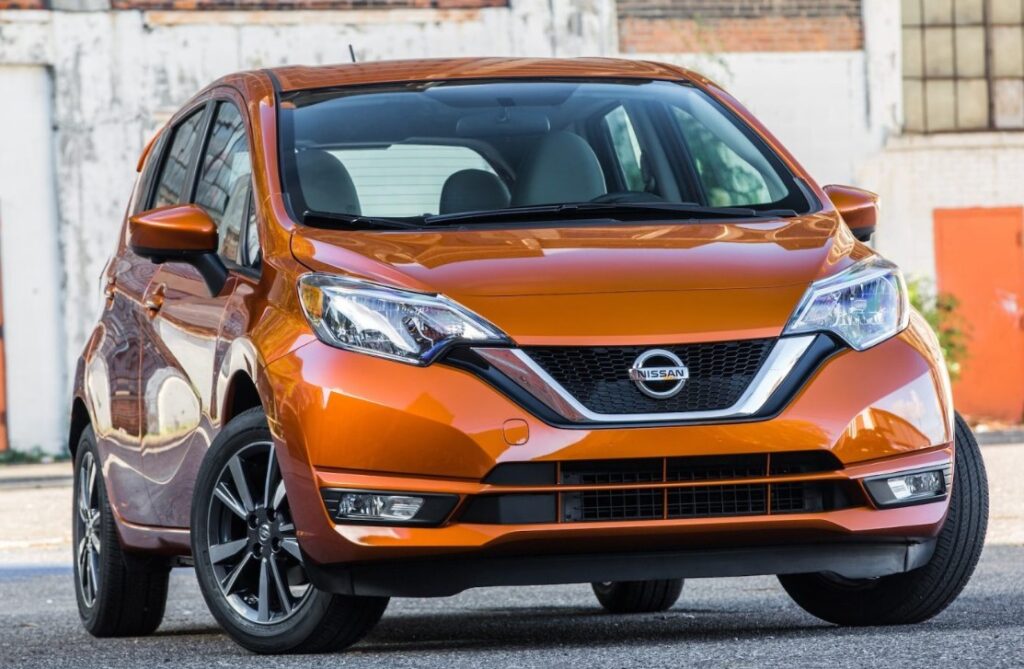
The Nissan Note has quietly become one of New Zealand’s favourite used-import hatchbacks. It is compact enough for Auckland traffic, practical enough for a weekly supermarket run, and generally inexpensive to keep on the road. Yet one question matters more than almost any other when we are considering buying one: How good is Nissan Note fuel economy in real New Zealand driving?
The answer depends heavily on which Note we choose.
A conventional petrol Nissan Note can deliver respectable economy without complicated hybrid hardware. The Nissan Note e-POWER, meanwhile, uses a petrol engine to generate electricity while an electric motor drives the wheels. That unusual arrangement can make the e-POWER remarkably economical around town, although its advantage may shrink during sustained open-road driving.
For most New Zealand owners, a realistic target is approximately:
- Petrol Nissan Note: 5.5–7.0 litres per 100 km
- Nissan Note e-POWER: 3.5–5.0 litres per 100 km
- Especially efficient urban e-POWER driving: potentially below 3.5 L/100 km
- Fast motorway or hilly driving: often higher than the figures above
These are practical ranges rather than guarantees. Generation, engine, drivetrain, tyre pressure, traffic, weather, battery condition and driving style all matter.
So, is the Nissan Note genuinely economical, or does it merely look impressive on a Japanese auction sheet? Let us separate the polished laboratory numbers from the fuel consumption Kiwi drivers are more likely to see.
Content in this publication
- Nissan Note Fuel Economy at a Glance
- Why the Nissan Note Is Popular in New Zealand
- How Economical Is a Petrol Nissan Note?
- What Is the Nissan Note DIG-S?
- How the Nissan Note e-POWER System Works
- Real-World Nissan Note e-POWER Fuel Economy
- Why Highway Driving Can Reduce the e-POWER Advantage
- Nissan Note Petrol vs e-POWER Fuel Economy
- Understanding Japanese Fuel-Economy Claims
- How Far Can a Nissan Note Travel on One Tank?
- What Affects Nissan Note Fuel Consumption?
- Does e-POWER Battery Health Affect Fuel Economy?
- Is the e-POWER Economy Display Accurate?
- How to Improve Nissan Note Fuel Economy
- Which Nissan Note Is Best for Fuel Economy?
- Is the Nissan Note Good for Long-Distance Driving?
- Nissan Note Fuel Economy Compared With Rivals
- Common Reasons for Poor Nissan Note Fuel Economy
- Final Verdict: Is Nissan Note Fuel Economy Good?
- Frequently Asked Questions
Nissan Note Fuel Economy at a Glance
Before diving into engines, generations and driving conditions, we can use the following table as a practical starting point.
| Nissan Note version | Likely real-world economy | Approximate km per litre | Best suited to |
|---|---|---|---|
| 1.2-litre petrol | 5.5–7.0 L/100 km | 14–18 km/L | Mixed everyday driving |
| 1.2 DIG-S supercharged petrol | 5.0–6.5 L/100 km | 15–20 km/L | Drivers wanting petrol efficiency |
| First-generation e-POWER | 3.5–5.0 L/100 km | 20–29 km/L | Urban commuting and stop-start traffic |
| e-POWER on open roads | 4.5–5.8 L/100 km | 17–22 km/L | Mixed trips with moderate highway use |
| e-POWER 4WD | 4.2–5.8 L/100 km | 17–24 km/L | Colder or hillier regions needing traction |
We should not treat every advertised figure as interchangeable. Japanese imports may display economy in kilometres per litre, while New Zealand fuel-economy labels normally use litres per 100 kilometres.
The conversion is simple:
L/100 km = 100 ÷ km/L
For example:
- 20 km/L equals 5.0 L/100 km
- 25 km/L equals 4.0 L/100 km
- 30 km/L equals approximately 3.3 L/100 km
The higher the km/L number, the better. With L/100 km, the lower number is better.
Why the Nissan Note Is Popular in New Zealand
The Note occupies a useful middle ground. It has the footprint of a small hatchback but a relatively tall body, good rear-seat room and easy access. It feels less cramped than some city cars without carrying the weight and fuel thirst of a compact SUV.
Many examples in New Zealand arrived as used imports from Japan rather than through the local new-car dealer network. That means buyers can encounter a wide mixture of:
- Model years
- Equipment grades
- Engine types
- Two-wheel-drive and four-wheel-drive versions
- Conventional petrol and e-POWER drivetrains
- Japanese dashboard displays and documentation
The Nissan Note e-POWER has become particularly popular among New Zealand import buyers. Nissan introduced the system in 2016, and the car has since offered drivers a taste of electric-motor performance without requiring external charging. Nissan describes e-POWER as a series-hybrid system in which the wheels are driven exclusively by the electric motor; the petrol engine generates electricity rather than directly powering the wheels.
That matters because the driving experience and fuel-economy pattern differ from those of both ordinary petrol cars and conventional hybrids.
How Economical Is a Petrol Nissan Note?
A petrol Nissan Note is not a technological magic trick. It follows the familiar recipe of a small petrol engine, automatic transmission and front-wheel drive, although engine specifications vary by generation.
In everyday New Zealand driving, we can generally expect a healthy 1.2-litre petrol model to consume around 5.5–7.0 L/100 km.
A gentle driver travelling through flowing suburban roads might stay closer to 5.5 or 6.0 L/100 km. Someone making short, cold trips through steep Wellington suburbs could see 7.0 L/100 km or more.
Petrol Note Economy Around Town
Urban consumption commonly falls between 6.0 and 7.5 L/100 km, especially when the car repeatedly starts from rest.
Small petrol engines are economical once moving, but stop-start traffic exposes their weaknesses. Every launch requires the engine to provide the acceleration directly, while idling and low-speed operation can waste energy.
A petrol Note can still be inexpensive to run, particularly if:
- Trips are long enough for the engine to warm up
- Traffic moves steadily
- The tyres are correctly inflated
- The driver accelerates progressively
- The car has been serviced properly
However, it usually cannot recover as much braking energy as an e-POWER version. Every red light becomes a small financial leak, like a tap that never closes completely.
Petrol Note Economy on the Open Road
The conventional petrol Note can perform surprisingly well at steady speeds. At approximately 80–100 km/h, with light winds and modest terrain, consumption may settle around 4.8–6.0 L/100 km.
This is where the petrol car can narrow the gap to the e-POWER.
At a steady cruise, the engine operates under relatively stable conditions. The e-POWER model must convert petrol into mechanical engine output, then electricity, then motor-driven movement. Each conversion carries some loss. Around town, regenerative braking and efficient engine operation often outweigh those losses. On a long, uninterrupted highway, the advantage becomes less dramatic.
For drivers who spend most of their week on State Highway 1 rather than navigating central Auckland, the ordinary petrol Note should not be dismissed.
What Is the Nissan Note DIG-S?
Some second-generation Notes use Nissan’s DIG-S engine. This is a 1.2-litre three-cylinder petrol unit with direct injection and a supercharger.
The supercharger is not there to turn the Note into a miniature sports car. Instead, it helps the small engine produce useful torque while supporting economical operation.
A well-maintained DIG-S model may return approximately:
- 5.0–6.5 L/100 km in mixed driving
- 4.5–5.5 L/100 km on easy open-road trips
- 6.0–7.0 L/100 km in dense urban conditions
The DIG-S can be more economical than a basic petrol Note under favourable conditions, but maintenance history matters. A neglected high-technology engine may erase years of fuel savings with one significant repair.
Fuel requirements can vary by exact Japanese specification, so we should check the fuel flap, owner documentation or chassis-specific information rather than relying on a dealer’s generic listing.
Using the correct octane is important. A higher price at the pump is annoying, but using unsuitable fuel to save a few cents can be like buying cheap shoes for a mountain hike: the decision may become expensive later.
How the Nissan Note e-POWER System Works
The Nissan Note e-POWER is often called a hybrid, but its layout is different from that of many Toyota hybrids.
In a typical parallel hybrid, the petrol engine, electric motor or both can help drive the wheels. In the Note e-POWER, the electric motor alone drives the wheels. The petrol engine acts as an onboard generator.
Nissan explains that the engine is not mechanically connected to the wheels. This allows the system to start the engine when needed and operate it within an efficient speed range while producing electricity.
The main components include:
- A small petrol engine
- An electrical generator
- An inverter
- A compact high-voltage battery
- An electric traction motor
We do not plug the car into a charger. Petrol goes into the tank, the engine generates electricity, and the electric motor moves the vehicle.
Why e-POWER Feels Like an Electric Car
An electric motor provides torque immediately. As a result, the Note e-POWER usually feels stronger from a standstill than its modest engine size suggests.
The relationship between engine noise and road speed can initially feel strange. The petrol engine may run while the vehicle is moving slowly, and it may become quiet while we are still travelling. It is working according to electrical demand rather than following the accelerator in the same way as a conventional drivetrain.
The first-generation Note e-POWER pairs a 1.2-litre petrol generator engine with an electric motor. A New Zealand Auto Trader review describes the motor output at around 80 kW and 254 Nm, while also noting that the engine never directly drives the wheels.
Why e-POWER Excels in Urban Driving
City traffic is normally the enemy of fuel economy. For the e-POWER, however, urban conditions can become its playground.
When we slow down, the traction motor can act as a generator and recover some of the vehicle’s kinetic energy. Instead of wasting almost all that movement as brake heat, the car sends part of it back to the battery.
The system can then use stored electricity to move the car again.
It is not perpetual motion. Energy is still lost, and the petrol engine must eventually run. Nevertheless, recycling some braking energy is far better than throwing it away at every intersection.
Real-World Nissan Note e-POWER Fuel Economy
A realistic expectation for a healthy first-generation e-POWER in New Zealand is around 3.5–5.0 L/100 km in mixed use.
Auto Trader New Zealand reports an expectation of approximately 4.0 L/100 km in real-world driving, with lower results possible in favourable town use. The same review notes that some drivers have recorded figures as low as 2.7 L/100 km, although we should view such exceptional results as best-case achievements rather than an everyday promise.
e-POWER Economy in Auckland
Auckland’s traffic can be frustrating, but the e-POWER system is well matched to it.
Frequent deceleration creates opportunities for regenerative braking, while the electric motor handles low-speed movement efficiently. An owner commuting through suburban and city traffic may see approximately:
- 3.3–4.5 L/100 km in favourable conditions
- 4.0–5.0 L/100 km with air conditioning and heavier congestion
- Above 5.0 L/100 km during very short or aggressive trips
The key word is favourable. A cold engine, a nearly empty battery, steep roads and hard acceleration can push consumption upward.
e-POWER Economy in Wellington
Wellington adds hills, wind and tightly packed urban roads to the equation.
Regeneration can recover energy when descending, but it cannot fully repay the fuel used to climb. Strong winds also increase aerodynamic resistance, particularly at higher speeds.
A practical Wellington range might be 4.0–5.5 L/100 km, although individual routes can produce very different results.
A commute that climbs in one direction and descends in the other may look economical on one leg and alarming on the next. We need to judge the complete round trip, not one side of the hill.
e-POWER Economy in Christchurch
Christchurch’s flatter roads can suit the Note well. Smooth acceleration, moderate speeds and fewer steep climbs may allow an e-POWER to remain around 3.5–4.5 L/100 km.
Cold winter mornings can raise consumption because the petrol engine may run more often for warming, cabin heating or battery management. Even so, the flat terrain offers the car a strong foundation for efficient driving.
e-POWER Economy on Rural Roads
Rural New Zealand roads are not controlled laboratory loops. They bend, rise, fall and sometimes feel as though they were drawn by someone chasing a runaway sheep.
At moderate speeds, an e-POWER can remain efficient. Consumption commonly lands around 4.0–5.2 L/100 km, depending on elevation changes and overtaking.
Repeated hard acceleration can quickly increase fuel use. Electric torque makes overtaking feel easy, but the electricity still has to come from somewhere. Once the battery’s available charge falls, the petrol engine must work harder to replace it.
Why Highway Driving Can Reduce the e-POWER Advantage
Many hybrid owners expect their car to achieve its best economy everywhere. That is not how energy use works.
At motorway speed, aerodynamic drag rises sharply. The electric motor needs a continuous supply of energy, and regenerative braking offers little benefit when the car cruises without slowing.
The petrol engine must therefore generate electricity more consistently. The conversion chain becomes:
Petrol → engine rotation → electricity → motor movement
A direct petrol drivetrain may be less sophisticated, but at a steady cruise it avoids some conversion stages.
This does not mean the e-POWER becomes inefficient. It means its greatest advantage usually appears in variable-speed urban driving rather than long motorway journeys.
Expected Motorway Consumption
At approximately 100 km/h, a first-generation Note e-POWER may return around 4.5–5.8 L/100 km.
Consumption can climb further when we combine:
- Strong headwinds
- Roof racks
- Heavy luggage
- Low tyre pressure
- Repeated overtaking
- Steep terrain
- Cold weather
- Speeds above the legal limit
The petrol version may achieve a similar figure in gentle highway conditions, making the purchase decision less obvious for high-mileage rural drivers.
Nissan Note Petrol vs e-POWER Fuel Economy
Which one uses less fuel? In most city-focused situations, the answer is the e-POWER.
| Driving environment | Petrol Note | Note e-POWER | Likely winner |
| Heavy city traffic | 6.5–7.5 L/100 km | 3.5–4.7 L/100 km | e-POWER |
| Suburban commuting | 5.5–6.8 L/100 km | 3.5–4.8 L/100 km | e-POWER |
| Mixed urban and highway | 5.5–6.8 L/100 km | 4.0–5.2 L/100 km | e-POWER |
| Constant open-road use | 4.8–6.0 L/100 km | 4.5–5.8 L/100 km | Close |
| Short winter trips | 6.5–8.0 L/100 km | 4.5–6.0 L/100 km | Usually e-POWER |
The e-POWER’s lead can be substantial in urban use. On the open road, the gap may become small enough that purchase price, condition and maintenance history matter more than fuel consumption.
How Much Fuel Could e-POWER Save?
Suppose we drive 14,000 km per year.
At 6.5 L/100 km, a petrol Note would use approximately:
14,000 ÷ 100 × 6.5 = 910 litres per year
At 4.2 L/100 km, an e-POWER would use:
14,000 ÷ 100 × 4.2 = 588 litres per year
The theoretical difference is 322 litres annually.
To calculate the monetary saving, multiply 322 by the current petrol price. Since fuel prices change frequently and vary by region, using our actual local pump price will produce a more useful estimate than relying on a fixed national assumption.
Understanding Japanese Fuel-Economy Claims
Imported Nissan Notes may be advertised with impressive Japanese figures. We might see numbers above 30 km/L and imagine the car will almost run on fresh air.
Those figures require context.
Japan has used several official test procedures, including JC08 and WLTC. These tests differ in speed profile, temperature, acceleration and laboratory methodology. A figure achieved under one procedure cannot be treated as a direct promise for New Zealand roads.
Why Laboratory Results Look Better
Official tests provide a standard comparison, but they cannot reproduce every real journey.
A laboratory does not fully capture:
- Wellington wind
- Auckland congestion at its worst
- Canterbury winter mornings
- Waikato back roads
- South Island mountain passes
- Roof boxes and bike racks
- Old tyres and overdue servicing
- A driver racing every green light
The advertised number is best viewed as a benchmark. Real-world economy is the number we should use for household budgeting.
JC08 vs WLTC
JC08 figures often appear especially optimistic because the cycle emphasises lower-speed Japanese driving. WLTC includes a broader mixture of operating conditions and usually produces a figure closer to real-world use, although it can still differ from a New Zealand commute.
When comparing listings, we should confirm whether both dealers are quoting the same test standard. Comparing JC08 with WLTC is like comparing a tailwind-assisted sprint with a normal race: both numbers may be genuine, but they describe different conditions.
How Far Can a Nissan Note Travel on One Tank?
Tank size varies by model, but many first-generation e-POWER examples use a tank of approximately 41 litres. Auto Trader New Zealand also cites a 41-litre tank for the 2016–2020 model.
At 4.0 L/100 km, the mathematical range would be:
41 ÷ 4.0 × 100 = 1,025 km
However, we should not plan to use every drop. The dashboard range estimate includes assumptions, and running a petrol vehicle completely dry can create unnecessary risks.
A more practical e-POWER range might be:
- 700–850 km in mixed driving
- 800–950 km under especially efficient conditions
- 600–750 km with extensive fast or hilly driving
A petrol Note using 6.0 L/100 km and carrying a similar amount of fuel might travel roughly 600–680 km before refuelling, depending on the reserve and actual tank capacity.
What Affects Nissan Note Fuel Consumption?
Fuel economy is not controlled by the drivetrain alone. It is the result of hundreds of small mechanical and human decisions.
1. Driving Style
Aggressive acceleration demands more energy. The e-POWER may hide that effort behind smooth electric torque, but physics still sends the bill.
We can improve economy by:
- Accelerating firmly but progressively
- Looking ahead and avoiding unnecessary braking
- Maintaining a stable speed
- Leaving space in traffic
- Avoiding repeated high-power overtaking
- Using regenerative modes intelligently
2. Tyre Pressure
Underinflated tyres flex more and increase rolling resistance. The engine or motor must work harder, like cycling with soft tyres.
We should check pressure when the tyres are cold and follow the vehicle placard rather than copying a random online number. Pressure requirements may differ according to wheel size, tyre specification and load.
3. Temperature
Cold conditions increase consumption because fluids thicken, the engine takes longer to warm and cabin heating requires energy.
Short winter journeys are particularly inefficient. The car may spend much of the trip warming itself rather than operating in its ideal range.
4. Air Conditioning and Heating
Climate control consumes energy. The impact may be modest on a long journey but noticeable during short trips.
We do not need to drive uncomfortably to save a teaspoon of petrol. Sensible settings, moderate temperatures and recirculation when appropriate can reduce unnecessary load.
5. Vehicle Load
Passengers, tools, sports gear and forgotten items in the boot all add weight.
The difference from one small bag is negligible. Carrying heavy equipment every day is another story. Removing unnecessary permanent cargo is an easy efficiency gain.
6. Aerodynamic Drag
Roof racks, cargo boxes and bicycles disturb airflow. The effect becomes much greater at highway speed.
A roof box might be convenient for a holiday, but leaving it attached all year is like wearing a parachute to the supermarket.
7. Maintenance Condition
Old spark plugs, unsuitable oil, dirty filters, binding brakes and poor wheel alignment can increase fuel use.
The e-POWER still contains a petrol engine and requires regular servicing. Its engine may behave differently from that of a conventional car, but it is not maintenance-free.
Does e-POWER Battery Health Affect Fuel Economy?
Yes, although the relationship is not always simple.
The e-POWER battery is much smaller than the battery in a full electric vehicle. Its purpose is to buffer energy, accept regenerative braking and supply the motor, not to provide hundreds of kilometres of electric-only range.
A degraded battery may:
- Store less usable energy
- Accept less regenerative energy
- Cause the engine to run more frequently
- Create less consistent efficiency
- Produce unusual charge-level behaviour
However, a changing dashboard figure does not automatically prove battery failure. Weather, route, tyres and driving style can cause large variations.
A New Zealand review describes the first-generation battery as a compact 1.5 kWh unit and recommends checking battery performance when buying, particularly if EV-mode behaviour appears erratic.
How to Check an e-POWER Before Buying
Before buying a used Note e-POWER, we should:
- Start the vehicle from cold.
- Watch for warning lights.
- Test it in urban and higher-speed conditions.
- Confirm that acceleration is smooth.
- Observe whether regenerative braking behaves consistently.
- Check the displayed average after a meaningful test drive.
- Request diagnostic scanning or battery assessment.
- Review servicing and import documentation.
- Verify that the correct model and drivetrain appear on the sales paperwork.
- Arrange an independent pre-purchase inspection.
A five-minute loop around a dealership will not reveal true fuel economy. The display may still contain data from previous trips, idling or vehicle preparation.
Is the e-POWER Economy Display Accurate?
The onboard display is useful, but we should treat it as an estimate.
The most reliable home method is the full-tank calculation:
- Fill the tank consistently.
- Reset the trip meter.
- Drive normally.
- Refill at the same type of pump position if possible.
- Record litres added.
- Divide litres by kilometres travelled.
- Multiply the result by 100.
For example, if we add 24 litres after driving 600 km:
24 ÷ 600 × 100 = 4.0 L/100 km
Repeat this over several tanks. One refill can be distorted by pump shut-off differences, but a multi-tank average gives a clearer picture.
How to Improve Nissan Note Fuel Economy
We do not need to crawl away from every intersection or switch off the heater in winter. Efficient driving is mostly about smoothness and anticipation.
Practical Fuel-Saving Habits
- Keep tyres correctly inflated.
- Remove unused roof racks.
- Avoid carrying unnecessary weight.
- Combine several short errands into one journey.
- Accelerate smoothly.
- Use cruise control where appropriate on gentle roads.
- Maintain a safe following distance.
- Brake early enough to maximise regeneration.
- Service the petrol engine on schedule.
- Use the correct engine oil.
- Check wheel alignment after uneven tyre wear.
- Avoid excessive idling.
- Track consumption over complete tanks.
Using Eco Mode and Regenerative Braking
Eco or strong-regeneration modes can help in city driving, but the strongest setting is not automatically the most efficient in every situation.
Regeneration recovers only part of the energy used to accelerate. Coasting without unnecessary slowing may be more efficient than repeatedly accelerating and regenerating.
Think of regeneration as a recycling bin, not a money-printing machine. Recycling is useful, but avoiding waste in the first place is better.
When Strong Regeneration Helps
It works well in:
- Stop-start traffic
- Descending roads
- Urban intersections
- Routes with frequent speed changes
When Gentle Coasting May Be Better
It can be more efficient on:
- Flat open roads
- Long, flowing suburban routes
- Light downhill sections where speed remains safe
- Roads with predictable traffic
Which Nissan Note Is Best for Fuel Economy?
For mostly urban use, the e-POWER is usually the strongest choice.
It particularly suits drivers who:
- Commute through heavy traffic
- Make regular suburban trips
- Want electric-like acceleration
- Cannot charge an EV at home
- Value low petrol consumption
- Prefer a practical small hatchback
A conventional petrol Note may make more sense for drivers who:
- Cover long open-road distances
- Want simpler mechanical systems
- Find a particularly well-maintained example
- Drive relatively few kilometres annually
- Can buy the petrol model for considerably less
- Prefer familiar engine behaviour
The most economical vehicle is not always the cheapest vehicle overall. Purchase price, insurance, tyres, servicing, battery condition, depreciation and repairs also belong in the calculation.
Is the Nissan Note Good for Long-Distance Driving?
The Note can handle long trips, but it remains a compact hatchback.
Its fuel range can be impressive, particularly in e-POWER form. However, road noise, seat comfort, luggage space and stability in strong crosswinds may matter more than saving another 0.3 L/100 km.
For occasional trips between Auckland and Wellington, either drivetrain can work. For someone driving hundreds of open-road kilometres every week, we would compare the Note with other efficient vehicles that offer greater highway refinement.
Fuel economy should guide the decision, not dominate it.
Nissan Note Fuel Economy Compared With Rivals
The Note frequently competes with the Toyota Aqua, Honda Fit Hybrid, Mazda Demio and Suzuki Swift.
Nissan Note e-POWER vs Toyota Aqua
The Aqua can be extremely economical and uses a well-established parallel-hybrid system. The Note e-POWER often feels quicker and more electric-like at low speed.
Real consumption can be similar, although the result depends on generation and route. The Note may appeal to drivers wanting stronger acceleration and more rear-seat space, while the Aqua’s widespread presence can make servicing knowledge and parts sourcing easier.
Nissan Note vs Honda Fit Hybrid
The Honda Fit is renowned for interior flexibility. Its folding-seat arrangement can transform the small cabin into a surprisingly useful cargo area.
The Note e-POWER often provides a smoother motor-driven sensation around town. Economy may be competitive, but condition and generation matter more than the badge alone.
Nissan Note vs Suzuki Swift
The Swift achieves economy through low weight and mechanical simplicity. A non-hybrid Swift may use slightly more petrol in traffic than an efficient e-POWER, but it can be straightforward to own.
For low annual mileage, the cheaper or better-maintained car may produce the lower total cost.
Common Reasons for Poor Nissan Note Fuel Economy
A Note returning far worse consumption than expected may have a mechanical problem, but we should investigate methodically.
Possible causes include:
- Underinflated tyres
- Incorrect wheel alignment
- Binding brake calliper
- Old spark plugs
- Dirty air filter
- Unsuitable engine oil
- Faulty oxygen or airflow sensor
- Weak 12-volt battery
- Hybrid-system fault
- Deteriorated high-voltage battery
- Frequent short journeys
- Excessive idling
- Heavy acceleration
- Roof-mounted accessories
- Incorrect fuel-consumption calculation
If consumption suddenly changes without a change in route or weather, a diagnostic inspection is sensible.
Warning lights, rough running, unusual engine operation or reduced power should never be ignored merely because the vehicle still moves.
Final Verdict: Is Nissan Note Fuel Economy Good?
Yes. The Nissan Note is generally an economical small car, and the e-POWER version can be exceptionally efficient in the environment it was designed to master: urban and suburban driving.
A conventional petrol Note will commonly use around 5.5–7.0 L/100 km in mixed New Zealand conditions. It is simple, practical and capable of strong open-road economy.
A first-generation Note e-POWER will often return approximately 3.5–5.0 L/100 km, with around 4.0 L/100 km serving as a sensible real-world target for many drivers. New Zealand testing and owner experience can vary, but this figure is more believable for budgeting than the most optimistic Japanese laboratory claim.
The e-POWER is at its best when traffic repeatedly slows and accelerates. It recovers braking energy, uses its electric motor efficiently and lets the petrol engine generate power under controlled conditions. On fast open roads, its advantage over a well-maintained petrol Note becomes smaller.
Our best buying strategy is therefore simple: choose the drivetrain that matches our route, inspect the individual car carefully and judge fuel economy over several complete tanks.
A clean, properly maintained petrol Note can be a better purchase than a neglected e-POWER. Equally, a healthy e-POWER used for daily city commuting can sip fuel like a bird drinking from a teaspoon.
Frequently Asked Questions
1. What is the Nissan Note’s average fuel economy in New Zealand?
A conventional petrol Nissan Note commonly returns around 5.5–7.0 L/100 km in mixed driving. A Nissan Note e-POWER may achieve approximately 3.5–5.0 L/100 km, depending on route, temperature, speed and driving style.
2. Is the Nissan Note e-POWER more economical than the petrol model?
Usually, yes. The difference is greatest in city and suburban traffic, where regenerative braking and electric-motor operation work effectively. During long, steady motorway journeys, the difference can become much smaller.
3. Does the Nissan Note e-POWER need to be plugged in?
No. The e-POWER is not a plug-in hybrid. Its petrol engine generates electricity onboard, while an electric motor drives the wheels. Nissan classifies the design as a series-hybrid system.
4. Why is my Nissan Note using more fuel than advertised?
Official figures may come from Japanese laboratory tests that do not reflect New Zealand conditions. Short trips, cold weather, hills, wind, low tyre pressure, hard acceleration, heavy loads and mechanical problems can all increase consumption.
5. Is 4.0 L/100 km good for a Nissan Note e-POWER?
Yes. Approximately 4.0 L/100 km is an excellent and realistic result for a healthy e-POWER used in suitable mixed or urban conditions. A New Zealand Auto Trader review also identifies around 4.0 L/100 km as a reasonable real-world expectation.
If you want to know other articles similar to Nissan Note Fuel Economy: New Zealand Petrol and e-POWER Guide you can visit the category Driving.
Can Nissan Rogue Pull a Boat? Complete Towing Guide
Can Nissan Rogue Be Flat Towed? Complete Towing Guide
Are Nissan Rogue Good on Gas? MPG, Fuel Economy, and Real-World Costs
Can Nissan Rogue Drive in Snow? Complete Winter Driving Guide

Kia Sorento Diesel Fuel Consumption: MPG, Efficiency and Real-World Range
Haval Jolion Hybrid Fuel Consumption: How Efficient Is It Really?
Leave a Reply
More content of your interest