

Alfa Romeo Tonale Hybrid Reliability: Should We Trust It?

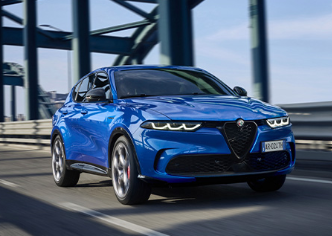
The Alfa Romeo Tonale Hybrid reliability question is an interesting one because the Tonale sits at the crossroads of old reputation and new technology. Alfa Romeo has spent decades building cars that stir the soul, yet historically the brand has not always been the first name we associate with bulletproof dependability.
The Tonale aims to rewrite that story.
It combines Italian styling and sporty road manners with electrified powertrains, modern infotainment, advanced driver-assistance systems, and increasingly sophisticated electronics. Depending on the market, buyers can find a conventional 48-volt hybrid or a more complex plug-in hybrid. For the 2026 European range, Alfa Romeo lists a 1.5-liter 175-hp Hybrid alongside a 1.3-liter 270-hp Plug-In Hybrid Q4.
So, is the Tonale Hybrid dependable enough to own for years?
The short version is encouraging but cautious: the Tonale Hybrid does not yet have the decades of evidence behind something like a Toyota RAV4 Hybrid, and early vehicles have been subject to several recalls. However, there is not yet evidence that every Tonale Hybrid should be considered inherently unreliable.
Let's dig deeper.
Content in this publication
- What Does Alfa Romeo Tonale Hybrid Reliability Really Mean?
- Alfa Romeo Tonale Hybrid Reliability at a Glance
- Understanding the Tonale Hybrid Powertrain
- How Reliable Is the Alfa Romeo Tonale Engine?
- Is the Tonale Hybrid Battery Reliable?
- Is the Tonale Hybrid Transmission Reliable?
- Tonale Hybrid Electronics and Software
- Alfa Romeo Tonale Hybrid Recalls
- Do Tonale Recalls Mean We Should Avoid the Car?
- Early Production Cars Deserve More Scrutiny
- How Does Tonale Hybrid Reliability Compare With Toyota?
- Tonale Hybrid vs Lexus Hybrid Reliability
- What About BMW, Audi, and Volvo?
- Is the Plug-In Hybrid More Risky Long Term?
- Can the Tonale Hybrid Last 100,000 Miles?
- What Could Make a Tonale Hybrid Expensive to Own?
- Maintenance Matters More Than the Alfa Badge
- The Importance of the 12-Volt Battery
- Should We Buy an Extended Warranty?
- Is a Used Alfa Romeo Tonale Hybrid a Good Idea?
- Which Tonale Hybrid Would We Choose for Reliability?
- Should We Avoid the First Model Years?
- Signs of a Good Tonale Hybrid
- Signs We Would Walk Away
- The Reliability Verdict
- Final Thoughts on Alfa Romeo Tonale Hybrid Reliability
- Frequently Asked Questions
What Does Alfa Romeo Tonale Hybrid Reliability Really Mean?
Reliability is more complicated than asking whether an engine will explode.
With a modern hybrid SUV, we need to consider several systems simultaneously:
- gasoline engine durability
- hybrid battery health
- electric motor reliability
- transmission behavior
- cooling system performance
- software and infotainment stability
- sensors and driver-assistance technology
- charging hardware on PHEV versions
- conventional brakes, suspension, steering, and electrical equipment
That matters because the Tonale is essentially a computer, hybrid powertrain, and SUV rolled into one handsome Italian package.
A mechanical engine fault might leave us stranded. A software glitch could simply annoy us for ten minutes. Both technically count as reliability concerns, yet their consequences are very different.
Alfa Romeo Tonale Hybrid Reliability at a Glance
If we were shopping for one today, we would describe its reliability outlook as promising but not fully proven.
The Tonale arrived recently enough that meaningful ten-year reliability data simply does not exist. In the 2025 What Car? Reliability Survey, there was not enough Tonale-specific data to include the model. Alfa Romeo itself ranked 17th out of 30 manufacturers in that survey—middle territory rather than either outstanding or disastrous.
That tells us something important.
Anyone claiming that the Tonale has already proven itself exceptionally reliable—or catastrophically unreliable—is probably getting ahead of the evidence.
We need more years and more high-mileage examples.
Understanding the Tonale Hybrid Powertrain
The 48-Volt Hybrid System
In markets offering the regular Tonale Hybrid, Alfa Romeo combines a turbocharged 1.5-liter gasoline engine with a seven-speed dual-clutch transmission and an electric motor integrated into the gearbox.
Earlier versions used a 48-volt electric motor rated at 15 kW and a compact 0.8-kWh lithium-ion battery. The architecture can propel the vehicle electrically during situations such as low-speed movement and parking rather than merely assisting the gasoline engine like an extremely basic mild-hybrid system.
For 2026, Alfa Romeo's updated European Tonale moves to a 175-hp version of the 1.5 Hybrid powertrain.
From a reliability perspective, this architecture has advantages and disadvantages.
The small battery avoids the massive, expensive battery pack found in a full EV. Yet we still have additional power electronics, a traction motor, hybrid control software, and a dual-clutch transmission interacting with the gasoline engine.
More components mean more potential failure points.
But complexity alone doesn't equal unreliability.
The Tonale Plug-In Hybrid Is Different
This distinction gets overlooked surprisingly often.
A Tonale Hybrid and Tonale Plug-In Hybrid are not the same drivetrain.
The PHEV adds a significantly larger high-voltage battery, external charging equipment, more substantial electric propulsion hardware, and all-wheel drive. It can handle much more meaningful electric-only driving than the standard 48V hybrid.
Consequently, reliability discussions should not mix every Tonale into the same bucket.
Think of two houses sharing the same exterior but using different heating systems. A problem with one furnace doesn't automatically tell us anything about the other.
How Reliable Is the Alfa Romeo Tonale Engine?
Engine reliability will ultimately depend heavily on maintenance.
Modern turbocharged gasoline engines operate with tight tolerances, direct injection, sophisticated emissions equipment, electronically controlled cooling, and extensive sensor networks. Skipping oil services because "the car still runs fine" is like ignoring a leaking roof because the living room isn't wet yet.
We would prioritize three things.
First, use oil meeting the exact manufacturer specification.
Second, avoid repeatedly extending oil-change intervals beyond the prescribed schedule.
Third, investigate abnormal noises, warning lights, coolant loss, or unusual oil consumption early.
The Tonale's gasoline engines haven't yet accumulated the enormous worldwide high-mileage sample that older Toyota, Honda, or Lexus hybrid engines have. That doesn't make them fragile; it simply limits how confidently we can forecast 150,000- or 200,000-mile ownership.
Is the Tonale Hybrid Battery Reliable?
Hybrid batteries naturally make buyers nervous because people picture an enormous repair bill appearing the morning after the warranty expires.
The regular 48V Tonale Hybrid is less intimidating in that respect.
Its battery is much smaller than the traction battery used by a plug-in hybrid or battery-electric vehicle. Alfa Romeo originally described the 48V pack as having a capacity of approximately 0.8 kWh and mounting it beneath the center tunnel.
Smaller doesn't automatically mean immortal, of course.
Lithium-ion batteries gradually degrade through age, temperature exposure, charge cycles, and operating conditions. However, the battery management system controls how the pack charges and discharges, protecting it from many of the extreme conditions that would shorten battery life.
What Battery Failure Might Feel Like
Hybrid-system problems don't always announce themselves dramatically.
We might instead notice reduced electric assistance, abnormal stop/start operation, warning messages, inconsistent fuel economy, unusual engine cycling, or the vehicle refusing to engage certain hybrid functions.
That is why proper diagnostic equipment matters.
Replacing parts based on guesswork can become very expensive very quickly.
Is the Tonale Hybrid Transmission Reliable?
The standard Hybrid uses a dual-clutch transmission rather than the planetary e-CVT arrangement commonly associated with Toyota hybrids.
That difference matters.
Dual-clutch gearboxes can feel more like traditional sporty transmissions, but their operation is mechanically more involved than a conventional torque-converter automatic in some respects.
At very low speeds, we may notice shifts, clutch engagement, or hesitation more distinctly.
A little low-speed awkwardness does not automatically mean the transmission is failing.
Driving Style Can Affect Longevity
Repeated creeping in heavy traffic, holding the vehicle on an incline using throttle instead of the brakes, hard launches, and severe stop-and-go operation can create additional heat and clutch wear.
A sensible approach is simple: drive normally, let the braking system hold the car on hills, and don't treat every green light like the starting grid at Monza.
Tonale Hybrid Electronics and Software
This may be the area we'd watch most closely on an early-production Tonale.
Modern Alfas depend heavily on software, displays, cameras, sensors, connected services, driver-assistance hardware, and control modules.
The original Tonale was specifically designed around substantial digital technology, including over-the-air software updates and multiple digital displays.
That gives the cabin a modern feel.
It also creates more opportunities for irritating bugs.
Software-related reliability problems are generally less frightening than internal engine damage, but they can be frustrating when they involve infotainment freezing, warning messages, connectivity issues, cameras, parking sensors, or driver-assistance functions.
Alfa Romeo Tonale Hybrid Recalls
Recalls deserve context.
A recall does not automatically mean a vehicle is unreliable, but serious recalls should absolutely influence how carefully we inspect a used example.
In the United States, certain 2023-2025 Alfa Romeo Tonale vehicles were included in a 2025 recall involving the possibility that the rearview camera image might fail to display during reversing. NHTSA documents indicate that more than 8,000 Tonales were potentially involved.
More significantly, certain Tonale PHEVs have been affected by brake-pedal recalls.
An October 2024 campaign covered certain 2024-2025 Tonale PHEV vehicles because the brake pedal assembly could potentially collapse while braking.
A subsequent December 2025 NHTSA campaign identified certain 2024 Tonale PHEVs potentially affected by a similar brake-pedal failure risk and specified dealer reinforcement of the brake-pedal arm as the remedy.
That isn't something we'd ignore.
If we're considering a used Tonale, checking the VIN for outstanding recalls should be one of the first things we do. NHTSA specifically allows owners to check individual vehicles by VIN and notes that recall repairs are performed without charge.
Do Tonale Recalls Mean We Should Avoid the Car?
Not necessarily.
You may be interested in reading BMW M4 Years to Avoid: A Smart Used-Buyer’s Guide
Recalls happen to manufacturers across virtually every price category. What matters more is the nature of the defect, how many vehicles are affected, whether an effective repair exists, and whether the particular car we're buying has actually received that remedy.
Imagine two identical used Tonales.
One has complete dealer history, every recall completed, current software, four matching quality tires, regular servicing, and no warning lights.
The other has missed maintenance, an unresolved recall, mismatched tires, questionable accident repairs, and several diagnostic codes.
Calling both cars "equally reliable" because they share the same badge would make little sense.
Condition and history matter enormously.
Early Production Cars Deserve More Scrutiny
This principle isn't unique to Alfa Romeo.
The first production years of an all-new vehicle frequently reveal manufacturing, supplier, calibration, and software problems that weren't obvious during development.
Automakers then update parts, software, production processes, and service procedures.
For that reason, if two comparable Tonales cost roughly the same, we'd generally lean toward the later-production example with documented service history.
That doesn't automatically make early Tonales bad purchases.
It simply changes our risk calculation.
How Does Tonale Hybrid Reliability Compare With Toyota?
Here's where expectations become important.
Toyota has been mass-producing hybrids for decades. Its hybrid architecture has accumulated billions of miles of real-world use across Priuses, Corollas, RAV4s, Camrys, Highlanders, Lexuses, taxis, delivery fleets, and ordinary family cars.
Alfa Romeo cannot magically create that historical database overnight.
So if our sole purchasing criterion is maximum statistical confidence in long-term hybrid durability, the Tonale would not be our obvious first choice over Toyota.
But cars aren't washing machines.
People buy Alfas partly because of steering feel, design, character, interior atmosphere, and the sense that the vehicle has a pulse.
The Tonale therefore makes more sense for someone willing to trade a little predictability for personality.
Tonale Hybrid vs Lexus Hybrid Reliability
Lexus presents a similar challenge.
Its hybrid technology benefits heavily from Toyota's long development history, and the brand has traditionally emphasized refinement and durability.
An Alfa Romeo Tonale arguably feels more distinctive and stylistically adventurous.
A Lexus may feel like a perfectly tailored suit.
The Alfa feels more like an Italian jacket that makes us glance at ourselves in every shop window.
From a pure long-term reliability-risk perspective, however, Lexus remains the safer conventional bet until substantially more high-mileage Tonales populate the used market.
What About BMW, Audi, and Volvo?
The equation becomes more balanced against European premium rivals.
Modern BMWs, Audis, Volvos, Mercedes models, and Alfas all feature complex engines, advanced transmissions, elaborate electronics, turbocharging, emissions hardware, large infotainment systems, and multiple computer modules.
None is truly "simple."
What Car?'s 2025 survey placed Alfa Romeo 17th among the 30 manufacturers included. The publication noted that BMW and Kia finished within the top ten, while Alfa ranked ahead of Volvo and Audi. The Tonale itself lacked sufficient responses for an individual reliability score.
That is a far more nuanced picture than the stereotype that every Alfa spends half its life beside a mechanic's toolbox.
Is the Plug-In Hybrid More Risky Long Term?
Potentially, yes—not necessarily because it is poorly engineered, but because there is simply more equipment.
A PHEV adds a large traction battery, charging electronics, high-voltage cabling, additional cooling requirements, electric propulsion hardware, and complex software coordinating combustion and electric power.
Every additional system introduces another theoretical repair possibility.
At the same time, PHEV operation can reduce gasoline-engine use when owners regularly charge and cover short journeys electrically.
So complexity cuts both ways.
We would not reject a Tonale PHEV purely because it is complicated, but we'd place even greater emphasis on warranty coverage, diagnostic history, recall completion, battery condition, and charging-system operation.
Can the Tonale Hybrid Last 100,000 Miles?
There is no engineering reason to assume a properly maintained Tonale Hybrid cannot reach 100,000 miles.
The difficulty is evidence.
Because the model is relatively young, we don't yet have enough ten- or fifteen-year-old Tonales to describe 100,000- to 200,000-mile durability with the confidence possible for long-established hybrid models.
That distinction matters.
"Not proven yet" isn't the same as "won't last."
If we maintain the car properly, respond quickly to faults, complete recall work, and avoid neglect, 100,000 miles should not be an extraordinary target.
Whether it reaches 200,000 miles economically is a question the next decade will answer much better.
What Could Make a Tonale Hybrid Expensive to Own?
The biggest long-term financial risk may not be catastrophic engine failure.
Instead, repair bills could accumulate through sophisticated components.
A radar sensor damaged in a minor accident, an LED lighting assembly, infotainment hardware, hybrid electronics, adaptive suspension equipment, cameras, or proprietary control modules can cost much more than comparable parts on a basic economy vehicle.
Premium SUVs are like smartphones on wheels.
We gain capability, but simplicity disappears.
The best protection is therefore preventive rather than reactive: good servicing, comprehensive inspections, sensible insurance, and ideally warranty coverage during the early years.
Maintenance Matters More Than the Alfa Badge
Old Alfa Romeo jokes are easy.
Maintenance records are more useful.
A neglected "reliable" vehicle can become a nightmare, while a carefully maintained premium car may run beautifully for years.
For the Tonale, we'd follow one practical ownership checklist:
- Follow the scheduled servicing precisely, including oil specification and fluid requirements.
- Check recalls by VIN, particularly when buying used.
- Keep software updated when manufacturer updates are available.
- Investigate warning lights immediately instead of repeatedly clearing codes.
- Maintain the 12V battery, because weak conventional batteries can create seemingly unrelated electronic faults in modern vehicles.
- Use a workshop familiar with Alfa Romeo and Stellantis diagnostics once the vehicle leaves warranty.
- Inspect PHEV charging operation before purchase, including the charge port, cable, onboard charger, and battery-related warning messages.
- Test every electronic feature on a used car, including cameras, parking sensors, climate controls, displays, driver aids, seat functions, and keyless entry.
- Request complete maintenance records, not just verbal assurances from the seller.
- Favor condition over bargain pricing, because a suspiciously cheap premium hybrid can become remarkably expensive after purchase.
The Importance of the 12-Volt Battery
This humble component deserves its own section.
Modern cars contain dozens of computers that expect stable voltage. When a 12V battery weakens, bizarre symptoms can appear: warning lights, failed start sequences, communication errors, infotainment problems, sensor warnings, and temporary hybrid-system faults.
That means a dashboard suddenly glowing like a Christmas tree doesn't always signify multiple catastrophic failures.
Sometimes the culprit is comparatively mundane.
Before panicking, proper voltage and diagnostic testing should be performed.
Should We Buy an Extended Warranty?
For buyers planning to keep a Tonale beyond the original factory coverage, an extended warranty can make sense—provided it actually covers the expensive components we care about.
Read the exclusions.
A cheap warranty that excludes hybrid electronics, infotainment units, cameras, sensors, charging hardware, and diagnostic labor isn't much of a safety net.
We'd pay particular attention to coverage for:
- hybrid powertrain components
- high-voltage battery where applicable
- transmission
- turbocharger
- infotainment hardware
- electronic control modules
- air-conditioning equipment
- AWD components on Q4 versions
The contract matters far more than the phrase "extended warranty."
Is a Used Alfa Romeo Tonale Hybrid a Good Idea?
It can be.
In fact, depreciation may eventually make lightly used Tonales especially tempting compared with newer premium rivals.
You may be interested in readingBMW M4 Years to Avoid: A Smart Used-Buyer’s GuideYou may be interested in reading
 Are Alfa Romeo Tonale Good Cars? A Complete Owner-Focused Guide
The key is resisting emotional buying.
Yes, the Tonale looks gorgeous parked under dealership lights. That's precisely when we need to become boring and methodical.
Check the VIN.
Scan the electronics.
Review service invoices.
Verify recall completion.
Drive it from cold.
Test the gearbox in stop-start traffic.
Listen for suspension noise.
Make sure every warning light illuminates at startup and then switches off correctly.
On a PHEV, confirm that it charges normally.
A pre-purchase inspection by someone familiar with the model is money well spent.
Which Tonale Hybrid Would We Choose for Reliability?
For an owner primarily focused on reducing long-term complexity, we'd lean toward the regular Hybrid rather than the PHEV, assuming both versions suit the intended driving pattern.
Why?
There is no external charging system and the traction battery is far smaller.
The drivetrain is still sophisticated, but there are fewer high-voltage components than in the plug-in model.
However, someone commuting short distances and charging at home could extract much greater efficiency from the PHEV.
Reliability isn't the only equation.
The best drivetrain is the one that matches how we actually use the vehicle.
Should We Avoid the First Model Years?
We wouldn't automatically avoid them.
We would simply demand more evidence.
An early Tonale with immaculate service documentation and all campaigns completed could be a better purchase than a later one that has been neglected.
Still, later production usually gives manufacturers time to introduce running changes and software improvements.
Consequently, buyers who are extremely risk-averse may prefer a later example.
Signs of a Good Tonale Hybrid
A healthy used Tonale should start cleanly, transition between gasoline and electric assistance without obvious drama, shift smoothly once warmed, display no persistent warning messages, and operate all electronic equipment correctly.
Brake feel should be predictable.
Steering should feel consistent.
The cooling system shouldn't show unexplained fluid loss.
The transmission shouldn't produce violent engagement.
The infotainment system shouldn't repeatedly restart during a test drive.
And most importantly, the vehicle's history should match its appearance.
A polished exterior cannot compensate for missing servicing.
Signs We Would Walk Away
A few warning signs would make us uncomfortable.
Persistent hybrid warnings, repeated unresolved electrical faults, evidence of flood damage, accident repairs around high-voltage components, missing maintenance history, unexplained coolant loss, transmission malfunction warnings, an inability to charge a PHEV properly, or unresolved safety recalls deserve serious investigation.
Occasional minor software quirks are one thing.
A seller explaining away five dashboard warnings with "they all do that" is another.
The Reliability Verdict
So, Is the Alfa Romeo Tonale Hybrid Reliable?
The Alfa Romeo Tonale Hybrid looks reasonably promising but remains too young for us to call it a proven long-term reliability champion.
There isn't yet enough model-specific survey evidence to establish a definitive reliability record. What Car? explicitly lacked sufficient Tonale data for its 2025 model reliability ranking, although Alfa Romeo as a brand finished roughly mid-pack at 17th of 30 manufacturers.
Meanwhile, recalls—including brake-pedal campaigns affecting certain PHEV vehicles and a rear-camera campaign affecting certain Tonales—show why checking individual VIN history is essential.
That leaves us with a balanced conclusion.
We wouldn't buy a Tonale expecting Toyota-like decades of hybrid evidence.
We also wouldn't reject it simply because the grille wears an Alfa Romeo badge.
The smarter position lies between those extremes.
Who Should Buy One?
The Tonale Hybrid makes sense for someone who wants an SUV with personality and is comfortable being disciplined about maintenance.
It's especially attractive if we value design, steering, Italian character, and something less predictable than the usual premium crossover.
Someone who views cars purely as appliances and wants the largest possible body of long-term hybrid reliability data may feel safer elsewhere.
Who Should Probably Look Elsewhere?
If the thought of an occasional software glitch ruins our week, a highly computerized Italian premium crossover may not be the ideal match.
Similarly, buyers keeping a vehicle for 15 years while minimizing every possible repair risk may prefer a simpler or historically better-established hybrid platform.
That isn't criticism.
It's choosing the right tool for the job.
Final Thoughts on Alfa Romeo Tonale Hybrid Reliability
The Alfa Romeo Tonale Hybrid reliability story is still being written.
Its hybrid technology is sophisticated, its early years have produced several recalls worth knowing about, and genuinely long-term owner data remains limited. Yet the available evidence doesn't justify treating the Tonale as an automatic reliability disaster either.
Perhaps that's the best way to think about it.
Buying a Tonale isn't like choosing the refrigerator with the longest warranty sticker.
There is emotion involved.
We see those sculpted lines, that unmistakable Alfa grille, and a cabin that feels different from the grey crossover crowd. Our heart starts negotiating with our spreadsheet.
Fortunately, the two don't have to become enemies.
Choose a well-maintained example. Verify recalls. Keep the servicing current. Don't ignore electronic warnings. Consider warranty protection if long-term repair costs worry you. And remember that the regular Hybrid and Plug-In Hybrid have materially different levels of complexity.
Do those things, and the Tonale can make considerably more sense than outdated Alfa Romeo stereotypes suggest.
It may not yet be the hybrid SUV we'd choose when maximum statistical reliability is the only goal.
But for buyers who want dependability and a little Italian fire in the driveway, it's a far more credible proposition than many people assume.
Frequently Asked Questions
1. Is the Alfa Romeo Tonale Hybrid dependable?
Current evidence suggests that the Tonale Hybrid can be a reasonable ownership proposition, but there isn't enough long-term data to describe it as exceptionally dependable yet. The model is relatively new, so high-mileage reliability evidence remains limited.
2. Does the Alfa Romeo Tonale Hybrid have problems?
Some Tonales have been affected by recalls and software or electronic concerns. In the United States, recall campaigns have included a rearview-camera issue affecting certain 2023-2025 Tonales and brake-pedal concerns affecting certain PHEV versions. Buyers should check the specific VIN rather than assuming every vehicle is affected.
3. How long does an Alfa Romeo Tonale Hybrid battery last?
There isn't yet enough real-world aging data to state a typical Tonale battery lifespan with confidence. Hybrid lithium-ion batteries are managed electronically to protect them from extreme charging conditions, but longevity ultimately varies with climate, mileage, age, and use.
4. Is the Alfa Romeo Tonale Hybrid more reliable than the PHEV?
We cannot definitively say that from available long-term data. However, the standard 48V Hybrid is mechanically less complex from an electrification standpoint because it uses a much smaller battery and doesn't require external charging hardware. Fewer components can theoretically reduce long-term repair exposure, although that doesn't guarantee better reliability.
You may be interested in readingBMW M4 Years to Avoid: A Smart Used-Buyer’s GuideYou may be interested in reading
Are Alfa Romeo Tonale Good Cars? A Complete Owner-Focused GuideYou may be interested in reading
Do Alfa Romeos Break Down a Lot? A Realistic Reliability Guide5. Is a used Alfa Romeo Tonale Hybrid worth buying?
Yes, provided the particular vehicle passes a thorough inspection. We'd prioritize complete service history, recall completion, clean diagnostics, correct transmission behavior, functioning electronics, and—on plug-in models—proper charging operation. A well-documented Tonale is far more appealing than a cheaper example with an uncertain history.
If you want to know other articles similar to Alfa Romeo Tonale Hybrid Reliability: Should We Trust It? you can visit the category Blog.
Kia Sportage Gas Tank Size: Complete Guide

BMW X1 Life Expectancy: How Long Does It Last?
Is the Toyota Yaris Cross Reliable? 2026 Guide

Kia Sportage Weight Guide: Curb, Kerb & GVWR

Toyota RAV4 Gas Tank Size (Chart & Explanation)

Toyota RAV4 Depreciation: Complete Resale Value Guide
Leave a Reply
More content of your interest